- Product Description Description
- Table of Contents TOC
- List of Table & Figure LOT
- Get Free Sample PDF Sample PDF
Market Size, 2025
$0.79 BnMarket Estimate, 2026
$0.83 BnMarket Forecast, 2034
$1.26 BnCAGR, 2026–2034
5.37%Latin America Advanced Wound Care Market Size, Trends, and Growth Forecast (2026–2034)
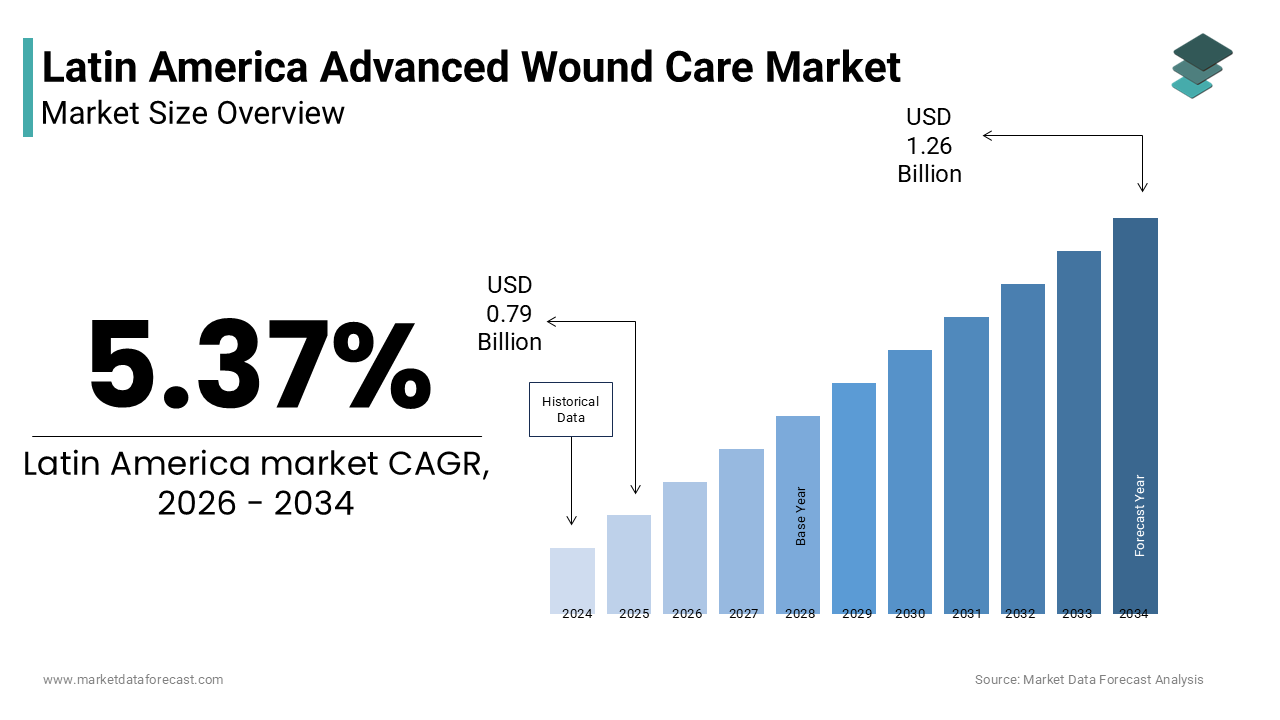
The Latin America advanced wound care market size was valued at USD 0.79 billion in 2025, is estimated at USD 0.83 billion in 2026, and is projected to reach USD 1.26 billion by 2034. Regional market expansion is progressing at a compound annual growth rate (CAGR) of 5.37% throughout the forecast period from 2026 to 2034. Key market drivers include the rising burden of chronic metabolic conditions like diabetes, increasing incidence of diabetic foot and skin ulcers, growing awareness of moist wound healing protocols, and technological innovations in bioactive dressings and skin substitutes.
Key Executive Metrics (At-a-Glance)
- 2025 Base Market Valuation: USD 0.79 Billion
- 2026 Current Market Size: USD 0.83 Billion
- 2034 Forecast Valuation: USD 1.26 Billion
- Compound Annual Growth Rate (CAGR): 5.37% (2026–2034)
- Largest Market Segment: Advanced Wound Dressings & Skin Ulcers Application
- Fastest-Growing Market Segment: Active Wound Care (9.05% CAGR) & Burn Wounds (8.02% CAGR)
- Key Geographic Footprint: Brazil, Mexico, Argentina, and Chile
Core Growth Drivers Shaping the Latin American Market
The regional adoption and commercial expansion of advanced wound management solutions are propelled by several clinical and structural catalysts:
- Diabetes and Chronic Wound Burden: Millions of adults affected by diabetes across Latin America leading to frequent complications such as non-healing diabetic foot ulcers.
- Professional Training and Adoption: Expanded educational initiatives by professional societies promoting evidence-based moist wound care over traditional dry gauze methods.
- Market Restraints: High product acquisition costs, limited public reimbursement frameworks, regional healthcare infrastructure deficits, and complex regulatory fragmentation.
Latin America Advanced Wound Care Market Segmentation Breakdown
| Segment Category | Largest Segment | Fastest-Growing Segment |
|---|---|---|
| By Type | Advanced Wound Dressings | Active Wound Care (9.05% CAGR) |
| By Application | Skin Ulcers | Burn Wounds (8.02% CAGR) |
| By End-User | Inpatient Services | Outpatient Services |
| By Country | Brazil (32.6% share in 2025) | Mexico & Argentina |
Major Market Players Profiled
Prominent corporations driving medical device manufacturing and wound therapy distribution across the Latin American market include Acelity L.P., Inc., Smith & Nephew PLC, Mölnlycke Health Care, ConvaTec, Inc., Coloplast Corp., 3M Healthcare, Medtronic, Integra LifeSciences Corporation, and Organogenesis Inc.
 Download Free Sample Report
Latin America Advanced Wound Care Market Size
The Latin America advanced wound care market size was valued at USD 0.79 billion in 2025 and is anticipated to reach USD 0.83 billion in 2026 from USD 1.26 billion by 2034, growing at a CAGR of 5.37% during the forecast period from 2026 to 2034.
The Latin American region is characterized by a growing burden of chronic diseases which necessitates effective wound management solutions to prevent complications and reduce healthcare costs. As per the International Diabetes Federation Latin America is home to approximately 49 million adults living with diabetes a figure projected to rise significantly in the coming decades thereby increasing the incidence of diabetic foot ulcers. Healthcare systems in countries like Brazil Mexico and Argentina are increasingly adopting advanced care protocols to improve patient outcomes and reduce hospital readmissions. Regulatory bodies such as the National Health Surveillance Agency in Brazil enforce strict quality standards for medical devices ensuring safety and efficacy. The market operates within a framework of evolving reimbursement policies and increasing awareness among healthcare professionals regarding the benefits of advanced dressings over traditional gauze. Supply chains are becoming more integrated with local manufacturing capabilities expanding to meet regional demand. Technological advancements in bioactive dressings and skin substitutes are driving innovation. Cross border trade facilitates the availability of premium products from global manufacturers. This ecosystem supports a transition toward value based care where wound healing efficiency and patient quality of life are prioritized.
MARKET DRIVERS
Rising Prevalence of Diabetes and Chronic Wounds Drives Demand
The rising prevalence of diabetes mellitus across Latin America is one of the key factors driving the expansion of the Latin American advanced wound care market due to the high risk of developing diabetic foot ulcers and other chronic wounds. As per the Pan American Health Organization diabetes affects nearly 10 percent of the adult population in several countries including Mexico and Brazil creating a substantial patient base requiring specialized wound management. Diabetic neuropathy and poor circulation often lead to non-healing wounds that are prone to infection and amputation if not treated effectively. Advanced wound dressings such as hydrogels and antimicrobial foams provide moisture balance and protection against pathogens accelerating the healing process. Hospitals and clinics are increasingly recognizing the cost effectiveness of advanced care in preventing severe complications and reducing long term hospital stays. Government health initiatives in nations like Colombia and Chile focus on early detection and management of diabetic complications driving the procurement of advanced dressings. Clinical guidelines recommend the use of modern dressings for moderate to severe wounds influencing physician prescribing habits. The aging population further exacerbates this trend as older individuals are more susceptible to chronic conditions and slower healing rates. This demographic shift ensures sustained demand for advanced wound care solutions. Manufacturers respond by developing products tailored to the specific needs of diabetic patients such as those with high exudate levels. The critical nature of diabetic wound care solidifies its role as a key driver in the regional market through persistent clinical necessity and public health prioritization.
Increasing Awareness and Adoption of Modern Wound Care Protocols
Growing awareness among healthcare professionals and patients regarding the superior efficacy of advanced wound care protocols compared to traditional methods significantly drives market expansion in Latin America. As per the World Union of Wound Healing Societies educational programs and clinical training sessions have increased substantially in the region promoting the use of evidence based practices. Medical practitioners are shifting away from dry gauze dressings which can damage newly formed tissue toward moist wound healing techniques that utilize hydrocolloids films and alginates. This paradigm shift is supported by clinical data demonstrating faster healing times reduced pain and lower infection rates with advanced products. Hospitals in urban centers such as Sao Paulo and Buenos Aires are implementing specialized wound care units equipped with modern technologies. Patient advocacy groups play a crucial role in educating individuals about proper wound management and the availability of advanced options. Insurance providers are beginning to recognize the long term savings associated with effective wound care leading to improved coverage for premium products. The dissemination of international best practices through medical conferences and journals further accelerates adoption. Manufacturers invest in continuing medical education to build relationships with key opinion leaders. This cultural and professional transformation ensures that advanced wound care becomes the standard of practice rather than an exception. The alignment of clinical evidence with professional education creates a robust foundation for market growth through informed decision making and improved patient outcomes.
MARKET RESTRAINTS
High Cost of Advanced Products and Limited Reimbursement Coverage
The prohibitive cost of advanced wound care products coupled with limited reimbursement coverage poses a significant restraint to market penetration in Latin America particularly in public healthcare systems. As per the World Bank healthcare expenditure per capita in many Latin American countries remains low compared to developed nations limiting the budget available for expensive medical supplies. Advanced dressings such as silver impregnated foams and biological skin substitutes can cost significantly more than traditional gauze making them inaccessible for a large portion of the population. Public hospitals often face budget constraints that force them to rely on cheaper conventional alternatives despite knowing the clinical benefits of advanced options. Private insurance plans may exclude certain high end products or impose strict criteria for coverage creating financial barriers for patients. Out of pocket expenses deter individuals from seeking optimal care leading to delayed treatment and worsening conditions. The lack of standardized reimbursement policies across different countries and regions creates uncertainty for manufacturers and providers. Economic volatility and currency fluctuations further exacerbate pricing issues making imported products expensive. Small and medium sized healthcare facilities struggle to afford inventory of advanced dressings. This financial barrier restricts the widespread adoption of innovative technologies. Until reimbursement frameworks are expanded and costs are reduced through local production or subsidies the market will remain constrained by affordability issues limiting access to life improving treatments for vulnerable populations.
Infrastructure Deficits and Shortage of Specialized Healthcare Professionals
Inadequate healthcare infrastructure and a shortage of trained wound care specialists significantly hinder the effective implementation of advanced wound care practices in Latin America, which is further hindering the Latin American market expansion. As per the World Health Organization many rural and remote areas lack access to basic medical facilities let alone specialized wound care centers equipped with advanced technologies. The concentration of healthcare resources in major urban centers leaves a significant portion of the population underserved. There is a critical shortage of nurses and doctors with specialized training in wound management leading to misdiagnosis and improper treatment of complex wounds. Without skilled personnel the potential benefits of advanced dressings cannot be fully realized as proper application and monitoring are essential for success. Training programs are limited and often inaccessible to healthcare workers in peripheral regions. Logistics challenges such as poor transportation networks and unreliable electricity supply affect the storage and distribution of temperature sensitive products. Maintenance of advanced equipment like negative pressure wound therapy devices is difficult in resource limited settings. The lack of integrated electronic health records hinders continuity of care and data collection for outcome analysis. These structural deficiencies create disparities in care quality between urban and rural populations. Addressing these gaps requires substantial investment in education infrastructure and workforce development. Until these systemic issues are resolved the market growth will be uneven and restricted to well-resourced institutions.
MARKET OPPORTUNITIES
Expansion of Home Healthcare and Telemedicine Services
The rapid expansion of home healthcare services and telemedicine platforms is a significant opportunity for the Latin America Advanced Wound Care Market by extending care beyond hospital settings. As per the Inter American Development Bank the aging population and rising chronic disease burden are driving demand for home based care solutions that reduce hospital admissions and improve quality of life. Advanced wound dressings that require less frequent changes and are easy to apply are ideal for home care settings allowing patients to manage their conditions with minimal professional assistance. Telemedicine enables remote monitoring of wound progress through digital images facilitating timely adjustments to treatment plans by specialists. This model reduces travel burdens for patients and optimizes healthcare resource utilization. Insurance providers are increasingly covering home care services recognizing their cost effectiveness. Manufacturers can develop user friendly packaging and instructional materials to support self care. Partnerships with home care agencies facilitate direct distribution of advanced products to patients. The convenience and comfort of home treatment enhance patient compliance and satisfaction. Digital health tools enable data collection for personalized care plans. This shift toward decentralized care opens new revenue streams and expands market reach to patients who previously lacked access to specialized wound clinics. By leveraging technology and home care trends stakeholders can drive adoption of advanced wound care products in a scalable and patient centric manner.
Development of Locally Manufactured Cost Effective Solutions
The development and production of locally manufactured advanced wound care products offer a lucrative opportunity for the market by addressing cost barriers and supply chain vulnerabilities. As per the Economic Commission for Latin America and the Caribbean regional integration initiatives encourage local industrialization to reduce dependency on imports and stabilize prices. Several countries including Brazil and Mexico have established manufacturing capabilities for hydrocolloids foams and alginate dressings using locally sourced raw materials. Local production reduces tariffs and logistics costs making advanced products more affordable for public and private healthcare providers. Governments offer incentives for domestic manufacturing including tax breaks and subsidies supporting industry growth. Local manufacturers can tailor products to specific regional needs and climate conditions enhancing relevance and acceptance. Collaboration with research institutions fosters innovation in bioactive materials derived from local resources such as chitosan from shellfish waste. This approach promotes sustainability and circular economy principles. Export opportunities within the region allow successful local brands to expand their footprint. The presence of local competitors stimulates innovation and price competition benefiting consumers. By focusing on local production stakeholders can create a resilient and accessible supply chain that supports market expansion and improves healthcare equity across Latin America.
MARKET CHALLENGES
Regulatory Fragmentation and Complex Approval Processes
Navigating the fragmented regulatory landscape and complex approval processes across different Latin American countries presents a major challenge for manufacturers of advanced wound care products. Each nation maintains distinct regulatory requirements for medical device registration with varying timelines documentation standards and clinical evidence expectations. As per the Pan American Health Organization harmonization efforts are ongoing but significant discrepancies remain between countries such as Brazil Mexico and Argentina. Manufacturers must submit separate applications for each market increasing administrative burdens and delaying product launches. In some countries the regulatory process is opaque and unpredictable leading to prolonged waiting periods. Post market surveillance requirements vary significantly complicating compliance for multinational companies. Changes in regulations occur frequently requiring constant monitoring and adaptation. Small and medium sized enterprises often lack the resources to manage these complexities effectively limiting market entry. The lack of mutual recognition agreements means that approvals in one country do not facilitate entry into others. This regulatory fragmentation increases costs and reduces agility hindering the introduction of innovative products. Manufacturers must invest heavily in regulatory affairs expertise to navigate this challenging environment. Until greater harmonization is achieved the market will remain fragmented and inefficient slowing down the availability of advanced wound care solutions to patients in need.
Supply Chain Disruptions and Import Dependency
Heavy reliance on imported raw materials and finished advanced wound care products exposes the Latin America market to significant supply chain disruptions and logistical challenges. As per the World Trade Organization global shipping delays and geopolitical tensions can abruptly halt the flow of essential medical supplies affecting availability in the region. Many advanced dressings and technologies are manufactured in North America Europe or Asia making Latin American countries vulnerable to external shocks. Currency fluctuations impact import costs creating pricing instability for distributors and healthcare providers. Port congestion and customs inefficiencies further exacerbate delays leading to stock outs in hospitals and pharmacies. Local manufacturing capabilities for high tech components such as semi permeable membranes are limited requiring continued dependence on imports. Climate related events such as hurricanes and floods can disrupt transportation networks affecting last mile delivery. Manufacturers must maintain high inventory levels to mitigate risks tying up capital and increasing storage costs. The lack of diversified sourcing options limits bargaining power and flexibility. Building resilient supply chains requires significant investment in local production and regional distribution hubs. Until self sufficiency improves the market will remain exposed to external vulnerabilities threatening the continuity of care for patients relying on advanced wound management products.
REPORT COVERAGE
| REPORT METRIC | DETAILS |
| Market Size Available | 2025 to 2034 |
| Base Year | 2025 |
| Forecast Period | 2026 to 2034 |
| CAGR | 5.37% |
| Segments Covered | By Type, Application, End-User and Region. |
| Various Analyses Covered | Global, Regional & Country Level Analysis, Segment-Level Analysis, DROC, PESTLE Analysis, Porter’s Five Forces Analysis, Competitive Landscape, Analyst Overview of Investment Opportunities |
| Country Covered | Brazil, Mexico, Argentina, Chile, and the Rest of Latin America. |
| Market Leaders Profiled | Acelity L.P., Inc., Smith and Nephew PLC., Mölnlycke Health Care, ConvaTec, Inc., Coloplast Corp., 3M Healthcare, Medtronic, Integra Lifesciences Corporation, and Organogenesis Inc. |
SEGMENTAL ANALYSIS
By Type Insights
The advanced wound dressings segment led the market by capturing the leading share of the Latin American market in 2025. The growth of the advanced wound dressings segment in the regional market can be credited to their versatility ease of use and relatively lower cost compared to therapy devices and active care products. As per the World Health Organization dressings such as hydrocolloids alginates foams and films are the first line of treatment for a vast majority of chronic and acute wounds including pressure ulcers and diabetic foot injuries. These products are widely available in both public and private healthcare settings making them accessible to a broader patient population. The ability of modern dressings to maintain a moist wound environment absorb exudate and protect against infection aligns with standard clinical protocols across the region. Hospitals and clinics prefer dressings for their simplicity which requires minimal training for nursing staff to apply correctly. The frequent need for dressing changes ensures recurring revenue streams for manufacturers. Government procurement programs often prioritize dressings due to their essential nature and budget friendly pricing. Innovations in antimicrobial and silicone bordered dressings further enhance their appeal by reducing pain and trauma during removal. The widespread acceptance of dressings as a standard of care solidifies their dominance through consistent high volume usage and integration into daily clinical practice across diverse healthcare facilities.
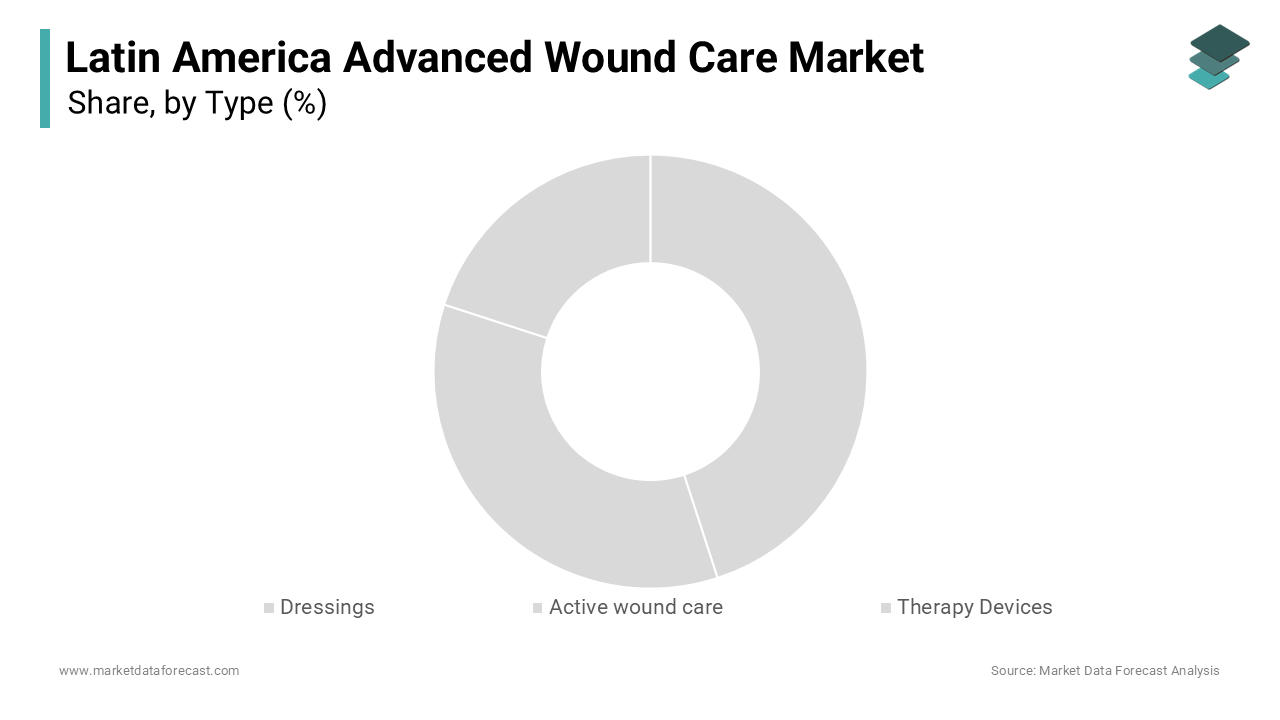
However, the active wound care segment represents the fastest growing segment in the Latin America advanced wound care market and is expected to register a CAGR of 9.05% over the forecast period owing to the technological advancements and superior healing outcomes for complex wounds. As per the Journal of Wound Care active products such as bioengineered skin substitutes growth factors and negative pressure wound therapy systems offer accelerated healing for non responsive wounds that fail to respond to traditional dressings. These technologies stimulate cellular activity and tissue regeneration reducing healing time by up to 50 percent in some cases. Hospitals in major urban centers are increasingly adopting these advanced therapies to improve patient outcomes and reduce the burden of chronic wounds. The rising incidence of severe burns and traumatic injuries drives demand for skin substitutes that provide immediate coverage and protection. Clinical evidence supporting the efficacy of active care encourages insurance providers to expand coverage for these premium products. Manufacturers invest heavily in research and development to introduce next generation biologics and smart devices. The ability of active care to address difficult to heal wounds positions it as a high value segment. This focus on innovation and clinical effectiveness drives rapid adoption among specialists seeking optimal solutions for complex cases.
By Application Insights
The skin ulcers segment dominated the market by holding the major share of the regional market in 2025. The growth of the skin ulcers segment is primarily attributed to the high burden of diabetic foot ulcers and venous leg ulcers across the region. As per the International Diabetes Federation diabetes prevalence is rising rapidly in Latin America leading to a significant increase in foot complications that require advanced wound management. Venous insufficiency also affects a large portion of the adult population particularly in aging demographics contributing to the formation of leg ulcers. These chronic conditions require long term care involving regular dressing changes and monitoring to prevent infection and amputation. Advanced wound care products are essential for managing exudate protecting surrounding skin and promoting granulation tissue formation. Clinical guidelines mandate the use of advanced dressings for moderate to severe ulcers ensuring consistent demand. Public health initiatives focus on early detection and management of ulcers to reduce healthcare costs associated with hospitalization and surgery. The chronic nature of these wounds ensures recurring usage of wound care products over extended periods. This epidemiological reality solidifies the dominance of skin ulcers as the primary application area through persistent clinical need and high patient volumes.
On the other side, the burn wounds segment is expected to record a promising CAGR of 8.02% over the forecast period in the Latin American market owing to the rising incidence of accidental burns and industrial accidents. As per the World Health Organization burns are a significant public health problem in the region particularly among children and workers in manufacturing and construction sectors. Severe burns require immediate and specialized care to prevent infection and minimize scarring. Advanced wound care products such as silver impregnated dressings hydrogels and skin substitutes are essential for managing burn injuries effectively. These products provide a barrier against pathogens maintain moisture and promote rapid epithelialization. Hospitals are upgrading their burn units with advanced technologies to improve survival rates and recovery times. Occupational safety regulations are becoming stricter leading to better reporting and treatment of workplace burns. Emergency response systems are improving ensuring faster access to specialized care. The severity of burn injuries necessitates the use of premium wound care solutions driving market growth. This focus on trauma care and emergency medicine positions burn wounds as a dynamic and rapidly expanding application segment.
COUNTRY ANALYSIS
Brazil Advanced Wound Care Market Analysis
Brazil stood as the largest market for advanced wound care in Latin America by accounting for 32.6% of the regional market share in 2025 due to its large population and robust healthcare infrastructure. As per the Brazilian Ministry of Health the public healthcare system SUS provides coverage for advanced wound care products although access varies by region. The high prevalence of diabetes and trauma cases drives significant demand for dressings and therapy devices. Local manufacturing capabilities are expanding reducing dependency on imports and lowering costs. Regulatory approval by ANVISA ensures quality standards for medical devices. Private hospitals in major cities adopt cutting edge technologies attracting medical tourism. Government initiatives focus on improving chronic disease management enhancing market growth. The diversity of the market requires tailored strategies for public and private segments. Brazil position as a regional leader ensures continued dominance through scale and innovation.
Mexico Advanced Wound Care Market Analysis
Mexico holds a significant position in the Latin America Advanced Wound Care Market due to a mix of public and private healthcare provision. As per the Mexican Social Security Institute IMSS and ISSSTE provide coverage for wound care products to insured populations driving steady demand. The rising incidence of obesity and diabetes increases the burden of chronic wounds. Private sector growth offers opportunities for premium products and advanced therapies. Trade agreements facilitate the import of high quality devices from North America. Local distributors play a key role in reaching remote areas. Regulatory harmonization efforts improve market access for international brands. The expanding middle class supports demand for better healthcare solutions. Mexico strategic location and economic ties enhance its market potential.
Argentina Advanced Wound Care Market Analysis
Argentina contributes a notable share of the Latin America advanced wound care market over the forecast period owing to the growing aging population and well established medical profession. As per the Argentine Ministry of Health economic volatility impacts purchasing power but demand for essential wound care remains resilient. The country has a strong tradition of medical education fostering adoption of advanced protocols. Private insurance covers a significant portion of the population enabling access to premium products. Local production of basic dressings exists but advanced technologies are largely imported. Currency fluctuations affect pricing and availability. Healthcare professionals advocate for better reimbursement policies. The focus on quality care sustains demand for effective solutions. Argentina medical expertise supports market stability despite economic challenges.
COMPETITIVE LANDSCAPE
The Latin America Advanced Wound Care Market features intense competition characterized by a mix of global multinational corporations and emerging regional manufacturers. Established giants leverage economies of scale extensive research and development capabilities and strong brand recognition to dominate the premium segment. These players continuously invest in product innovation and digital integration to maintain relevance amid changing healthcare needs. Smaller local producers compete by offering cost effective solutions tailored to specific regional diseases and public health programs. The market sees frequent collaborations between diagnostic companies and technology firms to develop connected testing devices. Regulatory compliance regarding quality and safety creates barriers to entry while ensuring standardization. Price sensitivity in emerging markets drives demand for affordable yet reliable testing options. The competitive landscape demands constant adaptation to technological advancements and regulatory changes. Companies must balance innovation with affordability to succeed in this dynamic environment where speed and accuracy are paramount. Strategic alliances and local manufacturing remain critical for sustaining growth and market relevance.
KEY MARKET PLAYERS
Noteworthy companies operating in the Latin America Wound Care Market include
- Acelity L.P., Inc.
- Smith & Nephew PLC
- Mölnlycke Health Care
- ConvaTec, Inc.
- Coloplast Corp.
- 3M Healthcare
- Medtronic
- Integra LifeSciences Corporation
- Organogenesis Inc.
Top Players in the Market
Smith and Nephew plc
Smith and Nephew plc maintains a robust presence in the Latin America Advanced Wound Care Market through its comprehensive portfolio of negative pressure wound therapy systems and advanced dressings. The company focuses on providing innovative solutions for complex chronic wounds such as diabetic foot ulcers and pressure injuries. Recent strategic initiatives include expanding its educational programs for healthcare professionals in Brazil and Mexico to promote best practices in wound management. Smith and Nephew actively collaborates with local distributors to enhance product availability in remote areas. The company invests in digital health tools that enable remote monitoring of wound healing progress. These efforts reinforce Smith and Nephew reputation for clinical excellence and innovation while strengthening its foothold in the diverse and growing Latin American market landscape.
ConvaTec Group plc
ConvaTec Group plc plays a pivotal role in the Latin America Advanced Wound Care Market by offering a wide range of skin and wound care products including silicone dressings and ostomy solutions. The company leverages its global expertise to address the specific needs of patients with fragile skin and chronic conditions. Recent actions involve launching new antimicrobial dressings designed to reduce infection risks in hospital settings across the region. ConvaTec focuses on sustainability by introducing eco friendly packaging and responsible sourcing practices. The company engages in partnerships with local healthcare providers to improve patient outcomes through tailored care plans. Strategic investments in manufacturing capabilities ensure consistent supply and quality. These measures demonstrate the company commitment to patient centric care and operational excellence ensuring competitive advantage in the Latin American sector.
Mölnlycke Health Care AB
Mölnlycke Health Care AB contributes significantly to the Latin America Advanced Wound Care Market through its specialized foam and silicone border dressings that minimize trauma during removal. The Swedish multinational emphasizes gentle care and pain reduction which are critical for patient comfort and compliance. Recent strategies include expanding its sales force in key markets like Argentina and Chile to increase brand visibility and adoption. Mölnlycke invests in clinical research to validate the efficacy of its products in treating venous leg ulcers and surgical wounds. The company supports healthcare institutions with training resources and technical support. Collaborations with local NGOs help reach underserved populations with essential wound care supplies. These initiatives underscore Mölnlycke dedication to improving quality of life and clinical efficiency reinforcing its position as a trusted partner in the Latin American healthcare ecosystem.
Top Strategies Used by Key Market Participants
Key players in the Latin America Advanced Wound Care Market employ several strategic approaches to maintain competitiveness and drive growth. Product localization and adaptation to regional clinical needs ensure relevance and acceptance. Expansion of distribution networks through partnerships with local agents enhances market penetration in remote areas. Investment in professional education and training programs builds trust and ensures proper product usage. Collaborations with governments and healthcare providers align offerings with public health priorities. Development of cost effective solutions addresses affordability constraints in public healthcare systems. Digital health integration enables remote monitoring and data driven care. Regulatory compliance and quality assurance build trust and facilitate market entry. These multifaceted strategies enable companies to navigate complex market dynamics and deliver impactful wound care solutions.
MARKET SEGMENTATION
This research report on the Latin American Advanced Wound Care market has been segmented and sub-segmented into the following categories.
By Type
- Dressings
- Active wound care
- Therapy Devices
By Application
- Skin Ulcers
- Surgical Wounds
- Burn Wounds
By End-User
- Inpatient Services
- Outpatient Services
By Country
- Brazil
- Mexico
- Argentina
- Chile
- Rest of Latin America