- Product Description Description
- Table of Contents TOC
- List of Table & Figure LOT
- Get Free Sample PDF Sample PDF
Market Size, 2025
$5.78 BnMarket Estimate, 2026
$6.04 BnMarket Forecast, 2034
$8.56 BnCAGR, 2026–2034
4.46%Latin America Apple Juice Market Size
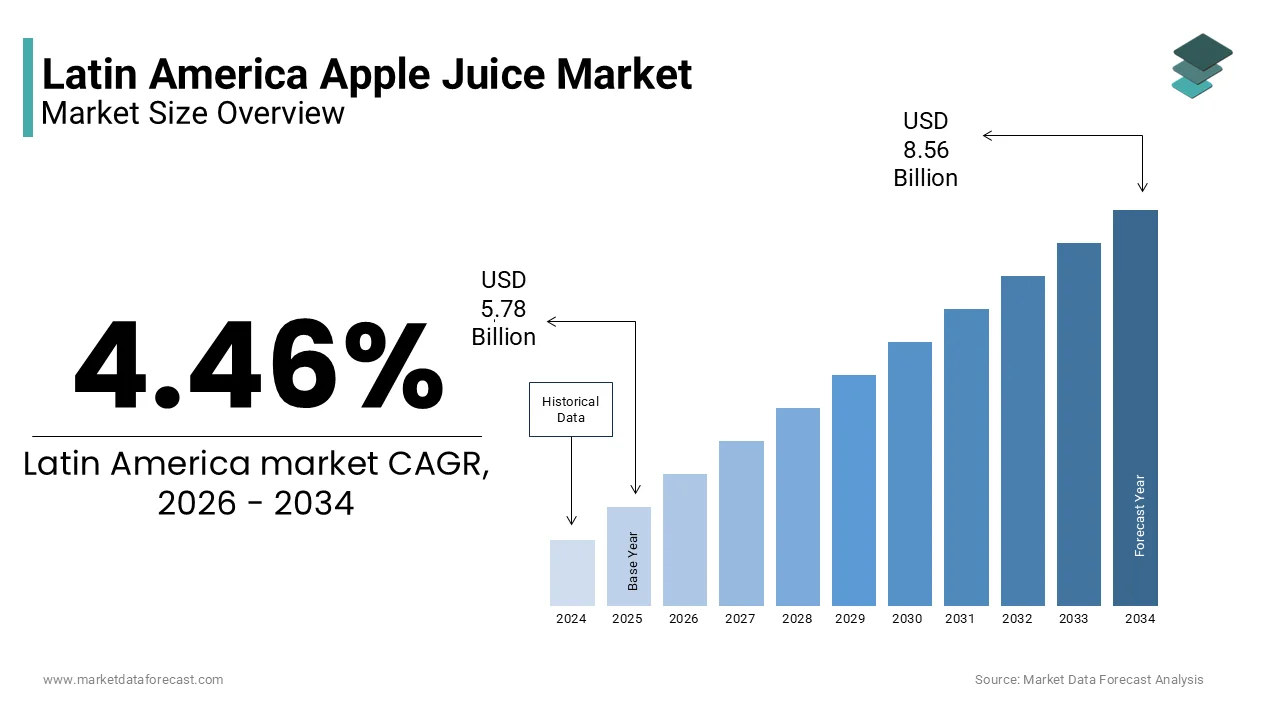
The Latin American apple juice market size was valued at USD 5.78 billion in 2025, and is projected to reach USD 8.56 billion by 2034 from USD 6.04 billion in 2026, growing at a CAGR of 4.46%.
The apple juice is derived from apples, ranging from clear concentrates to cloudy nectars and cold pressed variants. The agricultural output in key producing nations, such as Argentina and Chile, which serve as major export hubs for the region. The rising prevalence of lifestyle related health issues has prompted public health initiatives across the continent. Furthermore, urbanization rates in Latin America have reached 81%, as reported by the World Bank, facilitating greater access to modern retail channels where packaged apple juice is widely available. The growing middle class in countries like Brazil and Mexico has increased disposable income by allowing consumers to prioritize premium and organic juice varieties. Climate conditions in the southern cone provide ideal environments for apple cultivation, ensuring consistent supply despite global fluctuations.
MARKET DRIVERS
Rising Health Consciousness And Demand For Natural Beverages Drive Consumption
The escalating health consciousness consumers, as individuals actively seek nutritious alternatives to sugary sodas and artificial beverages, which is propelling the growth of the Latin America apple juice market. Apple juice is perceived as a rich source of vitamins, antioxidants, and essential minerals, aligning with the growing trend towards preventive healthcare and wellness. According to the World Health Organization, obesity rates in Latin America have risen significantly, with over 50% of adults in some countries classified as overweight or obese, prompting a shift towards lower calorie and natural drink options. Consumers are increasingly scrutinizing ingredient labels, favoring products with no added sugars or preservatives. As per data from Euromonitor International, sales of 46.6% pure fruit juices have outpaced those of juice drinks containing high fructose corn syrup, reflecting this change in preference. The convenience of ready to drink apple juice appeals to busy urban professionals and families who prioritize quick yet healthy hydration solutions. Additionally, the association of apples with digestive health and immune support enhances their appeal during seasonal illness peaks. Retailers have responded by expanding their shelves with premium and organic apple juice variants, catering to discerning buyers.
Expansion Of Modern Retail And E Commerce Channels Enhances Accessibility
The rapid expansion of modern retail formats and e-commerce platforms is accelerating the growth of the Latin America apple juice market. Supermarkets, hypermarkets, and convenience stores have proliferated in urban centers by offering a wide variety of packaged apple juice brands at competitive prices. E-commerce has emerged as a crucial channel, particularly following the pandemic, with online grocery sales surging in countries like Brazil and Mexico. The convenience of home delivery appeals to working households and younger demographics, who value time saving shopping experiences. Major retailers have invested in cold chain logistics to ensure the freshness of chilled and cold pressed apple juices, expanding the premium segment. Digital marketing strategies by brands leverage social media influencers to promote new flavors and health benefits by driving online engagement and sales. The integration of omnichannel strategies allows manufacturers to reach remote areas previously underserved by traditional distribution networks.
MARKET RESTRAINTS
Volatility In Raw Material Prices Due To Climatic Conditions Restrains Growth
The volatility in raw material prices due to unpredictable climatic conditions are affecting production costs and profit margins, which is limiting the growth of the Latin America apple juice market. Apple cultivation is highly sensitive to weather variations, including frost, hail, and drought, which can drastically reduce yields and impact quality. According to the National Institute of Agricultural Technology in Argentina, extreme weather events have caused apple production fluctuations of up to 20% in recent years, leading to supply shortages and price spikes. These instabilities force juice manufacturers to face uncertain input costs by making it difficult to maintain stable pricing for end consumers. As per data, inflation rates in several regional countries have exacerbated the financial burden on producers, squeezing margins further. Small and medium sized processors often lack the financial reserves to absorb these shocks, leading to reduced output or market exit. The reliance on specific apple varieties for juice production limits substitution options, making the sector vulnerable to crop specific failures. Additionally, climate change projections indicate an increase in frequency of extreme weather events, posing long term risks to supply stability. Manufacturers must invest in risk management strategies such as futures contracts or diversified sourcing, which can be costly and complex.
High Sugar Content Perception And Regulatory Pressures Impact Demand
The perception of high sugar content in apple juice and subsequent regulatory pressures impact consumer demand, which is also impeding the growth of the latin America apple juice market. While apple juice is natural, it contains significant amounts of fructose, which health experts warn can contribute to metabolic issues if consumed in excess. Several Latin American countries have implemented sugar taxes and strict labeling requirements to combat rising diabetes and obesity rates. For instance, Chile and Mexico have introduced front of package warning labels for products exceeding certain sugar thresholds, which often includes fruit juices. These regulations have led to a measurable decline in the purchase of high sugar beverages, including some fruit juices. Consumers are becoming more educated about the difference between whole fruit fiber and juice sugar, leading some to prefer eating whole apples over drinking juice. This shift in perception challenges the traditional health halo associated with fruit juices. Manufacturers face the dilemma of reformulating products to reduce sugar content, which may alter taste and appeal, or facing reduced sales due to negative labeling. The regulatory landscape continues to evolve, with potential bans on marketing juices to children under consideration in some jurisdictions.
MARKET OPPORTUNITIES
Development Of Functional And Fortified Apple Juice Products Creates Opportunities
The development of functional and fortified apple juice products, as consumers seek beverages with added health benefits beyond basic nutrition is likely to promote new opportunities for the growth of the Latin America apple juice market. Manufacturers are innovating by infusing apple juice with vitamins, minerals, probiotics, and plant extracts to target specific health needs, such as immunity, digestion, and energy. Apple juice serves as an ideal base for fortification due to its mild flavor and widespread acceptance. Consumers are willing to pay a premium for products that offer tangible health advantages, creating a lucrative niche for premium apple juice variants. The aging population in countries like Uruguay and Argentina increases demand for products supporting heart health and bone density, which can be addressed through fortified juices. Collaborations between juice manufacturers and nutritional scientists enable the creation of scientifically backed formulations that appeal to health conscious buyers. Additionally, the rise of sports nutrition has opened avenues for apple juice blends with electrolytes and amino acids for hydration and recovery.
Expansion Into Organic And Sustainable Packaging Segments Offers Potential
The expansion into organic and sustainable packaging segments by aligning with growing environmental and health consciousness among consumers is also to bolster the growth of the latin America apple juice market. Demand for organic apple juice is rising as buyers seek products free from pesticides and synthetic fertilizers, perceiving them as safer and higher quality. Simultaneously, there is a strong push towards eco-friendly packaging solutions to reduce plastic waste. Many Latin American countries are implementing stricter regulations on single use plastics, encouraging manufacturers to adopt recyclable, biodegradable, or refillable packaging. Brands that utilize glass bottles, carton packs made from renewable resources, or recycled PET gain a competitive edge by appealing to environmentally aware consumers. The premium nature of organic and sustainably packaged products allows for higher profit margins, offsetting the increased production costs. Retailers are increasingly dedicating shelf space to green products by enhancing visibility for these innovations. Furthermore, certification labels for organic and sustainable practices build trust and credibility with discerning buyers.
MARKET CHALLENGES
Intense Competition From Substitute Fruits And Beverages Poses A Challenge
The intense competition from substitute fruits and beverages, as consumers have a wide array of choices for healthy hydration is likely to pose as a major challenge for the growth of the Latin America apple juice market. Tropical fruits, such as orange, mango, pineapple, and passion fruit are native to the region and often preferred for their distinct flavors and local availability. Additionally, the rise of alternative beverages, such as coconut water, almond milk, and infused waters provides healthy options that compete directly with apple juice. The perception that tropical fruits are fresher and more exotic than apples, which are often imported or grown in limited regions, influences purchasing decisions. Price sensitivity also plays a role, as locally sourced tropical juices may be cheaper than apple juice depending on seasonal harvests. Manufacturers of apple juice must invest heavily in marketing to highlight unique benefits and differentiate their products from these abundant alternatives. The fragmentation of the beverage market means that apple juice must constantly prove its value proposition to retain consumer loyalty.
Supply Chain Inefficiencies And Infrastructure Deficits Impact Distribution
The supply chain inefficiencies and infrastructure deficits, hindering efficient distribution and increasing operational costs. This factor is also to pose as a challenge for the growth of the Latin America apple juice market. Many regions within Latin America suffer from inadequate transportation networks, poor road conditions, and limited cold storage facilities, which affect the timely delivery of perishable goods. Several Latin American countries rank below the global average in logistics efficiency, leading to higher spoilage rates and delays. For apple juice producers, maintaining the cold chain is crucial for preserving quality, especially for fresh and cold pressed variants. These inefficiencies increase the final cost of products, making them less competitive against imported juices or local substitutes. Small and medium sized enterprises struggle to invest in private logistics solutions, limiting their market reach to local areas. Additionally, bureaucratic hurdles and customs delays in cross border trade within the region complicate the distribution of apple juice from producing countries like Argentina to neighboring markets. The lack of integrated supply chain technology further exacerbates visibility and coordination issues.
 REPORT COVERAGE
| REPORT METRIC | DETAILS |
| Market Size Available | 2025 to 2034 |
| Base Year | 2025 |
| Forecast Period | 2026 to 2034 |
| CAGR | 4.46% |
| Segments Covered | By Type, Nature, Distribution Channel, End Use, and Region |
| Various Analyses Covered | Global, Regional, & Country Level Analysis; Segment-Level Analysis; DROC; PESTLE Analysis; Porter’s Five Forces Analysis; Competitive Landscape; Analyst Overview of Investment Opportunities |
| Regions Covered | Latin America include Brazil, Argentina, Mexico, and the Rest of Latin America |
| Market Leaders Profiled | The Coca-Cola Company (Minute Maid), Arcor SA, PepsiCo, Inc. (Tropicana), Del Monte Foods, Inc., Döhler GmbH, AGRANA Beteiligungs-AG, Tree Top, Inc., Welch Foods Inc., Britvic PLC, Rauch Fruchtsäfte GmbH & Co. OG, and Louis Dreyfus Company (LDC) |
SEGMENTAL ANALYSIS
By Nature Insights
The conventional segment was the largest by holding 48.1% of the Latin America apple juice market share in 2025 with its affordability, widespread availability, and established consumer preference for standard fruit juices. Conventional apple juice is produced using apples grown with synthetic fertilizers and pesticides, which allows for higher yields and lower production costs compared to organic farming. The lower retail price of conventional apple juice makes it accessible to a broader demographic, including price sensitive consumers in emerging economies within the region. The familiarity of conventional apple juice flavors and textures also contributes to its sustained popularity, as consumers are accustomed to these products through years of market presence. Additionally, large scale industrial processing facilities are optimized for conventional inputs by enabling efficient production and distribution across vast geographical areas.
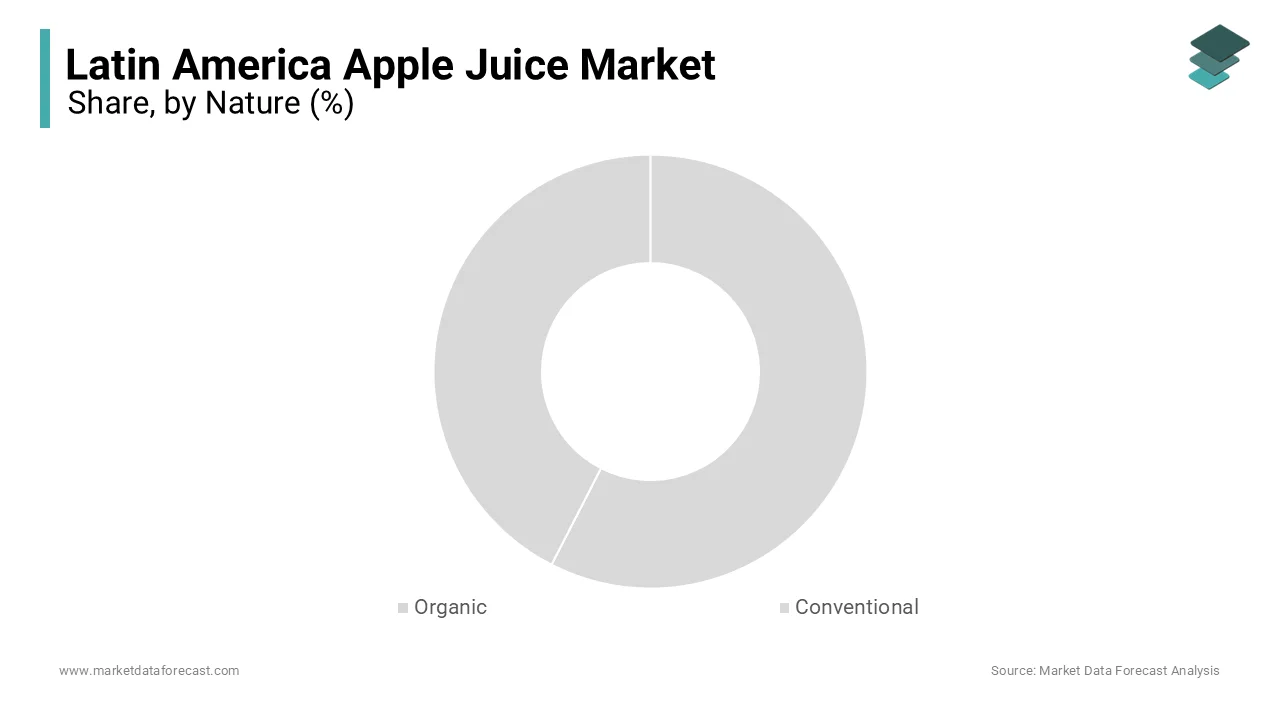
The organic segment is expected to register a fastest CAGR of 8.5% during the forecast period owing to the increasing health consciousness and environmental awareness among consumers who prioritize chemical free and sustainably produced food items. The global demand for organic products has risen significantly, influencing Latin American markets where consumers are becoming more discerning about ingredient quality. In countries like Chile and Argentina, which are major exporters of organic fruits, domestic consumption of organic apple juice is also rising as local populations gain access to premium products. The perception that organic juice offers superior nutritional value and safety drives willingness to pay a premium price. Government initiatives promoting organic farming in Brazil and Mexico, further support supply chain development. Additionally, the rise of specialized health food stores and online platforms dedicated to organic products enhances accessibility. Younger demographics and urban professionals are leading this trend, seeking transparency and ethical sourcing in their purchases.
By Distribution Channel Insights
The supermarkets segment held a dominant share of the Latin America apple juice market in 2025 with their extensive reach, diverse product offerings, and ability to provide a one stop shopping experience. These retail giants have expanded significantly across urban centers in countries like Brazil, Mexico, and Argentina, offering a wide variety of apple juice brands ranging from budget friendly concentrates to premium cold pressed options. The modern retail sector in Latin America has grown substantially, with supermarkets accounting for a significant portion of grocery sales. The ability of supermarkets to offer promotional discounts, bulk purchasing options, and private label alternatives attracts a large customer base. The shelf visibility and strategic placement in supermarkets significantly influence consumer purchasing decisions for beverage products. The establishment of cold chain infrastructure within these stores allows for the sale of fresh and chilled apple juices, catering to quality conscious consumers. Furthermore, supermarkets often serve as launch pads for new product innovations, providing manufacturers with immediate access to a broad audience. The trust associated with established retail chains also assures consumers of product quality and safety.
The e-commerce segment is deemed to grow at a fastest CAGR of 12.5% from 2026 to 2034 owing to the increasing penetration of internet connectivity, smartphone usage, and the convenience of home delivery services. The e-commerce sales in Latin America have accelerated rapidly, particularly in the food and beverage category, as consumers seek time saving shopping solutions. The pandemic acted as a catalyst, normalizing online grocery shopping for many households that previously relied on physical stores. E-commerce platforms allow consumers to compare prices, read reviews, and access a wider range of niche and premium apple juice brands that may not be available in local stores. Subscription models offered by online retailers ensure regular delivery of staple items like juice, enhancing customer retention. Additionally, social media marketing and influencer collaborations drive traffic to online stores, targeting younger demographics who are digitally native. The ability to purchase bulk quantities with doorstep delivery appeals to busy professionals and families.
By End Use Insights
The household segment was the largest by accounting for 36.4% of the Latin America apple juice market share in 2025 owing to the daily consumption habits of families and individuals who prioritize healthy hydration at home. Apple juice is a staple in many households, served as a breakfast beverage, snack accompaniment, or healthy alternative to sodas for children. The convenience of storing packaged apple juice and its long shelf life make it a practical choice for family pantries. The off premise consumption accounts for the majority of juice sales are reflecting the preference for home based drinking. The rising number of dual income households has increased the demand for quick and nutritious meal solutions, where apple juice plays a role. Additionally, the perception of apple juice as a immune boosting drink encourages regular purchase during flu seasons. Retailers cater to this segment by offering family sized packs and multi buy promotions.
The commercial segment is esteemed to witness a fastest CAGR of 7.8% from 2026 to 2034 with the expansion of the food service industry, including hotels, restaurants, cafes, and institutional catering services. Apple juice is a popular menu item in breakfast buffets, smoothie bars, and healthy dining concepts, appealing to tourists and locals alike. The number of health focused eateries has increased, incorporating fresh and natural juices into their offerings. Corporate cafeterias and schools are also increasingly providing apple juice as part of balanced meal programs to promote employee and student wellness. The rise of juice bars and specialty cafes in urban areas creates new avenues for commercial sales. Additionally, event catering and airline services contribute to the demand for single serve apple juice packs. The professionalization of the food service sector and the emphasis on quality ingredients drive the adoption of premium apple juice brands.
COUNTRY LEVEL ANALYSIS
Brazil was the top performer in the Latin America apple juice market by holding 35.4% of the share in 2025 with its large population, growing middle class, and expanding retail infrastructure. The country is a major consumer of fruit juices, with apple juice gaining popularity as a healthy alternative to tropical fruit blends. The urban population continues to grow, facilitating access to modern supermarkets and e commerce platforms where apple juice is widely sold. The rising prevalence of obesity and diabetes has prompted public health campaigns encouraging reduced sugar intake, boosting demand for 100% natural juices. The sales of healthy beverages have outpaced traditional soft drinks in recent years. Domestic production of apples in the southern states provides a local supply base, although imports from Argentina and Chile supplement demand. The vibrant food service sector in cities like Sao Paulo and Rio de Janeiro also drives commercial consumption.
Mexico apple juice market was ranked second by holding 21.2% of the share in 2025 with the strong preference for natural beverages and a robust manufacturing sector. The country has implemented strict labeling regulations and sugar taxes, which have shifted consumer preference towards healthier options like apple juice. The proximity to the United States facilitates trade and technology transfer, allowing Mexican manufacturers to adopt advanced processing techniques. Apple juice is increasingly consumed in households and commercial establishments, particularly in urban centers like Mexico City. The presence of international beverage companies drives competition and innovation in packaging and flavors. Additionally, the growing tourism industry supports commercial demand in hotels and restaurants.
Argentina apple juice market is attributed to grow at a fastest CAGR in coming years. The country’s favorable climate in the Patagonia region allows for high quality apple cultivation, supporting a strong domestic processing industry. This abundance ensures a stable supply and competitive pricing for domestic consumers. The local population has a strong tradition of fruit consumption, and apple juice is a common household item. As per data, the beverage sector is investing in value added products such as organic and fortified juices. Economic challenges have led consumers to seek affordable yet nutritious options, benefiting the conventional apple juice segment. Export revenues also support industry stability by allowing for reinvestment in local marketing and distribution.
Chile apple juice market growth is expected to grow with the presence of premium organic productions and export oriented industry. The country is a global leader in organic fruit exports, and this expertise translates into a growing domestic market for organic apple juice. Chilean consumers are increasingly health conscious and willing to pay for high quality, sustainable products. The sales of organic and natural products have grown steadily, reflecting this trend. The country’s stable economy and high human development index support a sophisticated consumer base that values transparency and quality. Apple juice is consumed in both household and commercial settings, with a focus on clean label and non-GMO attributes.
COMPETITIVE LANDSCAPE
The competition in the Latin America apple juice market is intense and characterized by the presence of multinational corporations alongside strong regional players. Large companies leverage their extensive distribution networks and brand recognition to dominate supermarket shelves and convenience stores. These players benefit from significant marketing budgets that allow them to launch widespread advertising campaigns promoting health benefits. Local manufacturers compete by offering cost effective alternatives and leveraging traditional consumer preferences for specific fruit flavors. Price sensitivity remains a key factor, with private label brands gaining traction among budget conscious consumers. Regulatory changes regarding sugar content and labeling further influence competitive dynamics. The rise of e-commerce provides new avenues for niche brands to reach targeted audiences.
KEY MARKET PLAYERS
Some of the key players in the Latin America apple juice market are
- The Coca-Cola Company (Minute Maid)
- Arcor SA
- PepsiCo, Inc. (Tropicana)
- Del Monte Foods, Inc.
- Döhler GmbH
- AGRANA Beteiligungs-AG
- Tree Top, Inc.
- Welch Foods Inc.
- Britvic PLC
- Rauch Fruchtsäfte GmbH & Co. OG
- Louis Dreyfus Company (LDC)
Top Players in the Market
- Arcor SA maintains a strong presence in the Latin America apple juice market through its extensive portfolio of beverages and food products. The company leverages its robust distribution network to ensure wide availability of apple juice variants across multiple countries. Arcor has recently invested in upgrading its production facilities to enhance efficiency and product quality. The company focuses on developing affordable and accessible juice options that cater to diverse consumer preferences. By introducing new packaging formats and flavors, Arcor strengthens its appeal to health conscious buyers. Its commitment to sustainable sourcing and community engagement further enhances brand loyalty.
- Coca Cola FEMSA contributes significantly to the Latin America apple juice market by distributing well known brands such as Del Valle and Minute Maid. The company utilizes its unparalleled logistics infrastructure to reach both urban and rural markets effectively. Coca Cola FEMSA has recently expanded its range of natural and low sugar apple juice products to align with changing consumer demands. The company invests heavily in marketing campaigns that escalate the nutritional benefits of its juice offerings. By partnering with local retailers and e-commerce platforms, it ensures consistent product visibility. Its focus on innovation and customer centric strategies reinforces its position as a leading player in the Latin American beverage industry.
- PepsiCo Inc plays a vital role in the Latin America apple juice market through its Tropicana and other fruit juice brands. The company emphasizes product innovation and quality to meet the evolving tastes of consumers in the region. PepsiCo has recently launched organic and cold pressed apple juice lines to capture the premium segment. The company actively engages in sustainability initiatives, including water conservation and recyclable packaging projects. By leveraging its global expertise and local market insights, PepsiCo delivers high value products that resonate with health aware individuals.
Major Strategies Used By Key Market Participants
Key players in the Latin America apple juice market primarily focus on product diversification and health oriented innovation to capture growing consumer interest. Companies are increasingly launching organic, low sugar, and fortified apple juice variants to align with wellness trends. Expansion of distribution networks into underserved rural areas helps broaden market reach and accessibility. Strategic partnerships with local farmers ensure a stable supply of high-quality raw materials while supporting sustainability goals. Investment in advanced processing technologies improves product shelf life and nutritional retention. Digital marketing and e commerce integration enable direct consumer engagement and personalized promotions. These combined efforts allow manufacturers to differentiate their offerings and build strong brand loyalty in a competitive landscape.
MARKET SEGMENTATION
This research report on the Latin America apple juice market has been segmeneted and sub-segmented into the following categories.
By Type
- Filtered
- Unfiltered
By Nature
- Organic
- Conventional
By Distribution Channel
- Supermarkets/Hypermarkets
- Convenience Stores
- Specialty Stores
- Retail Stores
- Online Stores
- Others
By End Use
- Household
- Commercial
By Country
- Brazil
- Argentina
- Mexico
- Rest of Latin America