- Product Description Description
- Table of Contents TOC
- List of Table & Figure LOT
- Get Free Sample PDF Sample PDF
Market Size, 2025
$1.63 BnMarket Estimate, 2026
$1.70 BnMarket Forecast, 2034
$2.73 BnCAGR, 2026–2034
4.25%Latin America Butter Market Size, Growth, Trends & Forecast (2026–2034)
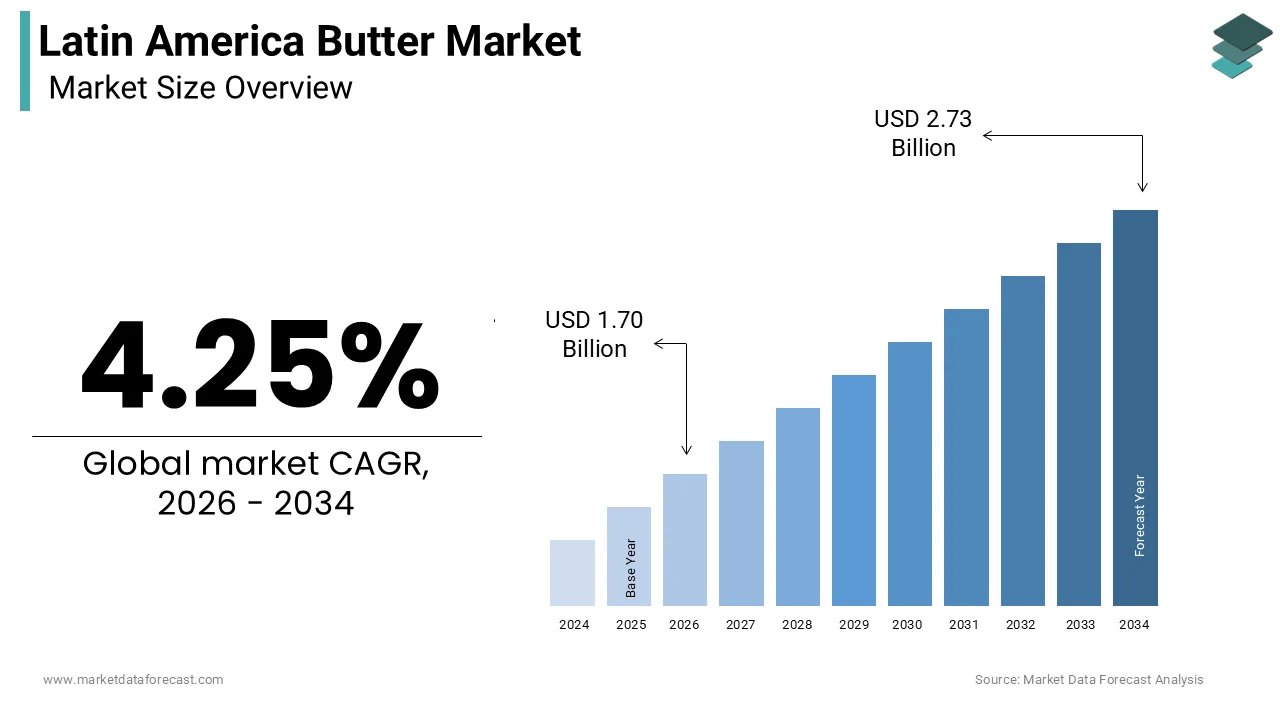
The Latin America butter market size was calculated to be USD 1.63 billion in 2025, is anticipated to be worth USD 1.70 billion in 2026, and is projected to scale up to USD 2.73 billion by 2034, registering a compound annual growth rate (CAGR) of 4.25% during the forecast period from 2026 to 2034. Driven by a shift away from artificial trans fats toward natural dairy fats, rising industrial demand from the bakery and confectionery sectors, and an expanding foodservice landscape, the regional market continues to expand steadily.
Key Executive Metrics (At-a-Glance)
- 2025 Base Valuation: USD 1.63 Billion
- 2026 Current Valuation: USD 1.70 Billion
- 2034 Forecast Valuation: USD 2.73 Billion
- Compound Annual Growth Rate (CAGR): 4.25% (2026–2034)
- Dominant Type Segment: Salted Butter (holding 52.4% market share in 2025 due to widespread culinary utility and extended natural shelf life)
- Dominant End-Use Segment: Industrial Processing (accounting for 42.3% share in 2025 driven by heavy confectionery and baking procurement)
- Dominant Region: Brazil (representing 35.3% market share in 2025 backed by high production capabilities and cultural dietary staples)
- Fastest-Growing Segments: Unsalted Butter (7.8% CAGR) and Foodservice Sector (6.5% CAGR)
Core Market Drivers
- Health Consciousness: Rising avoidance of margarine and artificial hydrogenated vegetable oils in favor of clean-label natural dairy fats.
- Bakery & Confectionery Expansion: Strong institutional consumption from major multinational food manufacturers and artisanal pastry shops.
Primary Market Restraints & Challenges
- Raw Milk Volatility: Unpredictable farm-gate price fluctuations caused by weather anomalies like El Niño and droughts impacting feed and pasture output.
- Regulatory Complexities: Stringent Mercosur safety norms and compliance burdens increasing operational costs for small and medium producers.
Latin America Butter Market Segmentation Breakdown
| Segment Category | Leading Sub-Segment (2025 Base) | Fastest-Growing Sub-Segment (2026–2034) |
|---|---|---|
| By Type | Salted (52.4% share, favored for savory dishes and natural preservation) | Unsalted (7.8% CAGR propelled by fine baking precision and clean-label trends) |
| By End Use | Industrial Processing (42.3% share, anchored by large-scale commercial bakery usage) | Foodservice Sector (6.5% CAGR driven by expanding tourism and dining out trends) |
| By Region | Brazil (35.3% share, supported by large herd sizes and cooperative milk processing) | Chile (expanding on modern organized retail infrastructure and affluent demographics) |
Major Industry Players Profiled
Key enterprises shaping the competitive Latin American butter market include Amul, Arla Foods UK Plc, Kraft Foods Inc., FrieslandCampina, Dean Foods Company, Lactalis, Gloria Foods, and Nestlé.
Latin America Butter Market Size
The Latin America Butter Market Size was calculated to be USD 1.63 billion in 2025 and is anticipated to be worth USD 2.73 billion by 2034, from USD 1.70 billion in 2026, growing at a CAGR of 4.25% during the forecast period.
Butter is a dairy-derived fat product, across nations, including Brazil, Argentina, Chile, Colombia, and Peru. Butter serves as a fundamental ingredient in culinary traditions ranging from household cooking to industrial baking and confectionery applications. As per the Food and Agriculture Organization of the United Nations, Latin America produces approximately 180 million tons of milk annually, which forms the raw material basis for butter manufacturing. Consumer awareness regarding trans fats has shifted preferences toward natural dairy fats, thereby influencing market dynamics. The cultural significance of butter in traditional recipes such as Argentine pastries and Brazilian breads ensures steady domestic demand. Regulatory frameworks governing dairy quality standards vary across countries but generally align with Codex Alimentarius guidelines, ensuring product safety.
MARKET DRIVERS
Rising Health Consciousness Driving Preference For Natural Dairy Fats
The consumer health awareness, as individuals increasingly scrutinize ingredient labels and seek minimally processed foods, is amplifying the growth of the Latin America butter market. According to the Pan American Health Organization, noncommunicable diseases account for 75% of all deaths in the region, prompting governments and health institutions to promote healthier dietary choices. This shift has led consumers to favor butter over margarine due to growing concerns about artificial trans fats commonly found in hydrogenated vegetable oils. Butter is perceived as a natural alternative free from industrial processing chemicals, which aligns with the clean label trend gaining momentum across Brazil, Mexico, and Chile. Nutritionists emphasize that moderate butter consumption provides essential vitamins, which support immune function and bone health. The saturated fat intake, but acknowledges that natural dairy fats differ metabolically from industrial trans fats. Retailers report increased shelf space allocation for premium and organic butter variants, reflecting this demand shift.
Expansion Of Bakery And Confectionery Industries Fueling Industrial Demand
The bakery and confectionery sectors for butter consumption in industrial applications are additionally fuelling the growth of the Latin America butter market. Butter remains the preferred fat source for premium baked goods due to its ability to enhance flavor, texture, and aroma in products, such as croissants, cakes, and cookies. Major multinational bakery chains, including Bimbo and Arcor, have expanded their production facilities in Mexico and Brazil, respectively, increasing their procurement of high-quality butter. Consumer preference for artisanal and gourmet baked items has risen sharply, with urban centers witnessing a proliferation of specialty bakeries. These establishments prioritize European-style butter with higher fat content to achieve superior product quality. The tourism sector further amplifies demand as hotels and restaurants incorporate butter-rich dishes into their menus to cater to international visitors. Supply chain partnerships between dairy cooperatives and large-scale bakeries ensure consistent quality and volume availability.
MARKET RESTRAINTS
Volatility In Raw Milk Prices Constraining Profit Margins
Fluctuations in raw milk prices, as dairy farmers and processors face unpredictable input costs that directly impact profitability, are hampering the growth of the Latin American butter market. Brazil, which accounts for nearly 30% of regional milk production, saw farm gate prices swing significantly during drought periods, affecting butter manufacturing costs. The El Niño weather phenomenon reduced pasture productivity in Argentina and Uruguay, leading to higher supplementary feed expenses for dairy cattle. Small and medium-sized dairy processors lack the financial buffers to absorb these cost fluctuations, forcing them to either reduce production volumes or pass increased costs to consumers. Higher retail prices dampen consumer demand, particularly in price-sensitive areas, such as Colombia and Peru, where butter competes with cheaper alternatives like margarine. Currency devaluation in several Latin American countries further exacerbates the situation by increasing the cost of imported equipment and packaging materials. These economic pressures constrain investment in capacity expansion and technological upgrades, thereby limiting market growth potential. Processors struggle to maintain consistent supply contracts with retailers, leading to occasional shortages during peak demand seasons.
Stringent Regulatory Standards Increasing Compliance Costs
The implementation of stringent regulatory standards for dairy products across Latin America imposes significant compliance burdens on manufacturers, affecting operational efficiency and market entry barriers, and additionally degrading the growth of the Latin America butter market. As per the Mercosur Technical Regulations, member countries, including Brazil, Argentina, Paraguay, and Uruguay, have harmonized food safety requirements mandating rigorous testing for contaminants, antibiotic residues, and microbial loads. Compliance with these standards requires substantial investment in laboratory infrastructure, quality control personnel, and certification processes, which smaller producers often find prohibitive. These regulatory complexities delay product launches and increase time to market, particularly for innovative butter variants such as flavored or fortified options. Small-scale artisanal producers face disproportionate challenges as they lack the resources to navigate bureaucratic procedures, leading to market consolidation favoring large corporations. Export-oriented manufacturers must also comply with international standards such as those set by the European Union and the United States, further escalating compliance costs. These regulatory hurdles restrict competition and innovation while increasing final product prices for consumers.
MARKET OPPORTUNITIES
Growing Demand For Premium And Organic Butter Variants
The emergence of premium and organic butter for market players in Latin America is driven by consumers increasingly seeking high-quality, differentiated products aligned with sustainable and ethical sourcing practices. The growing demand for premium and organic butter variants is expected to bolster the growth of the Latin American butter market. Retailers, such as Pao de Acucar in Brazil and Jumbo in Chile, have expanded their organic dairy sections, dedicating prominent shelf space to grass-fed and hormone-free butter brands. The rise of e-commerce platforms facilitates direct consumer engagement, allowing niche producers to reach affluent urban demographics without traditional distribution constraints. Certification bodies like IBD Certifications in Brazil provide credible verification, enhancing consumer trust and brand loyalty. The hospitality sector, including luxury hotels and fine dining restaurants increasingly sources premium butter to elevate culinary experiences, creating steady B2B demand. Collaborations between dairy cooperatives and certification agencies streamline the organic conversion process, enabling more farmers to participate. This segment offers higher profit margins and reduces price sensitivity among target consumers.
Development of Value-Added Butter Products With Functional Benefits
The innovation in value-added butter products incorporating functional ingredients is another factor to set up new opportunities for the growth of the Latin American butter market. Manufacturers are introducing butter variants enriched with omega-3 fatty acids, probiotics, vitamins, and plant-based extracts to address specific health needs and attract health-conscious consumers. Companies like La Serenisima in Argentina and Nestle in Brazil have launched fortified butter lines targeting cardiovascular health and immune support. These products appeal to aging populations and individuals managing chronic conditions who seek convenient nutritional solutions. Clinical studies cited by the Journal of Dairy Science demonstrate that omega-3-enriched butter can improve lipid profiles, offering a compelling health proposition. Retailers promote these products through educational campaigns and in-store demonstrations, enhancing consumer understanding and trial rates. Partnerships with nutritionists and healthcare providers lend credibility and facilitate professional recommendations. Packaging innovations, including portion-controlled sticks and resealable tubs, improve convenience and reduce waste, appealing to modern lifestyles. The food service industry adopts functional butter for menu differentiation, particularly in health-focused cafes and restaurants. Regulatory approvals for health claims vary by country, but progressive frameworks in Chile and Mexico enable clear communication of benefits.
MARKET CHALLENGES
Competition From Substitute Products Limiting Market Share
The intense competition from substitute products, such as margarine, vegetable oils, and plant-based spreads, poses a major challenge to the growth of the Latin American butter market. Major brands like Hellmann’s and Becel dominate retail shelves, offering affordable alternatives that appeal to budget-conscious consumers, particularly in economically strained households. The perception of margarine as a heart-healthy option persists despite evolving scientific understanding, leading many consumers to prefer it over butter. Plant-based spreads derived from avocado, coconut, and olive oil have gained traction among vegan and flexitarian demographics. Butter manufacturers struggle to communicate the nutritional nuances differentiating natural dairy fats from processed alternatives, resulting in consumer confusion. Price disparities remain significant, with butter costing 20 to 30% more than margarine in most markets, limiting accessibility for lower-income segments. Promotional activities by substitute brands, including bundle offers and loyalty programs, intensify competitive pressure. Retailers prioritize high turnover items, often allocating prime shelf positions to margarine and plant-based options, reducing butter visibility. The lack of aggressive marketing budgets for butter compared to multinational margarine brands hinders brand-building efforts.
Supply Chain Infrastructural Deficiencies Affecting Distribution Efficiency
The inadequate supply chain infrastructure creates logistical hurdles and increases operational costs for manufacturers and retailers, hindering the growth of the Latin American butter market. Poor road conditions in rural dairy-producing regions delay milk collection and transportation to processing facilities, leading to quality degradation and spoilage risks. Cold chain limitations exacerbate these issues as butter requires consistent refrigeration throughout the distribution network to maintain freshness and prevent rancidity. Small towns and remote areas lack a reliable electricity supply, compromising refrigeration capabilities at retail outlets. This restricts market access for premium butter brands that depend on temperature-controlled environments. Import-dependent countries face additional challenges with port congestion and customs delays increasing lead times and inventory holding costs. These inefficiencies force manufacturers to maintain higher safety stocks, tying up capital and reducing flexibility. Retailers experience stockouts during peak seasons, affecting consumer satisfaction and brand loyalty. Investment in infrastructure remains fragmented, with limited public-private partnerships addressing systemic gaps.
REPORT COVERAGE
| REPORT METRIC | DETAILS |
| Market Size Available | 2025 to 2034 |
| Base Year | 2025 |
| Forecast Period | 2026 to 2034 |
| CAGR | 4.25% |
| Segments Covered | By Type, End Use, And Region. |
| Various Analyses Covered | Global, Regional & Country Level Analysis, Segment-Level Analysis, DROC, PESTLE Analysis, Porter’s Five Forces Analysis, Competitive Landscape, Analyst Overview of Investment Opportunities |
| Country Covered | Brazil, Mexico, Argentina, Chile, and the Rest of Latin America. |
| Market Leaders Profiled | Amul, Arla Foods UK Plc, Kraft Foods Inc, Friesland Campina, And Dean Foods Company |
SEGMENTAL ANALYSIS
By Type Insights
The salted butter segment was the largest by holding 52.4% of the Latin America Butter Market share in 2025 due to its widespread culinary utility and consumer preference for enhanced flavor profiles in daily cooking. The addition of salt acts as a natural preservative, extending shelf life, which is crucial in regions with varying refrigeration infrastructure reliability. In countries like Brazil and Argentina, butter is extensively used in savory dishes, bread preparation, and table spreads where salt complements local flavors. The cost-effectiveness of salted butter compared to unsalted variants also drives mass market adoption among middle and lower-income households. Traditional recipes, such as Argentine empanadas and Brazilian pao de queijo, rely on salted butter for authentic taste, reinforcing consistent demand. Industrial bakeries also prefer salted butter for certain product lines to reduce additional ingredient costs. The perception of salted butter as a staple rather than a specialty item ensures steady replenishment cycles. Retailers prioritize salted variants for promotional activities, further boosting visibility and turnover.
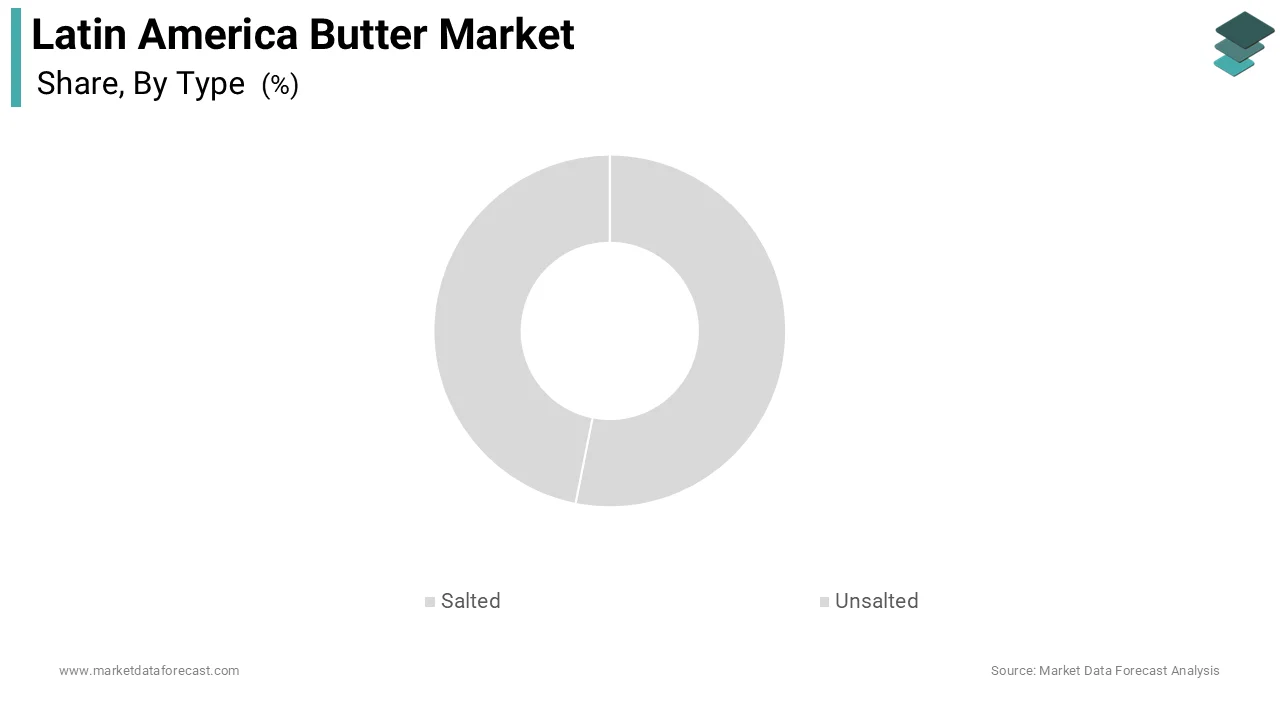
The unsalted butter segment is expected to register the fastest CAGR of 7.8% from 2026 to 2034, owing to the rising health consciousness and the expanding premium baking sector, where chefs and home bakers require control over sodium levels. The proliferation of international cuisine and gourmet cooking trends has increased demand for unsalted butter, which serves as a neutral base for both sweet and savory applications. High-end restaurants and patisseries in São Paulo and Buenos Aires exclusively use unsalted butter to maintain precise flavor balancing in delicate pastries and sauces. The clean label movement encourages manufacturers to offer pure dairy fat without additives, appealing to health-aware demographics. Social media influence and cooking tutorials have educated consumers on the versatility of unsalted butter, driving trial and repeat purchases. Additionally, the rise of lactose-free and organic unsalted variants caters to niche dietary needs, further accelerating segment growth.
By End Use Insights
The industrial processing segment accounted in holding 42.3% of the Latin America Butter Market share in 2025, owing to the robust expansion of the bakery confectionery and processed food industries across the region. Major food manufacturers, such as Bimbo in Mexico and Arcor in Argentina, utilize large volumes of butter for producing cookies, cakes, and filled snacks. The consistency and functional properties of industrial-grade butter ensure uniform product quality and extended shelf life for mass-produced items. Industrial buyers benefit from bulk purchasing agreements and stable supply contracts with dairy cooperatives, ensuring cost efficiency. The growing demand for ready-to-eat and convenience foods has further amplified industrial butter usage in frozen dough and prepared meal segments. Regulatory standards for industrial food production mandate high-quality fats, encouraging processors to source certified butter. The segment benefits from economies of scale and streamlined logistics, reducing per-unit costs. Continuous innovation in butter formulations tailored for specific industrial applications, such as lamination and creaming, sustains long-term demand.
The foodservice sector is projected to grow at the fastest CAGR of 6.5% throughout the forecast period, with the thriving tourism industry and the proliferation of dining establishments ranging from quick service restaurants to fine dining venues. Chefs increasingly incorporate butter into menus to enhance flavor richness and meet consumer expectations for premium dining experiences. The rise of international cuisine, particularly French, Italian, and American styles, has increased butter usage in sauces, garnishes, and baked goods served in restaurants. Hotel chains are upgrading their breakfast buffets and room service offerings featuring artisanal butter varieties to attract discerning travelers. The growth of cloud kitchens and food delivery platforms has also boosted demand for butter-rich comfort foods. Suppliers are developing specialized packaging solutions for foodservice clients, improving convenience and reducing waste.
REGIONAL ANALYSIS
Brazil Butter Market Analysis
Brazil was the largest contributor in the Latin America Butter Market by accounting for 35.3% of the share in 2025 due to its large population and robust dairy production capabilities. The strong consumption in both household and industrial segments is driven by cultural preferences for butter in traditional breads and sweets. Local dairy cooperatives, such as Cooperativa Central Gaucha, play a pivotal role in processing and distributing butter, ensuring wide availability. The government supports dairy farmers through credit programs, enhancing production stability. Imported butter faces tariffs protecting local producers, but premium European brands still capture niche segments. The rising middle class drives demand for higher-quality and flavored butter variants. E-commerce platforms facilitate direct-to-consumer sales, expanding reach beyond traditional supermarkets.
Mexico Butter Market Analysis
Mexico's butter market was ranked second by holding 24.3% of the market share in 2025, with its strategic location and strong trade relationships with North American counterparts. Mexican consumers exhibit a growing preference for butter over margarine due to health awareness campaigns highlighting trans-fat risks. Tourism in destinations like Cancun and Mexico City boosts foodservice butter usage in hotels and restaurants. Import duties under the United States, Mexico, and Canada Agreement facilitate access to high-quality US butter, influencing local pricing dynamics. Local producers face competition from imports but maintain loyalty through traditional branding. The rise of health-conscious consumers has spurred demand for organic and grass-fed butter variants. Retail chains, such as Walmart Mexico and Chedraui, expand dedicated dairy sections,s enhancing product visibility. Government initiatives support dairy modernization, improving efficiency and quality.
Argentina Butter Market Analysis
Argentina's butter market growth is propelled by the reputation for high-quality dairy products and strong export orientation. Domestic consumption is deeply embedded in culinary traditions, with butter being essential for pastries, breads, and table use. The economic landscape influences purchasing power, yet butter remains a preferred fat source among middle and upper-income households. Local brands like La Serenisima dominate retail shelves, offering diverse product ranges. The depreciation of the peso makes imports expensive, protecting local manufacturers from foreign competition. Production efficiency in provinces like Santa Fe and Cordoba ensures a consistent supply. Consumer preference for grass-fed butter aligns with global sustainability trends, enhancing brand value. Regulatory standards enforced by the National Service of Agrifood Health and Quality ensure product safety.
Chile Butter Market Analysis
Chile butter market is expected to grow due to high per capita consumption and advanced retail infrastructure. Consumers in Chile exhibit sophisticated preferences favoring premium and organic butter variants due to high health awareness. The strong presence of international supermarket chains like Jumbo and Lider facilitates wide distribution and product diversity. The tourism industry in regions like Patagonia and Santiago boosts foodservice demand for high-quality dairy products. Local producers collaborate with European partners to introduce artisanal butter lines catering to niche markets. Free trade agreements enable competitive pricing for imported premium brands, increasing consumer choice. The government promotes dairy sustainability initiatives, supporting environmentally friendly production methods. Urban centers drive innovation with demand for flavored and fortified butter options. Retail promotions and loyalty programs enhance brand engagement and repeat purchases.
COMPETITION OVERVIEW
The competition in the Latin America Butter Market is characterized by a mix of multinational corporations and strong local players vying for consumer attention through quality innovation and price competitiveness. Multinational entities leverage global resources and brand recognition to introduce premium and specialized butter variants while local producers capitalize on traditional trust and regional distribution strengths. Price sensitivity remains as an influencing factor in consumer choices, particularly in economically strained segments where margarine serves as a viable substitute. Competitive dynamics are further shaped by regulatory compliance requirements, which raise entry barriers for smaller artisans but ensure product safety and quality standards. Marketing efforts focus on educating consumers about the benefits of natural dairy fats versus processed alternatives. Supply chain reliability and cold chain infrastructure capabilities distinguish leading brands from lesser competitors. Innovation in packaging and functional formulations drives differentiation in a crowded marketplace. Strategic alliances with retail chains and foodservice providers secure shelf space and consistent demand.
KEY MARKET PLAYERS
A few major players in the Latin America Butter Market include
- Amul
- Arla Foods UK Plc
- Kraft Foods Inc
- Friesland Campina
- Dean Foods Company
Top Strategies Used by Key Market Participants
Key players in the Latin America Butter Market employ several strategic approaches to maintain competitiveness and drive growth. Product innovation remains central as companies introduce organic grass-fed and functional butter variants to meet evolving consumer health preferences. Expansion of distribution networks ensures broader market reach, particularly in underserved rural areas and emerging urban centers. Strategic partnerships with local dairy cooperatives secure stable raw material supplies while reducing dependency on volatile imports. Marketing campaigns emphasize natural ingredients and nutritional benefits to differentiate butter from margarine and plant-based substitutes. Investment in sustainable packaging and eco-friendly production processes appeals to environmentally conscious consumers. Digital transformation through e-commerce platforms enables direct consumer engagement and data-driven insights. Companies also focus on premiumization by launching artisanal and gourmet butter lines targeting affluent demographics. Collaborative efforts with the bakery and foodservice industries create steady B2B demand streams.
Leading Players in the Latin America Butter Market
- Lactalis operates as a dominant force in the Latin American dairy sector, leveraging its extensive global network to distribute high-quality butter products across multiple countries. The company focuses on premium branding and consistent supply chain management to meet rising consumer demand for natural dairy fats. Recent initiatives include expanding production facilities in Brazil and strengthening partnerships with local retailers to enhance product visibility. Lactalis invests heavily in marketing campaigns that highlight the nutritional benefits and culinary versatility of its butter ranges. Strategic collaborations with bakery chains ensure steady industrial demand while retail innovations drive household penetration.
- Gloria Foods maintains a strong presence in the Latin America Butter Market through its robust distribution network and diverse product portfolio tailored to regional preferences. The company emphasizes affordability and accessibility, ensuring its butter products reach both urban centers and rural communities. Recent actions involve upgrading manufacturing technologies to improve efficiency and product quality while reducing environmental impact. Gloria Foods actively engages in promotional activities and loyalty programs to build brand loyalty among middle-income households. The company also expands its industrial sales channel by supplying bulk butter to bakeries and food processors. Innovation in packaging formats enhances convenience for consumers and reduces waste.
- Nestlé contributes significantly to the Latin America Butter Market by leveraging its global expertise and local market insights to deliver innovative dairy solutions. The company focuses on health-oriented product development, introducing fortified and functional butter variants that appeal to modern consumer needs. Recent strategies include digital marketing campaigns and e-commerce integrations to reach younger demographics and tech-savvy shoppers. Nestle collaborates with nutritionists and healthcare professionals to endorse the benefits of moderate butter consumption. The company invests in sustainable sourcing practices, ensuring ethical procurement of milk from local farmers. Product launches featuring reduced sodium and organic certifications strengthen its premium positioning.
MARKET SEGMENTATION
This research report on the Latin America butter market has been segmented and sub-segmented based on type, end use, and region.
By Type
- Salted
- Unsalted
By End Use
- Industrial Processing
- Retail Channel
- Foodservice
By Region
- Brazil
- Mexico
- Argentina
- Chile
- Rest of Latin America