- Product Description Description
- Table of Contents TOC
- List of Table & Figure LOT
- Get Free Sample PDF Sample PDF
Market Size, 2025
$0.53 BnMarket Estimate, 2026
$0.56 BnMarket Forecast, 2034
$0.84 BnCAGR, 2026–2034
5.14%Latin America Casein Protein Market Size, Growth, Trends & Forecast (2026–2034)
The Latin America casein protein market size was valued at USD 0.53 billion in 2025, reached USD 0.56 billion in 2026, and is projected to scale up to USD 0.84 billion by 2034, registering a compound annual growth rate (CAGR) of 5.14% during the forecast period from 2026 to 2034. Driven by the rising popularity of sports and fitness nutrition products, the expansion of functional foods and fortified dairy items, and growing applications in clinical nutrition and elderly care, the market continues to expand steadily across the region.
Key Executive Metrics (At-a-Glance)
- 2025 Base Valuation: USD 0.53 Billion
- 2026 Current Valuation: USD 0.56 Billion
- 2034 Forecast Valuation: USD 0.84 Billion
- Compound Annual Growth Rate (CAGR): 5.14% (2026–2034)
- Leading Regional Market: Brazil (Holding 34.5% share in 2025)
- Fastest-Growing Country Market: Brazil / Regional Developing Markets
Core Market Drivers
- Sports Nutrition Demand: Growing fitness consciousness and demand for slow-digesting overnight recovery and meal replacement formulas.
- Functional Food Expansion: Government and private sector initiatives addressing malnutrition through enriched dairy products and school feeding programs.
Primary Market Restraints & Challenges
- Alternative Proteins & Costs: Stiff competition from plant-based and fast-absorbing whey proteins, alongside high production costs and fluctuating raw milk supply.
Latin America Casein Protein Market Segmentation Highlights
| Segment Category | Largest Segment | Fastest-Growing Segment |
|---|---|---|
| By Application | Food and Beverages | Pharmaceuticals |
| By Product | Edible Casein | Industrial Casein |
| By Region | Brazil | Brazil |
Major Industry Players Profiled
Key dairy processors, food multinationals, and market participants shaping the Latin American casein protein sector include Nestlé S.A., Danone S.A., Arla Foods, Groupe Lactalis, FrieslandCampina, Fonterra, Westland Milk Products, and Saputo.
Latin America Casein Protein Market Size
The Latin America Casein Protein Market size was calculated to be USD 0.53 billion in 2025 and is anticipated to be worth USD 0.84 billion by 2034, from USD 0.56 billion in 2026, growing at a CAGR of 5.14% during the forecast period.
The Latin America Casein Protein Market refers to the production, distribution, and consumption of casein, a slow-digesting milk protein widely used in dietary supplements, functional foods, infant formulas, and animal feed across the region. Extracted primarily from cow’s milk, casein is valued for its high nutritional content, amino acid profile, and ability to support muscle repair and satiety. It plays a crucial role in both human nutrition and industrial applications such as food fortification and pharmaceutical formulations.
According to the Food and Agriculture Organization (FAO), dairy production in Latin America has seen consistent growth over the past decade, providing a strong foundation for casein extraction and utilization.
In addition, rising health consciousness and increasing adoption of protein-rich diets have driven demand for casein-based products, particularly among fitness enthusiasts, athletes, and individuals seeking weight management solutions. The market is further supported by government initiatives promoting dairy sector modernization and export diversification.
With growing investments in dairy processing infrastructure and expanding applications in sports nutrition and clinical nutrition, the Latin America Casein Protein Market is undergoing a significant transformation, positioning itself as a dynamic segment within the broader protein industry.
MARKET DRIVERS
Rising Demand for Sports and Fitness Nutrition Products
One of the primary drivers of the Latin America Casein Protein Market is the growing popularity of sports and fitness nutrition products, particularly among young adults and health-conscious consumers.
Casein, known for its slow digestion and sustained amino acid release, is highly favored in overnight recovery formulas, meal replacements, and protein bars. Leading supplement brands such as Integralmédica in Brazil and NutriSport in Mexico have expanded their casein-based product lines to cater to this evolving consumer base.
Moreover, social media influencers and digital wellness platforms have played a pivotal role in educating consumers about the benefits of casein protein, contributing to its mainstream adoption beyond traditional gym communities. This shift in lifestyle preferences and dietary habits is expected to continue boosting regional market growth.
Expansion of Functional Foods and Fortified Dairy Products
Another key driver of the Latin America Casein Protein Market is the expansion of functional foods and fortified dairy products tailored to address malnutrition and protein deficiency issues across the region.
According to the Pan American Health Organization (PAHO), micronutrient deficiencies remain a public health concern, particularly in lower-income populations, prompting government and private-sector initiatives to enhance nutrient intake through enriched food products.
Casein protein is increasingly being incorporated into ready-to-drink shakes, fortified yogurts, and children's nutritional powders due to its excellent emulsifying properties and compatibility with various food matrices. In Brazil, for example, national school feeding programs have integrated casein-enriched milk products to improve child nutrition, as reported by the Ministry of Education.
Additionally, major dairy processors such as Nestlé and Danone have introduced premium casein-fortified yogurt and cheese lines targeting urban consumers seeking enhanced nutritional value without compromising taste or texture.
MARKET RESTRAINTS
Competition from Plant-Based and Whey Protein Alternatives
A major restraint affecting the Latin America Casein Protein Market is the increasing competition from plant-based and whey protein alternatives that offer perceived advantages in terms of digestibility, sustainability, and dietary inclusivity.
Soy, pea, and rice proteins have gained traction among consumers who seek non-animal-derived sources of nutrition, particularly in urban centers like São Paulo, Bogotá, and Mexico City. Additionally, whey protein—also derived from milk but faster-digesting than casein—has captured a significant share of the sports nutrition market due to its immediate post-workout absorption benefits.
Brands offering these alternatives often emphasize clean-label ingredients, ethical sourcing, and carbon footprint reduction, which resonate strongly with younger, environmentally conscious consumers. This shift in consumer preference poses a challenge to traditional casein manufacturers, compelling them to innovate in formulation, marketing, and sustainability practices to retain market relevance.
High Cost of Production and Limited Domestic Processing Infrastructure
Another significant challenge facing the Latin America Casein Protein Market is the relatively high cost of production and limited domestic processing infrastructure, particularly in smaller dairy-producing nations. Unlike large-scale dairy exporters such as the U.S. and New Zealand, many Latin American countries lack advanced casein extraction facilities, leading to higher input costs and logistical inefficiencies.
According to the Inter-American Institute for Cooperation on Agriculture (IICA), only a fraction of total milk output in Central America and the Caribbean is processed into value-added protein derivatives like casein, with most remaining in raw or minimally processed forms. This limits the availability of affordable casein-based products in local markets.
Furthermore, import duties and regulatory hurdles associated with importing specialized equipment and enzymes needed for casein isolation add to production expenses. Small and medium-sized enterprises (SMEs) often struggle to compete with multinational suppliers due to these barriers, resulting in a fragmented and underdeveloped regional supply chain.
Until there is greater investment in dairy processing technologies and policy support for protein valorization, the market will continue to face constraints in scaling up production and reducing end-user prices.
MARKET OPPORTUNITIES
Growth of Clinical Nutrition and Elderly Care Products
A promising opportunity for the Latin America Casein Protein Market lies in the growing demand for clinical nutrition and elderly care products, particularly as the region experiences demographic shifts toward an aging population.
According to the Economic Commission for Latin America and the Caribbean (ECLAC), the proportion of people aged 60 and above in Latin America is projected to double by 2050, increasing the need for age-specific dietary interventions.
Casein’s sustained release of amino acids makes it ideal for medical nutrition products aimed at preventing sarcopenia, managing chronic illnesses, and supporting post-hospitalization recovery. Hospitals, rehabilitation centers, and home healthcare providers are increasingly incorporating casein-based enteral nutrition formulas into patient care protocols.
In response, pharmaceutical and nutraceutical companies are developing targeted formulations designed for older adults, including fortified beverages, protein-enriched soups, and oral nutritional supplements. Public health agencies in countries like Chile and Argentina are also exploring partnerships with private firms to integrate casein-based nutrition into geriatric care programs.
This emerging focus on age-related health conditions presents a significant avenue for market expansion, particularly as governments prioritize long-term eldercare strategies and invest in healthcare infrastructure development.
Increasing Adoption of Casein in Infant and Pediatric Nutrition
An additional opportunity driving the Latin America Casein Protein Market is the increasing incorporation of casein in infant and pediatric nutrition products, particularly in formula-based feeding solutions.
Casein is a critical component in many infant formulas due to its natural presence in mammalian milk and its role in providing essential amino acids and calcium necessary for early childhood development. Regulatory bodies such as ANVISA in Brazil and COFEPRIS in Mexico have reinforced quality standards for infant nutrition, encouraging manufacturers to adopt high-purity casein sourced from certified dairy farms.
Domestic and international dairy firms are investing in localized production units to meet growing demand, particularly in rapidly urbanizing areas where access to refrigerated and fortified milk alternatives is improving. Additionally, educational campaigns conducted by pediatric associations are helping dispel misconceptions around formula feeding, further supporting market growth.
MARKET CHALLENGES
Fluctuating Raw Milk Supply and Seasonal Variability
One of the most pressing challenges in the Latin American casein Protein Market is the fluctuating availability of raw milk due to seasonal variability, climate conditions, and inconsistent livestock management practices. Unlike temperate regions with year-round dairy production cycles, many Latin American countries experience pronounced dry and wet seasons that impact pasture availability, feed quality, and milk yield.
Also, milk production in Brazil typically declines by up to 15% during prolonged dry periods, directly affecting casein extraction volumes and pricing stability. Similar patterns are observed in Argentina and Peru, where dairy farmers rely heavily on seasonal grazing systems.
These fluctuations create supply chain disruptions, making it difficult for casein processors to maintain consistent production schedules and meet commercial demand. Smaller manufacturers, in particular, struggle with inventory management and procurement planning, limiting their ability to scale operations.
Regulatory Complexity and Labeling Standards Across Countries
Regulatory inconsistency across Latin American countries poses a significant challenge to the harmonized development of the casein protein market. Each nation has distinct food safety regulations, labeling requirements, and permitted usage levels for casein in different food categories, complicating compliance for both domestic and international manufacturers.
For instance, Brazil enforces strict allergen labeling laws under ANVISA, while Mexico mandates specific nutritional disclosures for protein-containing products.
Small and mid-sized enterprises often lack the resources to navigate these complexities, limiting their market reach compared to larger multinational corporations with dedicated regulatory affairs departments.
Additionally, evolving consumer protection laws regarding health claims and ingredient transparency require continuous updates to packaging and marketing materials, adding to operational costs.
REPORT COVERAGE
| REPORT METRIC | DETAILS |
| Market Size Available | 2025 to 2034 |
| Base Year | 2025 |
| Forecast Period | 2026 to 2034 |
| CAGR | 5.14% |
| Segments Covered | By Application, Product, and Region |
| Various Analyses Covered | Global, Regional & Country Level Analysis; Segment-Level Analysis; DROC, PESTLE Analysis; Porter’s Five Forces Analysis; Competitive Landscape; Analyst Overview of Investment Opportunities |
| Regions Covered | Brazil, Mexico, Argentina, Chile, and the Rest Of Latin America |
| Market Leaders Profiled | Nestlé S.A, Danone S.A, Arla Foods, Groupe Lactalis, Friesland Campina, Fonterra, Westland Milk Products, Groupe Lactalis, and Saputo |
SEGMENTAL ANALYSIS
By Application Insights
The Food and Beverages segment held the largest share of the Latin America Casein Protein Market, accounting for 54.2% of total market revenue in 2025. This dominance is primarily driven by the widespread use of casein in dairy-based products such as cheese, yogurt, protein shakes, and fortified beverages. Casein’s emulsifying, thickening, and nutritional properties make it a preferred additive in functional foods targeting health-conscious consumers, including athletes, weight-watchers, and individuals seeking high-protein diets. Moreover, the rise of ready-to-consume nutrition products, especially among urban populations, has led to increased incorporation of casein into meal replacement powders, protein bars, and infant formulas. With growing investments in product innovation and increasing awareness of protein-rich diets, the Food and Beverages application segment is expected to maintain its leadership position in the regional casein protein market.
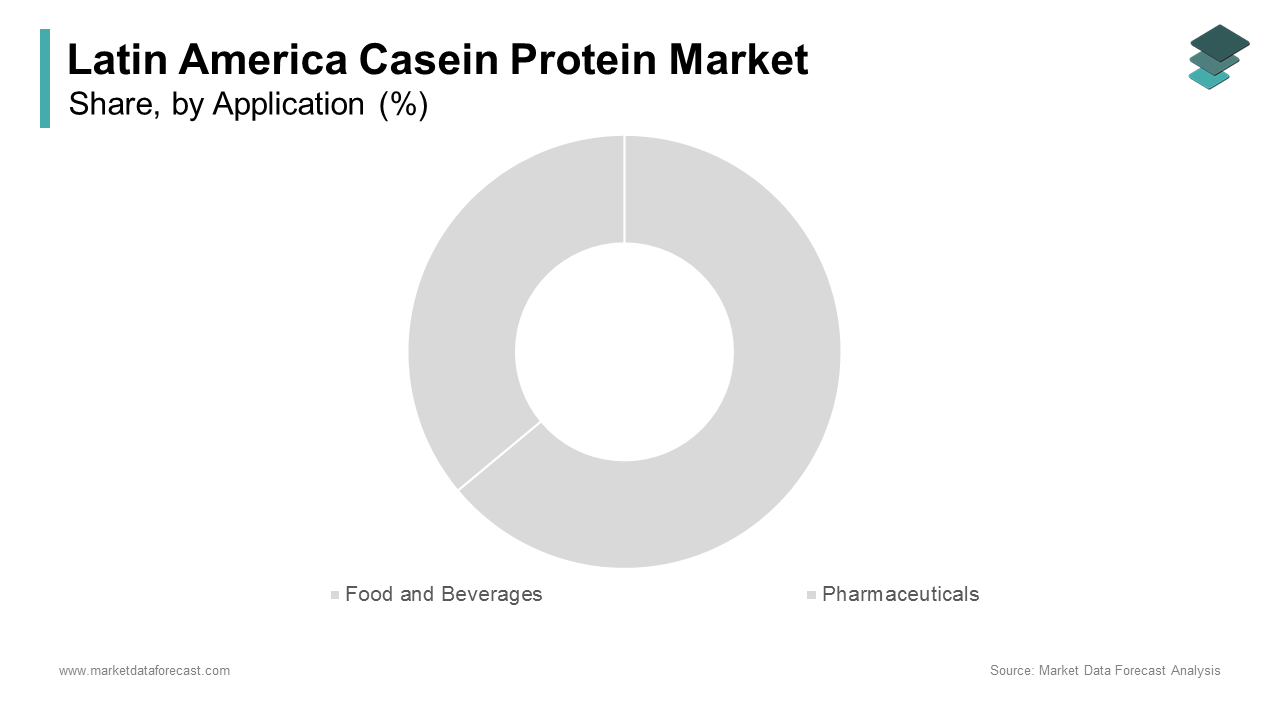
The Pharmaceuticals segment is projected to grow at the highest CAGR of 9.7%. This rapid growth is attributed to the expanding use of casein protein in medical nutrition products, wound healing formulations, and drug delivery systems. Casein’s biocompatibility and ability to form stable matrices make it an ideal excipient in tablet coatings, controlled-release formulations, and oral nutritional supplements used in hospitals and rehabilitation centers. According to the Pan American Health Organization (PAHO), chronic disease prevalence—including diabetes, cancer, and sarcopenia—has risen significantly across Latin America, driving demand for specialized nutrition and pharmaceutical applications.
In addition, public health initiatives in countries like Chile and Colombia have prioritized clinical nutrition programs, encouraging the integration of casein-based enteral formulas in healthcare settings. As governments and private healthcare providers focus on improving patient recovery outcomes through targeted nutrition, the pharmaceutical application of casein protein is expected to experience sustained growth in Latin America.
By Product Insights
The Edible Casein segment commanded the Latin America Casein Protein Market, capturing 68.5% of total market volume in 2025. This is largely due to its extensive utilization in food processing, dietary supplements, and infant nutrition products across the region.
Edible casein serves as a key ingredient in cheese manufacturing, protein powders, and fortified dairy alternatives, benefiting from rising consumer interest in high-protein diets and muscle maintenance. In Brazil alone, as per the National Confederation of Dairy Farmers, edible casein accounted for over 70% of all casein consumed in food applications, highlighting its central role in domestic dairy production.
Also, regulatory support for fortified foods has encouraged the inclusion of edible casein in school feeding programs and community nutrition initiatives. Several Latin American governments are integrating casein-enriched products into maternal and child health programs to combat malnutrition.
The Industrial Casein segment is experiencing robust growth, expanding at a CAGR of 8.4%. This growth is primarily driven by increasing demand for industrial-grade casein in adhesives, paper coatings, textile treatments, and biodegradable packaging materials.
Latin American manufacturers are increasingly adopting sustainable raw materials to meet global environmental standards, and casein-based adhesives offer a biodegradable alternative to synthetic glues used in woodworking and paper industries. According to the Brazilian Association of Paper and Pulp Industries, casein derivatives are now being integrated into premium packaging solutions aimed at reducing plastic dependency.
Moreover, Argentina and Chile have seen a surge in eco-friendly adhesive production for export markets, leveraging their established dairy processing capabilities. With rising emphasis on green chemistry and circular economy principles, industrial casein is poised for continued expansion, supported by policy incentives and corporate sustainability commitments.
REGIONAL ANALYSIS
Brazil Casein Protein Market Insights
Brazil played a dominant role in the Latin American casein Protein Market, holding an estimated market share of 34.5% in 2025. As one of the world’s top ten milk producers, Brazil benefits from a well-established dairy industry that supports large-scale casein extraction and downstream applications.
The country's strong domestic demand is fueled by the widespread use of casein in cheese production, sports nutrition products, and fortified food items. Additionally, government-backed initiatives promoting dairy valorization and export diversification have strengthened Brazil’s position as a regional leader. With ongoing investments in dairy infrastructure and rising consumer awareness of protein-rich diets, Brazil continues to drive growth and innovation in the Latin American casein protein landscape.
Mexico Casein Protein Market Insights
Mexico contributes a notable share to the Latin American casein Protein Market. The country’s growing middle class and increasing adoption of fitness-oriented lifestyles have boosted demand for casein-based protein supplements and fortified dairy products.
Urban centers such as Mexico City, Monterrey, and Guadalajara have witnessed a surge in health-conscious consumers seeking high-protein diets, leading to higher retail penetration of casein-enriched shakes, bars, and powders. Moreover, Mexico’s proximity to North America allows for seamless cross-border trade, enabling local manufacturers to access U.S. and Canadian markets for casein-derived products. SADER also highlighted that national dairy processors have been investing in advanced membrane filtration technologies to improve casein purity and yield.
Argentina Casein Protein Market Insights
Argentina is another key player in the Latin American casein Protein Market, supported by its long-standing tradition in dairy farming and agro-industrial processing. The country’s dairy sector is highly developed, particularly in the Pampas region, where large-scale farms supply milk to modern processing plants equipped for protein isolation. Additionally, Argentina has leveraged its expertise in dairy exports to strengthen its presence in international markets. With strong agricultural foundations and increasing investment in food science research, Argentina is well-positioned to sustain its growth trajectory within the regional casein protein market.
Chile Casein Protein Market Insights
Chile represented a key share of the Latin American casein Protein Market, with a growing emphasis on clinical nutrition, pharmaceutical applications, and eco-friendly industrial uses. One of the key drivers behind Chile’s market growth is the increasing integration of casein in medical nutrition products, particularly for elderly care and post-operative recovery. Furthermore, Chilean companies are exploring innovative applications in sustainable packaging and biodegradable adhesives, aligning with national environmental goals. With a strong regulatory framework and increasing collaboration between academia and industry, Chile is emerging as a strategic player in the Latin American casein protein sector.
Rest of Latin America Casein Protein Market Insights
The Rest of Latin America, encompassing countries such as Colombia, Peru, Ecuador, and Central American nations, these markets are demonstrating promising growth potential due to evolving dietary habits, expanding dairy production, and increasing investments in food fortification.
Colombia, for example, has seen a rise in demand for casein-enriched products within school feeding programs and infant nutrition initiatives. Peru and Ecuador are also strengthening their presence through organic dairy certifications and export partnerships with North America and Europe. Additionally, Central American countries are beginning to adopt casein in nutraceutical and sports nutrition segments, driven by rising health awareness and digital wellness trends.
LEADING PLAYERS IN THE LATIN AMERICA CASEIN PROTEIN MARKET
One of the leading players in the Latin America Casein Protein Market is Nestlé S.A., a global leader in food and nutrition with a strong presence across the region. Nestlé incorporates casein into a wide range of dairy and nutritional products, including infant formulas, fortified beverages, and clinical nutrition solutions. The company’s emphasis on product innovation and sustainable sourcing has reinforced its leadership in the casein protein space.
Another major participant is Danone S.A., which plays a significant role in utilizing casein for functional dairy products such as yogurts, fermented milk drinks, and high-protein snacks tailored to health-conscious consumers. Danone's commitment to gut health and digestive wellness has positioned casein-based formulations at the core of its regional product development strategy.
Lactalis Group, a key player in the dairy industry, also contributes significantly to the Latin American casein market through its cheese manufacturing operations and bulk ingredient supply chain. By leveraging its extensive dairy processing network, Lactalis ensures a steady supply of high-quality casein for both domestic consumption and export markets, supporting broader regional growth in protein-enriched food applications.
TOP STRATEGIES USED BY KEY MARKET PARTICIPANTS
A key strategy employed by leading companies in the Latin America Casein Protein Market is expanding product portfolios to cater to niche consumer segments, particularly in sports nutrition, infant feeding, and medical foods. By diversifying formulations and targeting specific dietary needs, firms are enhancing brand loyalty and capturing new customer bases.
Another major approach is investing in sustainable dairy farming and eco-friendly processing technologies. As environmental concerns grow, manufacturers are partnering with local dairy cooperatives to ensure responsible sourcing and reduce the carbon footprint associated with casein production.
Lastly, companies are strengthening their regional foothold through strategic collaborations with research institutions and government bodies to improve product quality, enhance regulatory compliance, and accelerate market entry for innovative casein-based applications in healthcare and functional foods.
KEY MARKET PLAYERS AND COMPETITIVE OVERVIEW
Major Players of the Latin America Casein Protein Market include Nestlé S.A, Danone S.A, Arla Foods, Groupe Lactalis, Friesland Campina, Fonterra, Westland Milk Products, Groupe Lactalis, and Saputo.
The Latin America Casein Protein Market is characterized by a mix of multinational corporations, regional dairy giants, and emerging specialty ingredient suppliers competing to meet rising demand across diverse application areas. While global players like Nestlé, Danone, and Lactalis dominate due to their established distribution networks and brand recognition, local producers are gaining traction by offering cost-effective alternatives and emphasizing regional sourcing.
Competition is particularly intense in the food and beverage sector, where brands are continuously innovating to introduce high-protein, functional, and clean-label products that align with evolving consumer preferences. In parallel, the pharmaceutical and industrial applications of casein are opening new avenues for differentiation, allowing smaller firms to carve out specialized niches.
Market participants are also navigating challenges such as fluctuating raw material availability, varying regulatory landscapes, and growing competition from plant-based proteins. To maintain relevance, companies are investing in digital marketing, direct-to-consumer engagement, and sustainability initiatives that resonate with younger, environmentally conscious consumers.
This dynamic environment fosters continuous adaptation, with firms striving to balance affordability, functionality, and ethical sourcing while responding to shifting dietary trends and regulatory expectations across the region.
RECENT HAPPENINGS IN THE MARKET
- In February 2025, Nestlé launched a new line of casein-based infant nutrition products in Brazil and Colombia, designed to support early childhood development and backed by scientific research partnerships with local universities.
- In June 2025, Danone expanded its dairy processing facility in Mexico to increase casein extraction capacity, aiming to meet rising demand for protein-enriched yogurt and functional beverages in urban markets.
- In October 2025, Lactalis Group introduced a private-label casein protein powder under a strategic partnership with a major Chilean retailer, targeting fitness enthusiasts and expanding its reach beyond traditional dairy consumers.
- In January 2026, a leading Brazilian biotech firm secured FDA approval for a novel enzymatic casein hydrolysis process, enhancing digestibility and amino acid absorption for use in sports nutrition supplements.
- In March 2026, a consortium of Latin American dairy cooperatives formed a joint venture to develop standardized casein quality certifications, improving export competitiveness and ensuring compliance with international food safety standards.
DETAILED SEGMENTATION OF THE LATIN AMERICA CASEIN PROTEIN MARKET IS INCLUDED IN THIS REPORT
This research report on the Latin America Casein Protein Market has been segmented and sub-segmented based on application, product & region.
By Application
- Food and Beverages
- Pharmaceuticals
By Product
- Edible Casein
- Industrial Casein
By Region
- Brazil
- Mexico
- Argentina
- Chile
- Rest of Latin America