- Product Description Description
- Table of Contents TOC
- List of Table & Figure LOT
- Get Free Sample PDF Sample PDF
Market Size, 2025
$0.94 BnMarket Estimate, 2026
$0.98 BnMarket Forecast, 2034
$1.47 BnCAGR, 2026–2034
5.13%Latin America Clinical Nutrition Market Size, Trends, and Growth Forecast (2026–2034)
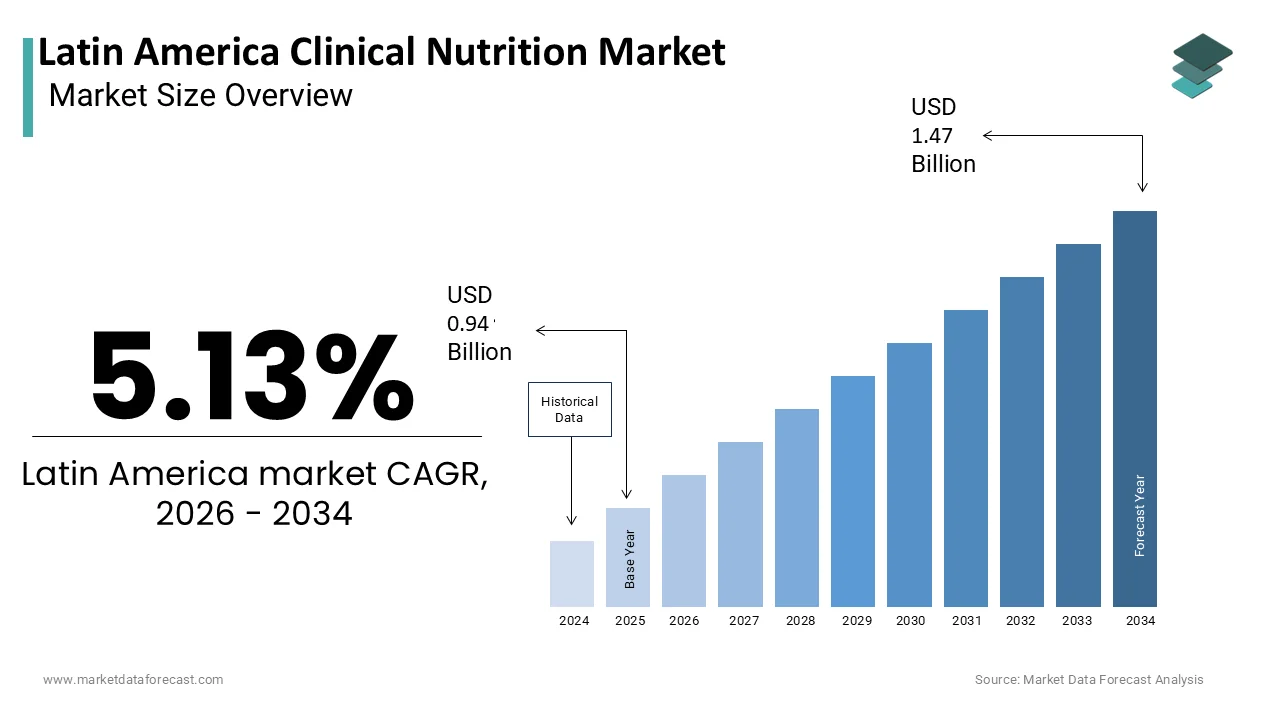
The Latin America clinical nutrition market size was valued at USD 0.94 billion in 2025, is estimated at USD 0.98 billion in 2026, and is projected to reach USD 1.47 billion by 2034. Regional market expansion is progressing at a compound annual growth rate (CAGR) of 5.13% throughout the forecast period from 2026 to 2034. Key market drivers include the escalating prevalence of noncommunicable diseases such as diabetes and renal disorders, rapid demographic aging leading to higher risks of sarcopenia, and the institutional integration of clinical nutrition into standard hospital and outpatient treatment protocols.
Key Executive Metrics (At-a-Glance)
- 2025 Base Market Valuation: USD 0.94 Billion
- 2026 Current Market Size: USD 0.98 Billion
- 2034 Forecast Valuation: USD 1.47 Billion
- Compound Annual Growth Rate (CAGR): 5.13% (2026–2034)
- Largest Market Segment: Oral Nutrition, Diabetes Therapeutic Area, and Carbohydrates Ingredient Category
- Fastest-Growing Market Segment: Enteral Nutrition (7.8% CAGR), Cancer Therapeutic Area (9.2% CAGR), and Amino Acids Ingredient Category (8.5% CAGR)
- Key Geographic Footprint: Brazil (38.7% share), Mexico, Argentina, and Chile
Core Growth Drivers Shaping the Latin American Market
The regional adoption and commercial expansion of clinical nutrition therapies are propelled by several clinical and structural catalysts:
- High Burden of Metabolic Diseases: Millions of adults living with diabetes and renal conditions requiring specialized disease-specific nutritional formulas.
- Aging Demographics and Sarcopenia Awareness: A fast-growing elderly population base driving demand for preventive, high-protein supplements and geriatric care products.
- Market Restraints: Severe economic volatility, currency depreciation, regulatory fragmentation, and cold chain distribution deficits across regional supply networks.
Latin America Clinical Nutrition Market Segmentation Breakdown
| Segment Category | Largest Segment | Fastest-Growing Segment |
|---|---|---|
| By Route of Administration | Oral Nutrition | Enteral Nutrition (7.8% CAGR) |
| By Therapeutic Areas | Diabetes | Cancer (9.2% CAGR) |
| By Ingredient Type | Carbohydrates | Amino Acids (8.5% CAGR) |
| By Country | Brazil (38.7% share in 2025) | Mexico & Colombia |
Major Market Players Profiled
Prominent corporations driving nutritional science and medical product distribution across the Latin American market include Nestlé Nutrition, Abbott Laboratories Inc., Baxter International Inc., Fresenius Kabi AG, B. Braun Melsungen AG, Mead Johnson & Company, Gentiva Health Services Inc., Ajinomoto Co., Inc., Lonza Ltd., and Hospira Inc.
Latin America Clinical Nutrition Market Size
The Latin America Clinical Nutrition Market is projected to grow from USD 0.94 billion in 2025 to USD 0.98 billion in 2026 and reach approximately USD 1.47 billion by 2034, registering a CAGR of 5.13% from 2026 to 2034.
Clinical nutrition is the study and practice of using food and nutrients to prevent, manage, and treat diseases in patients. It focuses on medical care in hospitals and clinics, translating diet science into specific treatment plans for patients. This domain is fundamentally intertwined with regional epidemiological transitions rather than simple commercial expansion. As per the Pan American Health Organisation, noncommunicable diseases account for 65% of total deaths in the Americas, elevating the medical necessity for clinical nutrition interventions and structured outpatient chronic disease management. According to the World Bank, the regional volume of public and private healthcare expenditure determines institutional purchasing frameworks for specialised enteral formulas and medical therapeutic nutrition items across Latin America.
Furthermore, as per the Economic Commission for Latin America and the Caribbean, the regional poverty rate fell to 27.3% of the population, shifting commercial consumer segments and changing clinical healthcare accessibility parameters. According to the United Nations Population Division, the population group aged 80 and over across Latin America will triple its proportion to reach 5.1% by 2050, expanding the specialised medical nutrition demand for age-related degenerative conditions. Consequently, this market functions as a critical public health infrastructure component addressing metabolic complications in diabetes, renal failure and oncology rather than operating solely as a consumer goods segment.
MARKET DRIVERS
Escalating Prevalence of Diabetes and Renal Disease Driving Specialised Formulations
Rising metabolic disorder incidence is a primary demand factor for disease-specific clinical nutrition across the regional healthcare systems, which drives the growth of the Latin America clinical nutrition market. According to the International Diabetes Federation, the adult diabetes patient load in South and Central America reached 32 million in 2019 and is projected to expand to 49 million by 2045, boosting regional commercial procurement of low-glycemic dietary options. According to the Brazilian Society of Nephrology, clinical epidemiological frameworks monitor the growing volume of patients requiring specialised renal therapy and calorie-dense, protein-restricted enteral liquid alternatives. This epidemiological burden forces hospitals to integrate medical nutrition therapy into standard treatment protocols to reduce complication rates and length of stay. According to the National Institute of Public Health of Mexico, national epidemiological health surveys measure adult metabolic comorbidities to organise programmatic distribution paths for disease-specific therapeutic formulations. Such high morbidity rates transform clinical nutrition from an adjunctive therapy into a mandatory standard of care. Healthcare providers increasingly prescribe renal- and diabetes-specific formulas because pharmacological management alone fails to address the profound metabolic derangements caused by these chronic conditions. The sheer volume of patients requiring long-term dietary modification ensures sustained consumption of specialised products independent of economic fluctuations.
Ageing Demographics and Sarcopenia Awareness Fueling Geriatric Nutrition Demand
Demographic shifts toward an older population structure create substantial structural demand for geriatric clinical nutrition throughout the region, which in turn propels the expansion of the Latin America clinical nutrition market. As per the Inter-American Development Bank, the accelerating regional demand for formal long-term healthcare professionals is projected to surpass 14 million workers by 2050 to manage severe age-related degenerative conditions. According to the Journal of Cachexia, Sarcopenia and Muscle, the prevalence of sarcopenia ranges from 6.1% to 36.6% among community-dwelling elderly populations in Latin America, modifying outpatient consumption of high-protein oral nutrition supplements. Unlike acute care, where nutrition is reactive, the ageing trend fosters preventive usage in outpatient and long-term care facilities. According to the Ministry of Health of Chile, public primary care protocols incorporate universal functional assessments for older adults to manage malnutrition risk parameters and guide specific food supplement interventions. This demographic reality generates consistent baseline demand for anti-sarcopenic formulations enriched with vitamin D, calcium, and leucine. Families and caregivers increasingly recognise that adequate protein intake prevents hospitalisation, thereby sustaining retail and pharmacy channel sales for geriatric-specific medical foods outside traditional hospital environments.
MARKET RESTRAINTS
Economic Volatility and Currency Depreciation Restricting Access to Imported Therapies
Macroeconomic instability severely constrains patient access to essential clinical nutrition products across multiple nations in the region, which restricts the growth of the Latin America clinical nutrition market. According to the International Monetary Fund, regional exchange rate pressures alter macroeconomic stabilisation programs and impact commercial import supply paths for therapeutic medical goods across Latin American developing markets. As per the World Food Programme, extreme food price inflation across vulnerable regional economies forces consumer households to modify overall nutritional expenditure and reallocate basic healthcare resources. Public health budgets denominated in local currencies lose purchasing power rapidly, leading to tender cancellations or reduced formulary listings in government hospitals. As per the Ministry of Health of Colombia, institutional budget allocations coordinate public procurement channels to supply essential specialised nutritional therapies within decentralised municipal clinical networks. Import tariffs and logistical bottlenecks further compound pricing issues, making international brands unaffordable for middle-income families. This economic fragility creates a two-tier system where only private payers or well-funded institutions can maintain consistent therapy while public sector patients face intermittent supply. Manufacturers must navigate unpredictable exchange rates and payment delays, which discourage investment in market development and limit product availability to major metropolitan areas only.
Regulatory Fragmentation and Reimbursement Gaps Limiting Therapy Continuity
Inconsistent regulatory frameworks and inadequate insurance coverage are significant barriers to seamless clinical nutrition delivery in the region, which further hamper the expansion of the Latin America clinical nutrition market. As per the Pan American Health Organisation, regional healthcare regulatory offices establish varying clinical registration frameworks that alter local access timeframes for specialised therapeutic nutrition options. The lack of harmonised standards means a product approved in Brazil may not be available in Peru despite similar clinical needs, forcing physicians to use suboptimal alternatives. According to the Inter-American Social Protection Network, public health insurance structures dictate reimbursement parameters for specialised outpatient enteral formulas, modifying regional patient out-of-pocket costs. Private insurers frequently classify medical food as supplementary rather than essential, leading to claim denials that disrupt treatment adherence. Regulatory uncertainty also deters innovation as companies hesitate to launch novel formulations without clear pathways for approval and payment. This systemic fragmentation prevents the establishment of integrated care models where nutrition is seamlessly embedded in disease management protocols, ultimately reducing clinical outcomes and market stability.
MARKET OPPORTUNITIES
Expansion of Home Enteral Nutrition Programs Reducing Hospital Burden
Healthcare system decentralisation creates substantial growth potential for home-based clinical nutrition services across the region, which is likely to fuel the growth of the Latin America clinical nutrition market. According to the Organisation for Economic Cooperation and Development, regional medical infrastructure utilisation metrics monitor acute care hospital bed availability to structure outpatient clinical pathways and manage home-based patient recovery systems. As per the Brazilian Ministry of Health, public healthcare administration directives organise regional therapeutic feeding programs to streamline the municipal distribution of specialised enteral nutrition formulas. Technological platforms enabling remote monitoring and formula delivery have matured, allowing safe management of complex cases outside hospital walls. In Chile, private insurers now reimburse home nutrition kits including pumps and supplies, recognising improved quality of life and lower readmission rates. This transition transforms clinical nutrition from an episodic hospital expense into a continuous longitudinal service. Companies that develop user-friendly packaging, caregiver training modules and telehealth integration stand to capture value in this rapidly expanding ambulatory segment, which aligns with broader regional healthcare modernisation goals focused on efficiency and patient-centred care.
Local Manufacturing and Ingredient Sourcing Enhancing Supply Resilience
Strategic localisation of production offers a critical opportunity to overcome import dependency and improve affordability in the Latin American clinical nutrition market. As per the United Nations Industrial Development Organisation, regional food processing and agribusiness technology transfers accelerate sustainable industrial manufacturing growth and improve domestic market supply chain resilience. Establishing local plants mitigates exposure to global supply chain disruptions and currency volatility that historically plagued imported medical foods. According to the Ministry of Health of Brazil, domestic manufacturing hubs coordinate clinical nutrition product manufacturing to satisfy localised institutional logistics for processed diet components. Local production also accelerates regulatory approval as authorities prioritise domestically manufactured health products during shortages. Beyond cost savings, local presence enables faster adaptation to regional taste preferences and cultural dietary patterns, improving patient compliance. This industrial maturation allows the market to serve price-sensitive public sector tenders more competitively while maintaining quality standards. Ultimately, building resilient regional supply chains transforms clinical nutrition from a luxury import into an accessible public health commodity aligned with national food security objectives.
MARKET CHALLENGES
Supply Chain Vulnerability and Cold Chain Deficiencies Compromising Product Integrity
Logistical infrastructure gaps are a persistent challenge to reliable distribution across the region and ultimately impede the expansion of the Latin America clinical nutrition market. This limitation is particularly true for temperature-sensitive formulations. According to the Inter-American Development Bank, infrastructure development financing targets regional cold storage networks to mitigate overall logistics spoilage risks for specialised perishable items. As per the World Bank, international supply chain connectivity scores measure the speed and structural efficiency of overland trade networks across developing regions. These disruptions result in stockouts at the point of care, forcing clinicians to substitute appropriate formulas with inadequate alternatives or suspend therapy entirely. In Central America, hurricane seasons regularly destroy inventory and damage warehouses, creating cyclical supply crises that disproportionately affect vulnerable pediatric and geriatric patients. Lack of real-time visibility systems prevents proactive inventory management, meaning facilities often discover shortages only when prescribing. Urban centres face different challenges, including traffic congestion and last-mile delivery inefficiencies that increase costs and reduce freshness. Manufacturers must invest heavily in redundant distribution channels and stabilised packaging technologies to mitigate these risks, adding operational complexity. Until infrastructure improves, geographic disparities in access will persist, undermining equitable healthcare delivery. This systemic vulnerability makes market penetration outside major cities economically unviable for many suppliers, limiting overall population coverage despite existing clinical need.
Workforce Shortages and Nutritional Literacy Gaps Hindering Appropriate Utilisation
Insufficiently trained healthcare professionals and low awareness levels hinder the effective deployment of clinical nutrition interventions across the region, thereby challenging the expansion of the Latin America clinical nutrition market. As per the Pan American Health Organisation, strategic regional health workforce initiatives organise public medical training frameworks to expand overall clinical capacity and improve specialised hospital care delivery systems. According to clinical research data indexed in PubMed Central, disease-related malnutrition affects a significant proportion of hospitalised patients across Latin American medical centres, modifying institutional usage patterns for specialised enteral nutrition formulas. Nursing staff often lack confidence in managing feeding tubes or calculating individualised requirements, leading to underfeeding or aspiration events. Educational curricula in many medical schools allocate minimal hours to clinical nutrition, perpetuating knowledge gaps among new graduates. Without adequate human capital, even available products remain underutilised or misused, diminishing therapeutic impact. Training initiatives are fragmented and rarely integrated into continuing professional development requirements. This workforce bottleneck creates a paradox where supply exists, but demand remains latent due to lack of qualified prescribers and educators. Addressing this requires systemic educational reform and task-shifting strategies to empower community health workers. Until competency improves, market growth will be constrained. This constraint comes from the absorptive capacity of the healthcare system itself, rather than product availability.
REPORT COVERAGE
| REPORT METRIC | DETAILS |
| Market Size Available | 2025 to 2034 |
| Base Year | 2025 |
| Forecast Period | 2026 to 2034 |
| Segments Covered | By Route of Administration, Therapeutic Areas, Application, Ingredient Type, and Region. |
| Various Analyses Covered | Global, Regional, and Country-Level Analysis, Segment-Level Analysis, Drivers, Restraints, Opportunities, Challenges; PESTLE Analysis; Porter’s Five Forces Analysis, Competitive Landscape, Analyst Overview of Investment Opportunities |
| Countries Covered | Mexico, Brazil, Argentina, Chile, Rest of Latin America |
| Market Leaders Profiled | Nestlé NutritionAbbott Laboratories Inc., Gentiva Health Services Inc., Mead Johnson & Company, Kendall, Ajinomoto Co., Inc., Hospira Inc., Hero Nutritionals Inc., Lonza Ltd., Baxter International Inc., B. Braun Melsungen AG. J. Heinz Company, American Home Patient Inc., Fresenius Kabi AG |
SEGMENTAL ANALYSIS
By Route of Administration Insights
The oral nutrition segment maintained dominance in the Latin America clinical nutrition market and accounted for a substantial share in 2025. This dominance of the segment was driven by its critical role in managing chronic-disease-related malnutrition outside acute care environments. According to the Pan American Health Organisation, strategic regional healthy ageing initiatives combine comprehensive outpatient clinical screening with structured diet adjustments to prevent severe health degradation among elderly cohorts. The sheer volume of diabetes and cardiovascular patients requiring long-term dietary support creates a massive baseline demand for ready-to-drink formulas and powders that can be self-administered at home. According to the Economic Commission for Latin America and the Caribbean, joint multilateral investment frameworks urge national governments to expand public primary healthcare expenditures to mitigate the long-term socio-economic impacts of noncommunicable diseases. This segment dominates because it aligns with patient preference for autonomy and avoids the complications associated with tube feeding. The accessibility of these products through pharmacies and retail channels further entrenches their market leadership as they bypass complex hospital procurement systems and reach consumers directly through established distribution networks.
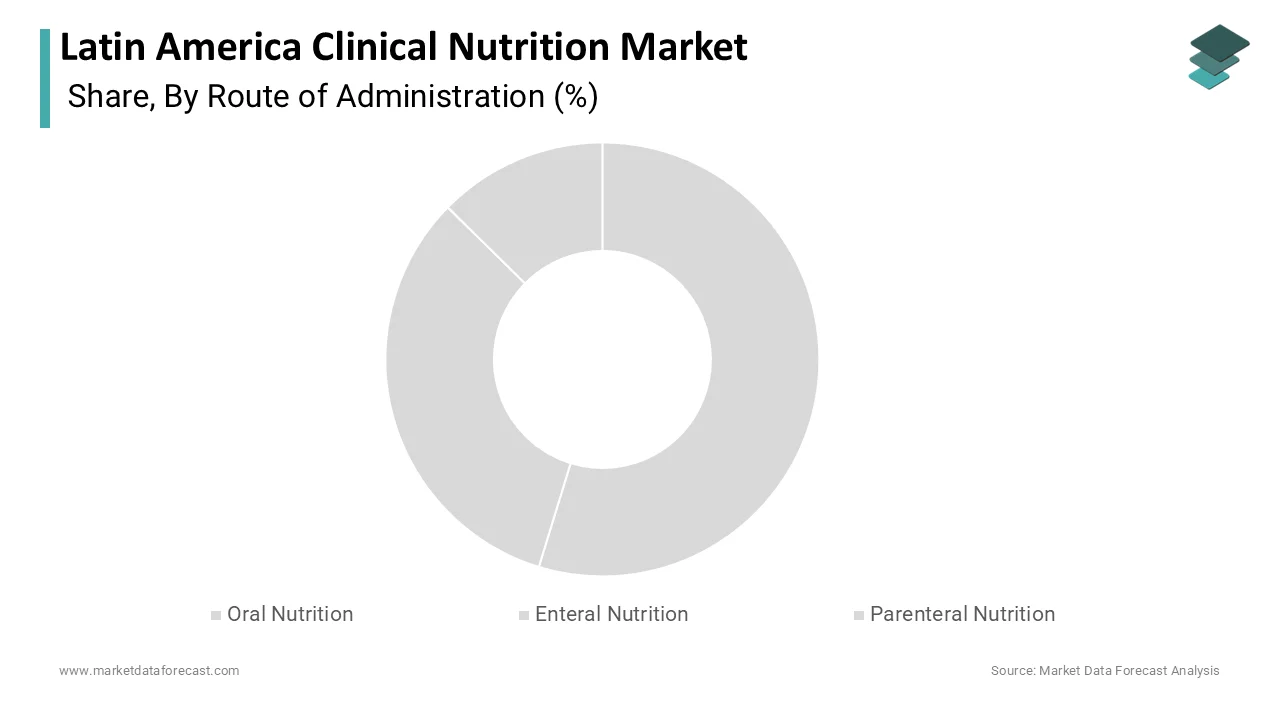
The economic advantage of oral nutrition over enteral and parenteral routes strengthens its dominance across both public and private healthcare payers in Latin America. According to the Inter-American Development Bank, standard cost-benefit thresholds prioritise non-invasive medical nutrition paths inside community-based healthcare frameworks to optimise limited public insurance budgets. Hospitals prioritise oral intake whenever gastrointestinal function permits because it preserves gut mucosal integrity and reduces infection risks associated with central lines or feeding tubes. According to the Revista Panamericana de Salud Pública, targeted multi-disciplinary feeding evaluations shorten general hospital lengths of stay and limit complications related to severe clinical malnutrition. The combination of clinical safety, economic efficiency, and regulatory ease ensures oral nutrition remains the foundational pillar of the regional clinical nutrition market despite technological advances in other delivery methods.
The enteral nutrition segment is predicted to witness the highest CAGR of 7.8% from 2026 to 2034 due to expanding intensive care infrastructure and standardised feeding protocols across Latin America. According to the World Federation of Intensive and Critical Care, national critical care medicine societies establish clinical training standards to lower patient morbidity and improve safety protocols inside intensive care environments. As per studies, clinical critical care guidelines prescribe immediate metabolic stabilisation and nutritional support windows to decrease infection complications in intensive care units. The protocol-driven adoption transforms enteral nutrition from an optional intervention into a mandatory standard of care in critical settings. As tertiary hospitals upgrade equipment and train staff on modern feeding techniques, the addressable patient population expands beyond traditional candidates to include those with moderate illness severity. This systematic integration of enteral nutrition into critical care pathways generates sustained volume growth that outpaces other segments tied to elective or chronic management.
Innovation in enteral delivery systems and formula compositions accelerates segment growth by addressing historical barriers related to intolerance and aspiration risk. As per sources, the expansion of the enteral feeding market in Mexico involves the deployment of specialised post-pyloric tubes to lower respiratory aspiration complications in acute clinical setups. Modern pumps with automated flow control and pressure sensors minimise gastric residual volumes and improve nutrient delivery accuracy, reducing nursing workload and complication rates. According to regional gastroenterology journals, fibre-supplemented and specialised peptide-based medical foods improve gastrointestinal tolerance parameters among tube-fed ICU patients. Enhanced safety profiles enable earlier transition from parenteral to enteral nutrition, shortening ICU stays and lowering costs, which incentivises hospital adoption. These advancements transform enteral nutrition from a high-risk last resort into a reliable first-line therapy for complex patients, thereby expanding its clinical indications and driving above-market growth rates across diverse healthcare settings in the region.
By Therapeutic Areas Insights
The diabetes segment led the Latin America clinical nutrition market and captured a significant share in 2025, as this leading position was attributed to the overwhelming prevalence of the disease and its integration into national health priorities across the region. According to the Ministry of Health of Mexico, clinical practice guidelines manage programmatic type 2 diabetes therapeutic interventions to establish structured healthcare pathways inside regional public clinical networks. As per the Pan American Health Organisation, regional diabetes clinical education frameworks coordinate specialised primary care training modules to lower cardiovascular risks and reinforce comprehensive healthcare support mechanisms. Unlike rare conditions where patient identification is challenging, diabetes screening is ubiquitous, ensuring near-universal detection of candidates for nutritional intervention. Public health campaigns emphasising diet as cornerstone therapy further reinforce physician and patient acceptance of specialised products. This epidemiological scale, combined with protocol-driven prescribing, creates a volume foundation that no other therapeutic area can match, securing diabetes as the dominant segment in terms of both units sold and revenue generation across the regional market.
The top position of the diabetes segment is reinforced by its embedding within multidisciplinary metabolic clinics that treat nutrition as inseparable from pharmacotherapy. According to the Latin American Diabetes Association, standardised clinical recommendations guide multidisciplinary therapeutic protocols to control metabolic parameters and optimise long-term outpatient follow-up care. According to PubMed Central, integrating intensive lifestyle counselling and specific medical nutrition plans lowers long-term haemoglobin A1c levels across regional clinical environments. The systemic integration removes financial and logistical barriers that limit other therapeutic areas. Furthermore, the chronic progressive nature of diabetes ensures lifelong product usage, unlike acute conditions with finite treatment durations. The combination of clinical efficacy evidence, favourable reimbursement structures, and lifelong disease trajectory creates a self-reinforcing cycle of demand that sustains diabetes as the preeminent therapeutic segment.
The cancer segment is estimated to register the fastest CAGR of 9.2% during the forecast period, owing to rising incidence rates and evolving supportive care paradigms across Latin America. According to the Global Cancer Observatory, the estimated number of new cancer cases in Latin America and the Caribbean is projected to rise from approximately 1.5 million in 2022 to over 2.4 million by 2040, expanding regional medical demand for supportive care therapies. As per regional oncology consensus boards, standardising early supportive interventions within clinical pathways prevents progressive muscle wasting and limits therapeutic intolerance during multimodal anticancer cycles. As cancer care becomes more sophisticated and survival improves, the duration of nutritional support extends beyond active treatment into survivorship phases. Private insurers increasingly recognise that adequate nutrition reduces hospitalisations and improves quality-adjusted life years, leading to expanded coverage for oncology-specific formulas. This convergence of demographic trends, clinical evidence, and payer alignment generates growth momentum that exceeds mature segments focused on stable chronic disease management.
Product innovation targeting cancer-specific metabolic derangements accelerates segment growth by addressing unmet needs that generic formulas cannot fulfil. As per the European Society for Clinical Nutrition and Metabolism, evidence-based guidelines prescribe specialised perioperative immunonutrition to lower surgical infection complications and optimise clinical tolerance pathways. According to Annals of Oncology, targeted eicosapentaenoic acid and amino acid-enriched medical supplement lines modulate lean mass loss parameters in patients undergoing active chemotherapy regimens. The availability of targeted therapies transforms nutritional support from nonspecific calorie provision to precision medicine aligned with tumour biology and treatment modality. This scientific advancement, coupled with regulatory approvals and guideline endorsements, creates a virtuous cycle of awareness, prescription, and outcomes validation that propels cancer nutrition growth well above regional market averages.
By Ingredients Type Insights
In 2025, the carbohydrates segment held the majority share in the Latin America clinical nutrition market because it serves as the primary energy substrate in virtually every enteral and oral nutritional product regardless of therapeutic indication. According to the Food and Agriculture Organisation of the United Nations, global dietary guidance parameters establish macronutrient balance principles to optimise overall energy metabolism and regulate agricultural commodity processing sectors. As per the Pan American Health Organisation, regional food safety standards and nutritional labelling frameworks evaluate commercial food items to safeguard community health outcomes. Unlike vitamins or amino acids, which are used in milligram quantities, carbohydrates are sourced in metric tons, creating massive supply chain footprints and commercial significance. The universality of carbohydrate inclusion means this segment grows in direct proportion to overall market expansion rather than being dependent on specific disease trends or premium positioning. Even specialised formulas for diabetes or renal disease contain modified carbohydrates rather than eliminating them, preserving the segment’s foundational status. This biochemical necessity combined with volumetric dominance ensures carbohydrates remain the largest ingredients category irrespective of innovation in other functional components.
The supremacy of the carbohydrates segment is supported by abundant regional agricultural production that ensures reliable supply and favourable economics compared to imported speciality ingredients. As per the Inter-American Institute for Cooperation on Agriculture, regional technical programs advance sustainable agricultural production models to improve hemispheric food supply chain mechanisms. According to international agricultural trade statistics, South American grain export infrastructure coordinates bulk commodity milling operations to ship starches and processed derivatives worldwide. The regional self-sufficiency insulates the segment from global supply disruptions, currency volatility, and trade tensions that frequently affect imported amino acids or lipid emulsions. According to national rural development policies, government agrarian credits allocate localised infrastructure financing to expand domestic crop yield efficiencies. Reliable, affordable supply enables manufacturers to maintain competitive pricing on finished products, supporting volume growth in price-sensitive public sector markets. This structural advantage rooted in regional agricultural endowments makes carbohydrates not just biochemically essential but also economically strategic, cementing their leadership position in the ingredients landscape.
The amino acids segment is anticipated to witness the fastest CAGR of 8.5% between 2026 and 2034. This swift expansion of the segment is propelled by increasing recognition of protein requirements for muscle preservation and recovery across diverse patient populations. According to international nutritional consensus boards, healthy adult dietary requirements specify a baseline protein intake of 0.8 grams per kilogram of body weight daily to prevent lean mass depletion. As per the Brazilian Association of Parenteral and Enteral Nutrition, intensive care clinical protocols organise multidisciplinary dietary interventions to manage acute hospital malnutrition parameters. As awareness of protein inadequacy spreads among clinicians and caregivers, prescriptions for high-protein oral supplements and enteral formulas have surged, particularly in ageing populations. Manufacturers have reformulated existing products and launched new high-protein variants to capture this demand, shifting the ingredient mix toward amino acids. This paradigm shift from calorie-centric to protein-centric nutrition reflects evolving scientific understanding and creates sustained growth momentum that outpaces bulk macronutrients tied to static energy requirements.
Growth acceleration in the amino acids segment is further fuelled by the development of specialised formulations containing conditionally essential amino acids and bioactive peptides for targeted therapeutic applications. As per the European Society for Clinical Nutrition and Metabolism, standard clinical care guidelines define optimal therapeutic pathways to address localised physiological stress responses. According to peer-reviewed data in Clinical Nutrition ESPEN, perioperative nutritional therapy frameworks improve acute recovery indicators across global oncology patient demographics. Patient willingness to pay premiums for targeted benefits supports higher-value amino acid ingredients despite cost pressures. This diversification beyond standard protein sources into functional amino acid therapeutics transforms the segment from commodity input to a differentiated solution platform, generating growth rates that reflect innovation cycles rather than mere volume expansion in basic nutrition support.
COUNTRY LEVEL ANALYSIS
Brazil Clinical Nutrition Market Analysis
Brazil was the top performer in the Latin America clinical nutrition market and accounted for a 38.7% share in 2025. This prominence of the Brazilian market was driven by its comprehensive public health system and substantial private healthcare sector. According to the Brazilian Ministry of Health, the Unified Health System coordinates public medical infrastructure and pharmaceutical dispensing channels to manage decentralised therapeutic feeding programs across local municipal networks. The country’s advanced regulatory framework through ANVISA establishes clear pathways for product registration and reimbursement, fostering manufacturer confidence and product availability unmatched elsewhere in the region. As per the Brazilian Association of Parenteral and Enteral Nutrition, standardising multidisciplinary nutritional therapy teams in clinical environments improves the administration safety of enteral solutions and minimises metabolic complications. Domestic manufacturing capacity is the most developed in Latin America, with multiple multinational and local producers operating facilities that serve both domestic and export markets, reducing import dependency and stabilising supply. According to the Brazilian Institute of Geography and Statistics, the portion of the population aged 65 years and over reached 10.9% during the national census cycle, accelerating structural market requirements for geriatric formulations. As per the National Supplementary Health Agency of Brazil, private healthcare plan enrollment rates dictate consumer purchasing shifts between standard public provision and premium specialised clinical nutrition product tiers. These factors combine to make Brazil not just the largest but also the most mature and resilient clinical nutrition market in the region.
Mexico Clinical Nutrition Market Analysis
Mexico was positioned second in the Latin America clinical nutrition market and captured a share of 24.3% in 2025 because of strong private sector growth and improving public sector integration of clinical nutrition services. As per the Mexican Social Security Institute, institutional procurement of specialised enteral formulas supports standard therapeutic lines for hospitalised patients suffering from severe metabolic disorders. The country’s proximity to North American supply chains facilitates efficient importation of specialised ingredients and finished products, ensuring broad product availability despite less domestic manufacturing than Brazil. According to the National Institute of Public Health of Mexico, the national prevalence rate of diagnosed and undiagnosed diabetes reached 18.3% among adults, expanding the domestic consumer audience for disease-specific low-glycemic dietary items. As per the Ministry of Health of Mexico, clinical certification mandates require private medical centres to operate specialised therapeutic units to safeguard enteral delivery protocols and clinical feeding consistency. The Secretariat of Health has included oral nutritional supplements in the national formulary for elderly care programs, expanding access beyond hospital settings into community-based prevention. Cross-border harmonisation efforts under USMCA are gradually aligning regulatory standards, accelerating product approvals and reducing trade barriers. According to the National Institute of Statistics and Geography, intense demographic concentration across large metropolitan zones streamlines commercial freight logistics and distribution paths for liquid medical nutrition commodities. These dynamics position Mexico as a high-growth market where private sector sophistication complements expanding public coverage, creating balanced and sustainable expansion trajectories.
Argentina Clinical Nutrition Market Analysis
Argentina contributes notably to the Latin America clinical nutrition market due to strong clinical expertise and academic leadership, despite persistent economic challenges affecting affordability. According to the Argentine Association of Enteral and Parenteral Nutrition, standardised specialised training programs improve institutional protocols for managing hospital malnutrition and optimising patient delivery pathways. Public hospitals in Buenos Aires and Cordoba maintain nutrition support services that serve as regional reference centres, training professionals from neighbouring countries and disseminating best practices throughout the Southern Cone. As per the Ministry of Health of Argentina, clinical application guidelines regulate decentralised enteral formulas within the public infrastructure to sustain standard healthcare supply logistics across municipal health networks. Local manufacturers have adapted to economic volatility by developing cost-optimised formulations using domestically sourced ingredients, maintaining supply continuity when imports become unaffordable. The country’s robust generic drug regulatory framework has been extended to medical nutrition, enabling faster approval of affordable alternatives that expand access during crises. Academic institutions produce significant clinical research contributing to the regional evidence base and guideline development that reinforces professional standards. Despite macroeconomic headwinds, Argentina’s deep institutional knowledge and professional infrastructure sustain a clinically sophisticated market that punches above its economic weight and serves as an intellectual hub for regional nutrition practice.
COMPETITIVE LANDSCAPE
Competition in the Latin American clinical nutrition market is characterized by intense rivalry among multinational corporations and emerging domestic manufacturers vying for position across heterogeneous healthcare systems. Multinational leaders leverage global R&D capabilities and brand recognition while adapting portfolios to local disease patterns and regulatory environments. Domestic players compete through cost advantages derived from regional ingredient sourcing and deeper understanding of public procurement processes. Competition increasingly centers on value-added services including clinical education, digital health integration, and caregiver support, rather than product specifications alone. Public sector tenders drive price competition,n particularly in Brazil and Mexico, where volume contracts determine market access. Private sector competition emphasizes premium positioning, clinical evidence, and physician relationships. Geographic fragmentation creates varied competitive dynamics, with mature markets like Chile featuring sophisticated differentiation while emerging markets prioritize basic access and affordability. Consolidation trends are accelerating as companies seek scale advantages and portfolio breadth. Innovation cycles are shortening with rapid adoption of global products adapted to regional needs. This multifaceted competitive landscape rewards companies balancing global expertise with local execution capabilities across diverse regulatory, economic, ic and cultural contexts defining regional success factors.
KEY MARKET PLAYERS
Some of the companies that are playing a dominating role in the Latin America Clinical Nutrition Market include:
- Nestlé Nutrition
- Abbott Laboratories Inc.
- Gentiva Health Services Inc.
- Mead Johnson & Company
- Kendall
- Ajinomoto Co., Inc.
- Hospira Inc.
- Hero Nutritionals Inc.
- Lonza Ltd.
- Baxter International Inc.
- B. Braun Melsungen AG
- H. J. Heinz Company
- American Home Patient Inc.
- Fresenius Kabi AG
Chile Clinical Nutrition Market Analysis
Chile is also a key player in the Latin American clinical nutrition market. It leads the region in per capita consumption and healthcare system integration of nutritional therapy. As per the Ministry of Health of Chile, the Explicit Health Guarantees framework legally enforces specific diagnostic and treatment timeframes for high-priority clinical conditions across public and private health networks. According to the National Statistics Institute of Chile, the portion of the population aged 65 years or over reached 14%, changing regional public health dependencies and increasing long-term care formulation needs. Private insurers known as ISAPREs provide comprehensive coverage for home enteral nutrition and oral supplements, recognising cost-effectiveness in preventing hospitalisations and complications. According to the Chilean Society of Nutrition, implementing evidence-based clinical protocols for critical care pathways optimises early gastric access rates and prevents severe hospital malnutrition. Strong regulatory alignment with European and North American standards facilitates rapid access to innovative products and technologies, keeping Chile at the forefront of regional clinical practice. Stable economy and predictable reimbursement environment attract manufacturer investment and ensure consistent product availability, unlike more volatile neighbours. High health literacy and patient empowerment culture support adherence and appropriate demand generation. These factors make Chile the most efficient and clinically advanced market, serving as a benchmark for regional development despite smaller absolute size.
TOP LEADING PLAYERS IN THE MARKET
- Nestlé Health Science maintains extensive operations across Latin America through localized manufacturing facilities in Brazil and Mexico that produce enteral and oral nutritional supplements tailored to regional dietary preferences and regulatory requirements. The company recently expanded its production capacity in São Paulo to meet growing demand for diabetes specific formulas driven by rising metabolic disease prevalence. Nestlé Health Science also launched digital health platforms connecting caregivers with nutritionists to improve adherence and outcomes in home care settings. These initiatives demonstrate commitment to integrating clinical nutrition into broader healthcare ecosystems while strengthening supply chain resilience against import disruptions and currency volatility affecting regional availability of specialized medical foods.
- Abbott Nutrition operates multiple manufacturing plants across Latin America,rica serving both public and private healthcare sectors with comprehensive portfolios spanning pediatric, adult, and disease-specific nutrition products. The company recently invested in upgrading its Bogotá facility to enhance production of renal and hepatic formulas addressing chronic kidney disease burden in Andean regions. Abbott Nutrition partnered with regional medical societies to develop clinical practice guidelines embedding nutritional therapy into standard treatment protocols for malnutrition and critical care. These educational collaborations build professional capacity while creating sustainable demand pathways. Localized R&D efforts adapt global formulations to Latin American taste profiles, improving patient compliance and therapeutic effectiveness across diverse populations.
- Danone Nutricia focuses on specialized medical nutrition for vulnerable populations, including infants, the elderly, and oncology patients throughout Latin America, with a strong presence in Chile, Argentina, and Brazil. The company recently inaugurated an innovation center in Santiago dedicated to developing culturally appropriate nutritional solutions for aging populations facing sarcopenia and dysphagia. Danone Nutricia established partnerships with public health systems to integrate oral nutritional supplements into primary care programs for elderly malnutrition prevention. These collaborations expand access beyond hospital settings in community-based care models. Manufacturing investments in Argentina ensure supply continuity despite economic volatility, demonstrating long-term commitment to serving price-sensitive markets with affordable therapeutic nutrition options.
TOP STRATEGIES USED BY KEY MARKET PARTICIPANTS
Key players prioritize localization of manufacturing to mitigate currency risks and ensure supply security across volatile Latin American economies. Companies invest heavily in clinical education programs partnering with medical societies to embed nutritional therapy into treatment guidelines and create sustainable demand. Digital health integration connects products with remote monitoring and caregiver support, enhancing adherence and outcomes in home care settings. Portfolio adaptation to regional disease burdens and taste preferences improves acceptance and compliance among diverse patient populations. Strategic public sector partnerships expand access through government procurement and social security coverage while building institutional trust. Regulatory engagement accelerates approvals and harmonizes standards across fragmented national frameworks, reducing market entry barriers. These interconnected strategies address structural challenges while positioning companies for long-term growth aligned with regional healthcare modernization priorities and demographic transitions driving clinical nutrition demand.
MARKET SEGMENTATION
This research report on the Latin American clinical nutrition market has been segmented and sub-segmented into the following categories.
By Route of Administration
- Oral Nutrition
- Enteral Nutrition
- Parenteral Nutrition
By Therapeutic Areas
- Malabsorption
- Diarrhea
- Cancer
- Food Allergies
- Maldigestion
- Diabetes
- Short-Bowel Syndrome
- Acute Lung Injury
- Acute Respiratory Distress
By Ingredients Type
- Vitamins
- Minerals
- Carbohydrates
- Amino Acids
By Country
- Mexico
- Brazil
- Argentina
- Chile
- Rest of Latin America