- Product Description Description
- Table of Contents TOC
- List of Table & Figure LOT
- Get Free Sample PDF Sample PDF
Market Size, 2025
$994 MnMarket Estimate, 2026
$1,087 MnMarket Forecast, 2034
$2,219 MnCAGR, 2026–2034
9.33%Latin America Cookies Market Report Summary
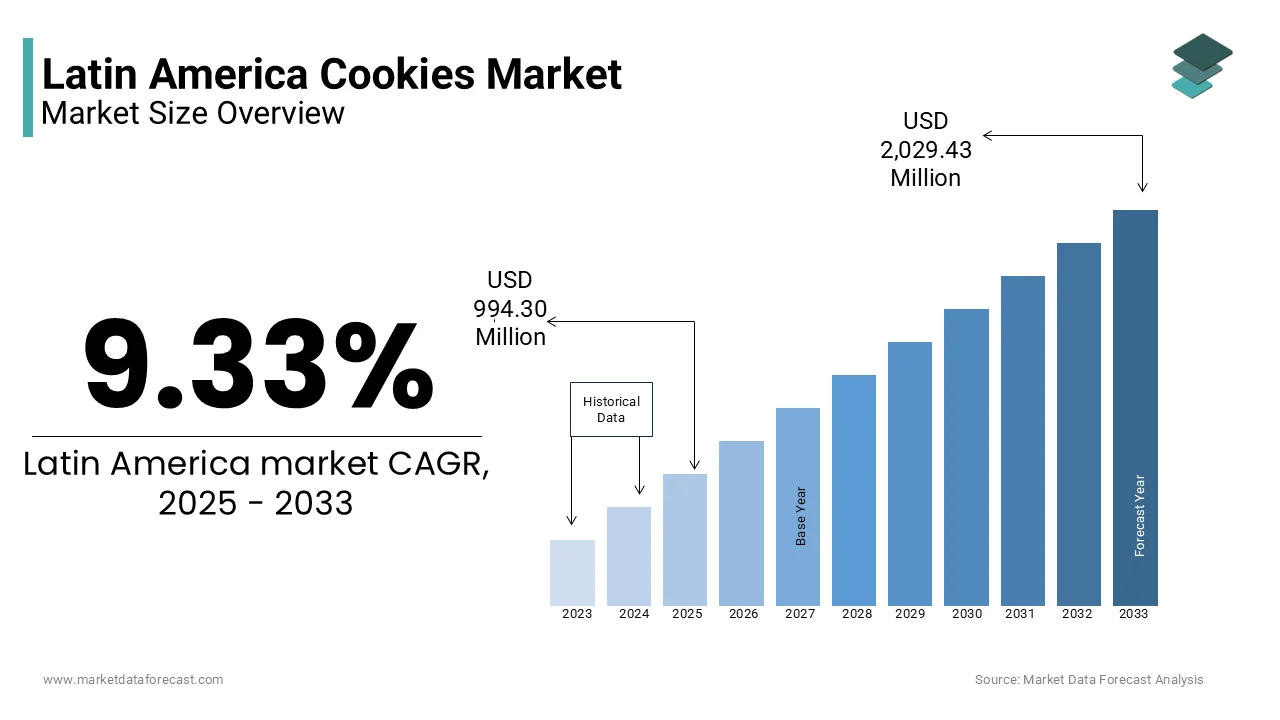
The Latin America cookies market was valued at USD 994.30 million in 2025, is estimated to reach USD 1,087.07 million in 2026, and is projected to reach USD 2,219.08 million by 2034, growing at a CAGR of 9.33% during the forecast period. Market growth is driven by increasing demand for convenient snack products, rising urbanization, and growing consumer preference for indulgent and ready to eat foods. The expansion of modern retail channels, along with product innovation in flavors and formats, is further supporting strong market growth. In addition, increasing disposable incomes and evolving consumption habits are contributing to rising demand across Latin America.
Key Market Trends
- Rising demand for convenient and ready to eat snack products is driving market growth.
- Increasing consumer preference for indulgent and flavored cookies is boosting demand.
- Growing innovation in ingredients and product formats is supporting market expansion.
- Expansion of supermarkets and retail chains is improving product availability.
- Rising influence of western dietary habits is enhancing market growth.
Segmental Insights
- Based on ingredients, the chocolate segment was the largest and held 35.4% of the Latin America cookies market share in 2025. This dominance is attributed to strong consumer preference for chocolate flavored products.
- Based on product type, the sandwich cookie segment accounted for 28.3% of the Latin America cookies market share in 2025. The segment’s growth is driven by increasing demand for filled and premium cookie variants.
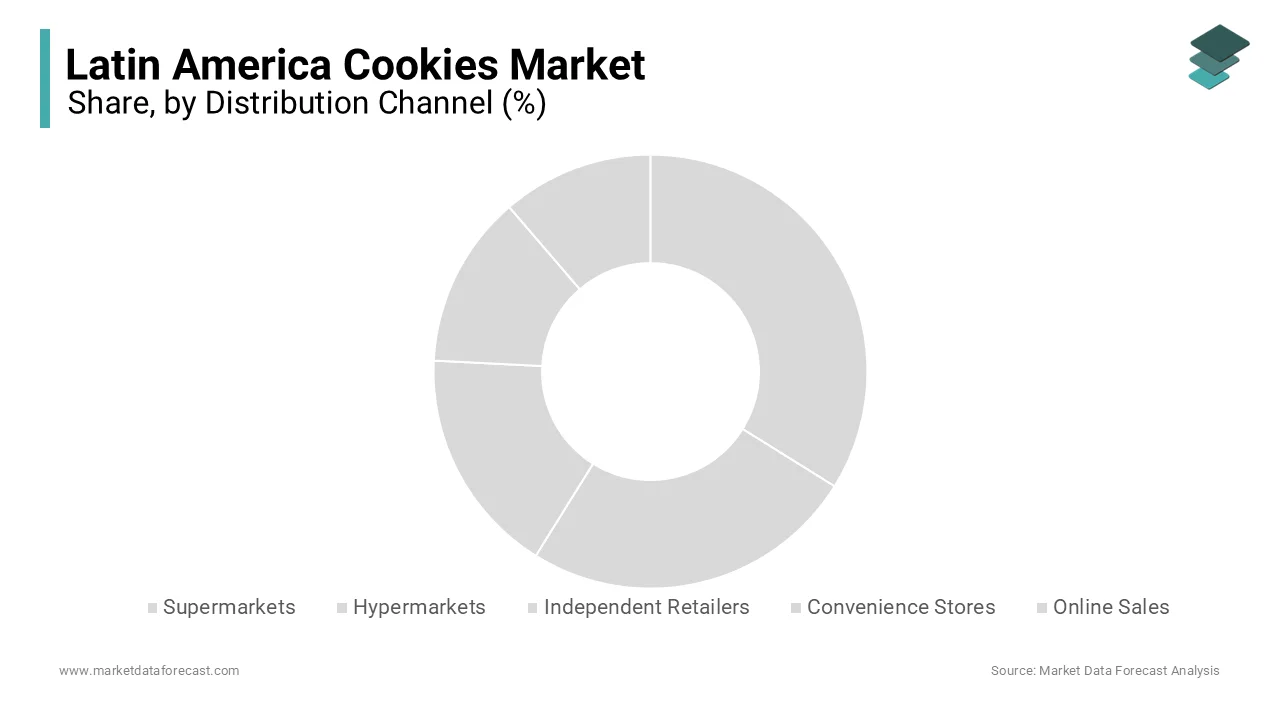
- Based on distribution channel, the supermarkets segment dominated with 45.3% of the Latin America cookies market share in 2025, supported by strong retail presence and consumer accessibility.
Regional Insights
- The Latin America cookies market is experiencing strong growth across key countries, supported by rising consumption and retail expansion.
- Brazil was the largest contributor, accounting for 32.8% of the Latin America cookies market share in 2025, driven by large consumer base, growing snack consumption, and expanding food retail sector.
Competitive Landscape
The Latin America cookies market is highly competitive, with key players focusing on product innovation, branding, and expansion of distribution networks to strengthen their market position. Companies are investing in new product launches, flavor diversification, and marketing strategies. Prominent players in the Latin America cookies market include Mondelez International, Kellogg Company, Campbell Soup Company, Nestle SA, United Biscuits, PepsiCo, M Dias Branco, Britannia Industries, Barilla G e R Fratelli, Arcor USA, Kraft Foods, Thomas Tunnock Limited, Nutrexpa, and Paterson Arran Limited.
Latin America Cookies Market Size
The Latin America cookies market size was valued at USD 994.30 million in 2025, and the market size is expected to reach USD 2,219.08 million by 2034 from USD 1,087.07 million in 2026. The market is promising a CAGR for the predicted period is 9.33%.
The cookies is a diverse array of baked confectionery products that serve as staple snacks and dessert items, across the region. The cultural significance of cookies in Latin American households is profound, often associated with social gatherings, family traditions, and daily consumption habits. As per the Food and Agriculture Organization of the United Nations, the region has seen a steady increase in wheat production, which serves as a primary ingredient for cookie manufacturing, with countries like Argentina and Brazil contributing significantly to the global supply chain. The urbanization rate in Latin America reached 81% in 2022, indicating a shift towards convenience foods and ready to eat snacks among the growing urban population. Furthermore, the Pan American Health Organization stated that the average calorie intake from processed foods in the region has risen by 15% over the last decade, reflecting changing dietary patterns. The presence of multinational food corporations alongside local bakeries creates a competitive landscape that drives innovation in flavors and packaging. Consumer preference for localized tastes such as dulce de leche and guava influences product development strategies. The integration of digital commerce platforms has also expanded the reach of cookie brands by allowing them to connect with younger demographics who prioritize online shopping experiences.
MARKET DRIVERS
Rising Urbanization And Busy Lifestyles Drive Convenience Snack Consumption
The rapid pace of urbanization that altered consumer behavior, leading to an increased demand for convenient and ready to eat snack options, such as cookies, which is propelling the growth of Latin America cookies market. As per the United Nations Department of Economic and Social Affairs, the urban population in Latin America and the Caribbean is projected to reach 85% by 2050, up from 81% in 2020. This demographic shift means that a larger proportion of the population resides in cities where fast paced lifestyles prevail. Working professionals and students often lack the time to prepare traditional meals or desserts, making packaged cookies an attractive alternative for quick energy boosts during work breaks or school hours. The International Labour Organization reported that the average working hours in major Latin American economies like Mexico and Colombia remain high, further reinforcing the need for portable and non-perishable food items. Retailers have responded to this trend by expanding their shelf space for single serve cookie packs and multipack bundles that cater to on-the-go consumption. This concentration of demand in urban hubs allows manufacturers to optimize distribution networks and reduce logistics costs. The convenience factor is not limited to taste but also extends to ease of storage and longer shelf life, which appeals to households with limited refrigeration space. Consequently, cookie manufacturers are investing in innovative packaging solutions that maintain freshness while offering portability, thereby aligning with the evolving needs of urban consumers who prioritize efficiency and convenience in their daily routines.
Growing Middle Class Income Levels Enhance Purchasing Power For Premium Products
The expansion of the middle class in Latin America has significantly boosted purchasing power, enabling consumers to explore premium and specialized cookie varieties beyond basic staples, which is additionally accelerating the growth of Latin America cookies market. According to the Economic Commission for Latin America and the Caribbean, the middle class in the region grew to comprise approximately 34% of the total population in 2023, marking a substantial increase from 25% in 2010. This economic upliftment has led to a greater willingness to spend on higher quality food products that offer unique flavors, organic ingredients, or health benefits. Consumers are increasingly seeking cookies made with whole grains, reduced sugar, or natural sweeteners, reflecting a broader trend towards healthier eating habits without compromising on taste. Multinational companies have capitalized on this trend by introducing artisanal and gourmet cookie lines that appeal to discerning buyers who value authenticity and quality. Local bakeries are also upgrading their offerings to compete in this segment, using indigenous ingredients such as quinoa and amaranth to create distinctive products that resonate with national pride. The availability of credit cards and digital payment methods has further facilitated access to these premium products, allowing consumers to make impulse purchases at supermarkets and specialty stores. As disposable incomes continue to rise, the demand for diversified cookie portfolios is expected to strengthen, driving manufacturers to innovate and differentiate their products to capture the attention of the affluent consumer base.
MARKET RESTRAINTS
High Prevalence Of Obesity And Diabetes Restricts Sugary Snack Intake
The rising prevalence of obesity and diabetes and rising awareness over the benefits of traditional cookies, as health-conscious consumers and regulatory bodies push for reduced sugar consumption is solely fuelling the growth of Latin America cookies market. According to the Pan American Health Organization, more than 58% of adults in the Latin America and Caribbean region are overweight or obese, with diabetes affecting approximately 8% of the adult population. These alarming statistics have prompted governments to implement stricter regulations on food labeling and advertising, particularly for products high in sugar, fat, and sodium. In Mexico, the implementation of front of package warning labels in 2020 has led to a 15% decline in the sales of sugary snacks, including cookies, as reported by the studies. Similar measures are being considered in other countries such as Brazil and Peru, where public health campaigns emphasize the risks associated with excessive sugar intake. Consumers are becoming more aware of the nutritional content of their food choices, leading to a shift away from traditional high sugar cookies towards healthier alternatives. This behavioral change is evident in the declining sales volumes of standard sweet biscuits in major retail chains across the region. Manufacturers face the challenge of reformulating their products to meet these new health standards without compromising on taste and texture, which often requires significant investment in research and development. The stigma associated with sugary snacks is further amplified by educational initiatives in schools and communities, which discourage the consumption of processed foods among children.
Volatility In Raw Material Prices Impacts Production Costs And Profit Margins
The volatility in prices of key raw materials, such as wheat, sugar, and cocoa by affecting production costs and overall profitability, which is limiting the growth of laatin America cookies market. According to the Food and Agriculture Organization of the United Nations, global wheat prices fluctuated by nearly 20% in 2023 due to geopolitical tensions and climate related disruptions in major exporting countries. Since wheat is a primary ingredient in cookie production, these price swings directly impact the cost structure of manufacturers, forcing them to either absorb the increased costs or pass them on to consumers. In Argentina, one of the world’s largest wheat exporters, domestic prices have been influenced by export taxes and currency devaluation, creating uncertainty for local bakeries and industrial producers. Cocoa prices have also surged, reaching record highs in early 2024 as per the International Cocoa Organization, driven by supply shortages in West Africa and increasing demand for chocolate filled cookies. These fluctuations make it difficult for manufacturers to maintain stable pricing strategies, leading to margin compression. Small and medium sized enterprises are particularly vulnerable to these shocks, as they lack the financial resilience to hedge against commodity price risks. Larger corporations may have more leverage to negotiate long term contracts, but even they face pressure to keep retail prices competitive in a price sensitive market. The inability to predict raw material costs accurately hinders long term planning and investment in capacity expansion, thereby restraining the overall growth potential of the cookies market in the region.
MARKET OPPORTUNITIES
Expansion Of E Commerce Platforms Offers New Distribution Channels For Niche Brands
The rapid expansion of e-commerce platforms to reach wider audiences and introduce niche products to diverse consumer segments is creating new opportunities for the growth of atin America cookies market. The digital transformation allows smaller and artisanal cookie brands to bypass traditional retail barriers and connect directly with consumers, who seek unique and specialized products. Platforms, such as Mercado, Libre, and Amazon have become essential channels for food and beverage sales by offering visibility to brands that might otherwise struggle to secure shelf space in dominant supermarket chains. Manufacturers can leverage data analytics from these platforms to understand consumer preferences and tailor their product offerings accordingly, such as launching gluten free or vegan cookies that cater to specific dietary needs. Social media integration further enhances brand engagement, allowing companies to create targeted marketing campaigns that resonate with younger demographics. The convenience of home delivery appeals to busy urban consumers who prefer shopping online for bulk purchases or subscription based services. Additionally, cross border e commerce enables regional brands to export their products to neighboring countries, expanding their market reach beyond domestic boundaries.
Innovation In Healthy and Functional Ingredients Attracts Health Conscious Consumers
The growing demand for healthy and functional food products to innovate and capture the attention of health conscious consumers is also to enhance the growth of Latin America cookies market. As per the Global Health Observatory data from the World Health Organization, there is a rising awareness of non-communicable diseases in the region, prompting consumers to seek food options that offer nutritional benefits without sacrificing taste. This trend has led to the development of cookies fortified with vitamins, minerals, fiber, and protein, as well as those made with alternative flours such as almond, coconut, and oat. Manufacturers are responding by launching cookies with reduced sugar content, using natural sweeteners like stevia and monk fruit, which appeal to diabetic and weight conscious individuals. The use of indigenous superfoods such as chia seeds, quinoa, and acai berries not only enhances the nutritional profile but also adds a unique selling proposition that resonates with local pride and sustainability values. Collaborations with nutritionists and health experts help validate these claims and build trust among consumers. Retailers are increasingly dedicating shelf space to these healthier options, recognizing the shift in consumer preferences. Furthermore, clear labeling and certification from recognized health organizations provide transparency and assurance to buyers.
MARKET CHALLENGES
Counterfeit And Unregulated Local Products Undermine Brand Integrity And Safety
The presence of counterfeit and unregulated local cookie products to established brands, undermining brand integrity and consumer safety is one of the challenges for the growth of Latin America cookies market. In many parts of the region, informal markets and street vendors sell homemade or illegally produced cookies that do not adhere to strict food safety standards. According to the World Intellectual Property Organization, intellectual property infringement in the food and beverage sector remains a persistent issue in Latin America, with counterfeit goods accounting for a substantial portion of informal trade. These unregulated products often use substandard ingredients and lack proper hygiene controls, posing health risks to consumers. In countries like Peru and Bolivia, the informal economy represents over 70% of employment, as stated by the International Labour Organization, facilitating the proliferation of such unofficial products. Established brands face difficulty in competing with these cheaper alternatives, which are sold at significantly lower prices due to the absence of regulatory compliance costs and taxes. Consumers, particularly in lower income segments, may opt for these affordable options despite the potential health hazards, eroding the market share of legitimate manufacturers. The lack of stringent enforcement mechanisms in some regions allows these illegal operations to thrive, making it challenging for authorities to curb their spread. Brand reputation suffers when consumers associate negative health outcomes with the general category of cookies, rather than distinguishing between regulated and unregulated products. Manufacturers must invest in consumer education and advocacy for stricter regulatory frameworks to protect their brand equity and ensure a level playing field. Addressing this issue requires collaborative efforts between industry stakeholders, government agencies, and consumer protection groups to enhance monitoring and enforcement capabilities.
Supply Chain Disruptions Due To Infrastructure Deficiencies Affect Product Availability
The infrastructure deficiencies, frequently lead to supply chain disruptions that affect the consistent availability of cookies in retail outlets, posing a operational challenge for manufacturers is one of the key challenges for the growth of Latin America cookies market. According to the study, several countries in the region rank low in terms of infrastructure quality, with issues such as poor road conditions, port congestion, and inadequate storage facilities hindering efficient distribution. Cookie manufacturers rely on timely delivery of raw materials and finished products to maintain inventory levels and meet consumer demand. However, frequent delays due to weather events, strikes, or bureaucratic hurdles can result in stockouts and lost sales opportunities. In rural areas, the lack of reliable transportation networks limits market access, preventing manufacturers from reaching potential customers in remote locations. The inefficiency of cold chain logistics, although less critical for cookies than for dairy products, still affects the quality of certain ingredients and finished goods during transit. These disruptions force companies to maintain higher safety stocks, increasing warehousing costs and tying up capital. Smaller manufacturers with limited resources are disproportionately affected, as they lack the flexibility to adjust their supply chains quickly.
REPORT COVERAGE
| REPORT METRIC | DETAILS |
| Market Size Available | 2025 to 2034 |
| Base Year | 2025 |
| Forecast Period | 2026 to 2034 |
| CAGR | 9.33% |
| Segments Covered | By Ingredients, Product Type, Distribution Channel, and Region |
| Various Analyses Covered | Global, Regional, & Country Level Analysis; Segment-Level Analysis; DROC, PESTLE Analysis; Porter’s Five Forces Analysis; Competitive Landscape; Analyst Overview of Investment Opportunities |
| Regions Covered | North America, Europe, Asia Pacific, Latin America, And Middle East & Africa |
| Market Leaders Profiled | Mondelez International, Kellogg Co., Campbell Soup Co., Nestle SA, United Biscuits, PepsiCo, M. Dias Branco, Britannia Industries, Barilla G. e R. Fratelli, Arcor U.S.A., Kraft Foods, Thomas Tunnock Limited, Nutrexpa, Paterson Arran Limited |
SEGMENTAL ANALYSIS
By Ingredients Insights
The chocolate ingredient segment was the largest by holding 35.4% of the Latin America Cookies Market share in 2025 with the deep rooted cultural affinity for cocoa based products across the region, where chocolate is not merely a flavor but a staple component of daily diets and celebrations. According to the International Cocoa Organization, Latin America consumes approximately 12% of the global cocoa supply, with countries like Brazil and Mexico being significant contributors to this demand. The versatility of chocolate allows it to be integrated into various cookie formats, from filled sandwiches to chip embedded drops, appealing to a broad demographic spectrum. In Mexico, the birthplace of cacao, traditional recipes often incorporate chocolate, creating a seamless transition into modern packaged cookie consumption. Manufacturers leverage this preference by launching premium chocolate variants that use higher cocoa content, catering to the growing middle class seeking indulgence. Furthermore, the association of chocolate with comfort and reward drives impulse purchases among younger consumers. The widespread availability of cocoa beans within the region also ensures a stable supply chain for manufacturers by allowing for consistent product quality and competitive pricing.
The coconut ingredient segment is projected to expand at a CAGR of 6.8% during the forecast period with the increasing consumer perception of coconut as a healthy and natural alternative to refined sugars and fats. As per the Food and Agriculture Organization of the United Nations, Latin America produces over 15% of the world’s coconuts, with countries like the Dominican Republic and Jamaica being key exporters. This local abundance reduces procurement costs for manufacturers and supports the narrative of using indigenous ingredients. The rise in vegan and gluten free diets has further accelerated the adoption of coconut flour and coconut oil in cookie formulations. Coconut offers a unique texture and subtle sweetness that appeals to health-conscious buyers looking to reduce their glycemic load. Additionally, the tropical climate of the region makes coconut a familiar and trusted ingredient, reducing barriers to trial for new products. Marketing campaigns emphasizing the natural origins and metabolic benefits of medium chain triglycerides found in coconut oil have resonated well with urban consumers.
By Product Type Insights
The sandwich cookie segment was accounted in holding 28.3% of the Latin America Cookies Market share in 2025 with the inherent convenience and portion control offered by sandwich cookies, which are pre-packaged in individual servings or small multipacks. The busy lifestyles of urban populations in cities like Sao Paulo, Mexico City, and Buenos Aires necessitate snack options that are easy to consume on the go without mess. Sandwich cookies, with their cream or jam fillings enclosed between two biscuits, provide a balanced taste experience that satisfies sweet cravings efficiently. Major brands have invested heavily in marketing these products as ideal companions for coffee breaks, a deeply ingrained social ritual in the region. The structural integrity of sandwich cookies also makes them less prone to breakage during transport compared to more fragile varieties like drop or rolled cookies by ensuring better product quality upon reaching the consumer. In Argentina, where mate drinking is a communal activity, sandwich cookies are a popular accompaniment, driving consistent household penetration. The ability to innovate with various filling flavors, from traditional dulce de leche to exotic fruit blends, keeps the segment dynamic and engaging for repeat purchasers.
The no bake cookie segment is expected to witness a fastest CAGR of 7.2% from 2026 to 2034 with the rising trend of artisanal and homemade style snacks that require minimal processing, appealing to consumers seeking authentic and less industrialized food experiences. No bake cookies, often made with oats, nuts, and binders like honey or chocolate, are perceived as healthier and more natural than their baked counterparts. Manufacturing no bake cookies requires significantly less energy, aligning with the corporate sustainability goals of major food producers who are under pressure to reduce their carbon footprints. In Colombia, the push for green manufacturing practices has led several local bakeries to adopt no bake techniques by reducing production costs and environmental impact. Furthermore, the ease of preparation allows for rapid product development and customization, enabling brands to quickly respond to trending flavors and dietary requirements. The texture of no bake cookies, often chewy and dense, offers a distinct sensory experience that differentiates them from traditional crisp biscuits.
By Distribution Channel Insights
The supermarkets segment was accounted in holding 45.3% of the Latin America Cookies Market share in 2025 with the extensive geographic reach of supermarket chains and their ability to offer a wide variety of brands and product types under one roof. In countries like Chile and Uruguay, supermarket penetration in urban areas exceeds 80% by making them the primary destination for weekly grocery shopping. According to the Latin American Supermarket Association, promotional activities such as buy one get one free offers and loyalty program discounts significantly drive volume sales in this channel. Consumers prefer supermarkets for their reliable stock availability and the opportunity to compare prices and ingredients before purchasing. Supermarkets also provide ample shelf space for new product launches, allowing manufacturers to gain visibility and trial among shoppers. The presence of in store bakeries within larger supermarket formats further enhances the appeal, offering fresh alternatives alongside packaged cookies. The trust associated with established retail brands ensures product authenticity and quality, which is crucial for maintaining consumer confidence. This combination of accessibility, variety, and promotional power cements the position of supermarkets as the primary conduit for cookie distribution in the region.
The online sales segment is lucratively growing at an anticipated CAGR of 9.5% during the forecast period with the increasing internet penetration and the widespread adoption of smartphones. As per the research, e-commerce adoption in Latin America surged by 25% in 2023, with food and beverage categories experiencing significant uptake. The convenience of home delivery appeals to busy urban professionals and families who prioritize time savings over physical shopping experiences. Platforms like Mercado Libre and Rappi have optimized their logistics networks to ensure quick and reliable delivery of perishable and semi perishable goods, including cookies. The ability to access niche and imported cookie brands that are not available in local stores further drives online traffic. Subscription models offered by certain retailers provide regular deliveries of favorite snacks, enhancing customer retention and lifetime value. Social media integration allows for targeted advertising and influencer endorsements, which effectively convert browsing into purchases among younger demographics.
REGIONAL ANALYSIS
Brazil Cookies Market Analysis
Brazil cookies market was the outperformer in Latin America by holding 32.8% of the share in 2025 due to its vast population and expanding retail infrastructure. The country’s diverse consumer base, ranging from low-income households to affluent urbanites that creates a broad demand spectrum for both affordable and premium cookie products. According to the Brazilian Institute of Geography and Statistics, the population of Brazil exceeded 215 million in 2023, providing a substantial consumer pool for fast moving consumer goods. The proliferation of supermarkets and convenience stores in rural and semi urban areas has improved product accessibility, driving volume growth. Local manufacturers like Bauducco and Mabel compete fiercely with multinational giants such as Mondelez and Nestlé, fostering innovation in flavors and packaging. The cultural habit of consuming snacks with coffee throughout the day reinforces consistent demand. Additionally, the government’s support for local agriculture ensures a steady supply of raw materials like wheat and sugar, stabilizing production costs. The rise of the middle class has also spurred interest in healthier and gourmet options, prompting brands to diversify their portfolios.
Mexico Cookies Market Analysis
Mexico cookies market was ranked second in Latin America by accounting for 24.4% of the share in 2025 by strong urbanization and a preference for localized flavors. The country’s proximity to the United States facilitates the adoption of global trends, while maintaining distinct culinary traditions that influence product development. Mexican consumers exhibit a strong preference for cookies infused with traditional ingredients such as cinnamon, piloncillo, and cajeta, prompting manufacturers to innovate within these flavor profiles. The presence of a robust informal retail sector complements formal channels, ensuring widespread availability even in remote areas. Health consciousness is rising, leading to a gradual shift towards reduced sugar and whole grain options, although traditional sweet biscuits remain dominant. The government’s implementation of front of package labeling has encouraged reformulation efforts, with major brands launching compliant products to maintain market relevance. The vibrant tourism industry also contributes to demand, particularly in coastal regions where international visitors seek familiar snack brands.
Argentina Cookies Market Analysis
Argentina cookies market growth is growing steadily in coming years with the high per capita consumption and deeply ingrained cultural habits. The tradition of mate drinking, often accompanied by biscuits and cookies, creates a consistent and habitual demand for these products across all socioeconomic segments. According to the study, the per capita consumption of baked goods remains among the highest in the region, with cookies being a staple in household pantries. The economic volatility in the country has led consumers to prioritize value for money, favoring local brands that offer competitive pricing without compromising on quality. Companies like Arcor dominate the market with extensive distribution networks that reach even the most remote provinces. The preference for butter based and dulce de leche filled cookies reflects local taste preferences, distinguishing the market from its neighbors. Export opportunities to neighboring countries like Chile and Uruguay provide additional revenue streams for Argentine manufacturers, mitigating domestic economic risks. The strong brand loyalty towards local producers ensures a stable market base, while gradual introductions of healthier variants cater to evolving consumer interests.
COMPETITIVE LANDSCAPE
The competition in the Latin America Cookies Market is characterized by the presence of both multinational corporations and strong local manufacturers who vie for consumer attention through innovation and pricing strategies. Multinational giants leverage their global brand recognition and extensive distribution networks to maintain a strong foothold in major urban centers. Meanwhile, local players capitalize on their deep understanding of regional tastes and agile supply chains to compete effectively in rural and semi urban areas. The market sees frequent product launches featuring unique flavors and healthier ingredients to differentiate offerings and attract health conscious buyers. Price competitiveness remains a crucial factor, especially in economically volatile regions where consumers seek value for money. Retailers play a significant role in shaping competition by offering shelf space and promotional support to preferred brands.
Key Market Players
Key players in Latin America cookies market are
- Mondelez International
- Kellogg Company
- Campbell Soup Company
- Nestle SA
- United Biscuits
- PepsiCo
- M. Dias Branco
- Britannia Industries
- Barilla G. e R. Fratelli
- Arcor USA
- Kraft Foods
- Thomas Tunnock Limited
- Nutrexpa
- Paterson Arran Limited
Top Players in the Market
- Mondelez International Inc maintains a robust presence in the Latin America Cookies Market through its iconic brands such as Oreo and Ritz. The company leverages its global supply chain expertise to ensure consistent product availability across diverse regional markets. Recent initiatives include the expansion of local manufacturing facilities in Brazil and Mexico to reduce logistics costs and enhance freshness. Mondelez has also invested heavily in digital marketing campaigns targeting younger demographics via social media platforms. These efforts aim to strengthen brand loyalty and drive engagement among urban consumers. The corporation actively collaborates with local retailers to optimize shelf placement and promotional activities.
- Grupo Bimbo SAB de CV is a dominant force in the Latin America Cookies Market, leveraging its extensive distribution network to reach remote and urban areas alike. The company offers a wide portfolio of cookie brands that cater to various taste preferences and price points. Recent actions include the launch of healthier cookie variants with reduced sugar and whole grain ingredients to address rising health consciousness. Grupo Bimbo has also upgraded its production technologies to improve efficiency and reduce environmental impact. The firm actively engages in community programs to build strong local relationships and brand trust. Its strategic partnerships with local suppliers support agricultural development and secure raw material quality.
- Arcor SAIC stands as a key player in the Latin America Cookies Market, renowned for its diverse range of confectionery and bakery products. The company utilizes its strong regional footprint to distribute popular cookie brands across Argentina and neighboring countries. Recent strategies involve the introduction of premium cookie lines featuring artisanal flavors and high quality ingredients. Arcor has invested in modernizing its manufacturing plants to enhance production capacity and product consistency. The firm focuses on sustainable practices by reducing plastic usage in packaging and promoting recycling initiatives. Arcor also engages in aggressive promotional campaigns during festive seasons to boost sales volumes.
Top Strategies Used by the Key Market Participants
Key players in the Latin America Cookies Market primarily focus on product innovation to meet evolving consumer demands for healthier and premium options. Companies are increasingly reformulating recipes to reduce sugar and sodium content while incorporating whole grains and natural sweeteners. Strategic expansions into e commerce platforms enable brands to reach wider audiences and offer convenient home delivery services. Manufacturers are also investing in sustainable packaging solutions to address environmental concerns and comply with regulatory standards. Localized flavor development remains a critical strategy, allowing firms to cater to specific regional tastes and cultural preferences. Partnerships with local suppliers help secure raw material quality and reduce logistical costs. Aggressive marketing campaigns through digital channels enhance brand visibility and engage younger demographics. These combined efforts aim to strengthen market position and drive long term growth in a competitive landscape.
MARKET SEGMENTATION
This research report on the Latin America cookies market is segmented and sub-segmented into the following categories
By Ingredient
- Chocolate
- Chocolate Chip
- Oatmeal
- Butter
- Cream
- Ginger
- Coconut
- Honey
By Product Type
- Bar
- Drop
- Fried
- Moulded
- No-Bake
- Icebox
- Rolled
- Sandwich
By Distribution Channel
- Supermarkets
- Hypermarkets
- Independent Retailers
- Convenience Stores
- Online Sales
By Country
- Argentina
- Brazil
- Mexico