- Product Description Description
- Table of Contents TOC
- List of Table & Figure LOT
- Get Free Sample PDF Sample PDF
Market Size, 2025
$2.02 BnMarket Estimate, 2026
$2.13 BnMarket Forecast, 2034
$3.26 BnCAGR, 2026–2034
5.48%Executive Summary: Latin America High-Pressure Processing Equipment Market
- Market Scope: Comprehensive Latin America high-pressure processing (HPP) equipment market analysis covering orientation types, vessel volumes, applications, end-user scales, regional country dynamics, and key industry participants.
- Market Valuation: Valued at USD 2.02 billion (2025), estimated at USD 2.13 billion (2026), and projected to reach USD 3.26 billion by 2034, registering a steady CAGR of 5.48% across the forecast period.
- Primary Growth Drivers: Shift toward innovative food processing technologies (cold pasteurization), growing demand for packaged foods with preserved nutritional and sensory qualities, and rising consumer awareness of food safety. Key restraints include the high capital expenditure and equipment costs associated with high-pressure processing machinery.
Key Market Segment Metrics (2026–2034)
| Category | Leading Segment (2025 Position) | Fastest-Growing Segment |
|---|---|---|
| By Orientation Type | Horizontal HPP Equipment (dominant in food packaging and processing lines due to high flow capacity and efficient component weight distribution) | Horizontal HPP Systems (recording rapid expansion driven by ease of installation, reassembly, and lower maintenance time) |
| By Vessel Volume | 100 Liters to 250 Liters & Medium-Sized Vessels (widely adopted across commercial processing facilities) | More than 500 Liters (scaling up as large industrial plants demand higher throughput for mass production) |
| By Application | Fruits & Vegetables (held the leading global share for preserving fresh characteristics in items like guacamole, jams, and juices) | Meat & Seafood Processing (prominent regional applications opening up new growth opportunities across Latin America) |
| By End-User | Large Production Plants (account for major capital investment and high-volume output) | Small and Medium-Sized Enterprises (adopting flexible HPP outsourcing and modular systems) |
| By Country | Mexico & Brazil (contribute majorly to regional market size backed by advanced food processing infrastructure and research activities) | Chile & Peru (showing healthy growth driven by expanding export-oriented food and beverage sectors) |
Major Market Players & Market Structure
Market Structure: Specialized industrial machinery landscape dominated by global engineering and high-pressure technology pioneers competing on vessel durability, cycle times, energy efficiency, and turnkey pasteurization solutions.
Key Companies: ThyssenKrupp AG, Avure Technologies Inc., Next HPP, Universal Pasteurization Co., Stansted Fluid Power Ltd., Multivac Sepp Haggenmuller SE & Co. KG, Kobe Steel, Ltd., CHIC FresherTech, Bao Tou KeFa High-Pressure Technology, and Hiperbaric Espana.
Latin America High-Pressure Processing Equipment Market Size
The Latin America high-pressure processing equipment market size was valued at USD 2.02 billion in 2025 and is projected to reach USD 3.26 billion by 2034 from USD 2.13 billion in 2026, growing at a CAGR of 5.48%.
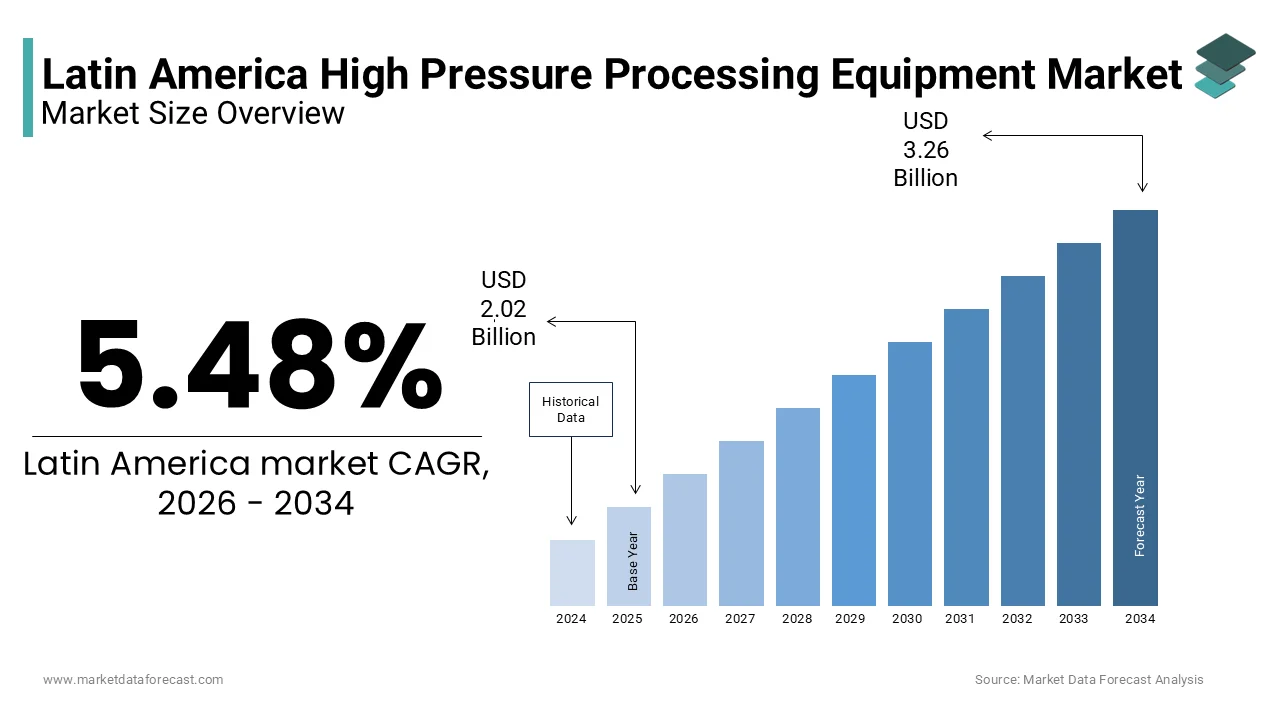
The high pressure processing equipment is advanced non-thermal food preservation systems that utilize intense hydrostatic pressure to inactivate pathogens, while preserving nutritional and sensory qualities. According to the Food and Agriculture Organization of the United Nations, post-harvest losses in the region reach up to 30% for perishable fruits and vegetables which drives adoption of technologies that extend shelf life without heat degradation. As per the Pan American Health Organization, foodborne illness incidents affect approximately 90 million people annually in the Americas creating urgent demand for superior microbial safety solutions beyond traditional pasteurization. The sector is characterized by gradual integration into industrial facilities as companies balance high capital expenditure against long term operational benefits. Regulatory bodies in major economies like Brazil and Mexico are increasingly recognizing high pressure processing as a valid critical control point in hazard analysis frameworks.
MARKET DRIVERS
Rising Consumer Demand for Clean Label Products
The increasing consumer preference for minimally processed foods with no artificial preservatives actively stimulates investment is fuelling the growth of the latin America high pressure processing equipment market. This shift allows producers to market juices smoothies and guacamole as fresh rather than processed commanding premium prices in retail channels. Retailers support this trend by dedicating shelf space to chilled sections where high pressure treated products thrive due to extended refrigerated shelf life. The technology aligns perfectly with health-conscious lifestyles that prioritize nutrient retention and authentic taste profiles over convenience alone. Manufacturers respond by retrofitting existing lines or installing new units to capture this growing demographic segment.
Stringent Food Safety Regulations and Export Requirements
The strict regulatory frameworks governing food safety and microbial control is significantly boosting the growth of the Latin America high pressure processing equipment market. According to the United States Department of Agriculture agricultural exports from Latin America must comply with rigorous pathogen reduction standards which high pressure processing effectively achieves for ready to eat meats and seafood. As per the study, recent updates to sanitary norms mandate enhanced validation of kill steps for low acid foods encouraging investment in validated non thermal technologies. Compliance with these standards is essential for accessing lucrative North American and European markets where rejection rates for contaminated shipments can be financially devastating. High pressure processing provides documented log reductions of bacteria like Listeria and E coli without altering product texture or flavor. This regulatory assurance reduces liability risks and enhances brand reputation among international buyers. Domestic authorities also increasingly view high pressure processing as a best practice for public health protection.
MARKET RESTRAINTS
High Capital Investment and Operational Costs
The prohibitive initial capital expenditure and ongoing maintenance costs for small and medium sized enterprises is restricting the growth of the Latin America high pressure processing equipment market. As per the Chilean National Institute of Statistics, the cost of importing high pressure vessels and hydraulic systems includes significant tariffs and logistics fees, which can increase total project costs, when compared to domestic thermal equipment. These financial barriers restrict adoption to multinational corporations and large cooperatives leaving smaller artisanal producers unable to compete on shelf life and safety claims. Operational expenses including electricity consumption and specialized labor further strain budgets in price sensitive markets. Return on investment periods often exceed five years discouraging rapid deployment despite long term benefits. Lack of local manufacturing capabilities means dependence on foreign suppliers for spare parts leading to prolonged downtime during repairs. The high economic entry barriers act as a persistent restraint on widespread market penetration and democratization of the technology.
Limited Technical Expertise and Skilled Workforce
The shortage of trained personnel capable of operating and maintaining complex high pressure processing systems is limiting the growth of the Latin America high pressure processing equipment market. According to the International Labour Organization, technical vocational training programs in Latin America focus primarily on traditional thermal processing leaving a gap in expertise for non-thermal technologies. This skills deficit leads to suboptimal machine performance increased error rates and higher risk of equipment failure during critical production cycles. Companies struggle to find local service providers forcing them to wait for international technicians which extends downtime and disrupts supply chains. Training internal staff requires significant time and resource investment that many firms are unwilling or unable to commit. The lack of standardized certification programs further complicates hiring and quality assurance processes.
MARKET OPPORTUNITIES
Expansion into Seafood and Ready to Eat Meat Segments
The significant growth potential exists in applying high pressure processing to the seafood and ready to eat meat industries, which face high spoilage and contamination risks. The expansion into seafood and ready to eat meat products is to promote new opportunities for the growth of the Latin America high pressure processing equipment market. This application allows producers to extend export reach to distant markets without freezing which degrades quality. Similarly ready to eat meat processors use the technology to control Listeria monocytogenes a major concern in deli products. Regulatory acceptance of high-pressure processing for shellfish shucking and meat tenderization opens new product categories. Retailers value the extended shelf life which reduces waste and improves inventory management. Consequently, targeting these high value protein segments offers a lucrative avenue for equipment manufacturers to demonstrate tangible return on investment.
Growth of Contract Manufacturing and Shared Facilities
The emergence of contract manufacturing hubs equipped with high pressure processing technology is additionally to accelerate the growth of the Latin America high pressure processing equipment market. According to the study, service models allow multiple small batches to be processed efficiently reducing the per unit cost barrier for artisanal producers. As per the Colombian Chamber of Commerce, startup food brands are increasingly outsourcing production to facilities with existing high pressure capabilities enabling them to launch premium products without capital expenditure. This model democratizes access to technology fostering innovation in niche categories like cold pressed juices and gourmet sauces. Equipment manufacturers can partner with these hubs to showcase technology and generate recurring service revenue. Shared facilities also facilitate knowledge transfer and standardization of best practices across the industry. This collaborative approach reduces risk for new entrants and accelerates market adoption of high pressure treated products.
MARKET CHALLENGES
Inconsistent Energy Infrastructure and Power Stability
The unreliable electrical grids and frequent power fluctuations, which requires stable high voltage inputs is a huge challenge for the growth of the Latin America high pressure processing equipment market. According to the World Bank, energy reliability indices in several Latin American countries indicate average outage durations of 4 hours monthly in industrial zones disrupting continuous processing cycles. As per the Argentine Electrical Energy Association, voltage spikes can damage sensitive hydraulic pumps and control systems leading to costly repairs and production delays. High pressure processing cycles are energy intensive and interruptions mid cycle can result in total batch loss due to incomplete pathogen inactivation. Facilities must invest in expensive backup generators and voltage stabilizers increasing overall operational complexity and cost. This infrastructure vulnerability discourages investment in remote processing locations near raw material sources where grid stability is often poorest. Manufacturers struggle to guarantee consistent output quality under such conditions affecting brand reliability.
Lack of Standardized Regulatory Frameworks Across Borders
The fragmented and evolving regulatory across different Latin American countries create uncertainty and compliance hurdles for equipment manufacturers and food processors. The lack of standardized regulatory frameworks across borders is additionally to decline the growth of the Latin America high pressure processing equipment market. As per the study, health regulations vary significantly between countries requiring separate validation studies and documentation for each market entry increasing time and cost for exporters. This lack of uniformity complicates supply chain logistics for regional brands seeking to distribute high pressure treated products across borders. Processors face ambiguity regarding acceptable log reduction claims and labeling requirements which can lead to legal disputes or product recalls. Equipment suppliers must navigate distinct certification processes for each country delaying sales cycles and market penetration. The absence of a unified regional framework stifles economies of scale and cross border trade opportunities.
 REPORT COVERAGE
| REPORT METRIC | DETAILS |
| Market Size Available | 2025 to 2034 |
| Base Year | 2025 |
| Forecast Period | 2026 to 2034 |
| CAGR | 5.48% |
| Segments Covered | By Orientation Type, Vessel Volume, Application, End User, and Region |
| Various Analyses Covered | Global, Regional, & Country Level Analysis; Segment-Level Analysis; DROC; PESTLE Analysis; Porter’s Five Forces Analysis; Competitive Landscape; Analyst Overview of Investment Opportunities |
| Regions Covered | Latin America include Brazil, Argentina, Mexico, and the Rest of Latin America |
| Market Leaders Profiled | ThyssenKrupp AG, Avure Technologies Inc., Next HPP, Universal Pasteurization Co., Stansted Fluid Power Ltd., Multivac Sepp Haggenmuller Se & Co. KG, Kobe Steel, Ltd., CHIC FresherTech, Bao Tou KeFa High-Pressure Technology, and Hiperbaric Espana |
SEGMENTAL ANALYSIS
By Orientation Type Insights
The horizontal orientation systems segment held a dominant share of the Latin America High Pressure Processing Equipment Market in 2025 due to their superior ergonomic design and ease of integration into existing automated production lines. According to the study, horizontal vessels allow for seamless conveyor belt loading and unloading which reduces manual labor requirements by 30% compared to vertical configurations in high volume facilities. The industrial food processors prefer horizontal units because they occupy less vertical space and facilitate easier maintenance access to hydraulic components and sealing mechanisms. This design minimizes operator fatigue and enhances safety protocols during continuous batch processing operations. The alignment with standard packaging formats such as bottles and pouches ensures efficient product handling without complex transfer systems. Manufacturers benefit from higher throughput rates as horizontal systems support rapid cycle times essential for perishable goods. The operational efficiency and compatibility with modern automation standards cement horizontal orientation, as the preferred choice for large scale juice and ready to eat meal producers in the region.
The vertical orientation systems segment is likely to grow at an anticipated CAGR of 8.5% from 2026 to 2034 with their compact footprint and suitability for small to medium sized enterprises with limited floor space. These systems utilize gravity for product positioning which simplifies mechanical design and reduces initial capital costs. Vertical vessels are ideal for batch processing of high value items like gourmet sauces and specialty seafood where volume is lower but margin is higher. The modular nature of vertical units allows for scalable expansion as businesses grow. Thus, the accessibility and spatial efficiency of vertical orientation make it an attractive option for emerging brands and contract manufacturers seeking flexibility.
By Vessel Volume Insights
The 100l to 250l vessel volume segment was accounted in holding 44.3% of the Latin America high pressure processing equipment market share in 2025, as it offers an optimal balance between production capacity and capital investment for mid-sized food processors. According to the Food and Agriculture Organization of the United Nations, the majority of fruit and vegetable processing facilities in Latin America operate at a scale that requires batch sizes within this range to manage seasonal harvest fluctuations effectively. This volume allows processors to handle diverse product lines including juices purees and marinated meats without excessive changeover times or inventory risks. The size accommodates standard industrial pallets and crates facilitating efficient loading and unloading processes. It provides sufficient throughput to meet regional distribution demands while avoiding the prohibitive costs associated with larger industrial systems. Regulatory validation studies are often standardized for this volume making compliance documentation more straightforward for exporters.
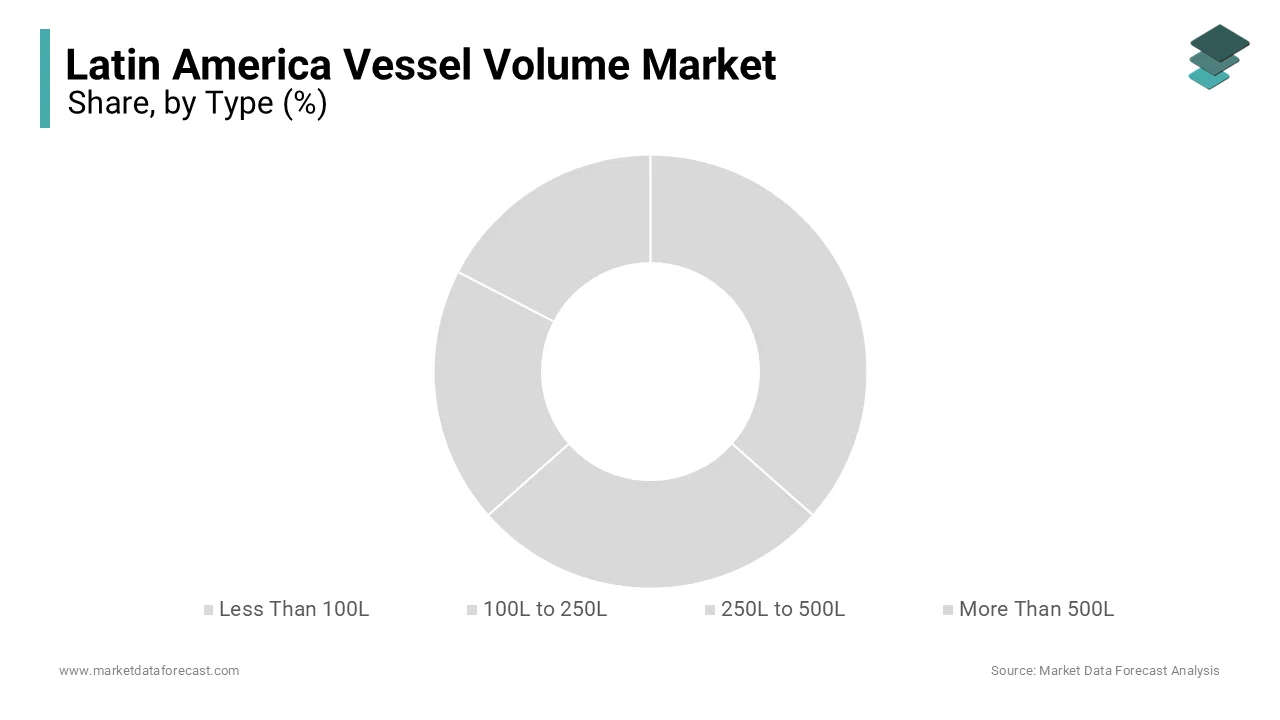
The vessels with a volume of more than 500l segment is likely to grow at a fastest CAGR of 9.2% from 2026 to 2034, as large multinational corporations expand their centralized processing capabilities in the region. As per the study, major juice and seafood exporters require large batch processing to fulfill bulk contracts with international retailers who demand consistent supply and competitive pricing. These large vessels reduce the number of cycles required per day lowering energy consumption per unit and labor costs. They are essential for continuous operation models where downtime must be minimized to maximize asset utilization. Advanced control systems in large vessels ensure uniform pressure distribution critical for food safety compliance in massive batches.
By Application Insights
The juice and beverages segment held a significant share of the Latin America High Pressure Processing Equipment Market in 2025 due to the high consumer demand for fresh tasting nutritious drinks with extended shelf life. According to the study, consumption of sugar sweetened beverages is declining while demand for natural fruit juices has increased by 10% annually as health awareness rises across the region. As per the Brazilian Fruit Growers Association, high pressure processing preserves heat sensitive vitamins and enzymes in tropical fruits like acerola and guava which are key export commodities. This technology allows producers to eliminate pasteurization related flavor changes maintaining the authentic taste profile that consumers prefer. Retailers favor high pressure treated juices because they can be stored under refrigeration for weeks reducing waste and improving supply chain flexibility. The clear label appeal of non-thermal processing aligns with marketing strategies targeting health conscious demographics.
The seafood application segment is expected to register a fastest CAGR of 10.1% from 2026 to 2034 with the need for enhanced safety and texture improvement in high value marine products. As per the Peruvian Society of Food Industry, high pressure processing effectively shucks shellfish and eliminates parasites in ceviche preparations without cooking thereby preserving the raw texture and delicate flavor prized by consumers. This application extends shelf life significantly allowing exporters to reach distant markets in Asia and Europe with premium quality products. Regulatory acceptance of high pressure treatment for pathogen control in ready to eat seafood enhances consumer confidence and reduces liability risks. The ability to improve yield by facilitating easier meat extraction from shells adds economic value for processors.
REGIONAL ANALYSIS
Brazil Market Analysis
Brazil was the top performer of the Latin America High Pressure Processing Equipment Market by holding 44.3% of the share in 2025 with its massive agricultural output and sophisticated food processing industry. Government incentives for technological innovation in agro industries further support equipment adoption. The presence of local distributors for international equipment manufacturers facilitates after sales service and training. Strong regulatory frameworks enforced by ANVISA ensure high safety standards encouraging investment in advanced processing methods. Consequently, Brazil acts as the regional hub for technology adoption and industrial scaling.
Mexico Market Analysis
Mexico high pressure processing equipment market was ranked second by accounting for 23.4% of the share in 2025 with the strong export orientation and integration with North American supply chains. As per the study, the avocado and berry sectors are rapidly adopting non thermal technologies to preserve freshness and reduce microbial loads for international shipment. Proximity to equipment manufacturers in the United States lowers logistics costs and facilitates technical support. Local food safety regulations are increasingly aligning with international best practices driving modernization in processing facilities. The growing middle class also drives domestic demand for premium healthy food products.
Argentina Market Analysis
Argentina high pressure processing equipment market growth is expected to grow eventually throughout the forecast period with the high value meat and juice processing for both domestic and export markets. According to the study, beef exports remain a cornerstone of the economy with processors seeking technologies to enhance safety and extend shelf life for premium cuts. As per the Research, research into high pressure effects on meat texture and color has led to wider industry acceptance and adoption. Economic volatility encourages investment in technologies that reduce waste and improve efficiency. Local universities collaborate with industry to develop customized solutions for traditional products like empanadas and marinades. The strong cultural emphasis on food quality supports premium positioning for high pressure treated goods. Argentina maintains steady demand driven by export needs and quality consciousness.
Chile Market Analysis
Chile high pressure processing equipment market growth is likely to grow with the seafood and fruit exports particularly salmon and berries. According to the study, the industry faces stringent international safety requirements which high pressure processing helps meet by controlling pathogens without affecting product integrity. The country’s stable regulatory environment and strong infrastructure support efficient equipment operation. Focus on sustainability and clean label trends drives adoption among premium brands. Collaboration with European technology providers ensures access to latest innovations.
COMPETITIVE LANDSCAPE
The competitive landscape of the Latin America High Pressure Processing Equipment Market features a mix of global engineering giants and specialized technology providers vying for dominance through innovation and service excellence. Multinational corporations leverage their extensive R&D capabilities and established distribution networks to supply high-capacity systems to large agro industrial exporters. Smaller niche players compete by offering customized solutions for specific applications like seafood shucking or bulk juice processing that address unique regional needs. Intense rivalry drives continuous improvement in vessel design and energy efficiency as buyers seek to maximize return on investment amidst economic volatility. Price sensitivity remains a critical factor prompting companies to offer flexible financing options and leasing models to lower entry barriers. Regulatory compliance and safety certifications play a significant role in differentiating reputable brands from lesser-known competitors.
KEY MARKET PLAYERS
Key players in the Latin America high-pressure processing equipment market are
- ThyssenKrupp AG
- Avure Technologies Inc.
- Next HPP
- Universal Pasteurization Co.
- Stansted Fluid Power Ltd.
- Multivac Sepp Haggenmuller Se & Co. KG
- Kobe Steel, Ltd.
- CHIC FresherTech
- Bao Tou KeFa High-Pressure Technology
- Hiperbaric Espana.
Top Players in the Market
- JBT Corporation maintains a strong presence in the Latin America High Pressure Processing Equipment Market through its comprehensive portfolio of food processing technologies and local service networks. The company focuses on integrating high pressure systems with existing thermal lines to offer hybrid solutions that optimize efficiency for juice and seafood processors. Recent initiatives include expanding technical support centers in Brazil and Mexico to provide faster maintenance and training for regional clients. JBT also collaborates with research institutions to validate process parameters for tropical fruits enhancing credibility among local manufacturers. These efforts help the brand retain customer loyalty by ensuring minimal downtime and consistent product quality.
- Hiperbaric strengthens its market position by specializing in bulk processing technology which allows liquids to be pressurized before packaging reducing material costs and increasing throughput. The company recently launched new models designed specifically for the high volume demands of Latin American juice exporters seeking competitive advantages in global markets. Hiperbaric actively engages with industry associations to promote the benefits of non thermal preservation for maintaining nutritional value in tropical beverages. Strategic partnerships with local distributors ensure seamless installation and regulatory compliance support for new adopters. The brand emphasizes sustainability by highlighting energy efficiency and reduced plastic usage in bulk operations.
- The ThyssenKrupp Industrial Solutions contributes to the Latin America high pressure processing equipment market by providing robust high pressure vessels and engineering services tailored to stringent safety standards. The company leverages its global engineering expertise to design customized systems that meet specific spatial and operational requirements of Latin American facilities. Recent actions include upgrading manufacturing protocols to enhance vessel durability under continuous high cycle operations common in meat and seafood processing. ThyssenKrupp also offers digital monitoring solutions that predict maintenance needs preventing unexpected breakdowns and ensuring production continuity. Collaborations with local engineering firms facilitate adaptation to regional infrastructure constraints. These strategies enable ThyssenKrupp to differentiate itself through reliability and technical precision attracting clients who prioritize long term asset performance and safety compliance.
Top Strategies Used by Key Market Participants
Key players in the Latin America high pressure processing equipment market primarily focus on localization of service and technical support to address the skilled workforce gap in the region. Companies invest heavily in training programs for local technicians ensuring rapid response times and minimizing equipment downtime for clients. Manufacturers emphasize total cost of ownership benefits including energy efficiency and waste reduction to justify high initial capital expenditures to price sensitive buyers. Innovation in bulk processing technologies offers cost effective alternatives to packaged units appealing to large scale juice and beverage producers. Demonstrating successful case studies with local products like tropical fruits and seafood builds trust and validates technology effectiveness. Digital integration for remote monitoring enhances operational reliability and provides data driven insights for process optimization. These combined strategies enable participants to overcome economic and technical barriers, while driving adoption across diverse food sectors.
MARKET SEGMENTATION
This research report on the Latin America heat high pressure processing equipment market market is segmented and sub-segmented into the following categories.
By Orientation Type
- Horizontal
- Vertical
By Vessel Volume
- Less Than 100L
- 100L to 250L
- 250L to 500L
- More Than 500L
By Application
- Fruits & Vegetables
- Meat
- Juice & Beverages
- Seafood
By End User
- Large Production Plants
- Small & Medium Enterprises
- Groups
By Country
- Brazil
- Argentina
- Mexico
- Rest of Latin America