- Product Description Description
- Table of Contents TOC
- List of Table & Figure LOT
- Get Free Sample PDF Sample PDF
Market Size, 2025
$130 MnMarket Estimate, 2026
$140 MnMarket Forecast, 2034
$220 MnCAGR, 2026–2034
6.2%Executive Summary: Latin America Non-Surgical Skin Tightening Market
- Market Scope: Comprehensive regional market evaluation of non-surgical skin tightening across Latin America covering product types, end-user settings, and country-level distribution frameworks (Brazil, Mexico, Argentina, Chile, Rest of Latin America).
- Market Valuation: Valued at USD 130 million in 2025, estimated at USD 140 million in 2026, and projected to reach USD 220 million by 2034, registering a steady CAGR of 6.2% from 2026 to 2034.
- Primary Growth Drivers: Rising aesthetic awareness, increasing demand for non-invasive cosmetic procedures with reduced risks and shorter recovery times, lower costs compared to invasive surgeries, and growing approvals for advanced laser, RF, and ultrasound devices.
Key Market Segment Metrics (2026–2034)
| Category | Leading Segment (2025 Position) | Segment Framework |
|---|---|---|
| By Product | Laser-based & RF (Radiofrequency) Devices (preferred for collagen stimulation and skin tightening efficacy) | Laser-based Devices, RF Devices, Ultrasound Devices, and Other Devices |
| By End User | Dermatology Clinics & Beauty Clinics (main clinical and aesthetic settings for procedures) | Dermatology Clinics and Beauty Clinics |
| By Country / Region | Brazil & Mexico (market leaders driven by high aesthetic awareness, expanding healthcare infrastructure, and rising disposable incomes) | Brazil, Mexico, Argentina, Chile, and Rest of Latin America |
Major Market Players & Market Structure
Market Structure: Highly competitive Latin American aesthetic device sector featuring prominent global medtech companies competing on technological innovation, product safety compliance, and clinical efficacy.
Key Companies: Cynosure Inc., Solta Medical Inc., Sciton, Inc., Alma Lasers Ltd, Lynton Lasers Ltd., Fotona d.d., Lumenis Ltd., EL.En. S.p.A., Venus Concept Canada Corp., Lutronic Corporation, Strata Skin Sciences Inc., and Cutera Inc.
Latin America Non-Surgical Skin Tightening Market Size
The size of the Latin America non-surgical skin tightening market was valued at USD 130 million in 2025. This market is expected to grow at a CAGR of 6.2% from 2026 to 2034 and be worth USD 220 million by 2034, up from USD 140 million in 2026.

Non-surgical skin tightening uses controlled thermal energy to firm and smooth loose skin without cuts, incisions, or long recovery times. This sector includes radiofrequency, ultrasound, laser, and microcurrent devices that stimulate collagen production and tighten underlying tissue structures. The region has emerged as a global hub for cosmetic treatments driven by strong cultural emphasis on physical appearance and growing disposable incomes. According to the International Society of Aesthetic Plastic Surgery, Brazil consistently ranks among the top two countries globally for total aesthetic procedures performed annually, with patients actively scheduling non-surgical skin tightening treatments alongside surgical operations to achieve comprehensive body contouring and facial rejuvenation. As per data from the Pan American Health Organization, the rapidly expanding demographic base in Latin America drives a sharp increase in clinical utilization, with one in four individuals projected to be aged 60 or older by 2050. According to the World Bank, urbanization rates exceed 85% in Argentina and Chile, actively concentrating high-income demographics within major metropolitan areas where private wellness networks expand specialized clinical facilities for advanced dermatological therapies. The preference for procedures with minimal downtime and lower risk profiles compared to traditional surgery further accelerates adoption. Regulatory frameworks in key markets are evolving to ensure device safety and practitioner competency. Consequently, this market plays a pivotal role in the regional healthcare and wellness landscape, offering accessible options for individuals seeking to maintain a youthful appearance through advanced technological interventions.
MARKET DRIVERS
Rising Prevalence of Obesity and Post-Weight Loss Skin Laxity
The increasing prevalence of obesity and subsequent weight-loss initiatives are primary drivers for the Latin America Non-Surgical Skin Tightening Market. This is because significant weight reduction often results in excess loose skin that requires aesthetic correction. According to the World Health Organisation, over 60% of the adult population in multiple Latin American countries, including Mexico and Chile, is classified as overweight or obese, which directly fuels the addressable patient base experiencing post-weight-loss skin laxity. The demographic frequently seeks non-invasive solutions to address residual skin sagging without undergoing additional invasive surgeries. As per sources, surgical and non-surgical body contouring sectors register double-digit clinical volume increases annually across primary regional hubs due to rising bariatric interventions. Patients who have successfully lost weight often experience psychological distress due to loose skin on the abdomen, arms, and thighs, driving them toward effective non-surgical alternatives. Radiofrequency and ultrasound technologies offer viable solutions to tighten these areas with minimal recovery time. The correlation between weight management trends and aesthetic demands ensures a steady stream of patients seeking these services. Clinics are increasingly marketing combination therapies that address both fat reduction and skin tightening to meet this specific need. Consequently, the market expands as it provides essential post-weight-loss care that enhances patient satisfaction and overall treatment outcomes.
Growing Influence of Social Media and Beauty Standards
The pervasive influence of social media and evolving beauty standards are the main factors behind the Latin America Non-Surgical Skin Tightening Market. These digital platforms continually expand the market by shaping consumer perceptions and increasing awareness of aesthetic enhancements. According to studies, digital connectivity indexes reveal social media penetration rates exceeding 70% in major Latin American economies, with active accounts climbing past 74% in Mexico and 81% in Chile, where consumer engagement relies heavily on highly visual formats. Exposure to filtered images and influencer endorsements normalizes cosmetic procedures and creates pressure to maintain a youthful and toned appearance. As per research, social commerce and digitized online channels now drive more than 50% of beauty and personal care sales globally, with Latin American consumer demand displaying the most aggressive growth trends. The digital exposure educates consumers about non-surgical options, making them more informed and willing to invest in skin tightening procedures. The desire to achieve the aesthetics seen online drives demand for quick and effective treatments with visible results. Clinics leverage social media marketing to showcase before and after results, attracting a younger demographic interested in preventive ageing treatments. The viral nature of aesthetic trends accelerates the adoption of new technologies and procedures. Consequently, the market benefits from heightened consumer engagement and willingness to explore non-invasive options to meet socially constructed beauty ideals.
MARKET RESTRAINTS
High Out-of-Pocket Costs Limiting Accessibility
The substantial out-of-pocket costs associated with non-surgical skin tightening procedures are major limitations to the Latin American market. This financial barrier significantly limits access to treatments for middle- and lower-income populations. According to the Economic Commission for Latin America and the Caribbean, monetary poverty rates hit a historic low of 25.5% in the region, yet extreme wealth concentration continues to heavily restrict discretionary consumer capital allocations toward elective aesthetic operations. These procedures are considered cosmetic and thus excluded from standard health coverage plans, forcing patients to pay entirely from personal savings. As per the Pan American Health Organization, out-of-pocket health expenditure remains highly elevated and accounts for roughly one-third of current health expenses, directly exhausting household cash reserves intended for non-essential personal wellness services. The high cost of advanced devices such as radiofrequency and ultrasound machines also translates into higher service fees for consumers. Price sensitivity is particularly acute in countries experiencing economic volatility such as Argentina and Venezuela, where inflation erodes purchasing power. Many potential patients delay or forego treatments due to financial constraints, opting for cheaper topical alternatives instead. This economic barrier restricts market penetration to affluent urban centers and excludes a large segment of the population. Hence, the growth of the market is constrained by affordability issues, requiring providers to develop flexible payment plans or more cost-effective treatment options to broaden their customer base.
Shortage of Qualified Medical Professionals in Rural Areas
The shortage of qualified medical professionals trained in aesthetic medicine is a significant restraint for the Latin America Non-Surgical Skin Tightening Market. This talent deficit severely limits the availability of safe and effective treatments outside major urban hubs. According to the Pan American Health Organisation, there is a marked disparity in the distribution of healthcare workers, with rural areas facing severe shortages of dermatologists and plastic surgeons capable of performing advanced non-surgical procedures. According to the World Health Organization, medical personnel distribution trends remain heavily skewed toward capital cities, requiring a minimum benchmark of 2.5 core healthcare workers per 1,000 inhabitants to resolve peripheral rural delivery deficits. The geographical imbalance means that residents in rural areas must travel long distances to access specialised clinics, increasing time and transportation costs. The lack of local expertise also raises concerns about the quality and safety of treatments provided by untrained practitioners who may operate illegal or unregulated facilities. Patients are hesitant to undergo procedures without confidence in the provider's credentials, leading to suppressed demand in underserved areas. Training programs for aesthetic medicine are often concentrated in urban academic centres, leaving rural practitioners without adequate education. This workforce gap hinders market expansion and perpetuates inequities in access to aesthetic care. Thus, the market remains fragmented, with growth concentrated in metropolitan areas while rural potential remains untapped due to human resource limitations.
MARKET OPPORTUNITIES
Expansion of Medical Tourism Creating Opportunities
The robust growth of medical tourism in the region presents a significant opportunity for the Latin America Non-Surgical Skin Tightening Market. This expansion is largely fueled by international patients travelling to the region in search of high-quality, affordable aesthetic treatments. According to the Patients Beyond Borders organization, Mexico receives over one million health travelers annually, leading a high-volume Latin American medical tourism trend where international patients actively schedule cosmetic and restorative operations. These patients are drawn by the combination of skilled professionals, state-of-the-art facilities, and lower costs compared to North America and Europe. As per regional cross-border care tracking, Colombia has seen a 240% increase in total foreign patient arrivals over the past decade, aggressively accelerating capital inflows into local private clinics performing advanced body contouring therapies. The influx provides a steady revenue stream for clinics, allowing them to invest in advanced technologies and expand their service offerings. International accreditation of hospitals and clinics enhances trust and credibility among foreign patients. The synergy between tourism and healthcare creates a unique value proposition where patients can combine vacation with treatment. Governments actively promote medical tourism through visa facilitation and marketing campaigns. This trend encourages clinics to adopt international standards and offer comprehensive packages including translation services and postoperative care. Therefore, the market expands its reach beyond domestic consumers, leveraging global demand to drive growth and innovation in non-surgical aesthetic technologies.
Adoption of Advanced Combination Therapies
The increasing adoption of advanced combination therapies unlocks potential for the Latin America Non-Surgical Skin Tightening Market. This enhances treatment efficacy and patient satisfaction through multimodal approaches. According to the American Society for Dermatologic Surgery, combination non-invasive protocols sequentially targeting distinct structural depths achieve optimized tissue remodeling by synergizing deep thermal micro-coagulation with superficial mechanical collagen synthesis. As per the Journal of Clinical and Aesthetic Dermatology, multi-modality energy and biostimulatory injectable regimens significantly optimize Cutometer measurements of skin recovery, driving strong positive patient satisfaction metrics. Clinics in major Latin American cities are increasingly offering customised packages that address multiple layers of the skin simultaneously, providing more comprehensive rejuvenation. This approach appeals to consumers seeking maximal results with minimal downtime. Manufacturers are developing integrated devices that allow for seamless switching between modalities, simplifying the workflow for practitioners. The ability to tailor treatments to individual skin types and concerns enhances clinical outcomes and differentiates providers in a competitive market. Educational workshops and conferences promote the benefits of combination therapies, encouraging wider adoption among practitioners. This trend drives demand for versatile equipment and consumables. Consequently, the market grows as providers embrace innovative protocols that deliver superior aesthetic results and meet the evolving expectations of discerning patients.
MARKET CHALLENGES
Regulatory Inconsistencies Across Countries Challenging Standardisation
The inconsistency in regulatory frameworks for aesthetic devices across different Latin American countries is a major challenge for the Latin America Non-Surgical Skin Tightening Market. This complicates market entry and compromises product safety. According to the Pan American Health Organization, regional healthcare frameworks display a fragmented adoption of medical device guidelines, with variations across regulatory authorities altering approval timelines and hindering technical convergence. As per the Brazilian Health Regulatory Agency ANVISA, the mandatory registration pathway for high-risk Class III and Class IV medical devices typically averages 4 to 12 months for standard dossier reviews. The fragmentation forces manufacturers to navigate complex and disparate requirements, increasing compliance costs and delaying product launches. The lack of standardised oversight also allows substandard or counterfeit devices to enter the market, posing risks to patient safety and undermining consumer trust. Practitioners face difficulties in verifying the authenticity and safety of equipment sourced from different suppliers. Inconsistent enforcement of regulations leads to uneven quality of care across the region. Companies must allocate significant resources to manage regulatory affairs in each country, which reduces profitability and discourages investment in smaller markets. This regulatory uncertainty hinders the efficient distribution of advanced technologies. Streamlining these processes through regional cooperation is essential to facilitate market growth and ensure patient safety across Latin America.
Prevalence of Unlicensed Practitioners and Illegal Clinics
The prevalence of unlicensed practitioners and illegal aesthetic clinics is a significant barrier to the Latin America Non-Surgical Skin Tightening Market. These illicit operations undermine the industry by compromising patient safety and severely distorting fair market dynamics. According to medical resolutions from regional licensing councils and the Federal Council of Medicine, strict structural enforcement models actively penalize unauthorized cosmetic practices to protect formal dermatological delivery standards. As per Mexico's Federal Commission for the Protection against Sanitary Risks, inspectors execute targeted closures and administrative suspensions against uncertified cosmetic entities using unregistered equipment. The unregulated entities often use counterfeit or outdated equipment, offering services at significantly lower prices, which undercuts legitimate businesses. Patients seeking affordable options may unknowingly expose themselves to risks such as burns, scarring, and infections due to improper technique or faulty devices. Negative outcomes from illegal practices damage the reputation of the entire industry and erode public trust in non-surgical treatments. Legitimate providers struggle to compete with the low prices of underground operators who do not bear the costs of compliance training and quality assurance. This shadow market impedes the growth of the formal sector and complicates efforts to establish professional standards. Addressing this issue requires stronger enforcement and public education campaigns to guide consumers toward certified professionals.
REPORT COVERAGE
| REPORT METRIC | DETAILS |
| Market Size Available | 2025 to 2034 |
| Base Year | 2025 |
| Forecast Period | 2026 to 2034 |
| Segments Covered | By Product, End User, and Country. |
| Various Analyses Covered | Global, Regional, and Country-Level Analysis, Segment-Level Analysis, Drivers, Restraints, Opportunities, Challenges; PESTLE Analysis; Porter’s Five Forces Analysis, Competitive Landscape, Analyst Overview of Investment Opportunities |
| Regions Covered |
|
| Market Leaders Profiled | Cynosure Inc., Solta Medical Inc., Merz Aesthetics, Sciton, Inc., Alma Lasers Ltd, Lynton Lasers Ltd., Fotona d.d, Lumenis Ltd., BTL Medical Solutions, EL.En. S.p.A, Venus Concept Canada Corp, Lutronic Corporation, Strata Skin Sciences Inc, Cutera Inc. |
SEGMENTAL ANALYSIS
By Product Insights
The radiofrequency (RF) devices segment led the Latin America Non-Surgical Skin Tightening Market and captured a significant share in 2025. This leading position of the segment was attributed to its proven efficacy, versatility, and ability to treat various skin types common in the region. Widespread adoption in both medical and aesthetic settings heavily propels this specific segment. The widespread adoption of RF devices is chiefly motivated by their clinical safety and effectiveness on all skin phototypes, which is vital for the ethnically diverse demographic of Latin America. According to the American Academy of Dermatology, radiofrequency modalities safely execute soft tissue contraction across all Fitzpatrick phototypes because the high-frequency current generates thermal energy directly within the dermis while preventing thermal injury to the superficial epidermis. According to regional epidemiologic assessments published by the Brazilian Society of Dermatology, the high prevalence of intermediate-to-dark Fitzpatrick skin phototypes across the country's diverse population dictates the clinical adoption of radiofrequency platforms to execute safe tissue remodeling without inducing post-inflammatory hyperpigmentation. The statistical reality ensures that RF devices are the first-line recommendation for dermatologists treating Hispanic and Afro-Latin American patients. The technology stimulates collagen production through controlled thermal injury without damaging melanin-rich epidermal layers. Clinics prefer RF systems because they reduce liability risks associated with adverse events in pigmented skin. Consequently, the market leadership of RF devices is sustained by their universal applicability and superior safety profile for the regional demographic. Manufacturers focus on developing monopolar and bipolar RF systems that offer consistent results regardless of skin colour, thereby securing their position as the standard of care in Latin American aesthetic practices.
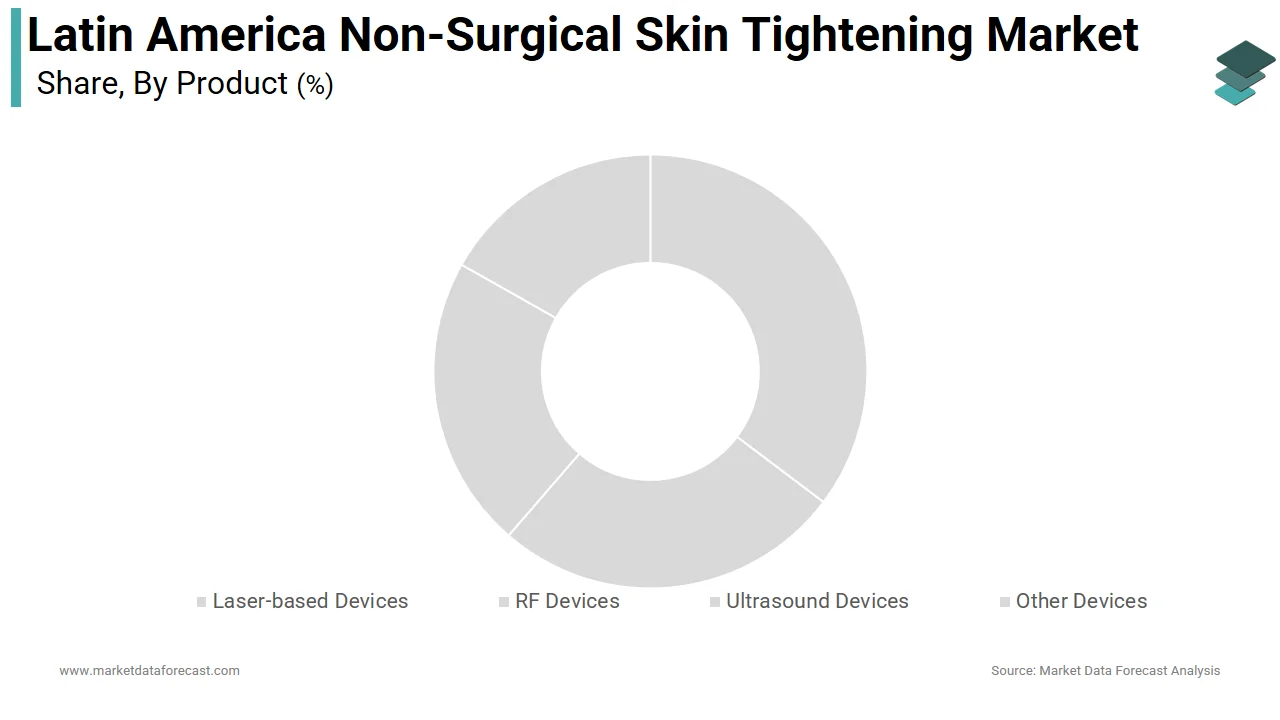
The versatility of RF devices in addressing both facial laxity and body contouring needs serves as a fundamental driver for their market domination in Latin America. According to the International Society of Aesthetic Plastic Surgery, surgical liposuction and high-definition body sculpting rank among the most frequently requested interventions in Latin American surgical centers, steadily multiplying the downstream requirement for non-invasive skin contraction technologies. RF technology uniquely offers the ability to tighten skin on large surface areas such as the abdomen, thighs, and arms while simultaneously reducing subcutaneous fat through thermolysis. As per the Journal of Clinical and Aesthetic Dermatology, modern multi-source phase-controlled radiofrequency architectures deliver deep, focused volumetric heating with reduced epidermal temperatures, generating substantial improvements in skin laxity and high objective patient satisfaction scores. This dual functionality allows clinics to offer comprehensive body rejuvenation packages that appeal to consumers seeking holistic aesthetic improvements. The high prevalence of obesity and post-weight-loss skin laxity in countries like Mexico and Chile creates substantial demand for body-specific RF applications. Patients value the ability to address multiple concerns in a single session, reducing overall treatment time and cost. Consequently, RF devices maintain their leading position by catering to the broad spectrum of aesthetic demands from facial rejuvenation to extensive body contouring, ensuring consistent high volume usage across clinics.
The ultrasound devices segment is on the rise and is expected to be the fastest-growing segment in the market, witnessing a CAGR of 8.9% during the forecast period. This rapid growth is fueled by technological advancements enabling deeper tissue penetration and non-invasive lifting capabilities. The swift expansion of this segment gains further momentum from the increasing consumer demand for non-invasive alternatives to surgical facelifts, which offer dramatic lifting effects without incisions or prolonged recovery. According to the International Society of Aesthetic Plastic Surgery, the global demand for minimally invasive and non-surgical facial rejuvenation continues to surge rapidly, with Latin American private clinics documenting aggressive market growth fueled by local cultural priorities. Microfocused ultrasound with visualization (MFUV) allows practitioners to target specific deep tissue layers such as the superficial muscular aponeurotic system, providing structural lifting similar to surgery. As per the American Society for Dermatologic Surgery, non-invasive therapeutic interventions utilizing microfocused ultrasound sequentially target distinct fascial layers to produce progressive tissue contraction and stable, measurable brow elevation. This capability appeals to middle-aged consumers who are not ready for surgery but desire noticeable improvement. The precision of ultrasound technology minimises damage to surrounding tissues, ensuring safety and predictability. Clinics market these devices as premium offerings, attracting high-value clients willing to pay for advanced technology. Consequently, the ultrasound segment experiences accelerated growth as it fills the gap between topical treatments and invasive surgery, meeting the evolving expectations of discerning patients in the region.
Technological advancements in ultrasound imaging and real-time visualization contribute to the fast-paced expansion of this segment by enhancing practitioner confidence and treatment precision. According to the Medical Device Innovation Consortium, computational modeling and simulation protocols accelerate the multi-center clinical validation of advanced diagnostic imaging technologies across specialized medical fields. As per the Journal of Cosmetic Dermatology, real-time B-mode ultrasound visualization allows clinicians to map variable tissue interfaces up to 8 millimeters deep, preventing direct energy delivery to bone or vascular boundaries and avoiding permanent motor nerve injury. The technological leap addresses previous concerns about operator dependency and variability in outcomes. Practitioners in Latin America are increasingly adopting these advanced systems to differentiate their services and offer higher quality care. The ability to customise treatment depth based on individual anatomy enhances efficacy and patient satisfaction. Training programs focused on ultrasound anatomy and device operation are expanding across the region, supporting wider adoption. Manufacturers invest heavily in research to improve transducer efficiency and treatment speed, making procedures more comfortable and efficient. Consequently, the ultrasound segment grows rapidly as technology matures and becomes more accessible to a broader range of aesthetic providers, driving market expansion through innovation and improved clinical standards.
By End User Insights
In 2025, the dermatology clinics segment held the majority share in the Latin America Non-Surgical Skin Tightening Market because it is perceived as the most authoritative and safe provider of medical aesthetic procedures. This segment benefits from high patient trust and regulatory compliance. The leading position of this segment is bolstered by the high level of patient trust in board-certified dermatologists, who possess specialised knowledge of skin physiology and pathology. According to the Pan American Health Organisation, comprehensive patient care relies on state-administered medical licensing frameworks rather than self-reported consumer surveys to verify technical competency in clinical procedures. The preference stems from rising awareness of complications associated with unqualified practitioners and counterfeit devices. As per research, structured postgraduate training regimens focus on advanced differential diagnosis to mitigate severe complications during complex tissue procedures. Medical oversight reduces the risk of adverse events and enhances treatment outcomes, leading to higher patient retention. Clinics led by dermatologists often command higher fees due to their perceived expertise and reliability. Insurance and legal frameworks also favour medical settings for liability purposes. Consequently, dermatology clinics maintain their leadership by leveraging their professional credibility to attract patients seeking guaranteed safety and efficacy. The association of skin tightening with medical health rather than just beauty reinforces the central role of dermatologists in the market.
Strict regulatory compliance and adherence to accreditation standards further solidify the position of dermatology clinics as the primary end users of non-surgical skin tightening technologies. According to the Brazilian Health Regulatory Agency ANVISA, energy-based and active electronic devices intended for aesthetic modifications fall under unified regulatory oversight requiring localized registration before commercial distribution. As per sources, state tracking mandates deploy targeted enforcement protocols to restrict illegal clinic operations using unregistered, non-compliant devices. This regulatory pressure drives patients toward legitimate dermatology clinics that meet all legal requirements for equipment storage, maintenance, and operation. Dermatologists are required to undergo continuous medical education to stay updated on the latest technologies and safety protocols, ensuring high standards of care. Hospitals and large clinic chains often partner exclusively with dermatology groups to provide aesthetic services, enhancing their reputation. The formalisation of the aesthetic sector favours medically supervised environments over informal beauty salons. Consequently, dermatology clinics dominate the market by aligning with regulatory expectations and offering a secure environment for patients. This compliance advantage ensures steady growth and market stability for the segment.
The beauty clinics segment is likely to experience the fastest CAGR of 9.5% from 2026 to 2034, owing to the democratization of aesthetic access and aggressive marketing strategies. This segment is expanding rapidly as this broader access makes non-surgical skin tightening more affordable and accessible to the middle-class population. According to regional macroeconomic tracking from the Inter-American Development Bank, expanding urban middle-class clusters exhibit high volatility in response to local inflation rates, which continuously alters secondary discretionary consumer retail patterns. Beauty clinics often offer competitive pricing and package deals that lower the entry barrier for first-time users compared to high-end dermatology offices. As per the Global Wellness Institute, regional consumer tracking reveals that the Latin America-Caribbean territory registers some of the highest compound expansion metrics globally for the broader personal care and beauty economy. These clinics focus on customer experience and convenience, offering flexible hours and localised services in shopping malls and residential areas. The shift from exclusive medical settings to approachable wellness environments attracts younger demographics interested in preventive ageing treatments. Social media marketing by beauty clinics highlights affordability and lifestyle benefits, resonating with mass market consumers. Consequently, the beauty clinic segment expands rapidly by tapping into underserved markets and normalising aesthetic treatments as part of regular self-care routines. This accessibility drives volume growth and broadens the consumer base for non-surgical skin tightening.
Aggressive marketing strategies and innovative service bundling employed by beauty clinics are propelling the expansion of this market segment. According to sources, digital communication channels absorb more than 74% of corporate media budgets globally, pushing brands to scale up omni-channel algorithm discovery mechanics. Beauty clinics leverage these channels to promote limited-time offers and bundled packages that combine skin tightening with other popular services such as facials or hair removal. As per research, bundling strategies are actively integrated into commercial playbooks to elevate transactional values by optimizing multiple complementary services. These clinics invest heavily in interior design and customer service to create a luxurious yet welcoming atmosphere that encourages repeat visits. Loyalty programs and referral incentives further enhance customer retention and word-of-mouth promotion. The ability to quickly adapt to trending treatments allows beauty clinics to capitalize on viral aesthetic phenomena. Partnerships with device manufacturers for training and certification enable non-medical staff to operate certain low-risk devices legally. Consequently, the beauty clinic segment grows rapidly by combining effective marketing with attractive service offerings that appeal to the aspirational desires of the regional population.
COUNTRY LEVEL ANALYSIS
Brazil Non-Surgical Skin Tightening Market Analysis
Brazil dominated the Latin America Non-Surgical Skin Tightening Market and accounted for a substantial share in 2025. This dominance of the Brazilian market was driven by its robust aesthetic culture, advanced healthcare infrastructure, and high volume of cosmetic procedures. The country serves as the regional leader in innovation and adoption of new technologies. According to the International Society of Aesthetic Plastic Surgery, Brazil consistently ranks second globally for total aesthetic procedures performed, with local clinical volumes exceeding 3.1 million surgical and non-surgical treatments. As per the Brazilian Society of Plastic Surgery, the demand for minimally invasive interventions has registered substantial multi-year volume gains as patient cohorts prioritize advanced clinical techniques with accelerated recovery profiles. The presence of numerous local and international device manufacturers facilitates easy access to the latest technologies. Regulatory approval by ANVISA is rigorous but streamlined for established companies, ensuring product quality. The strong influence of media and celebrity culture promotes aesthetic ideals, driving consumer demand. Consequently, Brazil remains the primary growth engine for the regional market, setting trends for neighbouring countries.
Mexico Non-Surgical Skin Tightening Market Analysis
Mexico was positioned second in the Latin America non-surgical skin tightening market because of strong medical tourism inflows and growing domestic demand for aesthetic services. The country benefits from proximity to the United States, facilitating cross-border patient flows. According to the Patients Beyond Borders organisation, Mexico receives over 1 million medical tourists annually, positioning border municipalities and major regional wellness corridors as dominant destinations for cross-border aesthetic and cosmetic care. As per the Mexican Association of Plastic, Aesthetic and Reconstructive Surgery, certified surgical centers register steady domestic growth by expanding structured public safety campaigns against unauthorized medical practices. Government initiatives to regulate aesthetic clinics have improved safety standards, boosting consumer confidence. Urban centres like Mexico City and Guadalajara host state-of-the-art clinics offering competitive pricing. The influence of US beauty trends accelerates adoption of new devices. Consequently, Mexico exhibits strong growth potential driven by both international visitors and local consumers seeking affordable, high-quality care.
Argentina Non-Surgical Skin Tightening Market Analysis
Argentina is a key player in the Latin America non-surgical skin tightening market due to high per capita spending on aesthetic treatments despite economic fluctuations. The country has a strong tradition of plastic surgery and skincare, influencing demand for non-surgical alternatives. According to the Argentine Society of Plastic Surgery, specialized clinical protocols emphasize advanced energy settings to achieve precise, progressive volumetric tissue contracture. As per the National Institute of Statistics and Censuses, the rapid urbanization of regional demographics triggers a persistent shift in local health infrastructure frameworks. Economic volatility affects purchasing power, but the cultural priority on appearance sustains baseline demand. Local practitioners are highly skilled and often train internationally, bringing advanced techniques back home. The market is concentrated in Buenos Aires, where disposable income is higher. Consequently, Argentina maintains a stable position with a focus on quality and expertise rather than volume.
Chile Non-Surgical Skin Tightening Market Analysis
Chile holds a noteworthy share of the regional market owing to high healthcare standards and increasing adoption of advanced aesthetic technologies. The country benefits from political stability and strong economic indicators supporting discretionary spending. According to the Chilean Ministry of Health, public-private financial models allocate a substantial percentage of current health expenditures to cover structural outpatient and copayment outlays. As per the Institute of Public Health of Chile, newly expanded sanitary control mandates strictly require formal registration for all high-risk therapeutic devices. The small but affluent population supports premium clinics offering personalized care. Regulatory frameworks are strict, ensuring only certified professionals perform procedures. Awareness of sun damage due to high UV exposure drives demand for skin rejuvenation and tightening. Consequently, Chile exhibits steady growth driven by quality-conscious consumers and well-regulated practice standards.
COMPETITIVE LANDSCAPE
The competition in the Latin America Non-Surgical Skin Tightening Market is characterized by a mix of global industry leaders and emerging regional distributors striving to capture value in a fragmented landscape. Multinational corporations dominate the premium segment with advanced radiofrequency and ultrasound devices leveraging their strong brand reputation and clinical validation. Local distributors compete aggressively by offering cost-effective alternatives and personalized service to smaller clinics and beauty centers. The competitive intensity is heightened by varying regulatory requirements across nations, which require companies to adapt their compliance strategies frequently. Price sensitivity remains a critical factor influencing procurement decisions, particularly in countries experiencing economic volatility. Companies differentiate themselves through superior after-sales support, comprehensive training programs, and marketing assistance for clinics. The rise of medical tourism drives competition for high-quality accredited facilities that can attract international patients. Innovation in combination therapies and device versatility is becoming a key differentiator as providers seek to offer holistic aesthetic solutions. Strategic collaborations with local medical societies help build trust and credibility among practitioners. This dynamic environment drives continuous improvement in technology and service delivery models across the region.
KEY MARKET PLAYERS
The leading companies operating in the Latin America non-surgical skin tightening market include:
- Cynosure Inc.
- Solta Medical Inc.
- Merz Aesthetics
- Sciton, Inc.
- Alma Lasers Ltd.
- Lynton Lasers Ltd.
- Fotona d.d.
- Lumenis Ltd.
- BTL Medical Solutions
- En. S.p.A.
- Venus Concept Canada Corp.
- Lutronic Corporation
- Strata Skin Sciences Inc.
- Cutera Inc.
TOP PLAYERS IN THE MARKET
- Merz Aesthetics maintains a strong presence in the Latin America Non-Surgical Skin Tightening Market through its innovative portfolio of energy-based devices and injectables. The company actively engages with local dermatologists and plastic surgeons to provide comprehensive training on its Ultherapy and Radiesse technologies. Recently, Merz Aesthetics expanded its educational academy in Brazil to certify more practitioners in advanced ultrasound techniques, ensuring high standards of care. The firm leverages strategic partnerships with leading clinics to promote combination therapies that enhance patient outcomes. By focusing on evidence-based marketing and clinical support, Merz strengthens its reputation as a trusted partner in aesthetic medicine. Its commitment to innovation drives the adoption of non-invasive lifting solutions across the region.
- BTL Medical Solutions contributes significantly to the market by offering advanced radiofrequency and magnetic field technologies designed for body contouring and skin tightening. The company has established a robust distribution network in key markets such as Mexico and Argentina to ensure widespread availability of its Emsculpt and Exilis devices. Recently, BTL launched new protocols tailored for diverse skin types common in Latin America, improving efficacy and safety profiles. The firm supports clinics with marketing materials and patient education tools to drive demand for non-surgical treatments. BTL also invests in clinical research to validate treatment outcomes, enhancing credibility among medical professionals. Its focus on user-friendly designs and reliable performance strengthens its position in the competitive landscape.
- Solta Medical plays a pivotal role in the market by providing high-quality radiofrequency systems known for their precision and versatility in skin rejuvenation. The company focuses on delivering consistent thermal energy to stimulate collagen production without damaging surrounding tissues. Recently, Solta Medical introduced updated software features for its ThermiSmooth devices, allowing for customized treatment plans based on individual patient needs. The firm collaborates with regional distributors to expand access in emerging markets like Chile and Colombia. Solta Medical also provides extensive technical support and maintenance services, ensuring optimal device performance. Its emphasis on safety and clinical efficacy makes it a preferred choice for dermatology clinics seeking reliable skin tightening solutions.
TOP STRATEGIES USED BY KEY MARKET PARTICIPANTS
Key players in the Latin America Non-Surgical Skin Tightening Market primarily employ strategies such as establishing comprehensive training academies to certify local practitioners and ensure safe device operation. Companies increasingly engage in strategic partnerships with medical tourism agencies to attract international patients seeking affordable aesthetic treatments. Expansion of digital marketing campaigns on social media platforms helps raise awareness and normalize non-invasive procedures among younger demographics. Manufacturers also focus on developing combination therapies that integrate multiple technologies for enhanced results and higher patient satisfaction. Regulatory compliance and localization of product labels facilitate smoother market entry in countries with strict health authorities. Pricing strategies often include flexible financing options to make treatments accessible to the growing middle class. These multifaceted approaches enable participants to navigate cultural nuances and economic variations while driving market growth.
MARKET SEGMENTATION
This Latin America non-surgical skin tightening market research report is segmented and sub-segmented into the following categories.
By Product
- Laser-based Devices
- RF Devices
- Ultrasound Devices
- Other Devices
By End User
- Dermatology Clinics
- Beauty Clinics
By Country
- Brazil
- Mexico
- Argentina
- Chile
- Rest of Latin America