- Product Description Description
- Table of Contents TOC
- List of Table & Figure LOT
- Get Free Sample PDF Sample PDF
Market Size, 2025
$534.39 MnMarket Estimate, 2026
$593.71 MnMarket Forecast, 2034
$1,378 MnCAGR, 2026–2034
11.10%Executive Summary: Latin America Pet Insurance Market
- Market Scope: Comprehensive regional analysis of the Latin American pet insurance market covering policy categories, policy types, country leadership frameworks, and veterinary healthcare trends.
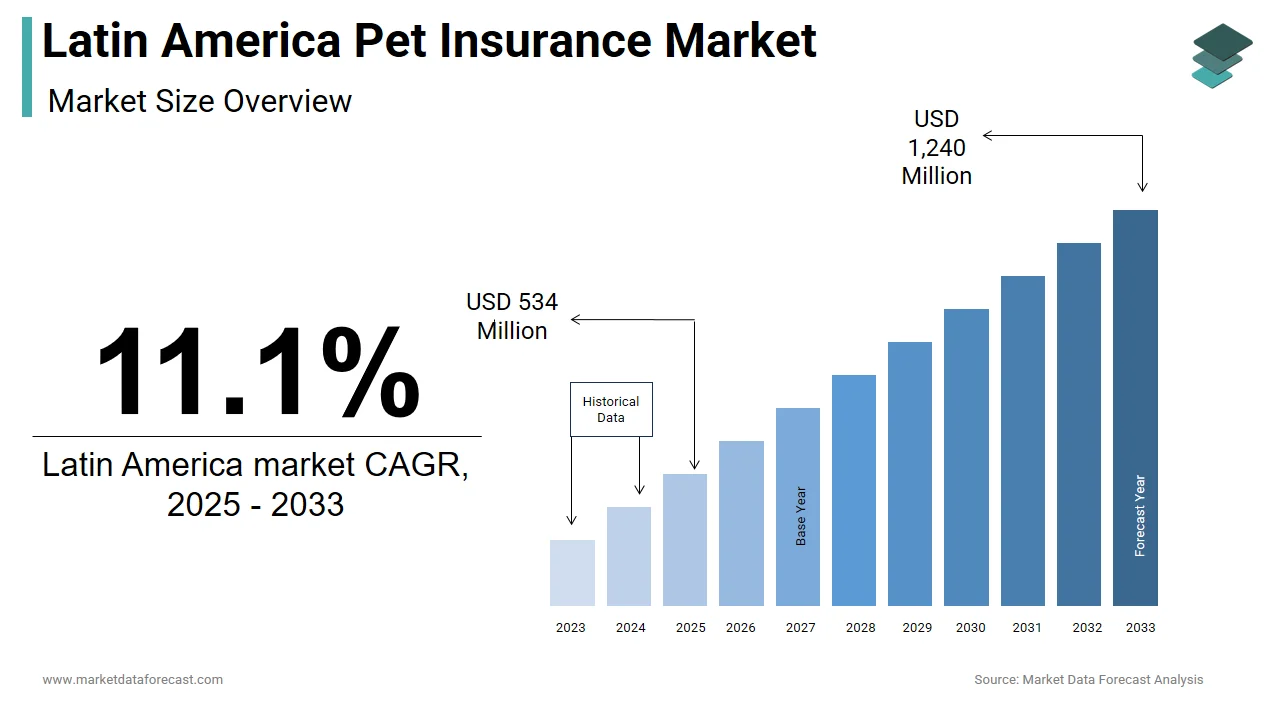
- Market Valuation: Valued at USD 534.39 million (2025), estimated at USD 593.71 million (2026), and projected to reach USD 1,378 million by 2034, registering a robust CAGR of 11.1% (2026–2034).
- Primary Growth Drivers: Growing pet adoption rates (especially post-COVID-19), escalating veterinary healthcare and maintenance costs, rising government support for pet welfare schemes, and the emergence of tech-driven online insurance platforms.
Key Market Segment Metrics (2026–2034)
| Category | Leading Segment (Base Position) | Fastest-Growing Segment |
|---|---|---|
| By Policy | Dog Insurance Segment (held the major market share backed by high regional canine adoption rates, e.g., Brazil ranking second globally) | Cat Insurance Segment (expanding due to urbanization and single-household pet preferences) |
| By Policy Type | Lifetime Cover Segment (predicted to occupy the leading share for comprehensive lifetime protection) | Accidental & Illness Cover variants (driven by unexpected veterinary check-up costs and injury treatments) |
| By Country | Brazil and Mexico (accounted for the major share in 2025 due to widespread pet ownership and expanding veterinary infrastructure) | Chile (experiencing rapid growth as monthly household veterinary expenditures rise) |
Major Market Players & Market Structure
Market Structure: Expanding regional market featuring international pet insurance specialists and local startup policy providers focusing on digital software integrations to simplify claims and coverage plans.
Key Companies: Petplan Pet Insurance, Embrace Pet Insurance Agency, Royal & Sun Alliance (RSA), Pethealth Inc., Agria Pet Insurance, Petfirst Healthcare, Nationwide Pet Insurance, PetSure Pty Ltd., Petsecure Pet Health Insurance, and Hartville Group.
 Download Free Sample Report
Latin America Pet Insurance Market Size
The size of the Latin America pet insurance market was worth USD 534.39 million in 2025. The market is anticipated to grow at a CAGR of 11.1% from 2026 to 2034 and be worth USD 1,378 million by 2034 from USD 593.71 million in 2026.
Chronic diseases such as diabetes and renal failure affect 15% of aging companion animals, thereby driving demand for long-term coverage solutions that manage recurring treatment expenses. The indemnity plans reimbursement models and wellness add-ons are distributed through digital platforms and traditional brokers. Regulatory frameworks regarding animal welfare and consumer protection influence policy structures and claim processes. Stakeholders prioritize affordability and transparency to overcome cultural hesitancy toward insuring non-human family members. These efforts address the rising cost of veterinary medicine while ensuring access to quality care.
MARKET DRIVERS
Rising Veterinary Care Costs
The rising veterinary care costs are making out-of-pocket payments for complex procedures, which is fuelling the growth of the Latin America pet insurance market. The financial burden forces pet owners to seek alternative payment mechanisms to avoid euthanasia or delayed treatment. Insurance policies provide a predictable monthly expense rather than unpredictable large bills. The availability of credit-based veterinary services is limited, making insurance a viable alternative. Veterinarians actively recommend coverage to ensure clients can afford recommended treatments. This economic pressure transforms insurance from a luxury into a necessity for responsible pet ownership. The escalating price of medical interventions is creating a clear value proposition for financial protection across the region.
Humanization of Pets
The humanization of pets is shifting the perception of animals from property to family members, who deserve comprehensive healthcare and emotional support similar to humans, which is also bolstering the growth of the Latin America pet insurance market. As per the study, owners who view pets as family members are three times more likely to purchase insurance to avoid making difficult financial decisions during medical crises. This emotional bond encourages proactive health management, including regular check-ups and vaccinations, which are often covered in wellness plans. Social media amplifies this trend by showcasing high-quality pet care standards, influencing peer behavior. Pet parents seek peace of mind knowing they can afford the best possible care without financial ruin. Marketing campaigns emphasize the emotional security insurance provides rather than just financial reimbursement. This cultural shift expands the addressable market beyond wealthy elites to include middle-class families who prioritize pet well-being.
MARKET RESTRAINTS
Low Awareness and Understanding
The low awareness and understanding are leaving a significant portion of the population unaware of the existence, benefits, and mechanics of pet insurance products, which is restricting the growth of the Latin America pet insurance market. As per the survey, the respondents believe pet insurance is either unavailable or exclusively for show animals, demonstrating a fundamental misconception about product accessibility and purpose. This lack of information prevents potential customers from considering insurance as a viable option for managing veterinary costs. Educational efforts by insurers are fragmented and often fail to reach rural or lower-income demographics. Misunderstanding of exclusions and waiting periods leads to distrust when claims are denied. Agents rarely offer pet insurance alongside other lines due to low commission incentives. This informational barrier stifles growth by limiting the pool of informed buyers who understand the value proposition.
High Premium Affordability Issues
High premium affordability issues are placing monthly costs that face economic volatility and limited disposable income. This factor is another factor to promote the growth of the Latin America pet insurance market. As per the study, price sensitivity is the primary reason for policy cancellation, with lapsed customers citing inability to pay premiums as the main factor. Currency fluctuations increase the cost of reinsurance and imported medical supplies. Many pet owners opt for self-insurance or savings accounts instead of paying for coverage they may not use immediately. Limited competition in some countries keeps prices artificially high. This economic constraint limits market penetration to upper income brackets, excluding the vast middle and lower classes. It creates a barrier to entry that prevents widespread adoption.
MARKET OPPORTUNITIES
Digital Distribution Channels
The digital distribution channels are leveraging high smartphone penetration and social media usage to reach younger, tech-savvy pet owners efficiently is attributed to the growth of the Latin America pet insurance market. Internet users in the region spend an average of 4 hours daily on social media platforms, which provides insurers with targeted advertising opportunities to educate and convert potential customers at low acquisition costs. This digital approach reduces overhead costs, allowing for more competitive pricing. Online communities facilitate peer recommendations and trust-building. Automated underwriting speeds up policy issuance, attracting impatient consumers. Integration with veterinary clinic software enables seamless data sharing for faster claims. Chatbots provide 24/7 customer support, improving satisfaction. This technological shift bypasses traditional barriers such as the lack of physical branches in rural areas. It aligns with the lifestyle of modern pet owners who prefer digital interactions.
Partnerships with Veterinary Clinics
The partnerships with veterinary clinics are an additional factor to accelerate the growth of the Latin America pet insurance market. The clinics actively promote insurance with a higher uptake rate among clients because veterinarians serve as trusted advisors who can explain the clinical and financial benefits effectively. The integrated payment systems that allow direct billing to insurers reduce administrative friction for both clinics and pet owners, thereby increasing satisfaction and retention rates for insurance providers. These partnerships enable insurers to access verified health data for better risk assessment and personalized pricing. Clinics benefit from increased client loyalty and higher acceptance of recommended treatments. Joint marketing campaigns raise awareness among existing patient bases. Exclusive discounts for clinic patients create incentives for enrollment.
MARKET CHALLENGES
Fraud and Claims Management
Fraud and claims management are posed to increase operational costs and lead to higher premiums that deter honest customers from purchasing or renewing policies, which is a key factor in the decline in the growth of the Latin America pet insurance market. According to the study, the insurance industry loses billions globally to fraudulent claims, including staged accidents and inflated veterinary bills, which is a growing concern in regions with less stringent verification systems. The lack of centralized pet identification databases in many Latin American countries makes it difficult to verify pre-existing conditions or identity theft, resulting in erroneous payouts and increased risk for insurers. This vulnerability forces companies to invest heavily in manual review processes, slowing down legitimate claims. Suspicion erodes trust between insurers and policyholders. Complex documentation requirements frustrate customers, leading to dissatisfaction. Advanced analytics for fraud detection are not yet widely adopted due to cost constraints. Regulatory frameworks for prosecuting insurance fraud are often weak or inconsistently enforced.
Regulatory Uncertainty
The regulatory uncertainty is creating an inconsistent legal environment, where product definitions, consumer protections, and solvency requirements vary is additionally to inhibit the growth of the Latin America pet insurance market. Only a few countries have specific regulations governing pet insurance, leading to ambiguity regarding policy terms, dispute resolution mechanisms, and insurer obligations in case of default. Local insurers struggle to design compliant products without clear precedents. Consumers hesitate to buy from unregulated entities, fearing lack of recourse. Cross-border sales are complicated by differing legal standards. Regulatory changes can occur abruptly, disrupting business models. Lobbying efforts for standardized frameworks are ongoing, but progress is slow. This instability increases the cost of doing business and limits innovation. It prevents the establishment of industry-wide best practices.
REPORT COVERAGE
| REPORT METRIC | DETAILS |
| Market Size Available | 2025 to 2034 |
| Base Year | 2025 |
| Forecast Period | 2026 to 2034 |
| Segments Covered | By Policy Type, Policy and Country, and Country. |
| Various Analyses Covered | Global, Regional, and Country-Level Analysis, Segment-Level Analysis, Drivers, Restraints, Opportunities, Challenges; PESTLE Analysis; Porter’s Five Forces Analysis, Competitive Landscape, Analyst Overview of Investment Opportunities |
| Countries Covered | Brazil, Mexico, Argentina, Chile & Rest of Latin America |
| Market Leaders Profiled | Petplan Pet Insurance, Embrace Pet Insurance Agency, Royal & Sun Alliance (RSA), Pethealth Inc., Agria Pet Insurance, Mapfre SA, Petfirst Healthcare, Allianz SE, Chubb Limited, Nationwide Pet Insurance, PetSure Pty Ltd., Petsecure Pet Health Insurance, Hartville Group. |
SEGMENTAL ANALYSIS
By Policy Insights
The dog insurance segment was the largest, accounting for 22.3% of the Latin America Pet Insurance Market share in 2025 due to the overwhelming prevalence of canines as the primary companion animal across households in the region. All registered pets in urban centers like Sao Paulo and Mexico City, which creates a massive addressable base for insurance products tailored to canine health needs. Dogs are statistically more prone to accidental injuries and chronic conditions, such as hip dysplasia, compared to other domestic animals, thereby driving higher claim frequencies and necessitating comprehensive coverage options. Veterinary clinics actively promote insurance during routine vaccinations for puppies, establishing early adoption habits. Breed-specific risks encourage owners of purebred dogs to seek financial protection against genetic disorders.
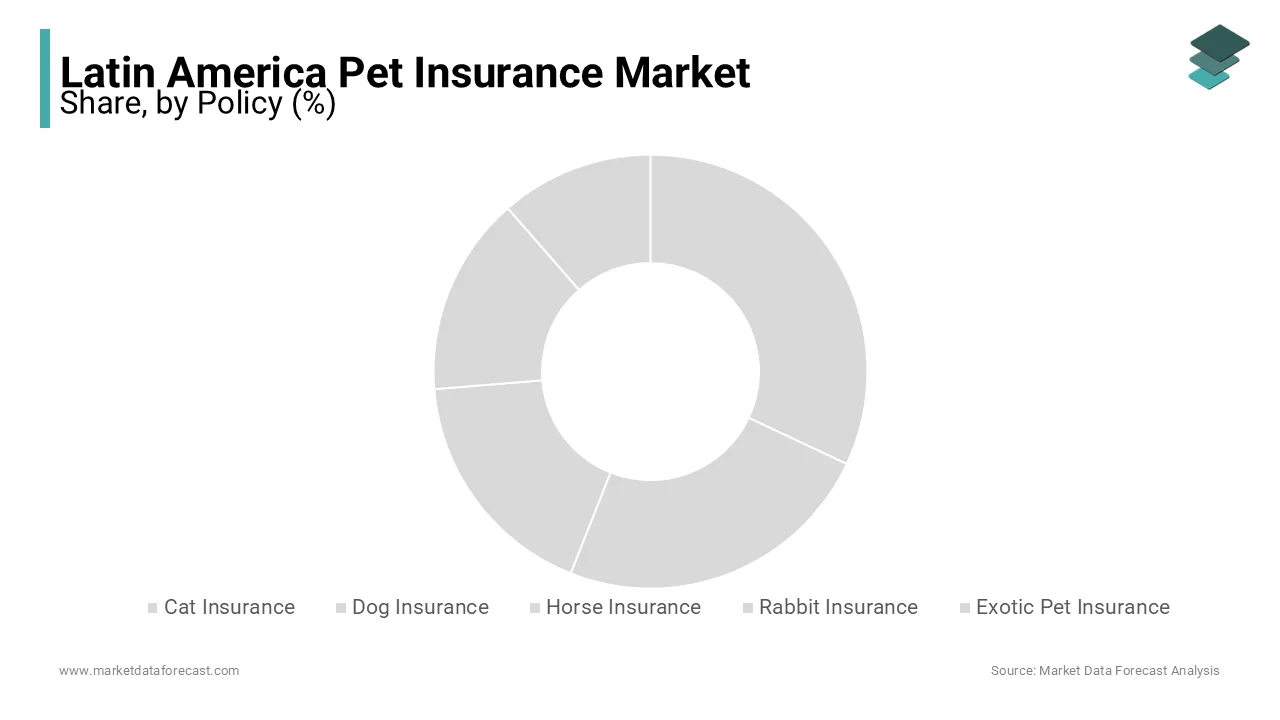
The exotic pet insurance segment is likely to grow at the fastest CAGR of 9.8% during the forecast period, with the rising interest in unique companions such as birds, reptiles, and small mammals among urban millennials. The specialized veterinary care for exotics costs up to 40% more than standard dog or cat visits due to the scarcity of qualified specialists and expensive diagnostic equipment, thereby creating an urgent need for financial coverage. Social media trends normalize keeping unusual pets and promote their complex care requirements. Higher disposable income among young professionals allows for spending on premium pet care. Awareness campaigns educate owners about the high cost of emergency care for fragile species. This trend diversifies the risk pool and opens new revenue streams.
By Policy Type Insights
The lifetime cover segment was the largest, holding 24.4% of the Latin America Pet Insurance Market share in 2025 due to the comprehensive nature of protection it offers for chronic conditions and long-term health management throughout the pet’s life. The policyholders prefer lifetime coverage because it provides peace of mind against recurring expenses associated with aging pets such as arthritis, diabetes, and kidney disease. More preventive care visits compared to those with limited terms, thereby improving overall health outcomes and reducing severe emergency interventions. Veterinarians recommend continuous coverage to avoid gaps in treatment for progressive conditions. Although premiums are higher, the predictability of costs appeals to budget-conscious families. Renewal guarantees prevent cancellation due to age or claim history. This stability fosters long-term customer loyalty and retention.
The accidental cover segment is anticipated to witness the fastest CAGR of 12.4% during the forecast period, with affordability and appeal to first-time pet owners, who seek basic protection against unexpected injuries without high premium commitments. Lower-income households are three times more likely to purchase accident-only policies because they provide a safety net for emergency surgeries resulting from trauma, while excluding costly chronic illness treatments. The high incidence of urban accidents, such as vehicle collisions and falls in densely populated cities. Quick claims processing for clear-cut injuries enhances user satisfaction. Bundling with wellness visits adds value without significant cost increases.
COUNTRY-LEVEL ANALYSIS
Brazil Pet Insurance Market Analysis
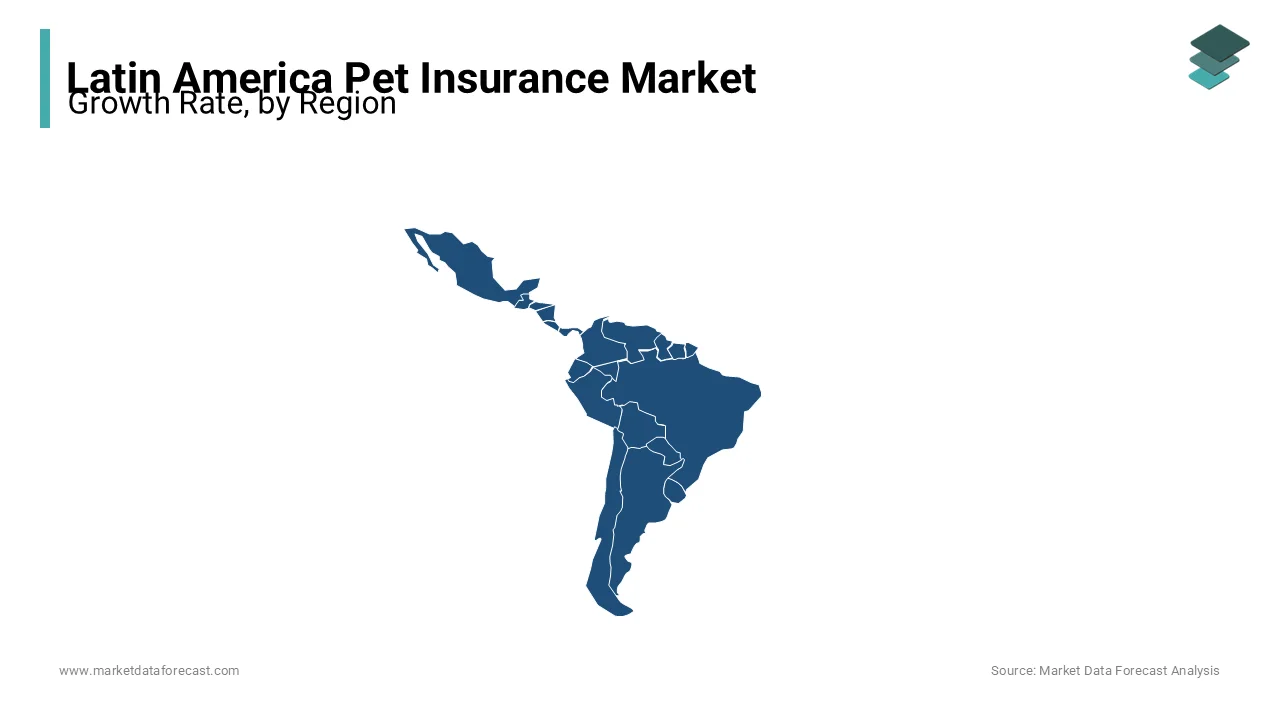
Brazil was the largest contributor in the Latin America Pet Insurance Market by holding 22.1% of the share in 2025, with its large pet population, robust veterinary infrastructure, and growing middle-class awareness of pet health benefits. Brazil's digital banking integration has facilitated the sale of micro insurance products, including pet coverage, leading to an annual increase in policy issuance through fintech partnerships. Major cities like Sao Paulo and Rio de Janeiro host advanced veterinary hospitals that encourage insurance adoption for expensive procedures. Local insurers collaborate with international reinsurers to manage risk effectively. Regulatory clarity supports product innovation and consumer protection. High smartphone penetration enables efficient digital distribution channels. Cultural shifts toward pet humanization drive demand for premium services.
Mexico Pet Insurance Market Analysis
Mexico pet insurance market was ranked second, holding 16.3% of the share in 2025, with increasing urbanization and rising disposable income among young professionals who prioritize pet wellness. Households in Mexico City own pets, with a significant portion expressing willingness to pay for health coverage due to rising veterinary fees. E-commerce platforms integrate pet insurance at checkout for pet supplies, boosting visibility. Government initiatives promoting responsible pet ownership include educational campaigns about insurance benefits. Economic stability in key regions supports consistent premium payments.
Argentina Pet Insurance Market Analysis
Argentina pet insurance market growth is likely to grow at the fastest CAGR in the coming years, driven by a strong cultural affinity for pets and a sophisticated insurance sector. As per the study, the high density of veterinary clinics in Buenos Aires facilitates easy access to care, making insurance a practical tool for managing frequent visit costs. Local insurers offer flexible payment plans indexed to inflation to maintain affordability. Strong consumer protection laws build trust in insurance contracts. Social media influencers promote pet insurance, enhancing awareness.
Chile Pet Insurance Market Analysis
Chile pet insurance market growth is driven by the high regulatory standards and widespread acceptance of insurance products among educated consumers. Chile has one of the highest insurance penetration rates in the region, with pet insurance increasingly bundled with home and auto policies for cross-selling opportunities. Strict rule of law ensures contract enforcement and fair claims handling. High-quality veterinary services drive demand for coverage that pays for premium care. Digital transformation in the insurance sector improves user experience and reduces administrative costs. Corporate wellness programs sometimes include pet benefits, attracting professional workers.
COMPETITIVE LANDSCAPE
The competitive landscape of the Latin America Pet Insurance Market features a mix of multinational insurers, regional banks, and emerging insurtech startups vying for market share through innovation and localized solutions. Global players leverage their brand reputation and financial strength to offer comprehensive policies with wide coverage networks. These corporations emphasize digital transformation to streamline operations and enhance customer experience. Regional banks utilize existing customer bases to cross-sell pet insurance as an add-on to other financial products. Insurtech startups disrupt the market with agile platforms, lower costs, and transparent pricing models appealing to younger demographics. The market remains fragmented due to varying levels of awareness and regulatory environments across countries. Key participants increasingly focus on partnerships with veterinary clinics to create integrated ecosystems that drive adoption.
KEY MARKET PLAYERS
The leading companies operating in the Latin America pet insurance market include:
- Petplan Pet Insurance
- Embrace Pet Insurance Agency
- Royal & Sun Alliance (RSA)
- Pethealth
- Agria Pet Insurance
- Mapfre A.
- Petfirst Healthcare
- Allianz SE
- Chubb Limited
- Nationwide Pet Insurance
- PetSure Pty
- Petsecure Pet Health Insurance
- Hartville Group
TOP PLAYERS IN THE MARKET
- Mapfre SA strengthens its position in the Latin America Pet Insurance Market through its extensive regional network and tailored product offerings that address specific local needs. The company recently launched digital platforms in Brazil and Mexico, allowing customers to purchase policies and file claims via mobile applications, which enhances accessibility for tech-savvy pet owners. Their strategic focus on partnerships with veterinary clinics ensures seamless service delivery and builds trust among consumers. Educational campaigns raise awareness about the benefits of insurance coverage for unexpected veterinary expenses. This customer-centric approach fosters loyalty and drives retention rates. Continuous investment in data analytics improves risk assessment and pricing accuracy.
- Allianz SE contributes significantly to the Latin America Pet Insurance Market by leveraging its global expertise and robust financial stability to offer comprehensive coverage options. The organization has expanded its presence in Argentina and Chile through collaborations with local brokers, who understand regional regulatory nuances. Recent initiatives include introducing wellness add-ons that cover preventive care such as vaccinations and dental cleanings, appealing to health-conscious pet parents. Allianz utilizes advanced underwriting models to provide competitive premiums while maintaining profitability. Strong brand recognition attracts high-net-worth individuals seeking premium services. Integration with international assistance programs provides added value for travelers with pets. Commitment to sustainability aligns with growing consumer preferences for responsible corporate practices.
- Chubb Limited has a strong presence in the Latin American pet insurance market through specialized high-end products, designed for affluent clients and exotic pet owners. The company recently enhanced its digital claims processing system in Colombia and Peru, reducing turnaround time and improving customer satisfaction significantly. Their strategic emphasis on personalized service includes dedicated support lines for policyholders requiring immediate assistance during emergencies. Chubb offers unique coverage for rare breeds and exotic animals, addressing gaps in standard market offerings. Partnerships with elite veterinary hospitals ensure access to top-tier medical care for insured pets. Marketing efforts target niche communities through social media and breed-specific events. This focused approach builds a loyal customer base willing to pay premium prices for superior service.
MARKET SEGMENTATION
This Latin America pet insurance market research report is segmented and sub-segmented into the following categories.
By Policy
- Cat Insurance
- Dog Insurance
- Horse Insurance
- Rabbit Insurance
- Exotic Pet Insurance
- Others
By Policy Type
- Lifetime Cover
- Accidental Cover
- Illness Cover
- Non-lifetime Cover
- Accidental Cover
- Illness Cover
- Others
By Country
- Brazil
- Mexico
- Argentina
- Chile
- Rest of Latin America