- Product Description Description
- Table of Contents TOC
- List of Table & Figure LOT
- Get Free Sample PDF Sample PDF
Market Size, 2025
$0.28 BnMarket Estimate, 2026
$0.30 BnMarket Forecast, 2034
$0.57 BnCAGR, 2026–2034
8.20%Executive Summary: Latin America Steam Autoclave Market
- Market Scope: Comprehensive regional market evaluation of steam autoclaves across Latin America covering configurations, sterilization technologies, end-user settings, and country-level frameworks (Brazil, Mexico, Argentina, Chile, Rest of Latin America).
- Market Valuation: Valued at USD 0.28 billion in 2025, estimated at USD 0.30 billion in 2026, and projected to reach USD 0.57 billion by 2034, registering a robust CAGR of 8.2% from 2026 to 2034.
- Primary Growth Drivers: High prevalence of infectious and nosocomial diseases, rising patient and clinician awareness regarding medical sterilization, growing hospitalization rates, strict government hygiene regulations, and the expansion of medical, dental, and pharmaceutical infrastructure across the region.
Key Market Segment Metrics (2026–2034)
| Category | Leading Segment (2025 Position) | Segment Framework |
|---|---|---|
| By Configuration | Table Top & Horizontal (widely utilized in clinics and large-scale hospital sterilization units) | Table Top, Vertical, Horizontal, High Pressure, and Floor Standing |
| By Technology | Pre-vacuum & Gravity Displacement (standard steam sterilization technologies) | Gravity Displacement, Steam Flush, and Pre-vacuum |
| By End-user | Medical & Healthcare Organizations (high adoption driven by continuous hospital use and surgical instrument processing) | Medical, Laboratory, Dental Clinics, Health Care Organizations, and Academics |
| By Country / Region | Brazil (major market leader) & Mexico (projected at 4.6% CAGR supported by waste management guidelines) | Brazil, Mexico, Argentina, Chile, and Rest of Latin America |
Major Market Players & Market Structure
Market Structure: Highly competitive Latin American healthcare sterilization sector featuring major international medtech corporations and infection control specialists competing on equipment efficiency, cost-effectiveness, and compliance with local regulatory guidelines.
Key Companies: Steris, Belimed Deutschland, Priorclave, Getinge Infection Control, 3M Health Care, Panasonic Healthcare, LTE Scientific, Medisafe International, Belimed Group, and Melag.
 Download Free Sample Report
Latin America Steam Autoclave Market Size
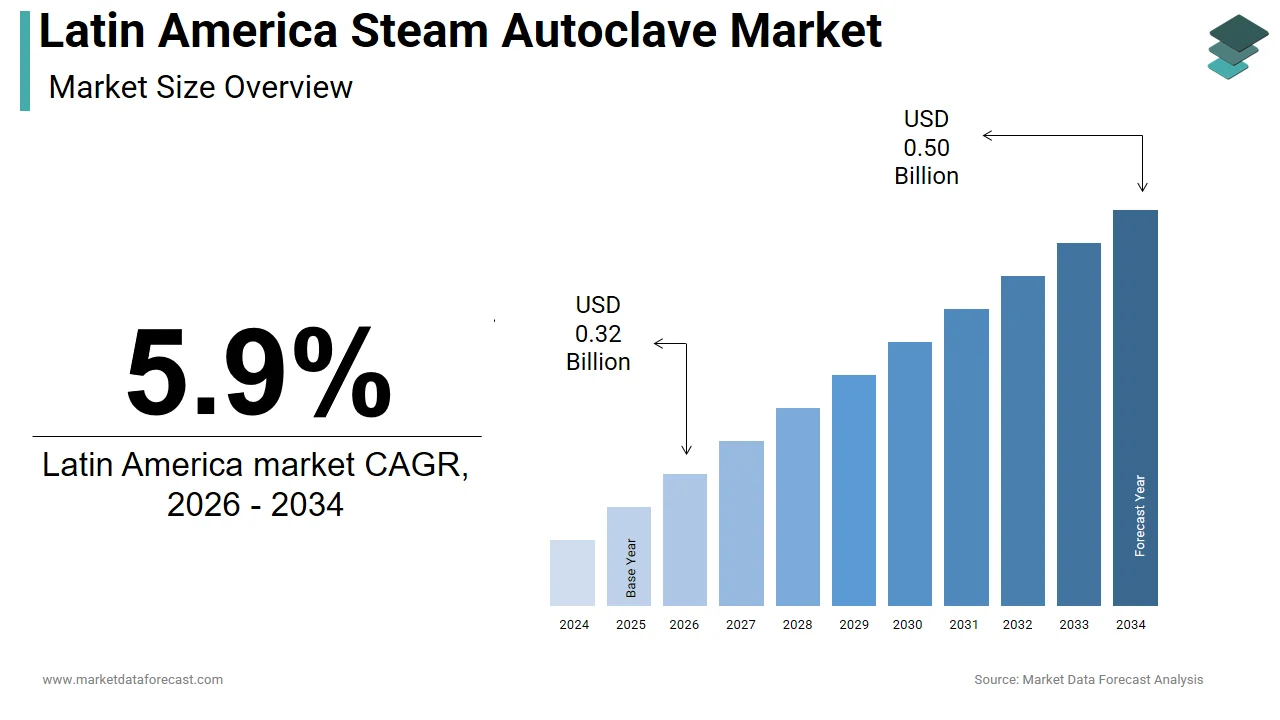
The size of the Latin America steam autoclave market was valued at USD 0.28 billion in 2025. This market is expected to grow at a CAGR of 8.2% from 2026 to 2034 and be worth USD 0.57 billion by 2034, up from USD 0.30 billion in 2026.
The steam autoclave is a pressurized steam sterilization device, utilized across healthcare facilities, pharmaceutical manufacturing units, and research laboratories. These devices ensure the elimination of microbial contaminants through high-temperature saturated steam exposure, serving as a cornerstone for infection control protocols. The region demonstrates a growing emphasis on biosafety standards, driven by increasing healthcare infrastructure development in nations such as Brazil and Mexico. According to the Pan American Health Organization, hospital-acquired infections affect approximately 10% of patients in Latin American healthcare settings, underscoring the urgent need for reliable sterilization solutions. Regulatory bodies across the region are increasingly aligning with international sterilization standards, thereby influencing procurement patterns.
MARKET DRIVERS
Rising Healthcare Infrastructure Investment Drives Sterilization Equipment Procurement
The expansion of healthcare infrastructure for steam autoclave adoption, directly correlating with increased hospital bed capacity and surgical procedure volumes, is majorly propelling the growth of the Latin America steam autoclave market. This substantial capital infusion enables healthcare facilities to upgrade outdated sterilization infrastructure with modern automated steam autoclaves that meet international safety standards. The direct relationship between infrastructure growth and equipment demand is evident in the procurement patterns of newly constructed medical centers, which prioritize advanced sterilization technologies to ensure regulatory compliance from inception. These facilities require rapid turnover capabilities that modern steam autoclaves provide, linking infrastructure expansion directly to market growth.
Increasing Surgical Procedure Volumes Elevate Sterilization Throughput Requirements
The escalating volume of surgical interventions drives the demand for high-capacity steam autoclaves capable of handling increased instrument processing loads that is additionally amplifying the growth of the Latin America steam autoclave market. This surge in surgical activity creates proportional pressure on sterilization departments to process larger volumes of surgical instruments within tighter turnaround times. The direct correlation between surgical volume and autoclave utilization rates forces healthcare facilities to invest in larger capacity or multiple units to prevent bottlenecks in sterile processing departments. These procedures often involve complex instrument trays that require extended sterilization cycles, demanding autoclaves with precise temperature and pressure control mechanisms. This demographic trend ensures sustained demand for sterilization equipment as healthcare systems adapt to serve an increasingly surgery-dependent patient population requiring consistent and validated sterilization outcomes.
MARKET RESTRAINTS
High Initial Capital Expenditure Limits Adoption Among Small Healthcare Facilities
The substantial upfront investment required for purchasing advanced steam autoclaves, particularly among small and medium-sized healthcare providers is restraining the growth of the Latin America steam autoclave market. The price point remains prohibitive for smaller clinics and rural health centers that operate with limited capital budgets. The high initial expenditure extends beyond the equipment itself, encompassing necessary facility modifications such as specialized plumbing, electrical upgrades, and ventilation systems that can add 30% to the total project cost. Small healthcare providers often prioritize immediate patient care expenses over capital-intensive infrastructure improvements, delaying sterilization equipment upgrades despite recognizing their importance. Furthermore, the limited availability of financing options specifically tailored for medical equipment acquisition exacerbates this restraint, as traditional lending institutions perceive healthcare technology investments as high risk in economically volatile regions. The currency fluctuation issues prevalent in several Latin American countries also complicate procurement planning, as imported autoclave components subject to exchange rate volatility create budget uncertainty. This financial constraint forces many smaller facilities to rely on outdated or shared sterilization resources, limiting overall market growth potential among the extensive network of primary care providers that constitute a significant portion of the regional healthcare sector.
Shortage of Trained Technical Personnel Hinders Optimal Equipment Utilization
The scarcity of qualified biomedical technicians and sterilization specialists is additionally impeding the growth of the Latin America steam autoclave market. The shortage directly impacts the operational efficiency of steam autoclaves, as improper handling and maintenance lead to increased downtime and reduced equipment lifespan. The complexity of modern automated steam autoclaves requires specialized knowledge for programming cycles, interpreting validation data, and troubleshooting technical issues. Educational institutions across Latin America produce only 8000 biomedical technology graduates annually, insufficient to meet the growing demand from expanding healthcare facilities. This skills gap forces healthcare providers to either invest heavily in continuous training programs or accept suboptimal equipment performance, both of which constrain market expansion. Many facilities hesitate to adopt sophisticated autoclave models, fearing they cannot maintain them properly, opting instead for simpler but less efficient systems.
MARKET OPPORTUNITIES
Expansion of Pharmaceutical Manufacturing Creates New Sterilization Demand Segments
The robust growth of pharmaceutical manufacturing activities for manufacturers targeting industrial sterilization applications beyond traditional healthcare settings, which is to positively impact the growth of the Latin America steam autoclave market. These facilities require industrial-scale steam autoclaves for sterilizing production equipment, glassware, and media used in drug formulation processes. All pharmaceutical manufacturing sites must implement validated sterilization protocols using certified steam autoclaves, creating mandatory demand points within the expanding industrial sector. The shift toward local drug production, accelerated by supply chain disruptions experienced during recent global health crises, has prompted multinational pharmaceutical companies to establish regional manufacturing hubs. These facilities typically install multiple large-capacity autoclaves capable of processing bulk materials and production components efficiently. This industrial expansion creates a diversified customer base less susceptible to healthcare budget fluctuations, offering manufacturers stable long-term contracts and recurring revenue streams through maintenance agreements.
Government Initiatives for Rural Healthcare Access Open Untapped Market Segments
Strategic government programs aimed at extending healthcare services to underserved rural populations for manufacturers of portable and compact steam autoclave systems are also elevating the growth of the Latin America steam autoclave market. These initiatives directly generate demand for smaller footprint autoclaves suitable for space-constrained facilities with limited utility infrastructure. Countries such as Peru and Ecuador have launched specific procurement programs targeting mobile health units that require rugged, transportable steam autoclaves capable of operating in variable environmental conditions. The decentralization of healthcare services, mandated by constitutional reforms in several Latin American nations, forces regional authorities to equip numerous small facilities rather than concentrating resources in urban centers. This policy shift creates volume opportunities for manufacturers offering cost-effective entry-level autoclave models designed for basic sterilization needs. These funded projects typically include equipment procurement packages that specify steam autoclaves as essential items, providing manufacturers with structured tender opportunities. The emphasis on preventive care in rural areas also increases the volume of minor surgical procedures performed locally, sustaining ongoing demand for reliable sterilization equipment in previously neglected geographic segments.
MARKET CHALLENGES
Inconsistent Regulatory Enforcement Creates Compliance Uncertainty
The fragmented and inconsistently enforced regulatory sector is a huge challenge for the growth of the Latin America steam autoclave market. This regulatory disparity forces manufacturers to navigate varying certification requirements, testing protocols, and documentation standards for each national market, increasing compliance costs and time to market. The lack of mutual recognition agreements between neighboring countries means that certification obtained in one nation does not facilitate market access in adjacent territories, duplicating regulatory efforts and expenses. Smaller manufacturers particularly struggle with these complexities, as maintaining separate regulatory dossiers for multiple jurisdictions requires dedicated legal and compliance resources that may exceed their operational capacities. This regulatory instability discourages long-term investment commitments and complicates strategic planning for market expansion. The inconsistency extends to post-market surveillance requirements, where some countries mandate rigorous performance monitoring while others lack enforcement mechanisms entirely. This uneven regulatory environment creates competitive distortions, as non-compliant products may enter markets with weaker oversight, undermining legitimate manufacturers who invest heavily in meeting stringent international standards.
Unreliable Utility Infrastructure Compromises Equipment Performance
The inconsistent availability and quality of essential utilities, including electricity, water, and steam supply, also contribute to the decline in the growth of the Latin America steam autoclave market. Steam autoclaves require stable electrical supply for precise temperature and pressure control, and frequent interruptions can damage sensitive electronic components while invalidating ongoing sterilization processes. The need for additional water purification systems adds cost and complexity to autoclave installations, particularly in areas with hard water or high mineral content that accelerates scale formation within steam generators. Furthermore, the irregular steam pressure from central boiler systems in older hospitals, documented in public healthcare facilities, forces autoclaves to work harder to achieve required sterilization parameters, leading to premature wear and increased energy consumption. These infrastructure limitations necessitate costly backup systems including uninterruptible power supplies and water treatment units, raising the total cost of ownership beyond initial equipment prices. Manufacturers must design products with enhanced tolerance for utility fluctuations, potentially compromising optimization for ideal conditions.
REPORT COVERAGE
| REPORT METRIC | DETAILS |
| Market Size Available | 2025 to 2034 |
| Base Year | 2025 |
| Forecast Period | 2026 to 2034 |
| Segments Covered | By Configuration, Technology, End-user, and Region. |
| Various Analyses Covered | Global, Regional, and Country-Level Analysis, Segment-Level Analysis, Drivers, Restraints, Opportunities, Challenges; PESTLE Analysis; Porter’s Five Forces Analysis, Competitive Landscape, Analyst Overview of Investment Opportunities |
| Regions Covered |
|
| Market Leaders Profiled | Steris, Belimed Deutschland, Priorclave, Getinge Infection Control, 3M Health Care, Panasonic Healthcare, LTE Scientific, Medisafe International, Tuttnauer, Belimed Group, and Melag. |
SEGMENTAL ANALYSIS
By Configuration Insights
The floor-standing configuration held a significant share of the Latin America Steam Autoclave Market in 2025 due to its indispensable role in high-volume hospital sterilization centers. The direct correlation between hospital bed count and sterilization equipment size drives this dominance, as facilities with over 200 beds typically require multiple large-capacity units to prevent hurdles. Furthermore, the durability and extended service life of floor-standing models, which average 12 years compared to 7 years for tabletop units, as reported by the review, make them a preferred long-term investment for public healthcare systems. The ability to integrate with automated loading and unloading systems further cements their position, as labor shortages in sterile processing departments force facilities to maximize automation.
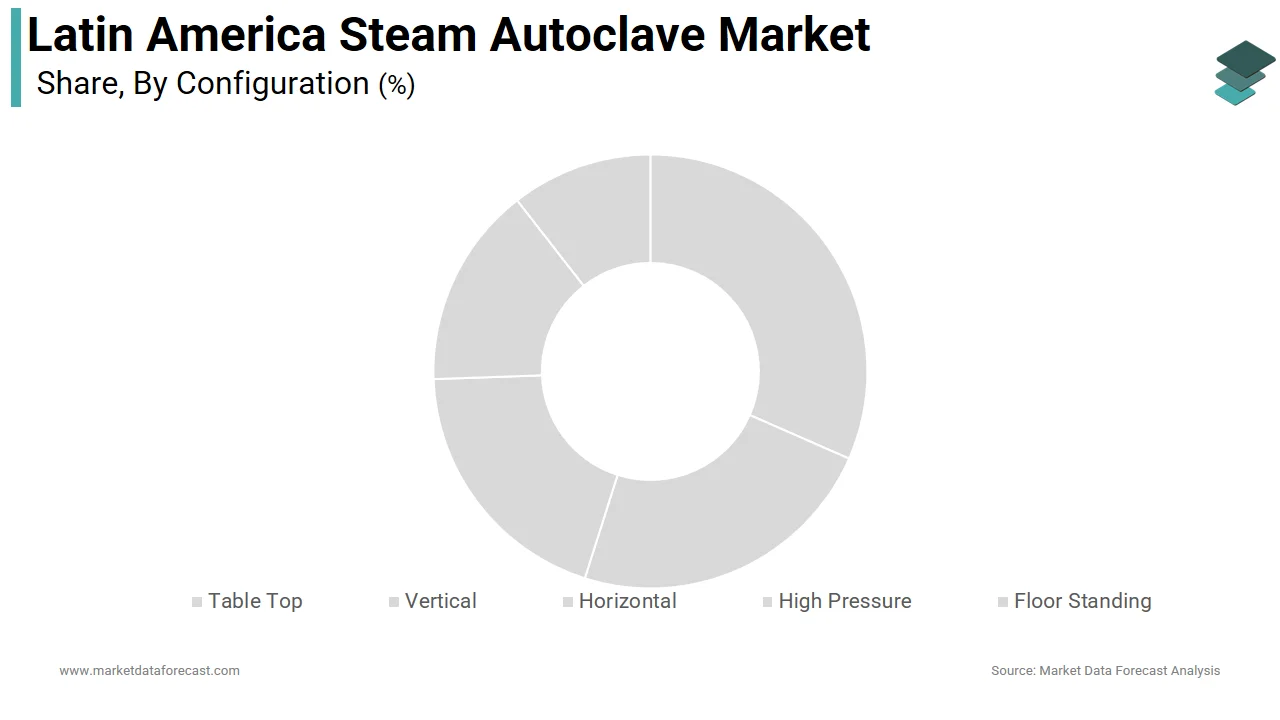
The tabletop segment is projected to register the fastest CAGR of 9.2% during the forecast period with the proliferation of small private healthcare practices. As per the data, 70% of new medical device registrations in the small equipment category were for tabletop autoclaves, reflecting the surge in demand from outpatient settings. The affordability and space efficiency of these units make them ideal for urban clinics where real estate costs are prohibitive for larger installations. Additionally, the rise in cosmetic and dermatological procedures, which grew in Colombia and Argentina, creates specific demand for quick cycle sterilization of minor surgical instruments. These procedures often require rapid turnover between patients, a capability that modern tabletop autoclaves with fast cooling cycles provide effectively. The ease of installation without major plumbing modifications further accelerates adoption, as many small practices operate in leased commercial spaces with limited infrastructure flexibility. Manufacturers are responding by introducing smart connectivity features in compact models, allowing remote monitoring and compliance reporting, which appeals to tech-savvy practitioners seeking streamlined operational workflows.
By Technology Insights
The pre-vacuum technology segment accounted for a significant share of the Latin America Steam Autoclave Market in 2025, with the highest level of sterilization assurance for porous loads and complex surgical instruments. The ability to remove air from the chamber before steam injection ensures uniform heat penetration, critical for preventing surgical site infections that affect 8% of patients in the region, according to the study. Furthermore, the shorter cycle times of pre-vacuum units, averaging 45 minutes compared to 90 minutes for gravity displacement that enhance operational efficiency in busy surgical centers. This time savings allows for more surgical turns per day, directly impacting hospital revenue and patient access. The regulatory push toward stricter infection control standards, enforced by national health agencies in Brazil and Mexico.
The steam flush pressure pulse technology segment is swiftly emerging at a CAGR of 8.5% during the forecast period, with a balance of performance and operational cost efficiency. This technology reduces water and energy consumption by 30% compared to traditional pre-vacuum systems, an advantage in regions facing utility cost pressures and sustainability mandates. The technology’s ability to achieve effective air removal through repeated steam injections and exhausts makes it suitable for a wide range of instruments without the complexity and expense of mechanical vacuum pumps. The growing emphasis on green healthcare initiatives, supported by government incentives in countries like Costa Rica and Uruguay, encourages the adoption of energy-efficient sterilization methods. Additionally, the versatility of steam flush pressure pulse autoclaves allows them to handle both wrapped and unwrapped loads effectively, making them ideal for mixed-use facilities such as community health centers and outpatient surgery units. The increasing availability of locally manufactured components for these systems further reduces acquisition costs, enhancing accessibility for smaller healthcare providers. This combination of economic benefits, environmental sustainability, and reliable performance positions steam flush pressure pulse technology as a rapidly expanding solution in the evolving Latin American sterilization landscape.
By End-user Insights
The medical hospitals and healthcare organizations segment was the largest, holding 36.4% of the Latin America Steam Autoclave Market share in 2025, with the absolute necessity of sterilization for patient safety and regulatory compliance. According to the Pan American Health Organization, hospitals in Latin America perform over 18 million surgical procedures annually, each requiring rigorous sterilization of instruments to prevent hospital-acquired infections that affect 10% of inpatients. These facilities typically operate multiple large-capacity units running continuously, accounting for the majority of equipment volume and value in the market. The integration of sterilization tracking software with hospital information systems also drives upgrades, as digital traceability becomes a standard requirement for quality assurance. The sheer scale of hospital operations, combined with strict legal liabilities for infection control failures, ensures that medical institutions remain the primary consumers of steam autoclaves, prioritizing performance and reliability over cost considerations in their procurement decisions.
The laboratory and research institution segment is anticipated to register the fastest CAGR of 10.1% during the forecast period with the expanding biotechnology and pharmaceutical research sectors in Latin America. As per data, the number of certified biological safety laboratories increased by 25% across the country, each requiring specialized autoclaves for decontaminating biohazardous waste and sterilizing culture media. The rise in academic research partnerships with international entities drives the adoption of advanced laboratory autoclaves that meet global biosafety standards. These institutions require precise temperature control and validation features to ensure experimental reproducibility and regulatory compliance for clinical trials. Furthermore, the growth in contract research organizations adds commercial laboratory users who require flexible and high-throughput sterilization equipment.
COUNTRY LEVEL ANALYSIS
Brazil Steam Autoclave Market Analysis
Brazil was the top performer of the Latin America Steam Autoclave Market by holding 33.3% of the share in 2025 with its extensive public healthcare system and robust industrial base. The country’s leadership in pharmaceutical production creates substantial demand for industrial-grade autoclaves. The implementation of the National Policy on Patient Safety, which requires strict sterilization protocols in all healthcare settings, further drives consistent procurement. Additionally, the expansion of private health insurance coverage fuels investment in private hospital infrastructure. The presence of major global autoclave manufacturers with local assembly plants ensures competitive pricing and timely service support. Brazil’s commitment to achieving universal health coverage through the Unified Health System necessitates continuous improvement in healthcare infrastructure, including sterilization capabilities. The country’s large population of 215 million people generates high patient volumes, requiring efficient and reliable sterilization solutions to maintain operational continuity. These factors collectively sustain Brazil’s dominant position in the regional market, with steady growth expected as healthcare quality standards continue to rise.
Mexico Steam Autoclave Market Analysis
Mexico was ranked second, holding 29.1% of the Latin America Steam Autoclave Market share in 2025, with strong integration with North American supply chains and growing medical tourism. According to the Mexican Institute of Social Security, the public healthcare system serves over 60 million beneficiaries, driving consistent demand for sterilization equipment in government-funded hospitals. Mexico’s regulatory alignment with international standards facilitates the entry of advanced technologies, encouraging healthcare providers to adopt modern automated systems. The country’s strategic location and economic stability attract significant foreign investment in healthcare infrastructure, supporting sustained market growth.
Argentina Steam Autoclave Market Analysis
Argentina steam autoclave market growth is likely to have significant opportunities in the coming years, with a highly educated medical workforce and a strong emphasis on healthcare quality. The country’s robust pharmaceutical industry, which exports to over 50 countries, requires compliant industrial sterilization solutions for production processes, according to the study. The implementation of new biosafety regulations in laboratories, affecting many research facilities that drives demand for specialized laboratory autoclaves. Argentina’s strong academic sector, with numerous universities conducting biomedical research, further contributes to market activity. The focus on reducing hospital-acquired infections, a priority in national health plans, ensures continued investment in sterilization infrastructure.
Chile Steam Autoclave Market Analysis
Chile steam autoclave market growth is likely to have steady growth opportunities with the high regulatory standards and efficient healthcare delivery. The country achieves some of the best health outcomes in the region, supported by rigorous infection control protocols that mandate advanced sterilization equipment. The expansion of private health insurers fuels investment in state-of-the-art medical facilities. Chile’s participation in international trade agreements facilitates access to cutting-edge sterilization technologies from global manufacturers. The government’s digital health strategy, which includes electronic tracking of sterilization cycles, encourages the adoption of smart autoclaves with connectivity features. The country’s stable economic environment and strong institutional framework support consistent market growth.
COMPETITIVE LANDSCAPE
The competition in the Latin America Steam Autoclave Market is characterized by a mix of global giants and regional specialists vying for dominance through innovation and service excellence. Global manufacturers leverage their technological expertise and brand reputation to secure contracts with large public hospitals and pharmaceutical companies. They compete on product reliability, advanced features such as digital connectivity, and comprehensive after-sales support networks. Regional players focus on affordability and localized service, catering to small clinics and rural health centers that require cost-effective solutions. The market sees intense rivalry in pricing strategies, especially for tabletop units used in private practices. Companies differentiate themselves by offering customized financing packages and extended warranty periods to attract budget-conscious buyers. Regulatory compliance serves as a key competitive barrier, with established players benefiting from their experience in navigating complex certification processes. The lack of standardized regulations across countries creates opportunities for agile competitors to adapt quickly to local requirements. Innovation in energy efficiency and sustainability also drives competitive advantage, as healthcare facilities increasingly prioritize environmental responsibility.
KEY MARKET PLAYERS
The leading companies operating in the Latin America steam autoclave market include:
- STERIS
- Belimed Deutschland
- Priorclave
- Getinge Infection Control
- 3M Health Care
- Panasonic Healthcare
- LTE Scientific
- Medisafe International
- Tuttnauer
- Belimed Group
- MELAG
TOP PLAYERS IN THE MARKET
- Steris Corporation maintains a robust presence in the Latin America Steam Autoclave Market through its comprehensive portfolio of advanced sterilization solutions. The company focuses on delivering integrated infection prevention systems that combine high-performance autoclaves with digital tracking software. Recent initiatives include expanding its service network in Brazil and Mexico to ensure rapid response times for healthcare facilities. Steris actively collaborates with local distributors to provide tailored training programs for biomedical technicians, addressing the regional skills gap. The company emphasizes sustainability by introducing energy-efficient models that reduce water and electricity consumption. These efforts align with growing environmental regulations across the region. Steris also invests in research and development to enhance cycle efficiency and instrument protection. Their commitment to regulatory compliance helps hospitals meet stringent international standards.
- Getinge Group contributes significantly to the Latin America Steam Autoclave Market by leveraging its strong reputation for reliability and innovation in sterile processing. The company provides a wide range of floor-standing and tabletop autoclaves designed for various healthcare settings. Getinge recently launched new automated loading systems in Argentina and Chile to improve workflow efficiency in large hospitals. These systems reduce manual handling errors and enhance staff safety. The company partners with local engineering firms to customize installation projects for complex hospital infrastructures. Getinge prioritizes after-sales support by establishing regional spare parts hubs to minimize equipment downtime. Their focus on digital connectivity allows facilities to monitor sterilization cycles remotely, ensuring consistent quality. Getinge also participates in government tenders for public health infrastructure upgrades, securing contracts for major hospital renovations.
- Tuttnauer plays a vital role in the Latin America Steam Autoclave Market by offering specialized sterilization equipment for dental and laboratory sectors. The company is known for its durable tabletop autoclaves that cater to the needs of small private practices. Tuttnauer recently expanded its distribution channels in Colombia and Peru to reach underserved rural areas. They introduced compact models with fast cycle times to support high patient turnover in urban clinics. The company emphasizes user-friendly interfaces and low maintenance requirements, appealing to practitioners with limited technical resources. Tuttnauer collaborates with dental associations to promote best practices in instrument sterilization. Their recent product launches include eco-friendly units that minimize water usage, aligning with sustainability goals. The company also offers extended warranty programs to build trust with new customers.
TOP STRATEGIES USED BY KEY MARKET PARTICIPANTS
Key players in the Latin America Steam Autoclave Market employ several strategic initiatives to strengthen their competitive position and drive growth. Product innovation remains a primary strategy, with companies investing heavily in research and development to create energy-efficient and digitally connected autoclaves. These advancements address the regional need for cost-effective and compliant sterilization solutions. Strategic partnerships with local distributors and service providers enable manufacturers to expand their reach into remote areas and improve after-sales support. This localization strategy enhances customer satisfaction and reduces operational barriers. Companies also focus on regulatory compliance by aligning their products with international standards, facilitating easier market entry across different countries. Training and education programs for healthcare personnel are another critical strategy, helping to overcome the shortage of skilled technicians and ensuring optimal equipment utilization. Additionally, manufacturers offer flexible financing options to make advanced technology accessible to smaller healthcare facilities with limited capital budgets. These comprehensive strategies collectively enhance market penetration and foster long term customer relationships in the dynamic Latin American healthcare sector.
MARKET SEGMENTATION
This Latin America steam autoclave market research report is segmented and sub-segmented into the following categories.
By Configuration
- Table Top
- Vertical
- Horizontal
- High Pressure
- Floor Standing
By Technology
- Gravity Displacement
- Steam Flush
- Pre-vacuum
By End-user
- Medical
- Laboratory
- Dental Clinics
- Health Care Organizations
- Academics
By Country
- Brazil
- Mexico
- Argentina
- Chile
- Rest of Latin America