- Product Description Description
- Table of Contents TOC
- List of Table & Figure LOT
- Get Free Sample PDF Sample PDF
Market Size, 2025
$2.66 BnMarket Estimate, 2026
$2.85 BnMarket Forecast, 2034
$4.87 BnCAGR, 2026–2034
6.93%Latin America Anatomic Pathology Market Size, Growth, Trends & Forecast (2026–2034)
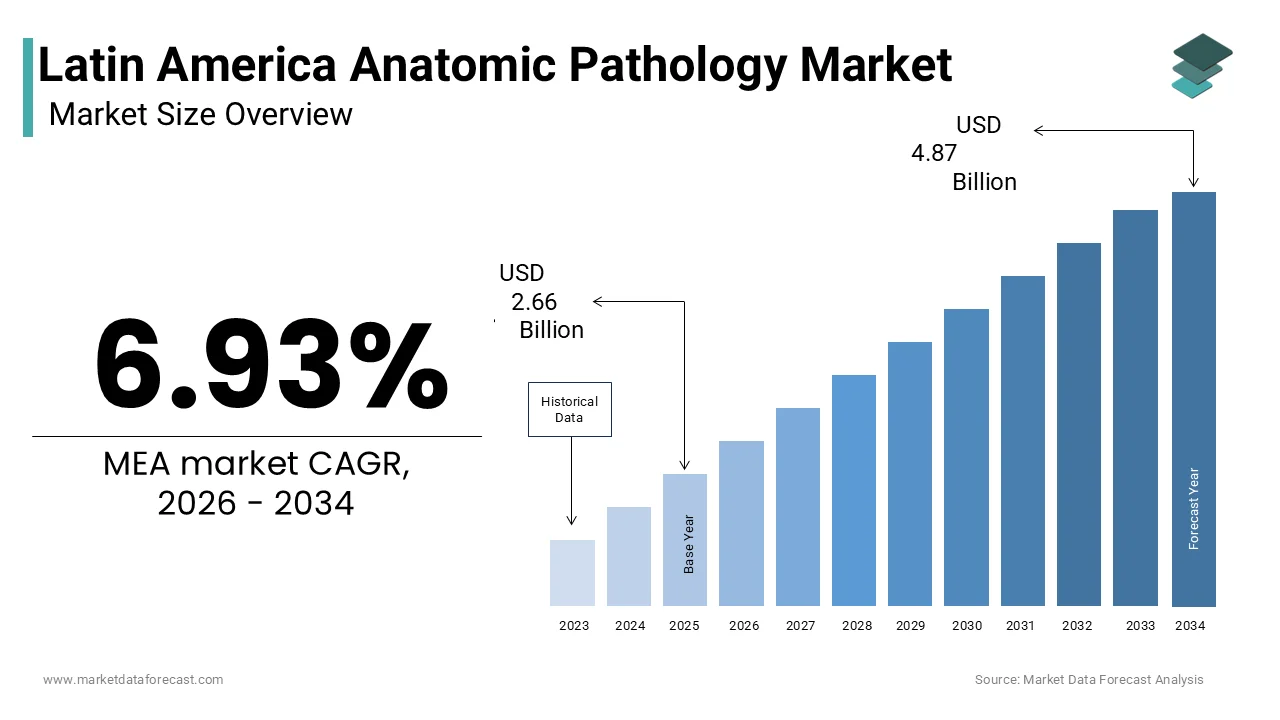
The Latin America anatomic pathology market size was valued at USD 2.66 billion in 2025, is estimated at USD 2.85 billion in 2026, and is projected to reach USD 4.87 billion by 2034, registering a compound annual growth rate (CAGR) of 6.93% during the forecast period from 2026 to 2034. Driven by the rising burden of non-communicable diseases, increasing cancer incidence, shift toward precision oncology, and expansion of private healthcare networks, the market continues to experience steady regional growth.
Key Executive Metrics (At-a-Glance)
- 2025 Base Valuation: USD 2.66 Billion
- 2026 Current Valuation: USD 2.85 Billion
- 2034 Forecast Valuation: USD 4.87 Billion
- Compound Annual Growth Rate (CAGR): 6.93% (2026–2034)
- Leading Segment by Product: Instruments (56.6% share in 2025)
- Fastest-Growing Product Segment: Accessories (8.4% CAGR)
- Leading End-User: Diagnostics Labs (48.5% share in 2025)
- Fastest-Growing End-User Segment: Hospitals (9.1% CAGR)
Core Market Drivers
- Rising Cancer Incidence: Alarming escalation in malignancies (breast, prostate, colorectal) requiring detailed histological and molecular characterization.
- Precision Oncology: A paradigm shift toward targeted therapies and immunotherapies demanding comprehensive biomarker testing.
- Private Healthcare Expansion: Proliferation of private diagnostic networks and consolidated laboratory chains catering to a growing middle class and medical tourism.
Primary Market Restraints & Challenges
- Economic Volatility: Severe currency fluctuations and high import costs affecting the procurement of advanced diagnostic instruments and reagents.
- Workforce Shortages: Critical deficit of board-certified anatomical pathologists and histotechnicians across the region.
- Regulatory & Infrastructure Barriers: Fragmented regulatory frameworks, accreditation disparities, and supply chain instability in remote areas.
Latin America Anatomic Pathology Market Segmentation Breakdown
| Segment Category | Largest Segment | Fastest-Growing Segment |
|---|---|---|
| By Product | Instruments (56.6% Share in 2025) | Accessories (8.4% CAGR) |
| By Application | Breast Cancer (26.3% Share in 2025) | Breast Cancer |
| By End-User | Diagnostics Labs (48.5% Share in 2025) | Hospitals (9.1% CAGR) |
| By Country / Region | Brazil & Mexico (Leading Markets) | Latin America Region |
Major Industry Players Profiled
Key market participants shaping the Latin American landscape include DASA (Brazil), PACS (Brazil), and UW Medicine Pathology (Colombia).
Latin America Anatomic Pathology Market Size
The Latin America Anatomic Pathology Market size in Latin America was valued at USD 2.66 billion in 2025 and is predicted to be worth USD 4.87 billion by 2034 from USD 2.85billion in 2026, growing at a CAGR of 6.93%. From 2026 to 2034.
Anatomic pathology is a medical specialty that diagnoses diseases by examining tissue samples, cells, and organs. This ecosystem includes histopathology, cytopathology, immunohistochemistry, and emerging digital pathology services, serving as the cornerstone for precision medicine and treatment planning. The region presents a unique epidemiological landscape where the rising burden of non-communicable diseases intersects with persistent infectious threats like tuberculosis and Chagas disease, creating a complex demand for diverse diagnostic capabilities. According to the Pan American Health Organization (PAHO) and IARC, cancer incidence in Latin America and the Caribbean is projected to increase by 67% (reaching approximately 2.4 million new cases annually) by 2040, driven largely by population aging and the adoption of Westernized lifestyles. The World Bank reports that healthcare expenditure in Latin America has been rising (spending approx. 6-8% of GDP), but emphasizes that profound structural disparities exist between the public and private sectors, leading to inequitable access to quality diagnostic services and medical technologies. Furthermore, the International Agency for Research on Cancer (IARC) confirms that late-stage diagnosis is a pervasive determinant of poor outcomes in Brazil and Mexico, where the majority of cases (e.g., >85% of lung cancers in Brazil) are identified at advanced stages. The market operates within a fragmented regulatory environment where nations like Chile and Uruguay have adopted stringent quality standards, while others struggle with basic laboratory accreditation. This dichotomy defines the current state of anatomic pathology in Latin America, positioning it not merely as a clinical service but as a pivotal determinant of public health outcomes and survival rates in a demographically shifting population.
MARKET DRIVERS
Rising Cancer Incidence and Shift Toward Precision Oncology
The alarming escalation in cancer incidence rates is propelling the growth of the Latin America Anatomic Pathology Market. This growth is further driven by a paradigm shift toward precision oncology that relies heavily on tissue biomarkers. The region is witnessing a demographic transition where urbanization and lifestyle changes have led to a surge in malignancies such as breast, prostate, and colorectal cancers, requiring detailed histological and molecular characterization for effective treatment. According to the International Agency for Research on Cancer, Latin America accounts for nearly 8 percent of global cancer cases, with mortality rates remaining disproportionately high due to late detection and limited access to targeted therapies. The adoption of immunotherapies and targeted drugs in major markets like Brazil and Mexico mandates comprehensive anatomic pathology workups, including immunohistochemistry and genetic profiling of tissue samples, to determine patient eligibility. Data from the Union for International Cancer Control indicates that the implementation of national cancer control plans in countries like Argentina and Colombia has prioritized the expansion of pathology services to support early diagnosis programs. Governments are increasingly recognizing that accurate tissue diagnosis is the gateway to personalized medicine, leading to investments in specialized oncology centers equipped with advanced pathology laboratories. Clinical consensus and guidelines from regional bodies like SLACOM emphasize the integration of biomarker testing (e.g., HER2, EGFR) into standard care, which is a primary driver for hospitals to adopt digital pathology and automated IHC staining to improve turnaround times and scoring accuracy. This clinical imperative ensures that the demand for anatomic pathology services will grow in tandem with the rising cancer burden, making it an indispensable component of the regional healthcare infrastructure.
Expansion of Private Healthcare and Diagnostic Networks
The rapid expansion of private healthcare facilities and consolidated diagnostic laboratory networks serves as a critical driver for the Latin America Anatomic Pathology Market. This is fueled by growing medical tourism and increasing demand for high-quality services among the rising middle class. As public health systems face capacity constraints and long waiting times, affluent patients and those with private insurance are increasingly turning to private providers who offer faster turnaround times and advanced testing menus. In Brazil and Mexico, major laboratory chains are aggressively expanding their networks through acquisitions and greenfield projects to capture the untapped market in secondary cities. Data from the Inter-American Development Bank indicates that the growing middle class, which now represents over 30 percent of the population in many Latin American nations, will drive a surge in demand for premium diagnostic services, including complex anatomic pathology. Private players are leveraging economies of scale to import high-end automation and offer specialized tests like molecular pathology that were previously unavailable locally. As per the Joint Commission International, the number of accredited private laboratories in the region is rising, signaling a commitment to quality that attracts both local patients and medical tourists. This shift toward privatization and consolidation creates a dynamic environment for vendors to supply advanced instrumentation and reagents to a growing network of sophisticated commercial laboratories.
MARKET RESTRAINTS
Economic Volatility and Currency Fluctuations
Economic volatility and severe currency fluctuations act as a major restraint on the growth of the LatinAmericana Anatomic Pathology Market. These factors significantly impact the affordability of imported instruments and reagents. The region has historically faced periods of high inflation and currency devaluation, particularly in countries like Argentina, Venezuela, and Brazil, which makes the procurement of expensive diagnostic equipment and proprietary consumables prohibitively costly for many healthcare providers. According to the International Monetary Fund, exchange rate volatility in Latin America has increased the cost of importing medical technology by up to 30 percent in recent years, forcing hospitals and laboratories to delay upgrades or rely on outdated manual methods. The reliance on imported reagents, antibodies, and slides, which are often priced in US dollars, exacerbates the financial strain on local operators who generate revenue in depreciating local currencies. Data from the World Bank highlights that economic instability leads to unpredictable budgeting for public health institutions, resulting in interrupted supply chains and stockouts of essential pathology materials. Furthermore, high import tariffs and complex customs procedures in several Latin American countries add layers of cost and delay, hindering the timely availability of critical diagnostic supplies. As per the Latin American Association of Pathology, these economic barriers prevent the widespread adoption of advanced technologies like digital pathology and automated staining platforms, limiting the region's ability to improve diagnostic accuracy and efficiency. This financial uncertainty creates a challenging operating environment that stifles market expansion and innovation.
Shortage of Skilled Pathologists and Technical Workforce
The acute shortage of skilled pathologists and trained technical staff poses a significant barrier to the operational capacity and growth of the Latin American Anatomic Pathology Market. Despite the increasing demand for diagnostic services, the region faces a critical deficit of board-certified anatomical pathologists and histotechnicians, with distribution heavily skewed toward urban centers, leaving rural areas underserved. The emigration of trained medical professionals to North America and Europe, known as brain drain, further exacerbates this scarcity, depleting the local talent pool. The Latin American Society of Pathology highlights significant variability in technical quality across the region, noting that limited access to continuous education in molecular methods and histotechniques leads to inconsistencies in slide preparation and interpretation. The lengthy and rigorous training required to become a pathologist means that the supply cannot quickly respond to the surging demand for services. As per the World Health Organization, the lack of structured residency programs and continuous education opportunities in many Latin American nations hinders the development of a sustainable local workforce. This human capital crisis prevents the full utilization of installed equipment and forces many facilities to outsource cases, stifling the development of a robust domestic anatomic pathology market.
MARKET OPPORTUNITIES
Adoption of Digital Pathology and Tele-pathology Solutions
The adoption of digital pathology and tele-pathology solutions offers a transformative opportunity for the Latin American Anatomic Pathology Market. Specifically, these technologies can overcome geographic barriers and address the critical shortage of specialists. By converting glass slides into high-resolution digital images, laboratories can transmit cases instantly to experts in major urban centers or abroad for second opinions, primary diagnosis, or subspecialty consultation, effectively democratizing access to high-quality care. According to the Digital Pathology Association, the implementation of tele-pathology networks in remote areas of Latin America has the potential to reduce diagnostic turnaround times by up to 50 percent and significantly improve accuracy rates. Governments and private investors are increasingly recognizing the value of these technologies, with initiatives in countries like Chile and Costa Rica establishing digital hubs that connect rural clinics with urban reference centers. Data from the College of American Pathologists suggests that digital workflows also enable the application of artificial intelligence algorithms for automated cell counting and anomaly detection, which can augment the capabilities of limited local staff. The growing penetration of high-speed internet and cloud computing infrastructure in the region provides a fertile ground for the deployment of scalable digital pathology platforms. As per the International Telecommunication Union (ITU), while mobile broadband is expanding rapidly with near-universal 4G coverage in urban Latin America, infrastructure gaps persist in rural areas, where 21% of the population remains uncovered, often necessitating optimized compression or dedicated fiber lines for the transmission of large pathology image files. This technological leapfrog offers a viable solution to the workforce crisis and positions the LatinAmericana market as a potential early adopter of next-generation diagnostic models that bypass traditional infrastructure limitations.
Growth of Molecular Pathology and Biomarker Testing
The rapid growth of molecular pathology and the increasing demand for biomarker testing provide substantial prospects for expansion in the LatiAmericanca Anatomic Pathology Market. This is driven by the global shift toward personalized medicine. As targeted therapies become more accessible in the region, the need for precise tissue-based molecular diagnostics to identify specific genetic mutations and protein expressions has become paramount. According to the Latin American Society of Clinical Oncology, the adoption of companion diagnostics for cancers such as lung, breast, and melanoma is accelerating, creating a new revenue stream for pathology laboratories capable of performing these advanced tests. Data from the National Cancer Institute of Brazil indicates that the inclusion of molecular testing in public health protocols for certain cancers has spurred investment in specialized equipment and reagents. Private laboratories are seizing this opportunity by partnering with international reference labs to offer comprehensive genomic profiling services locally, reducing the need for sample export. As per the Global Genomic Medicine Collaborative (G2MC), while the decreasing cost of NGS hardware makes the technology more accessible, mid-sized laboratories in Latin America still face barriers in bioinformatics support and high reagent costs, leading many to participate in regional diagnostic networks rather than full independent implementation. Furthermore, the rise of liquid biopsy as a complement to tissue analysis opens new avenues for integrated diagnostic offerings. This evolution from traditional histology to integrated molecular diagnostics allows market players to differentiate their services, command higher margins, and play a critical role in optimizing therapeutic outcomes for patients across the region.
MARKET CHALLENGES
Regulatory Fragmentation and Accreditation Disparities
Regulatory fragmentation and disparities in laboratory accreditation standards constitute a formidable challenge for the uniform development of the Latin American Anatomic Pathology Market. Each country in the region operates under its own distinct regulatory framework for medical devices, reagents, and laboratory practices, creating a complex compliance landscape for multinational vendors and hindering the standardization of diagnostic quality. According to the Pan American Health Organization, while countries like Chile, Uruguay, and Brazil have established rigorous accreditation bodies similar to ISO 15189, many other nations lack enforced quality assurance mechanisms, leading to significant variability in diagnostic reliability. Data from the Global Laboratory Leadership Program reveals that less than 20 percent of laboratories in the Andean and Central American regions have achieved international accreditation, raising concerns about the accuracy of pathology reports and patient safety. The absence of harmonized regulations complicates the registration and approval of new diagnostic technologies and reagents, delaying their market entry and increasing costs for manufacturers. This regulatory patchwork forces companies to navigate a maze of bureaucratic requirements, slowing down innovation and preventing the establishment of a cohesive, high-quality regional pathology ecosystem.
Infrastructure Deficiencies and Supply Chain Instability
Infrastructure deficiencies and chronic supply chain instability pose a significant challenge to the consistent delivery of these services across the region, which negatively impacts the expansion of the LatinAmericana anatomic pathology market. These issues are particularly acute in rural and remote areas. The region struggles with inadequate transportation networks, unreliable electricity supply, and limited cold chain capabilities, which are critical for the preservation and transport of tissue samples and temperature-sensitive reagents. According to the World Bank, logistics performance indices in several Latin American countries rank low globally, leading to frequent delays in the delivery of essential pathology supplies and increased risk of sample degradation. Data from the Inter-American Development Bank highlights that power outages in parts of the Amazon and Andean regions can compromise the integrity of automated staining processes and digital storage systems, resulting in lost data and ruined specimens. The reliance on imported consumables makes the market vulnerable to global shipping disruptions and local customs bottlenecks, often causing stockouts that halt diagnostic workflows. As per the Latin American Association of Pathology, the lack of robust maintenance infrastructure for high-tech equipment means that breakdowns can leave laboratories non-operational for weeks due to the unavailability of spare parts and service engineers. These systemic infrastructural weaknesses create an unpredictable operating environment that discourages investment in advanced technologies and hampers the ability to provide timely and reliable diagnostic services to the entire population.
REPORT COVERAGE
| REPORT METRIC | DETAILS |
| Market Size Available | 2025 to 2034 |
| Base Year | 2025 |
| Forecast Period | 2026 to 2034 |
| Segments Analysed | By Products, Application, End-user, and Region |
| Various Analyses Covered | Regional & Country Level Analysis, Segment-Level Analysis, Drivers, Restraints, Opportunities, Challenges; PESTLE Analysis; Porter’s Five Forces Analysis, Competitive Landscape; Analyst Overview of Investment Opportunities |
| Countries Analysed | Mexico, Brazil, Argentina, Chile, Per,u anthe restst of Latin America |
| Market Leaders Profiled | DASA (Brazil), PACS (Brazil), and UW Medicine Pathology (Columbia). |
SEGMENTAL ANALYSIS
By Product Insights
The Instruments segment dominated the Latin America Anatomic Pathology Market and accounted for a 56.6% share in 2025. This dominance of the segment is driven by the critical need for modernization in regional laboratories, where a shift from manual to automated processes is essential to handle increasing sample volumes and improve diagnostic accuracy amidst a shortage of skilled technicians. The main driver for the dominance of instruments is the acute shortage of skilled pathologists and histotechnicians across Latin America, which necessitates the adoption of automated systems to maintain diagnostic throughput. Automated tissue processors, stainers, and coverslippers allow laboratories to process significantly higher volumes of samples with fewer personnel while reducing human error associated with manual techniques. According to PAHO, Latin America faces a critical health workforce shortage that leaves nearly one-third of the population without access to care; this scarcity makes automation a vital 'survival mechanism' for laboratories to maintain services despite high vacancy rates and limited specialized personnel. Data from the Latin American Society of Pathology indicates that laboratories utilizing fully automated staining platforms can increase their daily slide output by up to 250 percent compared to manual stations, enabling them to clear backlogs that often delay cancer diagnoses for weeks. In major markets like Brazil and Mexico, the push toward high-throughput reference labs has led to massive procurement drives for integrated robotic lines that can operate continuously with minimal supervision. As per the International Agency for Research on Cancer, the rising incidence of cancer in the region requires rapid turnaround times for treatment planning, a feat only achievable through advanced instrumentation. The capital investment in these machines is viewed as a strategic necessity to bridge the gap between exploding demand and stagnant human resource capacity, securing the instruments segment as the largest revenue generator. A further critical factor propelling the instruments segment is the aggressive implementation of government mandates aimed at modernizing healthcare infrastructure and standardizing diagnostic quality across Latin America. National health plans in countries like Brazil and Chile explicitly prioritize the upgrading of public hospital laboratories with state-of-the-art equipment to meet international accreditation standards such as ISO 15189. According to the Brazilian Ministry of Health, billions of reais are being allocated to establish specialized oncology centers equipped with the latest anatomic pathology instrumentation to reduce reliance on overseas testing and improve early detection rates. The drive to localize complex diagnostics means that governments are directly funding the purchase of high-end hardware rather than just consumables, creating a surge in instrument sales. As per the Pan American Health Organization, new regulations require laboratories to utilize automated tissue processing to minimize exposure to hazardous chemicals, further driving the replacement of legacy systems. This top-down regulatory pressure ensures a steady and substantial flow of capital into the instruments market, reinforcing its leading position as the backbone of regional pathology development.
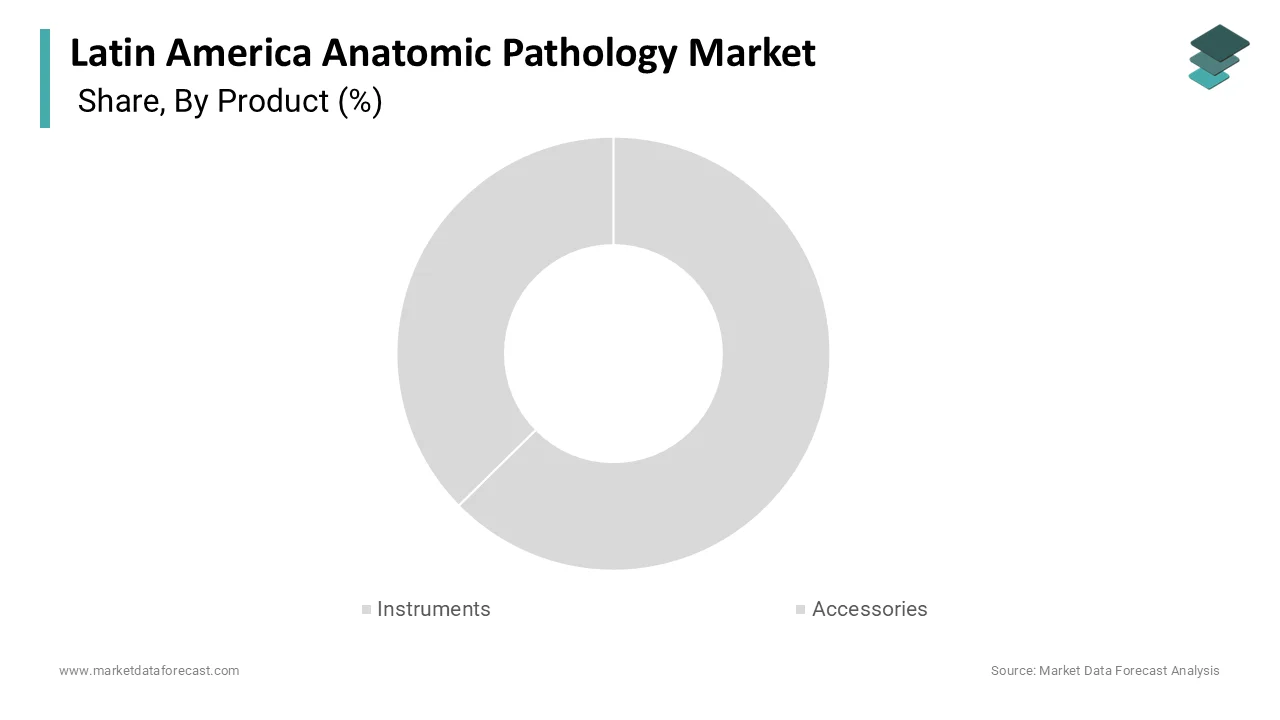
The Accessories segment is predicted to witness the highest CAGR of 8.4% from 2026 to 2034. This rapid acceleration is fueled by the expanding installed base of instruments, the recurring nature of consumable demand, and the increasing complexity of diagnostic tests requiring specialized reagents. The surge in growth for accessories is primarily driven by the exponential increase in the installed base of anatomic pathology instruments across the region, which creates a continuous and compounding demand for compatible consumables, reagents, and spare parts. Every new automated stainer, microtome, or digital scanner installed requires a steady supply of specific slides, coverslips, stains, antibodies, and embedding media to function, creating a recurring revenue stream that outpaces one-time hardware sales. Data from the Inter-American Development Bank highlights that as private laboratory chains expand into secondary cities in Colombia and Peru, they bring with them a sustained need for high-quality imported reagents that must be replenished monthly. The shift toward immunohistochemistry and special staining protocols, which require expensive and specialized antibody kits, further accelerates the value growth of this segment. As per the Union for International Cancer Control, the increasing volume of cancer biopsies being processed locally rather than sent abroad means that local laboratories are consuming significantly more accessories per capita than in previous decades. This multiplier effect, where each new instrument generates years of accessory sales, ensures that this segment grows faster than the hardware market as the region matures diagnostically. The increasing adoption of advanced staining protocols and the rising complexity of diagnostic requirements serve as significant catalysts for the accelerated growth of the accessories segment. Modern oncology diagnosis increasingly relies on precise immunohistochemical profiling and molecular pathology techniques that demand high-performance, specialized reagents and detection systems rather than generic stains. Laboratories are moving away from basic hematoxylin and eosin staining toward multiplex assays that require sophisticated accessory kits to visualize multiple protein targets simultaneously on a single tissue section. Data from the International Association for the Study of Lung Cancer indicates that the mandatory testing for PD-L1 and other predictive markers in major Latin American markets has created a booming market for high-cost, high-specificity reagent accessories. Furthermore, the introduction of digital pathology necessitates the use of optimized glass slides and mounting media specifically designed for high-resolution scanning, adding a new category of high-value accessories. As per the Journal of Clinical Pathology, the trend toward personalized medicine ensures that the mix of accessories purchased is shifting toward higher-margin, specialized products, driving both volume and value growth at a rate that exceeds general market expansion.
End-User Insights
The diagnostics labs segment led the Latin America Anatomic Pathology Market and captured a 48.5% share in 2025. Its leading position is attributed to the rapid proliferation of independent and chain-operated private laboratories that offer specialized, high-volume testing services to both public and private healthcare providers. A key driver for the dominance of diagnostics labs is the aggressive expansion and consolidation of private laboratory chains that are establishing large-scale reference centers capable of handling complex anatomic pathology cases. These entities benefit from economies of scale, allowing them to invest in high-end automation and attract skilled pathologists, capabilities that individual hospital labs often lack. Data from the Inter-American Development Bank shows that major laboratory networks in Brazil, Mexico, and Argentina are acquiring smaller independent labs to create unified networks that centralize anatomic pathology services, thereby increasing their collective market share and purchasing power. These consolidated labs serve as hubs for surrounding clinics and smaller hospitals that outsource their tissue diagnostics to ensure quality and speed. As per the Joint Commission International, the number of accredited private laboratories in the region has surged, enhancing their reputation and attracting patients who seek reliable cancer diagnosis without long waiting times. The ability of these labs to offer a broader menu of tests, including molecular pathology and genetic profiling, makes them the preferred partner for oncologists, solidifying their position as the primary end-user for anatomic pathology products and services. One of the major factors propelling the diagnostics labs segment is the growing trend among small hospitals, rural clinics, and physician offices to outsource anatomic pathology services to specialized external laboratories due to cost and expertise constraints. Maintaining an in-house anatomic pathology department requires significant capital investment in equipment, reagents, and highly trained staff, which is often unsustainable for smaller facilities in the Latin American region. According to the Pan American Health Organization, over 50 percent of primary healthcare facilities in rural Latin America do not have the capacity to perform even basic histopathology, forcing them to rely entirely on external reference labs for tissue diagnosis. Data from the Latin American Hospital Federation indicates that even in well-funded markets like Chile, smaller specialty clinics prefer outsourcing complex cases to dedicated pathology labs to ensure rapid turnaround and subspecialty expertise. This outsourcing model allows smaller providers to focus on patient care while leveraging the advanced capabilities of centralized diagnostics labs. As per the International Federation of Clinical Chemistry and Laboratory Medicine, the logistical improvements in sample transport networks across the region have made outsourcing more viable and reliable, further driving volume to independent labs. The economic efficiency and quality assurance offered by specialized diagnostics labs make them the natural destination for the majority of tissue samples, ensuring their continued market leadership.
The Hospitals segment is estimated to register the fastest CAGR of 9.1% over the forecast period due to massive government investments in public healthcare infrastructure, the establishment of specialized oncology centers, and the integration of pathology services within large medical cities. Moreover, the rapid ascent of the hospitals segment is primarily driven by unprecedented government investments in building and upgrading public healthcare infrastructure, particularly the construction of specialized cancer centers and medical cities that house comprehensive in-house pathology departments. Nations across Latin America are executing ambitious health visions that prioritize the localization of advanced medical services, leading to the commissioning of numerous new hospitals equipped with state-of-the-art anatomic pathology laboratories. According to the Brazilian Ministry of Health, the government is investing heavily in the Unified Health System (SUS) to expand specialized care and oncology units; however, the focus is on regional network integration and public-private partnerships rather than a plan for 15 'medical cities. Data from the Mexican Institute of Social Security reveals that the rollout of expanded health coverage has triggered a wave of hospital renovations and new constructions, all mandated to include modern diagnostic labs to serve insured populations. In the Andean region, initiatives funded by the World Bank and the Inter-American Development Bank are focusing on strengthening district hospitals with essential diagnostic capabilities, including basic to intermediate anatomic pathology services. This direct injection of public capital into hospital infrastructure ensures that the hospital segment experiences the highest growth rate as these new facilities come online and begin operations. The increasing integration of anatomic pathology into multidisciplinary oncology care models within large hospital systems serves as a powerful catalyst for the growth of the hospital end-user segment. Modern cancer treatment requires close collaboration between surgeons, oncologists, and pathologists, favoring an in-house laboratory model that facilitates real-time communication and rapid decision-making during tumor board meetings. According to the Union for International Cancer Control, the establishment of comprehensive cancer centers in Latin America prioritizes co-located pathology services to minimize turnaround times for critical biomarker results that dictate therapy choices. Data from the Latin American Society of Clinical Oncology highlights that hospitals with integrated pathology departments report 25 percent faster initiation of treatment compared to those relying on external labs, driving the preference for internal capacity expansion. The rise of complex surgical procedures, such as robotic surgeries and organ transplants, which require immediate frozen section analysis, further necessitates robust in-house pathology capabilities that only large hospitals can provide. As per the American Society of Clinical Oncology, the trend toward personalized medicine requires iterative testing and re-biopsy management that is logistically easier to manage within a single hospital ecosystem. This clinical imperative to keep pathology services embedded within the acute care setting ensures that hospitals are rapidly expanding their internal capabilities, driving the segment's exceptional growth trajectory.
By Application Insights
The breast cancer application segment held the majority share of 26.3% of the Latin America Anatomic Pathology Market in 2025. This supremacy of the segment is credited to the high prevalence of breast cancer as the most common malignancy among women in the region, coupled with aggressive national screening programs and the critical need for detailed biomarker profiling. The biggest factor behind the dominance of the breast cancer segment is the alarmingly high incidence rate of breast cancer in Latin America, which stands as the most frequently diagnosed cancer among women, often presenting at a younger age and more aggressive stage compared to Western populations. According to the International Agency for Research on Cancer, breast cancer accounts for nearly 24 percent of all cancer cases in Latin American women, with incidence rates rising steadily due to lifestyle changes and improved detection. Data from the Latin American Federation of Mastology indicates that the median age of diagnosis in the region is approximately 10 years younger than in Europe, leading to a larger cumulative patient population requiring extensive pathological evaluation over their lifetimes. The aggressive nature of the disease in this demographic necessitates comprehensive anatomic pathology workups, including hormone receptor status and HER2 testing, to guide treatment decisions. As per the Breast Health Global Initiative, the push for early detection in the region has led to a surge in biopsy volumes, directly increasing the consumption of pathology services and reagents. The sheer volume of cases ensures that breast cancer remains the largest application area, driving consistent demand for histopathology and immunohistochemistry services across all healthcare settings in the region. Also keeping this segment in the lead is the mandatory requirement for extensive biomarker testing to enable personalized treatment protocols, which has become the standard of care across Latin America. Accurate determination of Estrogen Receptor (ER), Progesterone Receptor (PR), and HER2 status is essential for prescribing targeted therapies, making anatomic pathology the gatekeeper for effective treatment. According to the Latin American Society of Clinical Oncology guidelines adopted by many nations, every invasive breast cancer case must undergo rigorous immunohistochemical analysis, driving high utilization of specialized antibodies and advanced staining platforms. Data from the Brazilian National Cancer Institute reveals that compliance with biomarker testing protocols has improved significantly in recent years, with over 85 percent of cases in major centers now receiving full pathological profiling, up from 55 percent a decade ago. The introduction of newer biomarkers and the need for repeat testing in metastatic settings further amplify the volume of pathology services required per patient. As per the Union for International Cancer Control, national cancer control plans in Argentina and Mexico explicitly mandate comprehensive pathological reporting for breast cancer to qualify for government-funded treatment programs. This regulatory and clinical imperative ensures that breast cancer remains the primary driver of anatomic pathology market activity, generating sustained demand for both routine and advanced diagnostic services.
The Lung Cancer application segment is anticipated to witness the fastest CAGR of 10.2% between 2026 and 2034 owing to rising smoking rates, environmental pollution, and the critical shift toward molecular profiling for targeted therapy selection. In addition, the rapid ascent of the lung cancer segment is primarily driven by the increasing prevalence of risk factors such as high smoking rates, waterpipe usage, and exposure to environmental pollutants and occupational hazards across Latin America. Tobacco consumption remains a significant public health challenge, particularly among men in the region, while indoor air pollution and dust exposure contribute to rising incidence rates in both urban and rural areas. According to the World Health Organization, smoking prevalence in the Americas has declined faster than in any other region to roughly 16 percent; however, lung cancer incidence is still projected to increase by approximately 65-70 percent by 2040 due to population aging and the long latency period of tobacco-related diseases. Data from IARC indicate that while lung cancer remains a top cause of mortality, its incidence growth is comparable to othat of the other major types; however, the complexity of diagnostic biopsies and cytology is surging due to the clinical requirement for subtyping and molecular profiling. The latency period of the disease means that current smoking trends are translating into immediate increases in diagnostic volumes. As per the Global Burden of Disease Study, the impact of urbanization and industrialization in rapidly developing nations like Peru and Colombia is also contributing to a rise in respiratory malignancies. This epidemiological shift ensures that lung cancer becomes an increasingly dominant application for anatomic pathology, driving rapid growth in tissue sampling and analysis services. The urgent need for comprehensive molecular profiling to guide targeted therapy decisions serves as a powerful catalyst for the accelerated growth of the lung cancer segment in anatomic pathology. Unlike other cancers, lung cancer treatment is heavily dependent on identifying specific genetic mutations such as EGFR, ALK, and ROS1, which requires sophisticated tissue analysis and often re-biopsy upon progression. According to the International Association for the Study of Lung Cancer, the adoption of precision medicine in Latin America has made molecular testing mandatory for all non-small cell lung cancer cases in major centers, significantly increasing the complexity and volume of pathology workflows. Data from the Latin American Lung Cancer Group shows that the availability of targeted therapies has expanded rapidly, but access is contingent upon detailed pathological characterization, driving hospitals and labs to upgrade their capabilities for small biopsy handling and genetic testing. The trend toward liquid biopsy complementation also requires coordinated tissue analysis, further embedding pathology in the diagnostic algorithm. As per the American Society of Clinical Oncology, the push for first-line molecular testing before treatment initiation has become a standard quality metric in regional cancer centers. This transition from histological diagnosis alone to integrated molecular pathology ensures that the lung cancer segment experiences the highest growth rate as the region embraces personalized oncology.
COUNTRY LEVEL ANALYSIS
Brazil Anatomic Pathology Market Analysis
Brazil was the top performer in the Latin American Anatomic Pathology Market and accounted for a 32.5% share in 2025. The nation serves as the largest healthcare spender in the region, characterized by a robust network of specialized oncology centers and a strong government commitment to localizing advanced diagnostic services through its unified health system. The market status here is defined by a rapid transition toward fully automated and digital pathology workflows driven by the National Cancer Policy. A key driving factor is the massive investment in building new medical cities and reference laboratories designed to eliminate the need for sending samples abroad for complex testing. According to the Brazilian Ministry of Health, the government has allocated billions of reais to healthcare infrastructure upgrades, with a significant portion dedicated to equipping pathology labs with next-generation sequencing and automated staining systems. The high prevalence of lifestyle-related cancers such as breast and colorectal cancer in the country further fuels the demand for high-volume diagnostic services. Data from the National Cancer Institute of Brazil indicates that the number of biopsies performed annually has increased by 18 percent year-on-year, driven by expanded screening programs. As per the Pan American Health Organization, Brazil is setting the regional benchmark for accreditation and quality standards, prompting widespread adoption of ISO-compliant pathology practices. This combination of financial muscle, strategic vision, and high disease burden secures Brazil's position as the dominant force in the regional anatomic pathology landscape.
Mexico Anatomic Pathology Market Analysis
Mexico was the next prominent country in the LatinAmericana Anatomic Pathology Market and captured a 22.3% share in 2025. This expansion of the Mexican market is propelled by its proximity to the United States, strong medical tourism sector, and growing private healthcare infrastructure. The market position in Mexico shows a dual system where world-class private laboratories coexist with a resource-constrained public sector striving to improve diagnostic access through social security reforms. A major driving factor is the presence of large, consolidated private laboratory groups that operate sophisticated anatomic pathology networks serving not only Mexico but also Central American neighbors. According to the Mexican Social Security Institute (IMSS), the expansion of IMSS-Bienestar aims to modernize diagnostic services. However, current investments are primarily focused on primary care and hospital infrastructure, with advanced pathology upgrades currently concentrated in tertiary 'High Specialty' regional centers. The National Cancer Institute of Mexico (INCan) indicates that the National Cancer Registry (RNCC) is expanding its coverage to provide data-informed insights, though it currently monitors specific regional hubs rather than providing a comprehensive national census of all cases. The high incidence of cervical and gastric cancers creates a unique and persistent demand for specialized cytopathology and histopathology services. As per the Pan American Health Organization, ongoing partnerships with international organizations are facilitating the introduction of molecular pathology tools in public hospitals. This blend of advanced private infrastructure and focused public sector reform sustains Mexico's influential role as a regional leader in diagnostic pathology.
Argentina Anatomic Pathology Market Analysis
Argentina occupies a significant position in the LatiAmericanca Anatomic Pathology Market due to its highly educated medical workforce, strong tradition in biomedical research, and advanced private healthcare sector. The market position in Argentina reveals a strong preference for premium, state-of-the-art diagnostic services and a rapid shift toward digital pathology and artificial intelligence integration in major urban centers. A significant driving factor is the country's reputation as a hub for medical excellence in the Southern Cone, which necessitates world-class pathology support for complex surgical and oncological cases. According to the Argentine Ministry of Health, public investment is prioritized for the National Cancer Network to improve domestic access; while Argentina remains a regional hub for medical tourism due to its high-caliber private specialists, recent public policy has focused on fiscal sustainability and internal equity rather than a state-funded campaign for international patient attraction. Data from ANMAT and trade reports indicate that while the agency maintains high technical standards, the adoption of new medical innovations has been slowed by macroeconomic challenges and import controls that require complex administrative approvals and foreign exchange authorizations. The presence of multinational laboratory operators and the high density of pathologists per capita in Buenos Aires foster a competitive environment that drives quality and efficiency. As per the Latin American Society of Pathology, Argentina leads the region in the deployment of tele-pathology systems for remote consultation, enhancing diagnostic collaboration. The combination of skilled human capital, strategic vision, and technological readiness maintains Argentina's significant position as a high-value market for anatomic pathology solutions.
Chile Anatomic Pathology Market Analysis
Chile expanded steadily in the Latin American Anatomic Pathology Market owing to its stable economy, rigorous regulatory framework, and high healthcare expenditure per capita. The market status here is unique due to the stringent quality standards enforced by the Superintendence of Health, which mandates high levels of accreditation and proficiency testing for all pathology laboratories. A primary driving factor is the government's commitment to universal access to cancer treatment, which requires a robust and reliable anatomic pathology infrastructure to support timely diagnosis and therapy initiation. According to the Chilean Ministry of Health, the national cancer plan has triggered significant tenders for modernizing public hospital laboratories with automated equipment and digital scanners. The high prevalence of gallbladder and stomach cancers in specific regions creates a focused demand for specialized tissue diagnostics. Data from the University of Chile Cancer Center indicates that biopsy volumes in public hospitals have surged as access to care improves under the explicit health guarantees system. According to the World Bank, Chile maintains a relatively stable investment environment for healthcare technology compared to regional peers, though it currently faces moderate fiscal pressures and slower economic growth that require a more prioritized allocation of healthcare resources. This convergence of regulatory rigor, economic stability, and disease-specific needs ensures Chile remains a critical and high-growth pillar of the regional market.
COMPETITIVE LANDSCAPE
The competition in the Latin America Anatomic Pathology Market is characterized by intense rivalry between global multinational corporations and emerging regional distributors striving for dominance in a fragmented yet rapidly growing landscape. Large international players leverage their extensive product portfolios and financial resources to offer integrated solutions that combine instrumentation, reagents, and software services. These entities compete fiercely on technological innovation, constantly launching automated systems and digital platforms to differentiate their offerings and improve diagnostic efficiency. Simultaneously, local distributors thrive by providing agile logistics, personalized customer support, and a deep understanding of specific country regulations and procurement processes. The market sees significant pressure on pricing as public sector tenders often prioritize cost-effectiveness over premium features. Regulatory compliance regarding quality standards and accreditation acts as a key battleground where firms strive to demonstrate superior adherence to international norms. The rise of digital pathology introduces new competitors from the technology sector, disrupting traditional hardware-centric models. Brand loyalty remains strong but is increasingly tested by the need for flexible financing options and comprehensive after-sales support. This dynamic environment ensures that only the most adaptable and customer-focused entities sustain long-term growth and influence in the sector.
KEY MARKET PLAYERS
Some of the companies that are playing a dominating role in the Latin America Anatomy Pathology Market include
- DASA (Brazil)
- PACS Diagnósticos (Brazil)
- UW Medicine Pathology (Colombia)
- Roche Diagnostics
- Danaher Corporation
- Thermo Fisher Scientific Inc.
- Agilent Technologies Inc.
- Sakura Finetek Group
- Quest Diagnostics Incorporated
- NeoGenomics Laboratories, Inc.
- PHC Holdings Corporation
- Bio SB
TOP LEADING PLAYERS IN THE MARKET
- Hoffmann-La Roche Ltd stands as a global pioneer in the Latin American anatomic pathology market, delivering comprehensive solutions that span tissue diagnostics, immunohistochemistry, and digital pathology. The company contributes significantly to the global market by setting benchmarks for precision medicine through its integrated diagnostic and therapeutic portfolios. In Latin America, Roche recently strengthened its position by expanding its network of reference laboratories and launching advanced automated staining platforms tailored for high-volume regional hubs in Brazil and Mexico. Their strategic focus includes partnering with governments to implement national cancer screening programs that rely on their proprietary biomarkers and testing kits. Roche actively invests in training initiatives to address the local shortage of skilled pathologists, ensuring optimal utilization of their technologies. By integrating artificial intelligence into their digital pathology systems, they enable remote diagnostics across vast geographical areas. Their commitment to improving access to quality testing in underserved regions solidifies their reputation as a critical enabler of healthcare transformation in the Latin American region.
- Danaher Corporation operates as a dominant force in the Latin American anatomic pathology market through its renowned Leica Biosystems brand, offering state-of-the-art instruments for histology, cytology, and molecular pathology. Globally, the company is recognized for its continuous innovation in automation and sample preparation technologies that enhance diagnostic accuracy and workflow efficiency. In the Latin American region, Danaher has recently focused on expanding its service infrastructure to ensure rapid support and maintenance for installed equipment in remote locations. The corporation actively engages in public-private partnerships to upgrade public hospital laboratories with fully automated tissue processing lines. Their recent acquisitions of specialized software companies have bolstered their digital pathology capabilities, allowing for seamless integration of imaging and data management. Danaher also prioritizes educational programs to train laboratory technicians on best practices and new technologies. By providing scalable solutions that range from basic manual tools to high-throughput robotic systems, they cater to the diverse needs of both developed and emerging markets within the region. This adaptability and commitment to operational excellence reinforce their leadership status.
- Thermo Fisher Scientific Inc. serves as a critical powerhouse in the LatinAmericana Anatomic Pathology Market, providing an extensive array of reagents, instruments, and informatics solutions for tissue analysis and biomarker discovery. The company plays a pivotal role globally by driving the adoption of personalized medicine through its advanced genomic and proteomic technologies. In Latin America, Thermo Fisher has recently strengthened its foothold by establishing local distribution centers to streamline supply chains and reduce delivery times for essential consumables. The firm is actively collaborating with regional research institutions to facilitate cancer genomics studies that require high-precision anatomic pathology workflows. Their strategic investments in digital pathology platforms enable cloud-based collaboration among pathologists across different countries. Thermo Fisher also focuses on developing cost-effective testing solutions designed specifically for resource-limited settings without compromising quality. By offering end-to-end services from sample collection to data interpretation, they support the entire diagnostic value chain. Their dedication to scientific excellence and customer support ensures they remain a trusted partner for healthcare providers striving to improve diagnostic outcomes in the Latin American region.
TOP STRATEGIES USED BY KEY MARKET PARTICIPANTS
Key players in the Latin American Anatomic Pathology Market predominantly employ strategic partnerships with local governments and healthcare providers to expand market access and align with national health visions. Companies frequently invest in establishing local distribution hubs or assembly facilities to mitigate supply chain disruptions and reduce costs associated with imports. Product localization serves as a critical approach where firms develop cost-effective and robust instruments suitable for diverse infrastructure conditions across the region. Expansion of training and education programs addresses the acute shortage of skilled personnel while fostering brand loyalty among laboratory staff. Acquisition of niche digital pathology startups enables major corporations to integrate advanced artificial intelligence and tele-pathology capabilities into their portfolios. Focusing on comprehensive service contracts ensures high equipment uptime and customer retention in remote areas. Active participation in public tenders and large-scale infrastructure projects secures long-term revenue streams. These multifaceted strategies collectively enable participants to navigate complex regulatory environments and sustain competitive advantages.
MARKET SEGMENTATION
This research report on the latin America anatomic pathology market has been segmented & sub-segmented into the following categories.
By Product
- Instruments
- Accessories
By End-User
- Diagnostics Lab
- Hospitals
- Physicians’ Office Lab
By Application
- Lymphoma
- Breast
- Lung
- Cervical
- Colorectal
- Prostate
By Country
- Brazil
- Mexico
- Argentina
- Chile
- Rest of Latin America