- Product Description Description
- Table of Contents TOC
- List of Table & Figure LOT
- Get Free Sample PDF Sample PDF
Market Size, 2025
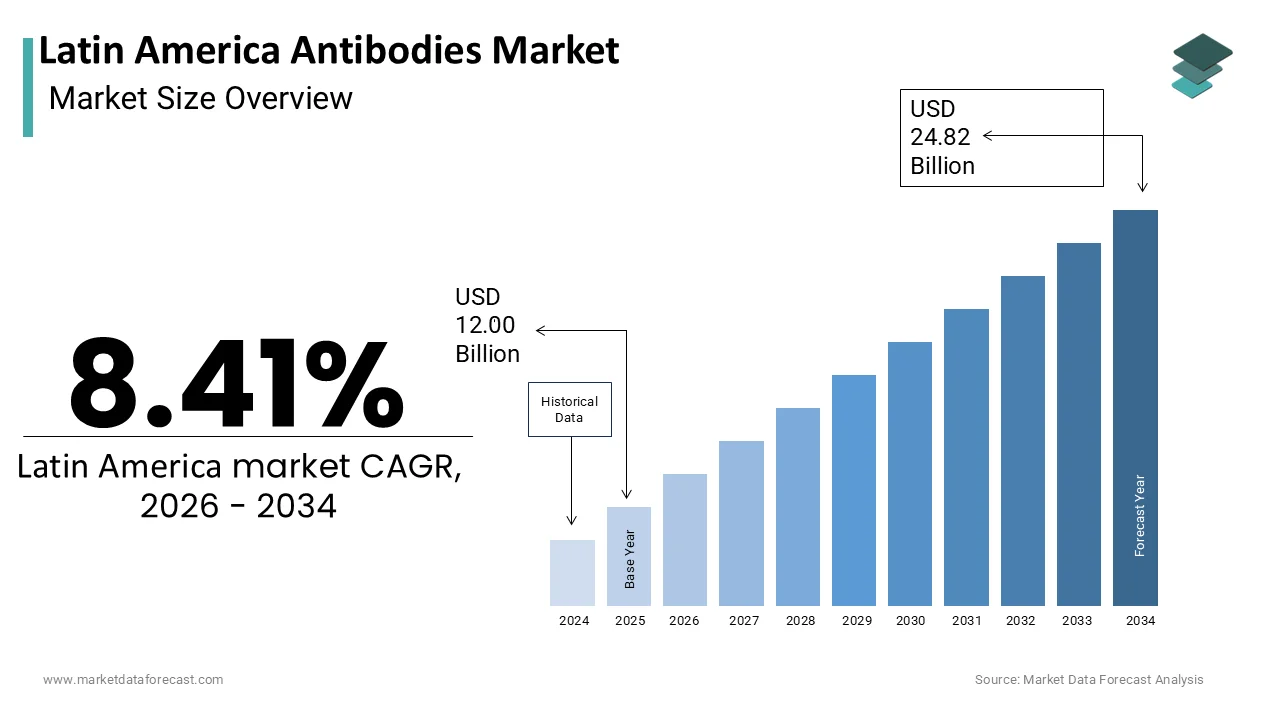
$12 BnMarket Estimate, 2026
$13.01 BnMarket Forecast, 2034
$24.82 BnCAGR, 2026–2034
8.41%Latin America Antibodies Market Size
The Latin America Antibodies Market is projected to grow from USD 12.00 billion in 2025 to USD 13.01 billion in 2026 and reach USD 24.82 billion by 2034, registering a CAGR of 8.41% during the forecast period from 2026 to 2034.
Antibodies are specialized proteins produced by the immune system to identify and neutralize foreign substances such as bacteria, viruses, and other pathogens. In the context of biomedical research and healthcare, antibodies serve as critical tools in diagnostics, therapeutics, and drug development. The Latin America antibodies market covers both monoclonal and polyclonal antibodies used across clinical laboratories, biopharmaceutical companies, academic institutions, and hospitals.
In addition, the market has gained momentum due to increasing prevalence of chronic diseases, rising government and private investments in healthcare infrastructure, and growing awareness about early disease detection. Besides, advancements in immunoassay technologies and a surge in R&D activities have contributed to the expansion of antibody-based applications in the region.
Also, according to the Pan American Health Organization (PAHO), infectious diseases remain a significant health burden in Latin America, with dengue, tuberculosis, and HIV affecting millions annually. This has led to an uptick in diagnostic testing, where antibodies play a pivotal role in detecting infections accurately and efficiently.
Moreover, Brazil has emerged as a key player in the regional market, driven by its expanding biotechnology sector and supportive regulatory frameworks for biosimilars. Argentina and Mexico are also witnessing growth due to increased collaborations between local and international pharmaceutical firms.
MARKET DRIVERS
Rising Incidence of Chronic and Infectious Diseases
A primary driver of the Latin America Antibodies Market is the escalating incidence of chronic and infectious diseases, which has intensified the demand for advanced diagnostic and therapeutic solutions.
According to the World Health Organization (WHO), non-communicable diseases such as cancer, diabetes, and cardiovascular disorders account for nearly 81% of all deaths in the Latin American region. These conditions necessitate accurate diagnostic tools, many of which rely on antibody-based assays like ELISA and immunohistochemistry for early detection and monitoring.
In Brazil alone, cancer cases have surged in the last decade, prompting increased investment in oncology research and targeted therapies. Monoclonal antibodies, which can specifically target cancer cells without harming healthy tissues, have become integral in treatment protocols. As per the Brazilian National Cancer Institute (INCA), more than 650,000 new cancer cases were diagnosed in 2023, reinforcing the need for scalable antibody production and application.
Simultaneously, infectious diseases continue to pose a major public health challenge. As per PAHO in 2023, over 2.5 million cases of dengue were recorded across Latin America, particularly in Colombia, Paraguay, and Bolivia. Rapid diagnostic tests using specific antibodies have proven essential in managing outbreaks effectively.
These disease trends underscore the growing reliance on antibody-based diagnostics and therapies, fueling sustained market growth across the region.
Expansion of Healthcare Infrastructure and Diagnostic Facilities
Another significant factor propelling the Latin America Antibodies Market is the rapid expansion of healthcare infrastructure and diagnostic facilities, particularly in emerging economies such as Mexico, Chile, and Peru. Governments across the region have been investing heavily in upgrading medical facilities, establishing centralized diagnostic labs, and integrating digital pathology systems, all of which rely extensively on antibody-based testing methodologies.
As per the Economic Commission for Latin America and the Caribbean (ECLAC), public healthcare expenditure in the region increased between 2021 and 2023, with Brazil and Argentina leading in capital allocation for laboratory modernization. This investment has enabled a broader rollout of immunoassay platforms that require high-quality antibodies for accurate disease detection.
Also, the proliferation of private diagnostic centers has created a parallel demand for cost-effective and efficient antibody kits. These labs increasingly source monoclonal and recombinant antibodies for autoimmune and infectious disease screening.
Furthermore, partnerships between global biotech firms and local manufacturers have facilitated easier access to standardized antibody products, reducing import dependency and accelerating domestic adoption. These developments collectively reinforce the region’s growing capacity to leverage antibody technologies in both preventive and curative healthcare settings.
MARKET RESTRAINTS
Limited Access to Advanced Technologies in Rural Areas
One of the major restraints hindering the growth of the Latin America antibodies market is the limited access to advanced diagnostic and therapeutic technologies in rural and underserved regions. Despite notable progress in urban healthcare infrastructure, large segments of the population in countries like Ecuador, Guatemala, and Bolivia still lack access to basic medical services, let alone sophisticated antibody-based diagnostics or treatments.
According to the Pan American Health Organization (PAHO), nearly 40% of the population in rural Latin America does not have regular access to essential medicines or diagnostic tools. This disparity extends to antibody-related applications, where the availability of trained personnel, cold chain logistics, and proper storage facilities remains inadequate.
Moreover, the high costs associated with monoclonal antibody therapies further restrict their usage in low-income populations. Without adequate insurance coverage or government subsidies, patients in these areas often resort to conventional, less effective treatment options. This uneven distribution of resources and technology presents a significant barrier to the widespread adoption of antibody-based solutions across the Latin American region.
Regulatory Complexities and Lengthy Approval Processes
Regulatory complexities and lengthy approval processes for antibody-based products constitute another major restraint on the Latin America Antibodies Market. While regulatory bodies such as ANVISA in Brazil, COFEPRIS in Mexico, and INVIMA in Colombia have made strides in standardizing approval procedures, inconsistencies and bureaucratic delays persist, hampering market entry for innovative antibody products.
According to the Inter-American Development Bank (IDB), the average time required to approve a new monoclonal antibody therapy in Latin America is approximately 18–24 months—significantly longer than in North America or Europe. Such delays discourage multinational pharmaceutical companies from launching novel antibody drugs in the region, limiting patient access to cutting-edge treatments.
Moreover, differences in regulatory expectations among Latin American countries complicate multi-market commercialization strategies. Companies must often tailor submissions to each jurisdiction, increasing both time-to-market and operational costs.
These regulatory hurdles create uncertainty and slow down the pace of innovation diffusion, constraining the overall growth potential of the Latin America Antibodies Market.
MARKET OPPORTUNITIES
Growth of Biosimilar Development Initiatives
A prominent opportunity driving the Latin America antibodies market is the rapid growth of biosimilar development initiatives across the region. With patent expirations of several blockbuster monoclonal antibody drugs, there is a growing focus on developing cost-effective biosimilars that can expand access to life-saving therapies while reducing financial burdens on healthcare systems.
Brazil has emerged as a leader in this space, supported by a robust regulatory framework established by ANVISA, which encourages biosimilar manufacturing through streamlined approval pathways. Mexico and Argentina are also witnessing strong growth in biosimilar investments, aided by government incentives and collaborative efforts with global biotech firms. In 2023, Argentina’s National Administration of Drugs, Foods and Medical Devices (ANMAT) approved two new biosimilar monoclonal antibodies for oncology use, signaling a shift toward self-sufficiency in biologic drug production.
Besides, organizations such as the International Centre for Genetic Engineering and Biotechnology (ICGEB) are supporting regional capacity-building programs to enhance local expertise in antibody engineering and production. With rising demand for affordable biological treatments and increasing domestic manufacturing capabilities, the biosimilar segment offers substantial growth potential for the Latin America Antibodies Market.
Increasing Adoption of Point-of-Care Diagnostic Platforms
Another key opportunity shaping the Latin America Antibodies Market is the increasing adoption of point-of-care (POC) diagnostic platforms, which utilize antibody-based assays for rapid and accessible disease detection. POC testing allows for immediate results outside traditional lab settings, making it particularly valuable in rural and resource-limited areas where centralized diagnostics are unavailable. These devices, which often employ lateral flow assays or microfluidic chips embedded with capture antibodies, enable early diagnosis of conditions such as dengue, malaria, and cardiac biomarkers.
In Colombia, mobile health units equipped with rapid antibody-based test kits have significantly improved outbreak response times for infectious diseases.
Moreover, the integration of digital health technologies with antibody-based diagnostics—such as smartphone-linked immunoassay readers—is enhancing data collection and real-time monitoring capabilities. As governments and NGOs continue to invest in decentralized healthcare models, the demand for antibody-driven POC diagnostics is expected to rise, presenting a compelling growth avenue for market participants.
MARKET CHALLENGES
High Cost and Complexity of Antibody Production
A major challenge facing the Latin America Antibodies Market is the high cost and technical complexity associated with antibody production, particularly for monoclonal antibodies. The manufacturing process involves intricate cell culture techniques, extensive purification steps, and stringent quality control measures, all of which require specialized equipment and highly skilled personnel.
According to the Inter-American Development Bank (IDB), the cost of setting up a monoclonal antibody production facility in Latin America is approximately 30–40% higher than in Asia due to higher labor expenses and limited local supply chains for raw materials. This economic barrier discourages smaller biotech firms from entering the market and limits domestic production capacity.
Moreover, the complexity of maintaining consistent product quality and complying with international GMP standards adds another layer of difficulty. Many local producers struggle to meet export requirements, restricting their ability to compete globally. Unless there is significant investment in technological upgrades and workforce training, this challenge will continue to impede the region's ability to develop a fully independent and competitive antibody industry.
Talent Shortage and Lack of Specialized Training Programs
Another critical challenge impacting the Latin America Antibodies Market is the shortage of skilled professionals and the lack of specialized training programs in antibody engineering and biopharma production. The development, manufacturing, and application of antibody-based products require expertise in molecular biology, immunology, and bioengineering—fields where Latin America faces a talent deficit.
Also, the educational gap results in a limited pool of qualified scientists and technicians capable of supporting the growing demand for antibody research and commercialization.
Moreover, industry-academia collaboration is relatively weak compared to developed markets. Few partnerships exist between biotech firms and universities to co-develop curriculum or provide hands-on training in antibody production techniques. Without targeted investments in education, workforce development, and knowledge transfer initiatives, the region may struggle to build a sustainable pipeline of experts necessary to drive long-term growth in the antibodies market.
REPORT COVERAGE
| REPORT METRIC | DETAILS |
| Market Size Available | 2025 to 2034 |
| Base Year | 2025 |
| Forecast Period | 2026 to 2034 |
| Segments Covered | By Product Type, Indication, End User, Application and Country. |
| Various Analyses Covered | Global, Regional, & Country Level Analysis; Segment-Level Analysis, DROC, PESTLE Analysis, Porter’s Five Forces Analysis, Competitive Landscape, Analyst Overview of Investment Opportunities |
| Country Covered | Mexico, Brazil, Argentina, Chile, Peru and Rest of Latin America. |
| Market Leaders Profiled | Abbott Diagnostics, Novartis AG, Pfizer Inc, ThermoFisher Scientific Inc |
SEGMENT ANALYSIS
By Product Type Insights
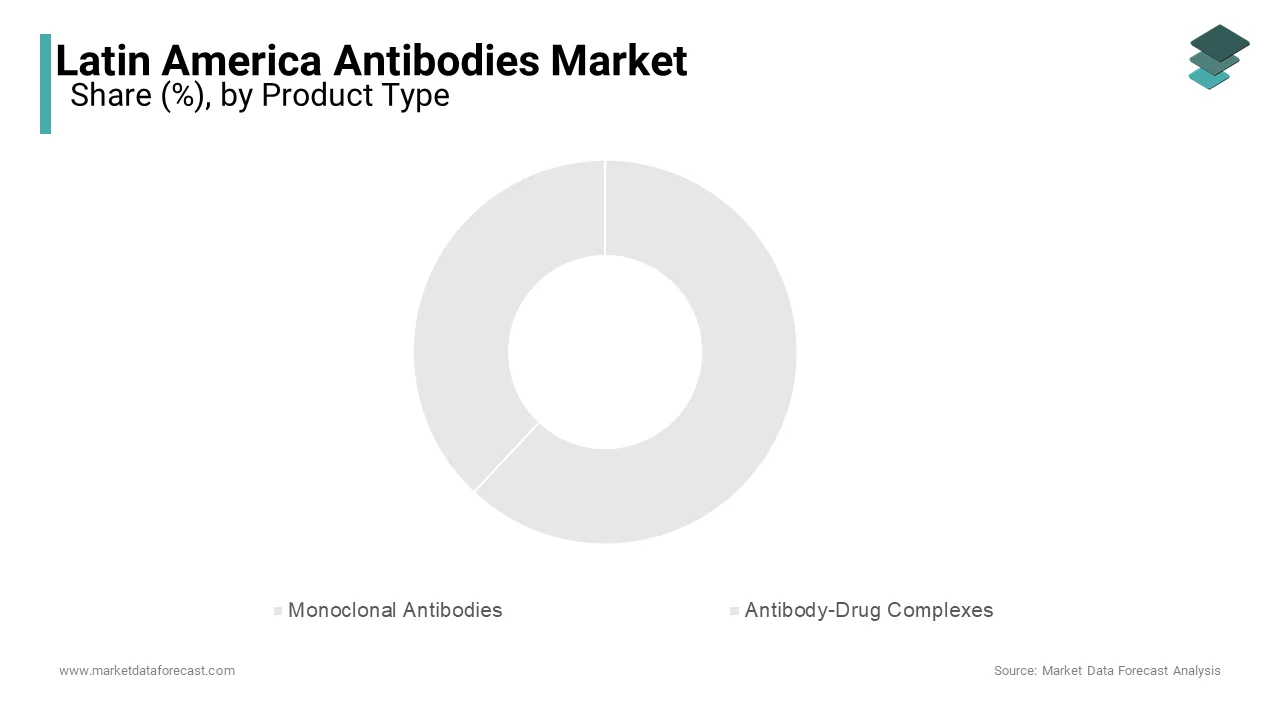
Monoclonal antibodies dominated the Latin America Antibodies Market with an estimated share of 62.5% in 2024. This segment’s position is primarily driven by their widespread application in targeted therapies for chronic diseases such as cancer and autoimmune disorders. Their high specificity and efficacy in blocking disease pathways have made them a preferred choice in therapeutic applications.
In Brazil, which holds the largest pharmaceutical market in Latin America, monoclonal antibody usage increased year-over-year between 2021 and 2023, as per the ANVISA, the country’s health regulatory agency. The rise in biosimilar approvals and government initiatives to localize production have further strengthened adoption rates.
Moreover, the increasing investment by multinational biopharma companies in contract manufacturing and R&D centers within the region has expanded access to these advanced therapeutics, reinforcing monoclonal antibodies as the most dominant product type in the Latin American antibodies landscape.
Antibody-drug complexes (ADCs) are emerging as the fastest-growing segment in the Latin America antibodies market, projected to expand at a CAGR of 18.4%. These innovative therapeutics combine monoclonal antibodies with potent cytotoxic agents, enabling highly targeted delivery of drugs to cancer cells while minimizing systemic toxicity.
The rapid growth of this segment is attributed to rising investments in precision oncology and increasing clinical trials focused on ADC development. Besides, regulatory support from agencies like COFEPRIS in Mexico and ANMAT in Argentina has expedited approval timelines for novel ADC therapies, encouraging global pharmaceutical firms to enter the regional market. In 2023, two ADC-based drugs received accelerated approval status in Brazil, enhancing treatment options for patients with HER2-positive breast and gastric cancers.
Furthermore, advancements in conjugation technologies and partnerships between academic institutions and biotech firms are fostering innovation in ADC design. As awareness grows and healthcare infrastructure improves, antibody-drug complexes are poised to become a transformative force in the Latin American antibodies market.
By Indication Insights
Cancer represented the largest indication segment in the Latin America Antibodies Market, capturing 38.6% of total value in 2024. The high prevalence of various cancers, coupled with increasing reliance on monoclonal antibodies for targeted therapy, drives this dominance.
According to the World Health Organization (WHO), Latin America recorded over 1.2 million new cancer cases in 2023, with breast, colorectal, and prostate cancers being the most common. The demand for precision oncology treatments has surged, particularly in countries like Brazil and Argentina, where government-led initiatives promote access to biologic therapies. Also, the expansion of biosimilar availability and improvements in diagnostic capabilities have further fueled adoption.
Moreover, the integration of antibody-based immunotherapies—such as checkpoint inhibitors—into standard cancer care protocols has enhanced treatment outcomes. These factors collectively reinforce cancer as the leading application area for antibody products in Latin America.
Autoimmune diseases are emerging as the fastest-growing indication segment in the Latin America antibodies market, expanding at an estimated CAGR of 16.9%. This growth is primarily driven by increasing incidence of conditions such as rheumatoid arthritis, psoriasis, and inflammatory bowel disease, alongside rising awareness about biological treatment options. Countries like Chile and Colombia have seen significant uptake of TNF-alpha inhibitors, which are monoclonal antibody-based drugs used to manage chronic inflammation. In addition, public and private healthcare providers are increasingly incorporating antibody therapies into treatment guidelines, improving patient access.
Apart from these, patient advocacy groups and medical associations have played a crucial role in educating both physicians and patients about the benefits of biologic treatments. With greater insurance coverage and biosimilar availability, the autoimmune disease segment is positioned for sustained growth in the Latin American antibodies market.
By End User Insights
Hospitals and clinics led end-user segment in the Latin America Antibodies Market, holding 55.1% of the total market share in 2024. This dominance is primarily attributed to the extensive use of antibody-based diagnostics and therapeutics in hospital settings for managing complex diseases.
According to the Inter-American Development Bank (IDB), over 60% of biologic prescriptions in Latin America are dispensed through hospitals and specialized clinics, particularly in oncology and rheumatology departments. These facilities serve as primary points of care for patients requiring monoclonal antibody infusions and other advanced treatments.
Moreover, the integration of digital health records and telemedicine platforms in hospitals has improved patient monitoring and follow-up, facilitating better adherence to long-term antibody therapies. With increasing investment in hospital infrastructure and the expansion of treatment access programs, hospitals and clinics remain the principal drivers of antibody consumption in the Latin American region.
Diagnostic laboratories are the fastest-growing end-user segment in the Latin America Antibodies Market, projected to grow at a CAGR of approximately 19.2%. This rapid expansion is fueled by the increasing adoption of antibody-based assays for early disease detection, particularly in infectious and autoimmune conditions.
Private diagnostic chains such as Dasa in Brazil and Grupo Gamma in Mexico have integrated advanced ELISA and chemiluminescence platforms that rely heavily on specific antibody reagents. Besides, the proliferation of point-of-care diagnostic centers and mobile labs equipped with rapid antibody test kits has expanded access in remote areas, further boosting market penetration. As healthcare providers prioritize early intervention and precision diagnostics, diagnostic laboratories are set to lead the next phase of growth in the Latin America Antibodies Market.
COUNTRY LEVEL ANALYSIS
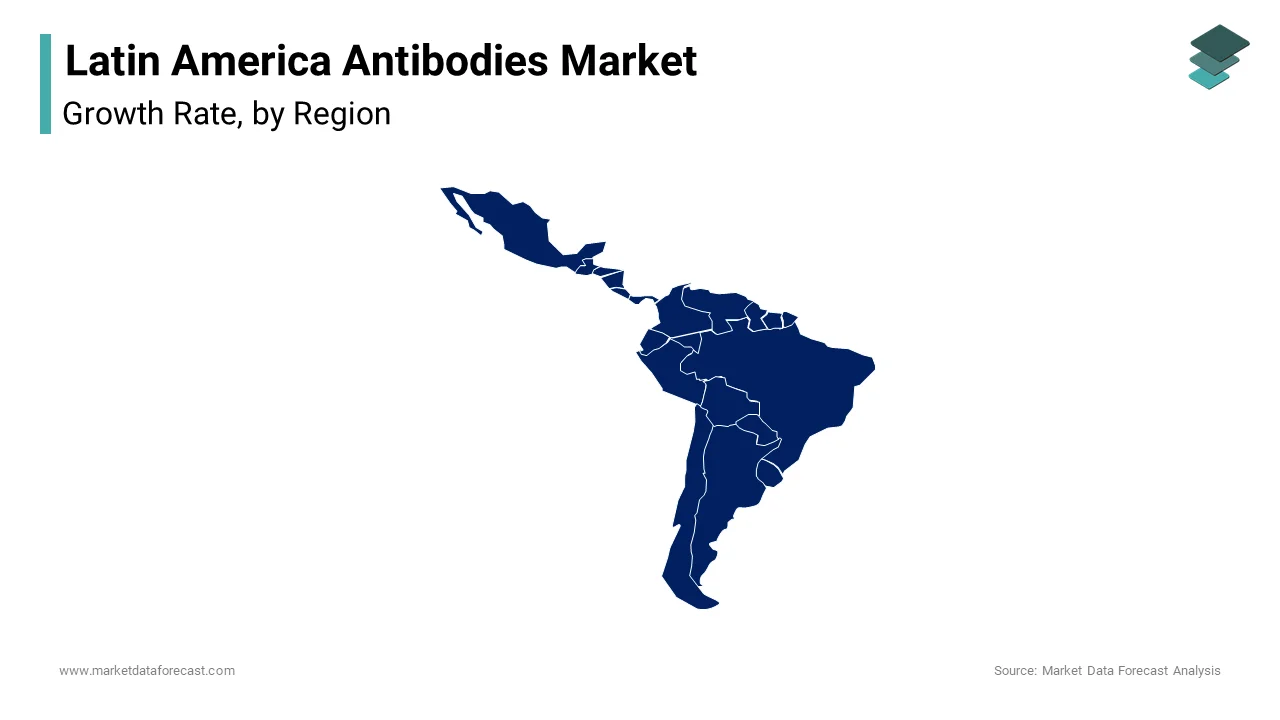
Brazil led the Latin America Antibodies Market with a market share of 36%, driven by its well-established biopharmaceutical industry and strong government support for domestic biologics production. The country’s robust healthcare infrastructure, including a large network of public and private hospitals, facilitates widespread adoption of antibody-based therapies. Moreover, Brazil’s high burden of cancer and autoimmune diseases has led to increased demand for targeted therapies. With expanding R&D collaborations and growing patient access programs, Brazil remains the central hub for antibody innovation and commercialization in Latin America.
Mexico is another key player in the Latin America Antibodies Market, supported by its progressive regulatory environment and increasing investments in biopharmaceutical manufacturing. The country serves as a strategic gateway for multinational pharmaceutical companies looking to expand into Latin America, leveraging its strong industrial base and proximity to the U.S. market.
COFEPRIS, Mexico’s health regulatory authority, has introduced fast-track approval mechanisms for biosimilars, accelerating market entry for cost-effective antibody therapies.
Also, the Mexican Social Security Institute (IMSS) expanded coverage for biologic treatments in 2023, increasing access for patients with rheumatoid arthritis and Crohn’s disease. Private healthcare providers, including Grupo Ángeles and Médica Sur, have also integrated antibody therapies into their treatment protocols, enhancing patient outcomes. Furthermore, the country’s growing participation in global clinical trials—particularly in oncology—has positioned Mexico as a key player in the regional antibodies market. With ongoing investments in local production and international partnerships, Mexico continues to strengthen its position in the sector.
Argentina is benefiting from a strong scientific foundation and supportive government policies aimed at promoting biotechnology development. The country has been actively investing in biosimilar manufacturing and research, positioning itself as a leader in antibody-based therapeutics within the Southern Cone.
Moreover, Argentina’s high prevalence of autoimmune diseases has driven demand for antibody therapies. Also, the country’s participation in regional trade agreements has facilitated technology transfers and collaborative research efforts with European and Asian biotech firms. These developments contribute to Argentina’s growing influence in the Latin American antibodies landscape.
Chile is distinguished by its advanced healthcare system and favorable regulatory framework for biologics. The country consistently ranks among the top in the region for healthcare accessibility and quality, enabling faster adoption of antibody-based treatments.
Moreover, Chile has emerged as a regional hub for clinical research, hosting numerous multinational trials focused on antibody therapies. The University of Chile and Pontificia Universidad Católica de Chile have established dedicated biotechnology research centers, advancing local expertise in antibody engineering.
Private healthcare providers, such as Clínica Las Condes and Clínica Santa María, have also integrated monoclonal antibody treatments into their standard care protocols, further driving market growth.With continued investment in research and regulatory modernization, Chile maintains a strong foothold in the Latin American antibodies market.
Colombia is experiencing steady growth driven by expanding healthcare access and increasing investment in biopharmaceutical infrastructure. The country has made notable progress in integrating antibody therapies into its public health system, particularly for cancer and autoimmune disease management.
In addition, Colombia has witnessed a surge in diagnostic testing using antibody-based assays, particularly for infectious diseases such as dengue and Chagas disease. Furthermore, partnerships between local biotech firms and international players have enhanced the supply chain for antibody products. Companies like Biomm and Sinergium Bio have explored distribution agreements with Colombian distributors to improve market reach. With ongoing reforms in healthcare financing and regulatory efficiency, Colombia is steadily strengthening its position in the regional antibodies market.
KEY MARKET PLAYERS AND COMPETITIVE LANDSCAPE
Some noteworthy companies operating in the Latin America Antibodies Market profiled in this report are Abbott Diagnostics, Novartis AG, Pfizer Inc, ThermoFisher Scientific Inc, Eli Lilly, and company, A.G. Scientific, Bristol-Myers Squibb, F. Hoffmann-La Roche Ltd, and AbbVie Inc.
The competition in the Latin America Antibodies Market is shaped by a mix of multinational biopharma giants, emerging regional biotech firms, and public-sector institutions striving to expand their influence in the biologics space. While global players bring established expertise and extensive product portfolios, local companies are increasingly gaining traction through cost-effective biosimilar development and tailored market strategies. The market remains fragmented, with no single entity dominating across all segments, allowing multiple players to coexist based on specialization, geographic focus, and therapeutic niche. Strategic investments in manufacturing, coupled with an emphasis on innovation and regulatory alignment, are key differentiators among competitors. Additionally, collaboration between academia and industry has become a vital mechanism for driving research and commercialization of new antibody-based solutions. As governments prioritize healthcare modernization and biotech growth, the competitive landscape continues to evolve, offering opportunities for both international expansion and regional innovation.
Top Players in the Market
Yeda Research and Development Co. Ltd. (Israel-based with strong presence in Latin America)
Yeda, the technology transfer arm of the Weizmann Institute of Science, is a key player in the development of novel antibody technologies that have found applications across Latin American research institutions and biotech firms. The company contributes to the global antibodies market through its licensing of cutting-edge monoclonal antibody platforms used in diagnostics and targeted therapies. In Latin America, Yeda collaborates with academic and industrial partners to advance antibody engineering, supporting innovation in therapeutic and diagnostic fields.
Bio-Manguinhos (Instituto Butantan – Brazil)
Bio-Manguinhos, a division of Instituto Butantan in Brazil, plays a central role in the Latin America Antibodies Market by developing and manufacturing vaccines and biologics, including monoclonal antibodies. As a public-sector leader in biotechnology, it strengthens regional self-sufficiency in critical therapeutics and supports government health programs. Its contributions extend beyond national borders, positioning Brazil as a hub for biopharmaceutical innovation in the region.
Sinergium Biotech (Argentina)
Sinergium Biotech is a leading Argentine biotechnology firm specializing in the development and production of monoclonal antibodies and biosimilars. It actively participates in the global antibodies market by exporting products and forming strategic partnerships with international pharmaceutical companies. In Latin America, Sinergium enhances access to affordable biologic treatments, particularly in oncology and autoimmune diseases, while promoting local R&D capabilities and manufacturing excellence.
Top Strategies Used by Key Market Participants
One of the primary strategies employed by key players in the Latin America Antibodies Market is expanding domestic manufacturing capabilities . Companies are investing in advanced biomanufacturing infrastructure to reduce dependency on imports and meet rising demand for biologics within the region.
Another crucial approach is forging strategic partnerships and collaborations with academic institutions, regulatory bodies, and international pharmaceutical firms. These alliances help accelerate R&D efforts, improve regulatory compliance, and facilitate technology transfer to enhance product development pipelines.
Lastly, market participants are focusing on strengthening distribution networks and improving supply chain efficiency . By enhancing logistics and establishing localized distribution hubs, companies ensure timely availability of antibody-based products across both urban and rural healthcare settings, thereby expanding their reach and reinforcing market presence in Latin America.
RECENT HAPPENINGS IN THE MARKET
In February 2024, Bio-Manguinhos expanded its monoclonal antibody production facility in Rio de Janeiro, aiming to increase domestic supply capacity and support Brazil’s public health initiatives in oncology and infectious disease management.
In May 2024, Sinergium Biotech announced a partnership with a European biopharma firm to co-develop a biosimilar monoclonal antibody targeting autoimmune diseases, enhancing its pipeline and strengthening its foothold in the regional market.
In July 2024, Yeda Research and Development Co. Ltd. signed a licensing agreement with a leading Argentine research institute to deploy its proprietary antibody discovery platform, fostering innovation in therapeutic antibody development across Latin America.
In October 2024, Laboratorio Elea, a major Argentine pharmaceutical company, launched a new line of diagnostic kits based on monoclonal antibodies, aimed at improving early detection of infectious diseases in underserved communities.
In December 2024, Grupo Bimbo Health Division entered into a joint venture with a Mexican biotech startup to explore antibody-based nutraceutical applications, signaling a diversification strategy that bridges food science and immunotherapy in the Latin American context.
MARKET SEGMENTATION
This research report on the latin american antibodies market has been segmented and sub-segmented into the following categories
By Product Type
- Monoclonal Antibodies
- Antibody-Drug Complexes
By Indication
- Cancer
- Autoimmune Diseases
By End User
- Hospitals and Clinics
- Diagnostic Laboratories
By Application
- Medical
- Experimental
- Western blot
- ELISA
- Radioimmune Assays
- Immunofluorescence
- Others (Immunohistochemistry, Immunoprecipitation, & Immunocytochemistry)
By Country
- Mexico
- Brazil
- Argentina
- Chile
- Rest of Latin America