- Product Description Description
- Table of Contents TOC
- List of Table & Figure LOT
- Get Free Sample PDF Sample PDF
Market Size, 2025
$0.47 BnMarket Estimate, 2026
$0.53 BnMarket Forecast, 2034
$1.49 BnCAGR, 2026–2034
13.7%Latin America Biochar Market Size, Growth, Trends & Forecast (2026–2034)
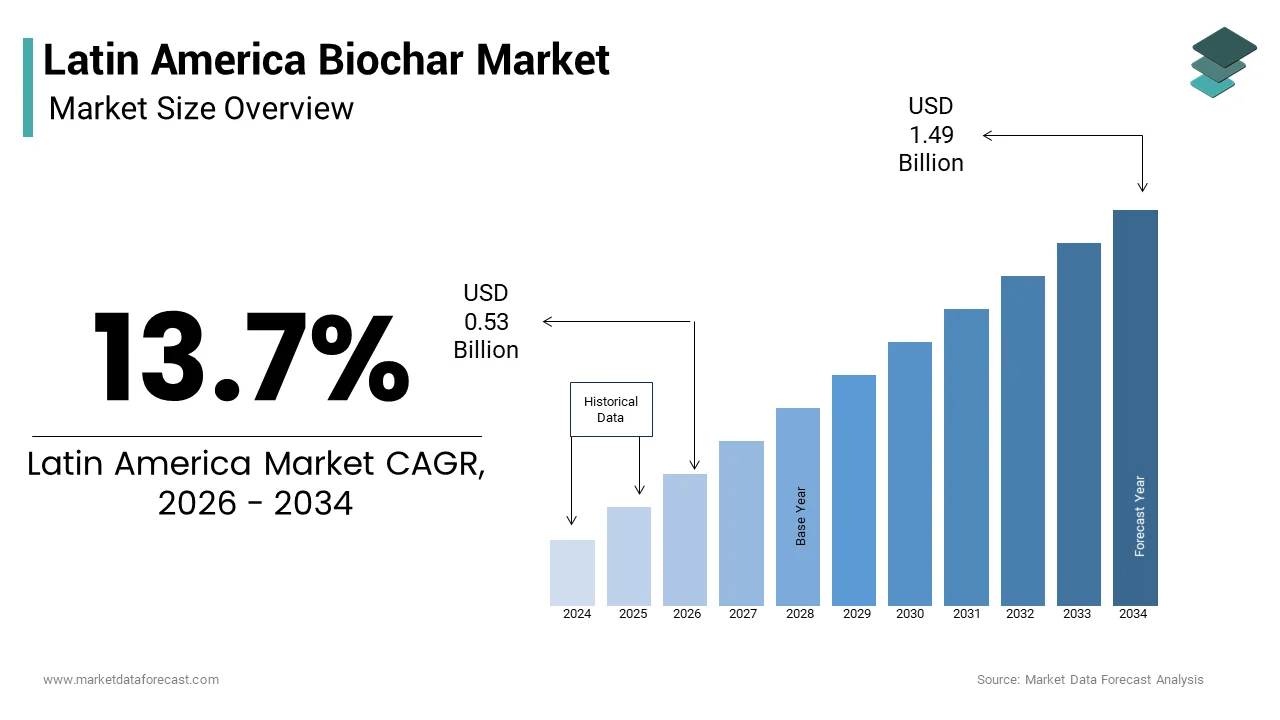
The Latin America biochar market size was valued at USD 0.47 billion in 2025, is anticipated to reach USD 0.53 billion in 2026, and is projected to expand up to USD 1.49 billion by 2034, registering a compound annual growth rate (CAGR) of 13.70% during the forecast period from 2026 to 2034. Growth is driven by acute soil degradation across arable lands, expanding carbon credit mechanisms, and extensive regional biomass residues from agricultural and forestry operations.
Key Executive Metrics (At-a-Glance)
- 2025 Base Valuation: USD 0.47 Billion
- 2026 Current Valuation: USD 0.53 Billion
- 2034 Forecast Valuation: USD 1.49 Billion
- Compound Annual Growth Rate (CAGR): 13.70% (2026–2034)
- Dominant Application Segment: Agriculture (Substantial share in 2025)
- Fastest-Growing Application Segment: Livestock (18.3% CAGR, 2025–2034)
- Dominant Technology Segment: Pyrolysis (Significant share in 2025)
- Fastest-Growing Technology Segment: Gasification (17.6% CAGR)
- Dominant Manufacturing Segment: Pyrolysis-Based Manufacturing (65.6% share in 2025)
- Fastest-Growing Manufacturing Segment: Gasification-Based Manufacturing (17.8% CAGR)
- Dominant Feedstock Segment: Agricultural Waste (55.1% share in 2025)
- Fastest-Growing Feedstock Segment: Forestry Waste (19.2% CAGR, 2025–2034)
Core Market Drivers
- Extensive Soil Degradation: Over 75% of soils in Latin America and the Caribbean facing degradation issues, demanding regenerative soil amendments like biochar.
- Maturing Carbon Credit Markets: High-value carbon removal mechanisms (such as CORCs) providing stable secondary revenue streams and de-risking project investments.
Primary Market Restraints & Challenges
- Technical Capacity Deficits: Scarcity of specialized pyrolysis engineering expertise and analytical laboratories for standardized quality and characterization.
- Logistical & Capital Barriers: Supply chain fragmentation, variable feedstock collection, and high upfront capital expenditure limiting smallholder adoption.
Latin America Biochar Market Segmentation Breakdown
| Segment Category | Largest (Dominant) Sub-Segment | Fastest-Growing Sub-Segment |
|---|---|---|
| By Application | Agriculture (2025) | Livestock (18.3% CAGR, 2025–2034) |
| By Technology | Pyrolysis (2025) | Gasification (17.6% CAGR) |
| By Manufacturing | Pyrolysis-Based (65.6% share, 2025) | Gasification-Based (17.8% CAGR) |
| By Feedstock | Agricultural Waste (55.1% share, 2025) | Forestry Waste (19.2% CAGR, 2025–2034) |
Major Industry Players Profiled
Key corporations driving the Latin American biochar sector include Biochar Products Inc., Diacarbon Energy Inc., Agri-Tech Producers LLC, Genesis Industries, Green Charcoal International, Vega Biofuels Inc., The Biochar Company, Cool Planet Energy Systems Inc., Full Circle Biochar, and Pacific Pyrolysis Pty Ltd.
Latin America Biochar Market Size
The Latin America biochar market size was valued at USD 0.47 billion in 2025 and is anticipated to reach USD 0.53 billion in 2026 and USD 1.49 billion by 2034, growing at a CAGR of 13.7% from 2026 to 2034.
Current Intro Definition of the Latin America Biochar Market
Biochar is a high-carbon, fine-grained, porous charcoal-like substance produced by heating organic biomass, such as agricultural waste, wood chips, or manure, in a low-oxygen environment, a process known as pyrolysis. It functions as a stable soil amendment that improves nutrient retention water holding capacity and microbial activity while permanently storing atmospheric carbon. According to the Food and Agriculture Organization seventy five percent of soils in Latin America and the Caribbean face degradation issues resulting in estimated annual economic losses reaching sixty billion United States dollars. Theoretical modeling published in environmental research frameworks indicates that Brazil possesses a maximum technical capacity to generate roughly 360 million tons of biochar annually by utilizing its vast agricultural and forestry residues, a strategy that could theoretically sequester nearly 590 million tons of carbon dioxide equivalent each year. The region's tropical soils frequently exhibit low fertility and high acidity creating substantial agronomic demand for sustainable amendments. Latin America generates immense volumes of biomass waste from sugarcane soy corn and timber operations providing abundant low cost feedstock for biochar production. Regional Food and Agriculture Organization (FAO) initiatives, such as RECSOIL and SOILFER, are actively promoting global soil recarbonization and sustainable management practices. These frameworks enhance organic matter and soil health, creating systemic synergies that support broader regional biochar deployment strategies. The convergence of degraded land restoration needs climate mitigation commitments and circular economy principles positions biochar as a strategically relevant technology for sustainable development across Latin American agricultural systems.
MARKET DRIVERS
Escalating Soil Degradation Drives Biochar Adoption for Agricultural Restoration
The accelerating deterioration of arable land across the region creates compelling demand for biochar as a regenerative soil solution, and thereby contributes to the growth of the Latin America biochar market. According to the Food and Agriculture Organization seventy five percent of soils in Latin America and the Caribbean exhibit degradation symptoms including nutrient depletion erosion and loss of organic matter which directly undermines crop productivity and farmer livelihoods. Biochar application addresses these challenges by enhancing soil structure increasing cation exchange capacity and promoting beneficial microbial communities. According to official national agricultural and environmental assessments in Mexico, between 64% and 70% of the country’s territory shows measurable soil degradation, intensifying the urgency for scalable remediation technologies like biochar. Biochar's porous structure retains water and nutrients reducing fertilizer runoff and irrigation requirements which is particularly valuable in drought prone regions of Central America and the Andean highlands. Field applications across weathered tropical soils in Colombia and Peru have demonstrated that integrating biochar can significantly boost the yields of staple crops by alleviating soil acidity, retaining moisture, and preventing fertilizer runoff. The economic rationale strengthens as input costs rise and climate variability increases production risks. Farmers increasingly view biochar not merely as a soil additive but as a long term investment in land resilience. According to regional agricultural extension services the adoption of biochar aligns with climate smart agriculture frameworks that prioritize productivity sustainability and adaptation simultaneously. This convergence of agronomic necessity economic pragmatism and policy support establishes soil restoration as a primary demand driver for biochar market expansion throughout Latin America.
Expanding Carbon Credit Mechanisms Incentivize Biochar Production Investments
The maturation of carbon removal markets provides a powerful financial catalyst for biochar project development across the region, which further propels the expansion of the Latin America biochar market. According to Puro Earth a leading carbon removal standard biochar has emerged as the fastest to market engineered durable carbon dioxide removal pathway with verified issuance volumes growing substantially in recent years. As per Nasdaq's CORCCHAR index, biochar carbon dioxide removal certificates (CORCs) traded at stable volume-weighted monthly averages between 125 and 145 Euros per metric ton, creating highly predictable, attractive revenue streams for project developers. Latin America's abundant biomass residues combined with relatively lower operational costs position the region competitively within global carbon removal supply chains. Colombia recently issued its first biochar based carbon removal credits signaling regulatory readiness and investor confidence in regional project pipelines. According to sources, these credits follow ex post verification protocols that enhance integrity and appeal to conservative corporate buyers seeking durable removals. The dual revenue model combining biochar sales for soil application with carbon credit monetization improves project economics and de risks capital deployment. Studies indicate that the economic viability of industrial-scale biochar projects in South America remains highly interdependent on carbon markets, with developers relying on certificate sales to subsidize infrastructure and operational costs. Growing corporate procurement commitments for permanent carbon removal further strengthen demand visibility. This convergence of credible carbon accounting favorable pricing and regional feedstock availability establishes carbon credit mechanisms as a pivotal demand driver accelerating biochar market growth across Latin America.
MARKET RESTRAINTS
Limited Technical Expertise Constrains Quality Consistent Biochar Production
The scarcity of specialized knowledge in pyrolysis engineering and biochar characterization is a significant barrier to the Latin America biochar market maturation. While academic assessments from Brazilian research institutions note that early biochar development was limited to small pilot facilities, the market is rapidly maturing with commercial-scale industrial pyrolysis operations successfully expanding to capture regional biomass potential. As per technical reviews many small and medium enterprises lack access to standardized protocols for feedstock preprocessing temperature control and emissions management which directly impacts product consistency and carbon stability. Biochar quality varies substantially based on pyrolysis conditions and feedstock composition yet regional laboratories often lack the analytical capacity to measure critical parameters such as hydrogen to organic carbon ratios or polycyclic aromatic hydrocarbon concentrations. Under the Food and Agriculture Organization's (FAO) technical umbrella, the Latin American Soil Laboratory Network (LATSOLAN) connects 230 soil analysis institutions across 23 regional nations, building localized capacities for standardized agricultural soil testing and biochar analysis. This technical gap complicates certification processes for carbon credits and agricultural approvals which require documented evidence of product safety and performance. Farmers and industrial buyers remain cautious about adopting biochar without reliable quality assurances. As per market observations inconsistent product specifications hinder the development of standardized contracts and pricing mechanisms. The absence of regionally adapted training programs for technicians and operators further slows technology diffusion. The Latin America biochar market will struggle to achieve the scale and reliability required for mainstream agricultural and climate applications. This lag will continue until technical capacity building receives coordinated public and private investment.
Fragmented Regulatory Frameworks Impede Cross Border Market Development
The absence of harmonized policies governing biochar production, certification, and trade creates substantial friction for the expansion of the Latin American biochar market across jurisdictions. According to World Bank assessments carbon market regulations vary significantly among countries with some nations like Chile and Colombia advancing framework development while others lack specific provisions for biochar as a carbon removal or soil amendment product. As per regional policy analyses the divergence in environmental permitting requirements agricultural input approvals and carbon accounting methodologies increases compliance costs and delays project timelines for developers operating in multiple countries. Biochar projects seeking carbon credit issuance must navigate distinct verification standards which may not be mutually recognized across borders. Under unified market standards such as Puro.earth, regional project developers in countries like Colombia utilize centralized, cross-border carbon removal accounting methodologies, ensuring that individual production facilities can achieve international registry verification under a consistent technical framework. The lack of regional mutual recognition agreements for biochar quality standards complicates cross border trade and limits market liquidity. Farmers in one country may face uncertainty about the regulatory status of imported biochar products. As per FAO policy briefs only eight Latin American nations have implemented the Sustainable Soil Management Protocol which provides a foundation for consistent agricultural practice evaluation. This regulatory fragmentation discourages large scale investment and prevents the emergence of integrated regional supply chains. The Latin America market will remain compartmentalized and inefficient. This will persist until governments coordinate on baseline standards for biochar characterization, carbon accounting, and product safety.
MARKET OPPORTUNITIES
Integration with Circular Economy Models Unlocks New Value Streams
The alignment of biochar production with circular economy principles creates compelling opportunities for waste valorization and resource efficiency across the region, which is likely to promote the growth of the Latin America biochar market. Theoretical modeling published in environmental research frameworks indicates that Brazil possesses a maximum technical capacity to generate roughly 360 million tons of biochar annually by utilizing its vast agricultural and forestry residues, converting massive organic waste streams into high-value climate and soil assets. As per sources, sugarcane bagasse soy stalks corn residues and timber processing byproducts represent underutilized feedstocks that currently decompose or burn releasing carbon without economic return. Biochar production converts these materials into stable carbon products while generating renewable energy through syngas co production. This dual output model enhances project economics and supports rural industrial development. Food and Agriculture Organization (FAO) initiatives, such as RECSOIL and SOILFER, are actively promoting global soil organic carbon return through sustainable management practices, creating systemic environmental frameworks that naturally complement regional biochar adoption. The integration of biochar into agro industrial clusters enables closed loop systems where processing facilities utilize their own residues for energy and soil amendment production. Case studies from Peru and Colombia demonstrate that biochar applications in perennial crops like coffee, cocoa, and tropical fruits successfully improve long-term soil health, optimize moisture retention, and lower farmer dependency on synthetic inputs. The growing corporate focus on scope three emissions and sustainable sourcing further strengthens demand for circular biochar solutions. Latin American stakeholders must position biochar as a nexus technology linking waste management, climate action, and agricultural productivity. By doing so, they can access blended finance instruments and premium market channels that reward integrated sustainability performance.
Emerging Carbon Removal Procurement Creates Premium Market Access
The rapid expansion of corporate and compliance demand for durable carbon dioxide removal provides a promising prospect for biochar producers in the region. This is expected to accelerate the growth of the Latin America biochar market. According to Puro Earth biochar has become a volume leader within verified durable carbon removal categories with issuance growth outpacing many nature based pathways due to its measurable permanence and scalable production model. As per Nasdaq's CORCCHAR index, biochar carbon removal certificates (CORCs) commanded steady volume-weighted monthly averages between 125 and 145 Euros per metric ton in 2025, trading significantly above standard carbon avoidance valuations. Latin America's competitive advantages include abundant low cost biomass feedstock favorable climate conditions for year round operations and growing technical expertise in pyrolysis engineering. According to research Colombia's recent issuance of its first biochar based carbon removal credits signals emerging investor confidence and replicable project structures across the region. The ex post verification model preferred by many corporate buyers aligns well with biochar's measurable carbon content and stable storage characteristics. As per procurement analyses forward contracting for biochar removals enables developers to secure financing while providing buyers with delivery certainty. The integration of Article six mechanisms and corresponding adjustment pathways could further enhance credit value for compliance eligible markets. Latin American producers that prioritize rigorous monitoring reporting and verification protocols can access premium procurement channels from technology finance and consumer goods companies seeking high integrity permanent removals. This convergence of credible carbon accounting favorable pricing and regional feedstock availability establishes carbon removal procurement as a high growth opportunity segment for the Latin America biochar market.
MARKET CHALLENGES
Inconsistent Feedstock Supply Chains Challenge Production Scalability
The variability in biomass residue availability and logistics infrastructure is a persistent operational challenge to the growth of the Latin America biochar market. According to research published in Environmental Research Letters while Brazil possesses theoretical biochar production potential of approximately 360 million tons annually the spatial distribution of agricultural residues creates significant collection and transportation complexities. As per industry assessments feedstock seasonality crop rotation patterns and competing uses for biomass such as animal feed or direct combustion introduce supply uncertainty that complicates continuous plant operation. Biochar production economics depend on consistent feedstock delivery within cost effective transport radii typically under one hundred kilometers yet many Latin American rural areas lack adequate road networks and storage facilities. According to FAO analyses post harvest losses and residue burning practices further reduce the volume of biomass available for controlled pyrolysis. The absence of standardized biomass grading and pricing mechanisms creates transaction friction between farmers and biochar producers. As per project case studies in Latin America, developers report that raw feedstock procurement and localized biomass transport represent the main operating cost components, ranging from 33% to 74% of total expenses depending on the automation level and tech configuration utilized. Smallholder dominated agricultural systems add coordination complexity requiring aggregation models that many early stage projects lack capacity to implement. The scalability of biochar production will remain constrained by feedstock accessibility and cost predictability challenges. To overcome this, regional stakeholders must develop integrated biomass supply chains that include contractual frameworks, quality standards, and logistics optimization.
High Capital Requirements Limit Technology Adoption Among Smallholders
The substantial upfront investment needed for pyrolysis equipment and emissions control systems creates a significant impediment to entry for small and medium scale producers across the region, which slows down the expansion of the Latin America biochar market. According to technical assessments from regional development banks commercial scale biochar production facilities require capital expenditures ranging from five hundred thousand to two million United States dollars depending on capacity and automation levels which exceeds the financial capacity of most agricultural cooperatives and rural enterprises. As per sources, the absence of tailored financing instruments such as green equipment leases or results based grants leaves potential producers dependent on commercial debt with interest rates that often exceed 12 percent annually in many Latin American jurisdictions. Biochar projects typically require three to five years to achieve positive cash flow creating a liquidity gap that discourages risk averse investors. According to FAO evaluations less than 15 percent of smallholder farmers in the region have access to formal credit for agricultural technology adoption. The technical complexity of pyrolysis operations demands specialized maintenance and monitoring capabilities that increase operational costs. As per industry observations many pilot projects rely on donor funding or corporate sustainability budgets which are not scalable for market wide deployment. The lack of regional equipment manufacturing further elevates costs through import duties and logistics expenses. Until financial mechanisms are developed that de risk capital deployment and align repayment schedules with project revenue profiles the Latin America biochar market will struggle to achieve the distributed production model needed to serve diverse agricultural landscapes and smallholder communities.
REPORT COVERAGE
| REPORT METRIC | DETAILS |
| Market Size Available | 2025 to 2033 |
| Base Year | 2025 |
| Forecast Period | 2026 to 2034 |
| CAGR | 13.7% |
| Segments Covered | Application, Technology, Manufacturing, Feedstock |
| Various Analyses Covered | Global, Regional & Country Level Analysis, Segment-Level Analysis, DROC, PESTLE Analysis, Porter’s Five Forces Analysis, Competitive Landscape, Analyst Overview on Investment Opportunities |
| Regions Covered | Brazil, Mexico, and Argentina |
| Market Leaders Profiled | Biochar Products Inc., Diacarbon Energy Inc., Agri-Tech Producers LLC, Genesis Industries, Green Charcoal International, Vega Biofuels Inc., The Biochar Company, Cool Planet Energy Systems Inc., Full Circle Biochar, and Pacific Pyrolysis Pty Ltd. |
SEGMENT ANALYSIS
By Application Insights
The agriculture segment dominated the Latin America Biochar Market, and accounted for a substantial share in 2025. This dominance of the segment was driven by biochar's proven capacity to remediate degraded tropical soils while enhancing crop productivity across the region. According to the Food and Agriculture Organization seventy five percent of soils in Latin America and the Caribbean exhibit degradation symptoms including nutrient depletion and reduced organic matter. Biochar application directly addresses these challenges by improving soil structure increasing cation exchange capacity and promoting beneficial microbial communities. As per field trials conducted in Colombia and Peru yield improvements ranging from 15 percent to 40 percent have been documented for staple crops following biochar incorporation into acidic tropical soils. The economic rationale strengthens as input costs rise and climate variability increases production risks. Farmers increasingly view biochar not merely as a soil additive but as a long term investment in land resilience. According to regional agricultural extension services the adoption of biochar aligns with climate smart agriculture frameworks that prioritize productivity sustainability and adaptation simultaneously. This convergence of agronomic necessity economic pragmatism and policy support establishes agriculture as the primary application driver for biochar market expansion throughout Latin America.
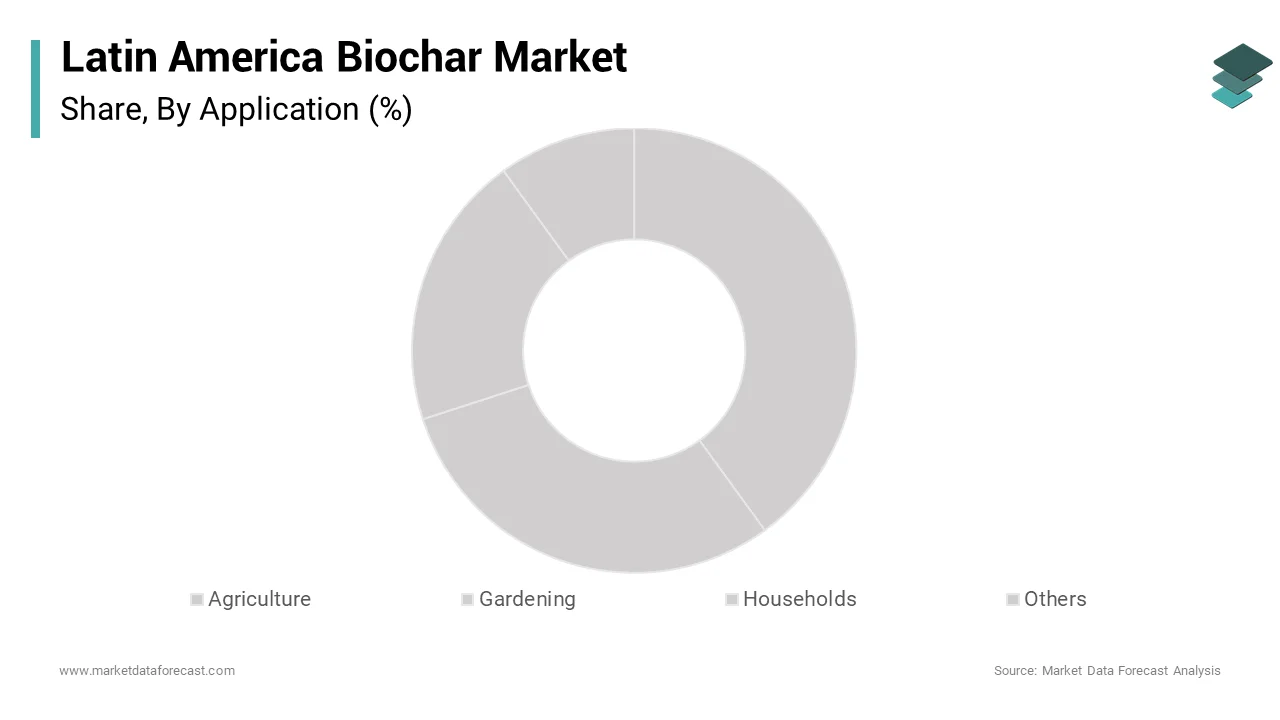
On the other hand, the livestock sub segment is predicted to witness the highest CAGR of 18.3% from 2025 to 2034. This accelerated growth of the segment is propelled by increasing adoption of biochar as a feed additive and manure management solution across Latin American livestock operations. According to peer-reviewed livestock research, biochar supplementation at inclusion rates between 0.5% and 2% of total feed dry matter demonstrates notable improvements in nutrient absorption, animal weight gain, and a 10% to 20% reduction in enteric methane emissions within ruminant systems. As per data from Brazil's agricultural tracking agencies, the country's cattle herd exceeds 230 million head, establishing a massive, high-volume market for sustainable feed additives and emissions-reduction solutions. Biochar's porous structure adsorbs ammonia and volatile organic compounds reducing odor and greenhouse gas emissions from manure storage facilities. According to FAO technical assessments biochar amended bedding materials can reduce pathogen loads by up to 60 percent while enhancing compost quality for subsequent soil application. The dual benefit of improving animal health while generating valuable soil amendments creates compelling economics for livestock producers. As per research, integrated biochar systems that combine feed supplementation manure treatment and soil application are gaining traction among progressive ranchers in Argentina and Uruguay. This multi dimensional value proposition positions livestock as the fastest growing application segment within the Latin America biochar market.
By Technology Insights
The pyrolysis segment led the Latin America Biochar Market, and captured a significant share in 2025. This leading position of the segment was attributed to its technical maturity scalability and compatibility with diverse biomass feedstocks prevalent across the region. According to research published in Renewable and Sustainable Energy Reviews, slow pyrolysis operating at temperatures between 4000 C and 6000 C optimizes solid biochar yields while simultaneously generating condensable bio-oil and non-condensable gas co-products. As per technical assessments from Brazilian research institutions pyrolysis systems can process agricultural residues including sugarcane bagasse soy stalks and corn cobs with conversion efficiencies exceeding 30 percent by weight. The technology's flexibility allows operators to adjust residence time and temperature profiles to tailor biochar properties for specific agricultural or industrial applications. Decentralized agricultural extension frameworks suggest that small-to-medium scale pyrolysis facilities represent a highly viable operational scale for rural deployment across Latin America, balancing localized capital expenditure with community-level biomass logistics. The ability to generate renewable energy through syngas combustion further enhances project economics particularly in regions with limited grid access. Case studies in Colombia and Peru indicate that integrated pyrolysis systems combining biochar manufacturing with thermal energy capture achieve strong financial viability, offering accelerated payback periods when local fossil fuel displacement and carbon finance are fully leveraged. This convergence of technical reliability economic viability and feedstock adaptability establishes pyrolysis as the foundational technology for biochar market development throughout Latin America.
However, the gasification segment is estimated to register the fastest CAGR of 17.6% during the forecast period due to its superior efficiency in converting biomass into multiple valuable outputs including biochar syngas and thermal energy. According to research published in Energy Conversion and Management gasification operating at temperatures above 750 degrees Celsius with controlled oxygen supply achieves higher carbon conversion rates and produces syngas with enhanced calorific value. Technical evaluations note that while gasification focuses primarily on energy generation, optimized slow pyrolysis systems generate biochar with superior structural stability and surface properties, maximizing its performance as an agricultural soil amendment. The technology's ability to process wet feedstocks with moisture content up to 50 percent expands the range of viable biomass sources across Latin America's diverse agricultural landscapes. Industrial technology reviews indicate that modern, enclosed thermo-chemical conversion units feature tightly controlled emissions profiles for particulate matter and volatile organic compounds, aligning with tightening air-quality regulations across Brazil, Mexico, and Argentina. The integration of advanced gas cleaning and heat recovery systems further improves operational efficiency and economic returns. This combination of technical advantages regulatory alignment and economic flexibility positions gasification as the fastest growing technology segment within the Latin America biochar market.
By Manufacturing Insights
The pyrolysis-based manufacturing segment was the largest, occupying a 65.6% share of the Latin America Biochar Market in 2025, because of pyrolysis's established commercial viability, technical maturity, and compatibility with regional biomass supply chains. According to research published in Biomass and Bioenergy pyrolysis processes operating under oxygen limited conditions between 400 and 700 degrees Celsius optimize biochar yield while preserving carbon stability essential for long term soil sequestration. As per technical assessments from Brazilian research institutions pyrolysis systems can process diverse feedstocks including sugarcane bagasse forestry residues and animal manure with consistent product quality. The technology's scalability allows deployment across multiple operational scales from small farm units to industrial facilities supporting distributed production models suited to Latin America's fragmented agricultural landscape. Industrial engineering reviews confirm that pyrolysis manufacturing generates valuable energetic co-products, including non-condensable syngas and liquid bio-oil, that can be utilized internally to offset operational costs or sold to generate secondary revenue streams. The ability to tailor process parameters to produce biochar with specific properties for agricultural metallurgical or environmental applications enhances market versatility. As per industry case studies pyrolysis facilities with integrated heat recovery achieve energy self sufficiency reducing dependence on external power sources. This convergence of technical reliability economic flexibility and feedstock adaptability establishes pyrolysis manufacturing as the foundational production pathway for biochar market development throughout Latin America.
But the gasification based manufacturing segment is anticipated to witness the fastest CAGR of 17.8% over the forecast period owing to gasification's superior efficiency in converting biomass into multiple high value outputs while meeting stringent environmental standards. According to research published in Applied Energy gasification operating at elevated temperatures with controlled oxygen supply achieves higher carbon conversion rates and produces syngas with enhanced energy content suitable for power generation or chemical synthesis. Technical evaluations show that while gasification maximizes gas energy outputs, optimized slow pyrolysis remains the preferred manufacturing method for generating high-quality biochar with the specific structural integrity required for agricultural soil amendments. The technology's capacity to process feedstocks with higher moisture content expands the range of viable biomass sources across Latin America's diverse agricultural and forestry operations. Environmental engineering data demonstrates that modern, fully enclosed biomass conversion systems feature advanced filtration to minimize the release of particulate matter and volatile organic compounds, aligning with tightening emissions standards across Latin America. The integration of advanced gas cleaning heat recovery and carbon capture systems further improves operational efficiency and environmental performance. Market observations indicate that modular, decentralized biomass conversion units are gaining traction among regional agro-industrial clusters seeking localized, right-scaled energy configurations and soil-conditioning solutions. This combination of technical advantages regulatory alignment and economic flexibility positions gasification manufacturing as the fastest growing production segment within the Latin America biochar market.
By Feedstock Insights
The agricultural waste segment held the majority share of 55.1% of the Latin America Biochar Market in 2025. This supremacy of the segment was supported by the region's immense generation of crop residues from sugarcane soy corn and coffee production that provide abundant low cost feedstock for biochar manufacturing. Theoretical scaling models published in global environmental frameworks suggest that Brazil possesses a maximum technical capacity to process approximately 360 million tons of biochar annually if it fully utilizes all agricultural and forestry residues, demonstrating a massive long-term feedstock ceiling. Data from national agricultural mapping assessments in Mexico confirm that the country generates between 60 million and 75 million tons of dry crop residues annually, with corn stover, sugarcane bagasse, and coffee husks serving as the most abundant regional feedstocks. Agricultural waste feedstocks offer logistical advantages including seasonal predictability established collection networks and minimal competition with food or feed markets. General agronomic data confirms that the baseline carbon content of raw agricultural residues typically ranges between 40% and 50% by dry weight, providing predictable and favorable conversion economics for industrial biochar manufacturing. The regional concentration of agro processing facilities creates opportunities for co located biochar production reducing transportation costs and enabling circular resource flows. Agronomic case studies demonstrate that biochar manufactured from agricultural waste provides reliable performance in soil amendment applications, yielding documented improvements in localized moisture retention and macro-nutrient availability. This convergence of feedstock abundance logistical practicality and agronomic efficacy establishes agricultural waste as the foundational feedstock for biochar market development throughout Latin America.
On the other hand, the forestry waste segment is likely to experience the fastest CAGR of 19.2% between 2025 and 2034. This swift growth of the segment is fuelled by the increasing utilization of timber processing residues, plantation thinning materials, and forest management byproducts as sustainable biochar feedstocks. Forestry data tracks Brazil, Chile, and Argentina as the dominant commercial timber and plantation markets in South America, where the industrial processing of roundwood generates massive quantities of localized wood residues ideal for dedicated biochar production. As per technical assessments from regional forestry institutes forestry waste feedstocks typically exhibit higher lignin content and lower ash concentrations compared to agricultural residues producing biochar with enhanced structural stability and carbon retention characteristics. The regional expansion of certified sustainable forestry operations creates reliable supply chains for consistent feedstock quality and volume. Regional land-management frameworks indicate that high-lignin biochar derived from forestry residues is highly effective for soil rehabilitation, offering long-term structural stability that can help mitigate erosion on degraded, sloped terrains. The integration of biochar production with existing forestry operations enables value addition to low grade residues while supporting forest health objectives. As per market observations mobile pyrolysis units deployed at logging sites or sawmills reduce transportation costs and enable decentralized production models suited to remote forest landscapes. This combination of feedstock quality supply chain reliability and application versatility positions forestry waste as the fastest growing feedstock segment within the Latin America biochar market.
COUNTRY ANALYSIS
Brazil Biochar Market Analysis
Brazil outperformed other countries in the Latin America Biochar Market and accounted for a 32.6% share in 2025. The demand for biochar in Brazil was driven by its vast agricultural landscape extensive biomass resources and progressive sustainability policies that collectively create favorable conditions for biochar adoption. Driven by its massive sugarcane, grain, and forestry industries, Brazil generates hundreds of millions of tons of agricultural and timber residues annually, offering an abundant, low-cost biomass feedstock pool for localized biochar manufacturing. Theoretical scaling models published in environmental research frameworks indicate that Brazil possesses an upper-bound technical capacity to produce roughly 360 million tons of biochar annually from its total residue pool, which could theoretically sequester nearly 590 million tons of carbon dioxide equivalent each year. Brazil's tropical soils frequently exhibit low fertility and high acidity creating substantial agronomic demand for sustainable amendments that biochar effectively addresses. According to national agricultural agencies, scaling climate-smart practices, including advanced soil carbonization and biochar applications, directly supports Brazil's low-carbon agriculture programs (ABC+ Plan) and its environmental commitments under the Paris Agreement. The country's established agro industrial infrastructure including sugarcane ethanol facilities and timber processing clusters enables integrated biochar production models that leverage existing logistics and energy systems. As per industry observations Brazilian research institutions and private enterprises are actively developing regionally adapted biochar technologies and application protocols. This convergence of feedstock availability agronomic necessity policy support and technical capacity establishes Brazil as the foundational market for biochar development throughout Latin America.
Mexico Biochar Market Analysis
Mexico was positioned second in the Latin America Biochar Market and captured a 28.7% share in 2025 because of its diverse agricultural systems, growing environmental awareness, and strategic policy initiatives that collectively support biochar market development. Driven by an expanding commercial agriculture sector, Mexico's domestic market for specialized biochar is growing as an innovative input for soil remediation, moisture retention in arid zones, and targeted livestock feed supplements. As per research published in Agricultural Systems Mexico's varied agroecological zones ranging from arid northern regions to tropical southern states create diverse demand profiles for biochar products tailored to specific soil and climate conditions. The country's substantial generation of agricultural residues including agave bagasse coffee husks and maize stover provides reliable feedstock supplies for localized biochar production. Regional policy reviews confirm that Mexico's active integration into international carbon removal markets and voluntary climate finance mechanisms opens vital revenue streams for commercial biochar projects capable of delivering verified, durable carbon removal certificates. The integration of biochar applications within Mexico's national strategy for sustainable agriculture and rural development enhances policy coherence and implementation support. As per market observations Mexican enterprises are increasingly adopting modular biochar production systems that align with smallholder farming structures and decentralized supply chains. This combination of market demand feedstock availability policy alignment and technological adaptation positions Mexico as a dynamic growth market within the Latin America biochar sector.
Argentina Biochar Market Analysis
Argentina maintains a significant position in the Latin America Biochar Market due to its extensive agricultural production systems significant biomass resources and growing interest in sustainable soil management practices. Data from Argentina's National Institute of Agricultural Technology (INTA) highlights that the highly productive Pampas region generates massive quantities of crop residues annually from wheat, soy, and corn harvests, providing a vast feedstock base for potential biochar operations. As per research published in Soil and Tillage Research Argentina's agricultural soils frequently exhibit declining organic matter content and structural degradation creating agronomic demand for carbon rich amendments that biochar effectively addresses. The country's established agro industrial infrastructure including soybean processing facilities and livestock operations enables integrated biochar production models that leverage existing logistics and energy systems. Policy analysts note that Argentina's evolving focus on carbon market readiness frameworks and regional climate initiatives creates important financial incentives for agricultural project developers implementing certified, durable biochar solutions. The integration of biochar applications within Argentina's national strategy for sustainable agriculture and climate adaptation enhances policy coherence and implementation support. As per research, Argentine research institutions and private enterprises are actively developing regionally adapted biochar technologies and application protocols for temperate agricultural systems. This convergence of feedstock availability agronomic necessity policy support and technical capacity establishes Argentina as a significant growth market within the Latin America biochar sector.
COMPETITIVE LANDSCAPE
The Latin America Biochar Market features a dynamic competitive landscape characterized by emerging specialized enterprises alongside established industrial players expanding into sustainable materials. Market participants differentiate through technology selection feedstock sourcing strategies and application expertise tailored to regional agricultural systems. Competition centers on production cost efficiency product quality consistency and verification credibility for carbon market participation. New entrants leverage modular technologies and decentralized production models to serve fragmented agricultural landscapes while established players capitalize on existing industrial infrastructure and supply chain relationships. Strategic partnerships between technology developers agricultural organizations and carbon market intermediaries shape competitive dynamics and market access pathways. Price competition remains moderate as product differentiation through performance verification and application support creates value based positioning. Innovation focus areas include feedstock flexibility process optimization and integrated value creation through co product utilization. The market's nascent stage allows for collaborative development of standards and best practices while competitive intensity increases as commercial scale projects demonstrate economic viability. This evolving competitive environment drives continuous improvement in technology performance application effectiveness and market accessibility across Latin America's diverse biochar sector.
KEY MARKET PLAYERS
Some of the major companies dominating the Latin American Biochar market are
- Biochar Products Inc.
- Diacarbon Energy Inc.
- NetZero S A S
- Aperam Bioenergia Ltda
- Agri-Tech Producers LLC
- Genesis Industries
- Green Charcoal International
- Vega Biofuels Inc.
- The Biochar Company
- Cool Planet Energy Systems Inc.
- Full Circle Biochar
- Pacific Pyrolysis Pty Ltd.
Top Players In The Market
- NetZero S A S operates as a pioneering biochar technology developer with significant contributions to the Latin America market through innovative carbon removal solutions. NetZero's approach integrates advanced pyrolysis technology with rigorous carbon accounting protocols aligned with international verification standards. The company actively collaborates with agricultural cooperatives and climate finance institutions to scale biochar deployment across tropical production systems. NetZero's recent strategic focus includes expanding feedstock sourcing networks and developing regionally adapted application protocols for diverse cropping systems. The company's commitment to transparent monitoring reporting and verification processes enhances credibility with corporate carbon removal buyers. NetZero's technical expertise and project execution capabilities position it as a catalyst for market development throughout Latin America's emerging biochar sector.
- Aperam Bioenergia Ltda leverages its industrial expertise in sustainable materials to advance biochar production and application across Latin America. The company integrates biochar manufacturing within its broader bioeconomy strategy utilizing forestry residues and agricultural byproducts as feedstock sources. Aperam Bioenergia focuses on developing high quality biochar products tailored for agricultural soil enhancement and industrial filtration applications. The company's recent initiatives include partnerships with research institutions to optimize biochar properties for specific regional soil conditions and cropping systems. Aperam Bioenergia emphasizes sustainable sourcing practices and lifecycle assessment methodologies to ensure environmental integrity across its value chain. The company actively participates in regional policy dialogues to support enabling frameworks for biochar deployment and carbon market integration. Aperam Bioenergia's technical capabilities in thermochemical processing and quality control systems enhance product consistency and performance reliability. The company's strategic investments in production infrastructure and application research strengthen its position within Latin America's evolving biochar market landscape.
- Genesis Enterprises Inc contributes to the Latin America Biochar Market through specialized technology solutions and application expertise focused on sustainable agriculture. The company develops modular biochar production systems designed for deployment across diverse agricultural landscapes and operational scales. Genesis Enterprises emphasizes farmer centric approaches that integrate biochar application within existing farm management practices to enhance adoption and impact. The company's recent activities include field demonstration projects across multiple Latin American countries to validate biochar performance under varied agroecological conditions. Genesis Enterprises collaborates with agricultural extension services and farmer organizations to develop training programs and technical support resources. The company's focus on cost effective production methods and simplified application protocols addresses key barriers to smallholder adoption. Genesis Enterprises actively engages with carbon market developers to create accessible pathways for farmers to monetize carbon sequestration benefits. The company's commitment to practical innovation and farmer empowerment positions it as a valuable partner for scaling biochar adoption throughout Latin America's agricultural sector.
Top Strategies Used By Key Market Participants
Key participants in the Latin America Biochar Market employ strategic approaches centered on technology adaptation partnership development and market education. Companies prioritize modular production systems that align with regional feedstock availability and operational scales to enhance economic viability. Strategic collaborations with agricultural cooperatives research institutions and policy makers enable context specific application protocols and supportive regulatory frameworks. Market participants invest in demonstration projects and farmer training programs to build awareness and technical capacity among end users. Integration with carbon removal markets creates additional revenue streams that improve project economics and attract investment. Companies emphasize rigorous monitoring reporting and verification processes to ensure product quality and environmental integrity. Supply chain development initiatives focus on establishing reliable biomass collection logistics and quality control systems. Product diversification strategies target multiple application segments including agriculture livestock and industrial uses to expand market opportunities. These coordinated strategies collectively strengthen market foundations and accelerate biochar adoption across Latin America.
RECENT MARKET NEWS
In April 2023 NetZero a French biochar technology company inaugurated Latin America first industrial scale biochar facility in Brazil. This facility with annual capacity exceeding 4500 tons of biochar is anticipated to remove over 6500 tons of atmospheric carbon dioxide annually and strengthen the Latin America Biochar Market presence.
MARKET SEGMENTATION
This research report on the Latin American biochar market is segmented and sub-segmented into the following categories.
By Application
- Agriculture
- Gardening
- Households
- Others
By Technology
- Microwave pyrolysis
- Continuous pyrolysis
- Batch pyrolysis kiln
- Gasifier
- Hydrothermal
- Cookstove
- Others
By Manufacturing
- Gasification
- Pyrolysis
- Others
By Feedstock
- Agricultural waste
- Forestry waste
- Animal manure
- Biomass plantations
By Country
- Brazil
- Mexico
- Argentina