- Product Description Description
- Table of Contents TOC
- List of Table & Figure LOT
- Get Free Sample PDF Sample PDF
Market Size, 2025
$1.13 BnMarket Estimate, 2026
$1.20 BnMarket Forecast, 2034
$1.96 BnCAGR, 2026–2034
6.3%Executive Summary: Latin America Camelina Sativa Market
- Market Scope: Comprehensive regional analysis of the Latin American Camelina Sativa market covering product grades, end-use applications, country-level insights, and agricultural integration trends.
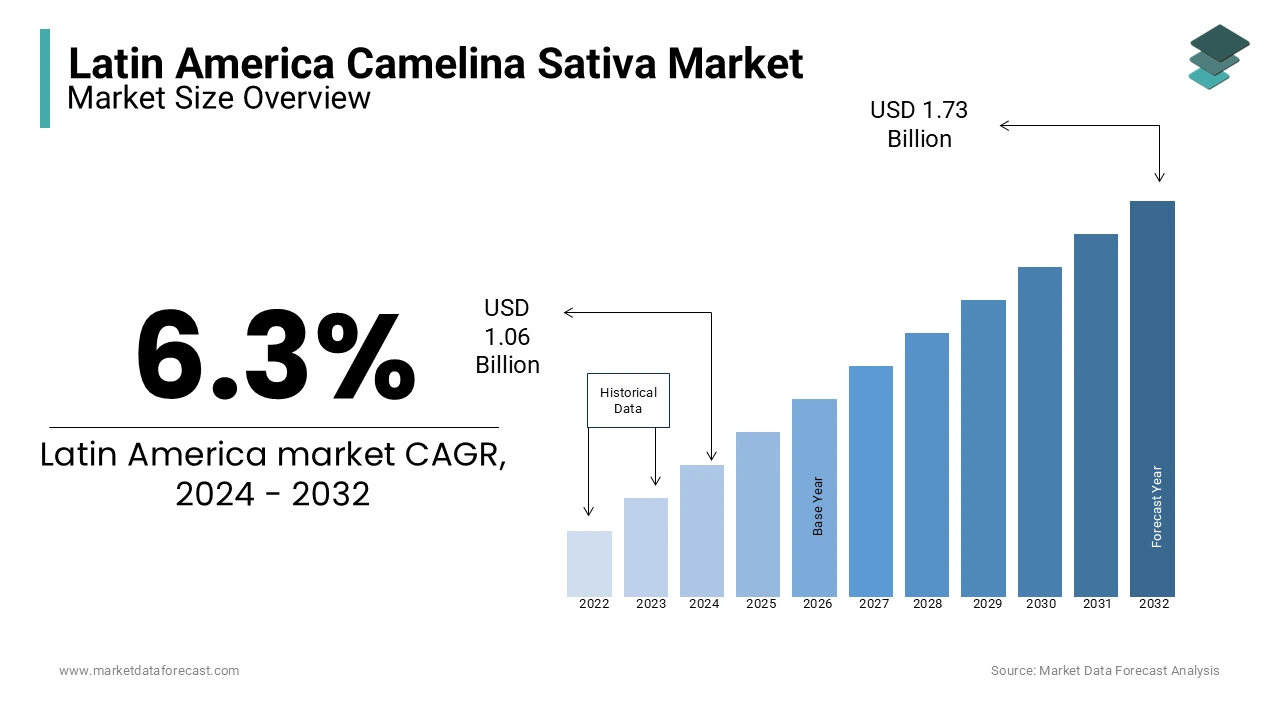
- Market Valuation: Valued at USD 1.13 billion (2025), estimated at USD 1.20 billion (2026), and projected to reach USD 1.96 billion by 2034, registering a CAGR of 6.3% (2026–2034).
- Primary Growth Drivers: Growing health awareness, increasing demand for sustainable biofuels and jet fuel, high requirement for edible oils, growth in food supplements, short crop-season flexibility, and advancements in conventional farming technologies.
Key Market Segment Metrics (2026–2034)
| Category | Leading Segment (2025 Position) | Fastest-Growing Segment |
|---|---|---|
| By Product Type | Industrial Grade (driven by high demand for biofuels, jet fuel, and chemical applications) | Food Grade (fueled by rising health awareness and nutritional supplements) |
| By Application | Biodiesel and Food Industry applications (backed by traditional consumption and green energy policies) | Jet Fuel and Cosmetics sectors |
| By Country / Region | Brazil (largest regional market share and agricultural production hub) | Mexico, Argentina, and expanding South American agricultural economies |
Major Market Players & Market Structure
Market Structure: An evolving and competitive landscape featuring specialized agricultural input providers, cosmetic ingredient developers, and green energy biofuel companies focusing on crop rotation compatibility and high oilseed yield.
Key Companies: Botanic Innovations, OQEMA, Yield10 Bioscience, Northstar Lipids, BioOrganic Concepts, GREENTECH, Lincoln Fine Ingredients, Biocosmethic, Perles de Gascogne, and Shxchangyu.
Latin America Camelina Sativa Market Size
The Latin America camelina sativa market size was valued at USD 1.13 billion in 2025 and is expected to reach USD 1.20 billion in 2026 and to reach USD 1.96 billion by 2034, growing at a CAGR of 6.3% from 2026 to 2034.
Camelina sativa is a flowering plant from the family Brassicaceae, and it is typically known as gold-of-pleasure, camelina, or false flax. Camelina sativa seeds are a rich source of essential fatty acids, which makes them a good source of nutrition for hair and skin problems. This plant is native to Europe and Central Asia, and it is cultivated as an oilseed crop to produce cooking oil, biodiesel, and jet fuel.
It is traditionally cultivated to produce animal feed and vegetable oil. It grows well in the temperate climate zone in light or medium soils but is more adapted to cold semiarid climate zones, and it has a short season crop from 85 to 100 days. The plant leaves and stems are partially hairy, its seeds have a characteristic orange color, and its four-petaled flowers are pale yellow. It is harvested and seeded with conventional farming equipment so that crop rotation will be relatively easy for farmers.
Growing health awareness, rising usage of biodiesel and jet fuel, high requirement of edible oil, growth in food supplements, short season crop, rise in poultry and cattle industry, and technology advancements in farming are driving the growth of Latin America Camelina sativa market. However, lack of knowledge, high packing costs, and strict regulations are restraining the growth of the Camelina sativa market.
REPORT COVERAGE
| REPORT METRIC | DETAILS |
| Market Size Available | 2025 to 2034 |
| Base Year | 2025 |
| Forecast Period | 2026 to 2034 |
| CAGR | 6.3% |
| Segments Covered | By Product, Application, and By Country |
| Various Analyses Covered | Global, Regional & Country Level Analysis, Segment-Level Analysis, DROC, PESTLE Analysis, Porter’s Five Forces Analysis, Competitive Landscape, Analyst Overview on Investment Opportunities |
| Regions Covered | Brazil, Mexico, Argentina, Chile and Rest of Latin America |
| Market Leaders Profiled | Botanic Innovations, OQEMA, Yield10 Bioscience, Northstar Lipids, BioOrganic Concepts, GREENTECH, Lincoln Fine Ingredients, Biocosmethic, Perles de Gascogne, Shxchangyu. |
REGIONAL ANALYSIS
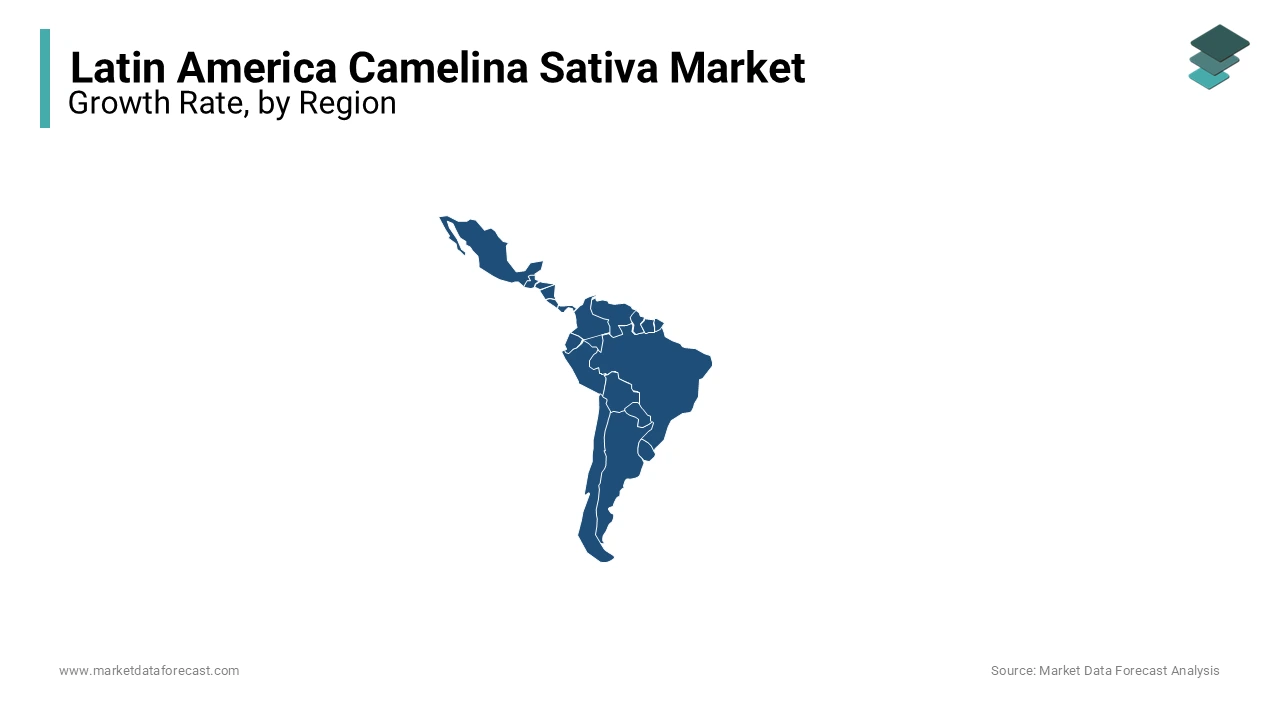
Latin America market region includes countries such as Brazil, Mexico, Argentina, and the remaining countries of South America. Brazil is one of the largest markets in this region followed by Mexico, Argentina, and Columbia, which are also intensifying their investments in the market.
KEY MARKET PLAYERS
Some of the key players in the camelina sativa market are
- Botanic Innovations
- OQEMA
- Yield10 Bioscience
- Northstar Lipids
- BioOrganic Concepts
- GREENTECH
- Lincoln Fine Ingredients
- Biocosmethic
- Perles de Gascogne
- Shxchangyu
SEGMENT ANALYSIS
This research report on the Latin America camelina sativa market is segmented and sub-segmented based on product type, application and country.
By Product Type
- Food
- Industrial Grade
By Application
- Food Industry
- Chemical Industry
- Biodiesel
- Textile
- Cosmetics
- Jet Fuel
- Others
By Country
- Brazil
- Mexico
- Argentina
- Rest of Latin America