- Product Description Description
- Table of Contents TOC
- List of Table & Figure LOT
- Get Free Sample PDF Sample PDF
Market Size, 2025
$26.95 BnMarket Estimate, 2026
$29.51 BnMarket Forecast, 2034
$60.99 BnCAGR, 2026–2034
9.50%Executive Summary: Latin America Commercial Aqua Feed Market
- Market Scope: Comprehensive Latin America commercial aqua feed industry analysis covering end-user sectors (fish, shrimp), ingredient components (soybean meal, functional additives, plant-based proteins), regional leadership frameworks (Chile, Brazil), strategic corporate developments, and competitive landscapes.
- Market Valuation: Valued at USD 26.95 billion (2025), estimated at USD 29.51 billion (2026), and projected to reach USD 60.99 billion by 2034, registering a robust CAGR of 9.50% (2026–2034).
- Primary Growth Drivers: Rapid aquaculture expansion, global seafood demand, export-oriented fish and shrimp farming, aquaculture infrastructure investments, advanced feed formulations (probiotics, functional additives), and sustainable feed ingredient innovation. Restraints include raw material costs, supply chain volatility, and financing limits for small producers.
Key Market Segment Metrics (2026–2034)
| Category | Leading Segment / Region (Position) | Fastest-Growing Segment |
|---|---|---|
| By End-User & Ingredient | Fish (largest end-user segment in 2025 via extensive salmon and freshwater aquaculture) & Soybean meal (held largest ingredient share) | Shrimp segment (fastest-growing due to expanding export-oriented shrimp farming) & Functional additives (fastest-growing additive category) |
| By Technology & Sustainability | Feed efficiency and animal health optimization through plant-based proteins, probiotics, and traceability standards | Alternative protein sources and environmentally sustainable aquafeed formulations |
| By Region / Country | Chile (accounted for largest regional market with 31.5% share in 2025 driven by salmon aquaculture leadership) | Brazil (projected to record the fastest growth during the forecast period) |
Major Market Players & Market Structure
Market Structure: Highly competitive Latin American aquaculture feed market characterized by investments in sustainable feed formulations, production capacity expansions, alternative protein ingredient R&D, and species-specific nutritional solutions.
Key Companies: Cargill, ADM, Nutreco, BioMar Group, Skretting, Alltech, De Heus Animal Nutrition, Purina Animal Nutrition, Evonik Industries, and Biomar Chile.
Latin America Commercial Aqua Feed Market Size
The Latin American commercial aqua feed market size was valued at USD 26.95 billion in 2025 and is anticipated to reach a valuation of USD 29.51 billion in 2026 and USD 60.99 billion by 2034, growing at a CAGR of 9.50% from 2026 to 2034.
The Latin American commercial aqua feed market encompasses specialized nutritional formulations designed for use in aquaculture operations, including fish and shrimp farming. These feeds are engineered to provide essential nutrients, enhance growth rates, and improve disease resistance in farmed aquatic species. With rising global demand for seafood and increasing pressure on wild fish stocks, aquaculture has become a critical component of food security and economic development across the region.
According to the Food and Agriculture Organization (FAO), aquaculture production in Latin America has grown steadily over the past decade, driven by expanding salmon and shrimp farming operations in countries such as Chile, Ecuador, Brazil, and Peru. As per data from the Latin American Aquaculture Association (LAA), aquaculture now accounts for more than 35% of total fisheries output in several key producing nations, reinforcing the need for high-quality, sustainable aquafeeds.
Besides, advancements in feed formulation technology—such as the incorporation of plant-based proteins, probiotics, and functional additives—have contributed to improved feed conversion ratios and environmental sustainability.
With growing investment in aquaculture infrastructure and supportive government policies aimed at boosting exports, the LatinAmericana commercial aqua feed market is transforming, aligning with global trends toward efficiency, traceability, and responsible sourcing.
MARKET DRIVERS
Expansion of Aquaculture Production Across Key Countries
A key factor propelling the Latin American commercial aqua feed market is the rapid expansion of aquaculture production, particularly in Chile, Ecuador, and Brazil. As wild fish stocks decline globally, aquaculture has emerged as a strategic alternative to meet domestic and international seafood demand, necessitating increased reliance on high-performance commercial feeds.
In Chile, which remains South America’s largest salmon producer, aquaculture output grew by over 7% annually between 2018 and 2023, directly boosting aquafeed consumption.
In Ecuador, the shrimp farming sector has experienced exponential growth, supported by favorable climatic conditions and strong export markets in Asia and Europe. As reported by the Ecuadorian Chamber of Aquaculture (Cámara Nacional de Acuacultura), shrimp production surpassed 1.2 million metric tons in 2023, making it one of the fastest-growing aquaculture industries in the world.
This expansion has significantly increased the demand for formulated aquafeeds that ensure optimal growth, health, and product quality.
Rising Demand for Seafood and Export-Oriented Aquaculture
Another key driver fueling the growth of the LatinAmericana commercial aqua feed market is the increasing global demand for seafood, particularly from North America and Asian markets. As consumer preferences shift toward protein-rich diets and sustainable food sources, Latin American aquaculture producers have ramped up production to capitalize on lucrative export opportunities.
As per the Inter-American Development Bank (IDB), export-oriented aquaculture has attracted significant foreign investment, particularly in processing facilities and feed manufacturing plants. This trend has encouraged aquafeed producers to develop premium formulations tailored to specific species and growth stages, ensuring compliance with international quality standards.
Moreover, major importers such as China and the United States have imposed stricter sustainability and traceability requirements on aquaculture products, prompting farmers to adopt certified feed solutions that meet these benchmarks. These developments reinforce the link between aquaculture exports and aquafeed demand, positioning the sector for sustained growth across Latin America.
MARKET RESTRAINTS
High Cost of Raw Materials and Supply Chain Volatility
A significant restraint affecting the Latin American commercial aqua feed market is the fluctuating cost of raw materials, particularly fishmeal, fish oil, soybean meal, and vegetable oils. These ingredients constitute a substantial portion of aquafeed production costs, and their price volatility can impact profitability and feed availability for aquaculture operators.
According to the International Fishmeal and Fish Oil Organization (IFFO), global fishmeal prices surged by over 25% in 2023 due to reduced Peruvian anchovy catch, es—a major supplier to the Latin American aquafeed industry. Similarly, as per the U.S. Department of Agriculture (USDA), soybean prices experienced considerable fluctuations in recent years due to trade tensions, climate disruptions, and shifting agricultural policies.
These input cost pressures are exacerbated by logistical challenges, including transportation bottlenecks and energy price surges, which further constrain affordability for small and medium-sized aquaculture enterprises.
Limited Access to Financing and Technical Expertise Among Small Producers
One more critical constraint impeding the Latin American commercial aqua feed market is the limited access to financing and technical expertise among smallholder and independent aquaculture producers. While large-scale operations benefit from structured supply chains and institutional support, smaller farms often struggle with capital constraints and a lack of training, limiting their ability to transition from homemade to commercial feed usage.
According to the World Bank, nearly 60% of aquaculture farms in Latin America operate at a subsistence level, relying on traditional feeding methods that do not fully optimize growth potential or disease prevention. Without adequate credit mechanisms or extension services, these producers find it difficult to invest in high-quality aquafeeds despite their long-term benefits.
Furthermore, as per the Pan-American Institute of Aquaculture Technology (PIAT), there is a shortage of localized technical advisory services that could guide small-scale farmers in optimizing feed usage and adopting best management practices. This knowledge gap results in suboptimal feeding strategies and lower productivity, discouraging broader uptake of commercial aquafeed products.
Public-private initiatives have sought to address these barriers through microfinance programs and farmer education campaigns; however, progress remains uneven across the region.
MARKET OPPORTUNITY
Shift Toward Sustainable and Alternative Protein Sources in Aquafeed Formulations
A transformative opportunity emerging in the Latin American commercial aqua feed market is the growing shift toward sustainable and alternative protein sources to replace conventional fishmeal and fish oil. With increasing awareness about ocean depletion and pressure to reduce dependency on marine-based ingredients, feed manufacturers are investing in plant-based proteins, insect meal, single-cell proteins, and algal biomass to develop eco-friendly formulations.
According to the International Centre for Advanced Studies in Aquaculture and Fisheries (ICA-SAF), alternative protein sources now account for over 40% of aquafeed formulations in Latin America, driven by both regulatory incentives and market demand for sustainable seafood. Countries like Brazil and Colombia have been actively promoting research into locally available plant proteins such as soy, canola, and cassava as viable substitutes.
As per the research conducted by the Brazilian Agricultural Research Corporation (Embrapa) highlights that incorporating black soldier fly larvae meal into aquafeed enhances growth performance in tilapia and shrimp while reducing environmental impact. Similarly, Chilean feed producers have partnered with biotech firms to integrate yeast-based proteins into salmonid diets, improving nutrient density and sustainability.
By leveraging alternative ingredients and circular economy principles, the LatinAmericana aquafeed sector is poised to unlock new growth avenues while addressing resource constraints.
Integration of Digital Technologies in Aquafeed Management
The integration of digital technologies in aquafeed management presents a significant opportunity for innovation and efficiency gains in the Latin American commercial aqua feed market. Advances in precision feeding, IoT-enabled monitoring systems, and AI-driven analytics are enabling aquaculture producers to optimize feed utilization, reduce waste, and improve overall productivity.
According to the Latin American Aquaculture Association (LAA), digital feeding systems have the potential to reduce feed wastage by up to 30%, enhancing both economic viability and environmental sustainability. Automated feeding platforms allow real-time adjustments based on water temperature, oxygen levels, and fish behavior, ensuring precise nutrient delivery.
Startups and agri-tech firms across the region are developing mobile applications and cloud-based dashboards that enable farmers to track feed consumption patterns and receive customized recommendations.
Furthermore, partnerships between multinational feed producers and local tech companies are accelerating the deployment of smart feeding solutions. With rising connectivity and smartphone penetration in rural aquaculture zones, the adoption of digital aquafeed management is expected to expand, offering scalable efficiencies and strengthening the competitiveness of Latin American aquaculture in global markets.
MARKET CHALLENGES
Environmental Regulations and Resource Constraints
One of the foremost challenges confronting the Latin American commercial aqua feed market is the tightening of environmental regulations and increasing scrutiny around resource-intensive aquaculture practices. Governments and international bodies are placing greater emphasis on the sustainable sourcing of feed ingredients, particularly those derived from marine resources such as fishmeal and fish oil.
According to the United Nations Environment Programme (UNEP), several Latin American countries have introduced restrictions on overfishing and unsustainable harvesting of forage fish used in aquafeed production. Peru and Chile, two of the world’s largest producers of fishmeal, have implemented seasonal catch quotas to preserve marine biodiversity, directly impacting the availability and pricing of key aquafeed components.
Moreover, compliance with these evolving regulations requires additional investment in traceability, certification, and sustainable supply chain management.
Feed manufacturers must navigate these complexities while maintaining product efficacy and cost-efficiency. Failure to adapt to stringent environmental standards risks reputational damage and loss of market access, particularly in export markets where sustainability credentials are increasingly valued.
Disease Outbreaks and Biosecurity Pressures
An additional pressing challenge for the Latin American commercial aqua feed market is the recurring threat of disease outbreaks in aquaculture, which heightens biosecurity concerns and increases the demand for fortified, immune-boosting aquafeed formulations. Pathogens such as white spot syndrome virus (WSSV), early mortality syndrome (EMS), and infectious salmon anemia (ISA) have historically disrupted production cycles and led to significant economic losses.
As per the Pan American Health Organization (PAHO), the use of functional aquafeeds containing prebiotics, probiotics, and immunostimulants has gained traction as a preventive strategy. However, formulating and supplying these specialized feeds at scale remains a challenge, particularly for small and mid-sized feed mills lacking advanced production capabilities.
Moreover, disease outbreaks have prompted stricter quarantine measures and movement restrictions, complicating logistics and delaying feed deliveries to affected regions. Ensuring a consistent supply of pathogen-free feed while adapting to evolving disease dynamics remains a complex but necessary endeavor for commercial aquafeed producers operating in Latin America.
REPORT COVERAGE
| REPORT METRIC | DETAILS |
| Market Size Available | 2025 to 2034 |
| Base Year | 2025 |
| Forecast Period | 2026 to 2034 |
| CAGR | 9.50% |
| Segments Covered | By End-User, Ingredients, Vitamins, Functional Components, and Region. |
| Various Analyses Covered | Global, Regional and Country Level Analysis, Segment-Level Analysis, DROC, PESTLE Analysis, Porter’s Five Forces Analysis, Competitive Landscape, Analyst Overview of Investment Opportunities |
| Regions Covered | Brazil, Chile, Argentina, Mexico, and Colombia, etc |
| Market Leaders Profiled | Cargill, Ingredion Incorporated, Archer Daniels Midland Company, AGRANA Beteiligungs-AG, Tate & Lyle PLC, Grain Processing Company, The Tereos Group, Roquette Frères, Altia Industrial Services, Royal Cosun. |
SEGMENTAL ANALYSIS
By End User Insights
Fish
Fish farming is depicted as the largest end-user segment in the Latin American commercial aqua feed market, accounting for 67.1% of total consumption. This dominance is primarily attributed to the region’s extensive production of salmon, tilapia, and trout, species that rely heavily on formulated feeds to achieve optimal growth and health outcomes.
According to the Food and Agriculture Organization (FAO), Chile remains one of the world’s top producers of farmed salmon, with annual output exceeding 800,000 metric tons. The country's intensive salmon farming industry consumes vast quantities of high-protein aquafeed, making it a major contributor to regional demand. In addition, Brazil has significantly expanded its tilapia production, reaching over 400,000 metric tons annually, as reported by Embrapa Aquaculture.
As per the Latin American Aquaculture Association (LAA), large-scale fish farms are increasingly adopting commercial feeds due to their superior nutritional balance and disease prevention benefits compared to traditional feeding methods. Besides, export-oriented aquaculture operations have adopted certified feed formulations to meet international quality standards, further reinforcing reliance on commercial aquafeed suppliers.
With sustained investment in aquaculture infrastructure and growing domestic seafood consumption, the fish segment remains central to the commercial aquafeed market in Latin America.
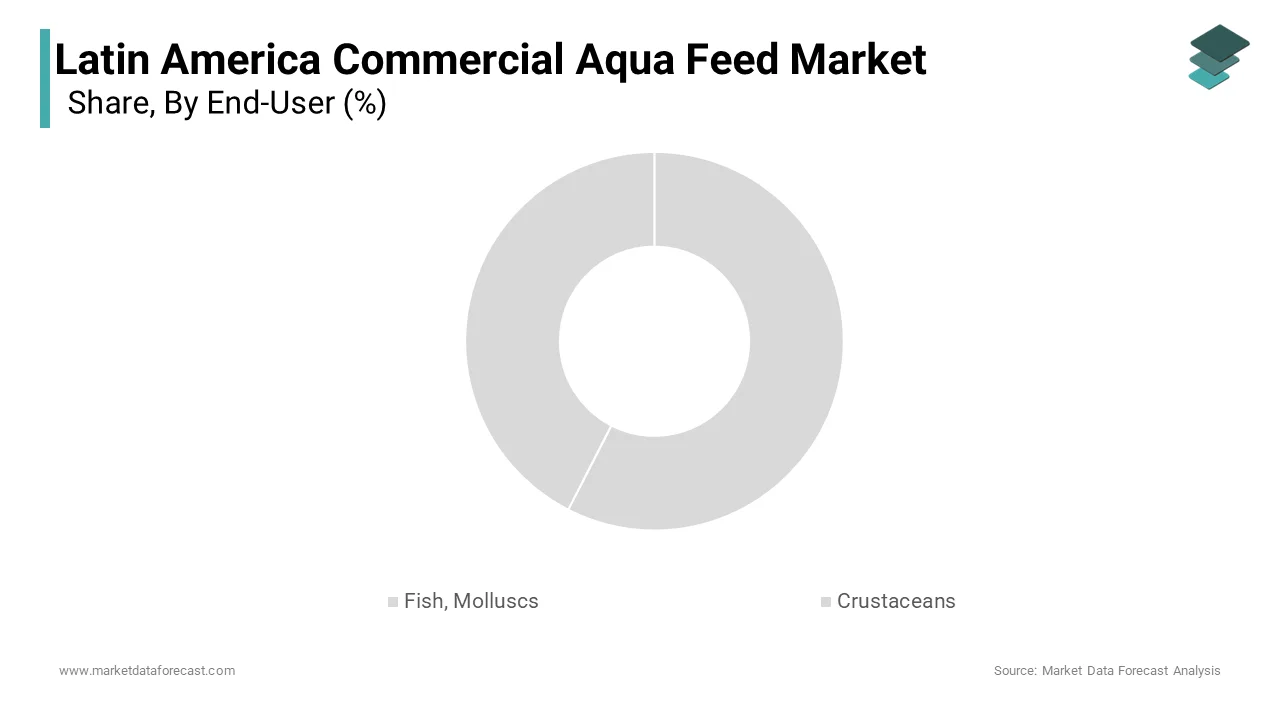
Crustaceans
Crustaceans represent the fastest-growing end-user segment in the Latin American commercial aqua feed market, projected to expand at a CAGR of 9.1% through 2033. This growth is driven by the rapid expansion of shrimp farming, particularly in Ecuador, Mexico, and Colombia, where favorable climatic conditions support high-yield aquaculture operations.
According to the Ecuadorian Chamber of Aquaculture (Cámara Nacional de Acuacultura), Ecuador alone accounts for nearly 25% of global shrimp exports, with production surpassing 1.2 million metric tons in 2023.
Moreover, advancements in shrimp feed formulation—such as microencapsulated diets and biofloc-compatible feeds—have improved feed conversion ratios and reduced environmental impact, encouraging wider adoption among farmers. As per the Pan-American Institute of Aquaculture Technology (PIAT), shrimp-specific commercial feeds now account for over 70% of aquafeed usage in crustacean farming, replacing farm-made alternatives.
With rising global demand for sustainably produced shrimp and increasing integration of digital feeding systems, the crustacean segment is poised for continued high-growth performance in the Latin American commercial aqua feed market.
By Ingredients Insights
Fish Meal
Fish meal constituted the biggest ingredient segment in the Latin American commercial aqua feed market in 2025, capturing 32.7% of total formulation volume. It remains a cornerstone ingredient in aquafeed due to its high protein content, balanced amino acid profile, and rich supply of essential nutrients such as omega-3 fatty acids and minerals.
According to the International Fishmeal and Fish Oil Organization (IFFO), Peru and Chile are among the world’s leading producers of fishmeal, collectively supplying over 40% of the Latin American aquafeed industry’s protein requirements. The Peruvian anchovy fishery, one of the largest single-species fisheries globally, plays a pivotal role in sustaining regional aquafeed production.
As per the Latin American Agribusiness Development Corporation (LADA), fishmeal remains indispensable in carnivorous species such as salmon, where alternative proteins often fail to fully replicate its nutritional value. Despite efforts to reduce dependency on marine-based ingredients, fishmeal continues to be a key component in premium aquafeed formulations targeting high-value export markets.
These factors collectively ensure the continued dominance of fishmeal in the Latin American commercial aqua feed ingredient landscape.
Additives
Additives are moving ahead quickly in the ingredient category in the Latin American commercial aqua feed market, projected to expand at a CAGR of 8.6% through 2033. This growth is driven by increasing demand for functional feeds that enhance gut health, improve immunity, and optimize nutrient absorption in farmed aquatic species.
According to the Latin American Network for Sustainable Aquaculture (LANSA), aquafeed producers are incorporating higher levels of probiotics, prebiotics, enzymes, and mycotoxin binders to address disease challenges and improve feed efficiency. These additives play a crucial role in reducing antibiotic dependence while supporting sustainable aquaculture practices.
As per the research conducted by the National Institute of Fisheries Research (INIDEP) in Argentina shows that enzyme-supplemented aquafeeds can improve digestibility by up to 18%, enhancing overall feed utilization and reducing waste generation. Similarly, according to studies from the University of São Paulo, the efficacy of organic acid-based additives in controlling pathogenic bacteria in shrimp feed contributes to better survival rates.
Besides, regulatory pressure to phase out antibiotics in animal feed has accelerated the adoption of natural alternatives such as botanical extracts and yeast derivatives. With growing emphasis on biosecurity, sustainability, and feed efficiency, additives are becoming an integral part of modern aquafeed formulations in Latin America.
By Vitamins and Functional Components Insights
Amino Acids
Amino acids led the Latin American commercial aqua feed vitamins and functional components market, capturing 38.7% of total demand. This lead position is credited to the critical role of essential amino acids—such as lysine, methionine, and threonine—in optimizing protein synthesis, improving feed efficiency, and supporting metabolic functions in aquatic species.
According to the Brazilian Agricultural Research Corporation (Embrapa), amino acid supplementation is particularly vital in plant-based aquafeed formulations, which often lack a balanced amino acid profile. As per studies, supplementing low-fishmeal diets with synthetic amino acids can enhance growth rates in tilapia and shrimp by up to 15%.
According to the Latin American Aquaculture Association (LAA), amino acid-enriched feeds are widely used in salmon and shrimp aquaculture, where protein efficiency directly impacts yield and profitability. In Chile, for example, amino acid inclusion in salmonid diets has become standard practice to maintain muscle development and fillet quality.
With ongoing advancements in precision nutrition and feed formulation technology, amino acid demand is expected to remain robust in the Latin American aquafeed sector.
Feed Enzymes
Feed enzymes are the quickly expanding segment within the Latin America commercial aqua feed vitamins and functional components market, projected to expand at a CAGR of 9.3%. This growth is fueled by increasing recognition of enzyme-based feed enhancements in improving digestibility, nutrient utilization, and overall feed efficiency in aquaculture operations.
According to the Latin American Network for Sustainable Aquaculture (LANSA), phytase, protease, and carbohydrase enzymes are being increasingly incorporated into aquafeeds to break down anti-nutritional factors present in plant-based protein sources, thereby enhancing digestibility and reducing waste excretion. The National Institute of Fisheries Research (INIDEP) in Argentina found that enzyme supplementation improved feed conversion ratios in tilapia and catfish farming, making them a valuable tool for cost-conscious producers. Similarly, according to the University of São Paulo, protease-enhanced feeds enhanced protein digestion in shrimp, leading to faster growth and lower feed costs.
Furthermore, as per the Economic Commission for Latin America and the Caribbean (ECLAC), government-backed initiatives promoting responsible aquaculture have encouraged the adoption of enzyme-modified feeds to reduce environmental impact and support resource-efficient production models.
With growing awareness and regulatory encouragement, feed enzymes are emerging as a key driver of innovation and efficiency in the Latin American aquafeed industry.
COUNTRY-LEVEL ANALYSIS
Chile
Chile held the largest share of the Latin American commercial aqua feed market, accounting for 31.5% of total consumption. As one of the world’s top three salmon producers, Chile’s aquaculture industry is highly dependent on commercial aquafeeds to support intensive salmon farming operations along its southern coastlines. The country’s well-established aquafeed manufacturing sector includes major players like BioMar, Skretting, and Purina Animal Nutrition, ensuring a steady supply of high-quality feed tailored to salmonid dietary needs.
Also, Chile has been proactive in implementing sustainability certifications such as ASC and BAP, influencing aquafeed producers to adopt traceable and eco-friendly formulations. With strong government support, advanced aquaculture infrastructure, and a focus on export competitiveness, Chile remains the dominant force in the Latin American commercial aqua feed market.
Brazil
Brazil is seeing strong growth h the Latin American commercial aqua feed market, driven by expanding tilapia farming, ornamental fish breeding, and freshwater aquaculture initiatives. As the largest economy in the region, Brazil has made significant investments in aquaculture modernization, fostering greater reliance on commercial aquafeed solutions. The majority of these operations utilize commercial aquafeeds to ensure consistent growth and product quality.
In addition, the ornamental fish industry—particularly in the Amazon basin and São Paulo state—has grown steadily, requiring specialized micro-diets that cater to small, high-value aquatic species. This niche market has contributed to increased demand for customized feed products. With continued investment in aquafeed technology and distribution networks, Brazil is positioned for sustained growth in the regional aquafeed landscape.
Ecuador
Ecuador is the fastest developing in the Latin American commercial aqua feed market, driven by its position as the world’s largest exporter of farmed shrimp. The country’s aquaculture industry has seen exponential growth over the past decade, necessitating a corresponding increase in commercial feed availability and formulation specialization. Given the high feed conversion ratio in shrimp farming, aquafeed demand has surged alongside production volumes. Local feed manufacturers have responded by expanding production capacity and introducing specialized formulations for whiteleg shrimp (Litopenaeus vannamei), the predominant species cultivated in the region.
Apart from these, the Ecuadorian government has implemented traceability and sustainability measures in aquafeed imports and local production, ensuring compliance with international seafood certification standards. With the ongoing expansion of shrimp farming and supportive policy frameworks, Ecuador remains a key growth engine in the Latin American commercial aqua feed market.
Mexico
Mexico is a significant player in the Latin American commercial aqua feed market, with growth primarily driven by diversification in aquaculture species and increasing investment in bluefin tuna ranching, tilapia farming, and shrimp aquaculture. The country’s strategic location and access to both the Pacific and the Gulf of Mexico waters provide favorable conditions for multiple aquaculture operations.
According to the Mexican National Fisheries and Aquaculture Commission (CONAPESCA), aquaculture production in Mexico surpassed 450,000 metric tons in 2023, with tilapia and shrimp accounting for the majority of output. These species require structured feeding protocols, prompting greater reliance on commercial aquafeed rather than homemade alternatives. Also, the country’s proximity to U.S. seafood markets has encouraged the adoption of premium aquafeed formulations that meet export quality standards. With the continued expansion of integrated aquaculture systems and increasing private-sector participation, Mexico remains a key player in the Latin American aquafeed market.
Argentina
Argentina is experiencing steady growth in the Latin American commercial aqua feed market, characterized by steady growth in freshwater fish farming, particularly carp, tilapia, and pacú. While relatively smaller in scale compared to other regional leaders, Argentina’s aquafeed sector is gaining momentum due to government-backed initiatives and growing consumer interest in locally farmed fish.
Also, academic institutions such as the National University of the Litoral have partnered with feed manufacturers to develop region-specific aquafeed blends that enhance productivity in temperate freshwater environments. With ongoing improvements in infrastructure and farmer education, Argentina is steadily expanding its footprint in the Latin American commercial aqua feed market.
KEY MARKET PLAYERS
Archer Daniels Midland Company, Ridley Corporation Limited, Cargill, Nutreco N.V., and Avanti Feeds Ltd are well-established and financially stable players that have been operating in the industry for several years. Other players include Purina Animal Nutrition LLC, Nutriad, Alltech, Biostadt India Limited, Aller Aqua A/S, Biomar, BIOMIN Holding GmbH, Norel Animal Nutrition, Dibaq A.S, and De Heus Animal Nutrition. Are the market players that are dominating the Latin American commercial aqua feed mmarket
?op Players In The Market
Cargill Animal Nutrition
Cargill is a leading force in the Latin American commercial aqua feed market, offering specialized formulations for salmon, shrimp, and tilapia farming. The company leverages its global expertise in animal nutrition to develop high-performance feeds tailored to regional aquaculture needs. Cargill's extensive supply chain infrastructure and commitment to sustainable sourcing have reinforced its credibility among large-scale producers. By integrating advanced nutritional science with environmental stewardship, Cargill supports the growth of responsible aquaculture across South and Central America.
Skretting (Nutreco)
Skretting, a subsidiary of Nutreco, plays a pivotal role in shaping the Latin American aquafeed landscape through innovative, species-specific feed solutions. The company has established a strong presence in Chilean salmon farming and Ecuadorian shrimp aquaculture, offering cutting-edge products that enhance productivity and fish health. Skretting’s investment in local research centers ensures formulation adaptability to regional conditions, strengthening its market position. Its emphasis on sustainability and digital feeding technologies further distinguishes it as a leader in the evolving aquafeed industry.
Biomar Group
Biomar is a key contributor to the LatinAmericana commercial aquafeed sector, known for its commitment to sustainable aquaculture and functional feed development. The company operates production facilities in several Latin American countries, focusing on delivering premium-quality feeds that support both fish performance and environmental responsibility. Biomar’s strategic collaborations with local governments and academic institutions help advance aquaculture best practices, reinforcing its leadership in the region’s growing aquafeed market.
Top Strategies Used by Key Market Participants
Product Innovation and Functional Feed Development
Leading companies are continuously investing in R&D to create advanced aquafeed formulations that improve digestibility, disease resistance, and growth performance. These innovations include enzyme-enhanced feeds, immunostimulants, and alternative protein sources that align with sustainability goals while meeting the nutritional needs of diverse aquatic species.
Strategic Partnerships and Local Collaborations
To strengthen their regional foothold, major players are forming alliances with local producers, research institutions, and government agencies. These partnerships facilitate knowledge exchange, support regulatory compliance, and enhance product adoption tailored to specific aquaculture ecosystems across Latin America.
Expansion of Sustainable Sourcing and Production Facilities
Key market participants are expanding their manufacturing capabilities and sourcing networks to ensure reliable supply chains while reducing dependency on marine-based ingredients. Companies are also adopting traceable and eco-friendly ingredient sourcing strategies to meet international certification standards and consumer demand for responsible aquaculture practices.
COMPETITION OVERVIEW
The competition in the Latin American commercial aquafeed market is shaped by a combination of global industry leaders and emerging regional players striving to capture market share in an evolving aquaculture landscape. Multinational corporations such as Cargill, Skretting, and Biomar dominate due to their extensive R&D capabilities, well-established distribution networks, and strong brand reputation in aquafeed innovation. These firms leverage their global expertise to tailor formulations to local species and environmental conditions, ensuring superior performance in regional aquaculture operations.
However, rising competition from domestic feed manufacturers and independent suppliers is reshaping the market dynamics. Smaller enterprises are gaining traction by offering cost-effective alternatives and localized service models that appeal to smallholder farmers. Additionally, shifting consumer preferences toward sustainably produced seafood are compelling feed producers to invest in plant-based proteins, insect meal, and biofloc-compatible diets. Regulatory pressures, fluctuating raw material prices, and increasing demand for functional additives further intensify the competitive environment. As aquaculture expands across the region, companies must differentiate themselves through product quality, technological integration, and sustainable sourcing strategies to maintain long-term relevance and leadership.
RECENT HAPPENINGS IN THE MARKET
- In February 2023, Cargill launched a new line of low-marine inclusion aquafeeds in Brazil, designed specifically for tilapia and catfish farming. This initiative aligns with the company’s sustainability commitments while addressing the growing need for resource-efficient feed solutions in freshwater aquaculture.
- In June 2023, Skretting expanded its technical advisory services in Ecuador, deploying mobile feed consultants to support shrimp farmers in optimizing feeding protocols and improving farm-level productivity. This move strengthens its relationship with local producers and enhances customer loyalty.
- In October 2023, Biomar opened a state-of-the-art aquafeed production facility in southern Chile, aimed at meeting rising demand from salmon farms while incorporating more plant-based proteins into its formulations to reduce environmental impact.
- In January 2024, Cargill partnered with a Brazilian biotech firm to integrate microbial proteins into aquafeed, enhancing amino acid profiles and supporting the transition toward sustainable aquaculture systems in Latin America.
- In May 2024, Skretting introduced a digital feeding management platform in Mexico, allowing shrimp and tilapia farmers to monitor feed usage and adjust nutrient delivery based on real-time water quality data, improving efficiency and reducing operational costs.
MARKET SEGMENTATION
This research report on the Latin American commercial aquafeed market is segmented and sub-segmented into the following categories.
By End User
- Fish, Molluscs
- Crustaceans
By Ingredients
- Soybean
- Corn
- Fish Meal
- Fish Oil
- Additives
- Additive
- Antibiotics
By Vitamins
- Anti-Oxidants
- Amino Acids
- Feed Enzymes
- Feed Acidifiers
COUNTRY ANALYSIS
- Argentina
- Brazil
- Mexico