- Product Description Description
- Table of Contents TOC
- List of Table & Figure LOT
- Get Free Sample PDF Sample PDF
Market Size, 2025
$56.10 BnMarket Estimate, 2026
$57.17 BnMarket Forecast, 2034
$66.46 BnCAGR, 2026–2034
1.90%Latin America Compound Feed Market Size, Growth, Trends & Forecast (2026–2034)
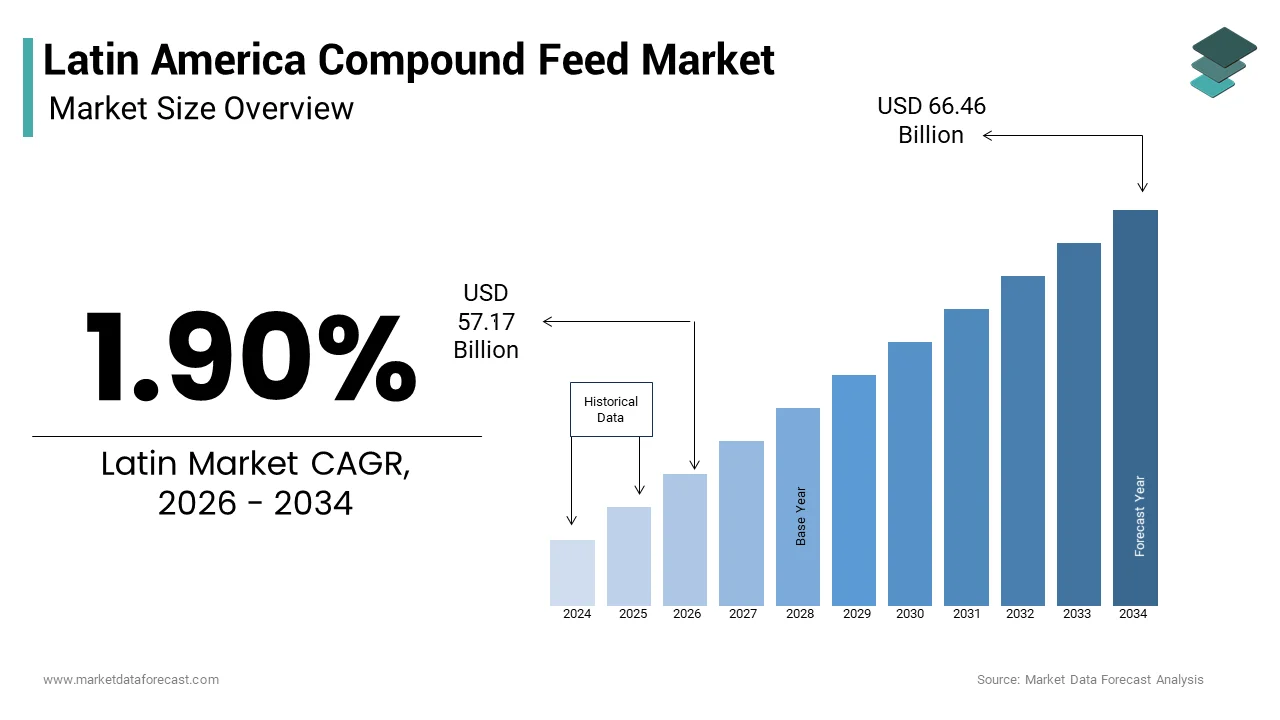
The Latin American compound feed market size was valued at USD 56.10 billion in 2025, is anticipated to reach USD 57.17 billion in 2026, and is projected to scale up to USD 66.46 billion by 2034, registering a compound annual growth rate (CAGR) of 1.90% during the forecast period from 2026 to 2034. Propelled by industrial livestock and poultry production expansions, rising per capita incomes, precision nutrition technologies, and a thriving aquaculture sector, the market is advancing strongly across Brazil, Mexico, Argentina, and the wider region.
Key Executive Metrics (At-a-Glance)
- 2025 Base Valuation: USD 56.10 Billion
- 2026 Current Valuation: USD 57.17 Billion
- 2034 Forecast Valuation: USD 66.46 Billion
- Compound Annual Growth Rate (CAGR): 1.90% (2026–2034)
- Dominant Ingredient/Raw Material Segment: Soya-based Ingredients (holding a leading share in 2025 anchored by regional soybean abundance, crushing, and high amino acid profiles)
- Fastest-Growing Ingredient/Alternative Protein Segment: Alternative Protein Sources (projected at a high 12.5% CAGR driven by sustainability, circular economy practices, and black soldier fly meal)
- Dominant Livestock/Animal Segment: Poultry (accounting for the highest share in 2025 supported by short production cycles, high consumption, and integration in Brazil/Mexico)
- Fastest-Growing Livestock/Animal Segment: Aquatic Animals (projected at a swift 10.2% CAGR fueled by rapid shrimp and salmon aquaculture growth in Ecuador, Chile, and Brazil)
- Dominant Country Markets: Brazil (largest producer/consumer with over 46 million tons in feed output), Mexico, and Argentina
Core Market Drivers
- Industrial Livestock Growth: Large-scale poultry and livestock farming transitions optimizing feed conversion ratios and export-oriented protein demands.
- Rising Incomes & Protein Consumption: Middle-class expansion and urbanization driving higher per capita meat consumption across Latin American economies.
Primary Market Restraints & Challenges
- Raw Material Price Volatility: Unpredictable price swings in corn, soybean meal, and wheat due to weather patterns and global supply chain bottlenecks.
- Regulatory Complexity & Climate Pressures: Fragmented legal standards across countries, compliance costs, and climate change disruptions impacting crop yields.
Latin America Compound Feed Market Segmentation Breakdown
| Segment Category | Largest (Dominant) Sub-Segment | Fastest-Growing Sub-Segment |
|---|---|---|
| By Ingredients / Raw Material | Soya-based Ingredients (leading share in 2025 via local soybean abundance, meal protein, and cost efficiency) | Alternative Protein Sources (12.5% CAGR driven by insect/black soldier fly meal, circular practices, and eco-sustainability) |
| By Animal / Livestock | Poultry (highest share in 2025 via high chicken meat production, short cycles, and broiler integration) | Aquatic Animals (10.2% CAGR fueled by booming shrimp/salmon aquaculture in Ecuador and Chile) |
| By Country | Brazil (dominates as regional leader with 46M+ tons of compound feed and massive poultry exports) | Mexico & Argentina (growing via commercialization, trade integration, and value-added soy/poultry production) |
Major Industry Players Profiled
Key enterprises shaping the competitive Latin American compound feed market include Cargill Inc., BRF S.A., Nutreco N.V., Charoen Pokphand Foods, Archer Daniels Midland Company (ADM), Land o’ Lakes, Inc., Alltech, Inc., New Hope Group Co., Ltd., De Heus B.V., and EWOS Group.
Latin America Compound Feed Market Size
The Latin American compound feed market size was valued at USD 56.10 billion in 2025 and is anticipated to reach USD 57.17 billion in 2026 to USD 66.46 billion by 2034, estimated to grow at a CAGR of 1.90% from 2026 to 2034.
As per the Food and Agriculture Organization of the United Nations, Latin America accounts for approximately 14% of global beef production, highlighting the critical role of efficient feeding systems. According to the Brazilian Ministry of Agriculture, Livestock and Supply, Brazil alone produced over 46 million tons of compound feed in 2024, reflecting its dominance in the regional landscape. The demographic shift towards urbanization has increased demand for animal protein, with data from the World Bank indicating that per capita meat consumption in the region rose by 3% annually over the last decade. Consumer behavior reflects a growing preference for safe and traceable food products, prompting stricter quality controls in feed manufacturing. Regulatory frameworks, such as those enforced by the National Service of Agrifood Health and Quality in Argentina, ensure safety standards and ingredient transparency. The market is characterized by a mix of multinational corporations and local manufacturers catering to diverse climatic and agricultural conditions. As sustainability becomes a priority, the integration of alternative protein sources and precision nutrition technologies gains traction. This evolution underscores the market's pivotal role in ensuring food security and economic stability in Latin America.
MARKET DRIVERS
Expansion of Industrial Livestock and Poultry Production
The expansion of industrial livestock and poultry production is primarily driving the growth of the compound feed market in Latin America. Large-scale farming operations increasingly rely on compound feed to ensure consistent growth rates and disease resistance in animals. According to the United States Department of Agriculture, Latin America is projected to increase its poultry exports by 8% in 2025, driven by strong demand from Asia and the Middle East. This export-oriented growth necessitates the use of high-quality compound feeds to meet international safety and quality standards. As per the Brazilian Animal Protein Association, broiler production in Brazil reached nearly 15.1 million tons in 2024, requiring substantial volumes of specialized feed. The shift from extensive grazing to intensive confinement systems further accelerates the adoption of compound feeds, which offer precise nutrient control. Farmers recognize that optimized feed conversion ratios directly impact profitability, leading to higher investment in premium feed products. Government initiatives supporting modernization of the agricultural sector also promote the use of industrial feed solutions. The consolidation of small farms into larger agribusiness entities enhances purchasing power and drives bulk procurement of compound feeds. This structural transformation ensures a steady and growing base for feed manufacturers. The focus on operational efficiency and scalability secures the long-term viability of the market.
Rising Per Capita Income and Protein Consumption
Rising per capita income and increasing protein consumption is further fuelling the expansion of the Latin American compound feed market. As economies in the region recover and grow, consumers are allocating more of their budgets to high-value food items including animal proteins. According to the Economic Commission for Latin America and the Caribbean, average per capita income in the region increased by 4.2% in 2025, enhancing purchasing power for middle-class households. As per the Inter-American Institute for Cooperation on Agriculture, annual meat consumption per capita in Latin America exceeds 80 kilograms, which is significantly higher than the global average. This high level of consumption drives continuous production levels in the livestock sector, thereby sustaining demand for compound feeds. Urbanization trends further amplify this effect as city dwellers prefer convenient and processed protein sources that require efficient supply chains. The growing awareness of nutritional benefits associated with lean meats and dairy products encourages regular consumption patterns. Retailers and food service providers expand their offerings to meet this demand, creating a robust downstream market. Feed manufacturers benefit from this stable domestic consumption, which buffers against fluctuations in export markets. The correlation between income growth and protein intake ensures that the compound feed market remains resilient. This driver supports both volume growth and product diversification in the sector.
MARKET RESTRAINTS
Volatility in Raw Material Prices and Supply Chain Disruptions
Volatility in raw material prices and supply chain disruptions are hindering the regional market growth. Key ingredients such as corn, soybean meal, and wheat are subject to fluctuating global prices influenced by weather conditions, geopolitical tensions, and trade policies. According to the International Grains Council, corn prices in South America varied by 20% in 2025 due to erratic rainfall patterns affecting harvest yields. This price instability makes it difficult for feed producers to maintain consistent pricing strategies and profit margins. As per the World Bank, inflation rates in several Latin American countries remained above 5% in 2025, exacerbating cost pressures on input materials. Supply chain bottlenecks caused by port congestion and logistical inefficiencies further delay the availability of essential ingredients. Manufacturers face challenges in sourcing high-quality raw materials consistently, which can impact the nutritional value of the final product. Small and medium-sized enterprises are particularly vulnerable to these fluctuations as they lack the financial reserves to hedge against price risks. The reliance on imported additives and vitamins exposes the market to currency exchange rate volatility. These economic factors constrain the ability of companies to invest in expansion and innovation. The unpredictability of input costs hinders long-term planning and stability in the sector.
Regulatory Complexity and Compliance Burdens
Regulatory complexity and compliance burdens are further hampering the Latin American compound feed market growth. Each country in the region has its own regulatory framework, which creates a fragmented legal landscape for multinational operators. According to the Pan American Health Organization, varying standards for antibiotic use and additive approvals complicate cross-border trade and product formulation. As per the Inter-American Institute for Cooperation on Agriculture, compliance with diverse national regulations can increase operational costs by up to 15% for feed manufacturers. The need for multiple certifications and inspections delays product launches and market entry. Strict environmental regulations regarding waste management and emissions from feed mills also add to the compliance burden. Manufacturers must invest in advanced monitoring systems and reporting mechanisms to meet these requirements. The lack of harmonization among regional trade agreements further impedes the free flow of goods and services. Small producers often struggle to navigate the complex regulatory environment, leading to market exit or consolidation. Legal uncertainties and frequent policy changes create an unpredictable business environment. This restraint limits the agility of companies to respond to market opportunities. It necessitates significant legal and administrative resources to ensure ongoing compliance.
MARKET OPPORTUNITIES
Adoption of Precision Nutrition and Alternative Ingredients
The adoption of precision nutrition and alternative ingredients is a significant opportunity for the Latin America compound feed market. Precision nutrition involves tailoring feed formulations to the specific genetic and physiological needs of animals, reducing waste and improving performance. According to the Food and Agriculture Organization of the United Nations, precision feeding can reduce nitrogen excretion by up to 30%, contributing to environmental protection. As per the Brazilian Agricultural Research Corporation, the use of multi-enzyme supplementation can improve weight gain by 5% to 12% in poultry operations. The exploration of alternative protein sources such as insect meal, algae, and single-cell proteins offers a sustainable solution to soybean dependency. These ingredients provide high-quality nutrients while reducing the environmental footprint of feed production. Manufacturers are investing in research and development to validate the efficacy and safety of these novel inputs. Government incentives for sustainable agriculture encourage the adoption of eco-friendly feed solutions. The growing demand for organic and non-GMO products also drives innovation in ingredient sourcing. This opportunity allows companies to differentiate themselves through scientific advancement and responsible practices. The focus on resource efficiency ensures long-term competitiveness and resilience.
Expansion of Aquaculture and Specialty Feed Segments
The expansion of aquaculture and specialty feed segments offers a substantial opportunity for the Latin America compound feed market by tapping into high growth sectors with specific nutritional requirements. Aquaculture is one of the fastest-growing food production sectors in the region driven by increasing demand for fish and shrimp. According to the Global Aquaculture Alliance, Latin America accounts for 15% of global shrimp production, with Ecuador and Brazil being key contributors. As per the National Fisheries and Aquaculture Service in Chile, salmon feed demand increased by 12% in 2025 due to expanded farming operations. Specialty feeds for aquaculture require high levels of protein and specific fatty acids, creating a premium market segment. The intensification of fish farming necessitates the use of high-quality compound feeds to ensure rapid growth and disease resistance. Manufacturers are developing specialized formulations for different species and life stages, enhancing product value. The rise of pet ownership in urban areas also drives demand for premium pet food, which shares similar production technologies with animal feed. This diversification allows companies to reduce dependence on traditional livestock segments. The focus on high value-added products improves profit margins and market stability. This opportunity supports sustainable growth and innovation in the feed industry.
MARKET CHALLENGES
Impact of Climate Change on Ingredient Availability
The impact of climate change on ingredient availability is a major challenge to the Latin America compound feed market by threatening the consistent supply of key raw materials. Extreme weather events such as droughts, floods, and heatwaves affect crop yields of corn, soybeans, and other essential feed components. According to the Intergovernmental Panel on Climate Change, agricultural productivity in Latin America is expected to decline by 10% to 25% by 2050 if adaptation measures are not implemented. As per the National Institute for Space Research in Brazil, soybean yields fluctuated by 15% in 2024 due to irregular rainfall patterns. This variability leads to shortages and price spikes, which disrupt feed production schedules. Manufacturers face difficulties in securing long-term supply contracts due to unpredictable harvest outcomes. The need to source ingredients from distant regions increases logistics costs and carbon footprints. Climate-induced pests and diseases further compromise crop quality and quantity. Farmers and feed producers must invest in resilient agricultural practices and diversified sourcing strategies. The uncertainty surrounding future climate scenarios complicates strategic planning and risk management. This challenge requires collaborative efforts between governments, researchers, and industry stakeholders. Failure to address these issues may lead to supply chain vulnerabilities and increased costs.
Disease Outbreaks and Biosecurity Concerns
Disease outbreaks and biosecurity concerns is another significant challenge to the Latin America compound feed market. Infectious diseases such as African Swine Fever, Avian Influenza, and Foot and Mouth Disease can devastate livestock populations and disrupt supply chains. According to the World Organisation for Animal Health, several countries in Latin America reported cases of Avian Influenza in 2025, leading to culling and trade restrictions. As per the Pan American Health Organization, disease outbreaks can reduce livestock productivity by up to 20% impacting feed demand. Biosecurity measures require strict control over feed ingredients to prevent contamination and disease transmission. Manufacturers must implement rigorous testing and hygiene protocols, which increase operational costs. Consumer fear of contaminated products can lead to decreased meat consumption, affecting the entire value chain. The spread of diseases across borders necessitates coordinated regional responses and surveillance systems. Trade barriers imposed by importing countries further limit market access for affected regions. The industry faces pressure to enhance traceability and transparency in feed production. This challenge demands continuous investment in health monitoring and prevention technologies. Maintaining biosecurity is essential for sustaining market stability and growth.
REPORT COVERAGE
| REPORT METRIC | DETAILS |
| Market Size Available | 2025 to 2034 |
| Base Year | 2025 |
| Forecast Period | 2026 to 2034 |
| CAGR | 1.90% |
| Segments Covered | By Ingredients, Supplements, Animal Type, and Country |
| Various Analyses Covered | Global, Re, Regional and Country-Level Analysis, Segment-Level Analysis, DROC, PESTLE Analysis, Porter’s Five Forces Analysis, Competitive Landscape, Analyst Overview on Investment Opportunities |
| Regions Covered | Brazil, Mexico, Argentina, and the Rest of Latin America |
| Market Leaders Profiled | Cargill Inc., Charoen Pokphand Foods, Archer Daniels Midland Company, Land o’ Lakes, Inc., Nutreco, ALLTECH Inc., NC, New Hope Group Co., Ltd, Wen’s Group, For Farmers B.V., Agribusiness Holding Miratorg, Kyodo Shiryo Company, Sodrugestvo Group S.A., DeKalb Feeds, Inc., De Heus B.V., Ballance Agri-Nutrients Ltd, J.D. Heiskell & CO, Kent Feeds, Weston Milling Animal Nutrition, EWOS GROUP |
SEGMENTAL ANALYSIS
By Livestock Insights
The poultry segment accounted for the highest share of the Latin American compound feed market in 2025. The growth of the poultry segment in the Latin American market can be credited to the high volume of production, short production cycles, and intense industrialization of the sector. Chicken meat is the most consumed protein in the region, making it a primary driver for feed demand. According to the United States Department of Agriculture, Latin America produced over 16 million tons of chicken meat in 2025 with Brazil and Mexico being the largest contributors. As per the Brazilian Animal Protein Association, the poultry sector consumes approximately 45% of total compound feed produced in Brazil, reflecting its massive scale. The efficiency of poultry farming relies heavily on precise nutrition to maximize feed conversion ratios which are among the lowest in the livestock industry. Large integrated companies control the entire supply chain from feed manufacturing to processing, ensuring consistent demand for high-quality feed. The export orientation of the poultry sector drives adherence to international quality standards, necessitating advanced feed formulations. Urbanization and rising incomes have increased per capita consumption of chicken meat, further boosting production levels. The relatively low capital investment required for poultry farming compared to cattle encourages widespread participation. Government support for biosecurity and disease control also favors the structured poultry industry. This combination of volume efficiency and market demand secures the leading position of the poultry segment.
However, the aquatic animals segment is emerging as the fastest growing category in the Latin America compound feed market by livestock type and is expected to showcase a CAGR of 10.2% during the forecast period owing to the rapid expansion of aquaculture, particularly shrimp and salmon farming in countries like Ecuador, Chile, and Brazil. According to the Global Aquaculture Alliance, Latin America accounts for over 20% of global shrimp exports, with production volumes increasing by 10% annually. As per the National Fisheries and Aquaculture Service in Chile, salmon feed consumption rose by 12% in 2025 due to intensified farming practices and higher stocking densities. The driving force behind this growth is the high profitability of aquaculture compared to traditional livestock, attracting significant investment. Aquatic feeds require specialized formulations with high protein content and specific fatty acids, driving innovation in ingredient sourcing. The shift towards sustainable aquaculture practices encourages the use of eco-friendly feeds with reduced fishmeal content. Government initiatives promoting blue economy development provide financial incentives for farm expansion. The increasing global demand for seafood offers lucrative export opportunities for Latin American producers. Technological advancements in feed extrusion and floating feed technologies improve efficiency and reduce waste. This combination of economic potential, technological innovation, and export demand ensures that the aquatic segment continues to grow rapidly.
By Raw Material Insights
The soya-based ingredients segment held the leading position in the Latin America compound feed market by holding the leading share of the regional market in 2025. The growth of the soya-based ingredients segment in the Latin American market is majorly driven by the region's status as a global powerhouse in soybean production and processing. Soybean meal is the primary source of protein in animal feed due to its high amino acid profile and digestibility. According to the United States Department of Agriculture, South America produced over 200 million tons of soybeans in 2025 with Brazil and Argentina accounting for the majority of this output. As per the Brazilian Oilseed Processors Association, approximately 70% of domestic soybean crush is used for animal feed, highlighting its central role in the industry. The availability of locally sourced soy reduces dependency on imports and lowers production costs for feed manufacturers. The established infrastructure for soy processing ensures a consistent supply of high-quality meal. Farmers prefer soy-based feeds for their proven efficacy in promoting growth in poultry, swine, and cattle. The integration of soy production with feed manufacturing creates vertical efficiencies that benefit large agribusinesses. Export demand for soybean meal also supports the stability of the local market. Regulatory standards for protein content in feed favor soy as a reliable ingredient. This combination of abundance, cost efficiency, and nutritional value secures the leading status of soya-based raw materials.
However, the alternative protein sources segment is predicted to record a CAGR of 12.5% during the forecast period in the Latin American market due to the rising need to reduce reliance on traditional soy and fishmeal due to sustainability concerns and price volatility. According to the Food and Agriculture Organization of the United Nations, alternative proteins can reduce the environmental footprint of feed production by up to 40%. As per the International Platform of Insects for Food and Feed, several Latin American startups have begun commercial production of black soldier fly meal for poultry and aquaculture feeds. The driving force behind this growth is the increasing regulatory support for circular economy practices and waste reduction. Governments in countries like Mexico and Colombia are encouraging the use of agro-industrial byproducts in feed formulations. The high protein content and favorable amino acid profile of insect meal make it a viable substitute for fishmeal in aquaculture. Consumer acceptance of sustainable farming practices is rising, encouraging producers to adopt innovative ingredients. Research institutions are collaborating with private companies to validate the safety and efficacy of these novel sources. The focus on resource efficiency and environmental stewardship ensures that alternative proteins continue to grow at the fastest rate.
COUNTRY ANALYSIS
Brazil Compound Feed Market Analysis
Brazil stood as the largest consumer and producer of compound feed in the Latin America region by capturing the major share of the regional market in 2025. Brazil is likely to solidify its role as the dominant regional leader in feed production and exports for the next few years given its unmatched agricultural infrastructure and high livestock population. This dominant position is underpinned by the country's vast agricultural landscape, robust livestock industry, and advanced processing infrastructure. According to the Brazilian Ministry of Agriculture, Livestock and Supply, Brazil produced over 46 million tons of compound feed in 2024, driven by strong demand from the poultry and swine sectors. The driving factors behind this leadership include the presence of major global agribusiness companies and a highly integrated production system. As per the Brazilian Animal Protein Association, Brazil is the world's largest exporter of chicken meat, which necessitates high volumes of quality feed. The availability of abundant raw materials such as corn and soybeans ensures cost-competitive production. Government policies supporting agricultural modernization and export promotion further stimulate market growth. The adoption of precision nutrition technologies is more advanced in Brazil compared to neighboring countries. The large domestic population provides a stable base for meat consumption, buffering against export fluctuations. The focus on sustainability and biosecurity enhances the reputation of Brazilian products globally. These factors collectively ensure that Brazil remains the central pillar of the Latin America compound feed market.
Mexico Compound Feed Market Analysis
Mexico is likely to experience sustained growth in its feed industry for the next few years as it intensifies commercial farming to meet the needs of a growing middle class and expanding protein demand. This prominent position is driven by the country's large population, growing middle class, and strong demand for animal protein particularly pork and poultry. According to the United States Department of Agriculture, Mexico is one of the top importers of corn and soybean meal in the region to support its feed industry. As per the Mexican Association of Nutritionists and Animal Technologists, compound feed production increased by 5% in 2025, reflecting steady growth in livestock operations. The driving factors include the proximity to the United States, which facilitates trade and technology transfer. The modernization of small-scale farms into larger commercial entities is accelerating the adoption of formulated feeds. Government initiatives to improve food security and rural development support the expansion of the livestock sector. The rising prevalence of chronic diseases has led consumers to prefer lean meats, boosting poultry production. The integration of retail chains and fast-food outlets drives consistent demand for standardized meat products. The focus on improving feed efficiency and animal health ensures sustained market growth. These factors collectively maintain Mexico's status as a key driver of regional demand.
Argentina Compound Feed Market Analysis
Argentina is likely to maintain a critical position in the regional market for the next few years by leveraging its massive soybean surplus to drive high value-added feed production and poultry exports. The country is renowned for its beef production but has seen significant growth in poultry and swine sectors requiring compound feeds. According to the Argentine Chamber of Concentrates and Balanced Feeds, compound feed production reached 6 million tons in 2025, supported by abundant local soybean supplies. The driving factors include the country's comparative advantage in soybean processing, which provides cost-effective protein sources for feed. As per the Ministry of Agriculture, exports of poultry meat have increased by 8% annually, creating demand for high-quality feed. The economic recovery and stabilization efforts have improved investor confidence in the agricultural sector. The adoption of intensive farming practices in the Pampas region has increased feed usage per animal. Government policies promoting value-added agricultural products encourage the development of the feed industry. The focus on export markets drives adherence to international quality standards. The integration of local producers with global supply chains enhances market stability. These factors ensure that Argentina remains a key player in the regional compound feed landscape.
COMPETITIVE LANDSCAPE
The competition in the Latin America Compound Feed Market is intense and characterized by the presence of large multinational corporations and strong regional players. Major companies like Cargill BRF and Nutreco dominate the landscape through extensive distribution networks and advanced technological capabilities. These firms leverage their scale to offer competitive pricing and consistent product quality which are critical for retaining large commercial clients. Regional cooperatives and local manufacturers compete by offering personalized services and flexible terms to small and medium scale farmers. The market sees frequent innovation in feed formulations with companies vying to introduce sustainable and efficient solutions. Price volatility of raw materials such as corn and soy creates a dynamic environment where supply chain management becomes a key competitive advantage. Regulatory compliance and food safety standards also play a role in differentiating reputable brands. Strategic acquisitions and joint ventures are common as firms seek to expand their geographic reach and product portfolios. This dynamic environment demands agility and strategic foresight to maintain market relevance and profitability.
KEY MARKET PLAYERS
A few of the market players in the Latin American compound feed market include
- Cargill Inc
- Charoen Pokphand Foods
- Archer Daniels Midland Company
- Land o’ Lakes, Inc
- Nutreco
- BRF SA
- ALLTECH, INC
- New Hope Group Co. Ltd
- Wen’s Group
- For Farmers B.V
- Agribusiness Holding Miratorg
- Kyodo Shiryo Company
- Sodrugestvo Group S.A
- DeKalb Feeds, Inc
- De Heus B.V
- Ballance Agri-Nutrients Ltd
- J.D. Heiskell & CO
- Kent Feeds
- Weston Milling Animal Nutrition
- EWOS GROUP
Top Players In The Market
- Cargill Incorporated maintains a robust presence in the Latin America compound feed market through its extensive network of production facilities and deep integration with local agricultural supply chains. The company provides tailored nutritional solutions for poultry swine and aquaculture sectors across Brazil Argentina and Mexico. Recently Cargill has strengthened its market position by investing in digital farming tools that help producers optimize feed efficiency and reduce waste. The corporation actively collaborates with local farmers to source sustainable raw materials such as soy and corn ensuring supply chain resilience. Its commitment to innovation is evident in the development of alternative protein sources and precision nutrition technologies. By focusing on sustainability and customer partnership Cargill enhances operational productivity for clients. These strategic initiatives reinforce its leadership and drive continuous growth in the competitive regional landscape.
- BRF SA contributes significantly to the Latin America compound feed market primarily through its vertical integration model which supports its massive poultry and pork production operations. As one of the largest protein producers globally BRF manufactures high quality compound feeds to ensure consistent animal health and product quality. Recent actions include the expansion of its feed milling capacity in Brazil to support increased export demands. The company invests heavily in research and development to create specialized formulations that improve feed conversion ratios. BRF leverages its scale to negotiate favorable terms for raw material procurement enhancing cost efficiency. The firm focuses on biosecurity and traceability aligning with international standards for food safety. By prioritizing operational excellence and sustainability BRF strengthens its competitive edge. These efforts solidify its reputation as a key player in the integrated agribusiness sector.
- Nutreco NV plays a vital role in the Latin America compound feed market by offering premium specialty feeds and additives through its brands such as Trouw Nutrition. The company focuses on providing science based nutritional solutions that enhance animal performance and health. Recently Nutreco has strengthened its position by expanding its technical service centers in key markets like Colombia and Chile. The corporation invests in innovative products such as organic acids and probiotics to support antibiotic free farming practices. Its strong emphasis on knowledge transfer helps farmers adopt best practices in nutrition and management. Nutreco leverages global expertise to address local challenges ensuring relevant and effective solutions. The commitment to sustainability and animal welfare resonates with modern consumers and producers. These strategies ensure sustained growth and competitiveness in the dynamic Latin American market.
Top Strategies Used by Key Market Participants
Key players in the Latin America Compound Feed Market employ diverse strategies to maintain competitiveness and drive growth in a evolving landscape. Vertical integration is a primary focus with companies controlling supply chains from raw material sourcing to final product distribution to ensure quality and cost efficiency. Product innovation drives differentiation as firms develop specialized feeds for specific animal stages and health needs. Strategic partnerships with local farmers and cooperatives strengthen market access and loyalty. Sustainability initiatives are increasingly important with manufacturers adopting eco friendly ingredients and reducing carbon footprints. Digital transformation efforts include the use of data analytics to optimize feed formulations and improve farm productivity. Expansion into high growth segments such as aquaculture and pet food diversifies revenue streams. These approaches collectively enable market participants to adapt to changing consumer preferences and regulatory requirements.
MARKET SEGMENTATION
This research report on the Latin America Compound feed market is segmented and sub-segmented into the following categories:
By Ingredients
- Cereals
- Cereals by-Product
- Oilseed Meal
- Oil
- Molasses
- Supplements
- Others
By Supplements
- Vitamins
- Antibiotics
- Antioxidants
- Amino Acids
- Feed Enzymes
- Feed Acidifiers
- Others
By Animal
- Ruminant
- Swine
- Poultry
- Aquaculture
- Others
COUNTRY ANALYSIS
- India
- UK
- France
- Spain
- Germany
- Italy
- Russia
- Sweden
- Denmark
- Switzerland
- Netherlands
- Turkey
- Czech Republic
- Rest of Latin America