- Product Description Description
- Table of Contents TOC
- List of Table & Figure LOT
- Get Free Sample PDF Sample PDF
Market Size, 2025
$680.62 MnMarket Estimate, 2026
$724.18 MnMarket Forecast, 2034
$1,189.54 MnCAGR, 2026–2034
6.4%Latin America Diagnostic ECG Market Size, Growth, Trends & Forecast (2026–2034)
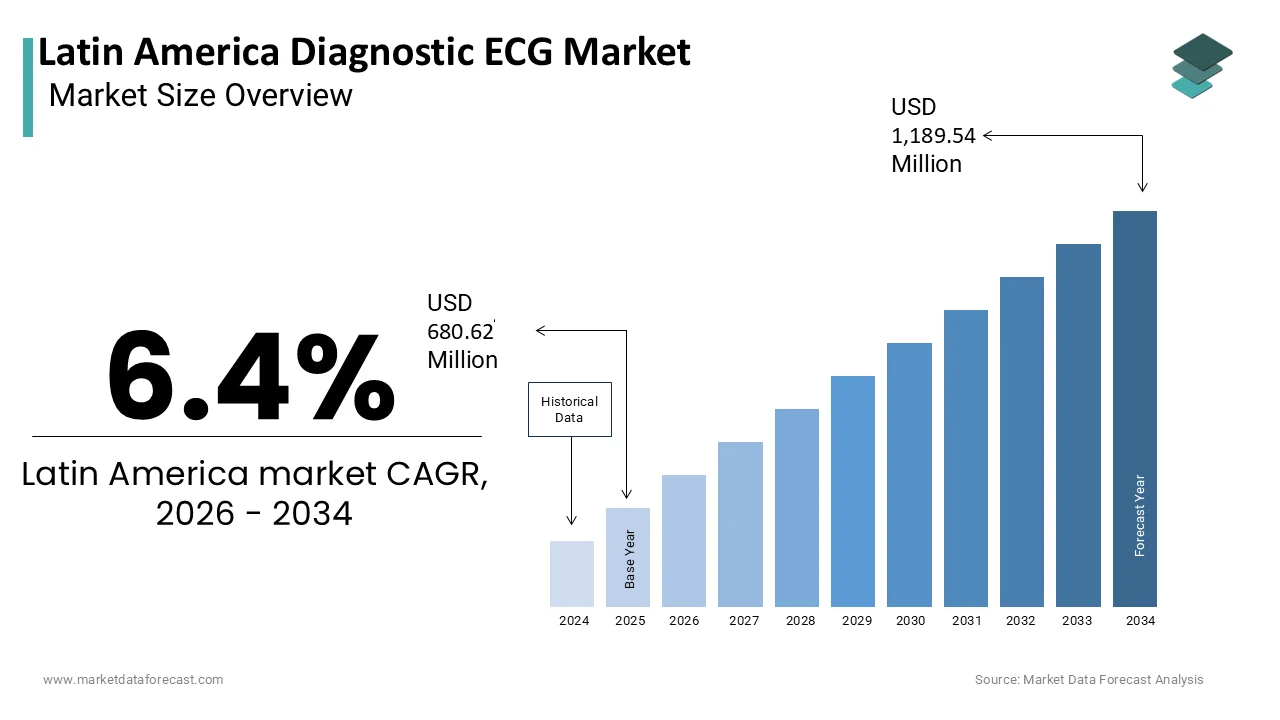
The Latin America diagnostic ECG market size was valued at USD 680.62 million in 2025, is anticipated to reach USD 724.18 million in 2026, and is projected to scale to USD 1,189.54 million by 2034, expanding at a compound annual growth rate (CAGR) of 6.4% during the forecast period from 2026 to 2034. Market expansion is primarily propelled by the escalating burden of cardiovascular diseases, rapid population aging, telemedicine integration, and the widespread adoption of AI-powered digital health screening frameworks.
Key Executive Metrics (At-a-Glance)
- 2025 Base Valuation: USD 680.62 Million
- 2026 Current Valuation: USD 724.18 Million
- 2034 Forecast Valuation: USD 1,189.54 Million
- Compound Annual Growth Rate (CAGR): 6.4% (2026–2034)
- Leading Regional Country: Brazil (holding 42.6% market share in 2025, driven by the SUS public system and private supplementary sectors)
- Key Geographic Countries: Mexico, Brazil, Argentina, Chile, Peru, and Rest of Latin America
Core Market Drivers & Opportunities
- Cardiovascular Disease Burden: PAHO data highlighting cardiovascular pathology as the leading cause of regional mortality, driving over 2.2 million annual deaths.
- Aging Demographics: Expanding geriatric population segments increasing chronic care hospitalizations and long-term cardiac surveillance.
- Telemedicine & AI Integration: Government telecardiology programs and AI-driven automated ECG analysis overcoming specialist workforce shortages.
Primary Market Restraints & Challenges
- Public Procurement Inefficiencies: Chronic underfunding and bureaucratic delays restricting equipment modernization in public health facilities.
- Workforce Shortages: Distribution deficits of trained cardiologists creating interpretation backlogs in secondary and tertiary tiers.
- Infrastructure Deficits: Unreliable grid stability and rural connectivity barriers restricting advanced cloud-enabled ECG operations.
Market Segmentation: Largest and Fastest-Growing Sectors
| Segment Category | Largest Segment | Fastest-Growing Segment |
|---|---|---|
| By Product | Resting ECG Systems (Cost efficiency and primary care screening gatekeeper) | Holter Monitors (CAGR of 11.4%, driven by chronic ambulatory rhythm tracking) |
| By Lead Type | 12-Lead ECG Devices (Comprehensive spatial resolution for acute triage) | Single-Lead ECG Devices (CAGR of 18.7%, driven by consumer wearables and mobile health) |
| By End User | Hospitals (62.3% share in 2025, driven by acute care and intensive units) | Home and Ambulatory Care (CAGR of 14.8%, driven by decentralized chronic care) |
| By Country | Brazil (42.6% share in 2025) | Mexico & Brazil (Driven by digital health expansions and nearshoring) |
Major Industry Leaders Profiled
Key market participants shaping the Latin America diagnostic ECG landscape include BPL Ltd, Cardiac Science Corp, Fukuda Denshi Co., Ltd, GE Healthcare, Medtronic, Inc, and other regional technology providers.
Latin America Diagnostic ECG Market Size
The Latin America Diagnostic ECG Market is projected to grow from USD 680.62 million in 2025 to USD 724.18 million in 2026 and reach USD 1,189.54 million by 2034, registering a CAGR of 6.4% from 2026 to 2034.
A diagnostic ECG (electrocardiogram) is a quick, painless, and non-invasive medical test that records your heart's electrical signals. Small sticky patches called electrodes are placed on your chest, arms, and legs to track the timing and strength of every heartbeat, helping doctors spot heart attacks, rhythm problems, and structural issues. According to the Pan American Health Organization, cardiovascular diseases remain the leading cause of death in the Americas and account for more than 2.2 million deaths annually across regional health systems. The market ecosystem includes resting ECG machines, stress testing systems, Holter monitors, and increasingly cloud-connected devices that facilitate telecardiology in geographically dispersed populations. As per the World Bank, public and private health investments in medical infrastructure vary significantly across Latin American nations, where diagnostic equipment access gaps between urban centers and rural facilities persist. According to the Pan American Health Organization, noncommunicable conditions generate the majority of the region's total mortality burden, accelerating hospital procurement of medical screening technologies. Furthermore, as per the Economic Commission for Latin America and the Caribbean, the regional population aged 60 and older reached 13.4% of the total demographic share and is projected to expand to 16.5% by 2030, driving up hospital admissions for cardiovascular care.
MARKET DRIVERS
Escalating Cardiovascular Disease Burden and Aging Demographics
The concurrent rise in cardiovascular pathology and rapid population aging is fuelling the growth of the Latin America diagnostic ECG market. Together, these two factors expand the clinical indication base for electrocardiographic testing. According to the Pan American Health Organization, cardiovascular diseases represent the single leading cause of death across the Americas, accounting for over 2.2 million lives lost annually and prompting major updates to clinical screening protocols. As per the United Nations, population aging acts as an inevitable outcome of the regional demographic transition, shifting public health system constraints toward long-term surveillance of chronic age-related cardiovascular illnesses. According to the Sociedade Brasileira de Cardiologia, large-scale cardiovascular disease hospitalizations require synchronized emergency triage mechanisms and continuous diagnostic assessment pathways within regional public healthcare facilities. This demographic and epidemiological convergence transforms ECG from an elective diagnostic tool into a compulsory public health intervention, compelling governments and insurers to expand procurement budgets despite fiscal constraints affecting other medical device categories.
Telemedicine Expansion and Rural Healthcare Access Initiatives
Government-led telehealth programs and private digital health investments are driving ECG adoption in underserved regions, which further propels the expansion of the Latin American diagnostic ECG market. These efforts enable remote interpretation and specialist consultation without requiring patient travel to tertiary centers. According to the Pan American Health Organization, integrated digital health frameworks accelerate asynchronous and synchronous remote consultation models to systematically handle chronic noncommunicable diseases across primary care locations. As per the Sociedade Brasileira de Cardiologia, the deployment of the national Telessaúde Brasil Redes program drives down specialist clinical turnaround times by executing rapid digital electrocardiography diagnostics for remote municipal clinics. According to the Pan American Health Organization, structuring telecardiology consultation connections between remote locations and tertiary hospital centers optimizes regional patient referral lines and reduces transport spending. As per the International Social Security Association, private and public healthcare entities across Latin America are diversifying their care delivery structures through increased integration of digital diagnostic tools. These programs create sustainable demand for connected ECG devices while addressing geographic inequities that historically limited market penetration outside major metropolitan areas, effectively decoupling diagnostic access from physical specialist distribution.
MARKET RESTRAINTS
Budgetary Constraints and Public Procurement Inefficiencies
Chronic underfunding of public health systems and bureaucratic procurement processes severely limit ECG equipment acquisition and replacement cycles, which restricts the growth of the Latin American diagnostic ECG market. These issues affect government-funded facilities serving the majority of the Latin American population. According to the Inter-American Development Bank, healthcare system allocations for medical equipment and diagnostic machinery remain restricted across regional budgets, creating an operational imperative to stretch the lifecycle of current screening devices. As per Transparency International, weak accountability controls and systemic oversight gaps in national procurement procedures across multiple Latin American states introduce operational delays that impede the structural modernization of cardiovascular tracking fleets. According to the Pan American Health Organization, chronic fiscal deficits and localized budgetary gaps for preventative medical devices compromise the availability of clinical hardware within public health facilities. As per the Pan American Health Organization, acute infrastructure failures and medical technology asset obsolescence within complex regional settings lead to severe diagnostic shortages for patients suffering from noncommunicable cardiac issues. These fiscal and governance failures create artificial demand suppression independent of clinical need, constraining market realization to levels far below epidemiological requirements and perpetuating diagnostic deserts in vulnerable communities.
Workforce Shortages and Interpretation Capacity Gaps
Insufficient numbers of trained cardiologists and technicians capable of performing and interpreting ECGs limit effective utilization of installed equipment, which hinders the expansion of the Latin American diagnostic ECG market. This trend is particularly visible in secondary and tertiary-tier cities where specialist concentration is lowest. According to the World Health Organization, specialized physician distribution deficits in developing public sectors hinder timely clinical evaluations, causing severe logjams in diagnostic electrocardiograph report handoffs. As per the Instituto Mexicano del Seguro Social, the concentration of specialized medical personnel inside metropolitan training institutions drives waitlists for cardiorespiratory diagnostic reviews at remote healthcare points. According to the Conselho Federal de Medicina, regional workforce disparities leave a multitude of rural municipalities without a stable density of resident specialists, necessitating the deployment of digital telecardiology services to utilize deployed diagnostic apparatus. As per the Pan American Health Organization, institutional caps on advanced medical training opportunities across regional learning networks fail to keep pace with the diagnostic service demands of expanding geriatric demographics. This human capital deficit means equipment procurement alone cannot translate into improved diagnostic access without parallel investment in workforce development or AI-assisted interpretation technologies that augment limited specialist availability and reduce dependency on scarce human expertise.
MARKET OPPORTUNITIES
Artificial Intelligence Integration for Automated Interpretation
AI-powered ECG analysis offers a transformative opportunity for the Latin America diagnostic ECG market. This helps to overcome specialist shortages and expand diagnostic access to primary care settings lacking cardiology expertise through automated preliminary reporting. According to the World Health Organization, artificial intelligence tools applied to clinical electrocardiograms optimize diagnostic workflows by enabling rapid identification of structural anomalies and major cardiac rhythms. As per the Sociedade Brasileira de Cardiologia, algorithmic solutions deployed within primary care networks enhance diagnostic screening coverage and minimize human error when interpreting patient cardiac signals. Regulatory agencies including ANVISA Brazil and COFEPRIS Mexico have established expedited approval pathways for AI diagnostic tools, recognizing their potential to address workforce gaps. As per the Agência Nacional de Saúde Suplementar, commercial supplementary healthcare plans adapt their corporate coverage parameters for digital outpatient services to align with updated nationwide medical guidelines. The convergence of clinical validation, regulatory acceptance, and payment alignment positions AI integration as the primary growth vector unlocking latent demand constrained by human resource limitations.
Portable and Wearable ECG Device Proliferation
Miniaturization of ECG technology into consumer wearables and handheld devices creates new market segments beyond clinical settings, which is anticipated to propel the expansion of the Latin American diagnostic ECG market. This shift enables continuous monitoring and early detection in homes and communities. As per the American Heart Association, clinical investigations into consumer-grade smartwatches demonstrate that paired software algorithms can flag hidden cardiovascular abnormalities to prompt timely specialist evaluations. Retail pharmacies stock single-lead ECG devices, creating over-the-counter distribution channels bypassing traditional medical device sales intermediaries. This democratization of cardiac monitoring expands the addressable market from episodic clinical diagnostics to continuous personal health surveillance, generating recurring revenue through device sales, subscription services, and downstream clinical referrals.
MARKET CHALLENGES
Infrastructure Deficits and Connectivity Reliability Issues
Unreliable electricity, internet, and basic facility infrastructure in many regions prevent the consistent operation of modern digital ECG systems, which holds back the growth of the Latin American diagnostic ECG market. This issue particularly affects devices that depend on cloud connectivity and stable power supplies for telemedicine and data storage. According to the World Bank, infrastructural grid vulnerabilities and systemic electricity blackouts affect corporate and industrial enterprises across developing Latin American economies, which impacts steady operational workflows. As per the International Telecommunication Union, rural connectivity limitations and digital penetration imbalances across rural territories restrict real-time data transmissions, forcing the expansion of decentralized mobile network frameworks. According to the Pan American Health Organization, persistent municipal infrastructure gaps and regional backup utility deficiencies within vulnerable hospital systems lead to periodic disruptions in essential cardiovascular screening protocols. Also, as per the Pan American Health Organization, geographic barriers and dispersed topography across Andean territories require the implementation of specialized telecardiology services to reach rural primary care posts. These infrastructural realities mean advanced ECG features,tures including cloud storage, AI analysis, and remote consultation, remain inaccessible to substantial portions of the target population regardless of device affordability, requiring offline-capable designs and robust hardware specifications unsuited to premium global product portfolios.
Regulatory Fragmentation and Approval Timeline Variability
Divergent and unpredictable regulatory requirements across the countries in the region inhibit the expansion of the Latin American diagnostic ECG market. This creates compliance complexity and market entry delays, preventing manufacturers from achieving regional scale efficiencies necessary for affordable pricing and rapid innovation diffusion. As per the Agência Nacional de Vigilância Sanitária, updated modernization resolutions streamline market notifications for lower-risk equipment while maintaining complex technical review loops for high-risk diagnostic hardware. Currency controls in Argentina and Venezuela prevent timely import of reference standards and testing equipment required for local conformity assessment, further extending timelines unpredictably. Post-market surveillance requirements vary dramatically, with Mexico demanding quarterly reporting while Peru requires none, creating ongoing compliance burden asymmetry. Lack of mutual recognition agreements means each country launch requires dedicated regulatory strategy and a local authorized representative, increasing fixed costs disproportionately for smaller innovators unable to amortize expenses across unified regional registration. This fragmentation sustains oligopolistic market structures favoring incumbents with established local presence while blocking disruptive technologies that could address unmet needs in underserved segments.
REPORT COVERAGE
| REPORT METRIC | DETAILS |
| Market Size Available | 2025 to 2034 |
| Base Year | 2024 |
| Forecast Period | 2026 to 2034 |
| Segments Analysed | By Product, Lead Type, End Users and Region |
| Various Analyses Covered | Regional & Country Level Analysis, Segment-Level Analysis, Drivers, Restraints, Opportunities, Challenges; PESTLE Analysis; Porter’s Five Forces Analysis, Competitive Landscape; Analyst Overview of Investment Opportunities |
| Countries Analysed | Mexico, Brazil, Argentina, Chile, Peru and Rest of Latin America |
| Market Leaders Profiled | BPL Ltd, Cardiac Science Corp, Fukuda Denshi Co., Ltd, GE Healthcare, Medtronic, Inc |
SEGMENTAL ANALYSIS
By Product Insights
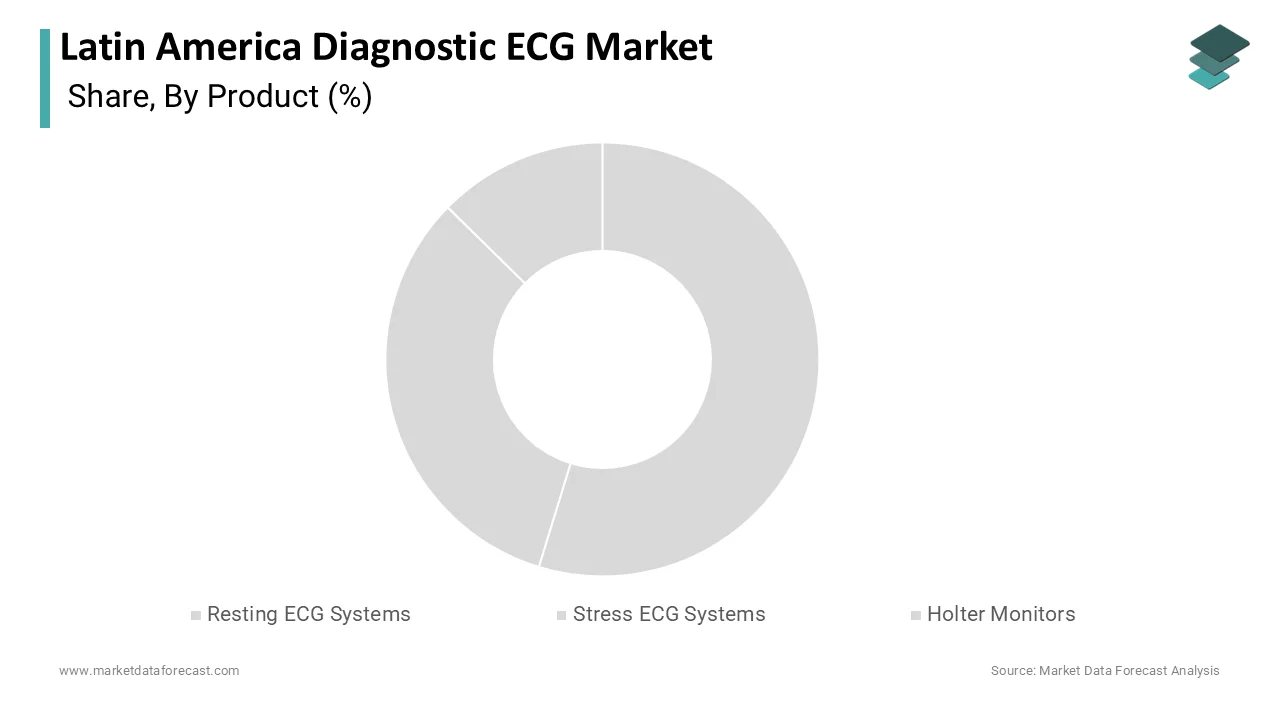
The resting ECG systems segment led the Latin America diagnostic ECG market and captured a significant share in 2025. They act as mandatory first-line screening tools in public and private primary care networks that manage massive patient volumes for cardiovascular risk assessment. According to the Pan American Health Organization, a unified registration and regulatory strategy is expanding healthcare access across Brazil, Mexico, Colombia, and Chile to meet rising demand for medical diagnostics. As per the Brazilian Ministry of Health, the SUS public healthcare system prioritizes preventive cardiology interventions and diagnostic protocols to address the regional burden of cardiovascular disease. According to the International Atomic Energy Agency, managing ischemic heart disease in women across Latin American countries requires comprehensive diagnostic infrastructure and gender-specific protocols rather than standardized pre-employment screenings. This concentration stems from clinical guidelines positioning resting ECG as the gatekeeper test determining need for further investigation rather than an optional adjunct. Procurement budgets in resource-constrained systems prioritize resting systems due to lower unit cost, higher throughput, and simpler maintenance requirements versus stress or Holter alternatives, ensuring sustained dominance despite technological advances in other segments.
Market leadership of resting ECG systems is reinforced by superior cost efficiency and operational simplicity, enabling deployment across diverse facility tiers includin, including rural clinics lacking specialized staff or infrastructure. According to Pan American Health Organization health data, regional public healthcare procurement budgets optimize capital equipment spending to focus on essential diagnostic tools across municipal clinics. As per the Pan American Health Organization, clinical management of chronic cardiovascular conditions requires the utilization of multiple, complex diagnostic and serological tests rather than a single primary device-level intervention. Battery-powered portable models function without stable electricity, addressing infrastructure gaps. The economic and operational advantages ensure resting ECG remains the default choice for health systems prioritizing breadth of access over depth of diagnostic capability.
The Holter monitors segment is predicted to witness the highest CAGR of 11.4% during the forecast period owing to expanding chronic disease management protocols requiring extended rhythm monitoring beyond single snapshot resting ECG capabilities. According to the Pan American Health Organization, ambulatory tracking systems and clinical surveillance are prioritized for managing systemic acute infections impacting public health in South America. As per the Brazilian Society of Cardiology, the clinical implementation of advanced transcatheter interventions improves cardiac autonomic function and mitigates stroke risks in older populations. Private insurers expanded Holter coverage to include asymptomatic screening for patients with family history of sudden cardiac death, creating new indication-driven demand. The guideline expansion and demographic tailwind transform a specialty test into a mainstream chronic care tool, sustaining growth rates exceeding the mature resting ECG segment.
Growth acceleration in the Holter segment stems from device miniaturization and wireless connectivity improvements addressing historical compliance barriers and interpretation delays that limited adoption. According to the International Federation for Medical and Biological Engineering, digital health monitoring validation studies focus on reducing physical data artifacts to enhance long-term compliance in patient groups. As per the Federal University of Santa Catarina clinical informatics benchmarks, single-use digital monitoring integrations optimize setup speed and scale access across community primary care environments. Smartphone integration allows patients to log symptoms synchronously with ECG recordings, improving correlation accuracy and diagnostic yield. These usability and workflow enhancements convert latent clinical need into realized utilization by removing friction points that historically suppressed demand despite clear indications.
By Lead Type Insights
The 12-lead ECG devices segment dominated the Latin America market and accounted for a substantial share in 2025. These devices provide comprehensive spatial resolution necessary for accurate diagnosis of ischemia, infarction, and structural abnormalities that fewer leads cannot reliably detect. According to AHA/ACC/ASE/CHEST/SAEM/SCCT/SCMR collaborative clinical practice guidelines, the systematic evaluation of acute chest pain symptoms focuses heavily on early diagnostic pathways to rule out life-threatening cardiac events. As per the Federal Council of Medicine regulations in Brazil, Resolution 2,217/2018 enforces strict ethical parameters outlining medical conduct and prohibiting treatment prescription without physical examination of the patient. According to the Mexican Government official health service norms, standard NOM-027-SSA3-2013 establishes precise regulatory criteria for the organization, operation, and administration of emergency medical services across healthcare facilities. The clinical, regulatory, and educational entrenchment ensures 12-lead dominance despite emerging evidence supporting reduced lead configurations for specific screening applications where diagnostic completeness remains non-negotiable for acute and complex presentations.
Rapid triage uses the 12-lead ECG to rule out life-threatening conditions. This vital step helps doctors decide on admission, discharge, and treatment, which keeps the tool in high demand. According to American Heart Association acute care guidelines, immediate diagnostic workups must prioritize early risk stratification and rapid intervention timelines for all incoming symptomatic coronary patients. As per American Academy of Emergency Medicine international registers, emergency medicine clinical education models seek to strengthen independent specialty frameworks and global diagnostic quality parameters. The acute care dependencies create inelastic demand unaffected by outpatient screening trends toward simplified devices because emergency departments cannot compromise diagnostic sensitivity for operational convenience or cost savings when missing diagnosis carries mortality consequences.
The single-lead ECG devices segment is estimated to register the fastest CAGR of 18.7% from 2026 to 2034 due to integration into consumer wearables and mobile health platforms enabling preventive screening outside clinical settings. According to International Data Corporation worldwide tracking analysis, vendor markets for wearable wrist devices segment into smart and basic categories to track historical consumer adoption trends. As per research, health monitoring wearables expand significantly across regional medical markets to enable continuous biometric data capture. Retail pharmacy chains Farmacias del Ahorro and Raia Drogasil stock KardiaMobile and similar devices, creating over-the-counter distribution and bypassing traditional medical sales channels. This democratization expands the addressable market from episodic clinical diagnostics to continuous personal health surveillance generatin, generating recurring revenue through device sales, subscriptions, and downstream referrals that clinical-only segments cannot capture.
Rapid expansion in the single-lead segment stems from native compatibility with telemedicine platforms, enabling remote cardiac assessment in regions lacking specialist access or during pandemic-era contact restrictions. According to International Data Corporation regional consumer indexes, wearable electronics performance monitoring emphasizes device marketplace fluctuations and hardware shipment contractions. As per the Center for Studies on Information and Communication Technologies public healthcare audits, the deployment of telemedicine resources shows notable regional variation across public facilities in Brazil. These telehealth synergies position single-lead as an enabler of decentralized care models aligned with regional access equity goals, driving adoption velocity exceeding traditional clinical segments.
By End Users Insights
The hospitals segment was the largest in the Latin America diagnostic ECG market and occupied a 62.3% share in 2025. This supremacy of the segment was driven by the concentration of acute cardiac care, emergency services, and inpatient monitoring requirements within institutional settings. According to the International Hospital Federation, millions of hospital beds globally serve as primary points of care for acute cardiac events where immediate electrocardiogram recording is required to guide clinical interventions. As per the Mexican Social Security Institute, massive high-technology medical equipment investments are actively expanding imaging and diagnostic laboratory capacity across dozens of regional public hospitals and family medicine units. Intensive care units require continuous ECG monitoring for all ventilated and hemodynamically unstable patients,s creating baseline device density proportional to bed count rather than discretionary purchasing decisions. Accreditation standards, including Joint Commission International and ONA Brazil, mandate minimum ECG equipment ratios per bed and per emergency bay,y enforcing replacement cycles independent of budget optimization considerations. This regulatory and operational dependency ensures the hospital segment maintains leadership despite outpatient growth trends because acute care cannot be decentralized without compromising patient safety.
Hospital dominance is reinforced by the concentration of cardiology specialists, teaching programs, and research activities within academic medical centers, shaping regional practice patterns and procurement preferences. According tothe World Health Organization, cardiovascular diseases represent the leading cause of death globally, causing approximately 19.8 million annual deaths and necessitating scaled institutional diagnostic screening infrastructures. According to National Institutes of Health primary care evaluations, the deployment of low-cost, portable electrocardiographs optimizes clinical accessibility and diagnostics across primary healthcare networks. Research protocols and clinical trials conducted at institutions validate new ECG technologies and establish evidence bases that guide regional adoption patterns favoring hospital-tested devices over ambulatory alternatives. Continuing medical education conferences sponsored by device manufacturers target hospital-based physicians,s reinforcing brand loyalty and specification influence in tender processes. This human capital and knowledge concentration creates a self-reinforcing cycle where hospitals set standards that other segments follow, ensuring continued market leadership.
The home and ambulatory care segment is anticipated to witness the fastest CAGR of 14.8% over the forecast period. This swift growth is propelled by healthcare system efforts to shift chronic cardiac monitoring from expensive institutional settings to lower-cost home environments. According to American Heart Association annual statistics, rising regional cardiac morbidity trends require long-term public investments in decentralized healthcare solutions to mitigate cardiovascular strain. As per the Brazilian Ministry of Health, the "Melhor em Casa" program structures home care multi-professional teams to scale healthcare delivery and progressive clinical treatment within municipal health budgets. The systemic shift toward decentralized chronic care creates a structural growth tailwind independent of technology innovation alone.
The quick surge in the home ambulatory segment stems from hospital readmission reduction initiatives creating financial incentives for post-discharge ECG monitoring to detect early decompensation before emergency presentation. According to National Institutes of Health diagnostic monitoring reviews, advanced artificial intelligence algorithms achieve over 90% accuracy in identifying subtle cardiac rhythm irregularities from standard electrocardiogram outputs. As per the Mexican Social Security Institute, public healthcare networks optimize patient screening workflows by utilizing standardized resting electrocardiogram devices, spirometers, and audiometers across medical clinics. These value-based payment reforms transform home ECG from optional convenience to financial necessity for providers and payers seeking to avoid penalties and capture shared savings. Unlike voluntary wellness adoption,n this reimbursement-driven demand creates predictable, scalable growth tied to policy implementation timelines rather than consumer discretion.
COUNTRY LEVEL ANALYSIS
Brazil Diagnostic ECG Market Analysis
Brazil was the top performer in the Latin America diagnostic ECG market and accounted for a 42.6% share in 2025. This prominence of the Brazilian market was fuelled by the universal public health system, SUS, and a large private supplementary sector. According to the Agência Nacional de Saúde Suplementar, the Brazilian private supplementary healthcare sector serves approximately 50.5 million beneficiaries, expanding institutional demand for private healthcare services and screening programs. As per the Sociedade Brasileira de Cardiologia, the national Telessaúde Brasil Redes program implements remote teleconsulting and digital telediagnosis protocols across public clinics to improve specialized clinical coverage in underserved regions. According to the Agência Nacional de Saúde Suplementar, private supplementary plans are legally mandated to offer comprehensive diagnostic coverage for outpatient cardiology screenings based on updated medical technology guidelines. As per the Tribunal de Contas da União, public procurement cycles for critical cardiovascular technologies under the SUS framework are subject to federal auditing guidelines to optimize delivery times and mitigate high regional asset acquisition costs. According to the Ministério da Saúde, national clinical protocols enforce clinical management frameworks for hypertension and diabetes to reduce high hospitalization rates stemming from preventable ischemic events. However, regional disparities persist. As per the Instituto Brasileiro de Geografia e Estatística, regional resource gaps in diagnostic equipment access continue to affect primary care systems, which prompts targeted state infrastructure expansions to address cardiovascular mortality inequities. Future growth depends on addressing geographic gaps through telemedicine expansion and primary care strengthening under Mais Médicos program renewal.
Mexico Diagnostic ECG Market Analysis
Mexico was the next prominent region in the Latin America diagnostic ECG market and secured a 24.1% share in 2025. This growth of the Mexican market was supported by a segmented health system structure, with IMSS, ISSSTE, and private sectors operating parallel procurement and service delivery networks. According to the Instituto Mexicano del Seguro Social, the public institution expands digital health diagnostic networks across its facilities to serve its millions of registered working-class affiliates. As per the Instituto Nacional de Estadística y Geografía, private health spending remains a significant component of national medical services, driving consumer demand for premium medical checkups and outpatient testing in urban medical centers. According to the Agência Nacional de Vigilância Sanitária, the Brazilian regulatory agency decreased the official review pipeline for complex biological items from 22 months down to 9 months under its strategic modernization framework. The nearshoring of foreign manufacturing investment includes the medical device sector, with ECG assembly plants in Baja California and Querétaro creating local supply chain resilience against global disruptions. However, the public sector backlog remains severe. As per the Instituto Mexicano del Seguro Social, structural waiting lists for clinical diagnostic screening continue to impact public healthcare pathways, driving the adoption of modernized efficiency protocols in public hospitals. Seguro Popular dissolution created transitional uncertainty affecting uninsured population access until INSABI stabilization is complete.
Argentina Diagnostic ECG Market Analysis
Argentina is another key player in the Latin American diagnostic ECG market. It is distinguished by a historically strong medical education tradition and a universal coverage framework that is currently strained by macroeconomic instability and currency depreciation. According to the Ministerio de Salud, public health coverage frameworks guarantee essential diagnostic screening protocols across public and private health insurance schemes to manage regional noncommunicable disease burdens. As per the Sociedad Argentina de Cardiología, geographic distribution data shows an oshowpulation of specialized medical professionals, reaching approximately 140 cardiologists per million population, which heavily impacts cardiac diagnostic service capacities in urban zones. According to the Pan American Health Organization, public bidding laws prioritize strategic regional healthcare acquisitions to sustain basic clinical equipment pipelines amid ongoing supply chain fluctuations. Despite challenges, Argentina maintains disproportionate influence on regional clinical guidelines and training standards through prestigious institutions like Hospital Británico and Favaloro Foundation,n shaping practice patterns beyond what its d domestic market size would suggest. Recovery depends on macroeconomic stabilization and health financing reform currently under legislative debate.
Chile Diagnostic ECG Market Analysis
Chile maintains a noteworthy position in the Latin American diagnostic ECG market. It is positioned as a regional quality leader, with the most advanced digital health infrastructure, highest regulatory standards, and strongest outcome measurement systems, despite a smaller absolute scale. According to the Superintendencia de Salud, public and private insurance systems process millions of distinct outpatient procedural records annually under coordinated national digital reporting standards. As per the Ministerio de Salud, the Explicit Health Guarantees framework mandates legal timelines and financial protections for high-priority chronic cardiovascular pathologies across the entire clinical network. According to the Sociedad Chilena de Cardiología y Cirugía Cardiovascular, continuous professional medical education guidelines outline standard evaluation criteria for diagnostic competencies to minimize diagnostic reporting errors. As per the Pan American Health Organization, the clinical deployment of rural telecardiology networks bridges regional primary care clinics with tertiary hubs to expedite emergency electrocardiographic interpretations. Chile’s role as a regulatory benchmark and innovation testbed gives it outsized influence on regional adoption patterns despite a modest volume share.
COMPETITIVE LANDSCAPE
Competition in the Latin American diagnostic ECG market is characterized by layered rivalry among global medtech giants, regional specialists, domestic manufacturers, and emerging digital health entrants vying across heterogeneous country contexts and buyer segments. Multinational leaders compete on integrated ecosystem offerings combining hardware, software, nd telehealth connectivity,ity leveraging scale and regulatory expertise but facing challenges adapting to infrastructure deficits and budget constraints. R egionaplayersss i includingSchiller and Biola, nd compete through localized product design, mid-tier pricing, and distributor relationships, capturing value-conscious buyers excluded by premium offerings. Domestic manufacturers in Argentina, Brazil, and Mexico leverage import substitution policies, government procurement preferences,s and currency hedging advantages, protecting market share despite technological gaps. Emerging AI and wearable companies disrupt traditional segments by enabling decentralized screening and interpretation, bypassing specialist bottlenecks but face reimbursement and validation barriers. Competition intensifies at intersection points where telehealth integration creates new battlegrounds beyond standalone device specifications. Public sector tenders favthe or lowest compliant bids, rewarding cost efficiency, while the private sector values differentiation and service, creating dual competitive dynamics. Regulatory fragmentation across countries prevents unified regional strategies, forcing country-specific approaches and increasing complexity. This multidimensional competition rewards companies balancing global capabilities with local adaptation, relationship depth with operational flexibility, and technological innovation with contextual appropriateness across diverse and volatile operating environments.
KEY MARKET PLAYERS
Some of the companies that are playing a dominant role in the Latin America Diagnostic Electrocardiograph Market include:
- BPL Ltd.
- Cardiac Science Corporation
- Fukuda Denshi Co., Ltd.
- GE HealthCare
- Medtronic, Inc.
- Philips Healthcare
- Spacelabs Healthcare, Inc.
- Mortara Instrument, Inc.
- Midmark Corp.
- Mindray Medical International Ltd.
- Nihon Kohden Corporation
- ScottCare Corporation
- Schiller AG
- Welch Allyn, Inc.
- CardioNet, Inc.
TOP LEADING PLAYERS IN THE MARKET
- GE HealthCare maintains significant involvement in the Latin American diagnostic ECG market through its comprehensive MAC and CASE product portfolio serving hospitals, clinics,s and primary care networks across all major countries. The company recently launched cloud-connected ECG solutions integrated with regional telehealth platforms, including Brazil Telessaúde and Mexico IMSS digital infrastructure, enabling remote interpretation in underserved areas. GE HealthCare established local manufacturing partnerships in Brazil and Mexico, reducing import dependency and currency exposure while accelerating public sector procurement cycles. Their AI-enabled interpretation algorithms received ANVISA and COFEPRIS approvals, facilitating deployment in specialist-scarce environments. Training programs for biomedical engineers and clinicians strengthen technical support ecosystems, ensuring sustained equipment utilization beyond initial sale. These initiatives reinforce GE HealthCare’s position as a trusted infrastructure partner, leveraging global technology adapted to regional operational realities and regulatory requirements rather than imposing standardized global products unsuited to Latin American healthcare delivery constraints and resource limitations.
- Philips Healthcare contributes tothe Latin American diagnostic ECG market throughthe PageWriter TC series and the IntelliSpace cardiovascular platform, integrating ECG data with electronic health records across public and private health systems. Local service centers in São Paul,o Mexico City, ty and Santiago ensure rapid maintenance response,nse addressing infrastructure reliability concerns affecting device uptime. Educational collaborations with the Latin American Society of Cardiology embed Philips protocols into residency training, creating generational brand preference among new cardiologists. Sustainability initiatives,s including device refurbishment programs,s extend equipment lifecycle for budget-constrained public facilities, maintaining access during fiscal austerity periods. These localized adaptations strengthen Philips competitive positioning through ecosystem integration and long term relationship building beyond transactional equipment sales, dominating competitor approaches in price-sensitive segments.
- Schiller AG participates in the Latin American diagnostic ECG market through CARDIOVIT and AT plus product lines emphasizing portability,y battery operation, and rugged design suited to infrastructure-challenged environments across rural and remote regions. Focus on mid-tier pricing positions products between premium multinationals and low-cost Asian alternatives, capturing value-conscious buyers seeking quality without prohibitive expense. Collaboration with an Argentine domestic manufacturer enables local assembly, complying with import substitution requirements and protecting market access during currency control periods. These strategic adaptations strengthen Schiller’s niche positioning as an accessible quality provider, bridging the gap between high-end and commodity segments in a fragmented regional market.
TOP STRATEGIES USED BY KEY MARKET PARTICIPANTS
Key participants employ multifaceted strategies centered on localization, adapting global products to regional infrastructure constraints,s regulatory requirements, ts and clinical workflows rather than imposing standardized offerings unsuited to Latin American realities. Companies prioritize public-private partnership models, engaging governments,s insurers, and NGOs in co-development of telehealth-integrated ECG solutions addressing access gaps while securing long-term volume commitments, de-risking investment. Local manufacturing and assembly partnerships reduce currency exposure, accelerate procurement eligibili, ty, and comply with import substitution mandates in Argentina, Brazil,,l and Mexico,o creating competitive advantages over pure importers. Workforce development initiatives, including technician training, clinician education, and biomedical engineering support, build ecosystem loyalty and ensure sustained equipment utilization beyond initial sale. Regulatory engagement through early dialogue with ANVISA, COFEPRI, S and national authorities accelerates approval timelines and shapes favorable classification pathways for innovative technologies. Tiered product portfolios spanning premium, mid-tier, er and refurbished options address diverse buyer segments from elite private hospitals to resource-constrained rural clinics, maximizing addressable market coverage. Digital health integration connecting ECG devices to regional telemedicine platforms, electronic health records, ds and AI interpretation services transforms standalone hardware into ecosystem components,nts creating switching costs and recurring revenue streams. These interconnected strategies collectively sustain competitive positioning where success depends on contextual adaptation, relationship depth,h and system integration rather than technological superiority or price competition alone.
MARKET SEGMENTATION
This research report on the Latin America diagnostic ECG market has been segmented and sub-segmented into the following categories:
By Product
- Resting ECG Systems
- Stress ECG Systems
- Holter Monitors
By Lead Type
- Single-Lead Type ECG Devices
- 3-6 Lead Type ECG Devices
- 12-Lead Type ECG Devices
- Other Lead Type ECG Devices
By End Users
- Hospitals
- Home/Ambulatory Care Research Centres
- Diagnostic Centres
- Rehabilitation Centres
- Clinics
- Physician Offices
- Surgical Centres
By Country
- Mexico
- Brazil
- Argentina
- Chile
- Rest of Latin America