Global Diagnostic ECG Market Size, Share, Trends & Growth Analysis Report By Product( Resting ECG Systems, Stress ECG Systems, Holter Monitors ), Lead Type, End-User and Region - Industry Forecast (2026 to 2034)
Market Size, 2025
$6901 MnMarket Estimate, 2026
$7326 MnMarket Forecast, 2034
$11819 MnCAGR, 2026–2034
6.16%Global Diagnostic ECG Market Size
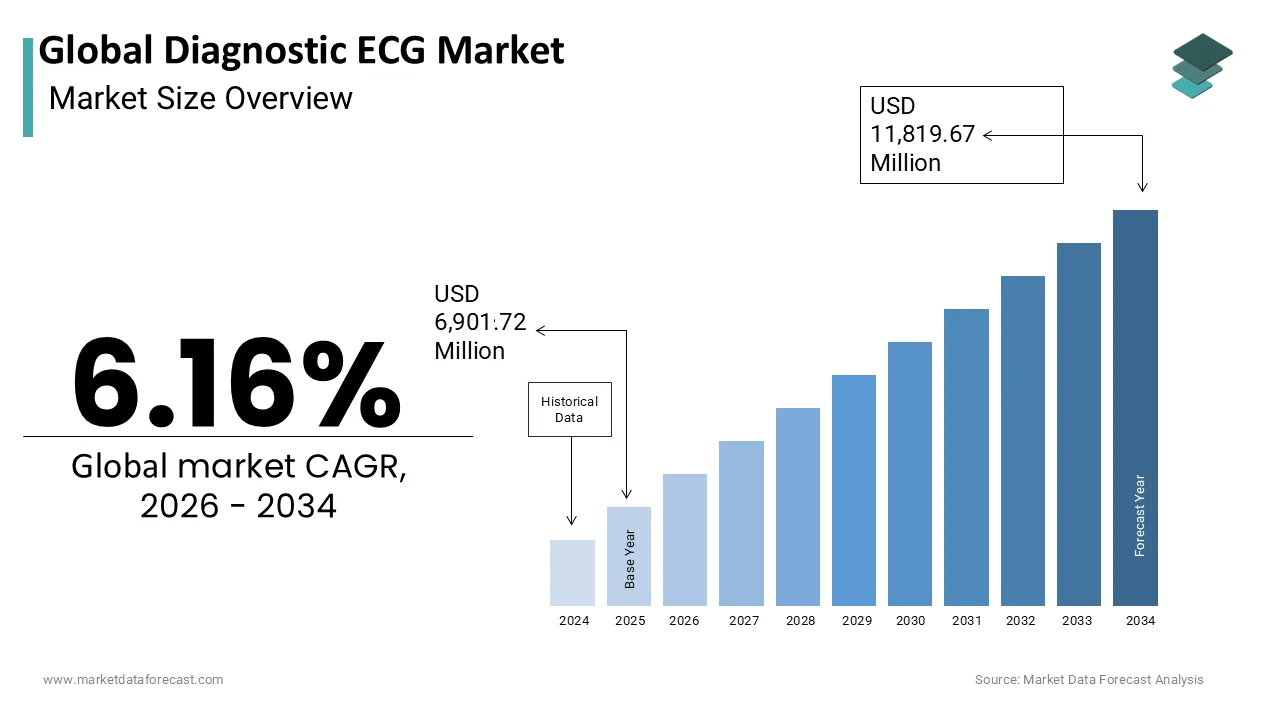
The Global Diagnostic ECG Market is projected to grow from USD 6,901.72 million in 2025 to USD 7,326.68 million in 2026 and reach USD 11,819.67 million by 2034, registering a CAGR of 6.16% during the forecast period from 2026 to 2034.
A diagnostic ECG is designed to record the electrical activity of the heart over a period of time using electrodes placed on the skin. These critical diagnostic instruments are fundamental in identifying arrhythmias and ischemic heart conditions. The foundational necessity for these advanced systems is directly tied to the escalating global burden of cardiovascular diseases. According to the World Health Organization, cardiovascular diseases are the leading cause of death globally, taking an estimated 17.9 million lives each year. This massive clinical burden necessitates the widespread availability of accurate and rapid cardiac monitoring solutions. As per the American Heart Association, nearly half of all adults in the United States have some form of cardiovascular disease, driving an immense demand for routine cardiac screening. Furthermore, the Global Burden of Disease Study indicates that the prevalence of atrial fibrillation alone affects over 47 million people worldwide, requiring continuous and advanced rhythm monitoring. The International Hospital Federation states that there are over 20 million hospital beds globally, each serving as a primary point of care for acute cardiac events where immediate electrocardiogram recording is mandatory. Consequently, the intersection of escalating global cardiac morbidity and the fundamental necessity for immediate clinical intervention defines the dynamic landscape of this vital medical device sector.
MARKET DRIVERS
Disease Prevalence
The escalating global prevalence of cardiovascular diseases is majorly fuelling the widespread adoption of diagnostic recording devices and is a key market driver. Modern sedentary lifestyles and poor dietary habits have led to a significant rise in conditions such as hypertension and coronary artery disease, which require continuous cardiac monitoring. According to the World Health Organization, cardiovascular diseases account for approximately 32% of all global mortalities, creating a massive parallel demand for routine and emergency cardiac screening tools. The American College of Cardiology states that over 120 million adults worldwide are currently living with some form of heart disease, necessitating regular electrocardiogram evaluations to detect silent ischemia or asymptomatic arrhythmias. Furthermore, the Global Burden of Disease Study indicates that the aging global population is exponentially increasing the incidence of atrial fibrillation, which requires precise rhythm documentation. The International Society of Cardiology emphasizes that early detection through standard twelve-lead electrocardiogram recordings significantly reduces mortality rates by enabling immediate therapeutic interventions. Consequently, the relentless expansion of the cardiac patient demographic guarantees a continuous and robust demand for advanced diagnostic monitoring equipment across global healthcare facilities.
AI Integration Advantages
The profound integration of artificial intelligence algorithms into modern cardiac monitoring systems significantly accelerates the adoption of advanced diagnostic platforms, which is further contributing to the diagnostic ECG market expansion. Traditional electrocardiogram interpretation relies heavily on the subjective expertise of cardiologists, which can lead to diagnostic delays and human error. Modern diagnostic devices now incorporate machine learning models that can automatically analyze complex electrical waveforms and detect subtle anomalies in milliseconds. According to the European Society of Cardiology, research presented in 2026 demonstrates that artificial intelligence-based interpretation of electrocardiograms outperforms standard pathways for detecting myocardial infarction in patients without characteristic ST-elevation. The European Society of Cardiology further notes that automated algorithms can identify rare arrhythmias with high sensitivity, significantly outperforming manual visual inspection by general practitioners. Furthermore, the World Health Organization indicates that deploying intelligent diagnostic tools in remote and rural clinics allows non-specialist healthcare workers to obtain expert-level cardiac assessments without requiring the physical presence of a cardiologist. The International Medical Informatics Association notes that the continuous improvement of these predictive models enhances the overall clinical workflow and patient triage efficiency. Consequently, the transition toward intelligent and automated diagnostic solutions ensures the rapid expansion of next-generation electrocardiogram devices across diverse clinical environments.
MARKET RESTRAINTS
Resource Constraints
The exorbitant financial burden associated with procuring advanced diagnostic equipment severely restricts widespread adoption in resource-limited healthcare settings, which is a major impediment to the growth of the global diagnostic ECG market. Modern electrocardiogram systems equipped with high-resolution displays, wireless connectivity, and integrated electronic health record capabilities require substantial capital investment. According to the World Bank, approximately 50% of the global population lacks access to essential medical devices due to severe financial constraints in their local healthcare infrastructure. The World Health Organization indicates that while basic 12-lead diagnostic units can be procured for as little as 300 to 500 dollars, premium carts and advanced integrated systems often require significant budget allocations that are unaffordable for small rural clinics and developing regional hospitals. Furthermore, the Global Health Observatory states that ongoing maintenance expenses, including proprietary software licensing and specialized technical servicing, can add significant overhead to the total cost of ownership over five years. The International Medical Devices Alliance emphasizes that healthcare administrators in low-income nations are frequently forced to prioritize basic life-saving interventions over expensive cardiac diagnostic upgrades. Consequently, the heavy financial barriers and the lack of sustainable funding models act as substantial bottlenecks preventing the universal implementation of modern electrocardiogram technologies in underserved populations.
Workforce Shortages
The acute deficit of highly trained cardiologists and specialized cardiovascular technicians is further hampering the diagnostic ECG market expansion. The accurate placement of electrodes and the precise interpretation of complex electrocardiogram waveforms require extensive clinical training and specialized expertise. According to the World Health Organization, the global shortage of healthcare workers is projected to reach 11 million professionals by 2030, with a severe concentration of this deficit in specialized medical fields. The American College of Cardiology states that the average wait time to consult a board-certified cardiologist in rural areas can exceed six months, delaying critical diagnostic evaluations for patients presenting with subtle cardiac symptoms. Furthermore, the International Society of Electrophysiology notes that improper electrode placement by untrained personnel occurs in nearly 15% of routine electrocardiogram recordings, leading to inaccurate data and potential misdiagnosis. The Global Health Workforce Alliance emphasizes that training a fully qualified cardiovascular technician requires years of specialized clinical instruction, which severely limits the rapid expansion of the technical talent pool. Consequently, this profound scarcity of highly skilled medical personnel acts as a formidable restraint, which is limiting the overall diagnostic accuracy and operational capacity of global cardiac monitoring networks.
MARKET OPPORTUNITIES
Wearable Technology Proliferation
The rapid proliferation of wearable and portable monitoring devices is a promising opportunity for the global diagnostic ECG market. Modern consumers and patients are increasingly demanding convenient and unobtrusive solutions for managing their chronic health conditions outside of hospital environments. Advanced smartwatches and portable chest patches now feature medical-grade electrocardiogram sensors capable of recording single-lead or multiple-lead rhythms continuously throughout the day. According to IDC, global wearable device shipments reached 611.5 million units in 2025, reflecting a massive societal shift toward proactive personal health management. The American Heart Association states that continuous wearable monitoring can detect paroxysmal atrial fibrillation episodes that are frequently missed during standard brief clinical evaluations, significantly improving long-term patient outcomes. Furthermore, the World Health Organization indicates that deploying portable diagnostic tools enables remote patient monitoring programs, which drastically reduce unnecessary hospital readmissions and lower overall healthcare expenditures. The International Society for Telemedicine notes that the seamless integration of wearable data with cloud-based analytics allows physicians to review thousands of continuous heart recordings remotely. Consequently, the transition toward decentralized and continuous cardiac monitoring unlocks immense commercial value and transforms the traditional diagnostic landscape.
Telemedicine Expansion
The exponential expansion of telemedicine platforms and remote diagnostic networks offers a highly lucrative opportunity for the growth of the diagnostic ECG market. The integration of digital health technologies allows patients in remote or underserved regions to access expert cardiac evaluations without the need for physical travel. Modern electrocardiogram devices can instantly transmit digital waveforms to centralized reading centers where board-certified cardiologists provide immediate interpretations and treatment recommendations. According to the World Health Organization, telemedicine consultations have increased by over 300% globally in recent years, fundamentally altering the delivery of specialized medical services. The American Telemedicine Association states that remote electrocardiogram interpretation services reduce the time to diagnosis for acute coronary syndromes by nearly 50%, enabling faster administration of life-saving thrombolytic therapies. Furthermore, the International Medical Informatics Association notes that the implementation of robust digital infrastructure allows rural clinics to perform standard twelve-lead recordings and instantly receive expert guidance from tertiary care centers. The Global Digital Health Partnership emphasizes that this decentralized diagnostic model significantly optimizes the allocation of specialized medical resources and improves overall population health outcomes. Consequently, the widespread adoption of remote diagnostic networks guarantees sustained growth for manufacturers of connected electrocardiogram systems.
MARKET CHALLENGES
Regulatory Compliance Hurdles
The implementation of stringent regulatory approval processes and rigorous clinical validation requirements imposes significant operational burdens on diagnostic device manufacturers, which is a notable challenge to the growth of the diagnostic ECG market. Electrocardiogram devices are classified as critical medical equipment requiring exhaustive testing to ensure absolute accuracy and patient safety before they can be legally marketed. According to the European Medicines Agency, the clinical validation process for a novel diagnostic algorithm or advanced hardware platform can take up to four years and require significant investment. The United States Food and Drug Administration mandates that manufacturers must provide comprehensive clinical evidence demonstrating equivalence or superiority to existing predicate devices, which involves conducting extensive multi-center trials. Furthermore, the World Health Organization emphasizes that varying international regulatory standards force companies to maintain entirely separate compliance documentation and testing protocols for different geographic regions, drastically increasing operational complexity. The International Medical Device Regulators Forum notes that any software update or algorithmic modification in an intelligent diagnostic system requires a formal regulatory review, potentially delaying critical technological improvements. Consequently, the heavy administrative friction and the massive financial cost of compliance act as persistent challenges hindering the rapid deployment of innovative electrocardiogram technologies.
Signal Integrity Challenges
The profound technical difficulty of eliminating signal interference and motion artifacts during continuous monitoring creates significant diagnostic accuracy challenges to the global market. Electrocardiogram recordings are highly susceptible to environmental noise and patient movement, which can severely distort the electrical waveforms and lead to false alarms or missed diagnoses. According to the Institute of Electrical and Electronics Engineers, motion artifacts account for a significant portion of all false-positive arrhythmia detections in continuous wearable monitoring devices. The American College of Cardiology states that poor skin-electrode contact caused by sweating or physical activity degrades signal quality, making it incredibly difficult for automated algorithms to accurately measure subtle ST-segment changes. Furthermore, the International Society of Electrophysiology notes that electromagnetic interference from common hospital equipment and personal electronic devices frequently contaminates standard twelve-lead recordings, requiring complex digital filtering techniques. The World Health Organization emphasizes that resolving these signal quality issues without introducing latency or altering the true physiological waveform remains a massive engineering hurdle for device developers. Consequently, the relentless battle against environmental and physiological noise forces manufacturers to invest heavily in advanced sensor technologies and complex signal-processing algorithms, thereby significantly complicating product design and inflating development costs.
REPORT COVERAGE
| REPORT METRIC | DETAILS |
| Market Size Available | 2025 to 2034 |
| Base Year | 2025 |
| Forecast Period | 2026 to 2034 |
| Segments Covered | By Product, Lead Type, End User, and Region |
| Various Analyses Covered | Global, Regional & Country Level Analysis, Segment-Level Analysis; DROC, PESTLE Analysis; Porter’s Five Forces Analysis, Competitive Landscape, Analyst Overview of Investment Opportunities |
| Regions Covered | North America, Europe, APAC, Latin America, Middle East & Africa |
| Market Leaders Profiled | BPL Ltd, Cardiac Science Corp, Fukuda Denshi Co., Ltd., GE Healthcare, Medtronic, Inc., Philips Healthcare, Spacelabs, Healthcare, Inc., Mortara Instrument, Midmark Corp, Mindray Medical International Ltd., Nihon Kohden Corp, Scottcare Corp, Schiller AG, Welch Allyn Inc., and Cardionet |
SEGMENTAL ANALYSIS
By Product Insights
The resting ECG systems segment accounted for the dominant share of the global diagnostic ECG market in 2025. These foundational devices serve as the initial point of contact for diagnosing a vast array of cardiovascular conditions in standard clinical environments. According to the World Health Organization, cardiovascular diseases remain the leading cause of global mortality, necessitating billions of routine screening procedures annually to detect silent ischemia and asymptomatic arrhythmias. Primary care physicians rely heavily on these accessible systems to evaluate patients presenting with chest pain, palpitations, or unexplained shortness of breath before referring them to specialized cardiology departments. The American College of Cardiology states that over 100 million resting electrocardiogram recordings are performed each year globally, reflecting the immense scale of primary care integration. Furthermore, the International Society of Cardiology emphasizes that early detection through standard resting evaluations significantly reduces long-term mortality rates by enabling immediate therapeutic interventions. Consequently, the indispensable role of these systems in foundational medical workflows guarantees their absolute market supremacy and continuous high-volume procurement across diverse healthcare settings worldwide.
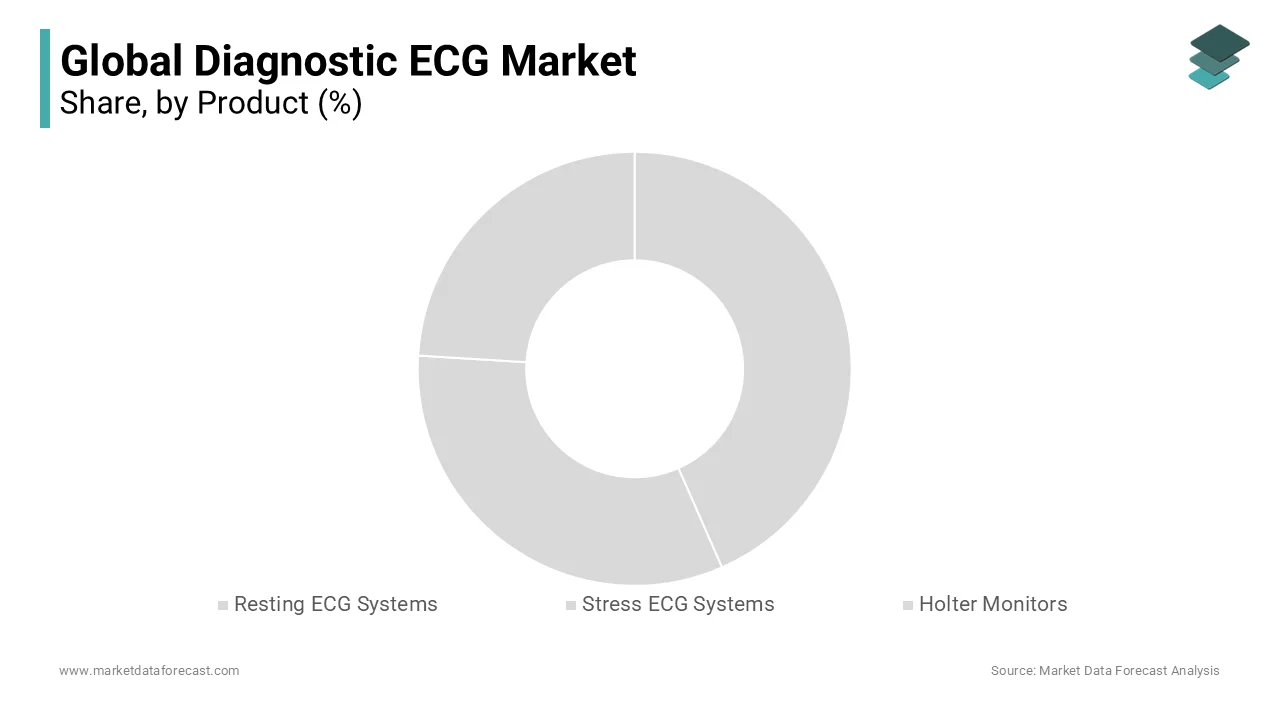
However, the Holter monitors segment is estimated to witness a CAGR of 6.4% during the forecast period in the global market. Many patients experience sporadic electrical abnormalities that do not manifest during a brief standard clinical evaluation, necessitating extended continuous monitoring to capture the exact moment of the anomaly. According to the American Heart Association, paroxysmal atrial fibrillation affects millions of individuals globally and is a leading cause of cryptogenic strokes, requiring prolonged rhythm documentation for accurate diagnosis. The European Society of Cardiology states that continuous ambulatory monitoring increases the diagnostic yield for intermittent arrhythmias by over 60% compared to single resting evaluations. Furthermore, the World Health Organization indicates that the aging global population is exponentially increasing the incidence of these sporadic electrical disturbances, creating a massive parallel demand for extended recording devices. The International Society of Electrophysiology emphasizes that capturing these fleeting events is absolutely critical for initiating appropriate anticoagulant therapies and preventing severe neurological damage. Consequently, the clinical necessity of detecting intermittent anomalies guarantees a steady growth trajectory for continuous ambulatory monitoring devices.
By Lead Type Insights
The 12-lead type ECG devices segment dominated the market by capturing the largest share of the global market in 2025. These advanced systems provide a complete three-dimensional view of the electrical activity across the entire heart muscle, which is absolutely mandatory for identifying the exact location and extent of ischemic damage. According to the American College of Cardiology, the 12-Lead recording is the undisputed gold standard for diagnosing acute coronary syndromes and guiding immediate life-saving reperfusion therapies in emergency settings. The World Health Organization states that every patient presenting with suspected cardiac ischemia must undergo a comprehensive multi-vector evaluation to rule out silent or atypical myocardial damage. Furthermore, the International Society of Cardiology emphasizes that the detailed spatial resolution provided by multiple simultaneous vectors is impossible to replicate with fewer leads, ensuring accurate risk stratification. The Global Burden of Disease Study indicates that the massive global incidence of coronary artery disease requires millions of these comprehensive evaluations annually. Consequently, the uncompromising clinical requirement for complete electrical mapping guarantees the absolute market supremacy of these comprehensive diagnostic systems.
However, the single-lead type ECG devices segment is predicted to register a CAGR of 10.2% during the forecast period in the global market. Modern consumers are increasingly demanding convenient and unobtrusive solutions for tracking their personal health metrics, including continuous heart rhythm monitoring. According to the Consumer Technology Association, the global shipment of wearable health monitoring devices surpassed 150 million units annually, reflecting a massive societal shift toward proactive personal health management. The American Heart Association states that continuous wearable monitoring empowers individuals to detect irregular rhythms in real-time and immediately share the data with their healthcare providers. Furthermore, the World Health Organization indicates that the integration of these sensors into everyday consumer electronics significantly lowers the barrier to entry for cardiac screening among healthy populations. The International Society for Telemedicine notes that the seamless connectivity of these wearable devices allows for the automatic transmission of electrical data to cloud-based analytics platforms. Consequently, the massive consumer adoption of smart wearable technology guarantees the fastest growth trajectory for single-lead monitoring solutions.
By End-User Insights
The hospitals segment dominated the market by holding the leading share of the global market in 2025. Hospitals serve as the primary point of care for severe cardiac emergencies, requiring immediate and highly accurate diagnostic interventions to save lives. According to the World Health Organization, acute myocardial infarction and severe arrhythmias account for millions of emergency hospital admissions globally each year, necessitating the continuous use of advanced diagnostic equipment. The American College of Cardiology states that emergency departments and intensive care units rely heavily on comprehensive diagnostic systems to continuously monitor hemodynamically unstable patients and guide complex therapeutic decisions. Furthermore, the International Hospital Federation indicates that the massive volume of surgical procedures performed globally requires extensive preoperative and intraoperative cardiac monitoring to ensure patient safety. The Joint Commission emphasizes that hospitals must maintain rigorous diagnostic capabilities to meet strict accreditation standards and provide the highest level of acute care. Consequently, the critical role of hospitals in managing severe and life-threatening cardiac conditions guarantees their overwhelming market supremacy and continuous high-volume procurement.
However, the home/ambulatory care centers segment is projected to grow at a CAGR of 9.5% during the forecast period. Healthcare systems globally are aggressively transitioning away from expensive inpatient admissions toward cost-effective outpatient and home-based monitoring to reduce overall medical expenditures. According to the World Health Organization, decentralized care models significantly reduce hospital readmission rates and improve patient outcomes by allowing individuals to recover in familiar and comfortable environments. The American Telemedicine Association states that the deployment of remote diagnostic technologies in ambulatory settings enables continuous monitoring of chronic conditions without the need for frequent physical clinic visits. Furthermore, the Centers for Medicare and Medicaid Services indicates that value-based reimbursement models financially incentivize healthcare providers to utilize home monitoring solutions to prevent costly emergency department visits. The International Society for Telemedicine notes that the integration of portable diagnostic devices into home care workflows significantly optimizes the allocation of clinical resources and reduces the burden on hospital infrastructure. Consequently, the powerful economic and operational drivers of decentralized care guarantee the fastest growth trajectory for ambulatory settings.
COUNTRY LEVEL ANALYSIS
North America Diagnostic ECG Market Analysis
North America held 36.9% of the global market share in 2025 and holds a highly dominant position in the global landscape characterized by advanced medical infrastructure and high adoption rates of innovative cardiac monitoring technologies. The continuous integration of artificial intelligence into diagnostic workflows and the massive procurement of advanced resting and ambulatory systems are primarily driving the dominance of North America in the global market. According to the American Heart Association, nearly half of all adults in the United States have some form of cardiovascular disease, driving an immense demand for routine and continuous cardiac screening tools. The World Bank indicates that regional healthcare expenditure exceeds 18% of the gross domestic product, providing substantial financial resources for hospitals to acquire state-of-the-art diagnostic equipment. Furthermore, the Centers for Disease Control and Prevention states that heart disease accounts for one in every four deaths in the region, necessitating widespread deployment of comprehensive monitoring solutions. This profound commitment to technological excellence and robust clinical funding guarantees sustained and highly profitable market growth across the entire continent.
Europe Diagnostic ECG Market Analysis
Europe was a promising regional segment in the global diagnostic ECG market in 2025, reflecting its unique status as a pioneer in digital health integration and standardized clinical protocols. Europe maintains a highly sophisticated position in the regional arena driven by stringent regulatory frameworks and a profound focus on preventive cardiovascular care. The market status here is heavily influenced by the aggressive deployment of remote patient monitoring networks and the widespread adoption of wireless diagnostic devices. According to the European Society of Cardiology, cardiovascular diseases cause over 4 million deaths annually in the region, prompting massive public health initiatives focused on early detection and continuous rhythm tracking. The World Health Organization indicates that the regional population aged 65 and older will exceed 150 million by the end of the decade, creating an unprecedented demographic shift toward chronic disease management. Furthermore, the European Commission notes that substantial digital health funding has been allocated to cross-border telemedicine projects, enabling seamless transmission of electrical cardiac data across national boundaries. This unwavering commitment to digital health innovation and preventive care ensures sustained market leadership across the continent.
Asia Pacific Diagnostic ECG Market Analysis
Asia Pacific occupies a highly influential position in the global sector, fueled by explosive population growth and the rapid modernization of domestic healthcare networks. The aggressive procurement of advanced diagnostic systems to support the booming medical tourism sector and the continuous expansion of rural health clinics is also propelling the Asia-Pacific market expansion. According to the World Health Organization, the burden of cardiovascular diseases in the region is rising exponentially due to rapid urbanization and shifting lifestyle habits, requiring millions of new diagnostic evaluations annually. The Asian Development Bank indicates that regional investments in healthcare infrastructure have surpassed 50 billion dollars recently to accommodate the rapid proliferation of modern hospital facilities. Furthermore, the International Federation of Cardiology notes that the deployment of portable and wireless diagnostic devices in remote areas has significantly improved early detection rates for silent ischemic events. This seamless blend of massive demographic growth and industrial expansion guarantees continuous commercial expansion across the region.
Latin America Diagnostic ECG Market Analysis
Latin America secures a steadily expanding position in the international market, supported by ongoing urbanization and the gradual enhancement of regional clinical capabilities. The rising focus on chronic disease management, the expansion of private healthcare networks, the massive growth of the middle class,s and the corresponding rise in disposable income for premium medical services are driving the diagnostic ECG market growth in Latin America. According to the Pan American Health Organization, the regional prevalence of hypertension and coronary artery disease has increased significantly over the past decade, driving immense demand for routine cardiac screening in both public and private facilities. The World Bank notes that improving economic stability in key regional economies is accelerating the adoption of advanced diagnostic technologies and modern retail healthcare formats. Furthermore, the Inter-American Development Bank states that regional governments are actively partnering with private technology providers to upgrade rural clinic infrastructure with basic resting diagnostic systems. This strategic focus on urbanization and clinical diversification guaranteessustainedn, ed extended commercial growth across the continent.
Middle East and Africa Diagnostic ECG Market Analysis
The Middle East and Africa hold an emerging position in the global landscape characterized by rapid infrastructure development and the aggressive expansion of specialized cardiac care centers. Factors such as the developing industrial base and specific strategic geographic importance, the urgent need to manage rising metabolic disorders, rs and provide reliable cardiac diagnostics to rapidly growing urban populations are contributing to the regional market expansion. According to the World Health Organization, the prevalence of diabetes and obesity in the Middle East is among the highest globally, creating a massive parallel epidemic of cardiovascular complications requiring continuous monitoring. The African Development Bank notes that significant financial investments are currently being made in regional healthcare infrastructure to reduce medical tourism outflow and enhance domestic clinical capabilities. Furthermore, the Gulf Cooperation Council health ministries emphasize that the continuous expansion of premium private hospital networks requires massive deployments of advanced resting and ambulatory diagnostic systems. As local populations become increasingly urbanized, the demand for advanced electronic diagnostic systems is expected to grow steadily, transforming the region into a notable commercial market.
COMPETITIVE LANDSCAPE
The competitive landscape of the global Diagnostic ECG sector is defined by intense rivalry among established multinational medical corporations and specialized regional manufacturers. Major global brands leverage massive financial resources to dominate hospital procurement channels through aggressive research investments and extensive distribution networks. These industry leaders continuously develop advanced wireless and artificial intelligence-integrated platforms to ensure absolute compliance with stringent international safety regulations. Meanwhile, regional players compete fiercely by emphasizing localized manufacturing capabilities and highly cost-effective maintenance solutions that resonate deeply with budget-constrained public health systems. The market also witnesses a surge in strategic mergers and acquisitions as companies seek to consolidate their technological capabilities and acquire emerging digital health startups. Furthermore, software integration initiatives have become a critical competitive differentiator with firms adopting advanced cloud analytics to appeal to modern clinical networks seeking seamless data interoperability. Ultimately,y the competitive environment demands continuous adaptation to rapid technological shifts, ensuring that only the most agile and innovative organizations maintain their extended profitability and brand loyalty across all international medical markets today and tomorrow globally, right here and now across the entire continental healthcare infrastructure network, ensuring absolute operational excellence and reliability for all global clinical clients every day.
KEY MARKET PLAYERS
Some of the companies that are playing a dominant role in the Global Diagnostic ECG Market include
- BPL Medical Technologies Ltd.
- Cardiac Science Corporation
- Fukuda Denshi Co., Ltd.
- GE HealthCare Technologies Inc.
- Medtronic plc
- Philips Healthcare
- Spacelabs Healthcare, Inc.
- Mortara Instrument, Inc. (now part of Baxter International Inc.)
- Midmark Corporation
- Mindray Medical International Limited
- Nihon Kohden Corporation
- ScottCare Corporation
- SCHILLER AG
- Welch Allyn, Inc. (Hillrom/Baxter)
- CardioNet, LLC (BioTelemetry, Inc.)
TOP LEADING PLAYERS IN THE MARKET
- GE HealthCare operates as a monumental force in the global diagnostic sector, providing exceptional cardiac monitoring solutions to clinical networks worldwide. The corporation leverages extensive engineering expertise to develop advanced resting and ambulatory systems that significantly enhance diagnostic accuracy and workflow efficiency. Recently,ntly the enterprise launched a comprehensive artificial intelligence-integrated diagnostic platform designed to provide real-time automated interpretation of complex electrical waveforms. This strategic innovation significantly enhances their product portfolio and deeply resonates with modern clinical expectations for rapid and precise cardiac evaluations. By continuously upgrading manufacturing capabilities, the organization successfully reinforces industry leadership and drives substantial commercial growth across international markets today.
- Philips stands as a premier global technology brand actively transforming the cardiovascular landscape through deep expertise in connected diagnostic devices and remote monitoring networks. The organization focuses heavily on producing highly reliable wireless electrocardiogram systems that provide uninterrupted data transmission to centralized clinical dashboards. Recently,ntly the company completed a massive upgrade to its specialized cloud infrastructure designed to seamlessly integrate continuous ambulatory data with electronic health records. This operational enhancement significantly improves care coordination and guarantees superior patient outcomes for global healthcare partners. By prioritizing technological excellence and absolute connectivity,ectivity the enterprise successfully attracts loyal clients and maintains a highly competitive edge globally.
- Schiller AG functions as a highly innovative medical device company dedicating significant resources toward the development of premium portable and resting diagnostic solutions. The corporation utilizes advanced research facilities to create unique compact electrocardiogram devices that perfectly stabilize complex electrical signals without compromising mobility. In a recent strategic initiative, the enterprise introduced a new series of advanced stress testing systems specifically engineered for rapid clinical deployment in emergency environments. This technological breakthrough enables the brand to capture the critical acute care segment without compromising on operational reliability. Through continuous product development,t the company continues to solidify its formidable presence and accelerate enterprise adoption worldwide today.
TOP STRATEGIES USED BY KEY MARKET PARTICIPANTS
Key players in the market employ several strategic approaches to reinforce their competitive standing and capture evolving clinical demands. Strategic partnerships remain central as companies collaborate directly with software developers to integrate proprietary artificial intelligence algorithms during the initial device design phase. Mergers and acquisitions are another common tactic, ic with major firms purchasing specialized digital health startups to instantly acquire advanced remote monitoring capabilities. Investment in sustainable production methods, ods including the development of energy-efficient hardware and recyclable electrode materials, helps meet strict environmental regulations. Geographic expansion,n particularly into emerging healthcare markets across Asia Pacific, allows access to new hospital clients and diversified revenue streams. Lastly,tly continuous investment in cloud infrastructure ensures that all diagnostic networks remain perfectly optimized against evolving data security demands and ensures extended commercial viability.
GLOBAL DIAGNOSTIC ECG MARKET NEWS
- In May 2019, Royal Philips and Medtronic announced a collaboration to further advance the treatment of paroxysmal atrial fibrillation (PAF).
- In March 2019, BioTelemetry, a leading remote medical technology company, announced that it had completed its acquisition of Geneva Healthcare, Inc., the leading provider of remote monitoring for cardiac implantable devices.
- In March 2014, BioTelemetry, a leading wireless medical technology company, announced that it had agreed to acquire the cardiac patient services business of Biomedical Systems Corporation.
- In July 2016, Bio Telemetry Inc. announced that the FDA had approved its next-generation device, the MCOT Patch Mobile Cardiac Outpatient Telemetry device.
- In June 2013, Cardionet, Inc., a leading wireless medical technology company focused on diagnosing and monitoring cardiac arrhythmias, announced that it had agreed with United Healthcare Insurance Company to cover MCOT and all Cardionet’s monitoring modalities.
MARKET SEGMENTATION
This research report on the global diagnostic ECG market has been segmented and sub-segmented based on the Product, Lead Type, End-User, and Region.
By Product
- Resting ECG Systems
- Stress ECG Systems
- Holter Monitors
By Lead Type
- Single-Lead Type ECG Devices
- 3–6 Lead Type ECG Devices
- 12-Lead Type ECG Devices
By End-user
- Hospitals
- Rehabilitation Centers
- Home /Ambulatory Care Research Centers
- Diagnostic Centers
- Clinics
- Physician Offices
- Surgical Centers
By Region
- North America
- Europe
- Asia Pacific
- Latin America
- Middle East and Africa
Frequently Asked Questions
How big is the diagnostic ECG market?
Yes, we have studied and included the COVID-19 impact on the global diagnostic ecg market in this report.
Which region will lead the diagnostic ecg market in the future?
North America is anticipated to play the leading share of the worldwide diagnostic ECG market in the coming years.
Who the key players in the diagnostic ECG market?
BPL Ltd, Cardiac Science Corp, Fukuda Denshi Co., Ltd, GE Healthcare, Medtronic, Inc., Philips Healthcare, Spacelabs, Healthcare, Inc., Mortara Instrument, Midmark Corp, Mindray Medical International Ltd, Nihon Kohden Corp, Scottcare Corp, Schiller Ag, Welch Allyn Inc., and Cardionet are some of the notable companies in the worldwide diagnostic ECG market.
Related Reports
Access the study in MULTIPLE FORMATS
Purchase options starting from
$ 2500
Didn’t find what you’re looking for?
TALK TO OUR ANALYST TEAM
Need something within your budget?
NO WORRIES! WE GOT YOU COVERED!
Call us on: +1 888 702 9696 (U.S Toll Free)
Write to us: sales@marketdataforecast.com