Latin America Fruit Tea Market By Form (Powder, Ready To Drink And Instant Premix), Type (Traditional, Unsweetened, Sweetened And Flavoured), Distribution Channel (Supermarket, Speciality Stores, Online Sales, Retail Stores), and Country (Brazil, Mexico, Argentina, Chile and Rest of Latin America) – Size, Share, Trends, Growth, Forecast (2026 to 2034)
Market Size, 2025
$0.26 BnMarket Estimate, 2026
$0.28 BnMarket Forecast, 2034
$0.51 BnCAGR, 2026–2034
7.76%Latin America Fruit Tea Market Size
Latin America Fruit Tea Market size was calculated to be USD 0.26 billion in 2025 and is anticipated to be worth USD 0.51 billion by 2034, from USD 0.28 billion in 2026, growing at a CAGR of 7.76% during the forecast period.
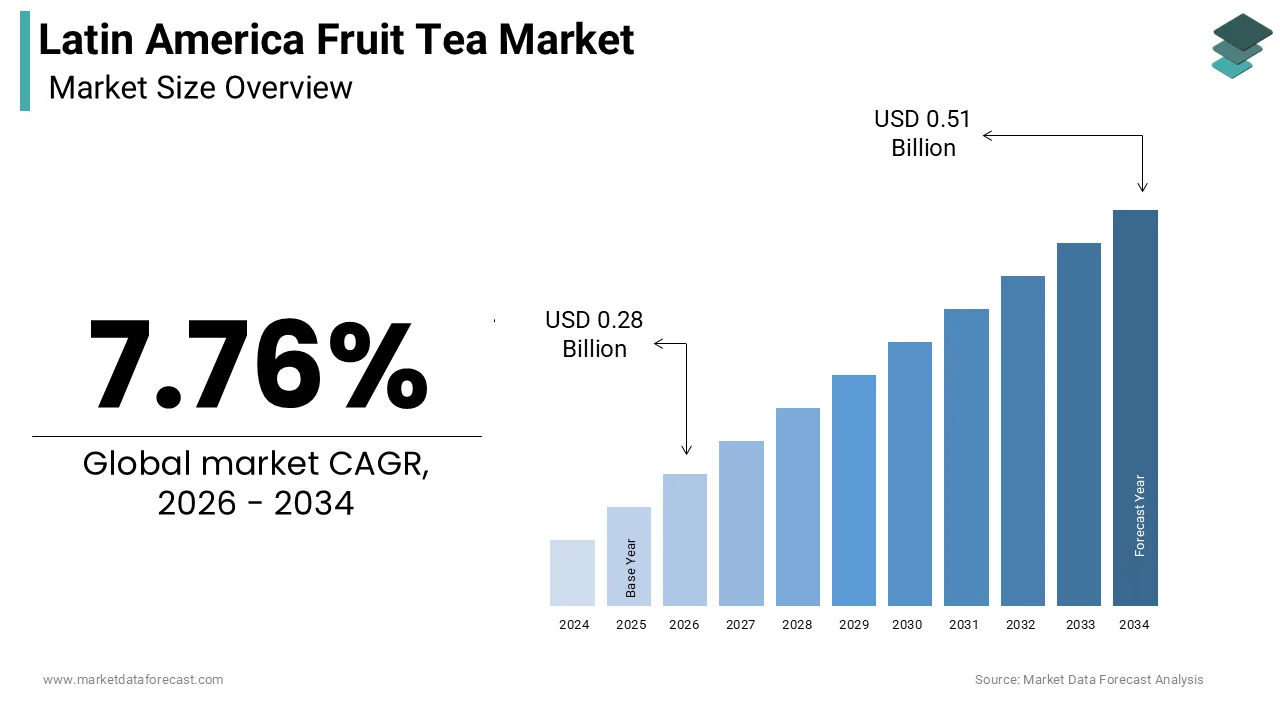
Fruit tea is a vibrant, flavorful beverage made by steeping dried fruits, berries, citrus peels, and herbs in hot water. These beverages are deeply rooted in regional cultural traditions where indigenous plants like hibiscus, passion fruit, and yerba mate blends serve as daily staples rather than niche health products. Approximately 25 percent of total global banana and major tropical fruit production originates in Latin America and the Caribbean, according to official reporting by the Food and Agriculture Organization. Noncommunicable diseases (NCDs), including cardiovascular conditions, cancer, respiratory diseases, and diabetes, account for 81 percent of all lives lost in the Americas, affecting an estimated 240 million adults, as documented by the Pan American Health Organization. Income concentration remains highly extreme across Latin America, where the wealthiest 10 percent of the population captures 34.2 percent of total regional income, according to the Economic Commission for Latin America and the Caribbean. This demographic shift coincides with a resurgence of interest in ancestral botanical knowledge, positioning fruit teas at the intersection of modern health consciousness and traditional heritage. Regulatory bodies across the continent are increasingly standardizing labeling requirements for herbal infusions to ensure safety and authenticity, which professionalizes the sector and builds consumer trust in locally sourced botanical products.
MARKET DRIVERS
Cultural Resurgence of Ancestral Botanical Traditions
Revitalization of Indigenous Herbal Knowledge in Modern Consumption. The profound reconnection with pre-Columbian and colonial herbal traditions drives the growth of the Latin American fruit tea market. Traditional Mexican cuisine is recognized on the UNESCO Intangible Cultural Heritage List as a comprehensive cultural model, protecting ancestral farming practices, community rituals, and historical culinary techniques dating back centuries. This cultural validation transforms fruit tea from a generic commodity into a symbol of identity, particularly among younger urban demographics seeking authentic connections to their heritage. The creative and cultural industries across Latin America generate roughly $124 billion in annual revenues, accounting for approximately 2.2% of the region's aggregate GDP, according to foundational economic tracking by the Inter-American Development Bank. Consumer preferences for premium and niche botanical products are heavily driven by origin certification and organic claims, allowing specialty brands to command significant retail price premiums over generic commodities across major Latin American metro areas. Colombia's agricultural and rural agencies actively promote the commercial scalability and export of native and exotic fruits, highlighting the country's vast biodiversity as an economic development engine, as documented by ProColombia's Agricultural Sector Initiatives. This driver is uniquely Latin American because it leverages living cultural memory rather than imported wellness trends, creating resilient demand that withstands global economic fluctuations and fosters deep brand loyalty rooted in national pride and historical continuity.
Public Health Initiatives Targeting Sugar Reduction
Government Led Reformulation Pressures Accelerating Functional Beverage Adoption. Aggressive public health policies aimed at combating obesity and diabetes are systematically redirecting consumer preference, which further propels the expansion of the Latin American fruit tea market. This shift moves demand away from sugary drinks and toward unsweetened fruit teas throughout the region. Studies on Mexico's landmark sugar-sweetened beverage tax demonstrated an average 6 percent decline in purchases during its first year of implementation, followed by a cumulative 9.7 percent reduction by the second year, according to data published via the National Institutes of Health (NIH) / PMC. These regulatory measures create a structural disadvantage for traditional soft drinks while positioning fruit teas as compliant and socially responsible alternatives. PAHO strongly advocates for increasing excise taxes on sugary drinks across the Americas, noting that a 25% price increase via taxation would yield a projected 34% reduction in harmful beverage consumption, as outlined by the Pan American Health Organization. Brazil's official nutritional policy centers on minimizing the intake of ultra-processed products while prioritizing minimally processed, whole foods to curb rising national metabolic health conditions, according to the Ministry of Health's Dietary Guidelines for the Brazilian Population. Chile’s Law on Food Labeling and Advertising, which mandates black octagonal warning seals ("Alto en"), successfully decreased consumer purchases of high-sugar and high-calorie beverages by 23.7% within its initial rollout phases, according to structural evaluations tracked by the Chilean Ministry of Health. This driver operates differently than voluntary health trends because it is enforced through legislation and fiscal mechanisms, creating non-discretionary market expansion that persists regardless of consumer sentiment cycles and establishes fruit tea as a mainstream rather than niche category.
MARKET RESTRAINTS
Agricultural Volatility and Climate Vulnerability
El Niño-Induced Crop Instability Disrupting Consistent Raw Material Supply. Extreme weather variability driven by El Niño Southern Oscillation cycles restricts the growth of the Latin American fruit tea market. This creates severe supply chain unpredictability for fruit tea manufacturers dependent on seasonal botanical harvests. The 2023–2024 El Niño event triggered severe climate disruptions across South America, fueling historic droughts in the Amazon basin and triggering intense, destructive rainfall along the coastal regions of Ecuador and Peru, according to systemic updates from the World Meteorological Organization. This climatic instability translates directly into price volatility. Smallholder farmers who supply a notable share of Latin America’s fruit tea ingredients lack irrigation infrastructure and crop insurance, making them acutely vulnerable to drought or excessive rainfall events. Extreme climate variations threaten foundational ecosystems across Latin America, where multi-decade economic compounding models show that unmitigated climate change could cost the region between 1.5% and 5% of its aggregate GDP by 2050, as evaluated by the Economic Commission for Latin America and the Caribbean. Manufacturers face difficult choices between absorbing cost increases or passing them to price-sensitive consumers, often resulting in inconsistent product availability that erodes brand trust. Unlike temperate regions with controlled environment agriculture CEA, Latin American fruit tea sourcing remains predominantly rainfed and open field. Thus, minor deviations in temperature or humidity during the flowering and drying phases can render entire harvests unsuitable for premium tea grades, creating chronic supply insecurity.
Informal Market Competition and Quality Standardization Gaps
Unregulated Street Vendors Undermining Premium Brand Value Propositions. The pervasive presence of informal vendors selling unbranded and untested herbal mixtures creates significant competitive pressure and consumer confusion for formal brands in the Latin American fruit tea market. Labor informality remains a structural hurdle across Latin America and the Caribbean, where informal employment represents nearly 50 percent of the total workforce, leaving millions of workers outside formal legal or social safety protections, according to data from the International Labour Organization. These informal sellers offer fruit teas at prices lower than packaged retail products, capturing volume from low-income consumers who constitute the majority of the population. Formal manufacturers bear compliance costs, including laboratory testing, packaging standards, and tax obligations that informal competitors avoid entirely, creating an uneven playing field. This restraint is particularly acute in Latin America because informal commerce is not merely a marginal phenomenon but a deeply embedded economic structure that serves essential needs, making eradication impractical and forcing formal brands to compete against unregulated alternatives that distort price expectations and quality perceptions.
MARKET OPPORTUNITIES
Valorization of Amazonian and Andean Superfruits
Commercialization of Underutilized Biodiversity for Premium Export Positioning. The region’s extraordinary botanical diversity presents untapped potential for developing unique fruit tea varieties, which is likely to boost the growth of the Latin American fruit tea market. Consequently, these exclusive blends can command premium pricing in both domestic and international markets. ACTO prioritizes expanding the Amazon Regional Observatory (ARO) to pool scientific data, coordinate water resource management, and track preservation metrics across its eight sovereign South American member states, as per the Amazon Cooperation Treaty Organization. Fruits like camu camu, aguaymanto, and cupuaçu possess exceptional nutritional profiles and distinctive flavors that cannot be replicated elsewhere, creating natural barriers to imitation. Functional agricultural products and high-protein ancestral grains continue to anchor Peru's premium non-traditional export expansion, cementing its position as a dominant global supplier of nutrient-dense superfoods, as documented by PromPerú Investment Files. Domestic consumers are also rediscovering these ingredients through gastronomic tourism and media coverage, creating crossover appeal for tea formats. This opportunity differs from generic fruit tea expansion because it leverages exclusive genetic resources and terroir-specific qualities that enable Latin American producers to escape commodity competition and establish category leadership based on irreplaceable origin attributes, supporting rural livelihoods while building globally recognized regional brands.
Ready-to-Drink Format Innovation for On-the-Go Consumption
Convenience-Oriented Product Development Capturing Urban Millennial Demand. Transforming traditional hot brew fruit teas into chilled,ready-to-drink beverages addresses critical consumption barriers among time-constrained urban populations accustomed to grab-and-go formats, which unlocks potential for the Latin American fruit tea market. The beverage industry has historically focused on carbonated soft drinks for convenience occasions, leaving a significant whitespace for healthier ready-to-drink options that align with evolving wellness preferences. Major retailers report that refrigerated fruit tea placements adjacent to fresh juices achieve higher turnover than ambient shelf positions, confirming the importance of cold chain integration for perceived freshness and quality. This opportunity is distinct because it requires reengineering traditional recipes for stability and taste at cold temperatures while maintaining clean label credentials, demanding technical capabilities that create competitive moats. Ready-to-drink (RTD) fruit teas meet consumers directly at the point of purchase. This on-the-go accessibility converts casual home brewers into daily users, which significantly broadens the market reach beyond the traditional, ritualistic hot beverage preparation.
MARKET CHALLENGES
Regulatory Fragmentation Across National Jurisdictions
Divergent Labeling and Composition Standards Impeding Regional Scale Efficiencies. Countries in the region maintain disparate regulatory frameworks for herbal infusions that complicate cross-border trade and increase compliance costs for manufacturers, and thereby hold back the expansion of the Latin American fruit tea market. This is despite regional integration efforts. The Pacific Alliance prioritizes regulatory convergence and the reduction of technical barriers to trade through the harmonization of cosmetic, pharmaceutical, and dietary supplement frameworks among its member nations. Small and medium enterprises are disproportionately affected because they lack dedicated regulatory affairs teams and must rely on expensive third-party consultants to navigate complex requirements. This challenge differs from mature markets where mutual recognition agreements facilitate trade, because Latin American regulatory fragmentation reflects deeper institutional capacity gaps and political sensitivities around food sovereignty. The result is that companies cannot achieve economies of scale through standardized regional product portfolios, forcing suboptimal production runs and limiting reinvestment capacity for innovation and marketing that would accelerate category growth.
Consumer Price Sensitivity Amidst Macroeconomic Instability
Inflationary Pressures Constraining Premiumization Trajectories and Margin Expansion. Persistent inflation and currency depreciation across the region continuously compress household purchasing power, which slows down the expansion of the Latin American fruit tea market. Hence, fruit tea brands struggle to maintain the premium positioning necessary for profitability. Average consumer price inflation across Latin America and the Caribbean reached 14.8 percent in 2023, creating steep cost hurdles for raw food and beverage inputs, as per the International Monetary Fund. Central bank responses involving elevated interest rates further constrain disposable income, forcing consumers to trade down to cheaper alternatives or reduce purchase frequency. Pressured by food price inflation, grocery shoppers in Latin America increasingly substitute premium brand names with private-label options and discount tier alternatives to maximize household purchasing power. This challenge is structurally different from cyclical downturns in developed markets because Latin American economies experience recurrent crises that prevent sustained accumulation of consumer surplus and brand equity. Manufacturers face the dilemma of either sacrificing margins to maintain volume or preserving prices and accepting shrinking penetration, neither of which supports long-term category health. The macroeconomic environment thus acts as a ceiling on fruit tea’s transition from affordable staple to aspirational lifestyle product, requiring constant recalibration of value propositions to remain relevant.
REPORT COVERAGE
| REPORT METRIC | DETAILS |
| Market Size Available | 2025 to 2034 |
| Base Year | 2025 |
| Forecast Period | 2026 to 2034 |
| CAGR | 7.76% |
| Segments Covered | By Form, Type, Distribution Channel, and Region. |
| Various Analyses Covered | Global, Regional & Country Level Analysis, Segment-Level Analysis, DROC, PESTLE Analysis, Porter’s Five Forces Analysis, Competitive Landscape, Analyst Overview of Investment Opportunities |
| Country Covered | Brazil, Mexico, Argentina, Chile, and the Rest of Latin America. |
| Market Leaders Profiled | Martin Bauer Group, Tetley, Twinings, The London Tea Company, Unilever, Hain Celestial Group Inc, Van Rees, James Finlay, Dilmah, Duncans Industries Ltd, McLeod Russel, Typhoo Tea Ltd |
SEGMENTAL ANALYSIS
By Form Insights
The powdered fruit tea segment dominated the Latin America market and accounted for a 55.6% share in 2025. This dominance of the segment was driven by its exceptional shelf stability, low logistics cost,s and deep integration into local culinary traditions. One of the major drivers of this dominance is the economic advantage it offers in regions where cold chain infrastructure is limited or expensive to maintain. Logistics costs in Latin America and the Caribbean consume 18 percent to 35 percent of final product values, vastly exceeding the roughly 8 percent benchmark seen in OECD nations, according to studies. Powdered mixes allow consumers to customize sweetness and strength while offering an extended shelf life of up to 24 months without preservatives, which aligns with household budgeting practices that favor bulk purchasing. The format also supports informal retail channels where small sachets priced at affordable levels enable daily consumption among lower-income demographics. Furthermore, powder technology has advanced to include freeze-dried fruit extracts that retain most of the original nutrient content, addressing health concerns while maintaining convenience. This segment’s leadership is reinforced by cultural habits where preparing beverages from scratch using dry ingredients is a normalized daily ritual rather than an occasional indulgence.
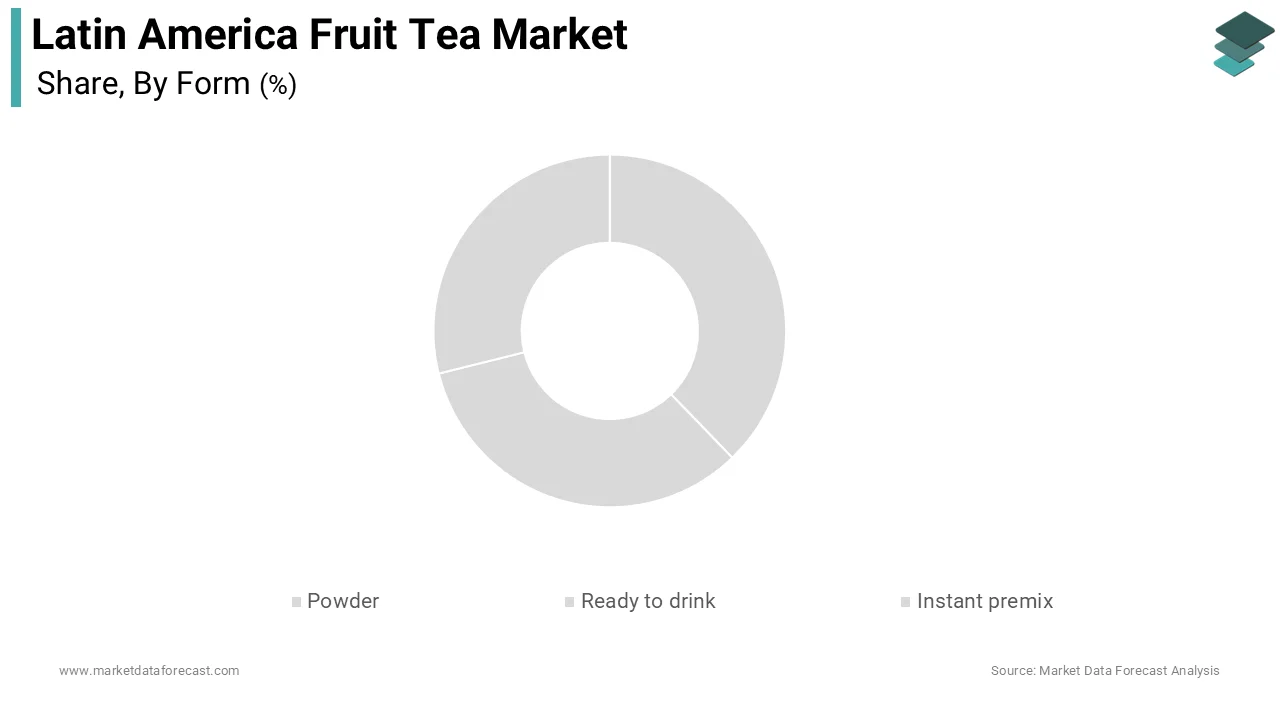
The ready-to-drink fruit tea segment is predicted to witness the highest CAGR of 8.5% over the forecast period due to rapid urbanization and the demand for convenient on-the-go hydration solutions. The main growth enabler is the changing lifestyle of the expanding urban middle class, who prioritize time efficiency and portability in their consumption choices. Driven by decades of rapid demographic shifts, roughly 80 percent of the total population in Latin America and the Caribbean resides in urban areas, as recorded by UN-Habitat. Heavy traffic congestion and sprawling infrastructure in Latin American megacities shape daily transit habits, favoring consumer choices for highly portable, shelf-stable, and accessible packaged provisions. Retailers are responding by expanding refrigerated shelf space for premium cold brew fruit tea,s which command higher margins and appeal to younger demographics influenced by global wellness trends. The format also benefits from aggressive marketing by multinational beverage companies introducing exotic local flavors such as passion fruit and hibiscus in sleek packaging that signals modernity and status. This segment’s acceleration is further supported by improvements in cold chain logistics and the proliferation of automated vending machines in corporate and educational settings.
By Type Insights
The traditional fruit tea segment led the Latin America market and captured a 45.3% share in 2025. This leading position of the segment was attributed to entrenched cultural preferences for authentic, unadulterated botanical infusions that have been consumed for generations. Moreover, this position is also sustained by the deep-rooted trust in ancestral knowledge regarding the medicinal and refreshing properties of native plants like yerba mate, hibiscus, and lemon verbena. PAHO actively coordinates with member nations to integrate traditional and complementary medicine into primary healthcare systems, acknowledging the cultural importance of ancestral ethnobotanical knowledge throughout rural communities. The format appeals to older demographics and health-conscious consumers who view added sugars and artificial flavors as detrimental to wellness goals. Traditional teas are often sold in loose leaf or simple bag formats that emphasize origin and purity, allowing consumers to verify quality through visual inspection of the dried fruit pieces. This segment benefits from low marketing costs because brand loyalty is built on familial transmission of preparation methods rather than advertising campaigns. The resilience of traditional types is evident during economic downturns when consumers revert to basic staples, avoiding premium flavored variants. Local producers dominate this segment, leveraging direct relationships with smallholder farmers to secure authentic raw materials that mass market brands cannot easily replicate.
The unsweetened fruit tea segment is estimated to register the fastest CAGR of 7.2% from 2026 to 203,4 owing to stringent public health policies and increasing consumer awareness of sugar-related health risks. The primary driver is the implementation of front-of-package warning labels and sugar taxes across multiple Latin American countries, which have fundamentally altered consumer perception of sweetened beverages. Consumers are actively seeking clean-label products that provide flavor without caloric penalty, driving innovation in naturally sweet fruit blends like strawberry mint or peach ginger that require no added sucrose. Major retailers are responding by dedicating prominent shelf space to unsweetened options and launching private label lines that cater to this demand. This segment’s growth is also supported by fitness and wellness influencers who promote unsweetened teas as essential components of a healthy lifestyle,s amplifying social proof and trial among younger demographics.
By Distribution Channel Insights
In 2025, the supermarkets segment held a 40.1% majority share of the Latin America fruit tea market because of its extensive reach, one-stop shopping convenience, and ability to offer wide product assortments. This supremacy is further propelled by the consolidation of modern retail chains across Latin America, which have expanded into secondary cities and suburban areas, bringing organized retail closer to consumers. Modern retail channels continue expanding across major Latin American urban centers, though traditional trade formats like independent neighborhood grocers remain vital distribution lifelines for everyday consumer goods. These retailers leverage economies of scale to negotiate favorable terms with suppliers, enabling competitive pricing and frequent promotional activities that drive volume. Supermarkets also provide critical visibility through eye-level shelving and end cap displays that influence impulse buying decisions, especially for established brands with strong packaging appeal. The channel benefits from integrated loyalty programs that allow retailers to track purchase behavior and target specific consumer segments with personalized offers, enhancing retention. Furthermore, supermarkets are increasingly introducing dedicated health and wellness aisles that group fruit teas with organic and natural products, creating contextual relevance that boosts cross-category sales. The reliability of supply and consistent availability make supermarkets the preferred channel for middle-class families who value convenience and brand assurance.
The online sales segment is anticipated to witness the fastest CAGR of 15.4% between 2026 and 2034. This swift expansion of the segment is fuelled by increasing internet penetration, digital payment adoption, and the convenience of home delivery. The main growth factor is the rapid expansion of e-commerce platforms and quick commerce services that have transformed grocery shopping habits, particularly among urban millennials and Gen Z consumers. Platforms like Mercado Libre and Amazon have invested heavily in cold chain capabilities and rapid delivery networks, enabling the sale of perishable, ready-to-drink fruit teas alongside dry goods. Online channels offer distinct advantages, including access to niche and artisanal brands that are not available in physical stores, allowing consumers to explore diverse flavor profiles and premium origins. Subscription models for regular tea deliveries are gaining traction, providing recurring revenue streams for brands and convenience for consumers. Social media integration allows for direct-to-consumer marketing where influencers showcase preparation methods and health benefits, driving traffic to online storefronts. The ability to compare prices, read reviews, and access detailed product information enhances consumer confidence and reduces purchase friction.
REGIONAL ANALYSIS
Brazil Fruit Tea Market Analysis
Brazil was the top performer in the Latin American fruit tea market and accounted for a 35.6% share in 2025. This dominance of the Brazilian market was driven by its vast agricultural base and strong cultural affinity for herbal infusions. The country is a major producer of tropical fruits such as passion fruit, acerola, and hibiscus, providing abundant raw materials for domestic tea manufacturing. In 2023, Brazil’s total agribusiness exports achieved a record of $166.55 billion, representing a 4.8% increase compared to 2022, primarily spearheaded by the record-breaking volumes of the soy complex and sugar sectors, according to the Ministry of Agriculture and Livestock. The popularity of chá de hibisco and maté blends is deeply embedded in daily routines, with consumption occurring in both home and workplace settings. Total nominal sales across the Brazilian supermarket sector grew by 10.1% in 2023 compared to the previous year, driven largely by retail footprint expansion and store-brand grocery innovations, as reported by the Brazilian Association of Supermarkets. Government initiatives promoting native biodiversity have encouraged the commercialization of Amazonian fruits like cupuaçu in tea format,s creating unique value propositions. The rise of health-focused retail chains and specialty stores in urban centers like São Paulo and Rio de Janeiro has expanded access to premium organic fruit teas. Economic recovery post-pandemic has boosted disposable income, allowing consumers to experiment with higher-quality imported and artisanal blends. The large population base ensures significant volume demand, while increasing health awareness drives value growth.
Mexico Fruit Tea Market Analysis
Mexico was the next prominent country in the regional market and captured a 25.7% share in 2025. This position of the Mexican market was propelled by a rich tradition of herbal medicine and high consumption of hibiscus and chamomile teas. The country’s proximity to the United States facilitates technology transfer and investment in modern tea processing facilities. Driven by nearshoring momentum and intense industrial activity, Mexico's total manufacturing GDP reached an output value of $367.18 billion in 2023, expanding significantly from the $315.19 billion recorded in 2022, as per historical economic data from INEGI / Macrotrends. The implementation of strict front-of-package labeling laws has accelerated the shift from sugary drinks to unsweetened fruit teas as consumers seek compliant alternatives. Mexico's preserved food and grocery industry experienced pricing shifts due to packaging raw material inflation, yet production volumes stabilized across major categories, as outlined in the 37th consecutive annual CANAINCA Statistical Report. Local brands leverage indigenous knowledge to create authentic products that resonate with national identity, while international players introduce innovative ready-to-drink formats. The tourism sector also drives demand as visitors seek authentic culinary experiences, including traditional tisanes. Urbanization in Mexico City and Guadalajara has increased the presence of modern retail channels, facilitating wider distribution. Government support for smallholder farmers growing hibiscus and mint ensures stable supply chains and competitive pricing.
Argentina Fruit Tea Market Analysis
Argentina holds a significant share of the regional market due to the pervasive culture of yerba mate consumption, which often blends with fruit flavors like orange and lemon. The country has one of the highest per capita tea consumption rates globally, creating a mature and sophisticated market. Domestically, the volume of yerba mate shipments from processing mills to Argentine retail markets reached 275.24 million kilograms in 2023, demonstrating market stability despite severe climatic and agricultural challenges, according to the National Institute of Yerba Mate. Domestic production focuses on high-quality dried herbs and fruits sourced from the northeast provinces, ensuring freshness and authenticity. CONICET scientific teams frequently collaborate with regional agricultural stations to map out the bioactive molecules, antioxidant benefits, and sustainable harvesting parameters of native crops like Yerba Mate, as highlighted by CONICET Research Spotlights. Economic volatility has led consumers to prefer locally produced teas over expensive imports, supporting domestic brands. The trend toward organic and sustainable farming is gaining momentum, with certified organic fruit teas achieving premium pricing in specialty stores. Buenos Aires serves as a hub for gourmet tea shops and cafes that educate consumers about diverse flavor profiles. Government regulations ensuring product safety and labeling transparency build consumer trust. The strong cultural ritual of sharing mate creates a consistent daily demand that extends to fruit-infused variations.
Chile Fruit Tea Market Analysis
Chile is also a key player in the Latin American fruit tea market, owing to its advanced retail infrastructure and high health consciousness among consumers. The country serves as a gateway for premium and organic fruit teas entering the South American market. Chile's non-energy, non-copper commercial exports totaled $43.32 billion in 2023, with specialized food and agricultural products like fresh cherries and kiwis maintaining dominant footholds despite global logistics corrections, according to ProChile. Domestic consumption is driven by a well-educated middle class that prioritizes wellness and sustainability in purchasing decisions. Food, beverage, and tea packaging compliance inside Chile must adhere strictly to front-of-package nutritional warning seals ("Alto en"), which are heavily audited and regulated by the Chilean Ministry of Health. The popularity of maqui berry and rosehip teas reflects interest in native superfruits with proven health benefits. Supermarkets and specialty health stores offer extensive selections of imported and local brands, fostering competition and innovation. The government’s promotion of healthy eating habits in schools and workplaces supports the adoption of unsweetened fruit teas. Climate conditions in central Chile are ideal for growing berries and herbs used in tea blends, ensuring local supply. Digital adoption is high with online sales of specialty teas growing rapidly among urban professionals.
COMPETITION OVERVIEW
The Latin America Fruit Tea Market exhibits a fragmented competitive landscape characterized by multinational corporations and numerous local artisanal producers vying for consumer attention. Global giants leverage their extensive distribution networks and marketing budgets to dominate mainstream retail channels, offering standardized products at competitive prices. Local specialists differentiate themselves through unique regional flavors, authentic sourcing stories, and premium quality positioning that appeals to culturally conscious consumers. Intense competition drives continuous innovation in packaging formats such as ready-to-drink bottles and eco-friendly sachets to enhance convenience and sustainability. Price sensitivity remains a critical factor prompting companies to balance premium positioning with affordability strategies to retain volume in economically volatile markets. Regulatory compliance regarding labeling and health claims creates barriers to entry, ensuring only established players can navigate complex legal frameworks effectively. Mergers and acquisitions are common as larger firms seek to absorb niche brands with strong local followings. The market remains dynamic with participants constantly adapting to shifting health trends and economic conditions across diverse national contexts.
KEY MARKET PLAYERS
A few major players of the Latin American Fruit Tea Market include
- Martin Bauer Group
- Tetley
- Twinings
- The London Tea Company
- Unilever
- Hain Celestial Group Inc
- Van Rees
- James Finlay
- Dilmah
- Duncans Industries Ltd
- Mcleod Russel
- Typhoo Tea Ltd
Top Strategies Used by Key Market Participants
Key players in the Latin America Fruit Tea Market primarily focus on product localization and sustainable sourcing to maintain a competitive advantage. Companies invest heavily in partnering with local farmers to secure authentic native ingredients like hibiscus and passion fruit, ensuring supply chain resilience. Strategic innovation in ready-to-drink formats addresses the convenience needs of urban consumers, driving volume growth in modern retail channels. Digital marketing campaigns emphasize health benefits and cultural heritage, building emotional connections with diverse demographic groups. Expansion into organic and fair trade certifications appeals to environmentally conscious shoppers willing to pay premiums for verified quality. Collaborations with supermarkets create dedicated wellness sections, enhancing product visibility and consumer education. These strategies collectively drive market penetration and brand loyalty while addressing evolving consumer demands for natural and convenient beverage solutions across the region.
Leading Players in the Latin American Fruit Tea Market
- Unilever maintains a dominant presence in the Latin American beverage sector through its extensive portfolio of herbal and fruit tea brands such as Lipton and local favorites. The company leverages its vast distribution network to ensure widespread availability across modern trade and informal retail channels throughout the region. Unilever recently launched a new line of organic hibiscus and passion fruit teas in Brazil and Mexico to cater to growing health consciousness among urban consumers. This initiative aligns with global sustainability goals by sourcing ingredients from certified local farmers supporting rural livelihoods. The firm invests heavily in digital marketing campaigns that highlight the natural benefits and traditional origins of its fruit blends. Unilever also collaborates with regional retailers to create dedicated wellness aisles, enhancing product visibility and consumer education. Its commitment to reducing plastic packaging through recyclable tea bags strengthens brand loyalty among environmentally aware shoppers.
- Yerbaria Del Sur is a leading regional specialist focused on premium yerba mate and fruit-infused herbal teas sourced directly from South American growers. The company distinguishes itself through high-quality artisanal blends that combine traditional mate with native fruits like orange, lemon, and mint. Yerbaria Del Sur recently expanded its production facilities in Argentina to increase capacity for export-oriented fruit tea products targeting European and North American markets. This expansion supports strict quality control standards, ensuring consistent flavor profiles and purity. The organization actively promotes fair trade practices, providing stable income for smallholder farmers in Misiones and Corrientes provinces. It engages consumers through educational content about the cultural significance and health benefits of its botanical blends. Strategic partnerships with specialty coffee shops and gourmet retailers enhance brand prestige and access to discerning customers seeking authentic regional flavors.
- Camomila Brasil operates as a prominent domestic manufacturer specializing in chamomile and fruit-based herbal teas tailored to local taste preferences. The company focuses on affordable pricing strategies that make healthy beverage options accessible to broad demographic segments across Brazil. Camomila Brasil recently introduced innovative ready-to-drink fruit tea formats in partnership with major supermarket chains to capture the on-the-go consumption trend. This move diversifies its product portfolio beyond traditional hot brew sachets, appealing to younger urban professionals. The firm utilizes advanced drying technologies to preserve the nutritional integrity and vibrant color of tropical fruits used in its blends. It maintains strong relationships with agricultural cooperatives, ensuring a steady supply of high-quality raw materials. Marketing efforts emphasize natural ingredients and family wellness, resonating deeply with Brazilian cultural values around health and hospitality.
MARKET SEGMENTATION
This research report on the Latin America Fruit Type Market has been segmented and sub-segmented based on form, type, distribution channel, and region.
By Form
- Powder
- Ready to drink
- Instant premix
By Type
- Traditional
- Unsweetened
- Sweetened
- Flavoured
By Distribution Channel
- Supermarket
- Speciality stores
- Online sales
- Retail stores
By Region
- Brazil
- Mexico
- Argentina
- Chile
- Rest of Latin America
Frequently Asked Questions
1. What is driving the growth of the Latin America fruit tea market?
Increasing health awareness, rising demand for natural beverages, growing preference for herbal and fruit-based drinks, and expanding retail distribution are the primary growth drivers.
2. Which product type holds the largest market share?
Ready-to-drink fruit tea and fruit tea bags account for a significant share due to their convenience and wide availability.
3. Which distribution channel dominates the market?
Supermarkets and hypermarkets remain the leading distribution channels, while online retail is growing rapidly.
4. Which country is expected to witness the fastest growth?
Mexico is expected to record strong growth owing to increasing demand for healthy beverages and expanding retail networks.
5. What are the major trends in the Latin America fruit tea market?
Key trends include clean-label products, organic fruit teas, sugar-free formulations, functional beverages, and sustainable packaging.
6. What are the key applications of fruit tea?
Fruit tea is primarily consumed as a refreshing beverage and is increasingly used in cafés, restaurants, and the hospitality sector.
7. What challenges does the market face?
Challenges include competition from carbonated drinks, fluctuating raw material prices, and limited consumer awareness in some regions.
8. Who are the leading companies in the Latin America fruit tea market?
Major companies include Nestlé, Unilever, The Coca-Cola Company, PepsiCo, Twinings, Dilmah, Tata Consumer Products, and Celestial Seasonings.
9. What opportunities exist in the Latin America fruit tea market?
Growth opportunities include premium fruit teas, herbal-fruit blends, ready-to-drink beverages, e-commerce expansion, and organic product offerings.
10. What is the future outlook for the Latin America fruit tea market?
The market is expected to experience steady growth, supported by rising disposable incomes, increasing wellness trends, and continuous product innovation in the beverage industry.
Related Reports
Access the study in MULTIPLE FORMATS
Purchase options starting from
$ 1600
Didn’t find what you’re looking for?
TALK TO OUR ANALYST TEAM
Need something within your budget?
NO WORRIES! WE GOT YOU COVERED!
Call us on: +1 888 702 9696 (U.S Toll Free)
Write to us: sales@marketdataforecast.com