- Product Description Description
- Table of Contents TOC
- List of Table & Figure LOT
- Get Free Sample PDF Sample PDF
Market Size, 2025
$2.77 BnMarket Estimate, 2026
$3.03 BnMarket Forecast, 2034
$6.19 BnCAGR, 2026–2034
9.34%Executive Summary: Latin America Infectious Disease Diagnostics Market
- Market Scope: Comprehensive regional analysis of the Latin American infectious disease diagnostics market covering product formats, core applications, molecular testing technologies, end-user settings, and country leadership frameworks.
- Market Valuation: Valued at USD 2.77 billion (2025), estimated at USD 3.03 billion (2026), and projected to reach USD 6.19 billion by 2034, registering a robust CAGR of 9.34% (2026–2034).
- Primary Growth Drivers: Rising burden of infectious diseases (dengue, Zika, chikungunya, HIV, malaria, hepatitis), growing aging population, increasing government-funded healthcare programs and free screening initiatives, and expanding diagnostic infrastructure.
Key Market Segment Metrics (2026–2034)
| Category | Leading Segment (Base Position) | Fastest-Growing Segment |
|---|---|---|
| By Product | Reagents & Kits (commanding the largest share due to recurring consumption in high-throughput diagnostics) | Instruments & Automated Software Solutions (driven by central laboratory modernizations) |
| By Technology | Polymerase Chain Reaction (PCR) & Molecular Assays (anchoring high-sensitivity pathogen detection) | DNA Sequencing & Isothermal Nucleic Acid Amplification Technology (INAAT) |
| By End User | Hospitals & Regional Laboratories (handling primary diagnostic volumes and acute care testing) | Independent Diagnostic Laboratories & Point-of-Care Centers |
| By Region / Country | Brazil (dominated the market in 2025 backed by high incidence of dengue, malaria, and government healthcare investments) | Mexico, Argentina, and Chile (expanding diagnostic testing facilities and healthcare access) |
Major Market Players & Market Structure
Market Structure: Highly consolidated global diagnostics landscape where multinational medtech corporations compete on assay accuracy, test speed, automated laboratory systems, and extensive distribution networks across Latin America.
Key Companies: Abbott Laboratories, bioMérieux SA, Hologic, Inc., Danaher Corporation, Becton, Dickinson and Company, Cepheid, Inc., Thermo Fisher Scientific Inc., Roche Diagnostics, Alere Inc., DiaSorin S.p.A., Quidel Corporation, and Bio-Rad Laboratories, Inc.
Latin America Infectious Disease Diagnostics Market Size
The size of the Latin America infectious disease diagnostics market was valued at USD 2.77 billion in 2025. This market is expected to grow at a CAGR of 9.34% from 2026 to 2034, reaching USD 6.19 billion by 2034, up from USD 3.03 billion in 2026.

According to the Pan American Health Organization, infectious diseases remain among the leading causes of illness and mortality in several Latin American countries and necessitate robust diagnostic infrastructure. The market includes molecular diagnostics, immunoassays, and rapid point-of-care tests utilized in hospitals, clinics, and reference laboratories. As per data from the United Nations Department of Economic and Social Affairs, urbanization rates in the region have reached 81%, leading to increased population density, which facilitates disease transmission and elevates the need for timely diagnosis. Government initiatives in countries like Brazil and Mexico focus on strengthening surveillance systems to control outbreaks effectively. The integration of advanced diagnostic tools helps healthcare providers make informed treatment decisions, reducing morbidity and mortality rates. Regulatory bodies are increasingly aligning local standards with international guidelines to ensure test accuracy and reliability. Private sector participation is growing as healthcare expenditure rises and insurance coverage expands. Technological advancements such as next-generation sequencing and multiplex PCR are gradually being adopted to enhance diagnostic precision. This evolving landscape reflects a concerted effort to combat endemic and emerging infectious threats through improved detection capabilities and accessible testing solutions across diverse healthcare settings.
MARKET DRIVERS
High Prevalence of Endemic and Emerging Infectious Diseases
The persistent high prevalence of endemic and emerging infectious diseases is propelling the expansion of the Latin America infectious disease diagnostics market. The region faces a unique epidemiological profile characterized by tropical climates that favor vector-borne illnesses such as dengue, chikungunya, and the Zika virus. According to the World Health Organization, the Americas reported over 3 million cases of dengue in 2023 alone, and this indicates the urgent need for rapid and accurate diagnostic tools to manage outbreaks. Tuberculosis remains a significant public health challenge, with Latin America accounting for approximately 4% of global TB cases as per data from the Global Fund. The rise of antimicrobial resistance further complicates treatment protocols, necessitating precise pathogen identification to guide appropriate antibiotic therapy. Healthcare systems are under pressure to implement comprehensive screening programs to detect these conditions early and prevent community spread. Government agencies prioritize funding for diagnostic infrastructure to support national elimination goals for diseases like HIV and hepatitis. The recurrence of seasonal epidemics creates consistent demand for diagnostic kits and laboratory services. Public awareness campaigns educate populations about symptoms and testing availability, encouraging proactive healthcare-seeking behavior. This sustained disease burden ensures a steady flow of patients requiring diagnostic evaluation, driving volume growth for manufacturers and service providers. The critical nature of timely diagnosis in controlling transmission dynamics makes infectious disease diagnostics an indispensable component of regional healthcare strategies.
Government Initiatives and Public Health Funding Increases
Increased government initiatives and public health funding is further contributing to the Latin American market expansion. National health ministries across the region are prioritizing the modernization of diagnostic networks to improve disease surveillance and response capabilities. According to the Inter-American Development Bank, public health expenditure in Latin America has seen a gradual increase with specific allocations for infectious disease control programs. Brazil’s Ministry of Health has invested heavily in expanding its network of reference laboratories equipped with molecular diagnostic technologies to detect respiratory and arboviral pathogens. Similarly, Mexico’s Institute for Health Security has launched initiatives to strengthen diagnostic capacity for emerging threats such as influenza and novel coronaviruses. International collaborations with organizations like the Pan American Health Organization provide technical assistance and financial support for purchasing advanced diagnostic equipment. These funds enable the procurement of high-throughput analyzers and rapid test kits for remote areas. Training programs for laboratory personnel ensure proper utilization of new technologies, enhancing overall system efficiency. Regulatory reforms streamline the approval process for innovative diagnostic products, facilitating faster market entry. Public-private partnerships leverage private sector expertise to improve supply chain logistics and distribution networks. These coordinated efforts create a favorable environment for market expansion by ensuring consistent demand from public healthcare facilities. The commitment to universal health coverage further drives investment in diagnostic services to ensure equitable access for all citizens.
MARKET RESTRAINTS
Limited Healthcare Infrastructure in Rural Areas
Limited healthcare infrastructure in rural and remote areas is impeding the Latin America infectious disease diagnostics market growth. A substantial portion of the population resides in regions with inadequate access to specialized medical facilities and diagnostic laboratories. According to the World Bank, approximately 20% of the Latin American population lives in rural areas where healthcare resources are scarce. Many primary care centers lack the necessary equipment, electricity stability, and trained personnel to perform complex diagnostic tests. This disparity forces patients to travel long distances to urban centers for testing, leading to delays in diagnosis and treatment. The absence of reliable cold chain infrastructure compromises the integrity of temperature-sensitive reagents and samples during transport. Supply chain disruptions frequently result in stockouts of essential diagnostic kits in peripheral facilities. Financial constraints limit the ability of local governments to invest in upgrading rural healthcare infrastructure. Private sector involvement is minimal in these areas due to low profitability and high operational costs. Consequently, a large segment of the population remains underserved, limiting the overall market potential. Efforts to decentralize diagnostic services through point-of-care testing face logistical and regulatory hurdles. Without significant improvements in rural healthcare access, market growth will remain concentrated in urban hubs, leaving a vast demographic without adequate diagnostic coverage.
High Cost of Advanced Diagnostic Technologies
The high cost of advanced diagnostic technologies is another major barrier to widespread adoption in the Latin America infectious disease diagnostics market. Molecular diagnostics and next-generation sequencing platforms require substantial capital investment for acquisition, maintenance, and operation. According to data from the Economic Commission for Latin America and the Caribbean, many countries in the region face budgetary constraints that limit healthcare spending. Public hospitals often struggle to afford expensive automated analyzers and proprietary reagents needed for high-precision testing. The total cost of ownership includes regular calibration, software updates, and specialized training for staff, which adds to the financial burden. Reimbursement policies in many countries do not fully cover the costs of advanced diagnostic tests, making them inaccessible to low-income patients. Private insurance coverage varies significantly, leaving many individuals unable to afford out-of-pocket expenses for premium diagnostics. Currency fluctuations and import tariffs further increase the price of imported diagnostic equipment and consumables. Small and medium-sized laboratories lack the economies of scale to negotiate favorable pricing with suppliers. This financial barrier restricts the adoption of cutting-edge technologies to only well-funded institutions in major cities. As a result, the majority of healthcare facilities rely on older, less efficient methods, limiting the overall modernization of the diagnostic landscape. Affordability remains a critical challenge that hinders equitable access to advanced infectious disease diagnostics.
MARKET OPPORTUNITIES
Expansion of Point of Care Testing Solutions
The expansion of point-of-care testing solutions is a significant opportunity for the Latin America infectious disease diagnostics market. Point-of-care devices offer rapid results at the site of patient care, reducing the need for centralized laboratory processing and improving clinical decision-making. According to the Global Fund, investments in decentralized diagnostic models have increased as they prove effective in reaching remote populations. Portable molecular diagnostic platforms are becoming more affordable and user-friendly, enabling their deployment in primary care clinics and community health centers. These devices allow for immediate detection of pathogens such as HIV, tuberculosis, and malaria, facilitating prompt initiation of treatment. The convenience of point-of-care testing enhances patient compliance and reduces loss to follow-up, particularly in chronic infectious disease management. Governments are increasingly recognizing the value of these tools in strengthening primary healthcare systems and achieving universal health coverage goals. Manufacturers are developing ruggedized devices suitable for harsh environmental conditions common in tropical regions. Integration with mobile health applications enables real-time data reporting to central surveillance systems, aiding in outbreak monitoring. Partnerships with non-governmental organizations facilitate the distribution of point-of-care tests in underserved areas. As technology advances and costs decrease, the adoption of point-of-care diagnostics is expected to accelerate. This shift towards decentralized testing opens new market segments beyond traditional hospital laboratories, driving growth and improving health outcomes.
Integration of Digital Health and Telemedicine Platforms
The integration of digital health and telemedicine platforms offers a notable opportunity for the Latin America infectious disease diagnostics market. Digital solutions enable seamless connectivity between diagnostic devices, electronic health records, and healthcare providers, enhancing data management and analysis. According to the International Telecommunication Union, mobile broadband penetration in Latin America has surpassed 70%, providing the infrastructure backbone for digital health initiatives. Telemedicine platforms allow remote consultation and interpretation of diagnostic results, bridging the gap between specialists and patients in rural areas. Artificial intelligence algorithms can analyze diagnostic data to predict disease trends and identify high-risk populations, supporting proactive public health interventions. Cloud-based laboratory information systems improve operational efficiency by automating workflows and reducing manual errors. Mobile applications empower patients to access their test results and receive personalized health advice, fostering engagement and adherence to treatment plans. Regulatory frameworks are evolving to support digital health innovations, ensuring data privacy and security. Investment in digital infrastructure by both public and private sectors is accelerating the adoption of these technologies. Collaborations between diagnostic companies and tech firms drive innovation in connected diagnostic devices. This digital transformation enhances the value proposition of diagnostic services by providing actionable insights and improving patient care coordination. As digital health becomes mainstream, it will create new revenue streams and operational efficiencies for market participants.
MARKET CHALLENGES
Regulatory Heterogeneity Across Countries
Regulatory heterogeneity across Latin American countries is a major challenge for the Latin American infectious disease diagnostics market. Each nation maintains distinct regulatory requirements for the registration, approval, and post-market surveillance of diagnostic products. According to the Pan American Health Organization, harmonization of regulatory standards remains incomplete, creating a fragmented landscape for manufacturers. Companies must navigate varying documentation requirements, clinical validation protocols, and quality control standards for each market entry. This complexity increases time to market and raises compliance costs, particularly for small and medium-sized enterprises. Inconsistent enforcement of regulations leads to uncertainty regarding product acceptance and liability. Changes in regulatory policies or personnel can cause unexpected delays in approval processes. Lack of mutual recognition agreements means that approvals in one country do not facilitate entry into neighboring markets, and this requires redundant submissions. Language barriers and local legal nuances further complicate the regulatory journey. Manufacturers must maintain dedicated regulatory affairs teams with expertise in each specific jurisdiction, increasing operational overhead. This regulatory fragmentation discourages investment in niche products and limits the availability of innovative diagnostics in smaller markets. Streamlining these processes through regional cooperation is essential to accelerate access to life-saving technologies. Until harmonization is achieved, companies will continue to face significant administrative burdens hindering market expansion.
Supply Chain Disruptions and Logistics Issues
Supply chain disruptions and logistics issues pose persistent challenges to the Latin America infectious disease diagnostics market. The region relies heavily on imported diagnostic equipment and reagents, making it vulnerable to global supply chain fluctuations. According to the World Trade Organization, trade bottlenecks and shipping delays have impacted the availability of critical medical supplies in recent years. Port congestion, customs delays, and bureaucratic inefficiencies prolong the time required to clear imported goods. Temperature-sensitive diagnostic reagents require robust cold chain infrastructure, which is often lacking in remote areas, leading to product spoilage. Political instability and economic volatility in certain countries disrupt local distribution networks and payment systems. Currency devaluation increases the cost of imports, affecting affordability and procurement planning. Local manufacturing capacity for diagnostic components is limited, forcing dependence on foreign suppliers. Natural disasters such as hurricanes and floods can damage infrastructure and interrupt transportation routes. These logistical challenges result in stockouts and inconsistent supply, affecting patient care and laboratory operations. Manufacturers must invest in resilient supply chain strategies, including diversified sourcing and local warehousing. However, high inventory holding costs and limited storage space constrain these efforts. Ensuring reliable supply remains a critical operational challenge that impacts market stability and growth potential.
REPORT COVERAGE
| REPORT METRIC | DETAILS |
| Market Size Available | 2025 to 2034 |
| Base Year | 2025 |
| Forecast Period | 2026 to 2034 |
| Segments Covered | By Product, Application, Technology, End User, and Country. |
| Various Analyses Covered | Global, Regional and Country-Level Analysis, Segment-Level Analysis, Drivers, Restraints, Opportunities, Challenges; PESTLE Analysis; Porter’s Five Forces Analysis, Competitive Landscape, Analyst Overview of Investment Opportunities |
| Countries Covered | UK, France, Spain, Germany, Italy, Russia, Sweden, Denmark, Switzerland, Netherlands, Turkey, Czech Republic & Rest of Europe. |
| Market Leaders Profiled | Abbott Laboratories, bioMérieux SA, Hologic, Inc., Danaher Corporation, Becton, Dickinson and Company, Cepheid, Inc., Thermo Fisher Scientific Inc., Roche Diagnostics, Alere Inc., DiaSorin S.p.A., Siemens Healthineers, Quidel Corporation, and Bio-Rad Laboratories, Inc. |
SEGMENTAL ANALYSIS
By Product Insights
The reagents segment dominated the market by holding the leading share of the Latin America infectious disease diagnostics market in 2025 due to their recurring consumption nature and essential role in daily diagnostic operations. Unlike instruments, which represent one-time capital expenditures, reagents generate consistent revenue streams as laboratories process increasing sample volumes for infectious disease detection. According to data from the Pan American Health Organization, the volume of diagnostic tests performed in public health facilities across Latin America increased by 10% annually between 2020 and 2024, driven by expanded screening programs for HIV, tuberculosis, and hepatitis. This surge in testing activity directly correlates with higher demand for proprietary reagents required for polymerase chain reaction, immunoassay, and rapid test platforms. Manufacturers often employ a razor-and-blade business model where instruments are subsidized or leased at lower costs to secure long-term contracts for high-margin consumables. The shelf life and storage requirements of these reagents necessitate regular replenishment, ensuring steady market turnover. In regions with high prevalence of seasonal infections such as dengue and influenza, laboratories maintain substantial inventory buffers, further boosting sales volumes. Regulatory approvals for specific reagent formulations create barriers to entry for competitors, locking in customer loyalty to established brands. The complexity of molecular chemistry requires optimized buffer systems and enzyme mixes that are difficult to replicate independently, forcing laboratories to rely on original equipment manufacturer supplies. This dependency ensures that reagents remain the financial backbone of the infectious disease diagnostics industry, sustaining market leadership through predictable and scalable demand patterns across both public and private healthcare sectors.
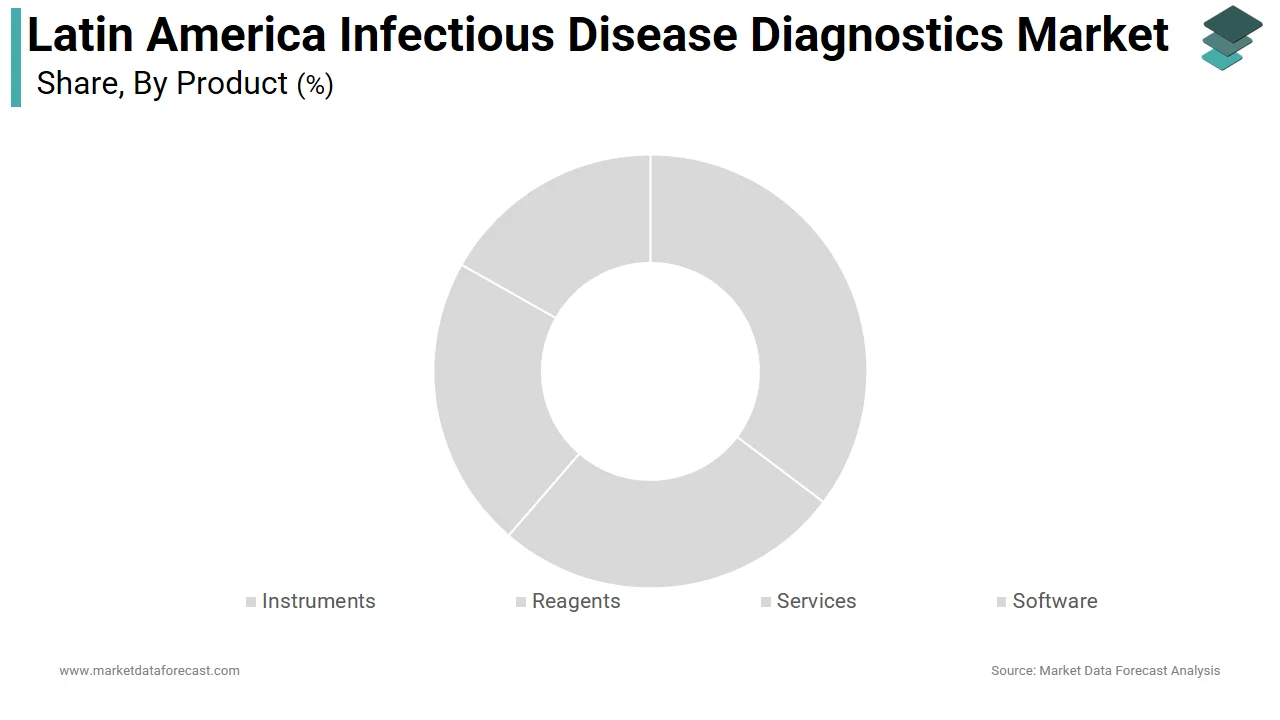
However, the software segment is estimated to showcase the fastest CAGR of 13.2% over the forecast period owing to the increasing integration of digital health solutions and laboratory information systems that enhance data management and analysis capabilities. Modern diagnostic instruments generate vast amounts of complex data that require sophisticated software for interpretation, reporting, and storage. According to the Inter-American Development Bank, investment in digital health infrastructure in Latin America has grown by 18% annually since 2022, supporting the adoption of diagnostic software platforms. These systems enable seamless connectivity between diagnostic devices, electronic health records, and central public health databases, facilitating real-time disease surveillance and outbreak monitoring. Artificial intelligence algorithms embedded in diagnostic software improve accuracy by identifying patterns and anomalies that may be missed by human analysts. Cloud-based solutions offer scalability and remote access, allowing specialists to review results from distant locations. Regulatory bodies are increasingly requiring digital traceability and data security measures, driving laboratories to upgrade their software infrastructure. The shift towards value-based care models emphasizes the importance of data-driven decision-making, further accelerating software adoption. As healthcare providers seek to optimize operational efficiency and improve patient outcomes, the demand for advanced diagnostic software continues to surge, driving exceptional growth in this segment.
By Application Insights
The HIV diagnostics segment dominated the market by capturing the highest share of the regional market in 2025 and is anticipated to maintain its position as the leading application segment in the Latin America infectious disease diagnostics market over the forecast period owing to the high prevalence of HIV and sustained government funding for control programs. Latin America has one of the highest rates of HIV infection globally, necessitating continuous screening and monitoring efforts. According to UNAIDS, approximately 2.1 million people were living with HIV in Latin America in 2023, with Brazil and Mexico accounting for the largest shares. National health ministries prioritize HIV testing as part of universal health coverage initiatives, ensuring broad access to diagnostic services. The availability of free antiretroviral therapy is contingent upon regular viral load and CD4 count monitoring, driving recurrent demand for diagnostic tests. Public health campaigns encourage routine testing among high-risk populations, increasing case detection rates. International organizations such as the Global Fund provide substantial financial support for HIV diagnostic kits and laboratory infrastructure. The shift towards point-of-care testing has expanded access to HIV diagnostics in remote communities, improving early diagnosis and treatment initiation. Regulatory frameworks support the rapid approval of new HIV testing technologies, facilitating market entry for innovative solutions. The chronic nature of HIV infection ensures long-term patient engagement with the healthcare system, sustaining steady demand for diagnostic services. This combination of high disease burden, policy support, and international aid cements HIV diagnostics as the dominant application segment in the region.
On the other hand, the others segment is expected to exhibit a CAGR of 11.4% over the forecast period in this regional market due to the growing increasing frequency of outbreaks and the emergence of new infectious threats in the region. Dengue fever cases have surged dramatically, with the World Health Organization reporting over 3 million cases in the Americas in 2023 alone. Climate change and urbanization contribute to the spread of vector-borne diseases, necessitating robust diagnostic capabilities. Rapid diagnostic tests for dengue and malaria are being deployed extensively in endemic areas to facilitate quick case management. Influenza surveillance has intensified following recent pandemic experiences, leading to increased adoption of multiplex respiratory panels. Ebola preparedness programs in border regions drive demand for high-containment diagnostic solutions. Typhoid fever remains a concern in areas with poor sanitation, prompting investments in improved diagnostic accuracy. Government agencies are strengthening surveillance networks to detect and respond to outbreaks rapidly. International aid supports the procurement of diagnostic kits for neglected tropical diseases. The dynamic nature of infectious disease threats ensures continuous innovation and adoption of new diagnostic tools. This volatility and urgency drive exceptional growth in the Others segment as healthcare systems adapt to evolving epidemiological challenges.
By End User Insights
The laboratories segment accounted for 58.4% of the regional market share in 2025. The growth of the laboratories segment in the Latin American market is attributed to the centralized nature of diagnostic testing where specialized equipment and skilled personnel are concentrated. Reference laboratories and independent diagnostic centers possess the capacity to perform high-volume testing with greater efficiency and accuracy than smaller clinical settings. Major chains such as Laboratório Carlos Chagas in Brazil and Laboratorio Médico del Sur in Mexico allocate significant resources to infectious disease testing modules. Accreditation standards such as ISO 15189 require laboratories to maintain rigorous quality control protocols, which are easier to implement in centralized facilities. Economies of scale allow laboratories to negotiate favorable pricing for reagents and instruments, reducing overall costs. Outsourcing trends see hospitals sending complex samples to specialized laboratories, ensuring faster turnaround times and expert interpretation. Public health laboratories play a crucial role in national surveillance programs, processing large batches of samples during outbreaks. Investment in automation and robotics enhances throughput and reduces manual errors. Digital integration enables seamless result transmission to referring physicians, maintaining care continuity. This structural advantage creates formidable competitive moats difficult for other end users to replicate, sustaining laboratory dominance through operational excellence and deep technical expertise.
However, the hospital end-user segment is experiencing the most rapid expansion in the Latin America infectious disease diagnostics market and is estimated to record a CAGR of 10.2% over the forecast period. This digital surge is propelled by the trend toward point-of-care testing within hospital settings to reduce turnaround times and improve patient flow. Emergency departments and intensive care units increasingly utilize rapid diagnostic devices to make immediate treatment decisions for critically ill patients. Pure-play diagnostic providers are partnering with hospitals to install onsite testing hubs, enabling faster result delivery. Subscription models for diagnostic equipment allow hospitals to access advanced technology without large upfront capital outlays. Detailed digital dashboards with real-time analytics help hospital administrators monitor testing volumes and optimize resource allocation. Targeted social media advertising reaches hospital procurement officers, highlighting efficiency gains and cost savings. Dark stores and micro-fulfillment centers in major cities enable sub-two-hour delivery of reagents, matching urgency expectations set by emergency care. Price comparison tools and group purchasing organizations create value perception, encouraging hospital adoption. Cross-border e-commerce agreements facilitate access to global diagnostic innovations, keeping Latin American hospitals synchronized with international standards. This digital-native growth trajectory reflects a fundamental shift in how hospitals manage diagnostic workflows, challenging traditional outsourcing models through agility and immediacy.
REGIONAL ANALYSIS
Brazil Infectious Disease Diagnostics Market Analysis
Brazil captured 38.3% of the regional market share in 2025 and is likely to maintain its dominant market position over the next few years, holding the largest share of the Latin America infectious disease diagnostics market. The dominance of Brazil in the Latin American market can be credited to the country’s massive population, advanced healthcare infrastructure, and sophisticated laboratory networks driving widespread testing adoption. São Paulo and Rio de Janeiro serve as innovation hubs where advanced molecular testing and specialized clinical research converge, creating fertile ground for precision diagnostics adoption. Domestic medical device manufacturing and strong reagent supply chains ensure operational security, reducing import vulnerability and supporting competitive pricing structures. Government health policies promoting universal screening programs in public health facilities introduce advanced diagnostics to broader demographics early. Major multinational and local manufacturers operate dedicated production facilities, optimizing supply chains for national coverage and export potential. E-commerce penetration exceeds regional averages, enabling direct access to specialized medical supplies in underserved interior cities. Health insurance providers increasingly cover advanced infectious disease diagnostics, raising awareness and treatment adherence. Celebrity health campaigns and public health announcements embed regular testing in popular culture, accelerating mainstream acceptance. Despite economic volatility, healthcare resilience sustains spending on essential diagnostic services viewed as investments in wellbeing. This combination of scale, infrastructure, policy, and cultural readiness cements Brazil’s undisputed leadership position, shaping regional trends and setting benchmarks for product development and diagnostic sophistication.
Mexico Infectious Disease Diagnostics Market Analysis
Mexico is expected to experience steady growth over the next few years. Distinctive growth drivers include the deep integration of point-of-care diagnostic tools into traditional healthcare settings alongside modern hospital network proliferation. Urban clinics and regional health centers increasingly incorporate rapid testing kits, preserving clinical efficiency while accommodating underserved populations. Proximity to the United States facilitates rapid trend transfer and cross-border product flows, exposing Mexican healthcare providers to North American technological innovations ahead of South American peers. Young urban professionals in Mexico City, Guadalajara, and Monterrey drive demand for digital health and app-connected testing options aligning with global wellness movements. Government front-line healthcare regulations encourage modernization toward cleaner, digital-first workflows benefiting advanced diagnostic platforms positioned as superior alternatives. Retail expansion brings point-of-care options to neighborhood levels, increasing accessibility beyond affluent enclaves. Domestic research and development initiatives reduce reliance on imports, improving affordability and supply stability. Public health testing campaigns create seasonal demand spikes for screening products, reinforcing habitual usage patterns. Strong family orientation means multi-generational households adopt preventive healthcare practices collectively, amplifying word-of-mouth diffusion. This unique blend of tradition, modernity, and geographic advantage sustains Mexico’s robust market position as a bridge between North and Latin American healthcare ecosystems.
Argentina Infectious Disease Diagnostics Market Analysis
Argentina is projected to show resilient growth over the next few years and is distinguished by premium positioning and niche specialization rather than mass volume, according to COPAL Argentine Food Industries Coordinating Council 2025 data. Economic constraints limit broad adoption, but affluent urban segments in Buenos Aires, Córdoba, and Rosario sustain vibrant demand for high-quality imported and artisanal diagnostic instruments. Laboratory culture adaptation represents a unique opportunity as clinical professionals experiment with adding molecular and multiplex PCR platforms to traditional testing routines, creating hybrid workflows appealing to specialized demographics. High prevalence of specific regional pathogens drives demand for certified allergen-safe and targeted testing options, positioning Argentina as a regional leader in specialized product development. Boutique laboratories and health clinics serve as primary distribution points, emphasizing education and curation over mass merchandising. Import substitution policies incentivize local production of diagnostic reagents, leveraging domestic industrial strengths despite currency challenges. Medical tourism in Patagonia introduces international visitors to regional healthcare innovations, generating export interest and brand prestige. Academic institutions conduct pioneering research on native pathogen strains, informing next-generation product development. Consumer cooperatives and public health networks foster direct provider relationships, building trust and transparency valued by discerning buyers. While smaller in absolute terms, Argentina’s focus on quality differentiation and cultural adaptation creates disproportionate influence on regional innovation trajectories, punching above its weight in shaping premium segment evolution across Latin America.
COMPETITIVE LANDSCAPE
The competition in the Latin America Infectious Disease Diagnostics Market is characterized by the presence of established global diagnostics giants and emerging regional players striving for technological superiority. Multinational corporations leverage their extensive product portfolios and strong brand recognition to maintain dominance while adapting to local regulatory requirements. These leaders invest heavily in research and development to introduce innovative multiplex platforms that address specific regional health challenges such as infectious diseases and genetic disorders. Regional competitors focus on cost-effective solutions and localized support services to capture market share in price-sensitive segments. Strategic collaborations with government bodies and academic institutions are common as companies seek to influence policy and drive adoption of advanced diagnostics. The market sees intense rivalry in terms of pricing, service quality, and technical support. Companies differentiate themselves through superior after-sales service and comprehensive training programs. As healthcare infrastructure improves across the region, the competitive landscape evolves with new entrants introducing niche products. This dynamic environment fosters continuous innovation and drives improvements in diagnostic accessibility and accuracy for patients throughout Latin America.
KEY MARKET PLAYERS
The leading companies operating in the Latin America infectious disease diagnostics market include:
- Abbott Laboratories
- bioMérieux SA
- Hologic, Inc.
- Danaher Corporation
- Becton, Dickinson and Company
- Cepheid, Inc.
- Thermo Fisher Scientific Inc.
- Roche Diagnostics
- Alere Inc.
- DiaSorin S.p.A.
- Siemens Healthineers
- Quidel Corporation
- Bio-Rad Laboratories, Inc.
TOP PLAYERS IN THE MARKET
- Abbott Laboratories maintains a strong presence in the Latin America Infectious Disease Diagnostics Market through its comprehensive portfolio of rapid and molecular testing solutions. The company actively supports regional healthcare systems by providing advanced diagnostic platforms for HIV, hepatitis, and respiratory infections. Recent initiatives include expanding manufacturing capabilities in Mexico to ensure a consistent supply of critical reagents across the region. Abbott collaborates with local governments to enhance laboratory capacity through training programs and technical support services. Their commitment to innovation is evident in the launch of high-throughput multiplex panels designed for rapid pathogen identification. By integrating digital health tools with their assay systems, the company enables real-time data sharing and improved clinical decision-making. These strategic efforts reinforce their position as a trusted partner in advancing diagnostic capabilities across diverse healthcare settings in Latin America.
- Roche Diagnostics plays a pivotal role in shaping the Latin America Infectious Disease Diagnostics Market by delivering high-quality molecular testing solutions. The company focuses on addressing prevalent health challenges such as tuberculosis and dengue through its cobas platform, which offers seamless multiplex testing capabilities. Roche has strengthened its market position by establishing regional training centers in Brazil and Argentina to educate healthcare professionals on advanced diagnostic techniques. Recent collaborations with public health authorities have facilitated the deployment of automated multiplex systems in national reference laboratories. The company emphasizes sustainability by optimizing supply chain logistics to reduce environmental impact while ensuring product availability. Roche continues to invest in research and development to create assays that meet the specific needs of regional populations. Their proactive approach to regulatory compliance and customer support ensures reliable performance and fosters long term relationships with key stakeholders.
- Siemens Healthineers contributes significantly to the Latin America Infectious Disease Diagnostics Market by offering innovative diagnostic solutions for infectious diseases and antimicrobial resistance. The company’s expertise in automation and digitalization enables the development of sensitive and specific assays for clinical and public health applications. Siemens has recently expanded its footprint in Chile and Colombia by partnering with local distributors to improve access to its Atellica solution. This platform allows for rapid simultaneous detection of multiple pathogens, enhancing patient care in resource-limited settings. The company actively participates in regional health initiatives supporting outbreak response and surveillance programs. Siemens prioritizes education by conducting workshops and webinars for laboratory staff to maximize the utility of their diagnostic tools. Their focus on quality assurance and regulatory adherence ensures that healthcare providers receive reliable and accurate results. Through continuous innovation and strategic partnerships, Siemens remains a key driver of diagnostic advancement in the region.
TOP STRATEGIES USED BY THE KEY MARKET PARTICIPANTS
Key players in the Latin America Infectious Disease Diagnostics Market primarily employ strategic partnerships and localized manufacturing to strengthen their competitive position. Companies frequently collaborate with regional governments and healthcare institutions to align product offerings with national health priorities. This approach facilitates faster regulatory approvals and enhances market access. Investment in training and education programs is another critical strategy used to build technical capacity among laboratory personnel. By empowering the local workforce, these companies ensure proper utilization of advanced diagnostic technologies. Expanding distribution networks through alliances with local distributors helps overcome logistical challenges and improves product availability in remote areas. Innovation remains central to their strategies, with firms continuously developing assays tailored to regional disease profiles. Digital integration is also prioritized to enable seamless data flow and remote monitoring. These combined efforts allow key participants to navigate complex market dynamics while delivering value to healthcare providers and patients across Latin America.
MARKET SEGMENTATION
This Latin America infectious disease diagnostics market research report is segmented and sub-segmented into the following categories.
By Product
- Instruments
- Reagents
- Services
- Software
By Application
- Hepatitis B
- Hepatitis C
- Human Immunodeficiency Virus (HIV)
- Tuberculosis (TB)
- Chlamydia trachomatis
- Neisseria gonorrhoeae (CT/NG)
- Human papillomavirus (HPV)
- Methicillin-resistant Staphylococcus aureus (MRSA)
- Others (Influenza, Ebola, Typhoid, Malaria, and Dengue)
By Technology
- PCR
- INAAT
- DNA Sequencing
- Hybridization
By End User
- Hospital
- Laboratories
By Country
- Brazil
- Mexico
- Argentina
- Chile
- Rest of Latin America