- Product Description Description
- Table of Contents TOC
- List of Table & Figure LOT
- Get Free Sample PDF Sample PDF
Market Size, 2025
$33.34 BnMarket Estimate, 2026
$35.97 BnMarket Forecast, 2034
$66.09 BnCAGR, 2026–2034
7.90%Executive Summary: Global Infectious Disease Diagnostics Market
- Market Scope: Comprehensive global infectious disease diagnostics market analysis covering product categories, disease application segments, technological assay types, end-user clinical settings, and regional leadership frameworks across major global economies.
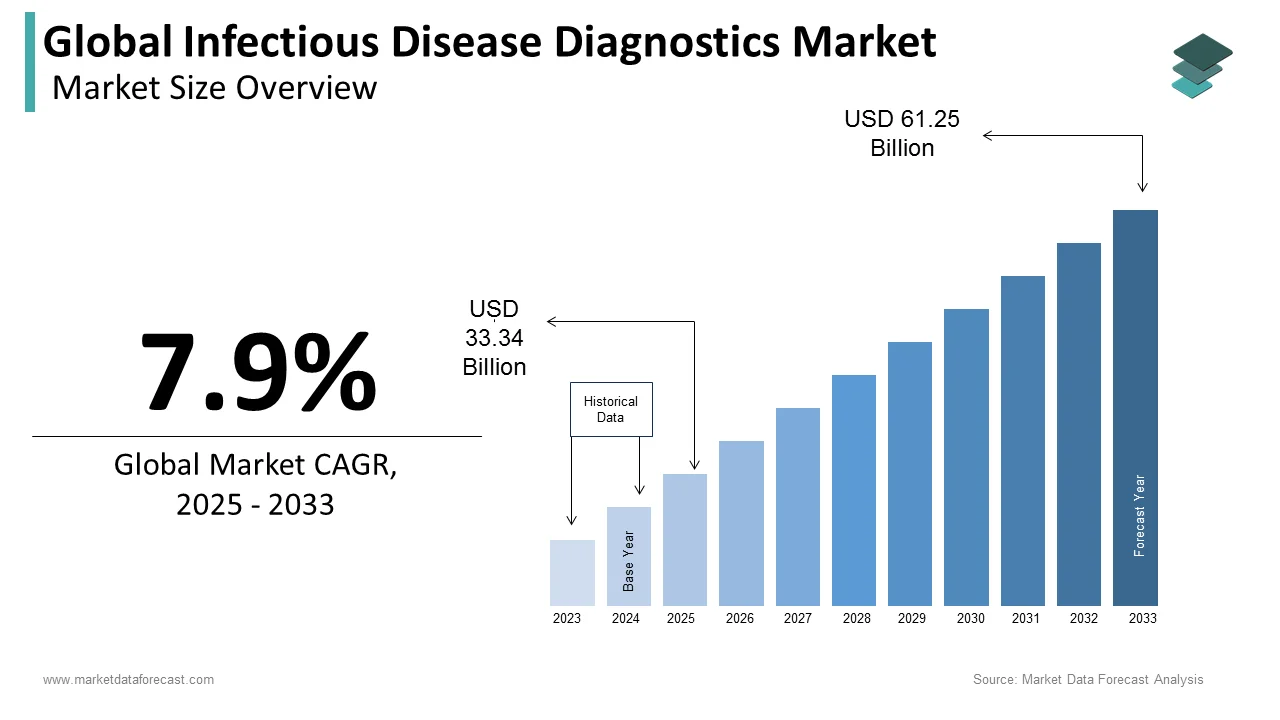
- Market Valuation: Valued at USD 33.34 billion (2025), estimated at USD 35.97 billion (2026), and projected to reach USD 66.09 billion by 2034, registering a robust CAGR of 7.9% (2026–2034).
- Primary Growth Drivers: Rising global prevalence of infectious diseases such as HIV, hepatitis, and influenza, alongside increasing demand for rapid and accurate diagnostic testing. Key technological and strategic trends include widespread adoption of molecular assays like PCR and next-generation sequencing, integration of artificial intelligence for enhanced data analysis, and expansion of point-of-care testing to improve accessibility and efficiency in clinical settings.
Key Market Segment Metrics (2026–2034)
| Category | Leading Segment (2025 Position) | Fastest-Growing Segment |
|---|---|---|
| By Product Type | Instruments segment (led the market by product type in 2025) | Reagents segment (expected to grow significantly due to recurring testing demand) |
| By Application & Technology | Hepatitis B application (identified as most lucrative); PCR and next-generation sequencing | Advanced molecular diagnostic platforms and point-of-care testing solutions |
| By End User | Laboratory end-user segment (dominated due to increasing use of automated diagnostics) | Decentralized clinics and point-of-care testing facilities |
| By Region | North America (leads the global market due to advanced healthcare infrastructure) | Europe (with Germany holding the largest regional share) and expanding emerging markets |
Major Market Players & Market Structure
Market Structure: Highly competitive global diagnostics landscape driven by technological advancements, strategic partnerships, and the development of cost-effective diagnostic tools to address distribution challenges and meet the growing demand for rapid testing solutions.
Key Companies: Abbott Laboratories, Roche Diagnostics, Thermo Fisher Scientific, bioMérieux, Danaher Corporation, Becton, Dickinson and Company, Cepheid, Inc., Hologic, Inc., Alere Inc., DiaSorin S.p.A., Quidel Corporation, and Bio-Rad Laboratories, Inc.
Global Infectious Disease Diagnostics Market Size
The global infectious disease diagnostics market was valued at USD 33.34 billion in 2025. The global market is anticipated to grow at a CAGR of 7.9% from 2026 to 2034 and be worth USD 66.09 billion by 2034, up from USD 35.97 billion in 2026.
Infectious disease diagnostics are a comprehensive array of technologies and methodologies designed to detect pathogens, including bacteria, viruses, fungi, and parasites, within human biological samples. This critical sector serves as the frontline defense in public health infrastructure, enabling timely identification and containment of communicable diseases. According to the World Health Organization, infectious diseases account for approximately 15 million deaths annually globally, underscoring the vital role of accurate diagnostic tools in mortality reduction. Advances in molecular biology have transformed traditional culture-based methods into rapid nucleic acid amplification techniques, providing results within hours rather than days. Regulatory bodies such as the United States Food and Drug Administration enforce stringent validation protocols, ensuring clinical accuracy and patient safety. The integration of artificial intelligence into diagnostic platforms enhances pattern recognition capabilities, improving sensitivity and specificity rates. Healthcare systems worldwide prioritize early detection strategies to mitigate outbreak risks and reduce hospitalization burdens. Point-of-care testing devices democratize access to diagnostics in remote regions lacking centralized laboratory infrastructure. The rise of antimicrobial resistance necessitates precise pathogen identification to guide appropriate therapeutic interventions. Global travel and urbanization accelerate disease transmission dynamics, requiring robust surveillance networks. Diagnostic manufacturers collaborate with research institutions to develop multiplex assays capable of detecting multiple pathogens simultaneously. Public health funding initiatives support the deployment of advanced diagnostic equipment in low-resource settings. The convergence of genomics and proteomics drives innovation in biomarker discovery, facilitating earlier disease intervention. Standardization of testing procedures across international borders ensures consistent data quality for epidemiological tracking and response coordination.
MARKET DRIVERS
Rising Global Burden of Infectious Diseases and Emerging Pathogens Drives Diagnostic Demand
The persistent threat of infectious diseases continues to escalate due to zoonotic spillover events and environmental changes favoring pathogen proliferation, which is a key factor driving the global infectious disease diagnostics market expansion. According to the Centers for Disease Control and Prevention, antibiotic-resistant infections cause at least 35,000 deaths annually in the United States alone, creating an urgent need for precise diagnostic differentiation. Emerging viruses such as novel coronaviruses and influenza variants require rapid development of specific diagnostic assays to prevent widespread transmission. Climate change expands the geographic range of vector-borne diseases like malaria and dengue fever, affecting previously non-endemic populations. According to the World Bank, pandemics could cost the global economy up to 1 trillion USD annually, and this indicates the economic imperative for robust diagnostic infrastructure. Increased international travel facilitates rapid cross-border spread of pathogens, necessitating airport screening and point-of-entry testing capabilities. Urbanization concentrates populations in dense environments, accelerating community transmission rates of respiratory and gastrointestinal infections. Aging populations exhibit higher susceptibility to opportunistic infections, requiring frequent diagnostic monitoring in healthcare settings. Government agencies allocate substantial budgets for surveillance programs tracking disease prevalence and mutation patterns. Pharmaceutical companies rely on accurate diagnostics for clinical trial participant selection and efficacy monitoring of new antimicrobial agents. Public awareness campaigns promote early testing behaviors, reducing asymptomatic transmission chains. Healthcare providers increasingly adopt syndromic testing panels to identify co-infections efficiently. Global health security indices emphasize diagnostic capacity as a key metric for national preparedness against biological threats.
Technological Advancements in Molecular Diagnostics and Point-of-Care Testing
Breakthroughs in molecular biology have revolutionized infectious disease detection through polymerase chain reaction and next-generation sequencing technologies, which is further contributing to the infectious disease diagnostics market expansion. These methods offer superior sensitivity compared to traditional culture techniques, enabling detection of low viral loads and fastidious organisms. According to the National Institutes of Health, molecular diagnostics can reduce time to result from 72 hours to under 2 hours for many bacterial infections. Miniaturization of diagnostic platforms has facilitated the development of handheld point-of-care devices suitable for use in primary care clinics and home settings. Microfluidic chips integrate sample preparation and analysis on a single substrate, reducing reagent consumption and operational complexity. Artificial intelligence algorithms analyze complex genomic data, identifying subtle mutation patterns associated with drug resistance mechanisms. Digital health platforms connect point-of-care devices to central databases, enabling real-time epidemiological mapping and outbreak prediction. The Bill and Melinda Gates Foundation supports development of low-cost molecular tests for tuberculosis and malaria in sub-Saharan Africa. Regulatory approvals for over-the-counter diagnostic kits empower consumers to monitor their health status without clinical visits. Integration of cloud computing allows remote expert interpretation of diagnostic images and data from resource-limited areas. Automation in high-throughput laboratories increases testing capacity during surge events such as seasonal influenza peaks. Biosensor technologies utilize nanomaterials to enhance signal detection limits, achieving femtomolar sensitivity for viral antigens. Continuous innovation in isothermal amplification methods eliminates the need for thermal cycling equipment, reducing energy requirements.
MARKET RESTRAINTS
High Costs Associated with Advanced Diagnostic Technologies and Infrastructure
Implementation of sophisticated diagnostic platforms requires substantial capital investment, posing financial barriers for healthcare systems in developing nations and a significant impediment to the global market. Advanced molecular instruments often exceed 100,000 USD per unit according to industry pricing surveys, which is limiting accessibility for small hospitals and rural clinics. Reagent costs for nucleic acid tests remain significantly higher than conventional serological assays, increasing per-test expense for patients and payers. Maintenance contracts for complex analytical equipment add recurring operational expenses, straining limited healthcare budgets. According to the World Health Organization, 50% of diagnostic equipment in low-income countries remains non-functional due to a lack of technical support and spare parts. Training personnel to operate and interpret results from advanced diagnostic systems requires extensive education and continuous professional development. Infrastructure requirements such as stable electricity supply, climate-controlled environments, and pure water systems are often unavailable in remote regions. Insurance reimbursement policies frequently lag behind technological adoption, leaving patients with significant out-of-pocket expenses for novel tests. Supply chain disruptions for specialized reagents and consumables cause testing delays and inventory shortages. Economic constraints force healthcare providers to prioritize essential services over preventive diagnostic screening programs. Currency fluctuations in importing nations affect the affordability of foreign-manufactured diagnostic equipment. A lack of economies of scale for rare disease diagnostics keeps prices prohibitively high for niche applications. Budgetary allocations for public health laboratories face competition from other urgent healthcare needs, reducing investment in diagnostic modernization.
Regulatory Complexities and Lengthy Approval Processes for New Diagnostic Tests
Navigating the regulatory landscape for infectious disease diagnostics involves rigorous validation studies and extensive documentation requirements, which is further hindering global market growth. The United States Food and Drug Administration mandates comprehensive clinical trials demonstrating sensitivity, specificity, and reproducibility before granting market clearance. Average approval timelines for novel diagnostic devices range from 12 to 18 months according to regulatory agency data, delaying patient access to innovative technologies. European Union Medical Device Regulation imposes stricter post-market surveillance obligations, increasing compliance burdens for manufacturers. Harmonization of regulatory standards across different jurisdictions remains incomplete, forcing companies to pursue separate approvals for each target market. Variability in reference standards and control materials complicates the comparison of performance metrics between different diagnostic platforms. Ethical considerations regarding patient data privacy and genetic information storage add layers of regulatory scrutiny. Intellectual property disputes over proprietary assay designs and biomarker sequences create legal uncertainties, hindering collaborative development. Regulatory agencies struggle to keep pace with rapid technological advancements, leading to ambiguous guidance for emerging modalities like digital pathology. Small and medium-sized enterprises lack resources to navigate complex regulatory pathways, consolidating market power among large corporations. Changes in regulatory policies during public health emergencies create uncertainty regarding long-term compliance requirements. International trade restrictions on biological materials impede cross-border validation studies and technology transfer. A lack of mutual recognition agreements between major regulatory bodies duplicates testing efforts, increasing development costs. Manufacturers face liability risks if diagnostic failures lead to misdiagnosis and inappropriate treatment outcomes.
MARKET OPPORTUNITIES
Expansion into Emerging Markets with Improving Healthcare Infrastructure
Developing nations in Asia-Pacific, Africa, and Latin America present significant growth potential as healthcare infrastructure undergoes modernization. According to the World Bank, healthcare spending in low- and middle-income countries increased by 6% annually over the past decade, enabling greater investment in diagnostic capabilities. Government initiatives in India and China aim to establish district-level diagnostic hubs equipped with automated analyzers and trained personnel. International aid organizations distribute millions of rapid diagnostic tests for malaria, HIV, and tuberculosis annually, supporting disease elimination goals. Mobile health clinics equipped with portable diagnostic devices reach underserved rural populations lacking fixed healthcare facilities. Public-private partnerships facilitate technology transfer and local manufacturing of diagnostic kits, reducing import dependencies and costs. Rising middle-class populations in emerging economies demand higher-quality healthcare services, including advanced diagnostic screening. Telemedicine platforms integrate diagnostic data, allowing remote specialists to guide treatment decisions in resource-constrained settings. Local regulatory bodies streamline approval processes for essential diagnostic tools, addressing urgent public health needs. Educational programs train healthcare workers in proper sample collection and test interpretation, improving diagnostic accuracy. Investment in cold chain logistics ensures the stability of temperature-sensitive reagents during distribution to remote areas. Digital payment systems enable affordable access to diagnostic services through micro-insurance schemes. Community health workers utilize simple rapid tests to triage patients, reducing the burden on tertiary care centers. Cultural adaptation of diagnostic messaging improves community acceptance and testing uptake rates.
Integration of Artificial Intelligence and Big Data Analytics in Diagnostics
Artificial intelligence transforms infectious disease diagnostics by enhancing image analysis, pattern recognition and predictive modeling capabilities, which is another major opportunity for the global market. Machine learning algorithms process vast datasets from electronic health records, identifying subtle correlations between symptoms and specific pathogens. According to the National Library of Medicine, AI-assisted diagnosis improves accuracy rates by 15% to 20% compared to human interpretation alone. Deep learning models analyze radiological images, detecting early signs of pulmonary infections such as tuberculosis and pneumonia with high precision. Natural language processing extracts relevant clinical information from unstructured physician notes, aiding in differential diagnosis formulation. Predictive analytics forecast outbreak trajectories based on real-time diagnostic data, enabling proactive resource allocation and containment strategies. Cloud-based platforms aggregate anonymized diagnostic results from multiple institutions, creating global surveillance networks for emerging threats. Algorithmic bias mitigation ensures equitable diagnostic performance across diverse demographic groups, preventing disparities in care quality. Automated quality control systems monitor instrument performance, detecting drifts in calibration before they affect patient results. Virtual assistants guide healthcare providers through complex diagnostic workflows, reducing cognitive load and decision fatigue. Blockchain technology secures diagnostic data integrity, preventing tampering and ensuring audit trails for regulatory compliance. Real-time dashboards visualize diagnostic trends, helping public health officials make informed policy decisions. Integration with wearable devices provides continuous physiological monitoring, alerting users to potential infections before symptom onset. Collaborative research initiatives share AI models openly, accelerating innovation and standardization across the global diagnostic community.
MARKET CHALLENGES
Supply Chain Vulnerabilities for Critical Reagents and Components
Global dependence on specialized raw materials creates fragility in the diagnostic supply chain, which is making it susceptible to geopolitical and logistical disruptions and a significant challenge to the global market. Key reagents such as enzymes, antibodies, and nucleotides are sourced from limited suppliers concentrated in specific geographic regions. According to the United States Department of Commerce, 80% of active pharmaceutical ingredients and diagnostic reagents originate from Asia, creating single-point-of-failure risks. Transportation bottlenecks during global crises delay the delivery of temperature-sensitive materials, compromising test kit viability and availability. Manufacturing capacity for plastic consumables like pipette tips and reaction tubes struggles to meet sudden surges in demand during outbreaks. Quality variability among different batches of biological reagents affects diagnostic consistency, requiring rigorous lot-to-lot validation. Shortages of semiconductor chips impact production of automated diagnostic instruments, extending lead times for healthcare facilities. Inventory management challenges arise from short shelf lives of biological components, leading to waste and stockouts. Trade tariffs and export restrictions increase costs and limit access to essential diagnostic supplies for importing nations. A lack of transparency in multi-tier supply chains hinders visibility into upstream vulnerabilities and alternative sourcing options. Cold chain infrastructure gaps in developing regions result in significant product spoilage during last-mile distribution. Regulatory changes regarding biological material transport impose additional documentation and handling requirements, slowing customs clearance. Diversification strategies require substantial investment in qualifying alternative suppliers and validating new material sources. Just-in-time inventory practices leave little buffer for unexpected disruptions, forcing hospitals to ration testing supplies. Cybersecurity threats targeting supply chain management systems pose risks of data theft and operational paralysis.
Workforce Shortages and Training Gaps in Diagnostic Laboratories
The infectious disease diagnostics sector faces critical shortages of skilled personnel capable of operating advanced instruments and interpreting complex results, which is further challenging the global market growth. According to the American Society for Clinical Pathology, a 20% vacancy rate exists for medical laboratory scientists, exacerbating workload pressures and turnaround times. Specialized training in molecular biology, bioinformatics, and quality assurance is required to manage next-generation diagnostic platforms effectively. High turnover rates due to burnout and competitive salary offers from other industries deplete institutional knowledge and expertise. Rural and remote healthcare facilities struggle to attract qualified staff, leading to reliance on less accurate manual testing methods. Continuing education requirements demand significant time and financial investment from laboratories already facing budget constraints. A lack of standardized certification programs across different countries creates inconsistencies in technician competency and testing quality. Automation reduces manual workload but requires higher-level technical skills for troubleshooting and maintenance, which many existing staff lack. Mentorship programs are insufficient to bridge the experience gap between retiring senior technologists and entry-level hires. Language barriers in multinational laboratories complicate the communication of standard operating procedures and safety protocols. Regulatory inspections reveal frequent deficiencies in personnel training records and competency assessments. Remote work limitations prevent flexible staffing arrangements common in other healthcare roles. Recruitment challenges intensify as universities produce fewer graduates specializing in clinical laboratory science. Outsourcing diagnostic services to third-party laboratories alleviates staffing pressures but raises concerns about data security and turnaround time control.
REPORT COVERAGE
| REPORT METRIC | DETAILS |
| Market Size Available | 2025 to 2034 |
| Base Year | 2025 |
| Forecast Period | 2026 to 2034 |
| Segments Covered | By Product, Application, Technology, Traditional Methods, End User, and Region. |
| Various Analyses Covered | Global, Regional, and Country-Level Analysis, Segment-Level Analysis, Drivers, Restraints, Opportunities, Challenges; PESTLE Analysis; Porter’s Five Forces Analysis, Competitive Landscape, Analyst Overview of Investment Opportunities |
| Regions Covered | North America, Europe, Asia Pacific, Latin America, Middle East & Africa |
| Market Leaders Profiled | Abbott Laboratories, bioMérieux SA, Hologic, Inc., Danaher Corporation, Becton, Dickinson and Company, Cepheid, Inc., Thermo Fisher Scientific Inc., Roche Diagnostics, Alere Inc., DiaSorin S.p.A., Quidel Corporation and Bio-Rad Laboratories, Inc., and Others. |
SEGMENTAL ANALYSIS
By Product Insights
The reagents segment had the largest share of the global infectious disease diagnostics market in 2025. The dominance of the reagents segment in the global market is attributed to its recurring consumption nature and essential role in every diagnostic test performed. Unlike instruments, which are capital expenditures with long lifespans, reagents represent operational expenses that must be replenished continuously. According to Grand View Research, global demand for molecular diagnostic reagents reached 12 billion USD in 2023, driven by the high volume of polymerase chain reaction tests conducted worldwide. Each diagnostic assay requires specific enzymes, primers, probes, and buffers, making reagent sales directly proportional to testing frequency. According to the Centers for Disease Control and Prevention, over 500 million diagnostic tests are performed annually in the United States alone, creating a massive baseline demand for consumables. Hospital laboratories and commercial diagnostic centers prioritize reliable supply chains for high-quality reagents to ensure consistent test accuracy and regulatory compliance. The shift toward multiplex panels increases reagent complexity and value per test as manufacturers combine multiple pathogen targets into single kits. Patent expirations for key enzymatic components have lowered costs, enabling broader adoption of advanced molecular techniques in resource-limited settings. Quality control standards mandate regular use of control reagents, further boosting volume sales. Manufacturers offer instrument-reagent bundles, locking customers into proprietary consumable ecosystems and ensuring steady revenue streams. The rise of point-of-care testing expands reagent distribution channels beyond central laboratories to clinics and pharmacies. Supply chain resilience becomes critical as reagent shortages can halt diagnostic operations entirely. Innovation in lyophilized reagent formats improves stability, reducing cold chain requirements and expanding geographic reach. Regulatory approvals for new pathogen targets drive continuous product launches and replacement cycles.
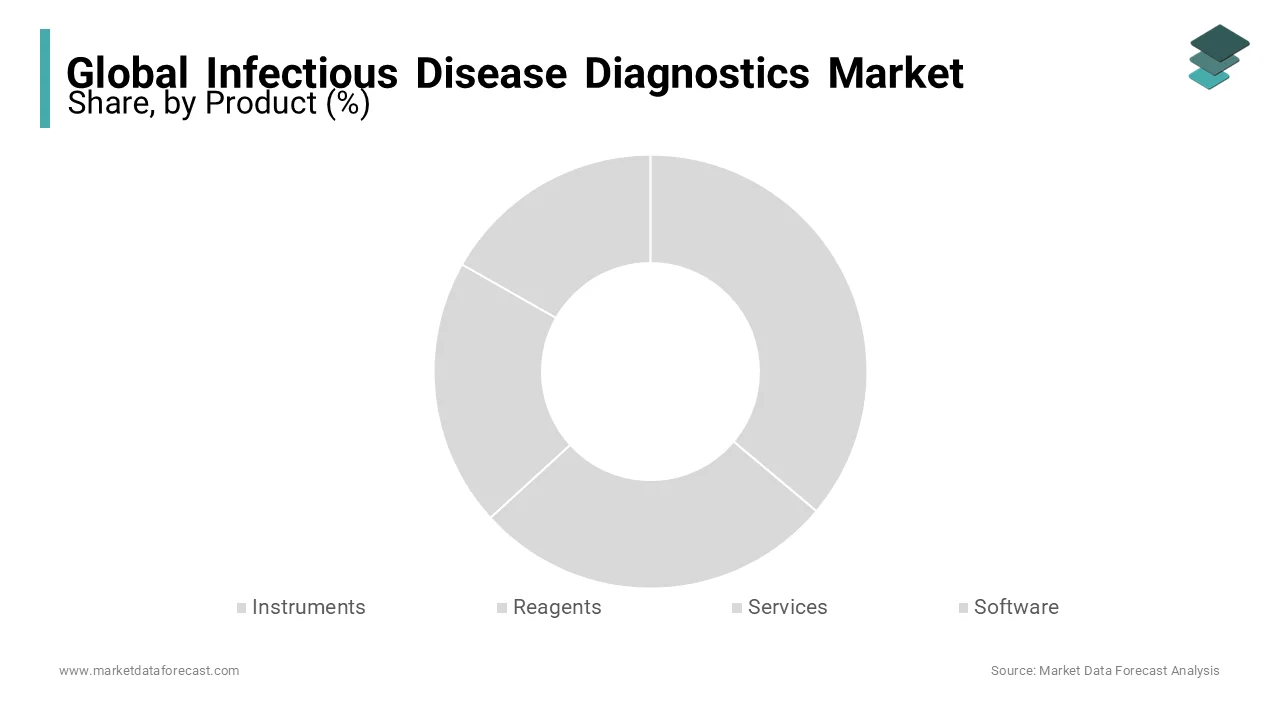
However, the software segment is predicted to witness the fastest CAGR of 13.5% during the forecast period owing to the integration of artificial intelligence and laboratory information management systems. The increasing complexity of diagnostic data from next-generation sequencing and multiplex assays necessitates advanced computational tools for accurate interpretation. According to the National Library of Medicine, AI-powered diagnostic software reduces analysis time by 40% while improving detection accuracy for rare pathogens. Laboratory information management systems streamline workflow automation, sample tracking, and result reporting, enhancing operational efficiency in high-volume testing facilities. Cloud-based diagnostic platforms enable real-time data sharing between remote laboratories and central public health authorities, facilitating rapid outbreak response. Cybersecurity investments surge as healthcare providers protect sensitive patient data from ransomware attacks targeting diagnostic networks. The Food and Drug Administration has cleared over 50 AI-based diagnostic algorithms in the past three years, accelerating market adoption. Interoperability standards such as HL7 and FHIR enable seamless integration of diagnostic software with electronic health records, improving clinical decision support. Predictive analytics modules help laboratories forecast reagent inventory needs and optimize staffing schedules, reducing operational costs. Telepathology applications allow remote experts to review complex diagnostic images, bridging specialist gaps in rural areas. Regulatory frameworks for software as a medical device provide clear pathways for innovation while ensuring patient safety. Subscription-based pricing models lower entry barriers for small laboratories accessing premium analytical tools. Continuous updates and machine learning improvements enhance software performance over time, creating ongoing value for users.
By Technology Insights
The PCR segment led the market with the leading share of the global market in 2025. The leading position of PCR segment in the global market is majorly attributed to its unparalleled sensitivity, specificity, and versatility in detecting diverse pathogens. PCR enables the amplification of minute amounts of genetic material, allowing the detection of viral loads even in early stages of infection. According to the World Health Organization, PCR is recommended as the gold standard for diagnosing tuberculosis, HIV, and hepatitis, resulting in widespread global adoption. According to Association for Molecular Pathology data, over 80% of molecular diagnostic tests performed globally utilize PCR technology. Real-time quantitative PCR provides viral load monitoring essential for managing chronic infections and assessing treatment efficacy. The COVID-19 pandemic accelerated investment in PCR infrastructure, with governments establishing thousands of new testing laboratories worldwide. Automation of PCR workflows reduces hands-on time and minimizes human error, increasing throughput in commercial laboratories. Multiplex PCR panels allow the simultaneous detection of respiratory, gastrointestinal, and meningitis pathogens from a single sample, improving diagnostic efficiency. Cost reductions in thermal cyclers and reagents have made PCR accessible to mid-tier hospitals and regional diagnostic centers. Standardization of PCR protocols ensures reproducibility across different laboratories, facilitating multi-center clinical trials and epidemiological studies. Integration of PCR with microfluidics enables point-of-care devices, bringing laboratory-grade accuracy to bedside testing. Regulatory bodies maintain rigorous validation guidelines for PCR assays, ensuring high clinical confidence in results. Continuous innovation in digital PCR offers absolute quantification capabilities for precise monitoring of low-abundance targets.
However, the DNA sequencing segment is expected to exhibit the highest CAGR of 15.8% during the forecast period in the global market owing to the advancements in next-generation sequencing technologies and decreasing costs per genome. Whole-genome sequencing provides comprehensive pathogen identification, including strain typing and detection of resistance genes, surpassing traditional methods. According to the National Human Genome Research Institute, the cost of sequencing a human genome has dropped below 1,000 USD, making it viable for routine clinical diagnostics. Metagenomic sequencing allows unbiased detection of all microorganisms in a sample, identifying novel or unexpected pathogens without a prior hypothesis. Public health agencies utilize sequencing for surveillance of emerging variants, tracking transmission chains, and informing vaccine development strategies. The Centers for Disease Control and Prevention expanded its sequencing capacity by 300% during recent health emergencies to monitor viral evolution. Clinical laboratories adopt targeted sequencing panels for the rapid identification of antimicrobial resistance profiles, guiding personalized antibiotic therapy. Integration of sequencing data with bioinformatics platforms accelerates result interpretation, transforming raw data into actionable clinical insights. Regulatory approvals for sequencing-based diagnostic tests increase as validation standards mature and clinical utility becomes evident. Research institutions collaborate with diagnostic companies, developing curated databases of pathogen genomes to improve reference accuracy. Portable sequencing devices enable field deployment for outbreak investigation in remote locations lacking laboratory infrastructure. Insurance coverage for sequencing-based diagnostics expands as evidence demonstrates improved patient outcomes and reduced hospital stays. Educational programs train clinicians in genomic medicine, fostering acceptance of sequencing as a standard diagnostic tool.
REGIONAL ANALYSIS
North America Infectious Disease Diagnostics Market Analysis
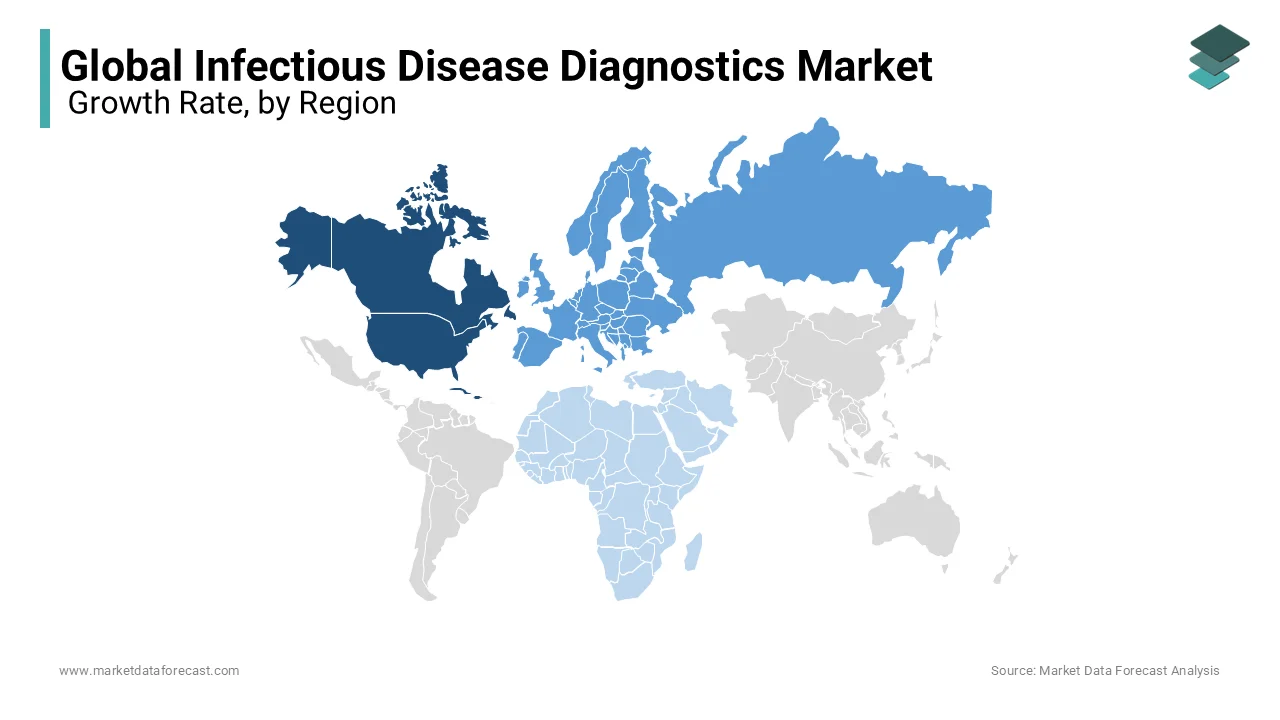
North America led the market by capturing 38.4% of the global market share in 2025. The dominance of North America in the global market can be credited to the advanced healthcare infrastructure and high diagnostic penetration. The United States accounts for the majority of regional demand, with robust reimbursement policies supporting the adoption of innovative diagnostic technologies. The Centers for Medicare and Medicaid Services covers over 90% of approved molecular diagnostic tests, ensuring financial accessibility for patients. A strong presence of major diagnostic manufacturers fosters continuous innovation and rapid commercialization of new products. High prevalence of chronic infectious diseases such as HIV and hepatitis C drives sustained demand for monitoring diagnostics. Government initiatives like the Antibiotic Resistance Lab Network enhance surveillance capabilities and promote standardized testing protocols. Academic medical centers serve as hubs for clinical research, validating novel diagnostic assays before widespread market entry. Private laboratory chains operate extensive networks, offering convenient access to testing services across urban and suburban areas. Regulatory clarity from the Food and Drug Administration provides predictable pathways for product approval, encouraging investment. High healthcare spending per capita enables the adoption of premium diagnostic solutions, including next-generation sequencing. Integration of diagnostics with electronic health records facilitates data-driven population health management. Strong intellectual property protection attracts global companies to establish research and development facilities in the region. Patient awareness campaigns promote preventive screening, increasing early detection rates. Collaborative partnerships between industry and government agencies accelerate responses to emerging health threats.
Europe Infectious Disease Diagnostics Market Analysis
Europe had the second largest share of the global market in 2025. The growth of Europe in the global infectious disease diagnostics market is attributed to the stringent regulatory standards and strong public health systems. The European Centre for Disease Prevention and Control coordinates surveillance efforts across member states, promoting harmonized diagnostic approaches. Germany, France, and the United Kingdom lead regional consumption, driven by well-funded healthcare systems and high diagnostic utilization rates. The European Union Medical Device Regulation imposes rigorous quality requirements, ensuring high standards for diagnostic accuracy and safety. Universal healthcare coverage in most European countries ensures broad access to infectious disease testing regardless of socioeconomic status. Aging populations increase susceptibility to infections, driving demand for rapid and accurate diagnostic solutions in hospital settings. Government funding supports research into antimicrobial resistance diagnostics, addressing a critical public health priority. Cross-border collaboration facilitates the sharing of best practices and diagnostic resources during health emergencies. Environmental regulations promote sustainable manufacturing practices for diagnostic reagents and instruments. High literacy rates and health awareness contribute to proactive testing behaviors among the population. Integration of diagnostics into primary care reduces the burden on secondary and tertiary healthcare facilities. Public-private partnerships drive innovation in point-of-care testing for remote and underserved communities. Standardization of laboratory accreditation ensures consistent quality across different healthcare providers. Investment in digital health infrastructure supports remote diagnostic services and telemedicine integration.
Asia-Pacific Infectious Disease Diagnostics Market Analysis
Asia-Pacific emerges as the fastest-growing region and is expected to showcase a promising CAGR in the global infectious disease diagnostics market during the forecast period owing to the expanding healthcare infrastructure and a rising disease burden. China and India drive regional growth through large populations and increasing government investment in healthcare modernization. According to National Health Commission data, the Chinese government allocated 50 billion USD for healthcare infrastructure improvement in 2023, enhancing diagnostic capacity. Rising prevalence of tuberculosis, hepatitis, and dengue fever creates urgent demand for affordable and accurate diagnostic solutions. Local manufacturing initiatives reduce dependency on imports, lowering costs and improving supply chain reliability. Medical tourism in countries like Thailand and Singapore drives the adoption of advanced diagnostic technologies to attract international patients. Urbanization leads to crowded living conditions, facilitating disease transmission and increasing testing volumes. Digital health platforms expand access to diagnostic services in rural areas lacking physical laboratory infrastructure. Government screening programs for infectious diseases increase early detection rates and reduce long-term healthcare costs. Increasing disposable incomes enable out-of-pocket spending on premium diagnostic tests. International diagnostic companies establish joint ventures with local firms to navigate regulatory landscapes and cultural preferences. Training programs address workforce shortages by upskilling laboratory technicians in modern diagnostic techniques. Mobile health applications facilitate appointment booking and result delivery, improving the patient experience. Public awareness campaigns reduce the stigma associated with infectious disease testing, encouraging higher participation rates.
COMPETITIVE LANDSCAPE
The Infectious Disease Diagnostics Market features intense competition among global conglomerates and specialized biotechnology firms striving for technological leadership. Major players leverage extensive distribution networks and established brand reputation to maintain dominance in hospital and commercial laboratory segments. Smaller innovators disrupt the market with niche solutions targeting specific pathogens or utilizing novel detection methods such as CRISPR-based diagnostics. Competitive dynamics revolve around speed of result turnaround, ease of use, and cost per test, influencing purchasing decisions. Price pressure increases as generic reagents enter the market, forcing branded manufacturers to differentiate through superior performance and service. Strategic alliances between diagnostic companies and technology firms accelerate development of integrated digital health solutions. Regulatory hurdles create barriers to entry, protecting incumbent players but also slowing innovation cycles for new entrants. Intellectual property disputes over proprietary assays and biomarkers lead to legal battles affecting market stability. Customer loyalty is driven by the reliability of instruments and the consistency of reagent quality rather than price alone. Global health crises trigger temporary collaborations among competitors to address urgent testing needs, highlighting the sector's public health role. Investment in automation reduces labor dependency, appealing to laboratories facing workforce shortages. Emerging markets offer growth opportunities but require adaptation to local infrastructure constraints and pricing sensitivities. Continuous innovation remains essential as pathogens evolve, requiring constant updates to diagnostic targets and methods.
KEY MARKET PLAYERS
The leading companies operating in the global infectious disease diagnostics market include:
- Abbott Laboratories
- bioMérieux SA
- Hologic, Inc.
- Danaher Corporation
- Becton, Dickinson and Company
- Cepheid, Inc.
- Thermo Fisher Scientific Inc.
- Roche Diagnostics
- Alere Inc.
- DiaSorin S.p.A.
- Quidel Corporation
- Bio-Rad Laboratories, Inc.
TOP PLAYERS IN THE MARKET
- Abbott Laboratories maintains a prominent position through its comprehensive portfolio of rapid diagnostic tests and molecular platforms. The company focuses on point-of-care solutions enabling quick detection of respiratory and gastrointestinal pathogens in diverse settings. Recent initiatives include expanding manufacturing capacity for antigen tests to meet global demand during health emergencies. Abbott invests heavily in research to develop multiplex panels that identify multiple infections simultaneously from single samples. Their digital health integration connects diagnostic devices with cloud-based platforms for real-time data sharing. Strategic partnerships with healthcare providers enhance distribution networks across emerging markets. The company prioritizes regulatory approvals in key jurisdictions, ensuring broad market access for new innovations. Continuous improvement in test sensitivity and specificity strengthens clinical trust in Abbott diagnostics.
- Roche Diagnostics leverages its expertise in molecular biology to deliver high-throughput automated testing systems for clinical laboratories. The company specializes in polymerase chain reaction technologies, offering superior accuracy for viral and bacterial detection. Recent actions involve launching next-generation sequencing solutions for comprehensive pathogen identification and resistance profiling. Roche expands its cobas platform capabilities, integrating artificial intelligence for faster result interpretation and workflow optimization. Collaborations with public health agencies support surveillance programs tracking disease outbreaks globally. The firm invests in sustainable manufacturing practices, reducing the environmental impact of diagnostic production. Training programs for laboratory personnel ensure optimal utilization of advanced diagnostic instruments. Roche maintains strong supply chain resilience, securing consistent availability of critical reagents worldwide.
- Danaher Corporation operates through subsidiaries like Cepheid and Leica Biosystems, providing innovative molecular and anatomical pathology solutions. The company excels in cartridge-based nucleic acid amplification tests, simplifying complex molecular workflows for routine use. Recent strategies include acquiring specialized biotechnology firms to enhance genomic diagnostic capabilities. Danaher integrates digital tools into diagnostic platforms, enabling remote monitoring and predictive maintenance of equipment. The corporation focuses on expanding its presence in Asia Pacific through local manufacturing and distribution partnerships. Investment in research and development drives the creation of ultra-sensitive assays for early disease detection. Danaher emphasizes customer support services, ensuring seamless integration of diagnostics into hospital workflows. Regulatory compliance remains a priority, facilitating rapid market entry for novel diagnostic products.
TOP STRATEGIES USED BY THE KEY MARKET PARTICIPANTS
Key players in the Infectious Disease Diagnostics Market prioritize strategic acquisitions to expand technological portfolios and enter new geographic regions rapidly. Companies invest heavily in research and development to create multiplex assays capable of detecting multiple pathogens simultaneously, improving diagnostic efficiency. Partnerships with government agencies and public health organizations facilitate large-scale deployment of diagnostic tools during outbreaks. Expansion into emerging markets involves establishing local manufacturing facilities to reduce costs and navigate regulatory requirements effectively. Integration of artificial intelligence and machine learning enhances data analysis capabilities, providing faster and more accurate results for clinicians. Focus on point-of-care testing devices democratizes access to diagnostics, allowing testing in remote and resource-limited settings. Subscription-based models for software and reagents ensure recurring revenue streams while lowering initial capital barriers for customers. Emphasis on regulatory compliance and quality assurance builds trust with healthcare providers and ensures uninterrupted market access. Sustainability initiatives reduce environmental impact, appealing to eco-conscious healthcare institutions and meeting corporate social responsibility goals.
MARKET SEGMENTATION
This research report on the global infectious disease diagnostics market has been segmented and sub-segmented into the following categories.
By Product
- Instruments
- Reagents
- Services
- Software
By Application
- Hepatitis B
- Hepatitis C
- Human Immunodeficiency Virus (HIV)
- Tuberculosis (TB)
- Chlamydia trachomatis
- Neisseria gonorrhoeae (CT/NG)
- Human papillomavirus (HPV)
- Methicillin-resistant Staphylococcus aureus (MRSA)
- and others (Influenza, Ebola, Typhoid, Malaria, and Dengue)
By Technology
- PCR
- INAAT
- DNA Sequencing
- Hybridization
By Traditional Methods
- Immunodiagnostics
- Microscopy
- Biochemical Characterization
By End User
- Hospital
- Laboratories
By Region
- North America
- Europe
- Asia Pacific
- Latin America
- The Middle East and Africa