- Product Description Description
- Table of Contents TOC
- List of Table & Figure LOT
- Get Free Sample PDF Sample PDF
Market Size, 2025
$0.88 billionMarket Estimate, 2026
$0.99 billionMarket Forecast, 2034
$2.39 billionCAGR, 2026–2034
11.7%Executive Summary: Latin America Medical Aesthetic Devices Market
- Market Scope: In-depth assessment of the Latin America medical aesthetic devices market segmented by product types, procedure types, end-users, and country-level markets.
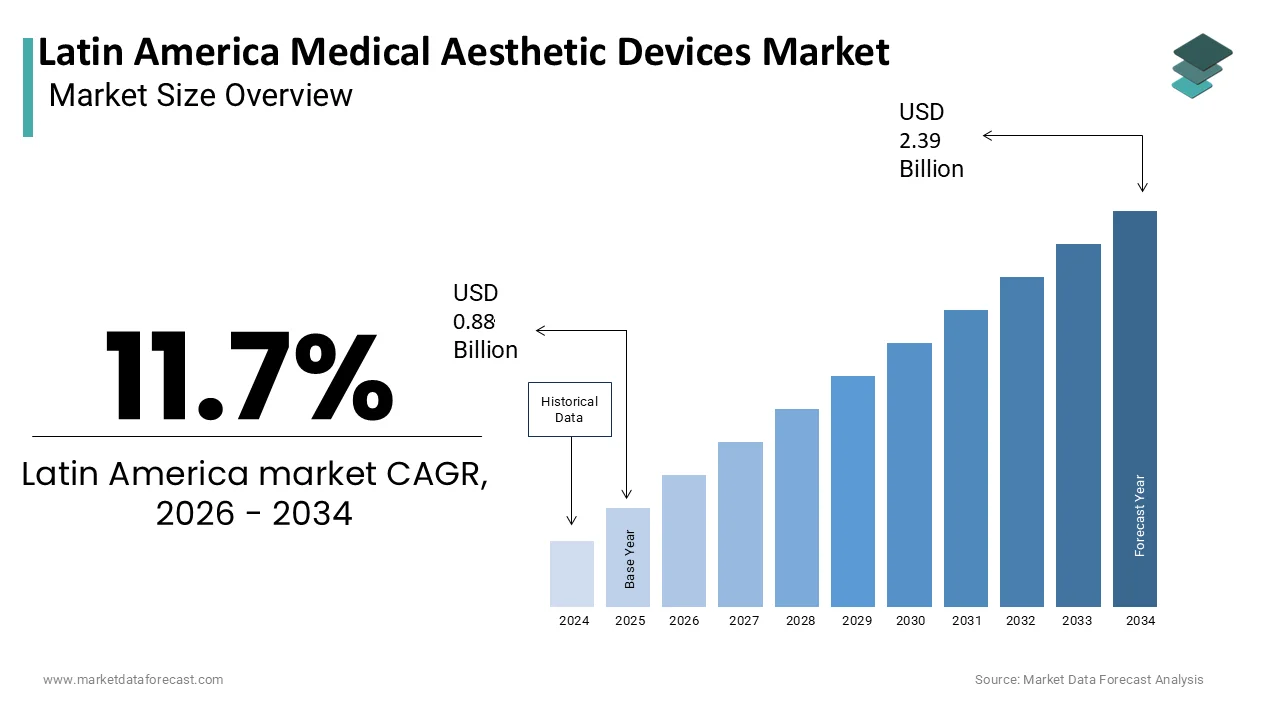
- Market Valuation: Valued at USD 0.88 billion in 2025, estimated at USD 0.99 billion in 2026, and projected to reach USD 2.39 billion by 2034, registering a robust compound annual growth rate (CAGR) of 11.7% from 2026 to 2034.
- Primary Growth Drivers: Surging demand for minimally invasive and non-invasive aesthetic procedures, technological innovations in energy-based devices and AI-integrated healthcare solutions, rising obesity rates, and increased awareness of cosmetic operations.
Key Market Segment Metrics (2026–2034)
| Category | Leading Segment Focus | Detailed Taxonomy & Sub-Segments |
|---|---|---|
| By Product Type | Energy-Based Devices & Anti-Wrinkle Products | Energy-Based Devices, Implants, & Anti-Wrinkle Products |
| By Procedures | Cosmetic & Reconstruction Procedures | Cosmetic Procedures & Reconstruction Procedures |
| By End-Users | Clinics & Beauty Centres | Home Use, Clinics, & Beauty Centres |
| By Country Focus | Mexico & Brazil (Most significant market shares) | Mexico, Brazil, Argentina, Chile, & Rest of Latin America |
Regional Insights & Market Dynamics
Mexico & Brazil: Forecasted to register the most significant shares in the Latin American market, propelled by rising obesity rates, increasing popularity of cosmetic enhancements, and broader adoption of advanced minimally invasive devices.
Market Restraints & Challenges: Lengthy procedural times, high costs, shortage of skilled physicians and specialized surgeons, surgery-related side effects, and market competition from alternative cosmetic products.
Key Market Leaders Profiled: Allergan, Cynosure, Johnson & Johnson, LCA Pharmaceutical, Galderma Pharma, Solta Medical, Cutera, Focus Medical, Human Med Ag, Genzyme Corporation, Alcon Inc., and Alma Lasers.
Latin America Medical Aesthetic Devices Market Size
The Latin America Medical Aesthetic Devices Market is projected to grow from USD 0.88 billion in 2025 to USD 0.99 billion in 2026 and reach USD 2.39 billion by 2034, registering a CAGR of 11.7% from 2026 to 2034.
Medical aesthetic devices are professional-grade, clinically validated tools used to improve physical appearance through non-invasive or minimally invasive procedures. They target skin, hair, and fat using advanced energy sources like lasers, radiofrequency, and ultrasound to treat wrinkles, scars, and unwanted hair. This market is uniquely defined by a cultural emphasis on physical appearance combined with high procedural volumes rather than mere luxury consumption. According to the International Society of Aesthetic Plastic Surgery, Brazil frequently alternates with the United States as a leading global hub for cosmetic interventions, recording over two million surgical and non-surgical procedures annually to anchor an expansive commercial infrastructure for energy-based medical devices. As per the World Bank, current healthcare expenditures per capita in developing Latin American territories have experienced uneven real-term baseline changes rather than static increases since 2019, while parallel out-of-pocket health metrics indicate an active consumer transition toward private, elective medical aesthetic solutions.
Furthermore, according to the Economic Commission for Latin America and the Caribbean, the regional female labor force participation rate reached approximately 51% following post-pandemic economic adjustments, expanding personal disposable incomes and altering consumer purchasing behaviors regarding elective cosmetic treatments. As per the Pan American Health Organization, the clinical management of chronic solar radiation impacts and public health strategies across tropical ecosystems focus heavily on mitigating high skin neoplasm risks, which continuously accelerates clinical procurement of dermatological laser infrastructure. Consequently, this market functions as a hybrid of medical necessity and cultural expression where technological adoption is accelerated by social normalization of aesthetic intervention and robust private practice infrastructure serving diverse socioeconomic segments through flexible financing models.
MARKET DRIVERS
Cultural Normalization and High Procedural Volume Sustaining Device Utilization
Deeply ingrained cultural values regarding physical appearance are the main reason behind the growth of the Latin American medical aesthetic devices market. According to the International Society of Aesthetic Plastic Surgery, Brazil and Mexico represent two of the largest global hubs for cosmetic medicine, registering hundreds of thousands of non-surgical treatments annually to fuel regional healthcare asset turnover. As per the Latin American Faculty of Social Sciences, gender-focused sociological research and regional socio-economic studies document that urban beauty standards and personal appearance practices heavily intersect with complex formal employment dynamics and social mobility across South American metropolitan hubs. This cultural imperative transforms aesthetic treatments from episodic luxuries into recurring maintenance expenditures similar to grooming or fitness,s creating predictable consumable and service revenue streams for clinics. As per the Argentine Society of Plastic, Reconstructive and Aesthetic Surgery, clinical demand for early-intervention non-invasive treatments continues to grow among younger adult demographics, shifting the entry-age baseline for preventative aesthetic therapies within regional private practices. Such profound sociocultural integration ensures sustained equipment utilization independent of broader economic volatility,y as consumers prioritize aesthetic spending even during downturns, viewing it as an investment in social capital and self-esteem.
Expansion of Private Credit and Installment Financing Enabling Access
Widespread availability of consumer credit specifically structured for aesthetic procedures removes financial barriers and expands addressable patient populations across the region, which in turn propels the Latin America medical aesthetic devices market. As per the Central Bank of Brazil, broader household consumption dynamics and expanding unsecured personal credit lines allow middle-income consumer segments to progressively integrate elective out-of-pocket private healthcare and wellness expenditures into their monthly budgets. According to the Central Bank of Colombia, consumer credit mechanisms and localized point-of-sale financing packages are deployed throughout major urban medical networks to break down the immediate financial barriers of capital-intensive aesthetic hardware treatments. Fintech companies have developed specialized underwriting algorithms assessing risk for elective procedures, expanding credit access to unbanked populations who represent significant untapped demand. This financial infrastructure transforms high-ticket device treatments into manageable monthly expenses, aligning payment schedules with treatment courses. Clinics leverage financing partnerships as competitive differentiators,s attracting volume-sensitive patients and maximizing equipment utilization rates. The symbiotic relationship between credit availability and device adoption creates structural demand growth decoupled from immediate household liquidity constraints, enabling market expansion across broader socioeconomic strata.
MARKET RESTRAINTS
Regulatory Heterogeneity and Approval Delays Impeding Technology Access
Fragmented regulatory frameworks across nations in the region create significant barriers to timely entry for advanced devices in the Latin American medical aesthetic devices market. This limitation restricts patient access to the latest innovations. According to the Pan American Health Organization, legislative variations in sanitary registration systems across Latin American countries alter commercial product lifecycles and significantly complicate regional medical equipment distribution compared to unified regulatory frameworks. As per the National Health Surveillance Agency, high-risk medical hardware and Class III or IV equipment entering Brazil require strict international Good Manufacturing Practices certifications and localized registration approvals to meet domestic health safety protocols. Lack of mutual recognition agreements means manufacturers must navigate separate technical dossier testing requirements and labeling standards for each national jurisdiction, multiplying compliance overhead. Regulatory uncertainty deters investment as companies hesitate to commit resources without predictable approval pathways, particularly for novel modalities lacking established classification codes. The systemic fragmentation prevents harmonized regional strategies, forcing manufacturers to prioritize larger markets while smaller nations experience technology lag. Patients in regulated markets often travel abroad or seek unapproved gray market devices,s undermining safety standards and legitimate market development while constraining overall regional growth potential.
Economic Volatility and Currency Depreciation Inflating Equipment Costs
Macroeconomic instability severely constrains clinic investment capacity and patient affordability for imported medical aesthetic technologies across multiple countries, which inhibits the expansion of the Latin America medical aesthetic devices market. As per the International Monetary Fund, severe macroeconomic realignments and intense foreign exchange volatility within developing markets have markedly altered the purchasing capacity of regional clinic networks procuring foreign currency-denominated medical machinery. According to the World Bank, hyperinflationary spikes and broad consumer price pressures across distressed economies reshape operational capital, directly affecting the profit margins and equipment procurement cycles of private medical providers. Import tariffs in Mercosur countries compound currency effects, making genuine devices prohibitively expensive compared to counterfeit alternatives flooding informal markets. Central bank restrictions on foreign exchange access in certain countries delay supplier payments, causing stockouts and warranty service interruptions. Clinics operating in volatile environments defer capital expenditures extending equipment lifecycles beyond optimal performance windows, reducing treatment efficacy and patient satisfaction. This economic fragility creates a two-tier system where only elite urban centers maintain current technology while provincial clinics operate obsolete equipment. Manufacturers face unpredictable revenue streams discouraging long term infrastructure investment and training programs essential for safe device utilization ultimately limiting market maturation despite underlying demand.
MARKET OPPORTUNITIES
Rising Male Aesthetic Acceptance Expanding Untapped Patient Demographics
Growing social acceptance of male aesthetic enhancement provides a significant untapped growth opportunity for the Latin American medical aesthetic devices market. This market is traditionally dominated by female patients. According to the International Society of Aesthetic Plastic Surgery, male requests for plastic surgery and non-invasive cosmetic interventions continue to represent a significant minority of overall procedure metrics in Latin America, establishing a gradual shift in clinical hardware utilization. As per the Federal Ministry of Health, changing demographic interests in personal wellness and grooming practices amongst male urban cohorts across Mexico are increasingly expanding regional clinical operations for non-surgical body and hair maintenance therapies. Media representation of male grooming in telenovelas and influencer content normalizes aesthetic intervention, reducing historical stigma. Employers increasingly view polished appearance aaas arofessional asset, particularly in client facing industries reinforcing treatment motivation. This emerging segment, client-facing, benefits from reducing dependence on female consumer spending cycles. Manufacturers developing gender specific marketing protocols and treatment parameters can capture first-mover advantage in rapidly expanding niche with higher average transaction values and lower price sensitivity than traditional female demographic.
Medical Tourism Infrastructure Leveraging Cost Arbitrage for Device Demand
The region’s established medical tourism ecosystem creates substantial prospects for device utilization by attracting international patients seeking high-quality aesthetic care at competitive prices, which is expected to fuel the expansion of the Latin American medical aesthetic devices market. As per the World Bank, prominent Latin American destinations including Mexico, Costa Rica, and Brazil actively anchor significant global medical tourism volumes, driving substantial capital infrastructure investment across regional private cosmetic clinics. According to Patients Beyond Borders, international patients traveling to major medical centers in Mexico and Costa Rica can regularly realize cross-border cost savings of 40% to 60% compared to average United States pricing baselines. Accredited facilities in Cancun,n Medellín, and Rio de Janeiro maintain international standard equipment portfolios to attract discerning foreign patients and maintain certification status creating demand for latest-generation technologies. Cross-border telehealth consultations enable pre-arrival treatment planning increasing conversion rates and optimizing device scheduling efficiency. Government tourism promotion agencies actively market aesthetic services alongside traditional attractions, expanding the visitor base beyond surgical candidates to include maintenance treatment seekers. This export-oriented demand stream provides revenue stability insulated from domestic economic volatility. Clinics catering to medical tourists achieve higher equipment utilization rates and faster ROI, enabling continuous technology refresh cycles that benefit domestic patients through spillover access to advanced devices.
MARKET CHALLENGES
Proliferation of Counterfeit Devices and Unregulated Practitioners Compromising Safety
Widespread availability of counterfeit and non-certified aesthetic devices poses severe safety risks and undermines legitimate development of the Latin American medical aesthetic devices market. According to the National Health Surveillance Agency, market surveillance operations and regular regulatory enforcement campaigns target the removal of unapproved medical infrastructure and non-compliant laser hardware to mitigate clinical complications across domestic clinical networks. As per the Brazilian Society of Dermatology, illegal cosmetic practices and the unauthorized deployment of energy-based aesthetic systems by unlicensed personnel continuously generate high severe event rates, leading to cutaneous injuries and chronic complications. Regulatory enforcement gaps allow gray market imports through porous borders and misdeclared shipments bypassing safety inspections and tax obligations. Victims of complications frequently lack legal recourse against fly by night operators damaging reputation of legitimate clinics through guilt. Genuine manufacturers face unfair competition from counterfeiters avoiding R&D costs, regulatory fees, and warranty obligations depressing margins needed for innovation and training. Patient education remains inadequate, with many consumers unable to distinguish certified from fraudulent devices based on marketing claims alone. This parallel illicit market creates persistent safety crisis requiring a coordinated regulatory, industry, and consumer advocacy response to protect public health and restore confidence in the n legitimate medical aesthetic device ecosystem.
Workforce Training Gaps and Technical Competency Deficits Limiting Outcomes
Insufficient standardized training for aesthetic device operators restricts effective technology utilization and compromises treatment outcomes throughout the region, which slows down the expansion of the Latin American medical aesthetic devices market. According to the Pan American Health Organization, formal public health capacity-building frameworks and regional continuous medical education portals emphasize foundational primary care qualifications rather than localized elective aesthetic technical training modules. As per the American Society for Laser Medicine and Surgery, clinical residency programs and specialized non-invasive hardware training benchmarks prioritize deeply structured hands-on supervision frameworks to minimize dermatological side effects and improve cosmetic patient safety metrics. Rapid technology evolution outpaces educational infrastructure, with new modalities launching before standardized protocols exist, creating knowledge gaps among experienced clinicians accustomed to older systems. Language barriers limit access to international training materials predominantly available in English,, disadvantagingSpanish-h anPortuguese-speakingng practitioners. Certification requirements vary widely across countries, with some jurisdictions allowing non-physicians to operate high-energy devices after minimal instruction, raising safety concerns. Manufacturers invest heavily in training programs, but reach remains limited relative to practitioner population growth. This competency deficit creates a paradox where advanced devices sit underutilized or misused despite strong demand. Addressing workforce development requires systemic educational reform and standardized credentialing to unlock the full therapeutic potential of available technologies and ensure sustainable market growth grounded in clinical excellence rather than mere equipment sales.
REPORT COVERAGE
| REPORT METRIC | DETAILS |
| Market Size Available | 2025 to 2034 |
| Base Year | 2025 |
| Forecast Period | 2026 to 2034 |
| Segments Covered | By Product Type, Procedures, End Users, and Region. |
| Various Analyses Covered | Global, Regional, and Country-Level Analysis, Segment-Level Analysis, Drivers, Restraints, Opportunities, Challenges; PESTLE Analysis; Porter’s Five Forces Analysis, Competitive Landscape, Analyst Overview of Investment Opportunities |
| Countries Covered | Mexico, Brazil, Argentina, Chile, Rest of Latin America |
| Market Leaders Profiled | Allergan Cynosure, LLC |
SEGMENTAL ANALYSIS
By Product Type Insights
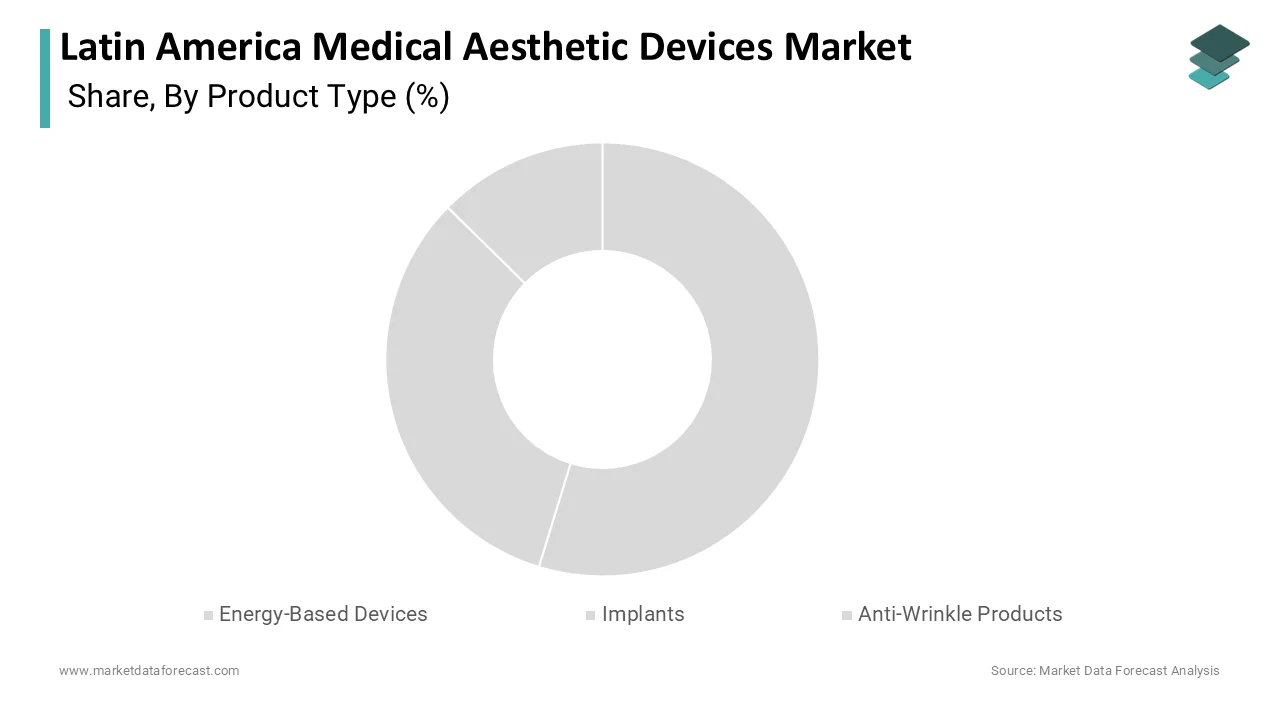
The energy-based devices segment dominated the Latin America medical aesthetic devices market and accounted for a substantial share in 2025. This dominance of the segment was driven by profound cultural preference for non-surgical body modification aligned with regional beauty ideals emphasizing toned physique and youthful skin. According to the International Society of Aesthetic Plastic Surgery, Brazil tracks hundreds of thousands of non-surgical body contouring, fat reduction, and skin tightening procedures annually, positioning the nation as a premier global hub for cryolipolysis and radiofrequency system deployments. According to the Latin American Faculty of Social Sciences, gender-focused sociological research across urban centers in Mexico and Colombia demonstrates that contemporary beauty standards deeply alter female body image priorities, driving targeted retail and clinical investments into aesthetic body silhouette adjustments. The cultural alignment ensures consistent utilization rates independent of economic cycles, as patients view body maintenance as essential self-investment. Manufacturers have developed region-specific protocols addressing Fitzpatrick skin types III to V, predominant in Latin populations, and reducing complication risks and building clinician confidence. The sheer procedural volume creates sustainable equipment replacement cycles and consumable revenue streams that anchor energy-based devices as a foundational market segment unaffected by shifting trends in injectable or implant categories.
The prominence of this segment is further reinforced by technological convergence enabling single platforms to address multiple aesthetic concerns maximizing return on investment for cost conscious Latin American clinics. As per the American Society for Laser Cost-Conscious Surgery, the acquisition of multi-wavelength and multi-indication hybrid platforms combining radiofrequency, laser, or ultrasound technologies helps clinical operators expand patient treatment menus using a single capital layout. Economic volatility across the region makes multi indication platforms particularly attractive as clinics can pivot services based on seasonal demand or patient demographics without additional equipment investment. As per the Mexican Association of Plastic, Aesthetic and Reconstructive Surgery, integrated multi-modality platforms scale up daily equipment utilization parameters across urban clinical operations by condensing separate body shaping and dermal therapies into single-room setups. Regulatory approvals for combination therapies have accelerated in Chile and Colombia recognizing clinical efficacy and safety profiles established through international studies. Training programs emphasize versatile treatment protocols enabling practitioners to maximize platform capabilities across diverse patient presentations. This technological efficiency aligns perfectly with Latin American business realities where capital constraints favor flexible solutions over specialized equipment. Manufacturers continuously expand platform indications through software updates extending product lifecycle and creating recurring revenue opportunities that solidify energy-based devices as indispensable infrastructure rather than discretionary.y
The anti-wrinkle products segment is on the rise and is expected to be the fastest-growing segment in the market, witnessing a CAGR of 9.4% from 2026 to 2034 due to emerging preventive aesthetics culture among millennials and Generation Z across Latin America. According to the Pan American Health Organization, regional public health campaigns focus on basic skin disease surveillance and sun-protection literacy across younger demographics, leaving elective non-surgical anti-aging metrics to specialized retail markets. According to the Brazilian Society of Dermatology, digital media trends and prominent local online creators accelerate the commercialization of preventative dermal treatments, converting botulinum toxin and complex skin care regimens into aspirational status markers among younger consumers. Dermatologists increasingly prescribe medical-grade topicals as adjuncts to device treatments, creating synergistic demand patterns. This demographic expansion transforms anti-wrinkle products from a niche geriatric category into a mass-market staple with longer customer lifetime value. Manufacturers launching affordable starter kits and subscription models capture price-sensitive younger consumers, establishing brand loyalty before they graduate to higher-margin device procedures. Preventive positioning also reduces stigma associated with aesthetic intervention, framing it as wellness rather than vanity, accelerating social acceptance and market penetration.
Growth acceleration in anti-wrinkle products is further propelled by increasing integration of prescription-strength formulations into dermatological practice, blurring boundaries between cosmetics and medicine. As per the Brazilian Society of Dermatology, clinical dermatologists systematically prioritize topical retinoids like tretinoin alongside highly targeted chemical compounds as essential first-line interventions to reverse severe skin photoaging. According to the Mercosur Common Market Group, cross-border regulatory integration projects enforce harmonized technical requirements and common safety evaluations to modernize market access pathways for verified personal care products across member states. Telemedicine platforms expanded during he pandemic now facilitate remote consultations and e-prescriptions, increasing access to medical-grade products for patients in underserved regions without local dermatologist availability. Insurance schemes in certain countries partially cover prescription anti-aging treatments for documented photo damage, further llegitimizing thecategory as therapeutic rather than purely cosmetic. This medical endorsement builds consumer trust and justifies premium pricing, supporting margin expansion. Integration with device treatment protocols creates bundled offering opportunities,s enhancing overall clinic revenue while establishing anti-wrinkle products as an essential component of the comprehensive aesthetic care continuum.
By Procedures Insights
The cosmetic procedures segment led the Latin America medical aesthetic devices market and captured a significant share in 2025. This leading position of the segment was attributed to pervasive social media influence creating homogenized beauty standards that drive unprecedented procedural volumes across diverse socioeconomic segments. According to the World Bank, internet and mobile network users across major Latin American urban territories display some of the highest global averages for daily digital content engagement, expanding the general population's exposure to commercialized and curated lifestyle standards. As per the Journal of Cosmetic Dermatology, interactive online platforms and social media channels serve as highly influential vectors for patient self-education, modifying consumer behavior trends and clinical consultation patterns across regional aesthetic practices. Celebrity culture and influencer marketing create aspirational benchmarks that transcend class boundaries, es making cosmetic enhancement perceived as accessible aspiration rather than elite luxury. Clinics leverage social proof through before-and-after content, generating organic demand that reduces customer acquisition costs and sustains high procedure volumes. Regional beauty pageants and entertainment industries reinforce specific aesthetic archetypes,s maintaining consistent demand drivers independent of global fashion trends. This cultural ecosystem transforms cosmetic procedures from discretionary indulgence into social currency necessary for personal branding and professional presentation. The resulting volume foundation supports extensive clinic networks and device utilization rates unmatched in other regions,n,s securing cosmetic procedures as a dominant market segment through cultural embeddedness rather than mere economic factors.
The leading position of this segment is bolstered by extensive private practice infrastructure specifically designed for high throughput elective aesthetic services rather than reconstructive or medical high-throughput care. According to the Brazilian Society of Dermatology, the commercial network of private cosmetic practices has continuously expanded across major metropolitan areas, anchoring its high-volume infrastructure on out-of-pocket elective treatments. Financing partnerships with major banks enable clinics to offer installment plans converting high ticket cosmetic procedures into manageable monthly payments and expanding access beyond cash-paying elites. Real estate development in urban centers prioritizes mixed-use buildings with ground-floor retail visibility optimized for aesthetic clinic foot traffic, creating ground-floor distribution channels. Training programs in aesthetic medicine produce graduates skilled in cosmetic techniques rather than complex reconstruction, ensuring workforce alignment with market demand. Supply chains for cosmetic devices and consumables are more developed than reconstructive alternatives reducing procurement friction and enabling rapid technology adoption. This infrastructure specialization creates self reinforcing cycle where cosmetic procedure availability begets demand, which drives further infrastructure investment. Reconstruction remains concentrated in academic hospitals with limited capacity and longer wait times pushing even borderline cases toward private cosmetic sector. Consequently, cosmetic procedures maintain dominance through systemic advantages in accessibility, ility affordability, and service delivery optimization.
The reconstruction procedures segment is likely to experience the fastest CAGR of 8.7% during the forecast period owing to rising bariatric surgery volumes creating substantial demand for post-weight-loss body contouring and skin tightening interventions. As per the International Federation for the Surgery of Obesity and Metabolic Disorders, the regional volume of bariatric and metabolic surgeries continues to scale upward to combat high chronic obesity rates, expanding the patient cohort entering downstream long-term medical care. According to the Obesity Surgery journal, massive weight loss achieved via surgical interventions creates extensive structural abdominal contour deformities, driving long-term clinical interest in body contouring and specialized plastic surgeries. Public health systems in a few countries increasingly recognize post-bariatric reconstruction as medically necessary rather than cosmetic, enabling insurance coverage and public funding that expands access beyond self-pay patients. Specialized multidisciplinary clinics integrating bariatric surgeons, plastic surgeons,n,s and aesthetic device specialists have emerged, optimizing the patient journey and capturing sequential treatment revenue. Device manufacturers have developed protocols specifically for post-bariatric tissue characteristics, addressing unique challenges of massive weight loss patients. This iatrogenic demand stream is structurally linked to the obesity epidemic and surgical response, creating a growth trajectory independent of voluntary aesthetic trends. As bariatric surgery continues expanding, so does downstream reconstruction demand, propelling segment growth above mature cosmetic market averages.
The swift expansion of this segment gains further momentum from advancing trauma care and oncology survivorship programs, integrating aesthetic restoration as a standard component of comprehensive rehabilitation. As per the Pan American Health Organization, severe physical injuries stemming from external causes such as motor vehicle accidents consume notable portions of hospital budgets, highlighting the substantial public healthcare burden of clinical maxillofacial and reconstruction care. Advances in microsurgery and tissue engineering enable previously impossible reconstructions, expanding the treatable patient population and device utilization. Government programs addressing violence-related injuries in Colombia and Central America fund reconstructive care as a public health priority, creating a stable demand base insulated from economic volatility affecting the elective cosmetic market. Academic institutions train the next generation of reconstructive surgeons using advanced simulation and device technologies, building human capital capacity. International NGOs supplement domestic resources in underserved regions,s expanding geographic reach. This medical necessity-driven demand provides a recession-resistant growth foundation distinct from discretionary cosmetic spending. Integration of aesthetic principles into functional reconstruction elevates patient expectations and device requirements, supporting premium technology adoption. Survivorship focus transforms reconstruction from a salvage procedure to an integral wellness component,, staining long term segment expansion.
By End Users Insights
In 2025, the clinics segment held the majority share in the Latin America medical aesthetic devices market because regulatory frameworks across most countries mandate physician supervision for energy-based device operation, restricting legal use to licensed medical facilities. According to the Federal Council of Medicine, medical regulatory resolutions and ethical guidelines strictly govern clinical boundaries and medical advertising in Brazil, emphasizing that high-risk invasive and therapeutic procedures require formal medical qualification to safeguard patient health. As per the Mexican Association of Plastic, Aesthetic and Reconstructive Surgery, national health regulations and medical licensing boards across major Latin American economies enforce strict oversight and operational criteria for facilities deploying professional energy-based devices. Liability concerns reinforce compliance, as malpractice insurance typically covers only supervised procedures, es incentivizing adherence to regulatory standards. Patient awareness campaigns by dermatological societies highlight risks of unregulated treatments, incentivizing consumer preference for credentialed clinics despite higher costs. The legal framework ensures that the majority of device sales flow through the clinic channel regardless of consumer interest in alternative settings. Manufacturers structure distribution and training programs around clinic requirements, further entrenching this channel. Even as technology becomes safer and moreuser-friendly, regulatory inertia preserves clinic dominance, creating a stable,e predictable demand base for professional grade devices unaffected by consumer electronics trends disrupting professional-grade segments.
The dominance of clinics is economically reinforced by high capital costs and ongoing maintenance requirements that make professional grade devices financially viable only in commercial clinical settiprofessional-gradeerican Society for Laser Medicine and Surgery, the acquisition of commercial-grade aesthetic laser and body contouring platforms involves substantial multi-thousand dollar capital expenditures alongside structured service agreememulti-thousand-dollarmulti-thousand-dollaro professional healthcare organizations. Clinics achieve return on investment through high patient volumes and premium pricing enabled by medical credentialing and financing partnerships unavailable to non medical entities. Depreciation schedules and tax incentives for medical entities are non-medical for incorporated clinical practices over sole proprietorships or informal operators. Technical complexity requires dedicated staff training and certification creating operational overhead manageable only in structured clinical environments. Consumable supply chains prioritize clinic accounts ensuring reliable access to proprietary tips cartridges and gels essential f,o,r treatment delivery. Warranty terms are often void if devices used outside approved clinical settings protecting manufacturer liability but rarely enforcing channel exclusivity. This economic reality creates natural barrier to entry preserving clinic dominance even as consumer demand democratizes. Only clinics possess the infr structure, nd financial capacity to sustain professional device ecosystems,s making them indispensable market anchors regardless of technological simplification trends.
The home-use devicessegment iss expected to exhibit a noteworthy CAGR of 11.2% between 202andto 2034. This swift expansion of the segment is fuelled by consumer preference for privacy, convenience, and reduced social stigma associated with clinic visits. According to the International Society of Aesthetic Plastic Surgery, a substantial segment of the consumer population chooses non-invasive professional procedures over surgical interventions due to the convenience of minimized recovery timelines and immediate return to daily activities. The pandemic-era normalization of self-care routines accelerated acceptance of at-home beauty technology. Social media tutorials and influencer endorsements demystify home device use, reducing the intimidation factor and building confidence in self-administration. Subscription models for consumables and app-guided treatment protocols enhance user experience and retention. This shift reflects broader cultural movement toward personalized autonomous wellness management. Home devices serve as gateway products, introducing consumers to aesthetic technology who may later graduate to professional treatments, expanding the overall market funnel. Manufacturers investing in safety features and intuitive interfaces address historical concerns, enabling confident adoption among demographics previously excluded by the clinic-centric model.
Growth acceleration in the home-use segment is fundamentally enabled by affordable price points that democratize access to aesthetic technology across middle- and lower-income populations historically excluded from premium clinic services. As per Euromonitor International, digital beauty consumer platforms and accessible electronic skincare tools represent highly dynamic product segments, capturing notable year-on-year growth across diverse consumer groups in emerging Latin American retail markets. Local manufacturing initiatives in Brazil and Mexico reduce import tariffs and logistics costs, enabling competitive pricing aligned with regional purchasing power parity. Buy now,w pay later fintech solutions extend payment terms up to 12 months for home devices, reducing monthly outlay to levels comparable with premium skincare products. Mass market retailers and pharmacy chains stock home devices alongside everyday beauty products, normalizing the category and increasing impulse purchase opportunities. Simplified regulatory classifications for low-energy home devices reduce compliance costs passed through to consumers. This affordability revolution transforms aesthetic technology from luxury indulgence into an accessible self-care staple, expanding the total addressable market tenfold beyond a clinic-constrained base. Volume-driven business models compensate for lower unit margins, creating a sustainable growth trajectory. As manufacturing scales and competition intensifies, prices will continue declining, further accelerating adoption curves and solidifying home use as the primary growth engine for the foreseeable future.
COUNTRY LEVEL ANALYSIS
Brazil Medical Aesthetic Devices Market Analysis
Brazil was the top performer in the Latin America medical aesthetic devices market and accounted for a 42.1% share in 2025. This leading position of the Brazilian market was attributed to its unparalleled procedural volume and sophisticated private clinic infrastructure serving over 215 million inhabitants. According to the International Society of Aesthetic Plastic Surgery, Brazil frequently alternates with the United States as a primary global destination for aesthetic surgeries, tracking over two million surgical and non-surgical procedures annually to anchor a large commercial infrastructure for energy-based medical devices. Domestic manufacturing capabilities include local production facilities for several multinational device companies, reducing import dependency and stabilizing supply despite currency volatility. National Health Surveillance Agency maintains a rigorous but predictable regulatory pathway, enabling timely technology adoption while ensuring safety standards. Cultural normalization of aesthetic intervention transcends socioeconomic boundaries, with financing options available through major banks expanding access to middle-class consumers. As per the National Agency of Supplementary Health, private health insurance networks provide coverage plans to approximately 25% of the Brazilian population, shifting the primary financial weight of elective medical aesthetic services strictly to out-of-pocket patient spending. These structural advantages make Brazil not just the largest but also the most mature and resilient market where aesthetic devices function as mainstream healthcare infrastructure rather than discretionary luxury.
Mexico Medical Aesthetic Devices Market Analysis
Mexico was positioned second in the Latin America medical aesthetic devices market and captured a 26.6% share in 2025. This growth of the Mexican market was propelled by a robust medical tourism ecosystem and rapidly expanding domestic middle-class demand for aesthetic technologies. As per the World Bank, international medical tourism channels actively route hundreds of thousands of cross-border patients to medical institutions across Mexico annually, expanding the utilization of premium aesthetic technology infrastructure outside the domestic patient baseline. According to the Mexican Association of Plastic, Aesthetic and Reconstructive Surgery, clinical aesthetic interventions continue to exhibit a steady upward trajectory in major metropolitan zones, accelerating the deployment and procurement of energy-based medical devices across private healthcare facilities. Proximity to the United States facilitates rapid technology transfer and regulatory alignment, enabling Mexican clinics to offer latest-generation devices concurrently with North American markets. Cross-border shopping by US residents in border cities like Tijuana and Ciudad Juárez creates an additional demand stream, leveraging favorable exchange rates and lower labor costs. Major retail pharmacy chains have expanded aesthetic service offerings, integrating device-based treatments into accessible community locations, broadening distribution beyond traditional specialty clinics. Government tourism promotion actively markets aesthetic services alongside cultural attractions, expanding the visitor base. As per the World Bank, the national urbanization rate in Mexico has reached approximately 82%, concentrating regional distribution channels and consolidating medical aesthetic equipment setups within major urban healthcare hubs. These dynamics position Mexico as a high-growth dual-track market where international and domestic demand streams reinforce each other, creating balanced expansion resilient to single-source volatility.
Argentina Medical Aesthetic Devices Market Analysis
Argentina occupies a significant position in the regional medical aesthetic devices market because of exceptional clinical expertise and academic leadership despite persistent economic challenges affecting device affordability and import stability. According to the International Society of Aesthetic Plastic Surgery, Argentina maintains one of the highest per capita rates of cosmetic procedures globally, securing a consistent regional deployment of capital-intensive aesthetic hardware and associated clinical consumables. Public hospitals in Buenos Aires and Córdoba serve as regional reference centers, training professionals from neighboring countries and disseminating best practices throughout the Southern Cone. As per the Central Bank of Argentina, volatile systemic foreign exchange controls and severe currency depreciation have consistently forced commercial distributors of imported medical devices to navigate complex bureaucratic approval systems to fulfill private aesthetic clinic equipment demands. Local distributors maintain strategic inventory buffers and offer flexible peso-denominated payment terms, preserving clinic access when hard currency is scarce. Academic institutions produce significant clinical research contributing to the global evidence base, reinforcing professional standards independent of commercial promotion. Strong dermatology and plastic surgery residency programs ensure continuous workforce renewal, maintaining clinical excellence. Despite macroeconomic headwinds, Argentina’s deep institutional knowledge sustains a clinically sophisticated market, punching above its economic weight and serving as an intellectual hub influencing device selection criteria and treatment protocols across the region beyond price considerations alone.
Chile Medical Aesthetic Devices Market Analysis
Chile grew steadily in the Latin American medical aesthetic devices market, and it leads the region in regulatory sophistication and per capita spending on premium aesthetic technologies. According to the Chilean Ministry of Health, the Explicit Health Guarantees program legally binds public and private networks to finance 87 prioritized clinical conditions, separating elective aesthetic energy-based device procurements into an entirely consumer-funded out-of-pocket private market. The country’s advanced demographic transition. As per the National Statistics Institute, recent national census findings document that the segment of the population aged 65 or over reached 14%, accelerating a major structural demographic aging trend that elevates long-term commercial interest in clinical skin rejuvenation and anti-aging treatments. Private insurers known as ISAPREs provide comprehensive coverage for medically indicated aesthetic treatments, recognizing the preventive value in mental health and social functioning. Strong regulatory alignment with European and North American standards through mutual recognition agreements facilitates rapid access to innovative technologies, keeping Chile at the forefront of regional clinical practice. A stable economy and predictable reimbursement environment attract manufacturer investment, ensuring consistent product availability, unlike volatile neighbors. High health literacy and consumer protection enforcement build trust in legitimate providers,s reducing gray market penetration. Santiago serves as regional headquarters for multiple multinational device companies,s leveraging Chile as a platform for Southern Cone operations. These factors make Chile the most efficient and clinically advanced market, serving as a benchmark for regulatory and quality standards despite its smaller absolute size.
COMPETITIVE LANDSCAPE
Competition in the Latin American medical aesthetic devices market is characterized by intense rivalry among multinational corporations,s specialized regional players,s and emerging Asian manufacturers vying for position across heterogeneous healthcare landscapes. Established multinationals leverage clinical validation, heritage, and physician relationships while adapting portfolios to meet diverse regulatory requirements across fragmented national jurisdictions. Specialized regional companies compete through cultural understanding, flexible financing, ng and responsive service networks addressing local pain points global players often overlook. Asian manufacturers challenge on price but face validation and trust barriers, limiting penetration in clinically sophisticated segments. Competition increasingly centers on integrated ecosystem provision, on combining devices, consumables, training, ng and financing rather than standalone hardware specifications. Public sector tenders drive price competition, particularly in Brazil and Mexico, where government procurement influences broader market pricing dynamics. Private sector competition emphasizes premium positioning, clinical evidence,ce and user experience differentiation. Geographic fragmentation creates varied competitive dynamics, with mature Brazilian and Mexican markets featuring sophisticated differentiation while emerging Andean and Central American markets prioritize affordability and basic access. Consolidation trends accelerate as companies seek scale advantages and portfolio breadth to navigate regulatory complexity and economic volatility. Innovation cycles shorten with rapid adoption of combination technologies and digital integration. This multifaceted landscape rewards companies balancing global expertise with local execution capabilities across diverse cultural, economic,c and regulatory contexts, thus defining Latin American success factors distinct from other global regions.
KEY MARKET PLAYERS
Some of the companies that are playing a dominating role in the Latin America Medical Aesthetic Devices Market include:
- Allergan
- Cynosure, LLC
- Johnson & Johnson
- LCA Pharmaceutical
- Galderma Pharma S.A.
- Solta Medical
- Cutera, Inc.
- Focus Medical
- Human Med AG
- Genzyme Corporation
- Alcon Inc.
- Alma Lasers Ltd.
TOP LEADING PLAYERS IN THE MARKET
- Allergan Aesthetics maintains extensive operations across Latin America through localized training centers and regulatory engagement, ensuring safe device utilization aligned with regional clinical standards. The company recently expanded its CoolSculpting Elite platform availability in Brazil and Mexico, addressing high demand for non-surgical body contouring among diverse skin types. Allergan partnered with Latin American dermatological societies to develop physician certification programs enhancing treatment safety and outcomes. These initiatives demonstrate commitment to education-driven market development rather than mere equipment sales. Manufacturing and distribution hubs in São Paulo ensure supply chain resilience against import disruptions while supporting rapid regulatory compliance. Continuous investment in clinical studies validating efficacy for Latin American populations builds physician confidence and differentiates from unvalidated competitors. Strategic financing partnerships enable clinics to acquire premium devices despite economic volatility. These actions strengthen position through ecosystem integration,,n embedding devices within professional practice standards and creating sustainable demand grounded in clinical excellence rather than price competition alone.
- Cynosure LLC operates as a leading provider of laser- and energy-based aesthetic technologies across Latin America, with a strong presence in Brazil, Mexico, and Chile serving diverse clinic segments. The company recently launche,d next, generation,, PicoSure Pro platform in the region, addressing pigmentation concerns prevalent in Fitzpatrick skin types III to V, common among Latin populations. Cynosure established regional service centers in São Paulo and Mexico City, reducing equipment downtime and improving clinic operational reliability. Localized marketing campaigns feature regional influencers and physicians, building cultural relevance beyond global messaging. Training academies offer hands-on workshops in Spanish and Portuguese, overcoming language barriers limiting technology adoption. Strategic collaborations with academic institutions generate local clinical evidence supporting regulatory approvals and physician trust. Flexible payment programs accommodate currency fluctuations, preserving access during economic downturns. These strategies position Cynosure at the intersection of technological innovation and local market adaptation, capturing demand from clinically sophisticated practitioners prioritizing validated solutions over cost alone in a competitive landscape.
- Merz Aesthetics distinguishes itself through integrated approach combining injectables with energy-based devices, creating a comprehensive treatment ecosystem valued in Latienergy-basedesthetic, practice. The company recently expanded Ultherapy platform availability across Colombia and Argentina, addressing growing demand for non surgical skin tightening among aging demographics. Merz partnered with Latinon-surgicalnon-surgicalacial plastic surgery societies to develop consensus protocols optimizing device use alongside neuromodulators and fillers. Regional headquarters in Miami serves Latin American markets with a dedicated Spanish-speaking support team understanding cultural nuances. Educational initiatives emphasize combination therapy synergies, increasing per-patient revenue and device utilization rates. Clinical research collaborations with Brazilian universities generate local evidence supporting unique positioning against single-modality competitors. Supply chain investments ensure consistent product availability despite regional logistics challenges. These actions strengthen position through holistic solution provision rather than standalone device sales aligning with Latin American practitioner preference for integrated aesthetic approaches and creating competitive moat through ecosystem lock in effects.
TOP STRATEGIES USED BY KEY PARTICIPANTS
Key players: lock in localized clinical validation studies generating region specific evidence for diverse skin types and anatomical characteristics, region-specific physician adoption. Companies invest heavily in Spanish and Portuguese training programs overcoming language barriers and building practitioner competency critical for safe device utilization. Strategic partnerships with national aesthetic societies facilitate guideline integration and regulatory navigation accelerating market access across fragmented jurisdictions. Flexible financing structures accommodate currency volatility and cash flow constraints enabling clinic acquisitions despite economic uncertainty. Distribution network localization reduces import dependency and service response times improving operational reliability for time sensitive aesthetic practices. In-house integration bundling combining time-sensitive consumables and injectables increases customer lifetime value and creates switching costs. Digital marketing leveraging regional influencers and social platforms builds consumer awareness and demand pull complementing physician push strategies. Post market surveillance exceeding regulatory minimums builds trust and differentiates from unvalidated gray market alternatives. These interconnected strategies address structural Latin American market characteristics including cultural preferences, economic volatility, and regulatory fragmentation, positioning companies for sustainable growth aligned with regional realities rather than generic global approaches disconnected from local success factors.
MARKET SEGMENTATION
This research report on the Latin American medical aesthetic devices market has been segmented and sub-segmented into the following categories.
By Product Type
- Energy-Based Devices
- Implants
- Anti-Wrinkle Products
By Procedures
- Cosmetic Procedures
- Reconstruction Procedures
By End Users
- Home Use
- Clinics
- Beauty Centres
By Country
- Mexico
- Brazil
- Argentina
- Chile
- Rest of Latin America