- Product Description Description
- Table of Contents TOC
- List of Table & Figure LOT
- Get Free Sample PDF Sample PDF
Market Size, 2025
$0.25 BnMarket Estimate, 2026
$0.29 BnMarket Forecast, 2034
$0.81 BnCAGR, 2026–2034
13.91%Latin America Mental Health Software Market Report Summary
The Latin America Mental Health Software Market was valued at USD 0.25 billion in 2025 and is projected to reach USD 0.81 billion by 2034, growing from USD 0.29 billion in 2026 at a CAGR of 13.91% during the forecast period. Growth is driven by the rising prevalence of mental health disorders, expansion of telemedicine regulations, increasing smartphone penetration, and growing adoption of digital healthcare solutions. However, limited digital infrastructure, cultural stigma, and shortages of trained mental health professionals continue to restrain market growth.
Key Market Trends
- Increasing integration of artificial intelligence for personalized mental healthcare and early diagnosis.
- Growing adoption of teletherapy and remote patient monitoring platforms.
- Rising demand for employer-sponsored digital mental health and corporate wellness programs.
- Expansion of mobile-first mental health applications to improve accessibility across the region.
- Increasing focus on secure, cloud-based software platforms that comply with evolving data privacy regulations.
Segmental Insights
- Based on component, integrated mental health software held the largest market share of 45.3% in 2025, driven by the need for interoperability, centralized patient management, and integration with hospital information systems.
- Based on delivery model, subscription models dominated the market in 2025, supported by lower upfront costs, cloud accessibility, automatic software updates, and flexible pricing for healthcare providers.
- Standalone behavioral health software is the fastest-growing component segment, projected to register a CAGR of 12.5%, driven by increasing adoption among private practices, specialized mental health clinics, and teletherapy providers.
Regional Insights
- Brazil led the market in 2025, supported by its large public healthcare system, digital health modernization initiatives, high prevalence of mental health disorders, and supportive telemedicine regulations.
- Mexico holds a significant share, driven by expanding digital healthcare infrastructure, increasing mental health awareness, and growing adoption of interoperable software solutions.
- Argentina is a prominent market, supported by a high concentration of mental health professionals, increasing adoption of cloud-based software, and expanding digital health initiatives.
- Chile contributes notably through advanced healthcare infrastructure, strong digital literacy, supportive telehealth programs, and increasing investment in AI-enabled mental health solutions.
- Private practices represent the fastest-growing end-user segment, projected to register a CAGR of 13.2%, driven by increasing telepsychiatry adoption, independent mental health practices, and demand for user-friendly practice management solutions.
Competitive Landscape
The market is highly competitive, with international software vendors and regional digital health companies competing through AI integration, localization, cloud-based deployment, mobile-first platforms, and regulatory compliance. Companies are investing in multilingual software, telehealth capabilities, clinician training, strategic partnerships, and enterprise healthcare solutions to strengthen their presence across Latin America.Prominent players in the market include Oracle Health (Cerner Corporation), Credible Behavioral Health, Inc., MindLinc, The Echo Group, Core Solutions, Inc., Valant Medical Solutions, Inc., NextGen Healthcare, Inc., Qualifacts Systems, LLC, Epic Systems Corporation, Netsmart Technologies, Inc., Welligent, Inc., and Advanced Data Systems Corporation (ADS).
Latin America Mental Health Software Market Size
The Latin American mental health software market size in Latin America was valued at USD 0.25 billion in 2025 and is predicted to be worth USD 0.81 billion by 2034, from USD 0.29 billion in 2026, growing at a CAGR of 13.91%. From 2026 to 2034.

Mental health software is a digital platform that facilitates diagnosis, treatment planning, patient monitoring, and administrative management for mental health professionals. These solutions include electronic health records specialized for psychiatry, teletherapy interfaces, cognitive behavioral therapy applications, and practice management tools. Despite this high prevalence, the treatment gap remains substantial, with nearly 70% of individuals requiring care not receiving adequate services, as stated by the World Health Organization. Digital solutions aim to bridge this disparity by expanding access to qualified professionals through remote consultations and automated self-help modules. The integration of artificial intelligence in diagnostic tools enhances early detection capabilities by allowing for timely intervention. Governments in countries like Brazil and Mexico are increasingly recognizing the economic impact of untreated mental illness, which costs the regional economy billions annually in lost productivity. The shift toward value-based care models encourages the adoption of software that tracks patient outcomes and ensures continuity of care. Mobile penetration rates exceeding 80% in urban areas provide a robust infrastructure for delivering digital mental health interventions. This technological evolution supports a transition from reactive crisis management to proactive wellness maintenance, transforming how mental healthcare is delivered across diverse socioeconomic landscapes in Latin America.
MARKET DRIVERS
Surging Prevalence of Mental Health Disorders Post-Pandemic
The dramatic increase in mental health conditions following the global pandemic is majorly fuelling the growth of the Latin America mental health software market. As per the World Health Organization, cases of depression and anxiety increased by 25% globally during the first year of the pandemic, with Latin America experiencing some of the highest impacts due to prolonged lockdowns and economic instability. This surge has overwhelmed traditional healthcare systems, creating long wait times and insufficient provider availability. Mental health software offers a scalable solution by enabling triage, remote monitoring, and asynchronous communication between patients and clinicians. Digital platforms allow therapists to manage larger caseloads efficiently through automated scheduling and progress tracking features. The urgency of addressing this public health crisis has prompted governments and private insurers to prioritize digital mental health solutions. The sheer volume of unmet demand necessitates technological interventions that can reach populations beyond physical clinic boundaries, driving rapid adoption of comprehensive mental health software suites across the region.
Expansion of Telemedicine Regulatory Frameworks and Reimbursement Policies
The formalization of telemedicine regulations and reimbursement policies is additionally boosting the growth of the Latin America mental health software market. Previously, legal ambiguities hindered the widespread use of digital consultations, but recent legislative changes have provided clarity and security for providers. Similarly, Brazil enacted Law 13989 in 2020, which explicitly permits telemedicine during and after public health emergencies, creating a stable regulatory environment for digital health vendors. These regulatory advancements encourage healthcare institutions to invest in compliant software platforms that facilitate secure video conferencing and electronic prescribing. Insurance providers are increasingly covering telepsychiatry sessions, with major insurers in Chile and Colombia adding digital mental health benefits to their plans. This financial support reduces out-of-pocket costs for patients by making digital care more accessible. The alignment of legal frameworks with payment mechanisms creates a sustainable ecosystem, where mental health software becomes an integral part of standard care delivery rather than an optional alternative, fostering long-term market growth.
MARKET RESTRAINTS
Limited Digital Infrastructure and Internet Connectivity Disparities
The inadequate digital infrastructure and uneven internet connectivity are hindering the growth of the Latin America mental health software market. While urban centers enjoy high-speed broadband access, rural and remote areas often lack reliable internet connections necessary for seamless teletherapy sessions and cloud-based software usage. According to the International Telecommunication Union, approximately 25% of the population in Latin America remains offline, with significant disparities between countries and within regions. In nations like Bolivia and Honduras, internet penetration rates fall below 50%, limiting the addressable market for digital mental health solutions. Poor connectivity leads to interrupted video calls and data synchronization failures, which compromise the quality of care and user experience. Patients in underserved areas may struggle to access high-bandwidth applications required for interactive therapeutic modules. The cost of mobile data remains prohibitive for lower-income segments, who are often the most in need of mental health support. Healthcare providers hesitate to recommend software dependent on stable internet connections when they know patients lack access.
Cultural Stigma and Low Mental Health Literacy
The deep-rooted cultural stigma surrounding mental illness and low levels of mental health literacy significantly hinder the growth of the Latin American mental health software market. Many individuals view seeking psychological help as a sign of weakness or personal failure, discouraging them from engaging with digital platforms even when available. This prevents nearly 60% of people with mental disorders from seeking any form of treatment in the region. This reluctance extends to digital tools, as users fear privacy breaches or social judgment if their usage is discovered. Family dynamics often prioritize collective harmony over individual emotional needs, leading to underreporting of symptoms and delayed intervention. Lack of awareness about mental health conditions means many people do not recognize their symptoms as treatable medical issues, reducing demand for diagnostic and management software. Educational campaigns are limited in reach, particularly in indigenous communities where language barriers further complicate access to digital resources. Without sufficient understanding of mental health benefits, potential users perceive software as unnecessary or ineffective. Overcoming these deeply ingrained social barriers requires extensive community engagement and culturally sensitive marketing, which slows down market penetration despite the availability of advanced technological solutions.
MARKET OPPORTUNITIES
Integration of Artificial Intelligence for Personalized Care and Early Detection
The integration of artificial intelligence into mental health software to enhance diagnostic accuracy and personalize treatment plans is creating new opportunities for the growth of the Latin America mental health software market. AI algorithms can analyze speech patterns, text inputs, and behavioral data to detect early signs of depression, anxiety, or psychosis with high precision. In Latin America, where psychiatrist shortages are acute, AI-powered triage tools can prioritize urgent cases and provide immediate coping strategies to users. Natural language processing enables software to offer conversational therapy in local dialects and languages, increasing accessibility for diverse populations. Machine learning models adapt to individual user responses, tailoring cognitive behavioral therapy exercises to specific needs and progress levels. This personalization improves engagement and adherence, leading to better clinical outcomes. Companies developing these technologies can partner with public health agencies to deploy scalable screening tools in schools and workplaces. The ability to process large datasets allows for population-level insights, helping policymakers allocate resources effectively.
Corporate Wellness Programs and Employer-Sponsored Digital Solutions
The growing emphasis on employee well-being by corporations is levelling up the growth of the Latin America mental health software market. Companies are increasingly recognizing that mental health directly impacts productivity, retention, and overall business performance. Depression and anxiety cost the Latin American economy over 100 billion dollars annually in lost productivity, prompting employers to seek cost-effective interventions. Corporate wellness programs are integrating digital mental health platforms to provide employees with confidential access to counseling, stress management tools, and mindfulness exercises. These B2B contracts offer software providers stable recurring revenue streams and large user bases without the need for direct consumer marketing. Major multinational corporations operating in Brazil, Mexico, and Argentina are leading this trend, setting benchmarks for local enterprises to follow. Software vendors can customize platforms to align with corporate culture and specific workplace stressors by enhancing relevance and utilization. Partnerships with human resources departments facilitate seamless integration into employee benefit portals. This shift toward preventive care in the workplace not only improves individual health but also demonstrates tangible return on investment for companies by driving sustained demand for enterprise-grade mental health software solutions.
MARKET CHALLENGES
Data Privacy Concerns and Regulatory Compliance Complexities
The complex landscape of data privacy regulations and ensuring compliance is a major challenge for the growth of the Latin America mental health software market. Mental health data is highly sensitive, requiring stringent protection measures to maintain patient trust and avoid legal repercussions. While Brazil implemented the General Data Protection Law in 2020, similar to the European GDPR, other countries in the region have fragmented or evolving regulatory frameworks. Mexico’s Federal Law on Protection of Personal Data Held by Private Parties lacks specific provisions for health data, creating ambiguity for software developers. Ensuring end-to-end encryption, secure data storage, and compliant consent mechanisms increases development costs and technical complexity. Cross-border data transfers face additional hurdles when servers are located outside the region, raising sovereignty concerns. A breach of mental health data can have devastating social consequences for patients due to stigma, making security paramount. Small startups struggle to meet these rigorous standards, limiting competition and innovation. Constantly changing regulations require continuous monitoring and adaptation, diverting resources from product improvement.
Shortage of Trained Mental Health Professionals for Digital Integration
The scarcity of trained mental health professionals capable of effectively integrating and utilizing digital software tools is likely to inhibit the growth of the Latin America mental health software market. The World Health Organization states that the region has an average of only 10 mental health workers per 100000 inhabitants, far below the global recommended ratio. This shortage means that even with advanced software, there are insufficient clinicians to interpret data, provide follow-up care, or manage complex cases identified by digital screenings. Many existing practitioners lack digital literacy and training in using telehealth platforms, leading to resistance or inefficient use of technology. Medical education curricula in many Latin American countries do not adequately cover digital health competencies, leaving graduates unprepared for modern practice environments. Without proper training, providers may misuse software features or fail to engage patients effectively through digital channels. The burden of managing both clinical duties and technological interfaces can lead to burnout, further exacerbating staffing issues. Software vendors face challenges in providing adequate support and training to a dispersed and resource-constrained workforce. The lack of professional champions limits advocacy for digital adoption within healthcare institutions. Bridging this skills gap requires significant investment in continuing education and change management initiatives, which slows down the realization of software benefits and restricts market expansion to areas with higher concentrations of qualified specialists.
REPORT COVERAGE
| REPORT METRIC | DETAILS |
| Market Size Available | 2025 to 2034 |
| Base Year | 2025 |
| Forecast Period | 2026 to 2034 |
| Segments Analysed | By Component, Delivery Model, Functionality, End User and Country |
| Various Analyses Covered | Regional & Country Level Analysis, Segment-Level Analysis, Drivers, Restraints, Opportunities, Challenges; PESTLE Analysis; Porter’s Five Forces Analysis, Competitive Landscape; Analyst Overview of Investment Opportunities |
| Countries Analysed | Mexico, Brazil, Argentina, Chile, Peru and Rest of Latin America |
| Market Leaders Profiled | Oracle Health (Cerner Corporation), Credible Behavioral Health, Inc., MindLinc, The Echo Group, Core Solutions, Inc., Valant Medical Solutions, Inc., NextGen Healthcare, Inc., Qualifacts Systems, LLC, Epic Systems Corporation, Netsmart Technologies, Inc., Welligent, Inc., Advanced Data Systems Corporation (ADS). |
SEGMENTAL ANALYSIS
By Component Insights
The integrated segment was the largest by accounting for 45.3% of the Latin America mental health software market share in 2025 due to its ability to streamline workflows within broader hospital information systems. The crucial need for interoperability between psychiatric care and general medical records. In large healthcare networks, patients often present with comorbid physical and mental health conditions, requiring seamless data exchange to ensure holistic treatment. Hospitals in Brazil and Mexico are increasingly adopting enterprise resource planning systems that include behavioral health modules to reduce administrative redundancy. The regulatory push for standardized electronic health records further accelerates adoption. Integrated platforms allow for centralized billing and reporting, which simplifies compliance with complex insurance requirements. Healthcare administrators prefer these solutions because they eliminate the need for multiple standalone applications, reducing training costs and technical support burdens. The ability to track patient journeys across different departments enhances care coordination and reduces fragmentation.
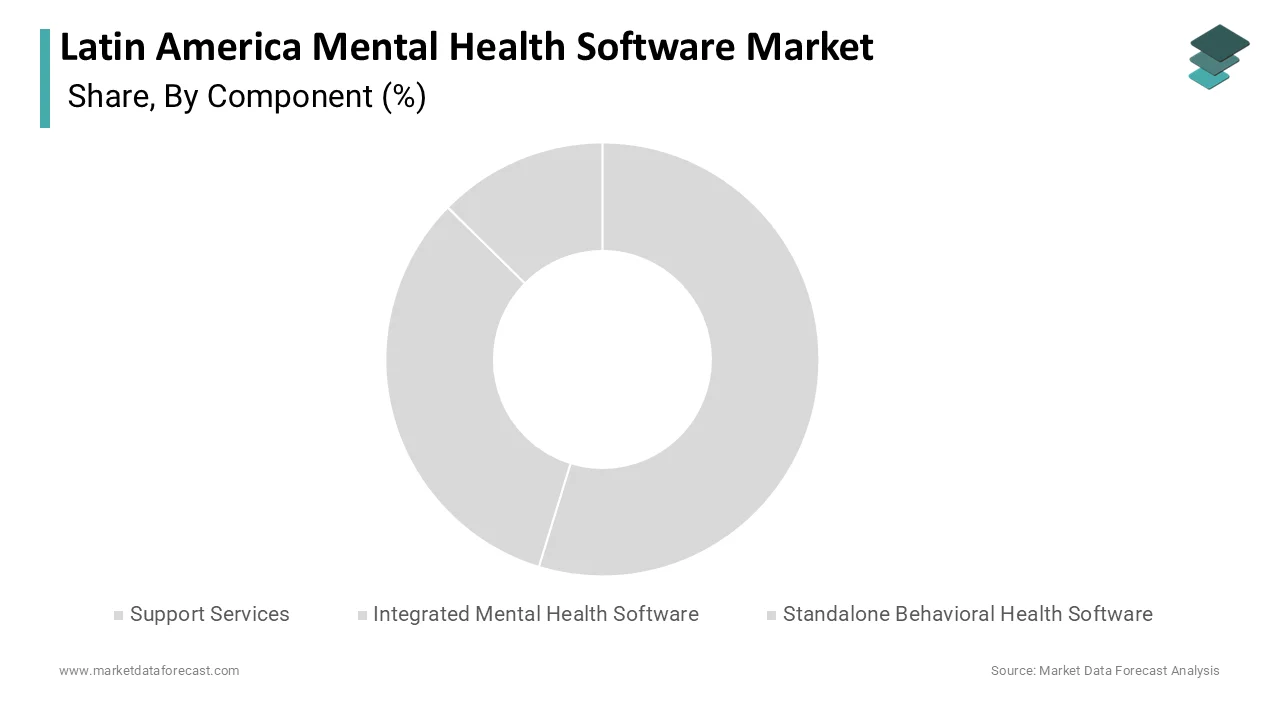
The standalone behavioral health software segment is likely to grow at the fastest CAGR of 12.5% from 2026 to 2034 owing to the proliferation of private practices and specialized mental health clinics that require tailored functionalities not available in general hospital systems. Private practitioners prefer standalone solutions because they offer specialized features such as detailed psychotherapy notes, outcome tracking scales, and teletherapy integration specific to behavioral health needs. Standalone systems are typically more affordable and easier to implement, making them accessible to smaller providers with limited IT budgets. Cloud-based standalone solutions enable remote access, which is crucial for therapists offering hybrid or fully virtual services. The flexibility to choose best-in-class features without being locked into large enterprise ecosystems appeals to independent clinicians. Vendor innovation focuses heavily on user experience and mobile accessibility, driving higher satisfaction rates. As the gig economy expands within the healthcare sector, more professionals are opting for independent practice, fueling the demand for specialized standalone tools that cater specifically to the nuances of mental health care delivery.
By Delivery Model Insights
The subscription models segment was the largest by holding a significant share of the Latin America mental health software market in 2025 owing to the lower upfront capital expenditure required, which aligns with the budget constraints of many healthcare providers in the region. Small clinics and private practitioners often lack the financial resources to purchase perpetual licenses and maintain on-premises servers. Subscription-based software as a service models allow users to pay predictable monthly or annual fees, converting capital expenses into operational expenses. This financial flexibility is crucial in economies with fluctuating currency values, such as Argentina and Brazil. The operational expenditure models are preferred in volatile economic environments to preserve cash flow. Additionally, subscription models include automatic updates, security patches, and technical support, reducing the burden on internal IT staff. The scalability of subscription plans allows providers to add or remove users easily as their practice grows or shrinks. Cloud hosting ensures high availability and disaster recovery capabilities that would be prohibitively expensive to build independently. The ease of implementation and immediate access to features make subscription models attractive for rapid deployment.
The ownership models segment is likely to witness the fastest CAGR of 6.8% throughout the forecast period, with large public hospital networks and government health institutions that prioritize data sovereignty and long-term cost efficiency. In countries with strict data localization laws, such as Brazil under its General Data Protection Law, some institutions prefer owning their infrastructure to ensure complete control over patient data storage and security. The Ministry of Health in several Latin American nations mandates that sensitive health data remain on local servers, prompting investments in on-premises solutions. While the initial investment is high, the total cost of ownership overten yearsd can be lower than recurring subscription fees for large-scale deployments. Government tenders often favor perpetual licenses to avoid indefinite vendor dependency and ensure continuity of care regardless of vendor financial stability. Legacy system integration requirements in older hospitals also drive the preference for owned software that can be deeply customized and maintained internally. The desire for independence from internet connectivity issues in remote areas further supports the adoption of locally hosted owned systems.
By End User Insights
The hospitals segment was the largest, holding 40.2% of the Latin America mental health software market share in 2025, with the high volume of psychiatric emergencies and inpatient admissions that require robust management systems. Large public and private hospitals serve as the primary points of care for severe mental health conditions, necessitating comprehensive software for admission, discharge, and medication management. Integration with emergency department workflows is critical for timely intervention and triage. Hospitals are under pressure to reduce length of stay and readmission rates, which automated software facilitates through better care coordination andfollow-upp scheduling. Regulatory requirements for detailed documentation and billing compliance in institutional settings further drive adoption. Public hospital networks in countries like Mexico and Colombia are undergoing digital transformation initiatives funded by government grants, prioritizing mental health modules within broader hospital information systems. The complexity of managing multidisciplinary teams including psychiatrists, psychologists, and social workers requires sophisticated collaboration tools that hospital-grade software provides.
The private practices segment is likely to grow at the fastest CAGR of 13.2% from 2026 to 2032 due to the increasing number of mental health professionals establishing independent clinics due to dissatisfaction with public sector working conditions and the desire for autonomy. The shortage of public sector jobs and low wages in countries like Argentina and Venezuela drives many specialists to the private sector. Private practitioners seek efficient, user-friendly software to manage appointments, billing, and clinical notes without administrative overhead. The rise of telepsychiatry has lowered barriers to entry, allowing therapists to start practices with minimal physical infrastructure. Digital platforms enable these solo practitioners to compete with larger institutions by offering convenient online booking and virtual sessions. Insurance reimbursement improvements for outpatient mental health services in Chile and Brazil further incentivize private practice growth. These practitioners prioritize software that enhances patient engagement and simplifies revenue cycle management. The agility of private practices allows for faster adoption of new technologies compared to bureaucratic hospital systems.
COUNTRY LEVEL ANALYSIS
Brazil Mental Health Software Market Analysis
Brazil was the top performer of the Latin America mental health software market by holding 35.3% of the share in 2026. The country’s dominance is driven by its large population and extensive public healthcare system known as SUS, which is undergoing significant digital modernization. The Brazilian Ministry of Health has implemented national strategies to integrate mental health care into primary care networks, requiring robust software solutions for data tracking and referral management. High prevalence of depression and anxiety, affecting over 10 million citizens, creates urgent demand for scalable digital interventions. The presence of local tech hubs in São Paulo and Florianópolis fosters innovation in health technology, with numerous startups developing specialized mental health platforms. Regulatory frameworks such as the General Data Protection Law enforce strict privacy standards, pushing providers toward compliant software solutions. Telemedicine regulations finalized in recent years have legitimized remote psychiatric care, boosting demand for video-enabled software.
Mexico Mental Health Software Market Analysis
Mexico mental health software market growth is driven by public institutions and private providers operating with varying levels of technological maturity. Recent reforms in the federal health system aim to unify services, driving demand for interoperable mental health software that can function across different provider networks. The rising incidence of substance abuse and mood disorders, prompting increased funding for digital treatment tools. Private hospitals in major cities like Mexico City and Guadalajara are leading adoption to attract medical tourists and affluent locals seeking premium care. The Federal Commission for Protection against Sanitary Risk has established clear guidelines for digital health services, providing legal certainty for software vendors. Growing awareness of mental health issues among the middle class drives demand for private therapy apps and practice management tools. Cross-border collaborations with United States technology firms facilitate the introduction of advanced software solutions. Economic ties with North America encourage the adoption of international standards in healthcare IT.
Argentina Mental Health Software Market Analysis
Argentina mental health software market growth is likely to grow with the mental health professionals per capita, creating a fertile ground for practice management software adoption. Economic volatility and inflation drive providers toward subscription-based cloud solutions that avoid large upfront hardware costs. The universal health coverage system includes mandatory mental health benefits, requiring efficient billing and claims processing software to manage reimbursements. Buenos Aires serves as a regional hub for health tech innovation, with many developers creating Spanish-language platforms tailored to local clinical workflows. The cultural acceptance of psychoanalysis and therapy results in high utilization rates of outpatient services by fueling demand for scheduling and electronic record tools. Recent economic stabilization efforts have improved access to imported technology and software licenses. Universities in Argentina produce highly skilled IT professionals who contribute to the development of localized mental health applications. The government’s digital health strategy emphasizes interoperability by encouraging the adoption of standardized software protocols.
Chile Mental Health Software Market Analysis
Chile's mental health software market is likely to grow with the most advanced healthcare systems in Latin America, with high levels of digital literacy among both providers and patients. The Superintendency of Health enforces strict quality standards that encourage the use of certified software for clinical documentation and outcome tracking. Chile has pioneered national telehealth programs that integrate mental health services into primary care, requiring sophisticated software infrastructure. The government’s explicit focus on reducing suicide rates and improving adolescent mental health has led to targeted investments in digital screening and intervention tools. Private clinics in Santiago adopt cutting-edge software to differentiate themselves in a competitive market. Regulatory clarity regarding data privacy and electronic prescriptions supports confident investment in digital solutions. Collaboration between public universities and tech companies drives research into AI-assisted diagnostic tools. The stable economic environment attracts international software vendors to establish local partnerships.
COMPETITIVE LANDSCAPE
The competitive landscape features a mix of established international vendors and agile local startups vying for share across diverse national contexts. International players leverage global expertise and capital resources but often struggle with cultural adaptation and regulatory nuances. Local competitors possess a deep understanding of regional workflows and patient needs, yet face limitations in scaling technology and funding. Differentiation increasingly relies on specialized features for low-connectivity areas. Price sensitivity drives competition toward flexible subscription models and freemium tiers to capture cost-conscious private practitioners. Regulatory fragmentation across countries creates barriers to entry but also protects incumbents with established compliance frameworks. Consolidation activity is emerging as larger firms acquire niche players to expand geographic reach and functional capabilities. Innovation focuses on integrating artificial intelligence and mobile technologies to address workforce shortages and access gaps.
KEY MARKET PLAYERS
Some of the companies that are playing a dominating role in the Latin America Mental Health Software Market include:
- Oracle Health (Cerner Corporation)
- Credible Behavioral Health, Inc.
- MindLinc
- The Echo Group
- Core Solutions, Inc.
- Valant Medical Solutions, Inc.
- NextGen Healthcare, Inc.
- Qualifacts Systems, LLC
- Epic Systems Corporation
- Netsmart Technologies, Inc.
- Welligent, Inc.
- Advanced Data Systems Corporation (ADS)
TOP LEADING PLAYERS IN THE MARKET
- Clinicloud maintains a significant presence in the Latin American mental health software sector by providing cloud-based practice management solutions tailored for private therapists and clinics. The company focuses on simplifying administrative tasks through integrated scheduling, billing, and electronic health records designed specifically for behavioral health workflows. Recent actions include expanding telehealth capabilities to support hybrid care models across Brazil and Mexico. Clinicloud actively partners with local professional associations to offer discounted access and training for independent practitioners. These initiatives strengthen its position by addressing the specific operational needs of solo providers, while ensuring compliance with regional data privacy regulations and enhancing user adoption rates throughout the region.
- PsicoManager contributes extensively to the Latin America market by offering specialized software for psychological assessment and clinical documentation. The platform emphasizes evidence-based tools and standardized testing modules adapted for Spanish- and Portuguese-speaking populations. Recently, the company integrated artificial intelligence features to assist clinicians in diagnostic decision-making and treatment planning. PsicoManager collaborates with universities to validate its assessment tools against local cultural norms and psychometric standards. These efforts reinforce its credibility among academic and clinical institutions.
- TherapyNotes serves the Latin American mental health software market by providing secure electronic health records and teletherapy platforms compliant with regional regulations. The company prioritizes data security and interoperability with national health systems to facilitate seamless care coordination. Recent strategic moves involve launching mobile applications optimized for low-bandwidth environments common in rural areas. TherapyNotes engages in educational webinars to train providers on digital best practices and regulatory compliance. These actions demonstrate a commitment to accessibility and user empowerment. By adapting its technology to local infrastructure constraints and investing in provider education, TherapyNotes strengthens its market presence and supports the broader digital transformation of mental healthcare delivery across Latin America.
TOP STRATEGIES USED BY KEY MARKET PARTICIPANTS
Key players employ localization strategies to adapt software interfaces and clinical content for diverse Latin American cultures and languages. Strategic partnerships with local telecommunications providers enable bundled service offerings that overcome connectivity barriers in underserved regions. Companies invest heavily in regulatory compliance to meet varying national data privacy laws and build trust with healthcare institutions. Freemium pricing models attract individual practitioners, while enterprise contracts secure revenue from large hospital networks. Integration of artificial intelligence enhances diagnostic accuracy and personalizes treatment recommendations for users. Mobile-first design approaches ensure accessibility for populations relying primarily on smartphones for internet access. Continuous user training programs improve adoption rates and reduce churn among non-technical clinicians. Collaborations with academic institutions validate clinical efficacy and enhance product credibility within professional communities.
MARKET SEGMENTATION
This research report on the Latin America Mental Health Software Market has been segmented and sub-segmented into categories.
By Component
- Support Services
- Integrated Mental Health Software
- Standalone Behavioral Health Software
By Delivery Model
- Subscription Models
- Ownership Models
By End User
- Hospitals
- Community Clinics
- Private Practices
- Residential
- Payers
By Country
- Mexico
- Brazil
- Argentina
- Chile
- Rest of Latin America