- Product Description Description
- Table of Contents TOC
- List of Table & Figure LOT
- Get Free Sample PDF Sample PDF
Market Size, 2025
$7.72 BnMarket Estimate, 2026
$8.86 BnMarket Forecast, 2034
$26.62 BnCAGR, 2026–2034
14.75%Latin America mHealth Market Report Summary
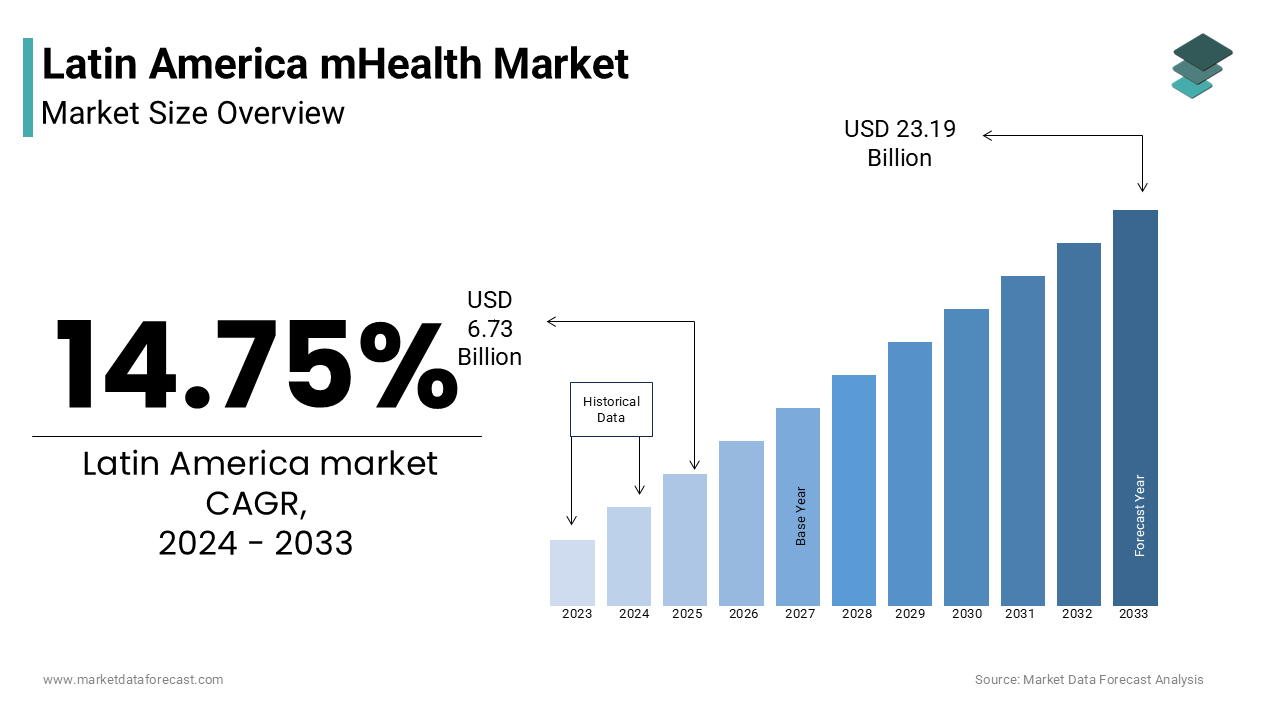
The Latin America mHealth Market was valued at USD 7.72 Bn in 2025, is estimated to reach USD 8.86 Bn in 2026, and is projected to reach USD 26.62 Bn by 2034, growing at a CAGR of 14.75% during the forecast period from 2026 to 2034. The growth of the Latin America mHealth market is driven by increasing smartphone penetration, expanding internet connectivity, and the rising prevalence of chronic diseases requiring continuous remote monitoring. Growing investments in telemedicine, AI-powered digital health platforms, and government-led digital healthcare initiatives are further accelerating market growth. Additionally, increasing adoption of wearable health devices and mobile-based healthcare services is strengthening the expansion of the Latin America mHealth market.
Key Market Trends
-
Rapid adoption of telemedicine and remote healthcare services across the region.
-
Increasing integration of AI and big data analytics into mobile health applications.
-
Rising use of wearable devices for continuous health monitoring.
-
Growing demand for chronic disease management through mobile health platforms.
-
Expanding government investments in digital health infrastructure and e-health initiatives.
Segmental Insights
- Based on connected devices, the glucose meters segment accounted for 43.3% of the Latin America mHealth market share in 2024. The segment’s dominance is driven by the rising prevalence of diabetes, increasing demand for home-based glucose monitoring, and expanding integration of connected glucose monitoring devices into healthcare and insurance programs.
- The pulse oximeter segment is projected to witness the fastest growth during the forecast period, registering a CAGR of 14.8%. The rapid growth is attributed to increasing awareness of respiratory diseases, rising home healthcare adoption, and growing availability of smartphone-compatible pulse oximeters.
- Based on services, the remote monitoring segment held 37.1% of the Latin America mHealth market share in 2024 due to increasing demand for continuous monitoring of chronic diseases and efforts to reduce hospital readmissions. The fitness and wellness services segment is expected to witness the fastest growth, registering a CAGR of 13.6%, supported by growing interest in preventive healthcare, wearable technologies, and digital fitness applications.
- Based on application, the chronic care management segment accounted for 35.3% of the market share in 2024, driven by the increasing burden of non-communicable diseases and growing use of digital disease management platforms. Meanwhile, the women’s health segment is projected to witness the fastest growth, registering a CAGR of 15.2%, owing to rising adoption of pregnancy monitoring, fertility tracking, and maternal healthcare applications.
Regional Insights
The Latin America mHealth market is witnessing strong growth across the region, supported by expanding digital healthcare infrastructure, increasing smartphone adoption, and government initiatives promoting telemedicine.
- Brazil dominated the Latin America mHealth market by accounting for 39.4% of the regional market share in 2024. The country's leadership is driven by strong government support for digital healthcare, high smartphone penetration, a thriving healthtech startup ecosystem, and widespread implementation of telemedicine services.
- Mexico remains a major regional market, supported by expanding private health insurance coverage, increasing adoption of mobile-based chronic disease management, and growing investments in digital healthcare delivery.
- Argentina continues to strengthen its position through national digital health initiatives, increasing adoption of AI-enabled healthcare applications, and growing investments in mobile-based primary care services.
- Chile is witnessing steady growth due to advanced broadband infrastructure, high smartphone penetration, and strong integration of electronic health records with mobile health applications.
- The Rest of Latin America, including Peru, Colombia, Ecuador, and Central American countries, is emerging as a promising market driven by increasing public-private collaborations, expanding telehealth services, and greater investment in digital health infrastructure.
Competitive Landscape
The Latin America mHealth market is highly competitive, with multinational healthcare companies, global technology firms, and regional digital health startups focusing on telemedicine, remote patient monitoring, AI-powered diagnostics, wearable health technologies, and cloud-based healthcare platforms. Companies are strengthening their market presence through strategic partnerships with healthcare providers, insurers, and government agencies while investing in localized digital health solutions and advanced analytics. Continuous innovation in mobile healthcare technologies is intensifying competition across the Latin America mHealth market.
Key Market Players
Prominent players in the Latin America mHealth market include Health Labs, Inc., Philips Healthcare, Cardionet, Inc., Lifee, Samsung Electronics Co., Ltd., Medtronic, Inc., and Vodafone Group Plc.
Latin America mHealth Market Size
The Latin America mHealth market size was valued at USD 7.72 billion in 2025 and is anticipated to reach USD 8.86 billion in 2026 from USD 26.62 billion by 2034, growing at a CAGR of 14.75%. During the forecast period from 2026 to 2034.
M-Health is the use of mobile and wireless technologies to support medical and public health practices, including remote patient monitoring, teleconsultations, medication adherence apps, and digital health records. With increasing smartphone penetration, expanding internet access, and rising healthcare demand, mHealth is playing a transformative role in improving healthcare delivery across both urban and rural areas. According to the Pan American Health Organization (PAHO), digital health initiatives have gained momentum in recent years, particularly in countries like Brazil, Mexico, and Colombia, where governments are investing in e-health infrastructure to address gaps in service accessibility and efficiency. Moreover, as per the World Bank, non-communicable diseases such as diabetes, hypertension, and cardiovascular disorders are on the rise in Latin America, necessitating cost-effective and scalable solutions that mHealth platforms can deliver. In response, both public health authorities and private sector players have introduced mobile-based diagnostic tools, wearable devices, and telemedicine applications tailored to regional needs.
MARKET DRIVERS
Increasing Smartphone Penetration and Internet Accessibility
The rapid expansion of smartphone ownership and mobile internet access, which has enabled widespread adoption of digital health services, is one of the primary drivers of the Latin America mHealth market. This technological advancement has facilitated the development and deployment of mobile health applications focused on disease management, teleconsultation, and health education. In addition, younger demographics in urban centers are more inclined to adopt mobile health solutions. With continued advancements in 4G/5G networks and affordable smartphones, the digital health ecosystem in Latin America is poised for sustained expansion, offering new opportunities for both domestic and international stakeholders.
Rising Prevalence of Chronic Diseases and Need for Remote Monitoring
The increasing burden of chronic diseases, which has created a pressing need for remote monitoring and digital disease management solutions is another major driver of the Latin America mHealth market. Moreover, non-communicable diseases account for 65% of all deaths in the region, with diabetes, hypertension, and cardiovascular diseases being particularly prevalent. To manage this growing health challenge, governments and private healthcare providers are increasingly turning to mHealth technologies that enable continuous patient engagement and real-time data collection. As healthcare systems seek to reduce hospital readmissions and optimize resource allocation, mHealth solutions offer a scalable and cost-effective alternative, reinforcing their critical role in shaping the future of healthcare delivery in Latin America.
MARKET RESTRAINTS
Data Privacy and Regulatory Challenges
The lack of standardized data privacy regulations and cybersecurity frameworks, which creates uncertainty for both developers and users, is a major restraint affecting the Latin America mHealth market. While several countries have enacted data protection laws such as Brazil’s General Data Protection Law (LGPD) and Mexico’s Federal Law on the Protection of Personal Data Held by Private Parties there remains a lack of harmonization across the region. In addition, concerns about unauthorized access to sensitive health information deter user trust and hinder widespread adoption. The regulatory fragmentation not only delays product launches but also discourages investment from global technology firms seeking stable environments for expansion. Until stronger cross-border regulatory alignment is achieved, data privacy concerns will continue to impede the full potential of the mHealth industry in Latin America.
Limited Healthcare Infrastructure in Rural Areas
Despite rising smartphone usage, limited healthcare infrastructure in rural and low-income regions continues to constrain the scalability of mHealth solutions across Latin America. According to the Food and Agriculture Organization (FAO), nearly 23% of Latin Americans still reside in rural areas where access to basic healthcare services remains inadequate. In countries like Bolivia, Guatemala, and parts of Honduras, poor internet connectivity, limited electricity supply, and low digital literacy create barriers to effective mHealth implementation. Furthermore, many rural healthcare workers lack training in digital health tools, limiting the effectiveness of mHealth adoption even when infrastructure allows.
MARKET OPPORTUNITIES
Expansion of Telemedicine Services in Underserved Regions
The expansion of telemedicine services into underserved and remote areas, where traditional healthcare access is limited, is one of the most promising opportunities in the Latin America mHealth market. Governments and private health providers are increasingly leveraging mobile platforms to bridge the gap in medical care availability, particularly in countries like Peru, Ecuador, and Paraguay. Also, several countries have implemented national telehealth strategies to provide virtual consultations, remote diagnostics, and digital prescriptions through mobile applications. Also, in Brazil, mobile telemedicine initiatives supported by state health departments have expanded maternal and neonatal care access in the Amazon region.
Integration of AI and Big Data Analytics in mHealth Applications
The integration of artificial intelligence (AI) and big data analytics into mHealth applications presents a significant opportunity for market growth in Latin America. These technologies enhance predictive diagnostics, personalized treatment recommendations, and real-time health monitoring, offering valuable tools for both patients and healthcare professionals. Moreover, AI-driven health applications have seen increasing adoption in countries like Chile, Argentina, and Uruguay, where digital health startups are developing machine learning algorithms to detect early signs of chronic diseases using mobile inputs. Also, as reported by the Inter-American Development Bank (IDB), the use of big data analytics in mHealth enables more efficient public health surveillance, allowing authorities to track disease outbreaks, monitor vaccination coverage, and allocate resources more effectively. Private sector players are also capitalizing on this trend. Companies like Doctoralia and Mediktor have integrated AI-powered symptom checkers and chatbots into their mobile health offerings, enhancing user experience and reducing unnecessary hospital visits.
MARKET CHALLENGES
Fragmented Regulatory Landscape Across Countries
The fragmented regulatory landscape, with each country maintaining its own set of guidelines governing digital health services, medical device certification, and data security standards, is a significant challenge facing the Latin America mHealth market. Also, this inconsistency complicates market entry for multinational mHealth providers and deters investment due to the complexity of navigating diverse approval processes.
For instance, in Brazil, the regulatory environment for digital health applications is relatively advanced, with ANVISA overseeing software as a medical device (SaMD) certifications. However, in countries like El Salvador and Nicaragua, there is little to no formal regulation guiding the use of mHealth tools, resulting in inconsistent quality and safety standards.
Low Digital Literacy Among Older and Lower-Income Populations
The low level of digital literacy among older adults and lower-income populations, which limits the reach and effectiveness of mobile health innovations is another critical challenge impacting the Latin America mHealth market. Despite high smartphone ownership rates, many individuals, particularly in rural areas, lack the necessary skills to navigate complex health applications. This digital divide hampers the adoption of preventive care and chronic disease management apps among vulnerable groups. Also, language barriers and limited access to digital education exacerbate the issue, especially in indigenous and semi-literate communities. To overcome this challenge, public-private partnerships are increasingly focusing on digital literacy campaigns and simplified user interfaces designed for ease of use.
REPORT COVERAGE
| REPORT METRIC | DETAILS |
| Market Size Available | 2025 to 2034 |
| Base Year | 2025 |
| Forecast Period | 2026 to 2034 |
| CAGR | 14.75% |
| Segments Covered | By Connected Devices, Application, Services and Region. |
| Various Analyses Covered | Global, Regional & Country Level Analysis, Segment-Level Analysis, DROC, PESTLE Analysis, Porter’s Five Forces Analysis, Competitive Landscape, Analyst Overview of Investment Opportunities |
| Country Covered | Brazil, Mexico, Argentina, Chile, and the Rest of Latin America. |
| Market Leaders Profiled | Health labs.Inc., Philips Healthcare, Cardionet, Inc., Lifee, Samsung Electronics co ltd, Medtronic. Inc..., Vodafone. |
SEGMENTAL ANALYSIS
By Connected Devices Insights
The glucose meters segment held the largest share of 43.3% in 2024. The rising prevalence of diabetes across Latin America, which has significantly increased demand for at-home monitoring devices is primarily attributing to the dominance of glucose meters segment. Countries like Brazil and Mexico account for the highest patient populations, making glucose monitoring an essential component of chronic disease management. Also, public health initiatives have played a key role in expanding access to digital glucose monitoring tools. In addition, the increasing integration of these devices into insurance and wellness programs further supports their widespread adoption.
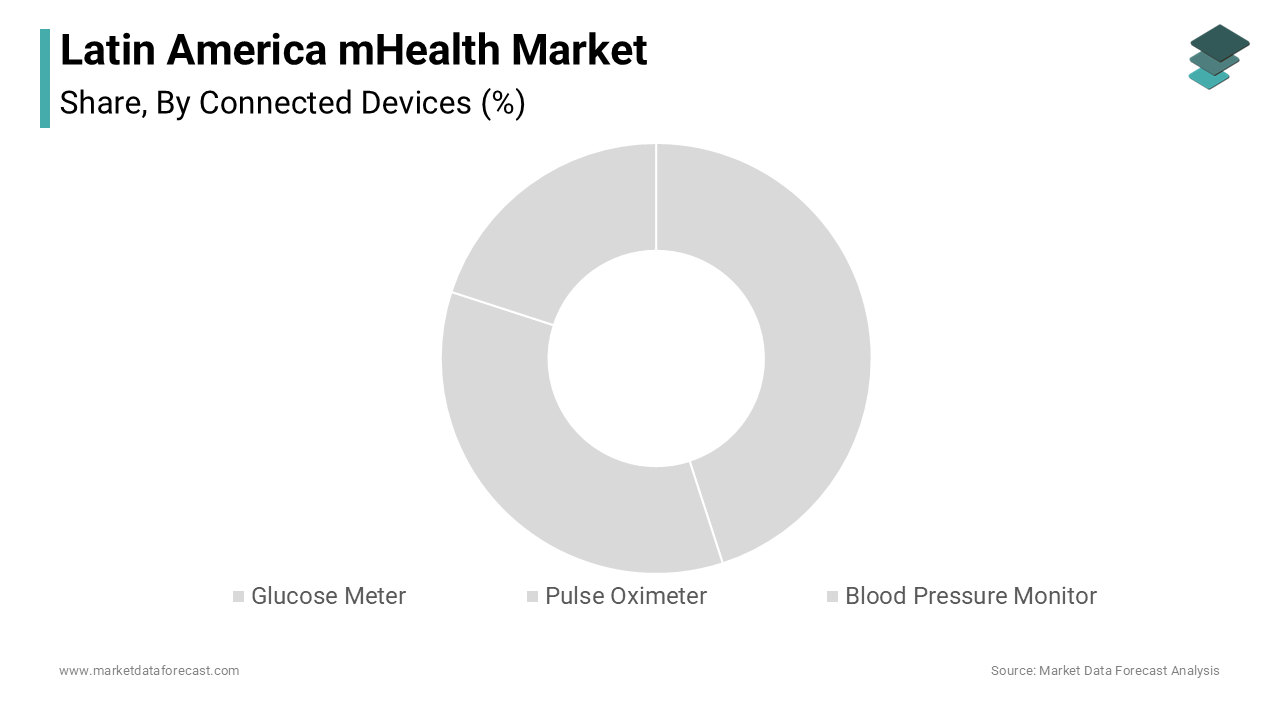
The pulse oximeter segment is experiencing the highest CAGR of 14.8% during the forecast period. This rapid growth of the pulse oximeter segment is driven by heightened awareness around respiratory conditions, particularly following the surge in home-based care during the pandemic. The growing use of pulse oximeters among individuals with chronic obstructive pulmonary disease (COPD), asthma, and post-COVID complications is another major factor contributing to the pulse oximeter segment. Also, respiratory diseases remain a leading cause of hospitalization in Latin America, prompting both healthcare providers and consumers to adopt remote oxygen saturation monitoring. Moreover, the integration of pulse oximeters into wearable health devices such as smartwatches and fitness bands has boosted consumer interest. In Chile and Colombia, startups have introduced low-cost, smartphone-compatible oximeters designed for elderly and rural populations, improving accessibility beyond traditional medical settings. These developments indicate strong momentum for pulse oximeter adoption in the Latin American mHealth landscape.
By Services Insights
The remote monitoring segment commanded the market with 37.1% in 2024. The increasing need for continuous health tracking, especially among patients with chronic illnesses such as hypertension, diabetes, and cardiovascular disorders is primarily driving the remote monitoring segment. The aging population and the associated rise in non-communicable diseases are also driving the growth of the remote monitoring segment. Moreover, governments and private health providers have deployed remote monitoring systems to reduce hospital readmissions and improve treatment adherence. These factors collectively reinforce the dominant position of the remote monitoring segment in the Latin American mHealth market.
The fitness and wellness services segment is experiencing the highest CAGR of 13.6%. It is driven by increasing consumer interest in preventive health and lifestyle management. The rising prevalence of obesity and sedentary lifestyles, especially among younger demographics, is fuelling the growth of the fitness and wellness services segment. In Mexico, workplace wellness programs integrating mHealth apps have gained traction, with companies offering incentives for employees who engage in digital fitness tracking. Also, the popularity of wearable technology such as smartwatches and fitness trackers has enhanced user engagement with mHealth services.
By Application Insights
The chronic care management application segment led the market with 35.3% share in 2024. This dominance of the chronic care management application segment is primarily driven by the escalating burden of non-communicable diseases (NCDs) such as diabetes, hypertension, and heart disease across the region. mHealth platforms have emerged as critical tools in enabling continuous monitoring, medication adherence, and timely physician-patient communication. In Colombia, the Ministry of Health has integrated mHealth-based chronic care applications into its universal health coverage framework, allowing patients to receive automated reminders for medication intake and doctor appointments.
The women’s health application segment is experiencing the highest CAGR of 15.2%. This, fueled by an increasing focus on maternal health, reproductive wellness, and digital empowerment of female users. The rising adoption of digital pregnancy assistants and fertility tracking apps, particularly among urban women is primarily propelling the women’s health application segment. In Brazil, mobile health startups such as Bebe Conectado and Gravida Digital have seen exponential user increases, providing expectant mothers with personalized health insights, appointment reminders, and teleconsultation options. Besides, the integration of AI-powered symptom checkers and chatbots into women’s health apps has further enhanced user engagement. With continued investment and policy support, the women’s health segment is positioned for rapid expansion in the Latin American mHealth market.
REGIONAL ANALYSIS
Brazil mHealth Market Analysis
Brazil maintained the largest share of the Latin America mHealth market at 39.4% in 2024. The expansion of public-sector telehealth initiatives is a key driver of Brazil’s market. As the continent’s most populous country and a leader in digital innovation, Brazil benefits from strong government support, high smartphone penetration, and a growing emphasis on digital health transformation. Also, Brazil’s thriving startup ecosystem has led to the development of homegrown mHealth solutions tailored to local needs. Companies like Doctoralia Brasil and Medtronic Brazil have launched mobile platforms for remote diagnostics, prescription delivery, and specialist referrals.
Mexico mHealth Market Analysis
Mexico is another key player of the market and is driven by increasing private sector involvement and a growing middle-class population seeking digital health solutions. A key factor supporting this growth is the expansion of private health insurance plans that include mHealth components. Major insurers such as Grupo Médica and AXA México have incorporated mobile-based chronic disease monitoring and virtual consultations into their coverage packages. These initiatives align with broader efforts to decentralize healthcare delivery and improve access in semi-urban and rural zones.
Argentina mHealth Market Analysis
Argentina is positioning itself as a key player in the Latin American mHealth market. Known for its advanced healthcare system and digital literacy, Argentina has embraced mHealth as a tool for enhancing public health efficiency and patient engagement. A major driver of market growth is the implementation of national digital health policies, including the "Salud Responde" initiative launched in 2023 to integrate mobile health services into primary care. Moreover, Argentina has witnessed a surge in startups focusing on AI-enabled diagnostic apps, particularly in maternal and chronic disease management.
Chile mHealth Market Insights Analysis
Chile is distinguished by its progressive healthcare policies and early adoption of digital health solutions. A key factor driving mHealth adoption is the country’s well-developed broadband infrastructure and high smartphone ownership rates. Besides, Chile has implemented national electronic health record systems that interface with mobile applications, enhancing data interoperability and patient engagement.
Rest of Latin America mHealth Market Analysis
The Rest of Latin America market is attributed to countries such as Peru, Colombia, Ecuador, and Central American nations. While individually smaller, collectively they represent a growing pool of opportunities driven by increasing mobile health investments and public-private collaborations. Peru has also made strides in mHealth adoption, particularly in rural and indigenous communities. With continued policy support and investment in digital health infrastructure, the rest of Latin America is expected to contribute meaningfully to the regional mHealth market.
KEY MARKET PLAYERS
Key market participants in the Latin America mHealth Market include
- Health Labs, Inc.
- Philips Healthcare
- Cardionet, Inc.
- Lifee
- Samsung Electronics Co., Ltd.
- Medtronic, Inc.
- Vodafone Group Plc.
COMPETITIVE LANDSCAPE
The Latin America mHealth market is characterized by a highly dynamic and competitive environment, shaped by the coexistence of global technology firms, multinational healthcare providers, and agile local startups. Multinational corporations such as Teladoc Health, Siemens Healthineers, and Medtronic bring advanced digital health solutions and strong brand recognition, enabling them to establish footholds in larger economies like Brazil and Mexico. These companies often collaborate with national health authorities and insurance providers to scale their offerings within regulated environments.
Simultaneously, regional players and digital health startups are gaining momentum by developing cost-effective, culturally relevant, and locally adaptable solutions tailored to the specific needs of Latin American users. Companies like Doctoralia, Bebe Conectado, and Salud Responde have successfully addressed gaps in maternal care, appointment access, and chronic disease monitoring.
The competition is further intensified by tech giants entering the healthcare space, offering wearable devices, AI-powered diagnostics, and cloud-based health records. As mobile internet penetration grows and regulatory frameworks evolve, the mHealth sector continues to attract investment and innovation, fostering a competitive yet fragmented market landscape. Success in this space depends on adaptability, scalability, and the ability to build trust with both patients and healthcare professionals.
Top Players in the Latin America mHealth Market
Doctoralia (Docplanner Group)
Doctoralia is a leading digital health platform in Latin America, offering online appointment scheduling, teleconsultations, and patient-doctor matching services. With operations across multiple countries, including Brazil, Mexico, and Argentina, it has become a key player in improving healthcare accessibility through mobile technology. The company contributes to the global mHealth landscape by setting benchmarks for user-friendly interfaces and seamless integration with healthcare provider networks.
Medtronic Plc
Medtronic has expanded its footprint in Latin America by integrating digital health solutions with its medical devices, particularly in chronic disease management and remote monitoring. Its connected glucose monitors, cardiac rhythm recorders, and AI-driven analytics platforms are widely adopted in regional hospitals and home care settings. Globally, Medtronic leads in merging medical device innovation with mHealth technologies, influencing how integrated health systems operate worldwide.
Teladoc Health Inc.
Teladoc Health plays a crucial role in expanding telemedicine access across Latin America, especially in Brazil and Mexico. Through strategic partnerships with local insurers and employers, the company offers 24/7 virtual consultations via mobile apps, contributing significantly to the growth of remote care delivery. Its presence reinforces the importance of scalable, cross-border digital health platforms in shaping modern healthcare ecosystems globally.y
Top Strategies Used by Key Market Participants
One of the primary strategies employed by key players in the Latin American mHealth market is the localization of digital health solutions, which involves tailoring mobile applications and telehealth platforms to regional languages, cultural preferences, and disease prevalence patterns. This approach enhances user engagement and ensures greater adoption among diverse populations.
Another major strategy is strategic partnerships with public health systems and private insurers, allowing mHealth companies to integrate their services into existing healthcare frameworks. These collaborations facilitate broader distribution, regulatory alignment, and financial sustainability, making digital health tools more accessible to a wider audience.
Lastly, leveraging artificial intelligence and data analytics is becoming increasingly common as companies seek to enhance diagnostic accuracy, personalize treatment recommendations, and improve preventive care models. By embedding smart technologies into mobile platforms, mHealth providers can offer predictive insights that support both individual and population-level health improvements.
RECENT MARKET DEVELOPMENTS
- In January 2024, Doctoralia expanded its teleconsultation services in Colombia, partnering with over 100 new clinics to provide real-time virtual appointments, aiming to improve access to specialist care in semi-urban and rural regions.
- In March 2024, Medtronic launched a mobile-based remote cardiac monitoring program in Argentina, collaborating with public hospitals to connect patients with implantable cardiac devices to centralized digital health hubs for continuous follow-up.
- In June 2024, Teladoc Health introduced a Spanish-language mental health module in Mexico, addressing rising demand for digital behavioral health services and enhancing inclusivity for non-English-speaking users.
- In September 2024, Samsung Health partnered with Chilean healthtech startups to integrate its wearable health data with local electronic health record systems, supporting personalized health tracking and physician decision-making.
- In November 2024, Philips expanded its eICU remote monitoring system in Brazil, deploying AI-enhanced mobile dashboards for intensive care units across São Paulo and Rio de Janeiro to improve critical care outcomes through real-time patient data analysis.
MARKET SEGMENTATION
This research report on the Latin America mHealth Market has been segmented and sub-segmented into the following categories.
By Connected Devices
- Glucose Meter
- Pulse Oximeter
- Blood Pressure Monitor
By Services
- Fitness and Wellness
- Remote Monitoring Consultation
- Prevention
By Application
- Women's Health
- Weight Loss
- Chronic Care Management
- Health and Fitness
- Medication
- Personal Health Record
By Country
- Brazil
- Argentina
- Chile
- Mexico
- Rest of Latin America