- Product Description Description
- Table of Contents TOC
- List of Table & Figure LOT
- Get Free Sample PDF Sample PDF
Market Size, 2025
$1.35 BnMarket Estimate, 2026
$1.44 BnMarket Forecast, 2034
$2.38 BnCAGR, 2026–2034
6.50%Executive Summary: Latin America Magnetic Resonance Imaging (MRI) Market
- Market Scope: Comprehensive Latin American regional market analysis of the MRI market covering field strength categories, system architectures, clinical applications, country-level adoption frameworks, and healthcare infrastructure expansions.
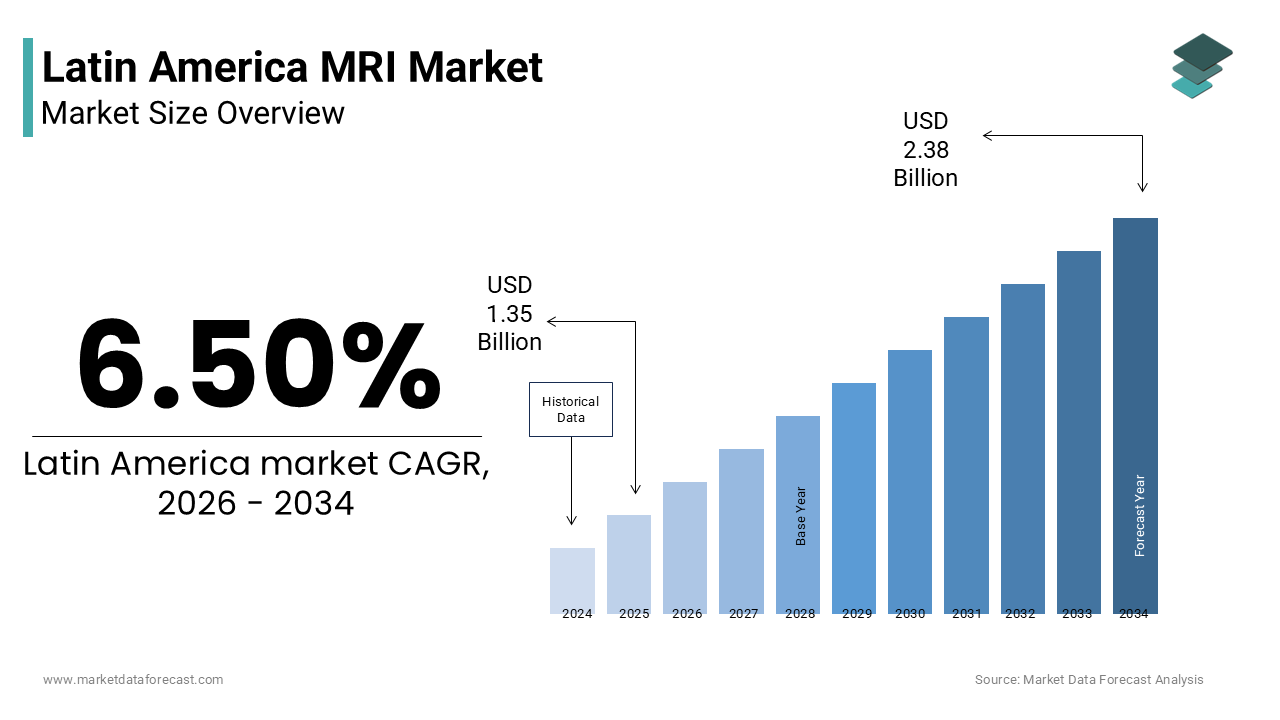
- Market Valuation: Valued at USD 1.35 billion in 2025, reaching USD 1.44 billion in 2026, and projected to scale up to USD 2.38 billion by 2034, registering a healthy CAGR of 6.50% from 2026 to 2034.
- Primary Growth Drivers: Increasing prevalence of chronic diseases (breast cancer, cardiovascular disorders, and neurological conditions), rising aging populations, increasing per capita healthcare spending, technological innovations like hybrid PET/MRI systems, and the introduction of smaller-footprint, economical MRI systems by GE and Philips.
Key Market Segment Metrics (2026–2034)
| Category | Leading Segment Position | Fastest-Growing Segment |
|---|---|---|
| By Field Strength | Low-to-Mid-Field Systems (widely adopted due to smaller footprints, ease of maintenance, and lower installation costs in emerging clinics) | High Field Systems (scaling alongside improving healthcare facilities and increased demand for precise diagnostic imaging) |
| By Architecture | Closed MRI Systems (captured substantial market share backed by high magnetic power and superior throughput) | Open MRI Systems (growing to accommodate broader accessibility needs and patient comfort) |
| By Application | Brain & Neurological Imaging (dominated regional demand driven by rising incidences of neurological disorders, strokes, and brain tumors) | Oncology & Cardiac Imaging (expanding steadily through rising cancer screenings and cardiovascular evaluations) |
| By Country | Brazil (expected to maintain regional supremacy supported by robust healthcare service expansion and rising per capita income) | Mexico and Argentina (prospering through well-defined healthcare policies, medical tourism, and technological investments) |
Major Market Players & Market Structure
Market Structure: Highly competitive medical imaging market dominated by major multinational technology leaders providing economical, advanced diagnostic equipment tailored for developing healthcare economies.
Key Companies: Hitachi Medical Corporation, Toshiba Medical Systems, Siemens Healthcare, GE Healthcare, IMRIS Inc., Fonar Corporation, Esaote S.P.A., Neusoft Medical Systems, Aurora Medical Imaging, and Philips Healthcare.
 Download Free Sample Report
Latin America MRI Market Size
The Latin America MRI market size was valued at USD 1.35 billion in 2025 and is anticipated to reach USD 1.44 billion in 2026 from USD 2.38 billion by 2034, growing at a CAGR of 6.50% during the forecast period from 2026 to 2034.
An MRI (Magnetic Resonance Imaging) is a safe, painless medical test that uses a large magnet and radio waves to make clear pictures of the inside of your body. This market is characterised by a dual structure comprising advanced private healthcare facilities in urban centres and under-resourced public hospitals in rural areas. As per the World Bank and OECD, the average number of MRI units per million people in Latin America and the Caribbean remains significantly lower than the density found in high-performing nations, with some countries reporting fewer than one unit per million population. This disparity highlights a substantial unmet need for diagnostic accessibility across the region. According to the World Bank, noncommunicable diseases account for most deaths in Latin America and the Caribbean, with estimates projecting they will account for approximately 81 per cent of deaths in the region by 2030. The rising prevalence of cancer and neurological disorders necessitates early detection capabilities that MRI provides without ionising radiation. Governments in countries like Brazil and Mexico are implementing national health plans to upgrade diagnostic infrastructure. Private investment continues to flow into specialised imaging centres catering to the growing middle class. Technological advancements such as portable and low-field systems are gaining traction due to their cost-effectiveness. Regulatory bodies are increasingly aligning with international safety standards to ensure equipment quality. Consequently, the market is evolving toward more accessible and efficient diagnostic solutions.
MARKET DRIVERS
Rising Prevalence of Noncommunicable Diseases
The rising prevalence of noncommunicable diseases is a primary factor in the expansion of the Latin America MRI Market. This is due to the urgent need for accurate diagnostic tools. Conditions such as cancer, cardiovascular diseases, and diabetes require detailed imaging for effective management and treatment planning. According to the Pan American Health Organisation, noncommunicable diseases are the leading cause of death in the Region of the Americas, accounting for 65% of total mortality in recent structural burden assessments. This epidemiological burden compels healthcare providers to invest in advanced imaging technologies to improve patient outcomes. As per the Brazilian National Cancer Institute (INCA), projections indicate a significant growth in cancer incidence, with expected annual new cases reaching 781,000 for the 2026–2028 triennium, an increase from the 704,000 annual cases estimated during the previous 2023–2025 reporting period. MRI is preferred for its superior soft tissue contrast, which is essential for tumour staging and monitoring. Public health initiatives are increasingly focusing on early detection programs which rely heavily on imaging infrastructure. Hospitals are upgrading their equipment to handle the growing patient load efficiently. The ageing population further exacerbates the incidence of chronic conditions requiring regular monitoring. This demographic shift ensures a steady increase in diagnostic procedures. Consequently, the clinical imperative to manage noncommunicable diseases drives continuous investment in MRI systems.
Expansion of Private Healthcare Infrastructure
The rapid expansion of private healthcare infrastructure profoundly fuels the growth of the Latin America MRI Market. This is because consumers are seeking higher quality and faster diagnostic services. The rising middle class in countries like Mexico, Colombia, and Chile is increasingly opting for private insurance and out-of-pocket payments to avoid long waiting times in public systems. According to the Inter-American Development Bank, the average annual growth rate in per capita health spending across Latin America and the Caribbean reached 4.9% during peak expansion periods, significantly outstripping the region's overall GDP growth. This financial capacity enables private hospital chains to invest in state-of-the-art MRI technology. As per the Mexican Association of Insurance Institutions (AMIS), health and major medical insurance penetration remains restricted, with major medical coverage reaching only 10.7% of the population, leaving a significant majority exposed to out-of-pocket costs amidst severe premium inflation. These facilities prioritise patient comfort and quick turnaround times, driving the adoption of high-field and open MRI systems. Competition among private providers leads to continuous upgrades in imaging capabilities to attract patients. Medical tourism in countries like Costa Rica and Brazil further stimulates demand for advanced diagnostic equipment. International accreditation standards require modern imaging tools, which private hospitals readily adopt. This sector benefits from easier access to financing compared to public institutions. The focus on service quality and efficiency makes private healthcare a key driver for MRI adoption.
MARKET RESTRAINTS
High Cost of Acquisition and Maintenance
The high cost of acquisition and maintenance is a serious restraint on the widespread adoption of MRI systems in the Latin America MRI Market. This trend is particularly visible in the public sector. Purchasing a high-field MRI scanner involves substantial capital expenditure, often exceeding 1 million dollars, which strains limited healthcare budgets. According to the study, total health expenditure across Latin American and Caribbean countries averages 6.6% of GDP, though extreme regional variations exist, with some countries spending significantly less. This financial constraint forces public hospitals to rely on outdated or shared resources. As per sources, the total cost of ownership for advanced medical imaging machinery encompasses extensive expenditures beyond the initial purchase price, requiring dedicated long-term allocations for maintenance contracts, specialised coolant refills, and diagnostic facility infrastructure. Currency fluctuations in countries like Argentina and Brazil further increase the cost of imported equipment and spare parts. Reimbursement rates for MRI procedures are often insufficient to cover these high operational expenses. Small private clinics struggle to achieve the patient volume necessary to justify the investment. Budget cuts during economic downturns delay planned procurement projects. The lack of local manufacturing means dependence on foreign suppliers who charge premium prices. These economic barriers limit the density of MRI units in underserved regions. Thus, cost remains a formidable obstacle to equitable access.
Shortage of Skilled Radiologists and Technicians
The shortage of skilled radiologists and specialised technicians unfavourably impacts the efficient utilisation of installed MRI systems in the Latin American market. Operating advanced imaging equipment and interpreting complex scans require specialised training, which is not widely available in many parts of the region. According to the Pan American Health Organisation, many countries across Latin America suffer from stark geographic inequities in radiological services, leaving rural populations with fewer than 1 radiologist per 100,000 inhabitants outside their capital cities. This workforce gap leads to long waiting times and underutilization of existing capacity. As per the Brazilian Society of Radiology, the distribution of specialists is highly uneven, with most concentrated in major urban centres, leaving peripheral hospitals understaffed. High workload and burnout contribute to staff turnover, exacerbating the shortage. Inadequate training programs fail to produce enough competent technologists to manage new installations. Misinterpretation of images due to lack of expertise can lead to diagnostic errors and liability issues. Hospitals hesitate to purchase new systems if they cannot secure adequate staffing. Remote reporting solutions help mitigate this issue but do not fully resolve local operational challenges. The reliance on external consultants increases costs and reduces autonomy. Until workforce capacity is strengthened, the full potential of MRI technology will remain unrealised. This human resource constraint hinders scalability and service quality.
MARKET OPPORTUNITIES
Adoption of Portable and Low Field MRI Systems
The adoption of portable and low-field MRI systems offers a significant opportunity for the Latin America MRI Market. This addresses infrastructure and cost constraints in remote areas. These compact systems require less shielding and no helium, making them ideal for deployment in smaller clinics and mobile health units. According to the World Health Organisation, innovative medical technologies that reduce infrastructure dependencies are crucial for improving healthcare access in low-resource settings. This trend aligns with the needs of rural Latin American communities where traditional MRI installation is impractical. As per the Journal of Magnetic Resonance Imaging, recent advancements in permanent magnet technology have improved image quality in low-field systems, making them viable for musculoskeletal and brain imaging. Governments and NGOs are increasingly funding mobile health initiatives that utilise portable MRI for screening programs. Private manufacturers are developing cost-effective models tailored to emerging markets. These systems offer lower total cost of ownership and easier maintenance. They enable point-of-care diagnostics, reducing the need for patient referral to distant hospitals. The flexibility of portable units allows for rapid deployment during health emergencies. This segment opens new revenue streams for vendors willing to innovate for affordability. It bridges the gap between urban and rural healthcare access.
Growth of Tele-radiology and AI Integration
The growth of teleradiology and artificial intelligence integration offers a lucrative prospect for the Latin America MRI market. This advancement effectively mitigates the shortage of local expertise. AI algorithms can assist in image reconstruction and preliminary diagnosis, reducing the workload on scarce radiologists. According to research, the implementation of teleradiology solutions is expanding at a rapid pace as medical networks seek to bridge regional resource divides and maximise the workflow efficiency of available imaging specialists. This technology allows images acquired in remote locations to be interpreted by experts in urban centres or abroad. As per the Nature Medicine journal, AI-driven tools have demonstrated high accuracy in detecting abnormalities in MRI scans, supporting less experienced technicians. This capability enhances diagnostic confidence and reduces error rates. Cloud-based platforms facilitate secure data sharing and collaboration among healthcare providers. Regulatory frameworks are evolving to support digital health solutions and cross-border data flow. Private companies are investing in AI startups focused on Latin American-specific pathologies. This integration improves efficiency and reduces turnaround times for reports. It makes MRI services more accessible and affordable for smaller facilities. The synergy between hardware and software creates value-added offerings. It positions MRI as a smart and connected diagnostic tool.
MARKET CHALLENGES
Economic Volatility and Currency Fluctuations
Economic volatility and currency fluctuations are a major obstacle to the stability and growth of the Latin America MRI Market. Many countries in the region experience frequent changes in exchange rates and inflation, which affect the affordability of imported medical equipment. According to the International Monetary Fund, while major economies in Latin America have successfully anchored long-term price stability, certain hyperinflationary or volatile economies within the region have seen inflation rates exceed 10% in recent years, impacting regional trade metrics. This economic instability makes long-term planning and budgeting difficult for healthcare providers. As per studies, the significant depreciation of local currencies against the US dollar in emerging economies directly inflates the procurement and logistical costs of imported high-technology medical equipment for domestic purchasing entities. Hospitals face difficulties in securing financing for large capital expenditures amidst uncertain economic conditions. Maintenance contracts priced in foreign currencies become prohibitively expensive when local currencies weaken. Suppliers may delay shipments or increase prices to hedge against risk. Government health budgets are often cut during economic downturns, affecting public procurement. This unpredictability discourages investment in new technology. Providers may postpone upgrades, leading to ageing infrastructure. The financial strain limits the ability to expand services to underserved populations. Economic resilience is required to sustain market growth.
Regulatory Fragmentation and Import Barriers
Regulatory fragmentation and import barriers are formidable challenges to the efficient distribution of these systems across the Latin America MRI market. Each country has its own regulatory agency and approval processes for medical devices, creating a complex compliance landscape. According to the Pan American Health Organisation, the lack of harmonisation in medical device regulations increases the time and cost required for market entry. Manufacturers must navigate disparate requirements for registration, labelling, and quality assurance. As per the Brazilian Health Regulatory Agency (ANVISA), the approval and registration process for high-risk medical technologies (Class III/IV devices) typically takes between 4 and 12 months, rather than up to two years. Customs procedures in some countries are bureaucratic and prone to delays, causing supply chain disruptions. High import tariffs on medical equipment further increase costs for end users. Small and medium-sized enterprises often lack the resources to manage multiple regulatory filings effectively. The absence of mutual recognition agreements means that approvals in one country do not facilitate entry into others. This fragmentation discourages smaller players from entering the market. It limits competition and keeps prices high. Streamlining regulatory processes is essential for improving access. The current system hinders the rapid deployment of life-saving technologies.
REPORT COVERAGE
| REPORT METRIC | DETAILS |
| Market Size Available | 2025 to 2034 |
| Base Year | 2025 |
| Forecast Period | 2026 to 2034 |
| CAGR | 6.50% |
| Segments Covered | By Field Strength, Architecture, Application and Region. |
| Various Analyses Covered | Global, Regional & Country Level Analysis, Segment-Level Analysis, DROC, PESTLE Analysis, Porter’s Five Forces Analysis, Competitive Landscape, Analyst Overview of Investment Opportunities |
| Country Covered | Brazil, Mexico, Argentina, Chile, and the Rest of Latin America. |
| Market Leaders Profiled | Hitachi Medical Corporation, Toshiba Medical Systems, Siemens Healthcare, GE Healthcare, Imris Inc., Fonar Corporation, Esaote S.P.A, Neusoft Medical System, Aurora Medical Imaging, and Philips Healthcare. |
SEGMENTAL ANALYSIS
By Field Strength Insights
In 2025, the high field segment held the majority share in the Latin America MRI Market because of its established clinical utility and widespread adoption in both public and private healthcare sectors. These MRI systems typically operate at 1.5 Tesla and 3.0 Tesla. Moreover, these systems offer an optimal balance between image resolution, scan speed and cost, making them the standard for most diagnostic procedures in the region. According to sources, high-field MRI systems (1.5 Tesla and 3.0 Tesla) comprise the absolute baseline majority of functioning scanners operating inside tier-1 corporate and academic hospitals across Latin America, serving as the clinical workhorse for routine diagnostic schedules. This dominance is driven by the ability of high-field scanners to provide detailed images required for complex neurological and oncological diagnoses, which are prevalent in the region. As per the Brazilian Society of Radiology clinical guidelines recommend 1.5 Tesla and 3.0 Tesla systems are recommended for accurate detection of small lesions and vascular abnormalities, ensuring their continued preference among radiologists. The availability of trained technicians familiar with high-field protocols reduces operational barriers for healthcare providers. Reimbursement policies in countries like Mexico and Chile favour procedures performed on high-field equipment due to proven diagnostic accuracy. Manufacturers focus their distribution efforts on this segment because it meets the needs of the largest patient volume. The robust secondary market for refurbished high-field systems also supports accessibility for smaller clinics. Consequently, this segment remains the backbone of the regional imaging infrastructure.
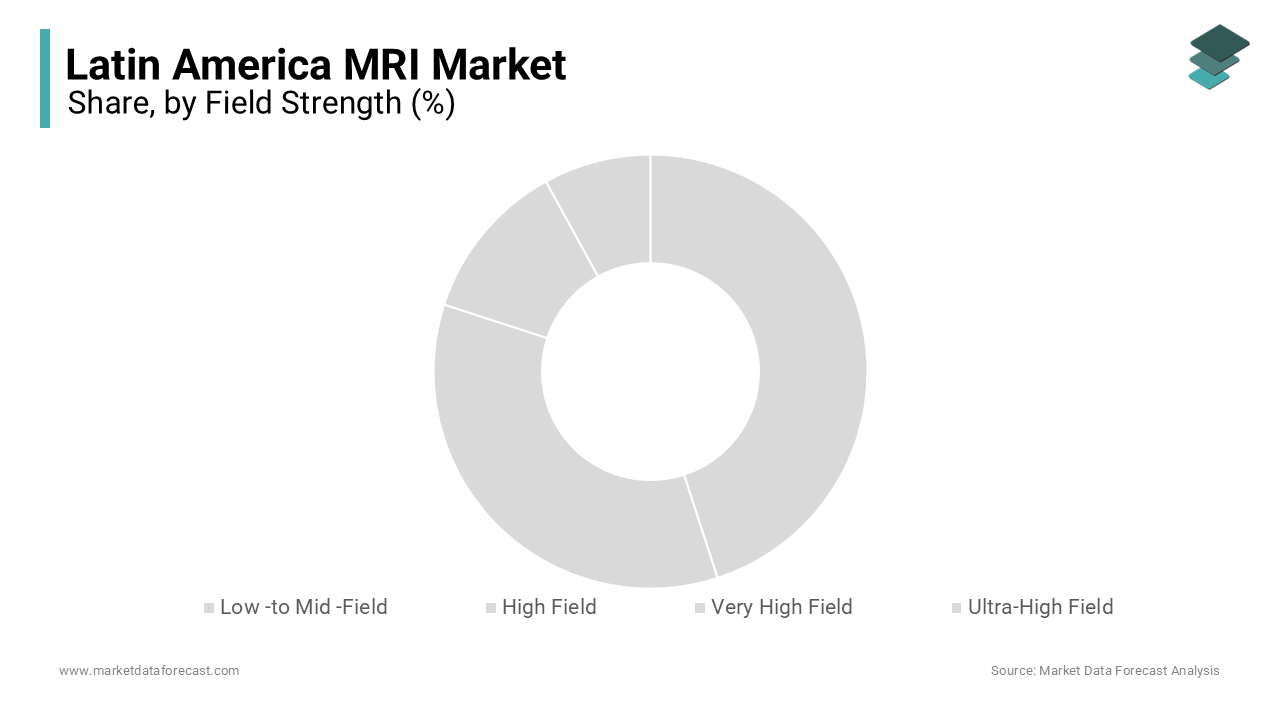
The low to midfield segment is experiencing the fastest growth in the Latin America MRI Market due to the urgent need for cost-effective and accessible diagnostic solutions in rural and underserved areas. These systems typically operate below 1.0 Tesla and require less infrastructure, such as specialised shielding and cooling, making them easier to deploy in resource-limited settings. According to the World Health Organisation Regional Office for the Americas, the implementation and deployment of low-field, resource-efficient, or portable point-of-care MRI technologies are actively expanding across remote or underserved communities to help bridge critical regional diagnostic gaps. This growth is fueled by government initiatives aiming to decentralise healthcare services and reduce patient travel burdens. As per the Journal of Magnetic Resonance Imaging, advancements in permanent magnet technology have significantly improved image quality in low-field systems, making them viable for musculoskeletal and basic neurological screening. Private diagnostic chains are also adopting these systems to expand into tier two and three cities where capital expenditure constraints exist. The lower total cost of ownership, including reduced helium dependency, attracts budget-conscious buyers. Tele-radiology integration allows images from low-field systems to be interpreted by experts remotely, enhancing diagnostic confidence. This segment addresses the critical shortage of imaging access in peripheral regions. It offers a sustainable model for expanding healthcare coverage.
By Architecture Insights
The closed MRI systems segment was the largest in 2025 and occupied a commanding share of the Latin America MRI Market. This prominence of the segment was supported by its superior magnetic field homogeneity and ability to deliver high-resolution images required for complex diagnostics. The cylindrical design allows for optimal gradient performance, which is essential for advanced applications such as cardiac and functional imaging. According to surveys, a clear majority of high-end diagnostic infrastructure installations favour closed-bore architectures to maintain higher magnetic field homogeneity, superior signal-to-noise ratios, and consistent image resolution. This preference is reinforced by the clinical need for speed and precision in emergency and oncological settings where accurate staging is critical. As per the Mexican Institute of Social Security, closed systems are the standard for public hospital procurement due to their proven track record in handling high patient volumes efficiently. The compact footprint of modern closed bore designs has improved, allowing installation in existing hospital spaces without major structural renovations. Technicians and radiologists are extensively trained on closed systems, reducing the learning curve for new installations. Insurance reimbursements are often calibrated based on protocols developed for closed architecture, ensuring financial viability. Manufacturers continue to innovate by widening the bore diameter to improve patient comfort while maintaining image quality. The established supply chain for parts and service supports long term operational stability. Consequently, closed MRI remains the preferred choice for comprehensive diagnostic capabilities.
The open MRI segment is rapidly expanding in the Latin America MRI Market owing to increasing patient demand for comfort and the need to accommodate individuals who cannot tolerate confined spaces. Open architecture features a more accessible design, which significantly reduces feelings of claustrophobia, a common barrier to MRI completion. According to the Patient Experience Journal, severe patient anxiety and claustrophobia represent significant operational challenges for traditional imaging, often causing a meaningful percentage of patients to delay, struggle with, or prematurely terminate their scanning procedures. This psychological factor drives private clinics to adopt open MRI to enhance patient satisfaction and retention. As per the Chilean Ministry of Health, specialised open architecture and low-field configurations are increasingly integrated into pediatric, bariatric, and claustrophobic care programs to accommodate specific patient needs and lower sedation frequencies. Advances in magnet technology have allowed open systems to achieve higher field strengths, improving their diagnostic utility beyond simple orthopaedic applications. Lower installation costs and reduced shielding requirements make open MRI attractive for smaller private practices entering the market. Marketing strategies emphasising a stress-free experience resonate with health-conscious consumers. The ability to scan patients in weight-bearing positions offers unique diagnostic advantages for spine and joint issues. This segment captures a niche but rapidly expanding demographic seeking personalised care.
By Application Insights
The brain imaging segment led the Latin America MRI Market and captured a significant share in 2025. This leading position of the segment was attributed to the high prevalence of neurological disorders and the critical role of MRI in diagnosing conditions such as stroke, tumours, and multiple sclerosis. The superior soft tissue contrast of MRI makes it the gold standard for evaluating brain pathology compared to other modalities. According to the World Health Organisation Region of the Americas, stroke is the second leading cause of death in the region, necessitating rapid and accurate imaging for effective intervention. This epidemiological reality drives consistent demand for brain MRI scans in emergency and outpatient settings. As per sources, the rapid greying of the population across South America has driven an escalating burden of age-related cognitive disorders and acute conditions, intensifying the baseline logistical pressure on specialised neurological diagnostic networks. Public health programs focusing on early detection of brain anomalies further support market growth. Hospitals prioritise investing in high-field MRI systems capable of advanced neural imaging techniques such as diffusion tensor imaging. Reimbursement policies often cover neurological assessments comprehensively, ensuring financial sustainability for providers. Research institutions in the region utilise brain MRI for clinical trials, enhancing technological adoption. The critical nature of neurological diagnosis ensures that brain imaging remains the primary application driver. It accounts for the largest share of scan volumes across both public and private sectors.
The cardiac application segment is quickly accelerating within the Latin America MRI Market. This swift growth is propelled by the rising burden of cardiovascular diseases and the increasing adoption of non-invasive diagnostic techniques. Cardiovascular MRI provides detailed information about heart structure, function, and viability without exposing patients to ionising radiation. According to the Pan American Heart Foundation, cardiovascular diseases account for nearly 30 per cent of all deaths in Latin America, creating an urgent need for advanced diagnostic tools. This health crisis prompts cardiologists to increasingly recommend MRI for precise assessment of myocardial infarction and cardiomyopathy. As per the study, the integration of cardiovascular magnetic resonance imaging has advanced significantly due to its superior capacity for non-invasive myocardial tissue characterisation compared to conventional screening modalities. The expansion of specialised heart centres in urban areas facilitates access to these complex procedures. Training programs for radiologists and cardiologists in cardiac imaging are expanding the pool of qualified interpreters. Technological advancements such as faster scanning sequences reduce motion artefacts, making cardiac MRI more feasible for routine use. Insurance coverage for cardiac diagnostics is improving in several countries, supporting patient access. The shift toward preventive cardiology drives demand for early detection of subtle heart abnormalities. This segment represents a significant opportunity for manufacturers to introduce specialised cardiac coils and software.
COUNTRY ANALYSIS
Brazil MRI Market Analysis
Brazil dominated the Latin America MRI Market and accounted for a substantial share in 2025. This market is a mix of advanced private healthcare facilities and a vast public network undergoing modernisation. The country is a major hub for medical technology adoption in the region due to its large population and industrial base. According to the Brazilian Ministry of Health, the government has allocated significant funds to upgrade diagnostic infrastructure in public hospitals under the National Health Plan. This investment drives the procurement of new MRI systems, particularly in underserved states. As per sources, private diagnostics and supplementary healthcare systems account for the vast majority of operating diagnostic scanners, revealing distinct disparities between private capital density and public sector infrastructure availability. Local manufacturing incentives encourage international companies to assemble components domestically, reducing costs. The prevalence of chronic diseases such as diabetes and hypertension sustains high scan volumes. Regulatory agency ANVISA ensures strict quality standards for imported equipment. Brazil serves as a strategic entry point for global vendors targeting the region. The market is competitive with a strong presence of all major manufacturers. Economic fluctuations impact purchasing power, but the essential nature of diagnostics ensures resilience.
Mexico MRI Market Analysis
Mexico is a growth landscape in the Latin America MRI Market because of proximity to the United States and a robust private healthcare sector catering to medical tourism. The country has seen significant investment in specialised imaging centres offering state-of-the-art MRI services. According to the Mexican Social Security Institute IMSS efforts to reduce waiting times have led to increased procurement of MRI equipment for public facilities. This initiative improves access for millions of insured citizens. As per research, private medical expenditure and capital investments in healthcare networks continue to demonstrate upward momentum, reflecting a growing consumer reliance on out-of-pocket and high-end supplementary services. Medical tourists from North America seek affordable, high-quality imaging, contributing to market revenue. Regulatory body COFEPRIS streamlines approval processes for new medical devices, facilitating faster market entry. The concentration of wealth in urban centres like Mexico City and Monterrey drives demand for premium imaging technologies. Local distributors play a crucial role in providing after-sales support and maintenance. The market benefits from trade agreements that reduce tariffs on medical equipment. Mexico continues to modernise its healthcare infrastructure to meet international standards.
Argentina MRI Market Analysis
Argentina holds a significant position in the Latin America MRI Market. The country features a strong tradition of medical excellence and a high density of healthcare professionals. The country faces economic challenges but maintains a sophisticated private healthcare sector that prioritises advanced diagnostics. According to the Argentine Ministry of Health, public hospitals are gradually replacing ageing imaging equipment through international financing programs. This renewal cycle creates opportunities for vendors offering flexible payment terms. As per the Argentine Society of Radiology, the adoption of 3.0 Tesla systems in private clinics has increased as providers seek to differentiate their services. The high level of medical education ensures a skilled workforce capable of utilising complex MRI applications. Currency volatility affects import costs, but local financing options help mitigate risks. Buenos Aires serves as a regional hub for specialised neurological and cardiac imaging. The market is characterised by price sensitivity but high technical expectations. Manufacturers focus on offering value-added services and training to retain customers. Argentina remains a key market for high-end diagnostic technology despite economic headwinds.
Chile MRI Market Analysis
Chile is a mature and stable player in the Latin American MRI Market owing to high healthcare standards and efficient public-private partnerships. The country has one of the highest densities of MRI units per capita in the region, ensuring broad access to diagnostic services. According to the Chilean Ministry of Health, the AUGE plan guarantees timely access to diagnostic tests for priority conditions, driving consistent utilisation of MRI resources. This regulatory framework ensures steady demand for imaging services. As per the Superintendence of Health, private insurers cover a wide range of diagnostic procedures, encouraging patients to seek early detection. The market is dominated by high-field closed systems due to their reliability and image quality. Chilean hospitals are early adopters of digital health solutions, including AI-integrated MRI workflows. The regulatory agency ISP maintains rigorous safety and quality standards. The country serves as a testbed for new technologies before regional rollout. Economic stability supports long term investment in healthcare infrastructure. Chile leads in implementing best practices for diagnostic efficiency and patient care.
COMPETITIVE LANDSCAPE
The competition in the Latin America MRI Market is characterized by the dominance of global multinational corporations who compete on technology quality and service reliability. Major players leverage their extensive research capabilities to introduce innovative solutions such as helium free magnets and artificial intelligence driven workflows. They differentiate themselves through comprehensive after sales support and training programs which are crucial in regions with skilled labor shortages. Local distributors play a vital role in navigating regulatory landscapes and providing last mile connectivity to remote areas. Price competition is intense particularly in the public sector where procurement decisions are heavily influenced by budget constraints. Refurbished equipment markets also contribute to competitive pressure by offering cost effective alternatives to new installations. Regulatory compliance acts as a barrier to entry favoring established firms with robust quality assurance systems. The market sees increasing collaboration between manufacturers and healthcare providers to co develop customized solutions. Companies that offer flexible financing and strong local presence gain a competitive advantage. The landscape is dynamic with continuous advancements in imaging speed and patient comfort. This rivalry drives rapid technological adoption and improves diagnostic accessibility across the region. Strategic alliances with telemedicine firms further enhance competitive positioning in decentralized care models.
KEY MARKET PLAYERS
Companies playing a dominating role in the Latin American MRI market include
- Hitachi Medical Corporation
- Toshiba Medical Systems
- Siemens Healthcare
- GE Healthcare
- IMRIS Inc.
- Fonar Corporation
- Esaote S.p.A.
- Neusoft Medical Systems
- Aurora Medical Imaging
- Philips Healthcare
Top Players in the Latin America MRI Market
Siemens Healthineers AG
Siemens Healthineers AG serves as a pivotal leader in the Latin America MRI Market by providing advanced imaging solutions tailored to regional healthcare needs. The company offers a comprehensive portfolio ranging from high field systems to innovative helium free scanners. Siemens recently expanded its service network in Brazil and Mexico to ensure faster maintenance and support for local hospitals. This strategic move enhances operational reliability for customers and strengthens long term partnerships. The company collaborates with government health agencies to implement digital health initiatives that improve diagnostic efficiency. Siemens focuses on training local radiologists and technicians to maximize the utility of installed systems. Their commitment to sustainability through energy efficient designs resonates with regional environmental goals. By integrating artificial intelligence into workflow solutions Siemens helps providers reduce scan times. These efforts solidify their reputation for technological excellence and customer centric innovation in the region.
GE HealthCare Technologies Inc
GE HealthCare Technologies Inc plays a significant role in the Latin America MRI Market by delivering robust and versatile imaging platforms. The company specializes in high performance MRI systems that cater to both public and private healthcare sectors. GE HealthCare recently launched portable MRI solutions in Chile and Colombia to address accessibility gaps in remote areas. This initiative supports decentralization of healthcare services and improves patient access to diagnostics. The company partners with local distributors to enhance supply chain resilience and reduce delivery times. GE HealthCare invests in educational programs to upskill medical professionals on advanced imaging techniques. Their focus on predictive maintenance tools helps hospitals minimize downtime and optimize resource utilization. By offering flexible financing options GE HealthCare makes advanced technology more affordable for smaller clinics. These actions reinforce their position as a trusted partner in regional healthcare transformation.
Koninklijke Philips NV
Koninklijke Philips NV contributes significantly to the Latin America MRI Market through its emphasis on patient centered design and holistic care. The company provides a wide range of MRI systems including open architecture models that improve patient comfort. Philips recently introduced helium free MRI scanners in Argentina and Peru to lower operational costs and environmental impact. This innovation addresses logistical challenges related to helium supply in the region. Philips collaborates with telemedicine providers to integrate remote diagnostic capabilities into their imaging workflows. The company supports hospital accreditation processes by ensuring equipment meets international safety standards. Their focus on value based healthcare helps providers improve outcomes while managing costs. Philips also engages in public private partnerships to upgrade infrastructure in underserved communities. These strategies enhance their market presence by delivering sustainable and efficient diagnostic solutions.
Top Strategies Used by Key Market Participants
Key players in the Latin America MRI Market primarily focus on localization and strategic partnerships to enhance market penetration. Companies are increasingly establishing local service centers and training facilities to provide timely support and build customer trust. This approach addresses the shortage of skilled technicians and ensures optimal equipment utilization. Mergers and acquisitions are used to expand distribution networks and acquire complementary technologies. Firms also prioritize affordability by offering flexible financing models and refurbished equipment options to budget constrained buyers. Digital transformation is another critical strategy where companies integrate cloud based analytics for remote monitoring and predictive maintenance. Collaboration with government bodies facilitates participation in public procurement tenders and infrastructure projects. Marketing strategies emphasize patient comfort and operational efficiency to differentiate products in a competitive landscape. These multifaceted approaches enable companies to navigate economic volatility and regulatory complexities while fostering long term growth in the dynamic regional environment.
MARKET SEGMENTATION
This research report on the Latin America MRI Market has been segmented and sub-segmented into the following categories
By Field Strength
- Low -to Mid -Field
- High Field
- Very High Field
- Ultra-High Field
By Architecture
- Open MRI
- Closed MRI
By Application
- Brain
- Spine
- Cardiac
- Abdominal
- Breast
By Country
- Brazil
- Argentina
- Chile
- Mexico
- Rest of Latin America