- Product Description Description
- Table of Contents TOC
- List of Table & Figure LOT
- Get Free Sample PDF Sample PDF
Market Size, 2025
$7.56 BnMarket Estimate, 2026
$7.96 BnMarket Forecast, 2034
$11.94 BnCAGR, 2026–2034
5.10%Executive Summary: Global Magnetic Resonance Imaging (MRI) Market
- Market Scope: Comprehensive global analysis of the MRI market covering field strength categories, system architectures, clinical applications, regional adoption frameworks, and technological innovations in medical diagnostic imaging.
- Market Valuation: Valued at USD 7.56 billion (2025), estimated at USD 7.95 billion (2026), and projected to reach USD 11.94 billion by 2034, registering a solid CAGR of 5.10% (2026–2034).
- Primary Growth Drivers: Rising awareness of early diagnosis, replacement of low-field systems with high-field and ultra-high-field systems, development of new helium resources, and increasing demand for rapid and effective diagnostic tools for neurological, cardiovascular, and oncological disorders. Key operational factors include the growing geriatric population, introduction of MRI-compatible pacemakers, and advancements in intraoperative MRI and quiet MRI technologies.
Key Market Segment Metrics (2026–2034)
| Category | Leading Segment (2025 Position) | Fastest-Growing Segment |
|---|---|---|
| By Field Strength | Low to Mid-Field Strength (dominated market share due to cost-effectiveness and accurate image capture) | High Field & Ultra-High Field / 7T (predicted to grow fastest driven by superior therapeutic efficacy and improved central nervous system imaging) |
| By Architecture | Closed MRI Systems (held the largest market share backed by superior magnetic power, picture quality, and throughput) | Closed MRI Systems (expected to grow at the fastest rate throughout the forecast period) |
| By Application | Brain / Neuroimaging (dominated market share due to superior soft-tissue scan quality compared to CT scans) | Breast & Spine Imaging (projected to showcase substantial growth fueled by rising breast cancer incidences and emergency/trauma care adoption) |
| By Region | North America (led global revenue share supported by advanced healthcare infrastructure, high chronic disease prevalence, and major market players like Siemens and Philips) | Asia-Pacific (estimated to be the fastest-growing region driven by aging populations, rising disposable incomes, and improving healthcare spending in India, China, and Japan) |
Major Market Players & Market Structure
Market Structure: Highly competitive global medical imaging market featuring established multinational corporations competing on field strength innovations, software enhancements, clinical application versatility, and strategic healthcare partnerships.
Key Companies: Hitachi Medical Corporation, Toshiba Medical Systems, Siemens Healthcare, GE Healthcare, Imris Inc., Fonar Corporation, Esaote S.p.A., Neusoft Medical System, Aurora Medical Imaging, and Philips Healthcare.
Global MRI Market Size
The global MRI market size was valued at USD 7.56 billion in 2025 and is anticipated to reach USD 7.95 billion in 2026 from USD 11.94 billion by 2034, growing at a CAGR of 5.10% during the forecast period from 2026 to 2034
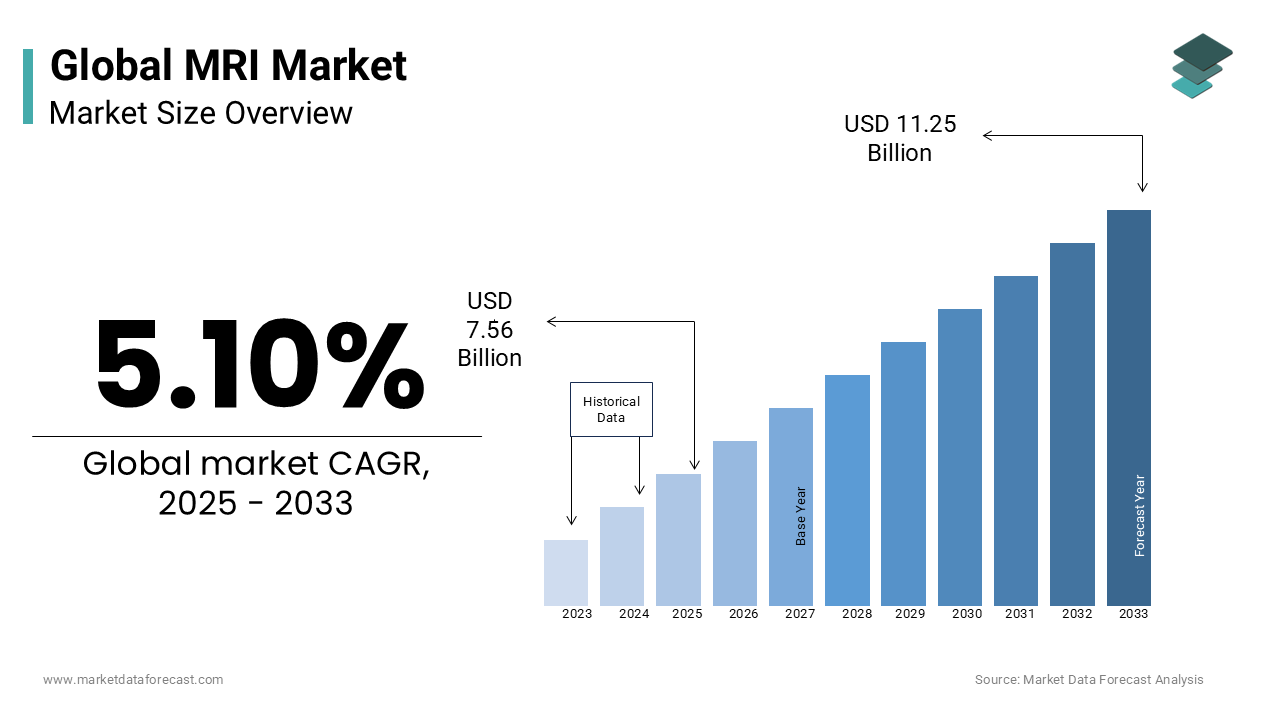
The MRI (Magnetic Resonance Imaging systems), which utilize strong magnetic fields and radio waves to generate detailed images of organs and tissues within the human body. This diagnostic technology is indispensable for detecting neurological disorders, musculoskeletal injuries, cardiovascular diseases, and oncological conditions without exposing patients to ionizing radiation. The global healthcare sector is increasingly prioritizing early and accurate diagnosis, which drives the adoption of advanced imaging modalities. According to the World Health Organization, non-communicable diseases, such as cancer and cardiovascular conditions, account for 74% of all deaths globally necessitating robust diagnostic infrastructure. The aging population further amplifies demand, as older individuals are more susceptible to chronic conditions requiring frequent monitoring. The European Society of Radiology emphasizes that MRI is the gold standard for soft tissue contrast resolution making it essential for complex clinical cases. Technological advancements, such as artificial intelligence integration and higher field strengths are transforming workflow efficiency and image quality. Regulatory bodies like the US Food and Drug Administration continue to approve innovative sequences and hardware improvements that enhance diagnostic confidence.
MARKET DRIVERS
Rising Prevalence of Chronic Diseases Drives Diagnostic Demand
The escalating burden of chronic diseases by creating an urgent need for precise and non-invasive diagnostic tools is fuelling the growth of the MRI market. Conditions, such as cancer stroke and neurodegenerative disorders require high resolution imaging for accurate staging treatment planning and monitoring. According to the International Agency for Research on Cancer, there were approximately 19.3 million new cancer cases worldwide in 2020 with projections indicating a significant increase in coming decades. MRI is critical in oncology for tumor detection characterization and assessing response to therapy. As per the Alzheimer’s Association, more than 6 million Americans are living with Alzheimer’s disease a condition where MRI plays a pivotal role in differential diagnosis and tracking disease progression. The increasing incidence of multiple sclerosis and other autoimmune disorders also contributes to the demand for neurological imaging. Healthcare providers rely on MRI to distinguish between benign and malignant lesions reducing the need for invasive biopsies. The cardiovascular disease affects nearly half of all adults in the United States driving the use of cardiac MRI for functional assessment. Early detection through advanced imaging improves patient outcomes and reduces long term healthcare costs. Consequently, hospitals and diagnostic centers are expanding their MRI capabilities to handle the growing volume of patients requiring these specialized services.
Technological Advancements Enhance Image Quality and Workflow Efficiency
The continuous innovation in technology to improve diagnostic accuracy operational efficiency and patient comfort, which is also promoting the growth of the MRI market. The introduction of higher field strength magnets, such as 3 Tesla and 7 Tesla systems provides superior signal to noise ratio enabling visualization of finer anatomical details. The advanced sequences like diffusion tensor imaging and functional MRI have expanded the clinical applications of MRI beyond traditional anatomical imaging. The integration of artificial intelligence and machine learning algorithms accelerates image reconstruction reduces scan times and minimizes artifacts. Silent scanning technologies address patient anxiety and claustrophobia making the procedure more tolerable for pediatric and elderly populations. The development of portable and low field MRI systems allows for point of care imaging in intensive care units and emergency departments. These technological enhancements improve the value proposition of MRI systems for healthcare facilities. Manufacturers are focusing on user friendly interfaces and automated protocols to reduce operator dependency. The ability to deliver faster and clearer images supports clinical decision making and enhances patient satisfaction. These innovations make MRI a more attractive option compared to other modalities driving adoption across diverse healthcare settings.
MARKET RESTRAINTS
High Capital and Operational Costs Restrain Market Penetration
The substantial financial investment required for acquiring and maintaining MRI systems, particularly for smaller healthcare facilities and developing regions is hindering the growth of the MRI market. The cost of a high field MRI scanner can range from 1 million to 3 million dollars, excluding installation and infrastructure modifications. The total cost of ownership, includes expensive helium cooling systems regular maintenance contracts and specialized, which can amount to hundreds of thousands of dollars annually. Many rural hospitals and clinics lack the budget to procure, such advanced equipment leading to disparities in access to diagnostic care. The healthcare expenditure per capita in low-income countries is often insufficient to support high end imaging infrastructure. The need for shielded rooms and stable power supplies further increases initial setup costs. Reimbursement rates for MRI procedures have stagnated or declined in some areas are squeezing profit margins for providers. This financial pressure discourages upgrades to newer technologies and limits the expansion of MRI services. Small practices may opt for outsourcing imaging services rather than investing in owned equipment. Additionally, the rapid pace of technological obsolescence means that systems may lose value quickly prompting hesitation in capital allocation. These economic constraints hinder the widespread deployment of MRI technology globally.
Shortage of Skilled Radiologists and Technicians Impacts Service Delivery
The global shortage of qualified radiologists and MRI technicians is limiting the growth of the MRI market. Operating an MRI scanner requires specialized training to ensure proper protocol selection patient positioning and image quality assurance. According to the American College of Radiology, there is a projected deficit of thousands of radiologists in the United States by 2030 due to an aging workforce and increasing demand for imaging services. This shortage leads to longer reporting times and potential delays in diagnosis. Many low- and middle-income countries face a severe lack of trained medical imaging professionals exacerbating access issues. High workload and burnout among existing staff further compromise service quality and efficiency. The complexity of advanced MRI sequences requires continuous education, which is not always accessible. Recruitment and retention of skilled technicians are difficult due to competitive job markets and demanding work conditions. Without adequate personnel even the most advanced MRI systems cannot operate at full capacity. This human resource constraint creates bottlenecks in patient flow and reduces the return on investment for healthcare facilities. Training programs are struggling to keep pace with demand leaving gaps in the workforce.
MARKET OPPORTUNITIES
Expansion into Point of Care and Portable MRI Solutions Offers New Growth Avenues
The development of compact and portable MRI systems by bringing diagnostic imaging closer to the patient is certainly to create new opportunities for the expansion of the MRI market. Traditional MRI scanners are large and fixed requiring dedicated rooms but new low field portable units can be deployed in emergency rooms intensive care units and remote clinics. MRI devices enable immediate imaging of stroke patients facilitating faster treatment decisions, which is important for saving brain tissue. As per the FDA, several low field MRI systems have received clearance for clinical use demonstrating their safety and efficacy in acute care settings. These systems do not require extensive shielding or cryogenic cooling reducing installation costs and complexity. The ability to perform bedside imaging reduces the risk associated with transporting critically ill patients. The growing trend towards decentralized healthcare delivery supports the adoption of point of care imaging. Manufacturers are investing in miniaturization and battery-operated designs to enhance portability. This shift democratizes access to MRI technology and creates new revenue streams.
Integration of Artificial Intelligence for Automated Analysis Creates Value
The incorporation of artificial intelligence into MRI workflows for enhancing diagnostic precision and operational efficiency is additionally to promote new opportunities for the growth of the MRI market. AI algorithms can automate image reconstruction segmentation and anomaly detection reducing the cognitive load on radiologists. AI tools can identify subtle patterns in MRI scans that may be missed by human observers improving early detection of diseases. This efficiency gain is crucial given the rising demand for imaging services. AI also enables personalized medicine by correlating imaging data with genetic and clinical information for better treatment planning. Pharmaceutical companies are using AI analyzed MRI data for clinical trials to monitor drug efficacy more accurately. The development of cloud-based AI platforms allows for continuous learning and improvement of algorithms across multiple sites. Healthcare providers can leverage these tools to standardize reporting and reduce variability. The value proposition of AI extends beyond speed to include improved diagnostic confidence and patient outcomes. Manufacturers who integrate robust AI capabilities into their MRI systems gain a competitive edge.
MARKET CHALLENGES
Supply Chain Vulnerabilities for Critical Components Disrupt Production
The reliance on complex global supply chains for crucial components, such as superconducting magnets and gradient coils is one of the major challenges for the growth of the MRI market. Disruptions in the availability of rare earth materials helium and semiconductor chips can delay manufacturing and increase costs. According to the US Geological Survey, helium is a non-renewable resource with limited suppliers making its price volatile and supply uncertain. Helium is essential for cooling superconducting magnets in high field MRI systems. The global chip shortage has impacted the production of medical devices, including MRI scanners which rely on advanced electronics for control and processing. Geopolitical tensions and trade restrictions further exacerbate supply chain risks affecting the timely delivery of components. Manufacturers face difficulties in sourcing alternative suppliers due to the specialized nature of MRI parts. These disruptions lead to longer lead times for new installations and repairs affecting customer satisfaction. Hospitals may experience downtime if spare parts are unavailable impacting patient care. The lack of transparency in multi tier supply chains makes it hard to predict and mitigate risks. Companies must invest in inventory buffering and supplier diversification which increases operational costs.
Regulatory Hurdles and Standardization Issues Slow Innovation
The complex regulatory sector for medical devices seeking to introduce innovative technologies is also a factor to impede the growth of the MRI market. Each country has its own approval processes and standards, which can delay entry and increase compliance costs. The new Medical Device Regulation in Europe has introduced stricter requirements for clinical evidence and post surveillance extending approval timelines. Obtaining clearance for new MRI sequences or hardware modifications requires rigorous testing and documentation. The lack of global harmonization in standards forces manufacturers to adapt products for different markets increasing development complexity. Changes in reimbursement policies also affect the adoption of new technologies if they are not adequately covered by insurance. Regulatory uncertainty can discourage investment in novel features, such as ultra-high field systems or hybrid PET MRI scanners. Compliance with cybersecurity regulations is becoming increasingly important, as MRI systems become more connected. Ensuring data privacy and protection adds another layer of regulatory burden. Small and mid-sized innovators may struggle to meet these demands limiting competition. The slow pace of regulatory adaptation to rapid technological change can stifle innovation.
REPORT COVERAGE
| REPORT METRIC | DETAILS |
| Market Size Available | 2025 to 2034 |
| Base Year | 2025 |
| Forecast Period | 2026 to 2034 |
| Segments Analysed | By Field Strength, Architecture, Application & Region |
| Various Analyses Covered | Global, Regional & Country Level Analysis, Segment-Level Analysis; DROC; PESTLE Analysis; Porter’s Five Forces Analysis, Competitive Landscape, Analyst Overview of Investment Opportunities |
| Regions Analysed | North America, Europe, Asia Pacific, Latin America, the Middle East, and Africa |
| Companies Analysed | Hitachi Medical Corporation, Toshiba Medical Systems, Siemens Healthcare, GE Healthcare, Imris Inc., Fonar Corporation, Esaote S.P.A, Neusoft Medical System, Aurora Medical Imaging, and Philips Healthcare. |
SEGMENTAL ANALYSIS
By Field Strength Insights
The high field MRI systems segment was accounted in holding a prominent share of the global MRI market due to their optimal balance between image quality signal to noise ratio and clinical versatility. These systems are considered the workhorses of modern radiology departments because they provide sufficient resolution for a wide range of applications, including neurology oncology and musculoskeletal imaging. The 3.0 Tesla systems are increasingly becoming the standard for neurological and cardiac imaging due to their ability to detect subtle abnormalities that lower field strengths might miss. The high demand for precise tumor characterization and vascular imaging drives hospitals to invest in these robust platforms. The availability of advanced software sequences optimized for 1.5 and 3.0 Tesla magnets further enhances their utility. Manufacturers have streamlined production for these field strengths resulting in lower costs compared to ultra-high field systems. The widespread familiarity of radiologists with high field protocols ensures smooth integration into daily workflows. Additionally, reimbursement policies in many countries favor high field scans for complex diagnoses ensuring financial viability for healthcare providers.
The ultra-high field segment is likely to grow at a fastest CAGR of 9.8% throughout the forecast period with the advancements in neuroscience research and specialized clinical applications. These systems offer unprecedented spatial resolution allowing for the visualization of microscopic structures such as cortical layers and small vessels, which is prominent for understanding neurodegenerative diseases. According to the National Institutes of Health, the number of 7.0 Tesla research sites has doubled in the last five years indicating a surge in academic and clinical interest. As per the European Society of Neuroradiology, ultra-high field MRI is gaining regulatory approval for specific clinical indications, such as epilepsy and multiple sclerosis prompting wider adoption beyond research labs. The development of dedicated radiofrequency coils and artifact reduction techniques has made these systems more practical for patient scanning. Pharmaceutical companies are utilizing ultra-high field imaging for drug development trials to monitor subtle biological changes. The increasing focus on precision medicine requires detailed anatomical maps that only ultr-high field systems can provide.
By Architecture Insights
The closed MRI systems segment held a prominent share of the MRI market in 2025. The enclosed structure allows for stronger gradient performance and better shielding from external interference resulting in superior image clarity required for complex diagnostics. Hospitals prefer closed architectures for routine and emergency diagnostics where speed and accuracy are paramount. As per the American Roentgen Ray Society, the majority of accredited imaging centers utilize closed bore systems to meet stringent quality assurance standards. The compact design of modern closed scanners has improved patient access while maintaining the benefits of a homogeneous field. Technological improvements, such as wider bores and shorter magnet lengths have mitigated some claustrophobia concerns without compromising image quality. The established infrastructure for installing closed systems including shielding and cooling requirements makes them a straightforward choice for facility planners. Reimbursement codes and clinical guidelines are largely based on data derived from closed system imaging. This entrenched position in clinical protocols and infrastructure ensures that closed MRI remains the primary architecture for diagnostic imaging worldwide.
The Open MRI systems segment is swiftly emerging at an anticipated CAGR of 7.5% during the forecast period with the need to accommodate patients with claustrophobia obesity or mobility issues. Traditional closed bores can be intimidating and physically restrictive leading to scan cancellations or incomplete studies. Open designs with vertical or side open configurations provide a more comfortable experience reducing anxiety and improving patient compliance. As per the Society of Pediatric Radiology, open MRI is particularly beneficial for children and patients requiring anesthesia, as it allows easier access for monitoring equipment and caregivers. Advances in magnet technology have improved the field strength of open systems narrowing the gap in image quality with closed counterparts. The rise of outpatient imaging centers focuses on patient satisfaction and throughput making open systems an attractive option for competitive differentiation. Lower installation costs due to reduced shielding requirements also appeal to smaller clinics. The growing awareness of patient centered care encourages healthcare providers to invest in open architectures.
By Application Insights
The brain imaging segment was the largest by accounting for 44.3% of the MRI market share in 2025 due to the high prevalence of neurological conditions, such as stroke tumors and neurodegenerative diseases, which require detailed structural and functional assessment. MRI is the gold standard for evaluating soft tissue contrast in the brain enabling early detection of abnormalities that CT scans may overlook. The stroke is second leading cause of death globally necessitating rapid and accurate imaging for treatment decisions. As per the Alzheimer’s Association, millions of individuals are diagnosed with dementia annually driving the demand for MRI to track disease progression and rule out other causes. The complexity of brain anatomy requires high resolution imaging which MRI provides effectively. Neurosurgeons rely on MRI for pre operative planning to map critical areas and avoid damage during surgery. The integration of functional MRI allows for the assessment of brain activity aiding in the diagnosis of epilepsy and psychiatric disorders. The aging population is more susceptible to neurological decline further sustaining demand for brain MRI. Clinical guidelines strongly recommend MRI for suspected brain pathologies ensuring consistent utilization.
The cardiac MRI segment is projected to grow at a fastest CAGR of 8.2% during the forecast period with the increasing burden of cardiovascular diseases and the superior diagnostic capabilities of MRI for heart structure and function. Unlike other modalities cardiac MRI provides comprehensive assessment of myocardial viability perfusion and fibrosis without ionizing radiation. The cardiovascular disease remains the leading cause of death globally, affecting millions of people annually. As per the European Society of Cardiology cardiac MRI is increasingly recognized as the reference standard for assessing right ventricular function and congenital heart defects. The rising incidence of heart failure and cardiomyopathies requires precise monitoring which MRI facilitates through detailed tissue characterization. Advances in faster imaging sequences have reduced scan times making cardiac MRI more feasible in busy clinical settings. The growing awareness of the limitations of echocardiography in certain patients has led to increased referrals for MRI. Insurance coverage for cardiac MRI is expanding as evidence supports its cost effectiveness in avoiding unnecessary procedures. The integration of artificial intelligence for automated analysis further enhances workflow efficiency.
REGIONAL ANALYSIS
North America MRI Market Analysis
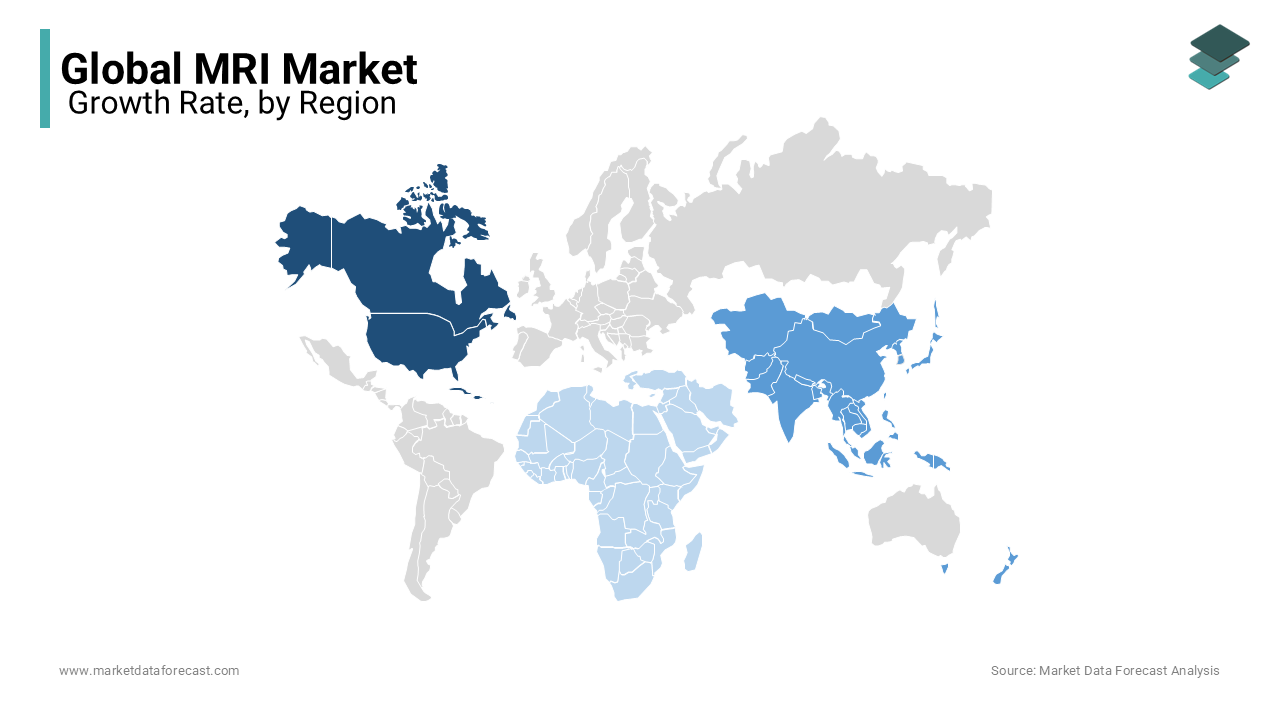
North America was the top performer in the global MRI market by holding 42.1% of the share in 2025 with the advanced healthcare infrastructure high healthcare expenditure and the presence of major medical device manufacturers. The early adoption of innovative technologies, such as ultra-high field and AI integrated systems. The United States spends significantly on diagnostic imaging, reflecting the high utilization rates of MRI services. As per the American College of Radiology, there are thousands of certified MRI facilities across the country ensuring widespread access to diagnostic care. The high prevalence of chronic diseases, such as cancer and neurological disorders drives consistent demand. Favorable reimbursement policies for advanced imaging procedures encourage healthcare providers to invest in state of the art equipment. The presence of key players like GE Healthcare and Siemens Healthineers fosters continuous innovation and local support. Research institutions and universities contribute to the development of new imaging protocols and applications. The aging baby boomer population further amplifies the need for diagnostic services. Strict regulatory standards ensure high quality and safety of imaging practices.
Europe MRI Market Analysis
Europe MRI market held second position by accounting for 23.2% of share in 2025 with the universal healthcare systems and strong regulatory frameworks that prioritize patient safety and diagnostic accuracy. According to the European Society of Radiology, member countries have well established imaging networks that facilitate equitable access to MRI services. The aging population in countries like Germany, Italy, and France drives higher demand for neurological and musculoskeletal imaging. Government funded healthcare systems ensure that MRI scans are accessible to a broad population although wait times can vary. The region is a hub for medical technology innovation with companies like Siemens Healthineers headquartered in Germany. Collaborative research projects across borders promote the sharing of best practices and technological advancements. Environmental regulations influence the design of MRI systems particularly regarding helium usage and energy efficiency. The focus on cost effectiveness encourages the adoption of efficient and durable systems.
Asia Pacific MRI Market Analysis
Asia Pacific MRI market growth is eventually to grow at a fastest CAGR during the forecast period with the improving healthcare infrastructure rising disposable incomes and increasing awareness of advanced diagnostic services. The large populations in China, India, and Japan creating substantial demand for medical imaging. The non-communicable diseases are rising rapidly in Asia necessitating better diagnostic capabilities. The government has invested billions in upgrading rural and urban healthcare facilities, including the procurement of MRI scanners. The growing middle class is willing to pay for premium healthcare services driving private sector investment in imaging centers. Local manufacturing initiatives in countries like China and South Korea are reducing costs and increasing availability. International players are expanding their presence through partnerships and localized production. The increasing number of trained radiologists supports the effective utilization of MRI technology. Government initiatives to reduce out of pocket expenses for diagnostics are boosting access.
Latin America MRI Market Analysis
Latin America MRI market growth is growing with the varying levels of healthcare access and economic stability across different countries. Economic fluctuations can impact purchasing power and import costs for MRI systems. However, the rising prevalence of chronic diseases is driving demand for better diagnostic tools. Private insurance coverage is expanding in countries like Mexico and Colombia facilitating access to MRI services. International donors and development banks sometimes fund healthcare infrastructure projects. The shortage of skilled radiologists remains a challenge but training programs are being implemented. Local distributors play a crucial role in navigating regulatory and logistical hurdles.
The Middle East and Africa MRI Market Analysis
The Middle East and Africa MRI market growth is driven by healthcare modernization initiatives and increasing investment in medical infrastructure. Many African countries face a severe shortage of diagnostic equipment, including MRI scanners. Saudi Arabia and the United Arab Emirates are investing heavily in world class healthcare facilities equipped with the latest MRI technology to serve both locals and medical tourists. Government visions, such as Saudi Vision 2030 prioritize healthcare transformation and digitalization. In Africa, international aid and public private partnerships are helping to introduce MRI services in major urban centers. The burden of infectious diseases and rising noncommunicable diseases creates a need for better diagnostics. Lack of trained personnel and maintenance infrastructure remains a barrier in many areas. However, mobile health initiatives and tele radiology are helping to bridge gaps.
COMPETITIVE LANDSCAPE
The competition in the global MRI market is characterized by an oligopolistic structure dominated by three major multinational corporations alongside emerging niche players. Established leaders leverage extensive distribution networks brand recognition and comprehensive service portfolios to secure large hospital contracts. They benefit from economies of scale and long-standing relationships with healthcare systems. Meanwhile specialized companies focus on innovative niches such as portable low field or dedicated organ scanners where they can offer differentiated value propositions. Differentiation occurs through superior image quality faster scan speeds AI integration and sustainability features rather than price alone. High capital requirements and regulatory barriers protect incumbents but also incentivize consolidation through mergers and acquisitions. Collaborative ecosystems involving software developers and research institutions are increasingly important for innovation. Regional variations in reimbursement and infrastructure create diverse competitive dynamics.
KEY MARKET PLAYERS
Some of the notable companies operating in the global MRI market include
- Hitachi Medical Corporation
- Toshiba Medical Systems
- Siemens Healthcare
- GE Healthcare
- Imris Inc.
- Fonar Corporation
- Esaote S.p.A.
- Neusoft Medical System
- Aurora Medical Imaging
- Philips Healthcare
Top Players in the Global MRI Market
Siemens Healthineers AG
Siemens Healthineers AG is a global leader in magnetic resonance imaging known for pioneering advanced magnet technologies and digital integration. The company contributes significantly through its Magnetom platform, which offers versatile field strengths from low to ultra-high field systems. Recently Siemens launched the Magnetom Free.Star system featuring helium free technology to address supply chain vulnerabilities and reduce operational costs. They have also integrated artificial intelligence driven reconstruction algorithms to accelerate scan times and improve image quality. By focusing on sustainable innovation and workflow efficiency, Siemens strengthens its position as a preferred partner for healthcare providers seeking reliable and future proof diagnostic solutions worldwide.
GE HealthCare Technologies Inc
GE HealthCare Technologies Inc maintains a prominent role in the MRI market by delivering comprehensive imaging solutions that emphasize patient comfort and clinical precision. The company’s SIGNA portfolio includes wide bore and silent scan technologies designed to enhance the patient experience while maintaining diagnostic accuracy. GE recently introduced the SIGNA MAGNUS head only 7 Tesla scanner dedicated to neuroscience research enabling unprecedented visualization of brain structures. They have also expanded their Edison AI platform to streamline workflows and automate routine tasks. Through continuous investment in specialized hardware and intelligent software GE reinforces its commitment to advancing neurological care and operational excellence in medical imaging globally.
Philips Healthcare
Philips Healthcare is a key contributor to the global MRI landscape with a strong focus on patient centric design and clinical versatility. The company’s Ingenia and Prodiva platforms utilize digital broadband architecture to deliver high quality images across diverse clinical applications. Philips recently launched the SmartSpeed DL solution, which uses deep learning to significantly reduce scan durations without compromising diagnostic confidence. They have also enhanced their BlueSeal magnet technology to minimize helium dependency and installation complexity.
Top Strategies Used by Key Market Participants
Key players in the MRI market primarily employ strategies focused on technological differentiation and ecosystem integration to maintain competitive advantage. Companies are heavily investing in artificial intelligence and machine learning to automate image reconstruction reduce scan times and enhance diagnostic accuracy. This addresses workforce shortages and improves throughput. Another major strategy involves developing sustainable technologies, such as helium free or low helium magnets to mitigate supply chain risks and lower total cost of ownership. Strategic partnerships with academic institutions and software developers enable firms to offer comprehensive solutions beyond hardware. Additionally, manufacturers are expanding into point of care and portable segments to capture new markets. Marketing efforts increasingly emphasize patient comfort and workflow efficiency to appeal to value based healthcare models. These approaches ensure sustained growth in a dynamic environment.
MARKET SEGMENTATION
This global MRI market research report has been segmented and sub-segmented based on the field strength, architecture, application, and region.
By Field Strength
- Low To Midfield
- High Field
- Very High Field
- Ultra-High Field
By Architecture
- Open MRI
- Closed MRI
By Application
- Brain
- Spine
- Cardiac
- Breast
- Abdomen
By Region
- North America
- Europe
- Asia-Pacific
- Latin America
- The Middle East and Africa