- Product Description Description
- Table of Contents TOC
- List of Table & Figure LOT
- Get Free Sample PDF Sample PDF
Market Size, 2025
$38.53 BnMarket Estimate, 2026
$41.87 BnMarket Forecast, 2034
$81.43 BnCAGR, 2026–2034
8.67%Executive Summary: Latin America Nutraceuticals Market
- Market Scope: Comprehensive Latin American nutraceuticals market analysis covering product categories, application sectors, national leadership shares, public health indicators, and demographic trends.
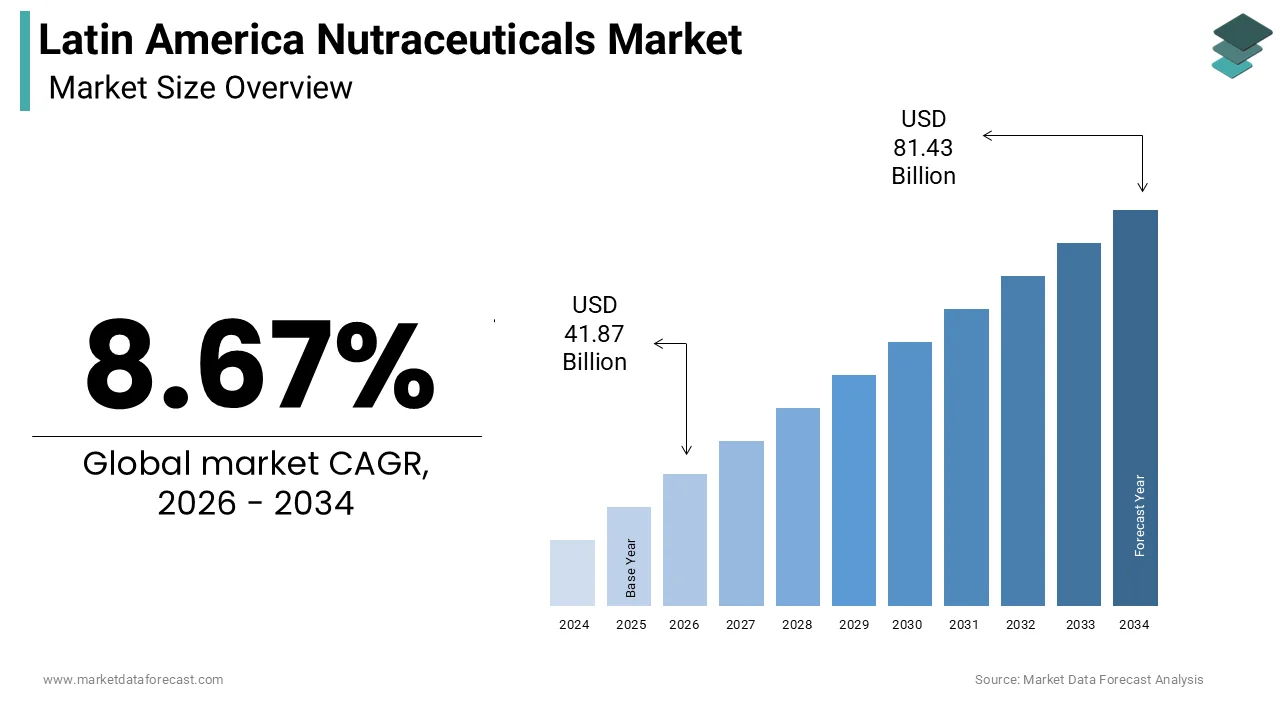
- Market Valuation: Valued at USD 38.53 billion (2025), estimated at USD 41.87 billion (2026), and projected to attain USD 81.43 billion by 2034, registering a solid CAGR of 8.67% (2026–2034).
- Primary Growth Drivers: Shift toward preventive healthcare adoption, aging demographics, rising lifestyle-related chronic diseases, and escalating consumer health consciousness. Key public health benchmarks include non-communicable diseases accounting for ~81% of all deaths in the Americas, the regional population aged 65 and above projected to reach ~138 million by 2050, ~302 million adults (nearly 58% of the regional population) being overweight or obese, and vitamin D deficiency affecting ~34.7% of South American populations.
Key Market Segment Metrics (2026–2034)
| Category | Leading Segment (2025 Position) | Fastest-Growing Segment |
|---|---|---|
| By Product Type | Vitamins (led with a 35.6% market share in 2025, heavily supported by widespread micronutrient deficiencies) | Probiotics (projected to record the fastest CAGR at 9.5% from 2026 to 2034) |
| By Application Sector | Dietary supplements (dominated with a 57.3% share in 2025, driven by demand for targeted and personalized health solutions) | Functional foods and beverages |
| By Distribution Channel | Pharmacies, specialized retail, and mass supermarkets | Digital e-commerce and direct-to-consumer platforms |
| By Country / Region | Brazil (led the regional market with a 40.5% share in 2025, followed by Mexico with 23.5%) | Major Latin American growth economies expanding via localized health initiatives |
Major Market Players & Market Structure
Market Structure: Highly competitive Latin American nutraceuticals marketplace featuring major multinational life sciences corporations, pharmaceutical leaders, and specialized brands competing intensely through localized product formulations, utilization of indigenous regional ingredients, continuous R&D investment, robust distribution partnerships, manufacturing facility expansions, and e-commerce channel penetration.
Key Companies: E. I. du Pont de Nemours and Company, General Mills, Cargill, Royal DSM, Groupe Danone, BASF, Archer Daniels Midland Company, Hypera, Sanofi, and Glanbia.
Latin America Nutraceuticals Market Size
The nutraceuticals market size in Latin America was calculated to be USD 38.53 billion in 2025 and is anticipated to be worth USD 81.43 billion by 2034 from USD 41.87 billion in 2026, growing at a CAGR of 8.67% during the forecast period.
Nutraceuticals are products derived from food sources that provide extra health and medical benefits, bridging the gap between food and medicine. This market includes vitamins, minerals, probiotics, herbal extracts, and specialized formulations aimed at preventing chronic diseases and enhancing overall well-being. The region is experiencing a paradigm shift in healthcare, moving from reactive treatment to proactive prevention, driven by an aging population and rising lifestyle-related ailments. According to the Pan American Health Organization, non-communicable diseases such as cardiovascular diseases, cancer, and diabetes account for approximately 81% of all deaths in the Americas, creating an urgent need to address risk factors like obesity and smoking. Furthermore, as per United Nations and ECLAC projections, the number of individuals aged 65 years or older in Latin America and the Caribbean is projected to more than double by 2050, reaching approximately 138 million individuals. This demographic transition intensifies the demand for products that support joint health, cognitive function, and immune resilience. In countries like Brazil and Mexico, regulatory frameworks are evolving to standardize safety and efficacy claims, fostering consumer trust. The integration of traditional herbal medicine with modern scientific validation also characterizes the market, reflecting a unique cultural synthesis. Consumers in key economies are increasingly willing to invest in high-quality nutraceuticals to maintain vitality and manage health risks. This behavior is driven by accelerating urbanization and rising disposable incomes, ultimately positioning the sector as a critical component of the regional healthcare ecosystem.
MARKET DRIVERS
Rising Prevalence of Chronic Lifestyle Diseases
The escalating prevalence of chronic lifestyle diseases is a key driver for the Latin America nutraceuticals market. This compels consumers to seek preventive health measures through dietary supplementation. Conditions such as type 2 diabetes, hypertension, and obesity have reached epidemic proportions in the region, largely due to sedentary lifestyles and poor dietary habits. According to the International Diabetes Federation (IDF) 2021 Atlas, approximately 32 million adults in South and Central America were living with diabetes. If Mexico (often categorized under North America) is included, the figure for Latin America rises to approximately 45–46 million. The World Health Organization (WHO) and FAO confirm that obesity rates in Latin America and the Caribbean have tripled since 1975. Currently, approximately 302 million adults (nearly 58% of the population) are classified as overweight or obese. This health crisis has heightened awareness regarding the role of nutrition in disease management, driving demand for functional ingredients such as fiber, omega-3 fatty acids, and plant sterols that help regulate blood sugar and cholesterol levels. Governments in countries like Chile and Mexico have implemented strict labeling laws and sugar taxes, further educating consumers about the risks of processed foods and encouraging the adoption of healthier alternatives. Nutraceuticals offer a convenient and accessible way for individuals to address specific health concerns, such as metabolic syndrome and cardiovascular risk, without relying solely on pharmaceutical interventions. The growing emphasis on self-care and holistic wellness reinforces the perception of nutraceuticals as essential tools for maintaining long-term health, thereby sustaining robust demand across diverse demographic segments.
Increasing Health Consciousness and Preventive Care Adoption
A profound shift towards health consciousness and preventive care is also fuelling the expansion of the Latin American nutraceuticals market. Consumers are becoming more informed about the benefits of proactive health management, influenced by global wellness trends and increased access to health information via digital platforms. As per the Global Wellness Institute, the wellness economy in Latin America is expanding rapidly, with consumers prioritizing physical activity, mental well-being, and nutritional balance. The pandemic accelerated this trend, highlighting the importance of a strong immune system and leading to a surge in the consumption of vitamins C, D, and zinc. Social media influencers and healthcare professionals play a crucial role in disseminating knowledge about the efficacy of specific supplements, reducing skepticism, and encouraging trial. The integration of nutraceuticals into daily routines, such as morning vitamin regimes or protein supplementation for fitness enthusiasts, reflects a cultural normalization of preventive health practices. This behavioral change ensures sustained growth in the market as consumers continue to prioritize wellness and longevity.
MARKET RESTRAINTS
Regulatory Fragmentation and Compliance Complexities
Regulatory fragmentation and complex compliance requirements are restricting the growth of the Latin American nutraceuticals market. These restraints hinder seamless product distribution and market entry. Each country in the region maintains distinct regulatory frameworks for classifying and approving nutraceuticals, ranging from strict pharmaceutical-like regulations to loose food supplement guidelines. According to the Pan American Health Organization, the lack of harmonized standards across member states creates substantial barriers for manufacturers seeking to expand regionally. For instance, while Brazil’s National Health Surveillance Agency requires rigorous registration and clinical evidence for many supplements, other countries may have more lenient or ambiguous processes. The uncertainty surrounding health claim approvals further complicates marketing strategies, limiting the ability of brands to communicate product benefits effectively. Small and medium-sized enterprises often lack the resources to manage these regulatory burdens, restricting competition and innovation. Additionally, frequent changes in legislation and inconsistent enforcement create an unstable business environment, discouraging long-term investment. Greater regulatory harmonization must be achieved through regional trade agreements or standardized guidelines. Until then, the market will continue to face inefficiencies that impede growth and limit consumer access to diverse and innovative nutraceutical products.
High Cost and Limited Accessibility in Rural Areas
The high cost of premium nutraceuticals and limited accessibility in rural and lower-income areas hamper the penetration of the Latin American nutraceuticals market. Many high-quality supplements and functional foods are priced at a premium, making them unaffordable for a significant portion of the population who face economic constraints. As per data from retail associations in Peru and Colombia, nutraceuticals are predominantly available in urban supermarkets and specialized pharmacies, leaving rural communities with limited options. The lack of robust distribution networks in remote areas exacerbates this issue, as logistical challenges increase transportation costs and reduce product availability. Furthermore, the prevalence of informal markets selling unregulated and potentially unsafe supplements undermines consumer trust in legitimate brands. Price sensitivity drives many consumers to opt for cheaper, lower-quality alternatives or forego supplementation entirely. While public health initiatives promote nutrition, they rarely cover the cost of private nutraceutical products. This economic disparity creates a two-tier market where only affluent urban dwellers can access high-quality preventive health solutions, leaving a vast potential customer base underserved. Addressing affordability and improving distribution infrastructure are critical to unlocking broader market growth.
MARKET OPPORTUNITIES
Utilization of Indigenous Biodiversity and Native Ingredients
The rich biodiversity of the region offers a significant opportunity for the Latin American nutraceuticals market. This paves the way for developing unique products based on indigenous ingredients. The region is home to a vast array of medicinal plants and superfoods, such as acai, maca, quinoa, guarana, and camu camu, which possess potent nutritional and therapeutic properties. As per the Brazilian Ministry of Science, Technology, and Innovation, research into the bioactive compounds of native flora is gaining momentum, validating their health benefits and supporting commercialization. By leveraging these local resources, manufacturers can create differentiated products that appeal to both domestic pride and international export markets. The global demand for natural and sustainable ingredients aligns perfectly with the region’s ecological assets, offering a competitive advantage. Furthermore, sourcing locally supports rural communities and promotes sustainable agricultural practices, enhancing brand reputation and social responsibility. Government initiatives in countries like Peru and Bolivia encourage the sustainable harvesting and commercialization of native crops, providing incentives for innovation. Developing proprietary extracts and formulations from these indigenous sources allows companies to capture niche markets and command premium prices, driving growth through uniqueness and authenticity.
Expansion of E-Commerce and Direct-to-Consumer Models
The rapid expansion of e-commerce and direct-to-consumer models creates a pathway for the expansion of the Latin American nutraceuticals market. This helps to reach wider audiences and enhance customer engagement. Digital platforms enable brands to bypass traditional retail barriers, offering convenient access to a diverse range of products regardless of geographic location. According to McKinsey and Company, e-commerce adoption in Latin America accelerated significantly during the pandemic, with online sales of health and wellness products growing by over 50 percent in key markets. As per Mercado Libre, the leading e-commerce platform in the region, categories such as vitamins and supplements have become top sellers, reflecting changing consumer shopping habits. Direct-to-consumer channels allow companies to collect valuable data on customer preferences, enabling personalized marketing and product recommendations. Subscription services and automated replenishment models foster customer loyalty and ensure consistent revenue streams. Additionally, digital platforms facilitate educational content delivery, helping consumers make informed decisions about their health needs. The ability to reach rural and semi-urban areas, where physical retail presence is limited, expands the potential customer base. Nutraceutical brands can overcome traditional distribution challenges and drive significant growth in the evolving digital landscape of Latin America by investing in robust online infrastructure and digital marketing strategies.
MARKET CHALLENGES
Proliferation of Counterfeit and Unregulated Products
The proliferation of counterfeit and unregulated products is among the severe challenges to the integrity and growth of the Latin American nutraceuticals market. The lack of stringent enforcement in some regions allows inferior or adulterated supplements to enter the supply chain, posing health risks to consumers and undermining trust in legitimate brands. As per consumer protection agencies in Mexico and Brazil, reports of adverse effects from unregulated weight loss and muscle-building supplements are increasing, leading to public health concerns. These illicit products often contain undeclared ingredients, incorrect dosages, or harmful contaminants, damaging the reputation of the entire industry. Legitimate manufacturers face unfair competition from counterfeiters who operate with lower overheads and disregard safety standards. Combating this issue requires substantial investment in authentication technologies and collaboration with regulatory authorities, which can be resource-intensive. The presence of counterfeit goods also erodes consumer confidence, making individuals hesitant to try new or premium products. The threat of counterfeit products will remain a persistent obstacle to market stability and consumer safety until effective monitoring and enforcement mechanisms are established.
Lack of Consumer Awareness and Scientific Literacy
A lack of consumer awareness and scientific literacy regarding the efficacy and proper use of these products further impedes the expansion of the Latin American nutraceuticals market. Many consumers hold misconceptions about the benefits of supplements, often viewing them as miracle cures or unnecessary expenses rather than complementary health tools. As per surveys conducted by local health organizations, many individuals self-prescribe supplements without professional guidance, potentially leading to interactions with medications or excessive intake of certain nutrients. The abundance of conflicting information online further confuses consumers, making it difficult to distinguish between evidence-based products and marketing hype. This knowledge gap hinders the adoption of high-quality, scientifically validated nutraceuticals, as consumers may opt for cheaper, less effective alternatives based on anecdotal evidence. Educating the public requires sustained efforts from industry stakeholders, healthcare providers, and government bodies, which can be costly and time-consuming. Without improved scientific literacy, the market risks stagnation as consumers fail to appreciate the true value of preventive health solutions. Bridging this education gap is essential for fostering a mature and informed consumer base that drives sustainable market growth.
REPORT COVERAGE
| REPORT METRIC | DETAILS |
| Market Size Available | 2025 to 2034 |
| Base Year | 2025 |
| Forecast Period | 2026 to 2034 |
| CAGR | 8.67% |
| Segments Covered | By Type, Application, And Region |
| Various Analyses Covered | Global, Regional & Country Level Analysis; Segment-Level Analysis; DROC, PESTLE Analysis; Porter’s Five Forces Analysis; Competitive Landscape; Analyst Overview of Investment Opportunities |
| Regions Covered | Brazil, Mexico, Argentina, Chile, and the rest of Latin America |
| Market Leaders Profiled | E. I. du Pont de Nemours and Company, General Mills, Inc., Cargill, Royal DSM N.V., Groupe Danone S.A., BASF SE, and Archer Daniels Midland Company |
SEGMENTAL ANALYSIS
By Type Insights
The vitamins segment remained in the lead in the Latin America nutraceuticals market and captured a 35.6% share in 2025. Its widespread recognition, affordability, and essential role in addressing common nutritional deficiencies across the region are attributed to the leading position of this segment. The primary driver for this dominance is the high prevalence of micronutrient deficiencies, particularly Vitamin D and B complex vitamins, which are linked to various health issues, including bone disorders and fatigue. A large systematic review in Nutrition Reviews found that the overall prevalence of vitamin D deficiency is around 34.7% in South American populations. This widespread deficiency creates a consistent and substantial demand for supplementation among all age groups. As per the Brazilian Ministry of Health, national surveys indicate that a significant portion of the population does not meet the recommended daily allowance for essential vitamins through diet alone, necessitating external supplementation. The low cost and easy availability of vitamin supplements in pharmacies and supermarkets make them accessible to a broad demographic, including lower-income households. Furthermore, the perception of vitamins as a basic health insurance policy against illness reinforces their regular consumption. Government fortification programs for staple foods like flour and milk also raise awareness about the importance of vitamins, indirectly boosting the supplement market. The established trust in vitamin efficacy, combined with their critical role in preventive healthcare, ensures that this segment remains the cornerstone of the regional nutraceutical industry.
On the other hand, the probiotics segment is predicted to witness the highest CAGR of 9.5% during the forecast period due to increasing awareness of gut health and its connection to overall well-being. The main factor accelerating this growth is the rising incidence of gastrointestinal disorders and the growing consumer understanding of the microbiome’s role in immunity and mental health. According to the World Gastroenterology Organisation, the prevalence of irritable bowel syndrome and other digestive issues is increasing in Latin America due to dietary changes and stress, prompting consumers to seek natural remedies. The scientific validation of probiotics for enhancing immune response, particularly in the post-pandemic era, has further boosted their popularity. Consumers are increasingly aware that a healthy gut contributes to better nutrient absorption and reduced inflammation, driving demand for diverse strains such as Lactobacillus and Bifidobacterium. Additionally, the expansion of product formats beyond capsules to include gummies, drinks, and fortified foods makes probiotics more appealing and convenient for daily consumption. Marketing campaigns emphasizing the link between gut health and skin clarity or mood regulation also attract younger demographics. This combination of scientific backing, diverse applications, and heightened health consciousness propels the rapid expansion of the probiotics segment.
By Application Insights
The dietary supplements segment dominated the Latin America nutraceuticals market and accounted for a 57.3% share in 2025. This dominance of the segment was driven by the convenience of dosage and the ability to target specific health concerns with concentrated ingredients. One of the major drivers of this dominance is the growing preference for personalized health solutions, where consumers select supplements based on individual needs such as joint support, heart health, or energy enhancement. As per retail data from major pharmacy chains in Brazil and Argentina, vitamin and mineral supplements account for the highest volume of nutraceutical sales, reflecting their status as entry-level products for health-conscious individuals. The ease of integration into existing lifestyles, without requiring significant dietary changes, makes supplements an attractive option for busy urban professionals. Furthermore, the aging population relies heavily on supplements to manage chronic conditions and maintain vitality, creating a stable and recurring demand. The availability of a wide range of formulations, from tablets to softgels, allows manufacturers to cater to diverse preferences and swallowing abilities. Regulatory frameworks in key markets are becoming more standardized for supplements, enhancing consumer confidence in product safety and efficacy. Consequently, the versatility and targeted benefits of dietary supplements ensure their continued leadership in the regional market.
However, the functional food beverages segment is estimated to register the fastest CAGR of 8.7% from 2026 to 2034, owing to the convergence of hydration and nutrition in convenient, ready-to-drink formats. This quick growth is caused by the busy lifestyle of urban consumers who seek healthy on-the-go options that provide immediate benefits without the need for pill swallowing. As per the Beverage Marketing Corporation, the introduction of adaptogenic drinks and immune-boosting shots has captured the attention of younger demographics who prioritize wellness in their social and professional lives. The cultural affinity for refreshing beverages in tropical climates further supports the adoption of functional drinks as daily staples. Manufacturers are innovating with natural sweeteners and exotic fruit flavors to enhance palatability while delivering health benefits such as improved focus or digestion. The visibility of these products in convenience stores and vending machines ensures high impulse purchase rates. Additionally, the perception of functional beverages as healthier alternatives to sugary sodas aligns with public health initiatives promoting reduced sugar consumption. This alignment with lifestyle trends and health goals drives the rapid uptake of functional food beverages in the region.
REGIONAL ANALYSIS
Brazil Nutraceuticals Market Analysis
Brazil was the top performer in the Latin American nutraceuticals market and accounted for a 40.5% share in 2025. The demand for nutraceuticals in Brazil was fuelled by its large population, robust manufacturing base, and growing health awareness. The country is a major producer of raw materials such as soy and acai, providing a cost advantage for local nutraceutical manufacturers. The Brazilian Institute of Geography and Statistics (IBGE) demographic data suggests that the resilience of the Brazilian consumer class is driving growth in the wellness sector. As per the Brazilian Association of Dietary Supplement Industries, the market has seen consistent double-digit growth in recent years, fueled by the rising prevalence of chronic diseases and an aging population. The regulatory framework overseen by the National Health Surveillance Agency is becoming more streamlined, encouraging innovation and foreign investment. Urban centers like São Paulo and Rio de Janeiro serve as hubs for digital health startups and e-commerce platforms, facilitating direct-to-consumer sales. The strong fitness culture in Brazil also drives demand for sports nutrition and protein supplements. Government initiatives promoting healthy eating and physical activity further support market growth. These factors collectively position Brazil as the dominant force in the regional nutraceutical landscape, setting trends and driving volume.
Mexico Nutraceuticals Market Analysis
Mexico was positioned second in the Latin American nutraceuticals market and occupied a 23.5% share in 2025. This position was supported by a high burden of lifestyle diseases and a strong tradition of herbal medicine. The country faces significant challenges with obesity and diabetes, which drive consumer interest in preventive health solutions. According to the Mexican National Institute of Public Health (INSP) and ENSANUT data, over 75% of Mexican adults are overweight or obese, a statistic that market researchers cite as a key driver for the growing weight management supplement industry. As per the Mexican Association of Self-Care Industry, the sales of vitamins and herbal supplements have risen steadily, supported by increasing health literacy and access to information. The proximity to the United States facilitates the introduction of new trends and products, influencing local consumer preferences. The government’s implementation of front-of-pack warning labels on unhealthy foods has heightened awareness about nutrition, indirectly boosting the nutraceutical sector. Local manufacturers are leveraging native ingredients like agave and chia to create unique products that appeal to national pride. The growing e-commerce sector enhances accessibility, particularly in rural areas. These dynamics make Mexico a critical growth engine for the regional market, with strong potential for innovation and expansion.
Argentina Nutraceuticals Market Analysis
Argentina is another major country in the Latin American nutraceuticals market due to a highly educated population and a strong pharmaceutical industry that often overlaps with supplement production. The country has a high per capita consumption of beef and dairy, yet there is a growing trend towards plant-based and supplemental nutrition due to economic fluctuations and health concerns. According to research, the Argentine dietary supplements landscape is growing due to increasing health awareness. However, economic volatility and import restrictions continue to challenge the availability of premium imported goods. A study indicates that Argentina’s aging population is driving increased commercial demand for bone health and cognitive support products, while the Ministry of Health focuses on public health interventions like the National Hip Fracture Registry to manage age-related conditions. The economic context, characterized by inflation, has made locally produced generics and supplements more attractive compared to expensive imported brands. Buenos Aires serves as a cultural and intellectual hub, where wellness trends are rapidly adopted and disseminated. The strong presence of pharmacies as primary retail channels ensures the wide distribution of nutraceutical products. Regulatory standards are relatively strict, ensuring product quality and consumer trust. These factors sustain Argentina’s relevance in the regional market, with a focus on quality and scientific validation.
Chile Nutraceuticals Market Analysis
Chile grew at a stable pace in the Latin American nutraceuticals market owing to high regulatory standards and a health-conscious population. The country was a pioneer in implementing strict food labeling laws, which have significantly influenced consumer behavior towards healthier choices. According to evaluations of Chile’s Law of Food Labeling and Advertising, the regulations led to a significant decrease in the purchase of ultra-processed foods and beverages high in sugar and sodium, but there is no data to support a correlated rise in natural supplement consumption. Chileans have one of the highest life expectancies in the region, driving demand for anti-aging and longevity supplements. The high level of internet penetration supports robust e-commerce sales of nutraceuticals. Santiago is a center for innovation, with several startups developing personalized nutrition solutions. The strong outdoor and fitness culture promotes the use of sports nutrition and recovery supplements. These factors ensure that Chile remains a key market for high-value and scientifically backed nutraceutical products in the region.
COMPETITION OVERVIEW
The competition in the Latin American nutraceuticals market is characterized by a mix of multinational corporations and local manufacturers vying for market share through innovation and accessibility. Large global players leverage their brand recognition and financial resources to introduce premium products and advanced formulations. They compete on quality scientific validation and comprehensive distribution networks that reach urban and rural areas. Local companies often dominate specific niches by offering cost-effective solutions and utilizing native ingredients that resonate with cultural traditions. Price sensitivity remains a key factor influencing purchasing decisions, particularly in lower-income segments. Regulatory compliance and safety standards serve as critical differentiators that build consumer trust. Digital marketing and e-commerce platforms are increasingly important for reaching younger demographics and enhancing brand visibility. Collaborations with healthcare professionals and influencers help educate consumers and drive adoption. The market requires continuous adaptation to changing health trends and economic conditions to sustain growth and maintain a competitive advantage in the region.
KEY MARKET PLAYERS
A few major players of the Latin American nutraceuticals market include
- E. I. du Pont de Nemours and Company
- General Mills, Inc
- Cargill
- Royal DSM N.V
- Groupe Danone S.A
- BASF SE
- Archer Daniels Midland Company
Top Strategies Used by Key Market Participants
Key players in the Latin America nutraceuticals market focus on product localization to meet specific regional health needs and cultural preferences. Companies invest in research and development to create formulations using indigenous ingredients such as acai and maca. Strategic partnerships with local distributors and pharmacies enhance market penetration and accessibility. Digital transformation is prioritized to leverage e-commerce platforms for direct-to-consumer sales and personalized marketing. Educational initiatives help consumers understand the benefits of preventive health and proper supplement usage. Regulatory compliance and quality assurance are central to building trust and ensuring product safety. Sustainability practices, including eco-friendly packaging, appeal to environmentally conscious buyers. These strategies enable participants to navigate market complexities and capitalize on growth opportunities in the diverse Latin American landscape.
Leading Players in the Latin America Nutraceuticals Market
- Hypera S.A. is a leading pharmaceutical and consumer health company in Latin America with a strong portfolio of nutraceuticals and vitamins. The company leverages its extensive distribution network to make products like Neutroff and Cenevit widely available across Brazil and neighboring countries. Recent actions include strategic acquisitions of local brands to diversify its product offerings and strengthen its presence in the wellness sector. Hypera invests heavily in digital marketing and e-commerce platforms to reach younger consumers directly. The organization focuses on innovation by launching new formulations that address specific health needs, such as immune support and energy enhancement. By integrating scientific research with consumer insight,s Hypera ensures high-quality standards. These efforts reinforce its position as a trusted provider of accessible and effective nutritional solutions in the region.
- Sanofi S.A. plays a significant role in the Latin American nutraceuticals market through its consumer healthcare division, which offers a wide range of vitamins and supplements. The company utilizes its global expertise to introduce premium brands such as Berocca and Enterogermina to local markets. Recent strategies involve expanding manufacturing capabilities in Brazil and Mexico to improve supply chain efficiency and reduce costs. Sanobi actively engages in educational campaigns to raise awareness about the importance of preventive health and proper nutrition. The organization collaborates with healthcare professionals to recommend its products for specific dietary deficiencies. By leveraging its strong brand reputation and regulatory compliance, Sanofi builds trust among consumers. These initiatives help the company maintain a competitive edge and drive growth in the evolving Latin American health and wellness landscape.
- Glanbia plc contributes to the Latin America nutraceuticals market primarily through its performance nutrition and ingredient solutions divisions. The company supplies high-quality protein powders and specialized nutrients to both consumer brands and industrial clients in the region. Recent actions include partnering with local distributors to expand the reach of its Optimum Nutrition brand in key markets like Brazil and Argentina. Glanbia focuses on innovation by developing clean-label and plant-based ingredients that align with current health trends. The organization supports sports nutrition enthusiasts through sponsorships and digital engagement programs. By providing technical expertise and customized formulations, Glanbia helps local manufacturers enhance their product portfolios. These strategic moves strengthen its influence in the regional market and support the growing demand for high-performance nutritional products in Latin America.
MARKET SEGMENTATION
This research report on the Latin America nutraceuticals market has been segmented and sub-segmented based on type, application, and region.
By Type
- Prebiotics
- Probiotics
- Proteins & Amino Acids
- Fibers & Specialty Carbohydrates
- Vitamins
- Phytochemicals & Plant Extracts
- Minerals
- Carotenoids
- Omega-3 Fatty Acids
- Others
By Application
- Animal Nutrition
- Functional Food
- Dietary Supplements
- Functional Food Beverages
- Personal Care
By Country
- Brazil
- Mexico
- Argentina
- Chile
- Rest of Latin America