- Product Description Description
- Table of Contents TOC
- List of Table & Figure LOT
- Get Free Sample PDF Sample PDF
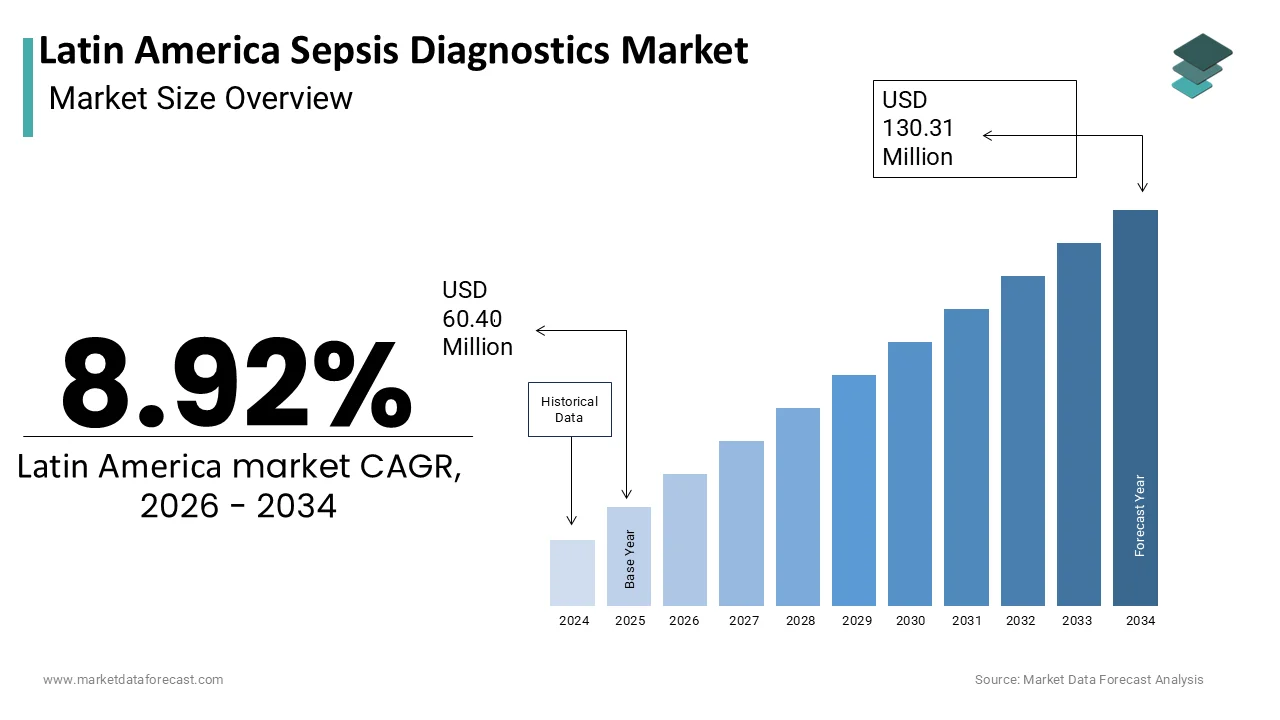
Market Size, 2025
$60.40 MnMarket Estimate, 2026
$65.78 MnMarket Forecast, 2034
$130.31 MnCAGR, 2026–2034
8.92%Latin America Sepsis Diagnostics Market Summary
The Latin America Sepsis Diagnostics Market size was valued at USD 55.45 million in 2024 and is anticipated to reach USD 119.64 million by 2033, growing at a CAGR of 8.92 % from 2024 to 2033. The market is gaining momentum due to the rising demand for remote cardiac care, the growing burden of cardiovascular diseases, and technological advancements in AI-powered diagnostics and wearable cardiac monitoring devices.
Key Market Trends & Insights
- Latin America dominated the global market with a largest share in 2024.
- Latin America is projected to grow at the fastest rate between 2024 and 2033.
- Based on technology, the IT services segment is the fastest-growing with a projected CAGR of 8.92 %.
- AI and wearable tech adoption are key trends driving innovation in the market.
Market Size & Forecast
- 2024 Market Size: USD 55.45 million
- 2025 Market Size: USD 60.40 million
- 2033 Projected Market Size: USD 119.64 million
- CAGR (2024–2033): 8.92 %
- Latin America: Largest market in 2024
- Latin America: Fastest-growing region
Latin America Sepsis Diagnostics Market Size
The Latin America Sepsis Diagnostics Market is projected to grow from USD 60.40 million in 2025 to USD 65.78 million in 2026 and reach USD 130.31 million by 2034, registering a CAGR of 8.92% during the forecast period from 2026 to 2034.
Sepsis is a life-threatening condition caused by the body’s dysregulated response to infection, leading to organ dysfunction and high mortality if not diagnosed early. In Latin America, sepsis remains a critical public health concern due to rising hospital-acquired infections, growing prevalence of chronic diseases, and increasing intensive care admissions. The Latin America sepsis diagnostics market encompasses a range of diagnostic tools including blood culture tests, biomarker assays, molecular diagnostics, and point-of-care testing devices aimed at rapid identification and management of sepsis.
Like, according to the Pan American Health Organization (PAHO), sepsis contributes significantly to in-hospital mortality across the region, with Brazil and Mexico reporting some of the highest incidence rates. Similarly, Latin America experiences over 300,000 annual sepsis cases, underscoring the urgent need for advanced diagnostic infrastructure. Apart from these, as per the World Sepsis Federation, nearly 40% of sepsis-related deaths in the region could be prevented with timely diagnosis and treatment.
The market is evolving with technological advancements such as polymerase chain reaction (PCR)-based pathogen detection and procalcitonin biomarker testing gaining traction. However, disparities in healthcare access, particularly in rural areas, remain a challenge. So, governments as well as private stakeholders are investing more in improving critical care systems so the sepsis diagnostics sector in Latin America is witnessing steady growth driven by clinical necessity and regulatory support.
MARKET DRIVERS
Rising Incidence of Hospital-Acquired Infections (HAIs) in Latin America
The escalating prevalence of hospital-acquired infections (HAIs) is a major factor fueling the Latin America sepsis diagnostics market. HAIs are a major contributor to sepsis cases, especially in intensive care units (ICUs), where patients are often immunocompromised or undergoing invasive procedures.
Further, approximately one in every 10 hospitalized patients in Latin America acquires an infection during their stay and these infections significantly increasing the risk of septic complications, according to the Pan American Health Organization (PAHO).
Also, in Brazil alone, HAIs affect more than 700,000 patients annually, making it one of the leading causes of morbidity and mortality in healthcare settings, as per the Ministry of Health in 2023. Similarly, Mexico has seen a surge in ICU-acquired infections, with nearly 25% of ICU patients develop sepsis following surgical interventions or ventilator use, according to a national study published by the Mexican Society of Internal Medicine.
This growing burden of HAIs necessitates robust diagnostic protocols, prompting hospitals and diagnostic centers to adopt advanced sepsis detection technologies such as rapid molecular assays and real-time PCR platforms. These figures show how the increasing rate of HAIs is compelling healthcare providers to invest in faster and more accurate sepsis diagnostic solutions, thereby driving market expansion across the region.
Increasing Government Initiatives and Funding for Sepsis Management
The growing number of government-led initiatives aimed at improving sepsis awareness, prevention, and early diagnosis is another key driver of the Latin America Sepsis Diagnostics Market. Public health authorities in several Latin American countries have recognized sepsis as a priority condition and are allocating increased funding toward diagnostic infrastructure and training programs for healthcare professionals.
For instance, in 2022, the Brazilian Ministry of Health launched the National Sepsis Action Plan, which includes provisions for upgrading laboratory facilities and integrating sepsis screening into emergency care protocols across public hospitals.
Similarly, in Argentina, the Ministry of Health introduced the "Sepsis Zero" campaign in collaboration with the World Health Organization (WHO), aiming to reduce preventable sepsis deaths by enhancing diagnostic capacity. As part of this program, over 200 public hospitals received grants to procure rapid diagnostic kits and implement standardized sepsis response protocols.
Also, according to Mexico's National Institute of Public Health in 2023, federal investments in sepsis diagnostics had risen by 22% over the past three years, directly supporting the procurement of advanced diagnostic equipment and reagents. These policy-level interventions are creating a conducive environment for market growth, enabling broader access to sepsis diagnostics and fostering innovation among local and international players operating in the region.
MARKET RESTRAINTS
Limited Access to Advanced Diagnostic Infrastructure in Rural Areas
Uneven distribution of diagnostic infrastructure, particularly in rural and remote regions, is one of the most pressing constraints hindering the Latin America sepsis diagnostics market. Despite advancements in urban centers, a large portion of the population in countries like Peru, Colombia, and Bolivia continues to face limited access to basic healthcare services, let alone sophisticated sepsis diagnostic tools.
Moreover, according to the Pan American Health Organization (PAHO), only 35% of healthcare facilities in rural Latin America are equipped with essential laboratory capabilities necessary for sepsis detection. This lack of infrastructure results in delayed diagnoses and higher mortality rates. As per a 2023 study by the Latin American Critical Care Research Network revealed that in Ecuador, nearly 60% of sepsis-related deaths occur outside urban hospitals, primarily due to inadequate diagnostic resources and prolonged transport times.
Moreover, according to the World Bank, in Guatemala, fewer than 10% of rural health clinics have access to microbiology labs capable of performing blood cultures—a fundamental test in sepsis diagnosis. Without reliable access to such foundational diagnostics, the implementation of advanced molecular or biomarker-based tests remains impractical.
These infrastructural limitations not only impede patient outcomes but also restrict market penetration for diagnostic manufacturers.
High Cost of Advanced Diagnostic Technologies
An additional restraint limiting the growth of the Latin America sepsis diagnostics market is the high cost associated with advanced diagnostic technologies, which hampers their adoption in both public and private healthcare settings. Molecular diagnostics, mass spectrometry, and biomarker assays—while highly effective in detecting sepsis early—are prohibitively expensive for many hospitals, especially in lower-income countries within the region. Given that sepsis often requires multiple diagnostic assessments, these expenses accumulate rapidly, placing financial strain on already resource-constrained health systems.
In Argentina, as per the Ministry of Health, despite the proven efficacy of procalcitonin (PCT) testing in guiding antibiotic use and reducing ICU stays, less than 20% of public hospitals can afford routine PCT assays due to budgetary limitations. Similarly, in Peru, according to the National Institute of Health, only 12% of regional hospitals utilize PCR-based diagnostics for sepsis due to the high capital investment required for equipment and trained personnel.
As a result, many healthcare providers continue relying on conventional, slower diagnostic methods, delaying treatment initiation and worsening patient outcomes.
MARKET OPPORTUNITIES
Expansion of Point-of-Care Testing (POCT) in Emergency Departments
A potential opportunity for the Latin America sepsis diagnostics market is the growing adoption of point-of-care testing (POCT) in emergency departments and ambulatory care settings. POCT enables rapid diagnosis of sepsis through portable devices that deliver immediate results, facilitating prompt clinical decision-making and reducing time-to-treatment.
According to the Latin American Shock Society, sepsis mortality decreases for every hour that antimicrobial therapy is administered earlier. This shows the importance of deploying rapid diagnostic tools at the bedside or triage area. Also, as per recent data from Brazil’s Ministry of Health, over 40% of public hospitals in São Paulo and Rio de Janeiro have integrated POCT systems into their emergency care protocols, resulting in a 20% improvement in sepsis survival rates since 2021.
With increasing investment in mobile healthcare units and telemedicine platforms, the deployment of POCT devices is expected to expand further across rural and semi-urban areas.
Integration of Artificial Intelligence in Sepsis Diagnosis and Monitoring
Another transformative opportunity in the Latin America sepsis diagnostics market is the integration of artificial intelligence (AI) and machine learning technologies into sepsis detection and monitoring systems. AI-powered algorithms can analyze vast amounts of clinical data in real time, identifying early signs of sepsis before symptoms become severe.
Several hospitals in Chile and Colombia have begun piloting AI-driven early warning systems that integrate electronic health records (EHRs), lab results, and vital sign trends to predict sepsis onset.
Furthermore, they are poised to revolutionize sepsis diagnostics by improving outcomes and optimizing resource utilization across the region.
MARKET CHALLENGES
Lack of Standardized Sepsis Reporting and Surveillance Systems
A major challenge facing the Latin America sepsis diagnostics market is the absence of standardized sepsis reporting and surveillance systems across the region. Unlike in North America and Europe, where national sepsis registries and mandatory reporting mechanisms exist, Latin American countries often lack uniform definitions, coding practices, and centralized databases for tracking sepsis cases.
In countries like Honduras and Paraguay, sepsis is frequently underreported or misclassified due to inconsistent diagnostic criteria and poor documentation practices. This lack of standardization hinders epidemiological research, complicates policymaking, and limits the ability of healthcare providers to benchmark performance.
Brazil, despite having a relatively developed healthcare system, faces challenges in harmonizing sepsis data across its decentralized public health network. According to a 2023 report by the Brazilian Society of Intensive Care Medicine (AMIB), discrepancies in sepsis coding between states led to a 20% variation in reported incidence rates, affecting resource allocation and intervention planning.
Without unified reporting systems, it becomes difficult to assess the true burden of sepsis, monitor diagnostic trends, or evaluate the impact of new technologies. This inconsistency poses a significant obstacle to market growth, as stakeholders require reliable data to justify investments in sepsis diagnostics and drive evidence-based improvements in patient care.
Shortage of Trained Healthcare Professionals in Critical Care
Another significant challenge impeding the Latin America sepsis diagnostics market is the persistent shortage of trained healthcare professionals specializing in critical care and infectious disease diagnostics. Effective sepsis management requires skilled clinicians, microbiologists, and laboratory technicians who can interpret complex diagnostic results and initiate timely interventions.
According to the Latin American Critical Care Research Network (LACCRN), the region faces a critical deficit in ICU-trained physicians and nurses, with some countries reporting fewer than two intensivists per 100,000 people.
Additionally, as per a report by the Pan American Health Organization (PAHO), only a small percentage of medical schools in Latin America offer specialized training in sepsis diagnostics and antimicrobial stewardship. This educational gap translates into suboptimal diagnostic practices, with many frontline workers relying on outdated techniques or empirical treatment approaches.
REPORT COVERAGE
| REPORT METRIC | DETAILS |
| Market Size Available | 2026 to 2034 |
| Base Year | 2025 |
| Forecast Period | 2026 to 2034 |
| Segments Covered | By Pathogen,Product,Technology,Usability and Country. |
| Various Analyses Covered | Global, Regional, & Country Level Analysis; Segment-Level Analysis, DROC, PESTLE Analysis, Porter’s Five Forces Analysis, Competitive Landscape, Analyst Overview of Investment Opportunities |
| Country Covered | Mexico, Brazil, Argentina, Chile, Peru and Rest of Latin America. |
| Market Leaders Profiled | bioMérieux SA, T2 Biosystem Inc, Cepheid, Thermo Fisher Scientific Inc |
SEGMENT ANALYSIS
By Pathogen Insights
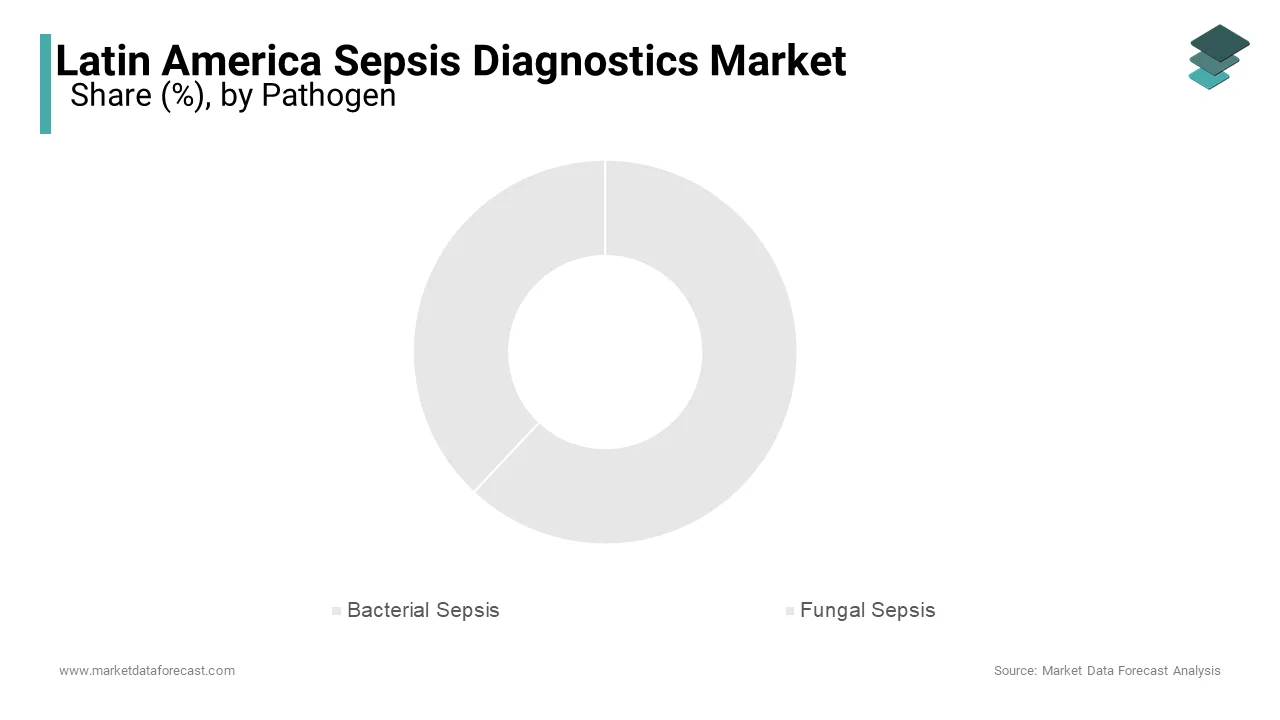
Bacterial sepsis constituted the largest segment in the Latin America sepsis diagnostics market, capturing 62.2% of total market revenue as of 2024. This dominance is primarily driven by the high incidence of bacterial infections across hospitals and community settings, particularly in intensive care units (ICUs) where gram-negative pathogens such as Escherichia coli , Klebsiella pneumoniae, and Pseudomonas aeruginosa are prevalent.
According to the Pan American Health Organization (PAHO), over 75% of sepsis cases in Latin America are attributed to bacterial origins, with Brazil alone reporting more than 200,000 annual hospitalizations due to bacterial sepsis. Also, as per the World Sepsis Federation, ICU-acquired bacterial infections account for nearly 40% of all sepsis-related deaths in the region, reinforcing the clinical urgency for rapid diagnostics.
The growing prevalence of antibiotic-resistant strains further fuels demand for advanced bacterial sepsis diagnostics. According to a 2023 study by the Latin American Network for Antimicrobial Resistance (LARNet), over 50% of bloodstream isolates in ICUs were multidrug-resistant , necessitating faster identification methods such as PCR-based assays and MALDI-TOF mass spectrometry. These factors collectively drive significant investment in bacterial sepsis diagnostics, consolidating its position as the leading pathogen segment in the region.
The fungal sepsis is predicted to advance at the highest CAGR of 11.8%. Although it currently holds a smaller market share compared to bacterial sepsis, its rapid expansion is linked to rising immunocompromised populations, increased use of invasive medical devices, and growing awareness of fungal co-infections in critically ill patients.
Moreover, as per a report published by the Latin American Mycology Association (LAMA) in 2023, there is a 30% increase in Candida bloodstream infections over the past five years, especially among ICU patients with prolonged stays or those undergoing chemotherapy.
Apart from these, the rise in diabetes and HIV prevalence contributes significantly to this trend. As per data from PAHO, over 25 million people in Latin America live with diabetes , many of whom are at elevated risk for fungal infections. Coupled with improved diagnostic capabilities—such as the adoption of T2Candida panels and BDG assays—the detection of fungal sepsis is accelerating, making it one of the most dynamic segments in the regional market.
By Product Insights
Assay kits and reagents led product segment in the Latin America Sepsis Diagnostics Market, holding 41.1% of the total market share in 2024. This segment’s superiority is due to the essential role these consumables play in both traditional and advanced diagnostic workflows, including blood culture, immunoassays, molecular tests, and biomarker analysis.
In addition, according to a 2023 report by the Brazilian Society of Clinical Pathology (SBPC), over 90% of diagnostic laboratories in Brazil rely on third-party assay kits for sepsis testing, reflecting strong dependency on standardized, ready-to-use diagnostic components. Similarly, in Argentina, the Ministry of Health recorded a 22% year-over-year increase in procurement of procalcitonin (PCT) assay kits , driven by their utility in guiding antimicrobial therapy.
Moreover, the increasing adoption of molecular diagnostics has boosted demand for polymerase chain reaction (PCR) reagent kits. With recurring consumption patterns and continuous innovation in assay design, this segment remains central to the sepsis diagnostics value chain, ensuring sustained market leadership.
Software solutions within the Latin America sepsis diagnostics market are anticipated to expand at the highest CAGR of around 14.3% during the forecast period. This rapid growth is attributed to the integration of artificial intelligence (AI), predictive analytics, and electronic health record (EHR)-linked systems designed to enhance early sepsis detection and streamline clinical decision-making.
In Chile, the Ministry of Health initiated a national digital health strategy in 2022 that included AI-driven sepsis alert systems in over 50 public hospitals. According to a 2023 evaluation by the University of Chile, these software tools reduced missed sepsis cases by nearly 40% and cut average response times by 50%.
Furthermore, as healthcare providers increasingly prioritize real-time data integration and automation, the software segment is poised for continued acceleration, positioning itself as the fastest-growing component in the market.
By Technology Insights
Microbiology remained the prominent technology segment in the Latin America sepsis diagnostics market, accounting for 38.5% of total market revenue in 2024. Blood culture techniques, Gram staining, and conventional microbial identification methods continue to be the cornerstone of sepsis diagnosis across the region, especially in resource-constrained settings where affordability and accessibility are critical. Even in larger economies like Brazil, the Ministry of Health reported that blood culture remains the first-line diagnostic tool in 65% of ICU admissions suspected of sepsis.
Besides, as per the World Health Organization (WHO), low-cost microbiology equipment and consumables remain widely available through local manufacturers and international suppliers, supporting continued adoption despite the emergence of newer technologies. While slower than molecular alternatives, microbiological methods remain indispensable in Latin America’s evolving sepsis management landscape.
Molecular diagnostics is coming up as the quickly growing technology segment in the Latin America sepsis diagnostics market, projected to expand at a CAGR of 13.6% through 2033. This progress trajectory is fueled by the urgent need for rapid, accurate, and pathogen-specific detection of sepsis-causing organisms, particularly in critical care environments.
Also, in Brazil, as per the Oswaldo Cruz Foundation (Fiocruz) in 2023, the adoption of multiplex PCR panels for sepsis detection increased by 40% over the previous two years, driven by their ability to identify multiple pathogens within hours rather than days.
Moreover, advancements in point-of-care molecular platforms have enhanced accessibility. So, with increasing government support and private sector investment, molecular diagnostics is rapidly transforming the sepsis landscape in Latin America.
By Usability Insights
Laboratory testing spearheaded the Latin America sepsis diagnostics market, representing 68% of total usability-based revenue in 2024. This segment encompasses centralized lab-based diagnostics such as blood cultures, biomarker assays, and molecular tests conducted in hospital pathology departments and independent diagnostic centers.
In addition, according to the Pan American Health Organization (PAHO), more than 80% of sepsis diagnoses in Latin America occur through centralized laboratory workflows, particularly in medium to large hospitals equipped with microbiology and molecular diagnostics infrastructure.
Moreover, Argentina’s National Academy of Medicine emphasized that laboratory testing remains the gold standard for confirming sepsis etiology , especially for complex cases requiring detailed pathogen identification and antimicrobial susceptibility profiling. Despite advancements in point-of-care (POC) technologies, limitations in funding, training, and equipment availability continue to favor centralized testing models, ensuring laboratory testing retains its dominant position in the regional market.
Point-of-Care Testing (POCT) is experiencing the fastest growth in the Latin America sepsis diagnostics market, expanding at a CAGR of approximately 15.2%. This surge is driven by the urgent need for rapid diagnostic results in emergency departments, ambulances, and rural clinics where timely intervention can significantly reduce mortality.
As per data from the Latin American Shock Society, for every hour treatment is delayed in sepsis cases, mortality increases by 7.5% , reinforcing the clinical necessity of POCT deployment.
Moreover, Brazil’s Ministry of Health launched a mobile health initiative in 2023 that integrated portable sepsis testing devices into ambulance fleets and remote clinics, particularly in the Amazon and Northeast regions. As healthcare systems prioritize speed and efficiency, POCT is poised for accelerated adoption across Latin America.
COUNTRY LEVEL ANALYSIS
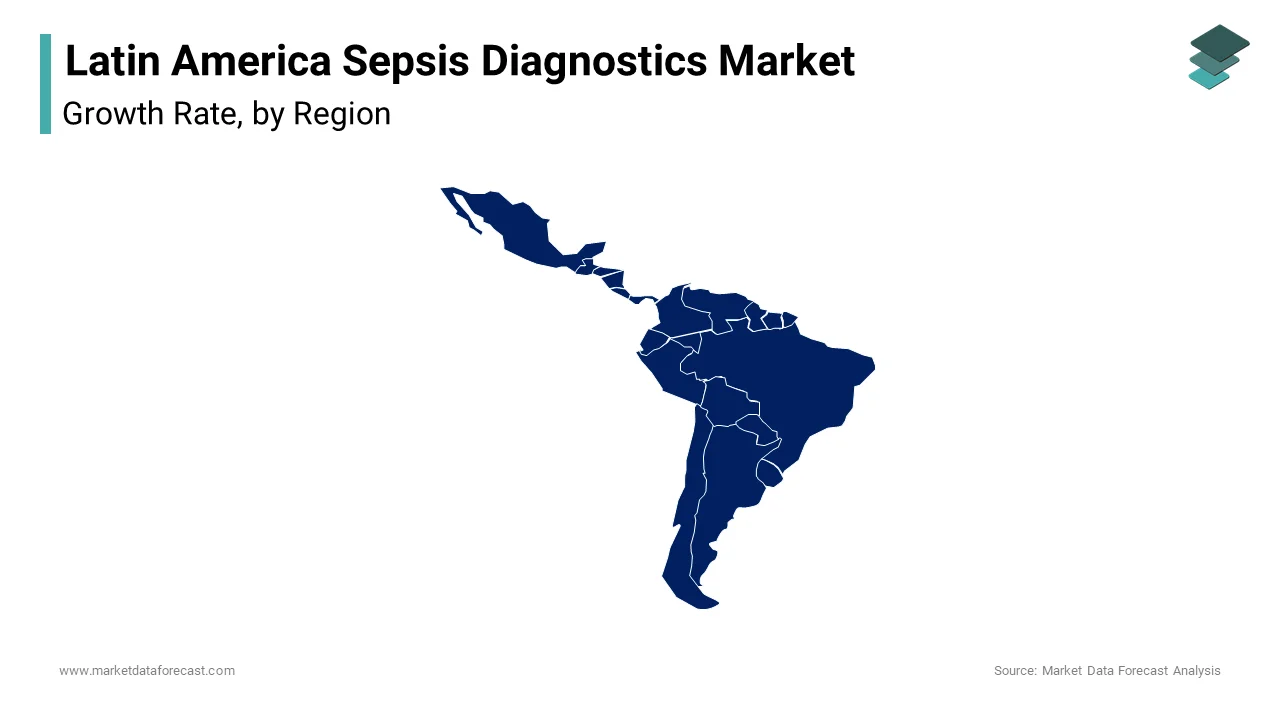
Brazil led the Latin America market, contributing 35.4% of total regional revenue in 2024. Its prowess is supported by a robust healthcare infrastructure, a high burden of infectious diseases, and increasing government investments in sepsis prevention programs.
In addition, Brazil is home to a growing number of private diagnostic centers and research institutions focused on sepsis innovation. Fiocruz, the country’s leading biomedical research agency, reported in 2023 that public-private collaborations have led to a 20% increase in rapid diagnostic test adoption across major hospitals. These developments reinforce Brazil’s status as the dominant force in the Latin American sepsis diagnostics landscape.
Mexico is a key region in the Latin America sepsis diagnostics market. The country benefits from a well-developed healthcare ecosystem, particularly in urban centers, where demand for advanced diagnostics is rising due to increasing hospitalization rates and growing awareness of sepsis as a critical condition.
Also, Mexico has seen a surge in imports of molecular diagnostic equipment and reagents, driven by the expansion of private healthcare networks and regulatory reforms encouraging innovation. These factors collectively strengthen Mexico’s position in the regional market.
Argentina has a notable share of the Latin America sepsis diagnostics market, driven by recent policy reforms, increased healthcare expenditure, and rising investment in diagnostic infrastructure. The country has made notable progress in integrating sepsis management protocols into public hospitals, particularly in Buenos Aires and Córdoba provinces.
Moreover, Argentina’s biotechnology sector is gaining traction, with domestic firms developing cost-effective diagnostic solutions tailored to local needs. As per the Inter-American Development Bank in 2023, health tech investments in Argentina grew by 28% , with a significant portion allocated to sepsis diagnostics. These trends position Argentina as a key growth driver in the region.
Chile is distinguished by its high healthcare spending, strong regulatory framework, and early adoption of innovative diagnostic tools. The country's relatively small but highly efficient healthcare system supports widespread use of molecular diagnostics, AI-integrated software, and point-of-care testing.
Additionally, Chile’s participation in global health consortia has facilitated access to cutting-edge diagnostic platforms. With continued emphasis on digital health and early intervention, Chile remains a progressive player in the Latin American sepsis diagnostics space.
The Rest of Latin America, including countries such as Colombia, Peru, Ecuador, and Central American nations, possess untapped potential in the regional sepsis diagnostics market . While these markets are less developed than Brazil and Mexico, they present significant growth opportunities due to increasing healthcare investments and rising sepsis incidence.
According to the Latin American Critical Care Research Network (LACCRN), countries like Colombia and Peru report over 50,000 sepsis cases annually , yet diagnostic capabilities remain limited outside major cities. In response, governments are expanding ICU capacity and deploying mobile diagnostic units to improve access.
Also, partnerships with global organizations like PAHO are facilitating the introduction of affordable diagnostic kits and training programs. These efforts signal strong future growth potential for the broader Latin American sepsis diagnostics market.
KEY MARKET PLAYERS AND COMPETITIVE LANDSCAPE
Companies playing a key role in the Latin American sepsis diagnostics market profiled in the report are bioMérieux SA, T2 Biosystem Inc, Cepheid, Thermo Fisher Scientific Inc., Nanosphere Inc, Abbott Laboratories, Roche Diagnostics Limited, Becton, Dickinson and Company, Bruker Corporation, and Beckman Coulter, Inc.
The Latin America Sepsis Diagnostics Market is characterized by a competitive landscape driven by technological advancements, regulatory developments, and increasing demand for rapid and accurate diagnostic solutions. A mix of global industry leaders and emerging local players contribute to this dynamic environment, where differentiation is often achieved through product innovation, pricing strategies, and localized service support. While multinational corporations dominate due to their extensive portfolios and strong brand recognition, regional companies are gaining traction by offering cost-effective alternatives tailored to local healthcare needs. Strategic partnerships and collaborations play a crucial role in market expansion, allowing companies to strengthen their foothold through joint ventures, research initiatives, and co-development projects. Moreover, the growing emphasis on point-of-care diagnostics and digital health integration is reshaping competition, pushing manufacturers to adapt to evolving clinical requirements. As awareness around sepsis management increases across Latin America, companies are under pressure to not only offer cutting-edge solutions but also provide training, after-sales service, and infrastructure support to sustain long-term growth in the region.
Top Players in the Market
BioMérieux
BioMérieux is a global leader in diagnostic solutions and holds a strong presence in the Latin America Sepsis Diagnostics Market. The company offers a wide range of microbiology and molecular diagnostic products tailored for sepsis detection, including automated blood culture systems and rapid identification panels. In Latin America, BioMérieux has established partnerships with public health institutions and private laboratories to enhance diagnostic accessibility. Their commitment to innovation and localized service support has made them a preferred choice among hospitals and reference labs across the region.
Becton Dickinson and Company (BD)
Becton Dickinson plays a pivotal role in the Latin American sepsis diagnostics landscape through its comprehensive portfolio that spans blood culture systems, immunoassays, and molecular testing platforms. BD has consistently invested in expanding its regional footprint by strengthening distribution networks and collaborating with local governments to improve diagnostic capabilities. Their focus on integrating advanced technologies into routine clinical workflows has significantly contributed to early and accurate sepsis diagnosis, particularly in Brazil and Mexico.
Thermo Fisher Scientific
Thermo Fisher Scientific contributes to the Latin America Sepsis Diagnostics Market by offering high-quality assay kits, reagents, and molecular diagnostic platforms. The company supports healthcare providers through reliable supply chains and technical expertise, ensuring consistent availability of critical diagnostic tools. Thermo Fisher’s strategic collaborations with academic and research institutions in the region have also helped advance sepsis-related studies and diagnostic protocols, reinforcing its influence in the market.
Top strategies used by the key market participants
One major strategy employed by key players is expanding their regional distribution networks to ensure broader access to diagnostic products across both urban and rural settings. This includes forming partnerships with local distributors and establishing regional warehouses to streamline logistics and reduce delivery times.
Another key approach is investing in technology integration , particularly in molecular diagnostics and AI-driven software solutions. Companies are incorporating automation and digital health tools into their offerings to enhance diagnostic accuracy and efficiency in sepsis detection.
Additionally, leading firms are focusing on collaborating with government agencies and academic institutions to develop standardized diagnostic protocols and training programs. These initiatives aim to build capacity within the healthcare system and promote the adoption of advanced diagnostic tools across Latin America.
RECENT HAPPENINGS IN THE MARKET
In March 2024, BioMérieux launched a new regional training center in São Paulo, Brazil, aimed at enhancing healthcare professionals’ skills in using advanced sepsis diagnostic technologies. This initiative supports improved clinical outcomes and strengthens the company's leadership position in the market.
In June 2023, Becton Dickinson announced a partnership with Argentina’s Ministry of Health to integrate its automated blood culture systems into public hospitals, improving sepsis diagnosis capabilities and reinforcing BD’s presence in the Southern Cone region.
In September 2023, Thermo Fisher Scientific expanded its distribution network in Mexico by collaborating with a local diagnostics distributor, enabling faster product availability and better customer support across the country.
In January 2024, Siemens Healthineers introduced a mobile diagnostics unit equipped with sepsis testing capabilities in Colombia, targeting underserved regions and expanding its reach in rural healthcare settings.
In May 2024, Roche Diagnostics initiated a collaboration with Chilean universities to develop AI-powered sepsis detection algorithms tailored for Latin American patient profiles, positioning itself as a forward-thinking player in digital diagnostics.
MARKET SEGMENTATION
This research report on the Latin American sepsis diagnostics market has been segmented and sub-segmented into the following categories
By Pathogen
- Bacterial Sepsis
- Fungal Sepsis
By Product
- Assay Kits & Reagents
- Software
By Technology
- Microbiology
- Molecular Diagnostics
By Usability
- Laboratory Testing
- Point-of-Care Testing
By Country
- Mexico
- Brazil
- Argentina
- Chile
- Rest of Latin America