- Product Description Description
- Table of Contents TOC
- List of Table & Figure LOT
- Get Free Sample PDF Sample PDF
Market Size, 2025
$2.31 BnMarket Estimate, 2026
$2.62 BnMarket Forecast, 2034
$7.28 BnCAGR, 2026–2034
13.62%Latin America Smart Vending Machine Market Report Summary
The Latin America smart vending machine market was valued at USD 2.31 billion in 2025, is estimated to reach USD 2.62 billion in 2026, and is projected to reach USD 7.28 billion by 2034, growing at a CAGR of 13.62% during the forecast period. Market growth is driven by increasing adoption of automated retail solutions, rising demand for contactless payment systems, and expanding urban infrastructure. Smart vending machines offer convenience, digital payment integration, and real time inventory management, making them increasingly popular across public and commercial locations. The growing focus on automation and smart retail technologies is further supporting strong market expansion in Latin America.
Key Market Trends
- Rising adoption of automated retail and self service technologies is driving market growth.
- Increasing demand for contactless and digital payment systems is boosting adoption.
- Growing deployment of vending machines in public and commercial spaces is supporting market expansion.
- Expansion of smart retail infrastructure and IoT integration is enhancing operational efficiency.
- Innovation in product customization and remote monitoring technologies is influencing market development.
Segmental Insights
- Based on product type, the beverages segment accounted for 53.5% of the Latin America smart vending machine market share in 2025. This dominance is attributed to high consumer demand for convenient ready to drink beverages.
- Based on installation site, the public places segment held 33.6% of the Latin America smart vending machine market share in 2025, driven by increasing deployment in airports, railway stations, malls, and other high traffic locations.
Regional Insights
- The Latin America smart vending machine market is experiencing rapid growth across the region, supported by digital transformation and urbanization trends.
- Brazil was the leading contributor, accounting for 36.1% of the Latin America smart vending machine market share in 2025, driven by expanding retail infrastructure, rising adoption of smart technologies, and strong urban consumer demand.
Competitive Landscape
The Latin America smart vending machine market is moderately competitive, with key players focusing on automation technologies, digital payment integration, and expansion of vending networks to strengthen their market position. Companies are investing in AI enabled vending systems, remote management platforms, and product diversification. Prominent players in the Latin America smart vending machine market include ECOM Agroindustrial Corporation Ltd., Automated Merchandising Systems, Fuji Oil Company, Ltd., Barry Callebaut AG, Olam International, and Cargill.
 Download Free Sample Report
Latin America Smart Vending Machine Market Size
The Latin America smart vending machine market size was valued at USD 2.31 billion in 2025, and the market size is expected to reach USD 7.28 billion by 2034 from USD 2.62 billion in 2026. The market is growing at a CAGR of 13.62%.

A smart vending machine is an internet-connected, automated retail unit that uses technology like AI, cameras, and sensors to deliver a cashless, interactive, and user-friendly purchasing experience. These machines transcend traditional dispensing functions by offering interactive user experiences real time inventory management and dynamic pricing capabilities. The region is witnessing a gradual shift from conventional mechanical units to intelligent kiosks that support diverse product categories including fresh food electronics and personal care items. As per the Economic Commission for Latin America and the Caribbean (ECLAC), digital transformation initiatives have accelerated across the service sector with urban internet penetration reaching approximately 77 percent in 2024, facilitating the adoption of connected retail solutions. The market operates within a complex economic landscape characterized by varying levels of infrastructure development and consumer purchasing power. Regulatory frameworks regarding electronic payments and data privacy are evolving to support digital commerce growth. Urbanization trends have concentrated populations in major metropolitan hubs creating high traffic zones ideal for smart vending placement. The integration of these machines into corporate offices educational institutions and public transport networks reflects a broader acceptance of automated services. Consumer behavior is increasingly favoring contactless transactions driven by health consciousness and convenience. The industry relies on robust telecommunications infrastructure to enable remote monitoring and maintenance. This technological evolution positions smart vending as a critical component of the modern retail ecosystem in Latin America.
MARKET DRIVERS
Rapid Urbanization And High Density In Metropolitan Areas
The rapid urbanization and high population density in major regional cities are primary drivers for the smart vending machine market. Concentrated urban environments create ideal conditions for automated retail by providing consistent foot traffic and limited space for traditional brick and mortar stores. As per the United Nations Department of Economic and Social Affairs approximately 81 percent of the population in Latin America and the Caribbean resides in urban areas which is one of the highest urbanization rates globally. This demographic concentration reduces the logistical costs associated with restocking and maintenance while maximizing transaction volumes per unit. Smart vending machines offer a space efficient solution for delivering essential goods in crowded city centers where real estate prices are prohibitive for conventional retail outlets. The proximity to large groups of consumers in business districts universities and residential complexes ensures steady demand. Urban dwellers often exhibit time poor characteristics making the convenience of immediate access to products highly valuable. The integration of smart vending into public transportation hubs further leverages the daily commute patterns of millions of residents. Cities like São Paulo Mexico City and Bogotá have invested in modernizing public spaces creating opportunities for technologically advanced retail installations. The density of these urban centers allows operators to achieve economies of scale in distribution networks. This structural demographic trend supports the viability and expansion of smart vending infrastructure. The efficiency of serving dense populations drives operator investment in high tech units.
Increasing Adoption Of Cashless Payment Systems
The increasing adoption of cashless payment systems leads to the Latin America smart vending machine market. Traditional vending machines were limited by coin and bill mechanisms which often faced issues with reliability and security. As per the Bank for International Settlements the use of instant payment systems such as Pix in Brazil has surged with billions of transactions processed monthly indicating a profound shift in consumer payment preferences. Smart vending machines equipped with near field communication QR code scanners and card readers align with this digital transition enabling seamless and secure transactions. The reduction in cash handling lowers operational risks such as theft and vandalism which are significant concerns in the region. Consumers appreciate the speed and hygiene of contactless payments particularly in post pandemic environments. The integration of mobile wallets allows for personalized marketing and loyalty programs enhancing customer engagement. Financial inclusion initiatives have expanded access to digital banking services among lower income populations broadening the potential customer base for smart vending. Retailers benefit from real time sales data and improved inventory tracking through digital payment integration. The reliability of electronic transactions reduces downtime caused by mechanical coin jams. This financial infrastructure evolution removes a critical barrier to automated retail adoption. The convenience of cashless options encourages higher frequency of use.
MARKET RESTRAINTS
Infrastructure Instability And Connectivity Issues
Infrastructure instability and inconsistent connectivity are major barriers to the Latin America smart vending machine market. Smart vending units rely heavily on stable internet connections for real time inventory tracking remote diagnostics and cashless payment processing. As per the International Telecommunication Union while mobile coverage has expanded broadband quality and reliability vary significantly across the region particularly in rural and semi urban areas. Frequent power outages and network interruptions can disrupt machine operations leading to lost sales and increased maintenance costs. Operators face challenges in ensuring continuous uptime which is critical for maintaining consumer trust and satisfaction. The cost of implementing backup power solutions and redundant connectivity options increases capital expenditure. In regions with poor telecommunications infrastructure the functionality of smart features is compromised reducing the value proposition compared to traditional machines. The lack of standardized infrastructure protocols complicates the deployment of large scale networks. Service providers must invest heavily in technical support to address connectivity related issues. This operational complexity discourages smaller operators from entering the market. The reliance on fragile infrastructure creates vulnerability to external disruptions. Until connectivity becomes more robust and widespread the full potential of smart vending technology remains constrained. This restraint limits geographic expansion to well connected urban centers.
High Initial Capital Investment And Maintenance Costs
The high initial capital investment and ongoing maintenance costs associated with smart vending machines are also a significant restraint to the Latin America smart vending machine market growth. Smart units are substantially more expensive than traditional mechanical vending machines due to the integration of sensors touchscreens and connectivity modules. As per research, the cost of a fully equipped smart vending machine can be up to three times higher than a standard unit, creating a significant barrier to entry for small and medium-sized enterprises. The complexity of the technology requires specialized technical expertise for installation and repair which is often scarce and costly in the region. Spare parts for advanced components may need to be imported leading to longer lead times and higher expenses. Operators must also invest in software licenses and cloud services for data management adding to recurring operational costs. The return on investment period is longer compared to traditional vending making it less attractive for risk averse investors. Economic volatility and currency fluctuations in Latin American countries further exacerbate financial risks. The high cost of financing limits the ability of operators to scale their networks rapidly. Maintenance issues related to hardware failures can result in prolonged downtime affecting revenue. This financial burden restricts market penetration to well capitalized players. The cost structure challenges the economic viability in price sensitive markets.
MARKET OPPORTUNITIES
Expansion Into Non Traditional Product Categories
The expansion into non traditional product categories offers a significant opportunity for the Latin America smart vending machine market. Beyond snacks and beverages smart vending units can dispense fresh food electronics personal care items and even pharmaceuticals. As per a study, there is a growing demand for convenience and immediate access to essential goods particularly among younger demographics who value speed and variety. Smart vending machines with temperature control and secure locking mechanisms enable the sale of perishable items such as salads sandwiches and dairy products. This diversification allows operators to tap into new revenue streams and reduce dependency on low margin commodity items. The ability to customize product offerings based on location and consumer preferences enhances relevance and sales potential. For instance machines in gyms can offer protein supplements while those in offices can provide stationery or tech accessories. The integration of age verification systems enables the sale of regulated products such as alcohol or over the counter medications in compliant manners. This versatility transforms vending machines into micro retail stores capable of meeting diverse consumer needs. Partnerships with local brands and artisans can introduce unique regional products attracting curious buyers. The flexibility of smart inventory management supports rapid rotation of product lines. This opportunity drives innovation and differentiation in a competitive landscape. The expansion into high value items improves profitability.
Integration With Loyalty Programs And Data Analytics
The integration with loyalty programs and advanced data analytics provides a clear path for smart vending machine operators in the region, which is likely to promote the growth of the Latin America smart vending machine market. Smart machines generate vast amounts of data on consumer behavior purchase patterns and peak usage times. As per various sources, large-scale retailers leveraging advanced customer analytics can increase their operating margins by more than 60 percent by optimizing pricing and product placement. Operators can use this data to implement dynamic pricing strategies adjusting costs based on demand and time of day. Loyalty programs linked to mobile apps encourage repeat purchases by offering rewards and personalized discounts. This direct engagement builds brand loyalty and enhances customer retention. The ability to track inventory in real time reduces waste and ensures popular items are always available. Data insights enable operators to identify underperforming locations and optimize network efficiency. Personalized marketing messages displayed on machine screens can influence impulse buying decisions. The integration with social media platforms allows for viral marketing campaigns and community building. This technological capability transforms vending from a passive transaction into an interactive marketing channel. Operators can share anonymized data with brands for targeted advertising creating additional revenue streams. The focus on data driven decision making improves operational efficiency. This opportunity enhances the strategic value of smart vending assets.
MARKET CHALLENGES
Security Concerns And Vandalism Risks
Security concerns and vandalism risks remain a major challenge for the Latin America smart vending machine market. High value smart machines equipped with screens and electronic components are attractive targets for theft and damage. As per the United Nations Office on Drugs and Crime crime rates in certain urban areas of Latin America remain elevated posing significant operational risks for unmanned retail units. Operators must invest in robust physical security measures such as reinforced cages surveillance cameras and alarm systems which increase costs. The fear of vandalism can deter placement in high traffic but less secure locations limiting market reach. Insurance premiums for smart vending assets are higher due to the increased risk profile. Repairing damaged units involves significant downtime and expense affecting profitability. The psychological impact of visible damage can deter consumers from using the machines. Operators must collaborate with local authorities and property owners to ensure safe placement. The need for constant monitoring adds to operational complexity. Security breaches can compromise customer data and payment systems leading to legal liabilities. This challenge requires a comprehensive risk management strategy. The balance between accessibility and security is difficult to achieve. The threat of crime remains a persistent obstacle to widespread deployment.
Regulatory Complexity And Compliance Burdens
Regulatory complexity and compliance burdens continue to be a significant hurdle for the Latin America smart vending machine market. Each country in the region has distinct laws regarding electronic payments data privacy and food safety. As per the Organization of American States harmonization of digital commerce regulations is limited creating a fragmented legal landscape for multinational operators. Compliance with local tax laws labor regulations and import duties requires specialized legal expertise and administrative resources. Data protection laws such as the General Data Protection Law in Brazil impose strict requirements on how consumer information is collected and stored. Failure to comply can result in hefty fines and reputational damage. The frequent changes in regulatory frameworks create uncertainty for long term planning. Obtaining permits for placing machines in public spaces involves bureaucratic hurdles and potential corruption. The need to adapt software and hardware to meet local standards increases development costs. Operators must navigate complex supply chain regulations for importing components. This regulatory fragmentation hinders scalability and efficiency. The burden of compliance diverts resources from innovation and expansion. Understanding and adhering to diverse legal requirements is a persistent operational challenge. The lack of regional standardization complicates cross border operations.
REPORT COVERAGE
| REPORT METRIC | DETAILS |
| Market Size Available | 2025 to 2034 |
| Base Year | 2025 |
| Forecast Period | 2026 to 2034 |
| CAGR | 13.62% |
| Segments Covered | By Product Type, Installation Site, and Region |
| Various Analyses Covered | Global, Regional and Country Level Analysis; Segment-Level Analysis; DROC; PESTLE Analysis; Porter’s Five Forces Analysis; Competitive Landscape; Analyst Overview of Investment Opportunities |
| Regions Covered | Brazil, Mexico, Argentina & Rest of Latin America |
| Market Leaders Profiled | ECOM Agroindustrial Corporation Ltd., Automated Merchandising Systems, Fuji Oil Company, Ltd., Barry Callebaut AG, Olam International, and Cargill |
SEGMENTAL ANALYSIS
By Product Type Insights
The beverages segment led the Latin America smart vending machine market and captured a 53.5% share in 2025. This leading position of the segment is attributed to the region's climatic conditions and deeply ingrained cultural consumption habits. Hot and tropical climates across much of Latin America create a consistent year round demand for hydration and cold refreshments. The beverages segment spearheads because the prevailing hot and humid climate in many Latin American countries drives a physiological need for frequent hydration. Consumers in regions such as Northern Brazil Central America and coastal areas experience high temperatures that necessitate regular intake of fluids. As per the World Meteorological Organization average annual temperatures in key Latin American urban centers have risen leading to increased demand for cooling products. Smart vending machines equipped with advanced refrigeration technology offer immediate access to cold water juices and soft drinks which are preferred over warm alternatives. The ability of these machines to maintain precise temperature controls ensures product quality and consumer satisfaction even in extreme heat. This environmental factor creates a stable and predictable demand base that is less susceptible to seasonal fluctuations compared to other product categories. The ubiquity of beverage consumption across all demographic groups ensures high transaction volumes. Operators prioritize beverage placement in high traffic outdoor and semi outdoor locations where heat exposure is greatest. The reliability of cold beverage availability enhances the perceived value of smart vending infrastructure. This climatic driver establishes beverages as the cornerstone of the vending industry in the region. The consistent need for refreshment supports sustained revenue generation. Furthermore, the cultural preference for soft drinks and natural juices significantly contributes to the dominance of the beverages segment. Latin America has one of the highest per capita consumption rates of carbonated soft drinks and fruit juices globally. Smart vending machines cater to this preference by offering a wide variety of local and international brands including traditional sodas and freshly squeezed juice options. The integration of digital interfaces allows users to customize their choices and explore new flavors enhancing the user experience. The social aspect of sharing drinks during gatherings and breaks further drives volume sales. Vending machines located in schools parks and community centers serve as convenient points of access for these popular beverages. The alignment with local tastes ensures high adoption rates and repeat purchases. Operators leverage data analytics to stock preferred brands and adjust inventory based on regional preferences. The strong brand loyalty towards established beverage companies supports steady sales. This cultural entrenchment makes beverages the most reliable product category for vending operators. The focus on familiar and beloved drinks minimizes market entry risks.
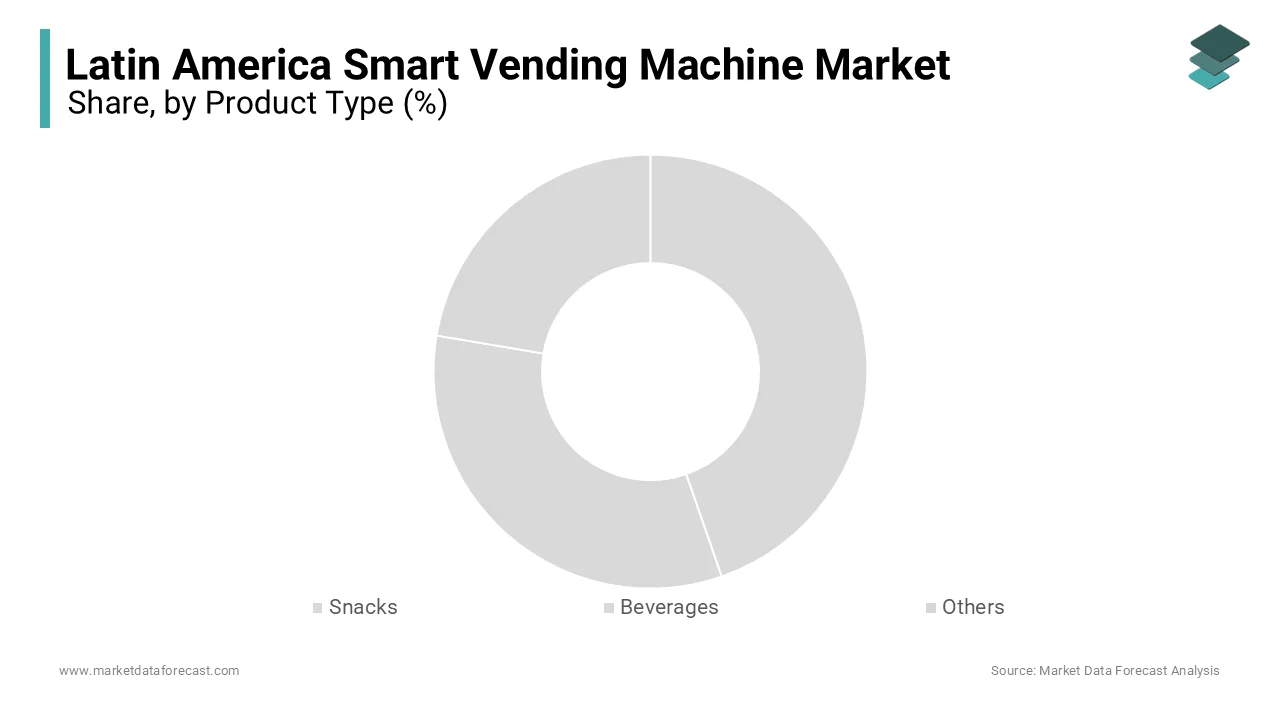
The others segment is predicted to witness the highest CAGR of 13.3% from 2026 to 2034 due to the increasing consumer demand for fresh and healthy food options available through automated retail. Urban professionals and health conscious individuals seek convenient alternatives to processed snacks driving the adoption of smart fridges and salad dispensers. As per the Food and Agriculture Organization of the United Nations there is a rising trend in urban agriculture and fresh food consumption in Latin American cities creating a market for ready to eat healthy meals. Smart vending machines with temperature controlled compartments can dispense sandwiches salads and fruit cups ensuring freshness and safety. This diversification appeals to consumers looking for nutritious meals during busy workdays. The ability to offer locally sourced and organic products differentiates smart vending from traditional options. Partnerships with local restaurants and cloud kitchens enable the distribution of prepared meals through vending networks. The convenience of accessing fresh food without waiting in lines enhances user satisfaction. This trend aligns with broader wellness movements gaining traction in the region. The expansion into fresh food opens new revenue streams with higher profit margins. The focus on health and convenience drives rapid adoption of these advanced units. Besides these, the expansion into non food retail categories such as electronics accessories and personal care items is a key driver of growth for the others segment. Smart vending machines equipped with secure locking mechanisms and interactive displays can safely dispense high value items. As per Statista the e commerce market in Latin America is expanding rapidly with consumers becoming accustomed to purchasing diverse goods online and through automated channels. Vending machines located in airports malls and universities offer immediate access to essentials like phone chargers headphones and hygiene products. This immediacy satisfies urgent consumer needs that cannot wait for delivery. The integration of digital payment systems facilitates the purchase of higher priced items securely. Operators can tailor product offerings to specific locations such as selling travel adapters in airports or beauty samples in shopping centers. This flexibility allows for targeted marketing and increased sales efficiency. The ability to operate 24/7 provides a competitive advantage over traditional retail stores. The diversification into non food items reduces dependency on low margin consumables. This strategic expansion enhances the versatility and profitability of smart vending networks. The focus on convenience and immediacy supports sustained growth.
By Installation Site Insights
The public places segment dominated the Latin America smart vending machine market and accounted for a 33.6% share in 2025. This dominance of the segment is because transportation hubs, such as bus stations, metro stops, and airports, generate massive daily foot traffic. Also, this category includes transportation hubs parks streets and public squares. Commuters and travelers often seek quick and convenient access to refreshments and essentials while on the move. As per the Inter American Development Bank urban mobility in Latin America relies heavily on public transportation with millions of daily trips recorded in major cities like São Paulo and Mexico City. Smart vending machines placed in these high visibility areas capture impulse purchases from a constant flow of potential customers. The density of people in these locations ensures high transaction volumes and rapid inventory turnover. The convenience of accessing products without leaving the transit area enhances the user experience for time constrained commuters. Operators benefit from the consistent demand patterns associated with peak travel hours. The strategic placement in public spaces maximizes brand exposure and customer reach. The integration of vending solutions into modernized public infrastructure projects further supports expansion. This accessibility makes public places the most lucrative installation site for vending operators. The reliance on public transport sustains the demand for automated retail services. Moreover, the accessibility and convenience offered by smart vending machines in public places drive their dominance in the market. These machines provide 24/7 access to essential goods for the general population regardless of store operating hours. As per the United Nations Human Settlements Programme the majority of Latin Americans live in urban areas where public spaces serve as central gathering points for social and commercial activities. Vending machines in parks plazas and streets cater to residents and tourists seeking immediate gratification. The ease of use and contactless payment options appeal to a broad demographic including young people and elderly citizens. The presence of machines in safe and well lit public areas encourages usage during evening hours. This widespread availability ensures that vending services are integrated into daily life. The ability to serve large crowds efficiently reduces congestion in nearby retail stores. Public placement also supports tourism by providing familiar and reliable service points. The convenience factor is a primary driver of consumer preference for vending over traditional shopping. This universal accessibility cements the leading position of public places. The focus on user convenience drives consistent engagement.
The offices segment is estimated to register the fastest CAGR of 14.8% during the forecast period owing to the fact that corporations are increasingly investing in employee wellness and convenience to attract and retain talent. Also, corporations are adopting automated solutions for workplace amenities. Smart vending machines in office buildings provide easy access to healthy snacks beverages and personal care items reducing the need for employees to leave the premises. Automated retail solutions offer a hygienic and efficient way to provide these amenities. The integration of smart technology allows for personalized recommendations and loyalty rewards fostering a positive workplace culture. Employers appreciate the data insights provided by smart machines which help them understand employee preferences and optimize offerings. The convenience of having essential items available on site improves productivity and morale. The shift towards hybrid work models has increased the value of office amenities when employees are present. This corporate adoption drives the installation of high end smart vending units. The focus on employee experience supports sustained growth in this segment. The alignment with corporate wellness goals ensures long term partnerships. In addition, the adoption of contactless solutions in workplaces is a key driver of growth for the offices segment. Post pandemic health concerns have accelerated the demand for hygienic and touch free retail options in professional environments. Smart vending machines with facial recognition mobile app integration and voice commands offer a seamless and sanitary user experience. Employees prefer these technologies to avoid touching shared surfaces such as keypads and cash slots. Companies are upgrading their facilities to include these advanced units as part of their health and safety protocols. The ability to monitor inventory and cleanliness remotely adds to the appeal for facility managers. The integration with corporate payment systems simplifies expense management for employees. This technological shift enhances the perceived value of smart vending in office settings. The focus on health and safety drives rapid replacement of traditional machines. The adoption of contactless technology ensures continued expansion in the corporate sector. The emphasis on hygiene supports market growth.
REGIONAL ANALYSIS
Brazil Smart Vending Machine Market Analysis
Brazil was the top performer in the Latin America smart vending machine market and occupied a 36.1% share in 2025. This supremacy of the Brazilian market is credited to the widespread adoption of instant payment systems such as Pix which has revolutionized cashless transactions. The country serves as the primary hub for technological innovation and retail automation in the region. As per the Central Bank of Brazil Pix processes billions of transactions monthly enabling seamless and secure payments for smart vending machines. This financial infrastructure removes a major barrier to automated retail adoption. As per the Brazilian Institute of Geography and Statistics (IBGE), a high urbanization rate of 84.8 percent creates dense, high-traffic markets ideal for automated retail placement in metropolitan hubs. Major cities like São Paulo and Rio de Janeiro have high foot traffic areas that support high volume sales. The growing middle class has increasing disposable income for convenience products. Local manufacturers are investing in smart vending production reducing costs and improving availability. The government support for digital inclusion further expands the customer base. The combination of financial technology and urban density drives market leadership. The focus on innovation attracts international players. Brazil sets the standard for smart vending in Latin America. The robust ecosystem supports sustained growth.
Mexico Smart Vending Machine Market Analysis
Mexico followed closely behind in the Latin America smart vending machine market and captured a 31.5% share in 2025. The demand for these machines is credited to strong manufacturing capabilities and high consumption of packaged goods. The country is a key player in the North American supply chain. Mexico boasts a strong market position, driven by a robust manufacturing sector. This industry is known for producing high-quality vending machines and components. As per the Mexican Association of Vending Machines the industry has seen steady growth driven by demand from the tourism and industrial sectors. The proximity to the United States facilitates technology transfer and investment. High consumption of soft drinks and snacks aligns with vending product offerings. The tourism industry in cities like Cancun and Mexico City generates significant foot traffic for vending units. The maquiladora industry along the border creates demand for workplace vending solutions. The government initiatives to modernize public spaces support infrastructure development. The cultural preference for convenience foods drives consistent sales. The integration of smart technologies is accelerating in major urban centers. The focus on manufacturing excellence supports cost effective deployment. Mexico serves as a strategic gateway for regional expansion. The strong domestic demand ensures market stability.
Argentina Smart Vending Machine Market Analysis
Argentina holds a notable share of the Latin America smart vending machine market due to the high level of urban sophistication and technological adoption in Buenos Aires. The market is also influenced by economic dynamics and technological adoption. As per the National Institute of Statistics and Censuses the country has high internet penetration rates facilitating the use of connected smart vending machines. Consumers in urban areas are accustomed to digital services and cashless payments. The cultural emphasis on coffee and social gatherings drives demand for beverage vending. Economic challenges have prompted operators to focus on efficiency and cost effectiveness. The adoption of smart technology helps optimize inventory and reduce losses. The presence of international brands introduces advanced vending solutions. The focus on quality and service distinguishes the market. The resilience of the consumer sector supports steady demand. The integration of smart vending into corporate and educational institutions is growing. The focus on innovation drives gradual expansion. Argentina offers opportunities for niche and premium segments. The sophisticated market values advanced features.
COMPETITIVE LANDSCAPE
The competitive landscape of the Latin America smart vending machine market is characterized by a mix of international technology providers and local manufacturing firms. Major players compete on product reliability payment integration and after sales support to capture market share. The market is fragmented with numerous small operators utilizing traditional machines alongside growing adoption of smart units. International companies leverage advanced technology and brand recognition to attract large scale clients. Local manufacturers compete on cost effectiveness and understanding of regional nuances. The rise of cashless payment systems has intensified competition among technology enablers. Partnerships with telecommunications providers are crucial for ensuring connectivity in remote areas. Innovation in user interface and product variety differentiates competitors. Regulatory compliance regarding data privacy and electronic payments influences strategic decisions. Market dynamics require continuous adaptation to economic fluctuations and consumer preferences. Consolidation activities allow larger firms to expand their product portfolios. Brand loyalty is influenced by service quality and machine uptime. This dynamic environment fosters technological advancement and strategic collaboration. Maintaining relevance requires a balance of innovation and operational efficiency.
Key Market Players
Some of the key players in the Latin America smart vending machine market include
- ECOM Agroindustrial Corporation Ltd.
- Automated Merchandising Systems
- Fuji Oil Company, Ltd.
- Barry Callebaut AG
- Olam International
- Cargill
Top Players in the Market
- USA Technologies Inc is a prominent provider of cashless payment and telemetry solutions that significantly influences the Latin America smart vending machine market. The company enables traditional vending operators to upgrade their machines with smart technology including credit card readers and real time data analytics. Recent actions include expanding its ePort G7 device availability in key Latin American countries to facilitate seamless digital transactions. This expansion allows local operators to integrate with popular regional payment systems such as Pix in Brazil. USA Technologies focuses on enhancing user experience through reliable connectivity and secure payment processing. The company collaborates with local distributors to ensure technical support and maintenance services are accessible. These efforts strengthen its position as a critical enabler of smart vending infrastructure. By providing robust backend solutions USA Technologies empowers operators to optimize inventory and increase sales. The focus on interoperability ensures compatibility with various machine brands. This strategic approach drives the modernization of the vending landscape in the region.
- Azkoyen Group is a leading manufacturer of vending solutions with a strong presence in Latin America through its subsidiary Azkoyen Vending. The company designs and produces high quality smart vending machines tailored to the specific needs of the region. Recent initiatives involve launching new models equipped with advanced touchscreens and energy efficient cooling systems. Azkoyen focuses on sustainability by incorporating recyclable materials and reducing power consumption in its devices. The company actively engages with local partners to customize product offerings for diverse markets such as Mexico and Colombia. Azkoyen emphasizes innovation by integrating Internet of Things capabilities for remote monitoring and management. These actions enhance its reputation as a provider of reliable and modern vending solutions. The focus on durability ensures performance in challenging environmental conditions. Azkoyen supports operators with comprehensive training and after sales service. This commitment to quality and customer support strengthens its market position. The company continues to expand its footprint through strategic alliances.
- Crane Payment Innovations is a key player in the Latin America smart vending machine market specializing in payment acceptance and validation technologies. The company provides essential components such as coin mechanisms bill validators and cashless payment modules. Recent strategies include introducing advanced multi currency validators that support various local banknotes and coins across Latin American countries. Crane Payment Innovations invests in research and development to enhance security features against fraud and counterfeiting. The company partners with local integrators to ensure seamless installation and operation of its devices. These efforts reinforce its role as a trusted supplier of critical vending hardware. Crane Payment Innovations focuses on reliability and precision to minimize downtime for operators. The adoption of its technologies enables vending machines to handle complex transaction scenarios efficiently. The company also offers software solutions for data collection and analysis. This comprehensive portfolio supports the transition to smart vending. The emphasis on innovation and security drives continued growth.
Top Strategies Used by Key Market Participants
Key players in the Latin America Smart Vending Machine Market employ diverse strategies to maintain competitiveness and drive growth. Technology integration is central as companies equip machines with cashless payment systems and Internet of Things connectivity. Strategic partnerships with local distributors ensure effective market penetration and technical support. Product customization addresses specific regional preferences and environmental conditions. Sustainability initiatives focus on energy efficiency and recyclable materials to align with environmental goals. Data analytics capabilities enable operators to optimize inventory and pricing strategies. Customer service enhancements include comprehensive training and maintenance support. Expansion into non traditional product categories diversifies revenue streams. These combined approaches help operators navigate infrastructure challenges while ensuring long term profitability in an evolving industry landscape.
MARKET SEGMENTATION
This research report on the Latin America smart vending machine market is segmented into the following categories.
By Product Type
- Snacks
- Beverages
- Others
By Installation Site
- Public Places
- Retail Stores
- Offices
By Country
- Argentina
- Chile
- Peru
- Mexico
- Brazil
- Rest of Latin America