- Product Description Description
- Table of Contents TOC
- List of Table & Figure LOT
- Get Free Sample PDF Sample PDF
Market Size, 2025
$0.46 BnMarket Estimate, 2026
$0.49 BnMarket Forecast, 2034
$0.87 BnCAGR, 2026–2034
7.30%Executive Summary: Latin America Specialty Medical Chairs Market
- Market Scope: Comprehensive Latin American specialty medical chairs market analysis covering applications (hospitals, extended care institutes), chair types (examination, rehabilitation, treatment), country-level landscapes, and regional healthcare infrastructure trends.
- Market Valuation: Valued at USD 0.46 billion in 2025, estimated at USD 0.49 billion in 2026, and projected to reach USD 0.87 billion by 2034, registering a compound annual growth rate (CAGR) of 7.30% from 2026 to 2034.
- Primary Growth Drivers: Increasing geriatric population susceptible to chronic and orthopedic disorders, rising volume of surgeries requiring flexible patient positioning, growing populations with physical disabilities, and technological advancements integrating battery power, AI, and smart sensors into medical chairs. Key market restraints include high equipment costs, lack of financial investments, and limited product awareness in certain healthcare sectors.
Key Market Segment Metrics (2026–2034)
| Category | Leading Segment (2025 Position) | Fastest-Growing Segment |
|---|---|---|
| By Type | Treatment & Examination Chairs (commanded major market shares as essential equipment for clinical diagnoses and surgical procedures) | Rehabilitation & Powered Specialty Chairs (expanding rapidly due to rising demand for senior and disability mobility support) |
| By Application | Hospitals (held the largest market share backed by high patient inflows and surgical department requirements) | Extended Care Institutes & Specialty Clinics (growing alongside outpatient dental and rehabilitation facilities) |
| By Country / Region | Brazil (dominated the Latin American market supported by high prevalence of oral disorders and domestic dental chair manufacturing) | Mexico (projected to capture a considerable growth share driven by rising manufacturing facilities and affordable medical suppliers) |
Major Market Players & Market Structure
Market Structure: Specialized medical furniture and equipment market characterized by key international and regional manufacturers focusing on ergonomic design, multi-directional adjustment mechanisms, and advanced dental/surgical applications.
Key Companies: Invacare Corporation, A-dec, Inc., Fresenius Medical Care, Forest Dental Products, Inc., DentalEZ, and ACTEVAID, Inc.
 Download Free Sample Report
Latin America Specialty Medical Chairs Market Size
The size of the Latin America specialty medical chairs market was valued at USD 0.46 billion in 2025. This market is expected to grow at a CAGR of 7.30% from 2026 to 2034, reaching USD 0.87 billion by 2034, up from USD 0.49 billion in 2026.

According to the Pan American Health Organization, the region faces a growing burden of non-communicable diseases, with cardiovascular conditions affecting over 100 million individuals, necessitating expanded diagnostic and treatment infrastructure. The World Bank indicates that healthcare expenditure in Latin America has increased by 4.5% annually over the past decade, reflecting government commitments to improve medical service accessibility. This financial expansion directly supports the procurement of modern medical equipment, including specialty chairs that meet international safety and hygiene standards. The aging demographic profile further amplifies demand as older populations require more frequent medical interventions and specialized care settings. Regulatory bodies in major economies such as Brazil and Mexico are aligning local standards with global benchmarks, driving the replacement of obsolete furniture with compliant modern units. The market dynamics are thus influenced by both public health initiatives and private sector investments in premium healthcare facilities. Understanding these structural shifts provides context for analyzing the specific forces shaping the Latin America Specialty Medical Chairs Market landscape.
MARKET DRIVERS
Expansion of Private Healthcare Infrastructure
The rapid expansion of private healthcare infrastructure primarily drives the Latin America specialty medical chairs market forward by driving demand for high-quality procedural furniture in new clinics and hospitals. Private providers seek to differentiate themselves through superior patient experience and operational efficiency, which requires investment in state-of-the-art medical furniture. According to the Inter-American Development Bank, private healthcare spending in Latin America accounts for approximately 55% of total health expenditure, indicating a robust market for premium medical equipment. This financial dominance enables private institutions to procure advanced specialty chairs with features such as memory foam upholstery, automated positioning, and integrated digital interfaces. The Brazilian Hospital Federation reports that the number of private hospital beds in Brazil increased by 8% in 2023, reflecting ongoing capacity expansion in the sector. Each new facility requires comprehensive outfitting, including dental chairs, surgical tables, and examination units, creating substantial volume demand. Patients in the private segment often expect hotel-like amenities and comfort levels, pushing providers to select chairs with enhanced ergonomic designs. The competitive nature of the private healthcare market ensures continuous upgrades and replacements to maintain brand reputation. This sustained capital investment cycle provides a stable revenue stream for manufacturers offering differentiated and high-performance products. The focus on quality and patient satisfaction drives preference for reputable brands with proven reliability.
Rising Prevalence of Chronic Diseases
The rising prevalence of chronic diseases further boosts the Latin America specialty medical chairs market expansion by increasing the frequency of medical consultations and specialized treatments requiring dedicated seating. Conditions such as diabetes, obesity, and cardiovascular disorders necessitate regular monitoring and intervention, which drives the utilization of diagnostic and treatment facilities. According to the World Health Organization, non-communicable diseases are responsible for 72% of all deaths in the Americas, highlighting the urgent need for expanded healthcare services. This epidemiological shift creates sustained demand for specialty chairs in cardiology, nephrology, and endocrinology clinics where patients undergo lengthy procedures. The Pan American Health Organization states that the number of dialysis centers in Latin America has grown by 12% annually to address rising kidney disease rates, requiring specialized reclining chairs for patient comfort during treatment. Dental health issues also remain prevalent, with the International Association for Dental Research noting that over 60% of adults in the region suffer from untreated cavities, driving demand for modern dental chairs. These clinical requirements mandate furniture that supports diverse patient positions and facilitates easy access for medical professionals. The chronic nature of these conditions ensures recurring usage and long-term equipment lifecycle needs. Healthcare providers must equip facilities to handle high patient volumes efficiently, making durable and versatile chairs essential. This health trend underpins consistent market growth independent of economic fluctuations.
MARKET RESTRAINTS
Economic Volatility and Currency Fluctuations
Economic volatility and currency fluctuations impede the Latin America specialty medical chairs market growth by increasing the cost of imported components and finished products. Many high-end specialty chairs are manufactured in North America, Europe, or Asia, requiring payment in strong currencies such as the US dollar or euro. According to the International Monetary Fund, several Latin American countries experienced inflation rates exceeding 10% in 2023, eroding purchasing power and limiting capital budgets for healthcare facilities. The depreciation of local currencies against the dollar makes imported medical furniture substantially more expensive, forcing providers to delay purchases or opt for lower-cost alternatives. The Central Bank of Brazil reported that the real fluctuated by 15% against the dollar in a single year, creating uncertainty for procurement planning. Hospitals and clinics operating on fixed budgets struggle to absorb these sudden cost increases, leading to postponed renovation projects. Small private practices are particularly vulnerable as they lack the financial reserves to hedge against currency risks. This economic instability discourages investment in premium equipment and extends the replacement cycle for existing furniture. Manufacturers face challenges in pricing strategies as they balance competitiveness with margin protection. The unpredictability of exchange rates complicates long-term supply contracts and inventory management. This financial pressure restricts market growth and limits access to advanced technologies for many healthcare providers.
Limited Reimbursement Coverage for Outpatient Procedures
Limited reimbursement coverage for outpatient procedures restrains the Latin America specialty medical chairs market by reducing the financial viability of specialized clinics that rely on high-volume patient throughput. In many countries, public health systems prioritize emergency and inpatient care, leaving outpatient services underfunded and reliant on out-of-pocket payments. According to the Organisation for Economic Co-operation and Development, out-of-pocket health expenditure in Latin America averages 35% of total health spending, which is significantly higher than the OECD average of 20%. This high financial burden on patients limits their ability to afford elective or preventive procedures that utilize specialty chairs, such as cosmetic dermatology or advanced dental care. The Mexican Institute of Social Security covers only basic dental services, excluding many advanced treatments that require specialized chairs, thereby restricting demand in the public sector. Private insurers often impose strict limits on coverage for outpatient visits, further constraining patient access. Clinics operating in this environment face revenue pressures that limit their capacity to invest in new equipment. The lack of comprehensive insurance support slows the adoption of advanced medical furniture as providers prioritize cost containment. This structural limitation in the payment ecosystem dampens market potential for premium specialty chairs. Providers must carefully manage capital expenditures to remain profitable in a constrained reimbursement landscape.
MARKET OPPORTUNITIES
Growth of Medical Tourism Sector
The growth of the medical tourism sector is a significant opportunity for the Latin America specialty medical chairs market by driving demand for world-class facilities that compete on quality and aesthetics. Countries such as Mexico, Costa Rica, and Brazil have emerged as popular destinations for patients seeking affordable yet high-quality dental, cosmetic, and surgical procedures. According to the Medical Tourism Association, Latin America attracts over 1 million medical tourists annually who spend an estimated 2 billion dollars on treatments and related services. These facilities must meet international accreditation standards, which often require the use of modern ergonomic and technologically advanced medical furniture to ensure patient safety and comfort. The Costa Rican Tourism Board reports that medical tourism revenue grew by 10% in 2023 driven by demand for dental and cosmetic surgeries that utilize specialized chairs. To attract international patients, clinics invest in premium equipment that signals quality and professionalism. This segment values aesthetics and functionality, leading to a preference for sleek design and integrated technology. The competitive nature of medical tourism encourages continuous upgrades to maintain global standards. Manufacturers can target this niche with high-end products that offer superior patient experience. The influx of foreign currency provides financial stability for these providers, enabling consistent investment in infrastructure. This trend creates a lucrative channel for premium specialty chair suppliers.
Government Initiatives for Primary Care Expansion
Government initiatives for primary care expansion offer substantial opportunities for the Latin America specialty medical chairs market as nations strive to improve basic healthcare access in underserved areas. Public health programs aim to establish thousands of new community health centers and family medicine clinics equipped with essential diagnostic and treatment tools. According to the Pan American Health Organization, Brazil alone plans to open 5,000 new primary care units by 2026 to reduce hospital congestion and improve preventive care. These facilities require standardized and durable medical furniture, including examination chairs and basic dental units, to deliver essential services. The Ministry of Health in Colombia has allocated significant funding for the modernization of rural health posts, which includes the procurement of compliant medical equipment. Government tenders provide large-volume orders that can stabilize manufacturer revenues despite private sector volatility. Standardization efforts allow for economies of scale in production and distribution. The focus on equity ensures that even remote regions receive basic medical infrastructure, creating widespread geographic demand. Manufacturers who can offer cost-effective and robust solutions suitable for varied environmental conditions stand to benefit. These public sector investments represent a steady and predictable demand source. Alignment with national health priorities enhances long-term market sustainability.
MARKET CHALLENGES
Complex Regulatory Approval Processes
Complex regulatory approval processes challenge the Latin America specialty medical chairs market expansion by delaying product launches and increasing compliance costs for manufacturers. Each country in the region has its own regulatory body with distinct requirements for medical device registration and certification. According to the Pan American Health Organization, harmonization of medical device regulations across Latin America remains incomplete, forcing manufacturers to navigate multiple bureaucratic systems simultaneously. In Brazil, the National Health Surveillance Agency requires rigorous technical documentation and local testing, which can extend approval timelines by 12 to 18 months. Similar delays occur in Argentina and Mexico, where regulatory backlogs are common due to resource constraints. These prolonged approval periods hinder market entry for innovations and limit competition. Small and medium-sized enterprises often lack the resources to manage complex regulatory submissions effectively. Changes in regulatory frameworks can occur unexpectedly, requiring costly re-certification efforts. The lack of mutual recognition agreements means that approval in one country does not facilitate entry into neighboring markets. This fragmentation increases operational complexity and reduces agility. Manufacturers must maintain specialized regulatory affairs teams for each market, adding to overhead costs. The uncertainty surrounding approval timelines complicates supply chain planning and inventory management. These administrative hurdles slowly down the adoption of advanced medical furniture technologies.
Supply Chain Disruptions and Logistics Issues
Supply chain disruptions and logistics issues pose a significant challenge to the Latin America specialty medical chairs market by causing delays in delivery and increasing transportation costs. The region relies heavily on imports for high-quality components such as motors, actuators, and specialized fabrics used in specialty chairs. According to the Economic Commission for Latin America and the Caribbean, port congestion and infrastructure bottlenecks increased shipping times by 20% in 2023, affecting the timely availability of medical equipment. Geopolitical tensions and global trade uncertainties further exacerbate these logistical challenges, leading to unpredictable lead times. The shortage of shipping containers and freight capacity during peak seasons creates additional pressure on importers. Local manufacturing capabilities for critical components are limited, forcing dependence on international suppliers. Customs clearance procedures in some countries are inefficient and prone to delays due to documentation errors or inspections. These disruptions force healthcare providers to hold higher inventory levels, tying up working capital. The risk of stock-outs can halt construction or renovation projects, leading to contractual penalties. Manufacturers struggle to maintain consistent service levels amidst volatile logistics conditions. The lack of regional integration in transport networks hinders efficient distribution across borders. These operational inefficiencies increase the total cost of ownership and reduce market responsiveness.
REPORT COVERAGE
| REPORT METRIC | DETAILS |
| Market Size Available | 2025 to 2034 |
| Base Year | 2025 |
| Forecast Period | 2026 to 2034 |
| Segments Covered | By Application, Type, and Country. |
| Various Analyses Covered | Global, Regional and Country-Level Analysis, Segment-Level Analysis, Drivers, Restraints, Opportunities, Challenges; PESTLE Analysis; Porter’s Five Forces Analysis, Competitive Landscape, Analyst Overview of Investment Opportunities |
| Country Covered | UK, France, Spain, Germany, Italy, Russia, Sweden, Denmark, Switzerland, Netherlands, Turkey, Czech Republic & Rest of Europe. |
| Market Leaders Profiled | Invacare Corporation, A-dec, Inc., Midmark Corporation, Fresenius Medical Care, Forest Dental Products, Inc., Steris Corporation, Adec Inc., DentalEZ and ACTEVAID, Inc. |
SEGMENTAL ANALYSIS
By Application Insights
The hospitals segment dominated the Latin America specialty medical chairs market in 2025 because they serve as the primary centers for high-volume surgical, diagnostic, and emergency procedures that require specialized seating solutions. These facilities handle a diverse range of medical cases, necessitating various types of specialty chairs, including surgical operating chairs, examination units, and recovery seating. According to the Pan American Health Organization, hospitals in Latin America perform over 15 million surgical procedures annually, each requiring specific ergonomic support for both patients and medical staff during extended interventions. The World Health Organization indicates that hospital admissions in the region have increased by 6% year-on-year due to the rising burden of chronic diseases and trauma cases. This surge in patient throughput drives continuous demand for durable and hygienic furniture that can withstand frequent use and rigorous cleaning protocols. Public and private hospitals alike invest in modernizing their infrastructure to improve patient outcomes and operational efficiency. The concentration of advanced medical technologies within hospital settings further necessitates compatible furniture designs that integrate with digital health systems. Government initiatives to upgrade public hospital infrastructure also contribute significantly to this segment's dominance. The scale of operations in hospitals ensures consistent procurement cycles for replacement and expansion projects. This central role in healthcare delivery solidifies hospitals as the largest consumer of specialty medical chairs in the region.
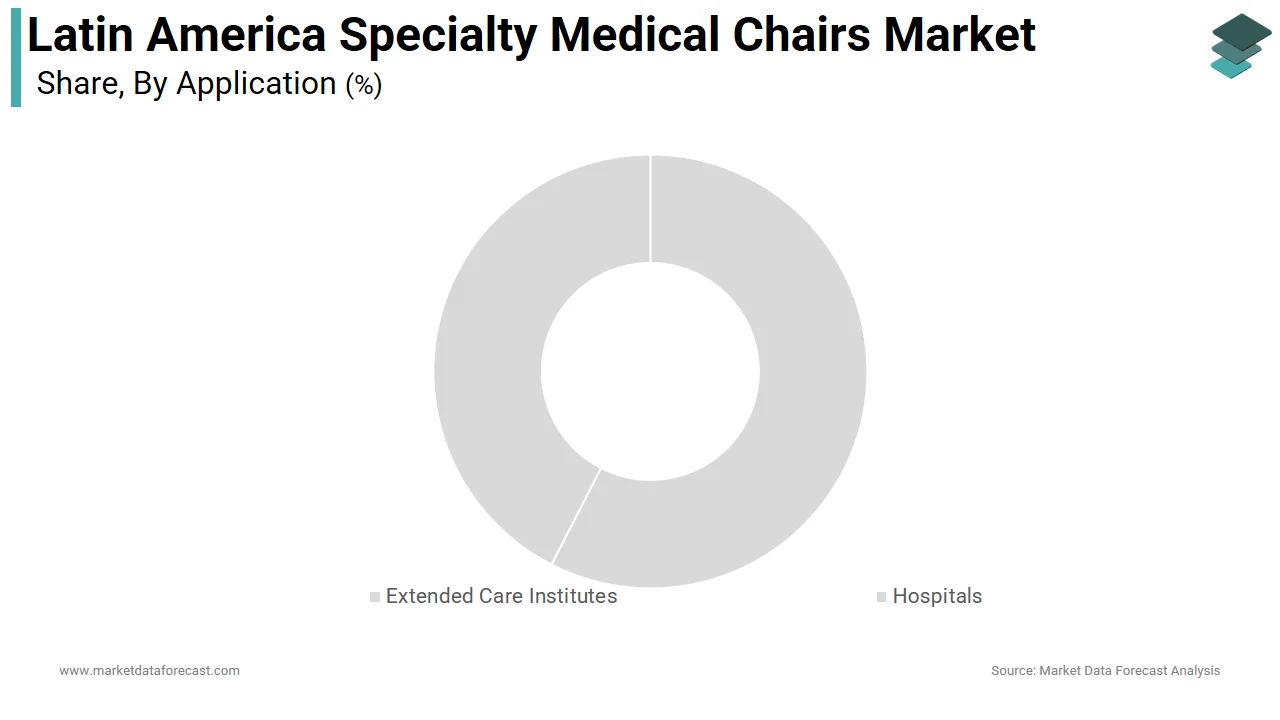
On the other side, the extended care institutes segment is experiencing the fastest growth and is predicted to record a CAGR of 10.5% over the forecast period owing to the rapidly aging population and the increasing need for long-term chronic disease management. As life expectancy rises in Latin America, the demand for specialized care facilities that provide rehabilitation and palliative services is expanding significantly. According to the United Nations Economic Commission for Latin America and the Caribbean, the population aged 60 and above is expected to double by 2050, reaching over 150 million individuals who require regular medical attention and supportive care. These facilities utilize specialty reclining and lifting chairs to assist patients with mobility issues and ensure comfort during prolonged stays. The Pan American Health Organization states that the prevalence of dementia and mobility impairments among the elderly has increased by 18% in the past decade, necessitating specialized furniture that supports safe patient handling. Extended care institutes prioritize ergonomics to reduce caregiver strain and prevent injuries during patient transfers. The shift from hospital-based care to community-based long-term care models further accelerates the establishment of these facilities. Government policies promoting aging in place and home-like care environments support this transition. The specific needs of elderly patients drive demand for chairs with advanced positioning features and pressure relief capabilities. This demographic trend ensures robust growth for the extended care segment.
By Type Insights
The examination chairs segment occupied the largest share of the Latin American market in 2025 due to their ubiquitous presence in primary care clinics, secondary health centers, and specialist offices. Every medical consultation typically begins with a physical examination, requiring a sturdy and adjustable chair for patient assessment. According to the Pan American Health Organization, there are over 50,000 primary care facilities in Latin America, each requiring multiple examination chairs to handle daily patient loads. The World Bank reports that outpatient visits in the region exceed 1.5 billion annually, creating immense recurring demand for durable and reliable examination furniture. These chairs are essential for general practitioners, gynecologists, cardiologists, and other specialists who perform routine checks and minor procedures. The simplicity and versatility of examination chairs make them a standard fixture in almost every healthcare setting, regardless of size or specialization. Government programs aiming to strengthen primary care networks further drive procurement of these basic yet critical units. The high turnover rate of patients in busy clinics necessitates chairs that are easy to clean and maintain. Manufacturers benefit from the standardized nature of these products, which allows for efficient mass production. The fundamental role of physical examination in medical practice ensures steady and widespread demand. This universal application secures the dominant market share for examination chairs.
On the other hand, the treatment chairs segment is estimated to register a prominent CAGR of 9.4% over the forecast period owing to the rise in minimally invasive procedures and outpatient surgeries that require specialized patient positioning. These procedures, including endoscopies, colonoscopies, and minor dermatological surgeries, are increasingly performed in ambulatory surgical centers and specialist clinics rather than hospitals. According to the Society of American Gastrointestinal Endoscopic Surgeons, the volume of outpatient gastrointestinal procedures in Latin America has increased by 15% annually as technology advances make these interventions safer and more accessible. Treatment chairs designed for these procedures offer precise positioning flexibility and integrated accessory mounts for medical instruments. The International Association for Ambulatory Surgery notes that over 60% of surgical procedures in developed Latin American markets are now performed on an outpatient basis, reducing hospital stays and costs. This shift creates demand for versatile chairs that can accommodate various procedural requirements while ensuring patient comfort during awake procedures. Clinics invest in high-quality treatment chairs to enhance procedural efficiency and patient satisfaction. The ability to quickly adjust patient position is critical for procedural success and safety. This trend toward outpatient care drives rapid adoption of advanced treatment chairs. The specialization of these units commands higher value per unit compared to standard examination chairs.
COUNTRY-LEVEL ANALYSIS
Brazil Specialty Medical Chairs Market Analysis
Brazil occupied the dominant position in the Latin America specialty medical chairs market with the largest share of the Latin American market in 2025 due to its vast healthcare infrastructure and status as the region's largest economy. The country serves as the primary hub for medical equipment manufacturing and consumption, driven by a mix of public and private healthcare demands. According to the Brazilian Hospital Federation, the private healthcare sector added over 12,000 new hospital beds in 2023, which directly necessitated the procurement of modern examination and treatment chairs to equip these expanded facilities. The National Agency of Supplementary Health reports that private health insurance beneficiaries reached 52 million individuals in 2024, creating a stable reimbursement base for elective procedures that utilize specialized seating, such as dental and ophthalmological chairs. This extensive coverage encourages clinics to invest in ergonomic and technologically advanced furniture to attract insured patients seeking comfort and quality care. Government initiatives through the Unified Health System also drive volume purchases of standardized, durable chairs for primary care units across remote municipalities. The presence of local manufacturers allows for cost-competitive supply chains that bypass import tariffs affecting other nations. Consequently, Brazil acts as both the largest consumer and a critical production center, influencing pricing and availability throughout the entire Latin American region.
Mexico Specialty Medical Chairs Market Analysis
Mexico holds the second largest share of the regional market owing to its strategic proximity to North America and a robust medical tourism industry. Mexico functions as a vital gateway for international medical device brands entering Latin America while simultaneously serving as a destination for cross-border healthcare services. According to the Mexican Association of Private Hospitals, medical tourism generates approximately 800 million dollars annually, with dental and cosmetic surgery being top specialties that require high-end specialty chairs equipped with integrated technology. The Mexican Social Security Institute has allocated significant budget increases for infrastructure modernization in 2024, aiming to upgrade over 300 primary care clinics with new medical furniture to reduce waiting times and improve service delivery. This dual demand structure creates a unique market dynamic where premium imported chairs serve the private tourist sector while durable, cost-effective models supply the public system. The integration of Mexican supply chains with United States manufacturers facilitates faster access to the latest innovations compared to South American peers. Furthermore, the growing middle class is increasingly accessing private outpatient care, driving demand for specialized diagnostic seating. This combination of export-oriented manufacturing and domestic service expansion solidifies Mexico’s pivotal role in the regional landscape.
Argentina Specialty Medical Chairs Market Analysis
Argentina maintains a significant but volatile position in the Latin America specialty medical chairs market and is driven by economic fluctuations and a strong tradition of domestic manufacturing. Despite financial instability, the country retains a highly developed healthcare network that sustains baseline demand for medical furniture through local production capabilities. According to the Argentine Chamber of Medical Equipment Manufacturers, local production accounts for nearly 60% of medical furniture consumed domestically, as currency devaluation makes imports prohibitively expensive for many providers. The Ministry of Health reported an increase in public hospital renovations during 2023, focusing on replacing obsolete equipment in provincial centers to maintain essential service levels despite fiscal constraints. This reliance on indigenous manufacturing insulates the market from global supply shocks but limits access to cutting-edge smart chair technologies available elsewhere. Private clinics catering to the upper-middle class continue to import premium units for specialized therapies, creating a bifurcated market structure. The government occasionally implements temporary tariff reductions to allow critical imports when local capacity falls short. Thus, Argentina represents a resilient market where adaptability and local industrial policy drive performance rather than pure purchasing power or foreign investment.
Chile Specialty Medical Chairs Market Analysis
Chile represents the most technologically advanced segment of the Latin America specialty medical chairs market and is distinguished by high per capita health spending and stringent quality standards. The nation acts as a trendsetter for premium medical furniture adoption due to its stable regulatory environment and affluent private healthcare sector. According to the Superintendence of Health, private insurance expenditure grew by 7% in 2023, reflecting sustained investment in high-quality clinical environments that prioritize patient comfort and ergonomic design. The Chilean Ministry of Health has implemented rigorous technical standards for medical devices, ensuring that only certified and safe specialty chairs enter public tenders, which raises the overall quality floor for the market. This regulatory maturity attracts top-tier international manufacturers who view Chile as a reference market for launching innovative products in the region. The aging population is driving increased demand for geriatric and rehabilitation chairs in long-term care facilities, which are expanding rapidly. Unlike larger neighbors, Chile focuses on value-based procurement rather than lowest cost, fostering a sustainable ecosystem for advanced medical furniture. Its stability makes it a preferred test bed for digital health-integrated seating solutions before broader regional rollout.
COMPETITIVE LANDSCAPE
The competitive landscape of the Latin America Specialty Medical Chairs Market is characterized by a mix of global multinational corporations and regional manufacturers vying for dominance through price competitiveness and localized service. International players leverage brand reputation and advanced technology to capture the premium segment dominated by private hospitals and medical tourism clinics. These companies benefit from established global supply chains and rigorous quality control standards that appeal to accredited healthcare facilities. Regional manufacturers focus on cost-effective solutions for public health institutions and small private practices where budget constraints are significant. They offer flexible payment terms and customized products that address specific local needs and regulatory requirements. The market exhibits fragmentation due to varying economic conditions and regulatory frameworks across different countries. Price sensitivity remains a key factor influencing purchasing decisions, particularly in the public sector. Collaboration with local distributors is essential for navigating logistical challenges and ensuring timely delivery. Intellectual property protection varies by country, affecting innovation incentives for smaller firms. After-sales service quality often differentiates competitors, as reliable maintenance is critical for continuous operations. The interplay of these factors creates a dynamic environment where adaptability and local presence determine long-term success in this diverse regional market.
KEY MARKET PLAYERS
The leading companies operating in the Latin America specialty medical chairs market include:
- Invacare Corporation
- A-dec, Inc.
- Midmark Corporation
- Fresenius Medical Care
- Forest Dental Products, Inc.
- Steris Corporation
- DentalEZ
- ACTEVAID, Inc.
TOP PLAYERS IN THE MARKET
- Midmark Corporation serves as a pivotal provider of specialized medical furniture with a strong focus on dental and examination chairs tailored for clinical efficiency. The company leverages its engineering expertise to design ergonomic units that enhance patient comfort and practitioner workflow across Latin American healthcare facilities. Recent initiatives include expanding distribution networks in Brazil and Mexico to improve accessibility and after-sales support for local clients. Midmark actively collaborates with regional distributors to customize products according to specific regulatory requirements and cultural preferences in the region. Their investment in durable materials ensures longevity in varied environmental conditions common in Latin America. The company prioritizes training programs for biomedical technicians to maintain high service standards. By offering modular designs that adapt to diverse clinical settings, Midmark strengthens its reputation for reliability. This strategic focus on localized support and robust product design positions them as a trusted partner for modernizing medical infrastructure in emerging markets.
- Adec Inc contributes significantly to the market through its premium dental chairs and integrated delivery systems that set benchmarks for quality and innovation. The company emphasizes advanced technology integration such as digital connectivity and ergonomic controls, which appeal to high-end private clinics and medical tourism centers in Latin America. Adec has recently strengthened its presence by establishing dedicated service hubs in key cities like Santiago and Buenos Aires to ensure rapid response times. Their development of eco-friendly manufacturing processes aligns with growing sustainability demands from environmentally conscious healthcare providers. The company partners with local dental associations to promote best practices in equipment maintenance and hygiene. Adec focuses on delivering comprehensive solutions that include lighting and instrumentation, enhancing overall procedural efficiency. Their commitment to user-centered design drives adoption among specialists seeking superior performance. These efforts reinforce their position as a leader in premium specialty seating solutions for demanding clinical applications.
- Steris Corporation plays a crucial role in the market by providing specialized surgical and procedure chairs that meet stringent infection control and safety standards. The company excels in designing versatile units suitable for operating rooms and ambulatory surgical centers, which are expanding rapidly in Latin America. Steris has recently intensified its focus on integrated room solutions that combine furniture with sterilization technologies to streamline clinical workflows. Their acquisition of regional distributors has enhanced supply chain efficiency and market penetration in countries like Colombia and Peru. The company develops chairs with antimicrobial surfaces to reduce hospital-acquired infections, addressing a critical concern for healthcare administrators. Steris invests in educational initiatives to train medical staff on proper equipment usage and maintenance. By offering scalable solutions for both public and private sectors, Steris supports healthcare modernization efforts. Their holistic approach to infection prevention and operational efficiency makes them a preferred choice for advanced medical facilities.
TOP STRATEGIES USED BY KEY MARKET PARTICIPANTS
Key players in the Latin America Specialty Medical Chairs Market employ several strategic approaches to maintain competitive advantage and drive growth. Product localization remains central as companies adapt designs to meet specific regulatory standards and cultural preferences in different countries. Strategic partnerships with local distributors enable suppliers to navigate complex logistics and provide timely after-sales support. Expansion of service networks in major urban centers ensures rapid maintenance and reduces downtime for healthcare providers. Investment in durable and easy-to-clean materials addresses hygiene concerns and extends product lifespan in challenging environments. Companies also pursue government tenders to secure large volume contracts for public health infrastructure projects. Sustainability initiatives drive efforts to use recyclable materials and energy-efficient manufacturing processes. Digital integration strategies incorporate smart features for better workflow management and data tracking.
MARKET SEGMENTATION
This Latin America specialty medical chairs market research report is segmented and sub-segmented into the following categories.
By Application
- Extended Care Institutes
- Hospitals
- Others
By Type
- Examination Chairs
- Rehabilitation Chairs
- Treatment Chairs
By Country
- Brazil
- Mexico
- Argentina
- Chile
- Rest of Latin America