- Product Description Description
- Table of Contents TOC
- List of Table & Figure LOT
- Get Free Sample PDF Sample PDF
Market Size, 2025
$110.48 MnMarket Estimate, 2026
$115.01 MnMarket Forecast, 2034
$158.62 MnCAGR, 2026–2034
4.1%Executive Summary: Latin America Testosterone Replacement Therapy Market
- Market Scope: In-depth assessment of the Latin America testosterone replacement therapy (TRT) market broken down by product delivery types, active pharmaceutical ingredients, and key country markets.
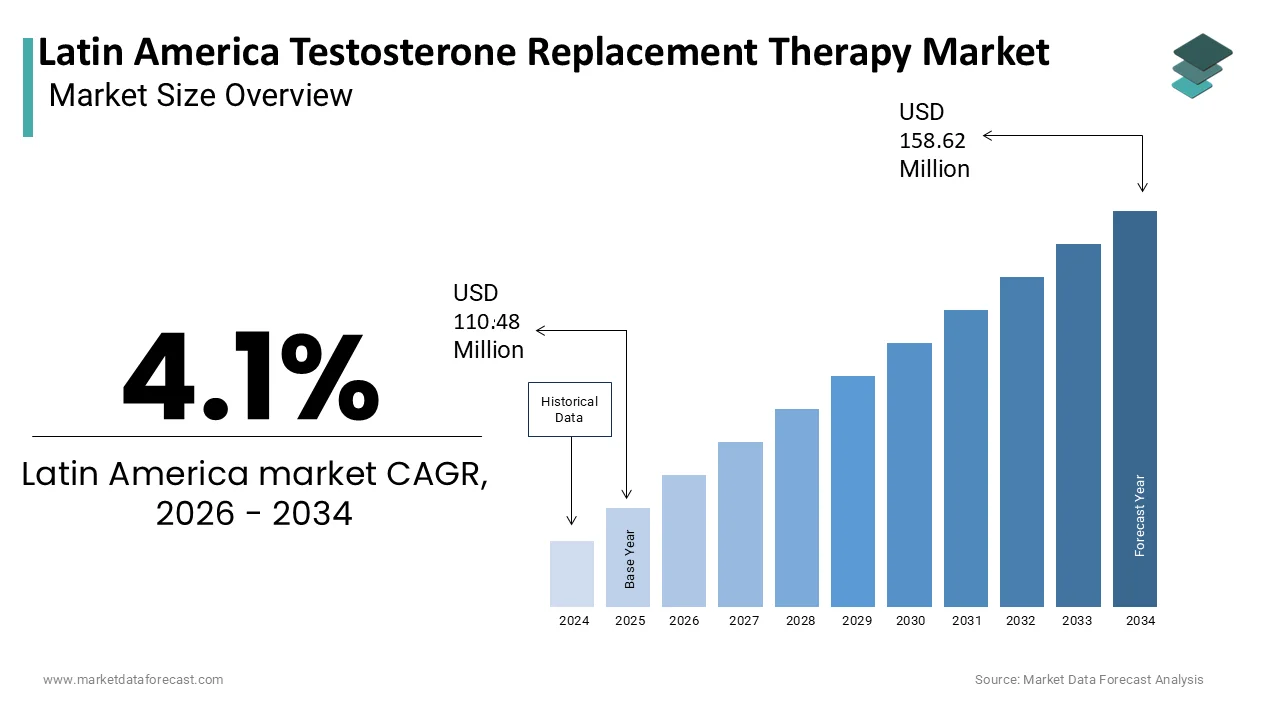
- Market Valuation: Valued at USD 110.48 million in 2025, estimated at USD 115.01 million in 2026, and projected to reach USD 158.62 million by 2034, registering a compound annual growth rate (CAGR) of 4.1% from 2026 to 2034.
- Primary Growth Drivers: Rising prevalence of testosterone deficiency (hypogonadism), expanding aging male population, government and non-profit awareness campaigns, and modernized healthcare infrastructure investments.
Key Market Segment Metrics (2026–2034)
| Category | Leading Segment Focus | Detailed Taxonomy & Sub-Segments |
|---|---|---|
| By Product Type | Injections & Transdermal Formulations | Patches, Injections, Adhesives, Implants, & Oral |
| By Active Ingredient | Testosterone Esters | Testosterone Undecanoate, Testosterone Enanthate, Testosterone Cypionate, & Methyl Testosterone |
| By Country Focus | Brazil & Mexico | Mexico, Brazil, Argentina, Chile, & Rest of Latin America |
Regional Insights & Market Dynamics
Regional Landscape: Latin America holds a substantial share of the global TRT market, anchored by a growing senior demographic, higher diagnosis rates for hypogonadism, and increased accessibility to convenient treatment options in countries like Brazil and Mexico.
Market Restraints & Challenges: Imminent patent expirations for key branded therapies ("patent cliff") triggering intense price competition from cheaper generic alternatives via Abbreviated New Drug Applications (ANDAs).
Key Market Leaders Profiled: Pfizer Inc., Allergan Plc., AbbVie Inc., Bayer AG, Eli Lilly and Company, Endo Pharmaceuticals, Kyowa Kirin International Plc., Novartis AG, and Mylan N.V.
 Download Free Sample Report
Latin America Testosterone Replacement Therapy Market Size
The Latin America Testosterone Replacement Therapy Market is projected to grow from USD 110.48 million in 2025 to USD 115.01 million in 2026 and reach USD 158.62 million by 2034, registering a CAGR of 4.1% from 2026 to 2034.
The Latin America Testosterone Replacement Therapy Market encompasses the diagnosis and treatment of hypogonadism through exogenous testosterone administration via gels, injections, patches, es or pellets. As per the Pan American Health Organization, the population aged 60 years and older in Latin America is projected to reach 120 million by 2030, creating a substantial demographic base prone to age-related hormonal decline. This demographic shift directly correlates with increased clinical demand for hormonal interventions. Such prevalence rates underscore the critical need for accessible diagnostic and therapeutic services. Regulatory agencies in key markets like Mexico and Argentina are streamlining approval processes for new formulations to improve patient access. Healthcare systems increasingly recognize the impact of untreated hypogonadism on quality of life and comorbidities. Patient awareness campaigns reduce stigma associated with hormone therapy.
MARKET DRIVERS
Rising Prevalence of Obesity and Metabolic Disorders
The escalating incidence of obesity and metabolic syndrome is significantly boosting the growth of the Latin America Testosterone Replacement Therapy Market. Excess adipose tissue converts testosterone into estrogen through aromatase activity, leading to suppressed gonadal function. As per the World Health Organization Regional Office for the Americas, obesity rates in Latin America have risen by 40% over the past two decades, es with Mexico and Chile reporting some of the highest prevalence globally. This metabolic burden creates a direct physiological pathway to low testosterone levels requiring clinical intervention. Physicians increasingly screen obese patients for hormonal imbalances as part of comprehensive metabolic management. Public health initiatives targeting diabetes and cardiovascular health indirectly boost testosterone testing rates. Insurance providers begin to cover therapy when linked to metabolic improvement outcomes. Pharmaceutical companies develop formulations that complement weight loss strategies.
Growing Awareness and Reduced Stigma Around Men’s Health
The growing public awareness and diminishing social stigma surrounding men’s health are encouraging help-seeking behavior, which is driving the growth of the Latin American testosterone replacement therapy market. Traditional cultural norms often discouraged men from discussing sexual health or fatigue, but educational campaigns are shifting this paradigm. According to the International Society for Sexual Medicine, patient inquiries regarding erectile dysfunction and low libido in Latin America have increased by 35% in recent years, reflecting greater openness to medical consultation. This behavioral change leads to earlier diagnosis and treatment initiation. The media campaigns focusing on male vitality have improved knowledge about hypogonadism symptoms among men aged 40 to 60. Digital health platforms provide discreet information and telemedicine consultations, reducing barriers to access. Primary care physicians receive more training on recognizing subtle signs of testosterone deficiency. Patient support groups foster community and shared experiences,s normalizing therapy. Pharmaceutical marketing emphasizes quality of life improvements rather than just sexual function. This holistic approach resonates with modern consumers seeking overall wellness.
MARKET RESTRAINTS
Stringent Regulatory Restrictions and Prescription Requirements
The strict regulatory frameworks and mandatory prescription requirements are unfavorable by limiting easy access and increasing administrative burdens, which substantially degrades the growth of the Latin America testosterone replacement therapy market. Health authorities classify testosterone as a controlled substance in many countries due to potential abuse and side effects. As per the National Administration of Drugs, Food and Medical Technology in Argentina, prescriptions for testosterone must include specific diagnostic codes and regular monitoring logs to prevent misuse. This bureaucratic complexity discourages casual prescribing and delays treatment initiation. The Brazilian Health Regulatory Agency mandates rigorous documentation for reimbursement claims creating friction for both doctors and patients. Illegal markets thrive where legal access is cumbersome, posing safety risks to consumers. Physicians may hesitate to prescribe due to fear of regulatory scrutiny or liability. Insurance companies often require proof of failed lifestyle interventions before approving coverage. Cross-border trade of medications faces strict customs controls, limiting availability in remote areas. Pharmacists must verify prescription authenticity,y adding time to the dispensing process.
High Out-of-Pocket Costs and Limited Insurance Coverage
The significant out-of-pocket expenses and inadequate insurance coverage are restricting the growth of the Latin America testosterone replacement therapy market. Public healthcare systems in many Latin American countries prioritize acute care over chronic hormonal management,t leaving patients to bear full costs. Testosterone gels and injections can cost several hundred dollars annually, representing a substantial portion of monthly income for average workers. Private insurance plans often exclude hormone replacement unless specific severe criteria are met. Generic alternatives are limited in some markets, ts keeping prices elevated. Economic volatility and currency devaluation further increase the relative cost of imported medications. Patients may resort to irregular dosing or substandard products to save money. This financial barrier prevents consistent therapeutic levels and optimal outcomes. Clinicians struggle to recommend best practices when patients cannot afford them.
MARKET OPPORTUNITIES
Expansion of Telemedicine and Digital Health Platforms
The rapid expansion of telemedicine and digital health platforms is overcoming geographic and logistical barriers, which is expected to promote new opportunities for the growth of the Latin America testosterone replacement therapy market. Remote consultations allow men in rural or underserved areas to access specialist care without traveling to urban centers. This digital shift facilitates initial screening and follow-up monitoring for testosterone therapy. Digital platforms integrate electronic prescriptions and home delivery services ensuring continuous supply of medications. The Journal of Medical Internet Research notes that patient satisfaction with tele-endocrinology services exceeds 85% due to reduced wait times and privacy. Mobile applications track symptoms and medication adherence providing valuable data for clinicians. Artificial intelligence tools assist in interpreting lab results and recommending dosage adjustments. Insurance providers increasingly reimburse virtual visits, making care more affordable. Pharmaceutical companies partner with tech firms to offer integrated patient support programs.
Development of Novel Long-Acting Formulations
The development of novel long-acting testosterone formulations to improve patient compliance and convenience is also expected to boost the growth of the Latin America testosterone replacement therapy market. Traditional daily gels or frequent injections pose adherence challenges that new technologies aim to resolve. According to the Endocrine Society, long-acting subcutaneous pellets or intramuscular injections administered every 10 to 12 weeks show 30% higher adherence rates compared to daily topical applications. This improved consistency leads to better clinical outcomes and patient satisfaction. Pharmaceutical companies are investing in biodegradable implants and nano suspension technologies tailored for regional preferences. The Brazilian Journal of Urology highlights that patients prefer less frequent dosing schedules to maintain privacy and reduce routine disruption. Local manufacturing agreements can reduce costs for these advanced formulations. Regulatory agencies expedite reviews for innovations that demonstrate clear patient benefits. Marketing efforts focus on lifestyle compatibility, appealing to active professionals. Healthcare providers benefit from reduced monitoring frequency,y allowing more efficient resource allocation.
MARKET CHALLENGES
Risk of Cardiovascular Events and Safety Concerns
Concerns regarding cardiovascular risks and long-term safety, creating hesitation among prescribers and patients, act as a major challenge for the growth of the Latin America testosterone replacement therapy market. Historical studies linking testosterone therapy to increased heart attack or stroke risk have left a lasting impact on clinical perception. This ambiguity leads to conservative prescribing practices especially in patients with pre-existing heart conditions. The Argentine Cardiology Society recommends thorough cardiac evaluation before initiating therapy, adding steps to the diagnostic process. Media reports on adverse events amplify public fear regardless of context. Regulatory bodies mandate black box warnings that deter potential users. Litigation risks influence hospital formularies and insurance policies. Physicians may opt for alternative treatments with perceived lower risks. Patient education materials must carefully balance benefits and risks to avoid alarm. This safety narrative requires continuous scientific clarification.
Prevalence of Counterfeit and Substandard Products
The widespread presence of counterfeit and substandard testosterone products undermines trust and patient safety and limits the growth of the Latin America testosterone therapy market. Weak enforcement of intellectual property rights and porous borders facilitate the influx of fake medications. These counterfeit products often contain incorrect dosages or harmful contaminants, posing serious health risks. Patients purchasing from unregulated online sources or informal markets face unpredictable outcomes. The Mexican Federal Commission for Protection against Sanitary Risk conducts raids but struggles to curb illegal distribution networks. Genuine manufacturers suffer reputational damage when patients associate adverse events with their brands. Healthcare providers find it difficult to verify the source of medications brought by patients. Regulatory agencies lack resources for comprehensive market surveillance. This illicit trade distorts pricing and reduces tax revenues.
REPORT COVERAGE
| REPORT METRIC | DETAILS |
| Market Size Available | 2025 to 2034 |
| Base Year | 2025 |
| Forecast Period | 2026 to 2034 |
| Segments Covered | By Product Type, Active Ingredient, and Region |
| Various Analyses Covered | Global, Regional, and Country-Level Analysis, Segment-Level Analysis, Drivers, Restraints, Opportunities, Challenges; PESTLE Analysis; Porter’s Five Forces Analysis, Competitive Landscape, Analyst Overview of Investment Opportunities |
| Countries Covered | Mexico, Brazil, Argentina, Chile, Rest of Latin America |
| Market Leaders Profiled |
|
SEGMENTAL ANALYSIS
By Product Type Insights
The injections segment held a prominent share of the Latin America Testosterone Replacement Therapy Market in 2025 due to their cost-effectiveness and established clinical protocols across public and private healthcare systems. This administration route remains the preferred choice for physicians treating severe hypogonadism because it ensures complete bioavailability and predictable serum levels. Public health programs favor injectables because they reduce the financial burden on state-funded healthcare budgets while delivering proven efficacy. The injection-based therapies are included in the essential medicines lists of most Latin American countries, ensuring widespread availability even in remote areas. Patients in lower-income brackets prefer injections because they require less frequent purchasing compared to daily topical applications. Medical training programs in the region emphasize injection techniques, making clinicians comfortable with this modality. The long history of use builds trust among older patient populations who are skeptical of newer formulations. Manufacturing facilities in Mexico and Argentina produce generic injectables at scale,e keeping prices competitive. Insurance reimbursement policies often prioritize injectables as first-line treatment options.
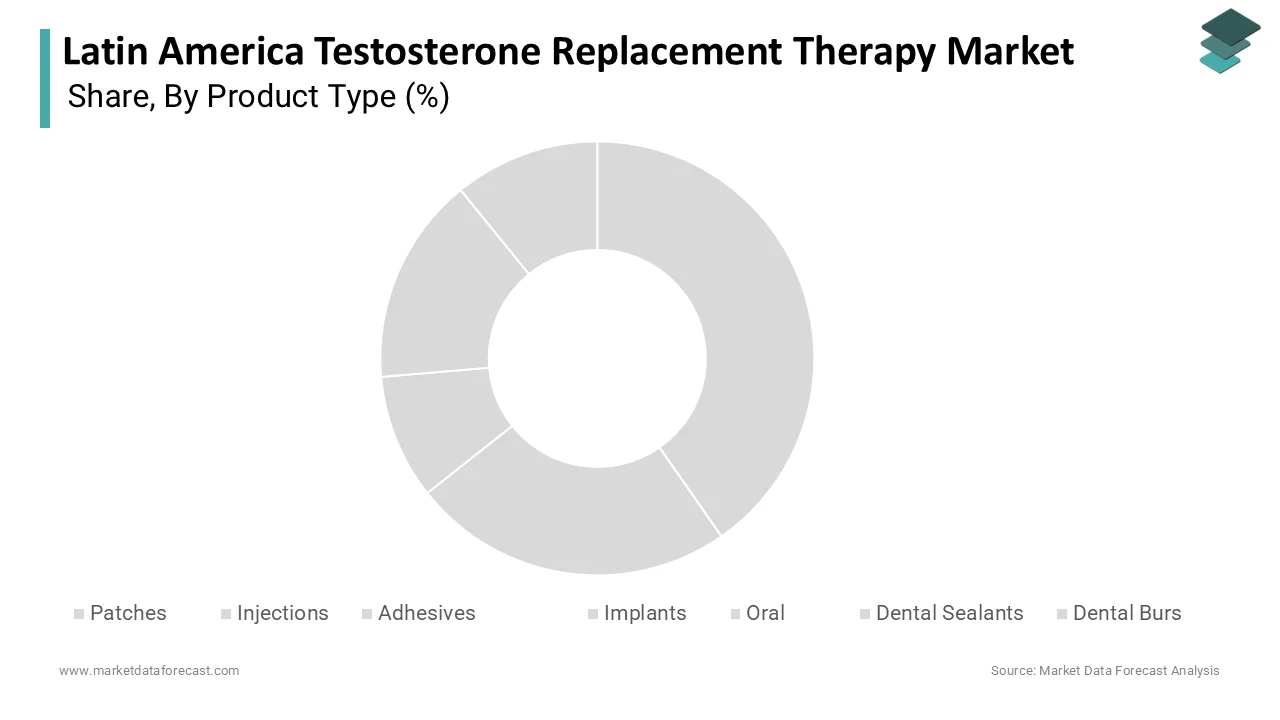
The adhesives segment is projected to register the fastest CAGR of 7.8% from 2026 to 2034, with patient preference for non-invasive and convenient administration. The shift toward lifestyle-compatible therapies encourages men to choose topical applications that avoid needle phobia and clinic visits. This convenience factor appeals to working professionals in urban centers across Latin America who value discretion and flexibility. Pharmaceutical companies invest heavily in marketing campaigns that highlight the ease of use and steady hormone release profiles of gels. Improved formulation technologies reduce skin irritation and transfer risks, addressing previous safety concerns. Telemedicine platforms facilitate prescription renewals for topical products enhancing accessibility. Younger patients entering the market prefer modern delivery methods over traditional injections. Retail pharmacy chains expand shelf space for branded and generic gels,s meeting rising demand.
By Active Ingredient Insights
The testosterone enanthate segment held 44.3% of the Latin America Testosterone Replacement Therapy Market share in 2025 due to its extensive availability as a generic drug and well documented safety profile. This ester has been used for decades, es allowing physicians to rely on familiar dosing regimens and monitoring protocols. The low production cost makes it accessible to public healthcare systems serving large patient populations. The Brazilian Journal of Urology highlights that enanthate provides a reliable half-life of approximately four to five days, allowing for biweekly or weekly injection schedules that fit clinical workflows. Doctors in rural areas prefer enanthate because it does not require specialized storage conditions unlike some newer formulations. Patient support groups and online forums frequently discuss enanthate experiences, creating a knowledge base that reinforces its use. Regulatory approvals for generic versions have expanded market penetration significantly. Insurance formularies list enanthate as a preferred agent due to its cost efficiency.
The testosterone undecanoate segment is anticipated to grow at the fastest CAGR of 9.5% during the forecast period with the introduction of long-acting injectable formulations that improve patient convenience. This ester allows for extended dosing intervals of up to 10 to 14 weeks, reducing the frequency of clinic visits significantly. Patients appreciate the reduced burden of frequent injections,s which enhances long-term adherence and satisfaction. The private clinics in Santiago have adopted undecanoate as a premium option for patients seeking minimal disruption to their daily routines. Pharmaceutical manufacturers promote undecanoate as a modern solution aligning with trends toward personalized and convenient care. Insurance providers begin to recognize the value proposition of long-acting therapies in managing chronic conditions.
COUNTRY LEVEL ANALYSIS
Brazil Testosterone Replacement Therapy Market Analysis
Brazil was the top performer in the Latin America Testosterone Replacement Therapy Market by capturing 38.6% of the share in 2025 with its large population and advanced healthcare infrastructure. The country has a robust network of endocrinologists and urologists who actively diagnose and treat hypogonadism. The Brazilian Society of Endocrinology and Metabolism promotes guidelines that standardize diagnosis and treatment, improving care quality. Local manufacturing capabilities ensure affordable access to generic injectables and gels. Urban centers likeSãoo Paulo and Rio de Janeiro lead in adopting new therapies and digital health solutions. High prevalence of obesity and diabetes drives secondary hypogonadism cases requiring intervention. Regulatory agencies streamline approvals for new products, facilitating market entry.
Argentina Testosterone Replacement Therapy Market Analysis
Argentina testosterone replacement therapy market was ranked second, holding 22.8% of the share in 2025, with high medical literacy and strong pharmaceutical production. The country benefits from a tradition of excellent medical education, producing skilled specialists in hormonal health. Private healthcare sectors offer premium formulations catering to discerning patients. The Argentine Agency of Medicines and Medical Technology maintains rigorous quality standards, fostering trust in local and imported products. Economic challenges sometimes impact import availability,y but local manufacturing mitigates supply risks. Patient advocacy groups actively engage in policy discussions promoting better coverage for chronic conditions. Telemedicine adoption has grown,wn enabling remote consultations for follow-up care.
Chile Testosterone Replacement Therapy Market Analysis
Chile testosterone replacement therapy market is likely to witness prominent opportunities in the coming years, with high healthcare spending and regulatory stability. The country has one of the highest per capita health expenditures in the region, supporting access to advanced therapies. Private insurers complement public coverage,e offering faster access to newer formulations. The Chilean Society of Endocrinology establishes clinical guidelines that promote evidence-based practices. High urbanization rates facilitate efficient distribution of medications and services. Patients in Chile are well informed and seek high-quality care, driving demand for premium products. Regulatory processes are transparent and efficient,t encouraging international pharmaceutical investment. Digital health integration improves monitoring and adherence tracking.
Mexico Testosterone Replacement Therapy Market Analysis
Mexico testosterone replacement therapy market growth is likely to grow, with Mexico as a hub for pharmaceutical production exporting generics to neighboring regions. Private healthcare sectors in major cities offer cutting-edge therapies and specialized clinics. High prevalence of metabolic syndrome increases the pool of eligible patients. Regulatory harmonization with international standards facilitates product launches. Cross-border trade influences pricing and availability of various formulations. Growing middle class expands the market for premium topical products. Telehealth regulations have evolved, supporting remote prescription services.
COMPETITIVE LANDSCAPE
The competition in the Latin America Testosterone Replacement Therapy Market is characterized by the presence of global pharmaceutical giants and emerging local manufacturers striving for dominance. Major players compete primarily on product efficacy, safety profiles, es and cost efficiency rather than price alone. Local generic manufacturers challenge multinational corporations by offering affordable alternatives that appeal to public healthcare systems and price-sensitive consumers. Innovation in delivery methods such as long-acting injections and transdermal gels serves as a key differentiator for premium brands. Regulatory heterogeneity across countries creates barriers to entry that protect incumbent providers with established compliance frameworks. Trust remains a critical factor as healthcare providers prioritize proven safety records over novel untested products. Strategic alliances with medical associations help shape clinical guidelines and prescribing habits. Digital health integration offers new avenues for customer engagement and retention.
KEY MARKET PLAYERS
Some of the companies that are playing a dominating role in the Latin America Testosterone Replacement Therapy Market include
- Pfizer Inc.
- Allergan Plc.
- AbbVie Inc.
- Bayer AG
- Eli Lilly and Company
- Endo Pharmaceuticals
- Kyowa Kirin International Plc.
- Novartis AG
- Mylan N.V.
TOP LEADING PLAYERS IN THE MARKET
- Bayer AG maintains a strong presence in the Latin America Testosterone Replacement Therapy Market through its established portfolio of hormonal treatments and extensive distribution networks. The company focuses on providing high-quality testosterone undecanoate formulations that offer convenient long-acting dosing schedules for patients. Bayer recently expanded its manufacturing capabilities in Brazil to ensure consistent supply and reduce dependency on imports. This strategic move allows the firm to meet growing demand from both public and private healthcare sectors efficiently. The organization collaborates with local medical societies to promote awareness about hypogonadism diagnosis and treatment guidelines. Bayer emphasizes patient support programs that improve adherence and clinical outcomes. These initiatives strengthen brand loyalty among physicians and patients alike. The company also invests in digital health tools to facilitate remote monitoring and prescription management.
- Pfizer Inc. plays a pivotal role in the Latin America Testosterone Replacement Therapy Market by offering a diverse range of testosterone formulations,s including gels and injections. The company leverages its global research expertise to develop products with improved safety profiles and efficacy. Pfizer recently launched educational campaigns targeting primary care physicians in Mexico and Argentina to enhance diagnostic accuracy for low testosterone. This initiative helps identify untreated patients and expands the addressable market for replacement therapies. The firm partners with local distributors to ensure widespread availability of its products across urban and rural areas. Pfizer prioritizes regulatory compliance and quality assurance to build trust with healthcare providers.
- AbbVie Inc contributes significantly to the Latin America Testosterone Replacement Therapy Market through its specialized endocrinology division and robust product pipeline. The company offers advanced testosterone therapies designed to address specific patient needs such as obesity related hypogonadism. This achievement allows the firm to capture share in premium segments seeking convenient administration options. The organization invests in real-world evidence studies to demonstrate the clinical benefits of its treatments in diverse populations. AbbVie collaborates with patient advocacy groups to reduce stigma and encourage help-seeking behavior. The company provides comprehensive training resources for healthcare professionals on the latest treatment protocols. These educational efforts improve prescribing confidence and patient care quality.
TOP STRATEGIES USED BY KEY MARKET PARTICIPANTS
Key players in the Latin America Testosterone Replacement Therapy Market employ diverse strategies to maintain competitive advantage and drive sustainable growth. Product localization remains a primary focus as companies adapt formulations and packaging to meet regional regulatory and cultural preferences. Strategic partnerships with local distributors enable efficient penetration into remote areas and public healthcare systems. Educational initiatives targeting physicians and patients help overcome stigma and improve diagnosis rates for hypogonadism. Companies invest in digital health platforms to facilitate telemedicine consultations and remote monitoring, enhancing patient convenience. Regulatory engagement ensures timely approvals and compliance with evolving safety standards.
MARKET SEGMENTATION
This research report on the Latin American TRT market has been segmented & sub-segmented into the following categories.
By Product Type
- Patches
- Injections
- Adhesives
- Implants
- Oral
By Active Ingredient
- Testosterone Undecanoate
- Testosterone Enanthate
- Testosterone Cypionate
- Methyl Testosterone
By Country
- Mexico
- Brazil
- Argentina
- Chile
- Rest of Latin America