- Product Description Description
- Table of Contents TOC
- List of Table & Figure LOT
- Get Free Sample PDF Sample PDF
Market Size, 2025
$0.29 BnMarket Estimate, 2026
$0.34 BnMarket Forecast, 2034
$1.24 BnCAGR, 2026–2034
17.6%Executive Summary: Latin America IVF Market
- Market Scope: Comprehensive regional analysis of the Latin American In-Vitro Fertilization (IVF) market covering reagents and media, instruments, technologies, end users, and country-level breakdowns.
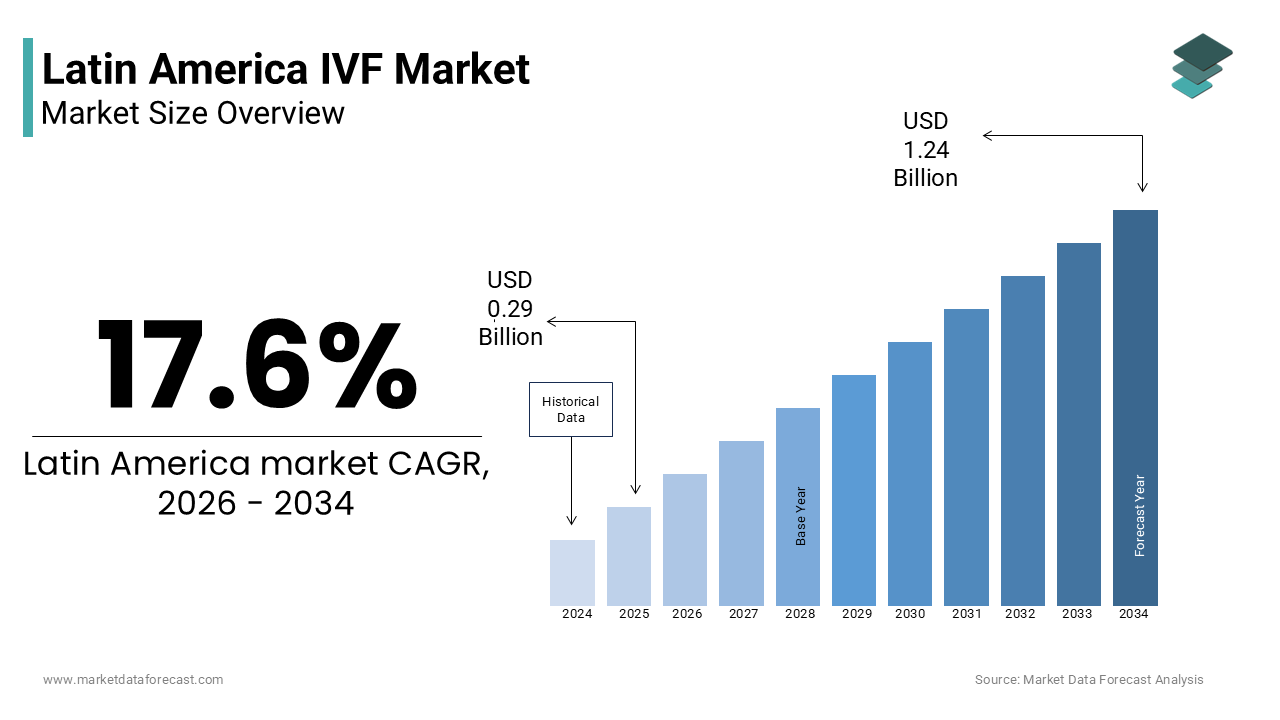
- Market Valuation: Valued at USD 0.29 billion (2025), estimated at USD 0.34 billion (2026), and projected to reach USD 1.24 billion by 2034, growing at a robust CAGR of 17.6% (2026–2034).
- Primary Growth Drivers: Growing knowledge and awareness of IVF treatment, low-cost healthcare facilities, a large population base facing infertility, rising disposable incomes, and the rising prevalence of lifestyle-related conditions like PCOS and obesity.
Key Market Segment Metrics (2026–2034)
| Category | Leading Segment Focus | Fastest-Growing Segment Focus |
|---|---|---|
| By Reagents and Media | Embryo Culture Media | Cryopreservation Media |
| By Instruments | Incubators and Imaging Systems | Micromanipulator Systems & Cryosystems |
| By Technology | Intra-Cytoplasmic Sperm Injection (ICSI) | Pre-Implantation Genetic Diagnosis (PGD) |
| By End User | Fertility and Surgical Centers | Hospitals and Research Laboratories |
| By Country | Brazil (dominant country market with advanced facilities & medical tourism) | Mexico (expanding fertility centers & specialized reproductive options) |
Major Market Players & Market Structure
Market Structure: Competitive regional landscape featuring prominent international medical technology and life sciences corporations specializing in assisted reproductive technologies (ART), culture media, and laboratory equipment.
Key Companies: CooperSurgical, Inc. (U.S.), Vitrolife AB (Sweden), Cook Medical, Inc. (U.S.), Irvine Scientific (U.S.), Thermo Fisher Scientific, Inc. (U.S.), EMD Serono, Inc. (U.S.), Genea Limited (Australia), ESCO Micro Pte. Limited (Singapore), IVFtech ApS (Denmark), and The Baker Company, Inc. (U.S.).
Latin America IVF Market Size
The Latin America IVF market size was valued at USD 0.29 billion in 2025. The size of the Latin America IVF Market is expected to reach USD 1.24 billion by 2034 from USD 0.34 billion in 2026, growing at a CAGR of 17.6% from 2026 to 2034.
IVF stands for in vitro fertilisation. It is a medical process where a doctor takes eggs from a woman's body and joins them with sperm in a special lab dish to create an embryo, which is then placed back into the womb to help achieve a pregnancy. This market operates within a unique sociocultural context where family formation remains central to social identity, yet access to fertility treatment varies dramatically based on geography, income and regulatory frameworks. As per the Red Latinoamericana de Reproducción Asistida (REDLARA), member clinics across 16 countries initiated a total of 127,351 assisted reproduction cycles, representing an expanding utilisation trend driven primarily by freeze-all protocols and oocyte donations. According to the World Health Organisation (WHO), global prevalence data show that infertility affects roughly 1 in 6 people worldwide, prompting international health bodies to emphasise the need for enhanced diagnostic and clinical equity across developing healthcare infrastructures. As per the Brazilian National Health Surveillance Agency (ANVISA), certified human reproduction centres throughout Brazil registered over 43,000 in vitro fertilisation cycles, following structural increases in domestic lab operations and broader diagnostic demands. Unlike mature markets with standardised reimbursement, this region exhibits extreme heterogeneity, with public systems in some countries providing limited coverage while others rely entirely on out-of-pocket payments, creating stratified access patterns. Demographic transitions, including urbanisation, female educational attainment, and delayed childbearing, intersect with cultural values emphasising biological parenthood, generating complex demand dynamics distinct from North American or European counterparts where individual choice narratives dominate fertility discourse.
MARKET DRIVERS
Expansion of Private Insurance Coverage and Regulatory Mandates
Regulatory reforms mandating fertility treatment inclusion in private health plans have fundamentally altered access dynamics and drive the growth of the Latin America IVF market. This shift is particularly visible in Brazil, which accounts for nearly half of regional IVF volume. According to the Brazilian National Supplementary Health Agency (ANS), Normative Resolution 465 updates the mandatory list of health procedures and events, while overall market dynamics reflect a continuous increase in demand for premium and specialised healthcare segments. As per the Ministry of Health and Social Protection of Colombia, public healthcare infrastructure and general clinical utilisation data for specialised treatments are subject to ongoing systemic expansions and funding adaptations across regional health networks. These policy interventions convert latent biological need into realised clinical demand by removing catastrophic out-of-pocket costs that previously restricted treatment to wealthy elites. According to the Ministry of Health of Chile, specialised reproductive health programs and clinical resource allocations managed under public networks like FONASA are expanding to address demographic trends and standard clinical needs in designated national hospitals. Employer-sponsored benefits increasingly supplement statutory minimums, with multinational corporations operating regional headquarters offering enhanced fertility packages to attract skilled professionals in competitive labour markets. This regulatory-driven expansion creates predictable revenue streams enabling clinic infrastructure investment and workforce development previously constrained by uncertain self-pay demand cycles. However, implementation variability across jurisdictions produces uneven geographic access, concentrating services in major metropolitan areas where insurer networks and specialist density align favourably.
Cultural Emphasis on Biological Parenthood and Delayed Childbearing Trends
Deep-rooted cultural values prioritising biological kinship intersect with socioeconomic transformations delaying family formation, which fuels the expansion of the Latin America IVF market. This intersection creates structural demand for reproductive technologies across diverse income strata. According to the United Nations Economic Commission for Latin America and the Caribbean (ECLAC), the total fertility rate across the region has steadily declined below the replacement level of 2.1 children per woman, signalling structural shifts in long-term demographic patterns and age distributions. As per the Latinobarómetro survey, evolving social attitudes and cultural priorities continue to shape traditional family structures and lifestyle choices across Latin American societies. According to the International Labour Organisation (ILO), female labour force participation rates in Latin America and the Caribbean have experienced a structural post-pandemic recovery, stabilising at approximately 53% amid ongoing shifts in formal economic employment. Religious institutions historically opposing ART have gradually shifted toward acceptance, with Catholic bioethics frameworks increasingly distinguishing between permissible technological assistance and prohibited third-party reproduction, reducing stigma barriers. Social media normalisation of fertility journeys among influencers and celebrities further destigmatises treatment seeking, particularly among younger demographics viewing reproductive medicine as legitimate healthcare rather than a desperate last resort. This cultural demographic convergence generates resilient demand less sensitive to economic cycles than purely elective medical services, anchoring long-term market fundamentals.
MARKET RESTRAINTS
Extreme Income Inequality and Out-of-Pocket Cost Barriers
Pervasive economic stratification restricts IVF access to affluent minorities despite growing middle class aspirations, which hinders the expansion of the Latin America IVF market. This creates markets bifurcated between premium private clinics and underfunded public options serving majority populations. According to the World Bank, Gini coefficients exceed 0.40 in highly unequal nations across Latin America, reflecting a structural disparity layout where income concentration within the highest percentiles impacts broader access to specialised private medical expenditures. As per the Economic Commission for Latin America and the Caribbean (ECLAC), the regional poverty rate stabilised around 26.8%, representing significant portions of the population that experience constrained purchasing power for non-subsidised healthcare options. Even in countries with insurance mandates, copayments, deductibles and excluded medications impose residual costs exceeding monthly wages for lower-income formally employed workers, forcing treatment abandonment after initial consultations. According to sources, public reproductive health networks and clinical waitlists are subject to varying administrative processing intervals that influence the overall delivery timeline for patient treatment pathways. Currency devaluations in Argentina, Turkey and Venezuela have tripled imported medication costs in local currency terms, pricing out previously eligible middle-class patients overnight. This affordability crisis perpetuates intergenerational inequality where reproductive autonomy becomes a luxury good rather than a universal right, suppressing aggregate utilisation rates far below epidemiological need estimates regardless of technological availability or clinical expertise concentration in urban centres.
Regulatory Heterogeneity and Legal Uncertainty Across Jurisdictions
The absence of harmonised regional frameworks creates operational complexity, restricts cross-border care coordination, and discourages investment, which hampers the expansion of the Latin America IVF market. This happens through unpredictable legal environments governing third-party reproduction and embryo disposition. According to the Inter-American Court of Human Rights, regional human rights standards promote a transformative impact based on common criteria, while specific legislative frameworks for reproductive technologies remain structurally diverse across different state jurisdictions. As per the Inter-American Court of Human Rights, the landmark Artavia Murillo v. Costa Rica ruling in 2012 declared the national ban on in vitro fertilisation a human rights violation, establishing a major legal precedent for reproductive rights across the region. Surrogacy arrangements remain legally precarious in most countries, with Brazil permitting only altruistic gestational carriers among relatives while Mexico’s state-level regulations vary dramatically, creating jurisdiction shopping and contract enforceability uncertainties. Embryo donation and adoption lack clear legal frameworks in many jurisdictions, leaving thousands of cryopreserved embryos in permanent storage limbo, unable to be transferred, donated or discarded without litigation risk. Religious and political influences periodically resurface, threatening existing permissions as seen in El Salvador’s absolutist abortion restrictions extending to embryo research and disposal, complicating laboratory protocols. This regulatory fragmentation prevents economies of scale achievable through standardised multi-country operations, forcing clinics to navigate distinct legal landscapes individually, increasing administrative burdens and limiting patient mobility across borders for cost optimization or specialized services unavailable domestically.
MARKET OPPORTUNITIES
Medical Tourism Development and Cross-Border Care Integration
The region’s cost advantage, combined with high clinical standards, creates substantial opportunity for the Latin America IVF market. This helps capture international fertility tourism demand, particularly from North American and European patients facing prohibitive domestic expenses. According to the Medical Tourism Association (MTA), medical travellers choosing destinations across Latin America for specialised care benefit from competitive private clinic infrastructure and lower cross-border out-of-pocket costs compared to typical United States clinical rates. Mexico’s proximity to US border states enables day trip consultations and weekend procedures, minimising travel disruption for working professionals seeking affordable care without extended absences. Panama City and Bogotá have developed dedicated medical tourism infrastructure, including bilingual coordinators, airport transfers and recovery accommodations, streamlining international patient experiences beyond clinical excellence alone. Currency depreciation in Argentina and Colombia enhances price competitiveness further widening cost differentials versus hard currency markets. As per Joint Commission International (JCI) registry data, accredited private hospital systems and specialised diagnostic centres throughout major Latin American urban hubs maintain strict international compliance metrics to attract global patient volumes. Digital telehealth platforms enable remote consultations, monitoring, and follow-up, reducing physical presence requirements and expanding addressable catchment areas globally. Government tourism ministries increasingly promote fertility services alongside traditional medical offerings, recognising the high value-added nature of reproductive tourism compared to commodity procedures. This export-oriented diversification reduces dependence on volatile domestic economies while building international reputation, reinforcing domestic quality standards through external validation pressures.
Technology Democratisation Through Local Manufacturing and Generic Medications
Import substitution initiatives and generic pharmaceutical production present opportunities to reduce treatment costs and expand access, which is expected to propel the expansion of the Latin America IVF market. These efforts also build regional supply chain resilience against currency shocks and global disruptions. According to the Pan American Health Organisation (PAHO) Strategic Fund operational criteria, public procurement mechanisms focus on securing affordable, quality-assured essential medicines and reproductive health supplies to strengthen public institutional distribution networks across member states. Laboratory consumable manufacturing in Argentina and Chile reduces dependency on imported culture media and cryopreservation supplies vulnerable to exchange rate fluctuations and shipping delays. Technology transfer agreements between European manufacturers and Latin American partners facilitate knowledge spillovers, building local technical capabilities beyond simple assembly operations. University spinoffs developing low-cost incubators and time-lapse imaging systems tailored to resource-constrained settings create appropriate technology alternatives, avoiding over-specification premiums embedded in global platforms. Government procurement preferences for domestic suppliers in public health systems guarantee baseline demand, de-risking private investment in local production capacity. This import substitution dynamic transforms cost structure fundamentals, making IVF economically viable for broader population segments while retaining value within regional economies rather than extracting it through perpetual import dependence.
MARKET CHALLENGES
Specialist Workforce Shortages and Training Pipeline Deficits
Critical shortages of reproductive endocrinologists, embryologists, and andrologists constrain clinic capacity, which slows down the growth of the Latin America IVF market. These shortages also limit geographic expansion and create burnout risks among existing practitioners, despite robust patient demand. According to the Red Latinoamericana de Reproducción Asistida (REDLARA), regional data tracking highlights structural deficits in specialist availability, while certified clinical distribution remains primarily centred in major urban areas. As per research, specialised fellowship training programs and clinical certification cycles are expanding across targeted medical universities to increase the long-term pipeline of qualified reproductive health professionals. Embryology training lacks standardised accreditation frameworks, with most professionals learning through apprenticeship rather than formal education, creating variable competency levels and quality control vulnerabilities. Brain drain to Spain, Portugal and the Middle East siphons experienced professionals attracted by higher salaries, better working conditions and clearer career progression pathways abroad. Rural and secondary city coverage remains minimal. According to the Red Latinoamericana de Reproducción Asistida (REDLARA) registry, the geographic concentration of specialised assisted reproduction clinics remains heavily focused in principal metropolitan networks, requiring patients from secondary zones to seek cross-regional transfers. Public sector salary caps prevent competitive compensation from driving talented clinicians toward private practice, exacerbating access inequities between insured and uninsured populations. Workforce constraints will cap market growth regardless of technological availability or policy improvements. This creates a hard supply-side ceiling on demand realisation without coordinated investment in accredited training programs, loan forgiveness incentives, and retention strategies.
Psychosocial Support Gaps and Mental Health Integration Failures
Inadequate psychological care integration throughout fertility treatment journeys causes premature discontinuation, which holds back the expansion of the Latin America IVF market. This leads to suboptimal outcomes and ethical concerns regarding patient welfare in emotionally demanding medical processes. According to regional psychological associations, the integration of comprehensive counselling programs inside specialised multi-disciplinary networks continues to expand as clinical consensus emphasises emotional care alongside standard technical treatment. Cultural stigma surrounding mental health care compounds access barriers, with patients reluctant to seek counselling, fearing judgment or perceived weakness within pronatalist social contexts valuing stoicism over vulnerability. As per the Red Latinoamericana de Reproducción Asistida (REDLARA) registry data, cumulative live birth metrics and dropout trends are influenced by multi-factorial elements, with emotional stress acting as a significant component in ongoing patient retention. According to sources, integrated psychosocial care models designed to offer continuous support during fertility interventions rely heavily on standardising laboratory practices and institutional funding mechanisms. Staff training in trauma-informed communication and grief counselling is inconsistent, leaving frontline personnel unprepared to recognise crisis indicators or provide appropriate referrals. Patient support groups operate informally without professional facilitation, risking misinformation propagation and inadequate crisis intervention. Addressing psychological dimensions requires reconceptualising IVF as a biopsychosocial intervention demanding systemic integration of mental health resources throughout treatment pathways rather than optional adjunct services available only to privileged patients able to afford supplementary private care.
REPORT COVERAGE
| REPORT METRIC | DETAILS |
| Market Size Available | 2025 to 2034 |
| Base Year | 2025 |
| Forecast Period | 2026 to 2034 |
| CAGR | 17.6% |
| Segments Covered | By Reagents and Media, Instruments, Technology, End-User, and Region. |
| Various Analyses Covered | Global, Regional & Country Level Analysis, Segment-Level Analysis, DROC, PESTLE Analysis, Porter’s Five Forces Analysis, Competitive Landscape, Analyst Overview of Investment Opportunities |
| Regions Covered | Brazil, Mexico, Argentina, Chile, and the Rest of Latin America. |
| Market Leaders Profiled | CooperSurgical, Inc. (U.S.), Vitrolife AB (Sweden), Cook Medical, Inc. (U.S.), Irvine Scientific (U.S.), Thermo Fisher Scientific, Inc. (U.S.), EMD Serono, Inc. (U.S.), Genea Limited (Australia), ESCO Micro Pte. Limited (Singapore), IVFtech ApS (Denmark), and The Baker Company, Inc. (U.S.). |
SEGMENTAL ANALYSIS
By Reagents and Media Insights
The embryo culture media segment maintained the lead in the Latin America IVF market and captured a significant share in 2025. This leading position of the segment was attributed to its non-discretionary consumption in every treatment cycle, and direct correlation with clinical outcomes that determine clinic reputation and patient retention. According to the Red Latinoamericana de Reproducción Asistida (REDLARA), over 120,000 initiated assisted reproduction cycles across regional member clinics establish a consistent operational demand for specialised embryo culture consumables. The critical nature of the embryo culture environment means Latin American clinics prioritise proven international brands like Vitrolife and CooperSurgical over cost alternatives despite currency pressures, as even marginal improvements in blastulation rates translate directly to live birth success metrics that drive patient referrals in competitive urban markets. Single-step media adoption has accelerated across Brazil, Mexico and Argentina, reducing laboratory workflow complexity and technician exposure time, addressing workforce shortage constraints documented in regional surveys showing average embryologist-to-cycle ratios exceeding recommended standards. Continuous quality control requirements mandate lot testing, stability verification, and cold chain validation, generating recurring revenue streams beyond initial sales while reinforcing supplier lock-in through technical support dependencies. As elective single embryo transfer becomes standard practice in response to multiple pregnancy reduction guidelines, optimising individual embryo viability through superior culture conditions gains disproportionate importance, making media selection a strategic rather than a commodity purchasing decision sustaining segment dominance.
The cryopreservation media segment is likely to experience the fastest CAGR of 16.4% from 2026 to 2034 due to universal adoption of freeze-all protocols and expanding fertility preservation indications across diverse patient populations. According to Red Latinoamericana de Reproducción Asistida (REDLARA), the deployment of freeze-all strategies and specialised frozen embryo transfers has sustained an upward trajectory, redefining laboratory protocol frameworks away from historic fresh embryo methods. As per research, growing commercial availability and social visibility surrounding egg freezing applications are shifting patient enrollment behaviours among urban demographic segments seeking proactive family planning infrastructure. Freeze-all protocols mitigate ovarian hyperstimulation syndrome risks, particularly relevant in Latin American populations with higher OHSS susceptibility documented in regional clinical studies, while enabling preimplantation genetic testing workflows requiring embryo biopsy and subsequent cryopreservation regardless of patient age or diagnosis. According to studies, technical standardisation of ultra-fast vitrification protocols demonstrates highly optimised oocyte and blastocyst survival metrics under standardised independent validation trials. Long-term storage infrastructure expansion creates sustained media consumption as preserved cohorts accumulate annually, generating compounding demand independent of new cycle initiation rates, insulating this segment from economic volatility affecting fresh cycle volumes.
By Instruments Insights
The incubators segment dominated the Latin America IVF market and accounted for a substantial share in 2025. This dominance of the segment was driven by its foundational role as continuous culture environments where embryos spend entire developmental periods outside the human body, making them indispensable capital investments for any functioning laboratory. According to sources, private human reproduction facilities maintain varying benchtop incubator numbers to support active embryo culture workloads across distinct clinical scales. Time-lapse integrated incubator adoption has accelerated dramatically, particularly in Brazil, Mexico and Chile, where premium private clinics compete on technological differentiation. As per the European Society of Human Reproduction and Embryology (ESHRE) recommendations, the use of time-lapse systems in reproductive medicine provides continuous observation capabilities that help embryologists document specific developmental landmarks without disturbing the culture environment. According to research, continuous incubation networks optimise embryo development parameters by maintaining uniform temperature and gas concentrations throughout the in vitro culture cycle. Regulatory requirements for temperature, gas concentration and pH stability validation generate ongoing service contract calibration revenues and consumable dependencies supplementing capital equipment sales while creating long-term customer relationships. Market consolidation among major manufacturers creates ecosystem lock-in through proprietary software platforms and training dependencies, raising switching costs particularly acute in regions with limited technical service availability outside major metropolitan centres.
The imaging systems segment is expected to exhibit a noteworthy CAGR of 18.7% during the forecast period owing to artificial intelligence integration and urgent need to address critical embryologist workforce shortages through automation and decision support technologies. According to sources, deep learning algorithms and time-lapse imaging models are utilised to automate the scoring of blastocyst features, mitigating inter-observer variability during routine clinical workflows. Noninvasive ploidy inference algorithms reduce the need for costly and risky trophectoderm biopsies, lowering per-cycle expenses while maintaining diagnostic precision, appealing to self-pay patients dominating Latin American markets where insurance coverage remains limited and out-of-pocket costs drive treatment decisions. As per the Brazilian National Health Surveillance Agency (ANVISA), the regulatory review of software as a medical device (SaMD) and advanced digital imaging platforms relies on established efficacy and safety data verification to determine regional clinical commercialisation. Standardisation benefits emerge as multi-clinic networks in Brazil and Mexico implement unified imaging protocols enabling centralised embryologist oversight and consistent evaluation criteria across geographically dispersed sites, addressing severe workforce maldistribution documented in regional health ministry audits. Patient satisfaction metrics improve significantly when clinics offer visual embryo development documentation, enhancing transparency and emotional engagement during treatment journeys, particularly valuable in cultural contexts emphasising biological parenthood and family involvement in reproductive decisions.
By End Users Insights
In 2025, the fertility and surgical centres segment held the majority share of the Latin America IVF market. Specialised centres concentrate procedural volume, expertise, and equipment density, achieving economies of scale unattainable in general hospital settings. According to the Red Latinoamericana de Reproducción Asistida (REDLARA) registry profiles, specialised reproductive health networks concentrate operational cycle volumes across regional hubs, managing localised infrastructure to process expanding treatment demands. Private clinic proliferation has accelerated particularly in Brazil, Mexico, and Chile, where regulatory environments favour entrepreneurial practice models, and insurance mandates create predictable reimbursement streams supporting infrastructure investment and technology adoption. Outpatient surgical centre designation enables streamlined regulatory compliance compared to acute care hospital environments, reducing overhead costs and facilitating rapid technology adoption without bureaucratic delays common in public health systems. Patient preference strongly favours dedicated fertility facilities offering integrated counselling, financial coordination and peer support services unavailable in fragmented hospital departments where reproductive care competes with acute medical priorities for resources and attention. As per research, multi-centre outcome analytics show that specialised centre performance indicators are tied to technical standardisation and lab configuration parameters across certified locations. Geographic expansion strategies prioritise freestanding centre development in secondary cities, capturing underserved demand before competitors establish presence while diversifying revenue streams beyond saturated metropolitan markets.
The cryobanks segment is predicted to witness the highest CAGR of 21.3% between 2026 and 2034. This rapid expansion of the segment is propelled by exponential inventory accumulation, third-party reproduction infrastructure demands and emerging fertility preservation markets across diverse patient demographics. According to the Brazilian National Health Surveillance Agency (ANVISA) SisEmbrio indicators, certified human tissue banks are expanding regional infrastructure allocations to accommodate growing trends in long-term gamete and embryo cryopreservation. Third-party reproduction growth reflects evolving family formation patterns, including LGBTQ parenthood, single motherhood by choice and medical infertility driving demand for banked donor eggs, sperm and gestational carrier matching services requiring professional cryostorage infrastructure beyond traditional clinic capacities. Long-term storage fee models generate compounding recurring revenue as preserved inventories accumulate annually. As per research, continuous storage maintenance models drive long-term baseline inventory accumulation as a result of patient preferences shifting heavily toward frozen embryo and egg preservation. Regulatory scrutiny intensifies regarding chain of custody labelling and infectious disease screening, elevating compliance costs and favouring accredited professional facilities over informal clinic-based storage arrangements lacking standardised quality systems. Geographic decentralisation strategies establish regional cryobank hubs in secondary cities, reducing shipping risks, turnaround times and customs complexities for cross-border specimen transfers within Mercosur and Pacific Alliance trade blocs, facilitating regional integration of reproductive healthcare services.
COUNTRY ANALYSIS
Brazil IVF Market Analysis
Brazil was the top performer in the Latin America IVF market and accounted for a 47.4% share in 2025. It serves as a regional leader in volume, technological sophistication, regulatory development, and domestic manufacturing capacity, anchored by comprehensive private insurance mandates and a large population base. According to the Brazilian National Health Surveillance Agency (ANVISA), structural updates for biological product registration have expanded the national framework for biosimilar approvals, prompting a broader availability of alternative healthcare interventions across domestic markets. As per the Brazilian National Health Surveillance Agency (ANVISA) SisEmbrio reporting, the geographic distribution of certified human reproduction centres continues to show a heavy concentration within the country's most populous southeastern states. According to research, the Brazilian Unified Health System (SUS) incorporates assisted reproduction coverage across designated university medical facilities, where long-term clinical waiting lists frequently exceed a multi-year timeframe. Currency volatility and import dependency for specialised reagents create supply chain vulnerabilities partially mitigated by growing domestic production capacity and strategic stockpiling initiatives by major clinic networks.
Mexico IVF Market Analysis
Mexico was the next prominent region in the regional market and captured a 22.8% share in 2025. This position of the Mexican market was supported by medical tourism infrastructure, proximity to United States border states, and state-level regulatory variation creating heterogeneous legal landscapes for third-party reproduction and commercial surrogacy arrangements. According to the Red Latinoamericana de Reproducción Asistida (REDLARA), active monitoring of medical registries shows a continuous rise in total initiated assisted reproduction cycles across member states, influenced significantly by increasing regional utilisation parameters. Border cities have developed dedicated medical tourism ecosystems, including bilingual coordinators, airport transfers, recovery accommodations and cross-border legal services, streamlining international patient experiences beyond clinical excellence alone, facilitating high-volume cross-border care delivery. State-level surrogacy regulations vary dramatically, with Tabasco and Sinaloa permitting commercial arrangements while Mexico City and other states prohibit or restrict, creating jurisdiction shopping dynamics and contract enforceability uncertainties complicating legal parentage establishment for intended parents. Domestic demand grows steadily, driven by expanding middle-class female educational attainment and delayed childbearing patterns mirroring global trends, yet concentrated in Mexico City, Guadalajara and Monterrey, leaving rural and indigenous populations with minimal access to specialised reproductive care. Currency depreciation enhances price competitiveness for international patients while simultaneously increasing imported medication and equipment costs for domestic clinics, creating complex margin dynamics requiring sophisticated pricing strategies and supply chain management.
Argentina IVF Market Analysis
Argentina is also a key player in the Latin America IVF market due to progressive reproductive rights legislation, a strong academic research tradition, and severe economic volatility. This creates paradoxical dynamics where advanced legal frameworks coexist with affordability crises, limiting actual access despite nominal entitlements. According to Argentina’s Ministry of Health, Law 26862, enacted in 2013, guarantees universal access to assisted reproduction, mandating public and private coverage for up to four low-complexity treatments and three high-complexity treatments annually. As per regional macroeconomic trend reports, severe currency devaluations and high inflation indicators continue to generate operational modifications and supply-chain pressures for private clinics managing clinical equipment procurement across the country. Despite economic challenges, Argentina maintains regional leadership in reproductive biology research with Universidad de Buenos Aires and CEMIC publishing influential studies on embryo culture optimisation and cryopreservation techniques contributing to the global knowledge base while training specialists who subsequently emigrate to Spain, Portugal and the Middle East seeking stable compensation, creating brain drain dynamics undermining domestic capacity retention. According to regional health services oversight, access parameters and patient waiting lists across municipal hospital networks are subject to systemic resource availability constraints that dictate patient onboarding timelines.
Chile IVF Market Analysis
Chile contributes notably to the regional market. It demonstrates exceptional regulatory maturity, clinical standardisation, and technological adoption velocity, reflecting higher per capita income, stronger institutional capacity, and a more stable economic environment compared to regional peers. According to Chile’s Superintendencia de Salud, regulatory updates continue to define the coverage parameters and financial frameworks for specialised medical services across both public and private insurance subsystems. As per the Red Latinoamericana de Reproducción Asistida (REDLARA) reporting metrics, specialised reproductive centres across Chile are incorporating advanced electronic lab configurations and embryology equipment to optimise treatment standards. The regulatory framework permits embryo donation and cryopreservation. According to international human rights overviews, regional legal frameworks demonstrate significant diversity regarding third-party reproductive agreements, with family-building pathways for diverse couples governed strictly by domestic statutory constraints.
COMPETITIVE LANDSCAPE
The competitive landscape exhibits stratification between multinational life science companies and regional specialists creating distinct value propositions across market segments reflecting diverse economic conditions and regulatory environments. Global players leverage integrated portfolios manufacturing scale and brand recognition attracting premium private clinics and medical tourism destinations seeking international quality signals and supply chain reliability. Regional competitors compete through localized technical expertise established physician relationships flexible payment arrangements and cultural understanding addressing nuances multinational standardized approaches cannot accommodate efficiently. Price competition intensifies in commoditized media segments where differentiation erodes and purchasing decisions reduce to cost per unit particularly in self pay dominated markets lacking insurance price insulation. Innovation races focus on appropriate technology adaptation rather than cutting edge advancement recognizing that resource constrained settings require robust affordable solutions over sophisticated expensive platforms designed for wealthy markets. Regulatory expertise becomes critical differentiator as approval complexity varies dramatically across jurisdictions favoring organizations with dedicated local registration teams and established authority relationships facilitating smoother market entry. Talent competition intensifies for skilled embryologists and reproductive endocrinologists influencing product design toward labor saving features and automation addressing severe workforce shortages documented throughout region. Patient empowerment through outcome transparency cost comparison tools and peer support communities shifts purchasing influence from physicians alone to shared decision making requiring consumer facing value propositions beyond traditional B2B relationships ultimately reshaping competitive dynamics toward patient centered care models.
KEY MARKET PLAYERS
Companies playing a pivotal role in the Latin American IVF Market include
- CooperSurgical, Inc. (U.S.)
- Vitrolife AB (Sweden)
- Cook Medical, Inc. (U.S.)
- Irvine Scientific (U.S.)
- Thermo Fisher Scientific, Inc. (U.S.)
- EMD Serono, Inc. (U.S.)
- Genea Limited (Australia)
- ESCO Micro Pte. Limited (Singapore)
- IVFtech ApS (Denmark)
- The Baker Company, Inc. (U.S.)
Top Players in the Latin America IVF Market
Vitrolife AB
Vitrolife AB operates as a comprehensive solutions provider across Latin America supplying embryo culture media time lapse imaging systems and genetic testing services through integrated product ecosystems tailored to regional clinical needs. The company contributes significantly to laboratory standardization by establishing widely adopted protocols for embryo assessment and cryopreservation that influence practices across Brazil Mexico and Argentina. Recent strategic initiatives include launching next generation artificial intelligence enabled embryo evaluation software adapted for Latin American patient populations enhancing noninvasive selection capabilities. They expanded Geri incubator installations across major fertility networks creating ecosystem lock in through proprietary consumables and localized technical support teams addressing service gaps in secondary cities while reinforcing clinical leadership throughout the region.
CooperSurgical Inc
CooperSurgical Inc maintains prominent position in Latin America IVF market through extensive portfolio spanning culture media cryopreservation devices surgical instruments and fertility diagnostics serving diverse clinical settings from premium private clinics to public hospitals. The organization contributes to market development by acquiring complementary technologies integrating fragmented supply chains into unified procurement relationships simplifying vendor management for multi site clinic groups across multiple countries. Recently they launched enhanced vitrification kits with improved safety features addressing regulatory scrutiny and patient concerns regarding specimen integrity during storage and transport in tropical climates. Strategic partnerships with regional distributors enable last mile delivery to underserved areas while educational programs train hundreds of embryologists annually on standardized techniques building brand loyalty and ensuring proper product utilization maximizing clinical performance across diverse resource settings.
Merck KGaA
Merck KGaA serves critical role in Latin America IVF ecosystem providing pharmaceutical gonadotropins culture media and laboratory equipment essential for ovarian stimulation and embryo development processes across diverse healthcare systems. The company contributes to treatment accessibility through patient assistance programs and insurance navigation support reducing financial barriers for underserved populations in countries with limited public coverage. Recent actions include expanding Brazilian manufacturing capacity for recombinant FSH products ensuring supply security amid currency volatility and import restrictions affecting regional markets. They invested heavily in digital health platforms connecting patients with treatment tracking medication reminders and telehealth consultations improving adherence particularly in geographically dispersed populations. Strategic collaborations with Latin American universities facilitate clinical research validating protocols for regional patient demographics while training next generation specialists ensuring sustainable workforce development alongside commercial activities strengthening long term market position.
Top Strategies Used by Key Market Participants
Key players prioritize localization through domestic manufacturing and regulatory approvals reducing import dependency and currency exposure while demonstrating commitment to regional self sufficiency priorities. Companies invest substantially in Spanish and Portuguese language training programs building local technical expertise and brand loyalty among next generation practitioners who influence future purchasing decisions. Strategic partnerships with regional distributors enable last mile delivery to underserved areas overcoming infrastructure limitations while maintaining quality control through certified channel partners. Patient support programs including financing assistance counseling resources and educational content address affordability barriers and cultural stigma expanding addressable populations beyond affluent elites. Technology adaptation for tropical climates and resource constrained settings demonstrates understanding of local operational realities differentiating offerings from global standard products designed for temperate developed markets. Regulatory navigation expertise ensures first mover advantages in emerging categories where approval pathways remain evolving and complex across heterogeneous national frameworks. Academic collaborations facilitate clinical validation studies generating region specific evidence supporting marketing claims and guideline inclusion strengthening scientific credibility. Digital health integration addresses geographic access barriers through telemedicine remote monitoring and patient engagement tools extending reach beyond physical clinic locations while building longitudinal relationships transcending single treatment episodes.
MARKET SEGMENTATION
This research report on the Latin America IVF Market has been segmented and sub-segmented into the following categories
By Reagents and Media
- Embryo Culture Media
- Cryopreservation Media
- Sperm Processing Media
- Ovum Processing Media
By Instruments
- Incubators
- Imaging Systems
- Sperm Separation Systems
- Ovum Aspiration Pumps
- Micromanipulator Systems
- Cryosystems
- Other Instruments (Gas Analyzers, Laser Systems, Accessories)
By Technology
- Intra-Cytoplasmic Sperm Injection (ICSI)
- Pre-Implantation Genetic Diagnosis (PGD)
- Frozen Embryo Transfer/Replacement (FET/FER)
- Other Technologies
By End Users
- Fertility and Surgical Centers
- Cryobanks
- Hospitals and Research Laboratories
By Country
- Brazil
- Mexico
- Argentina
- Chile
- Rest of Latin America