- Product Description Description
- Table of Contents TOC
- List of Table & Figure LOT
- Get Free Sample PDF Sample PDF
Market Size, 2025
$34.82 BnMarket Estimate, 2026
$39.40 BnMarket Forecast, 2034
$105.86 BnCAGR, 2026–2034
13.15%Executive Summary: Latin America Theranostics Market
- Market Scope: Comprehensive Latin America theranostics market analysis covering disease classifications, technological diagnostics, clinical end-user setups, country frameworks, and precision medicine adoption metrics.
- Market Valuation: Valued at USD 34.82 billion (2025), estimated at USD 39.40 billion in 2026, and projected to reach USD 105.86 billion by 2034, registering a strong CAGR of 13.15% (2026–2034).
- Primary Growth Drivers: Rising prevalence of chronic and life-threatening conditions (cardiovascular diseases, cancer, and diabetes), increasing adoption of nanoparticles in biological imaging, and rising healthcare expenditures/public insurance expansions across the region. Key restraints include strict government approval regulations and limited reimbursement frameworks.
Key Market Segment Metrics (2026–2034)
| Category | Leading Segment (2025 Position) | Fastest-Growing Segment |
|---|---|---|
| By Disease Type | Oncology and cardiovascular diseases (dominated regional clinical demand) | Neurological and immunological disorders |
| By Technology | Polymerase Chain Reaction (PCR) and immunohistochemistry | Advanced sequencing and in situ hybridization |
| By End-User | Hospitals (held the highest clinical testing and therapeutic administration volume) | Specialized diagnostic laboratories |
| By Country | Brazil (dominated regional market share backed by high government healthcare spending and public infrastructure) | Mexico (projected to record high growth due to rising cancer incidences and improving healthcare infrastructure) |
Major Market Players & Market Structure
Market Structure: Collaborative Latin American healthcare and diagnostic market featuring key international medical technology enterprises and local partnerships aimed at expanding precision diagnostics and pharmaceutical delivery.
Key Companies: Abbott Laboratories, AmeriPath, Dickinson and Company, BIOTEC Laboratories, Dade Behring, Dianon Systems, Dynacare Laboratories, Enterix, Focus Diagnostics, Pfizer, and Beckman Coulter.
 Download Free Sample Report
Latin America Theranostics Market Size
The Latin America theranostics market was valued at USD 34.82 billion in 2025. The market is estimated at USD 39.40 billion in 2026 and is projected to reach USD 105.86 billion by 2034, growing at a CAGR of 13.15% from 2026 to 2034.

Theranostics is a medical approach that combines diagnostic imaging and targeted therapy into a single, coordinated process, mostly used in cancer care. This approach allows clinicians to visualize specific molecules and deliver precise radiation doses to diseased tissues, particularly in oncology and neuroendocrine disorders. In regions such as Brazil and Argentina, the adoption of these advanced techniques is accelerating due to rising cancer burdens and improved healthcare infrastructure. According to sources, PET scanners in the Latin American and Caribbean region grew from 144 systems in 11 countries in 2015 to 301 systems in 17 countries in 2019, demonstrating a strong upward trend in the adoption of hybrid molecular imaging technology across the region. This technological expansion supports the clinical utility of theranostic pairs such as Gallium-68 and Lutetium-177. Furthermore, as per the study, cancer burden in the Americas is anticipated to increase by 32% to more than 5 million people diagnosed each year by 2030, driven by an aging population, exposure to risk factors, and the epidemiological transition. This epidemiological shift creates an urgent demand for precision oncology solutions that improve survival rates while minimizing systemic toxicity. Regulatory bodies are increasingly aligning with international standards to accelerate the approval of novel radiopharmaceuticals. The convergence of diagnostic accuracy and therapeutic efficacy positions theranostics as a critical component of modern medical practice in Latin America, requiring sustained investment in training and infrastructure.
MARKET DRIVERS
Rising Prevalence of Cancer and Neuroendocrine Tumors
The escalating prevalence of cancer and neuroendocrine tumors is a major driver of the Latin American theranostics market. This creates a large patient population requiring precise and effective treatment options. Prostate cancer and neuroendocrine tumors are among the most common indications for theranostic applications due to their expression of specific receptors amenable to targeted radiation. According to the Union for International Cancer Control, Latin America accounts for approximately 1.5 million new cancer cases annually, with prostate cancer representing a significant portion of male diagnoses. This high incidence rate drives the demand for advanced diagnostic tools such as PSMA PET scans, which enable early detection and staging. Moreover, as per reports, the use of Lutetium-177 dotatate for patients with advanced midgut neuroendocrine tumors demonstrated a 79% reduction in the risk of disease progression or death compared to high-dose octreotide LAR, significantly extending progression-free survival. According to research, access to precision oncology and personalized medicine initiatives in major urban centers within Latin America is growing due to increased clinical confidence and expanded genetic profiling infrastructure. The ability to tailor therapy based on individual tumor biology reduces unnecessary treatments and improves outcomes. Healthcare systems are prioritizing these technologies to manage the increasing burden of chronic diseases. Hence, the rising disease burden serves as a primary catalyst for market expansion, ensuring steady demand for both diagnostic isotopes and therapeutic agents.
Government Initiatives and Investment in Nuclear Medicine Infrastructure
Government initiatives and increased investment in nuclear medicine infrastructure also contribute to the growth of the Latin America theranostics market. This enhances accessibility and regulatory support for advanced radiopharmaceuticals. Several countries in the region are recognizing the strategic importance of nuclear medicine and are allocating resources to expand capabilities. According to the International Atomic Energy Agency, Brazil and Argentina have launched national programs to upgrade radioisotope production facilities, ensuring a stable supply of critical materials such as Molybdenum 99 and Technetium 99m. This domestic production capability reduces reliance on imports and lowers costs for healthcare providers. In addition, as per sources, ministries of health across several Latin American countries are increasingly evaluating and integrating advanced oncology therapies into public health coverage models to expand patient access. According to sources, the specialized workforce supporting technical nuclear medicine procedures in Latin America has expanded over the past decade to meet rising diagnostic and therapeutic demands. Government partnerships with private entities facilitate technology transfer and training. These policy measures create a favorable environment for market growth by addressing supply chain vulnerabilities and improving reimbursement frameworks. The commitment to modernizing healthcare infrastructure ensures that theranostics become a standard of care rather than a niche luxury.
MARKET RESTRAINTS
High Cost of Radiopharmaceuticals and Limited Reimbursement
The high cost of radiopharmaceuticals and limited reimbursement policies are the primary restraints on the growth of the Latin America theranostics market. This restricts access for a large portion of the population. Theranostic agents involve complex synthesis and short half-lives, requiring specialized production and logistics which drive up prices. According to sources, out-of-pocket expenditure as a percentage of total health expenditure across Latin America and the Caribbean averages around 30% (standing above 20% to over 40% in several countries), placing a significant financial barrier and economic burden on healthcare access, including specialized cancer care. This economic barrier prevents many individuals from accessing advanced theranostic therapies despite clinical need. Additionally, many public health systems do not fully cover newer radiopharmaceuticals such as Lutetium-177 PSMA due to budget constraints and lack of established health technology assessment guidelines. As per research, healthcare spending per capita in several Latin American countries remains below USD 1,000, limiting the capacity to fund expensive innovations. Private insurance coverage is often restricted to specific indications, further narrowing the addressable market. Hospitals face challenges in recovering costs, leading to hesitation in adopting new technologies. The lack of uniform pricing regulations across countries creates market fragmentation. Thus, affordability remains a critical hurdle that limits market penetration and overall patient reach despite the proven clinical benefits of theranostics.
Short Half-Life of Isotopes and Supply Chain Complexities
The short half-life of isotopes and supply chain complexities hamper the growth of the Latin America theranostics market. This poses logistical challenges for distribution and availability. Many therapeutic and diagnostic radionuclides decay rapidly, requiring production close to the point of use or efficient transportation networks. According to the study, delays in transport and logistical transit can lead to significant decay and loss of radioactivity for short-lived medical radioisotopes, threatening product usability for clinical radiopharmaceutical applications. This vulnerability is exacerbated in Latin America due to vast geographical distances and varying infrastructure quality across regions. Moreover, as per a survey, medical cyclotron installations and radiopharmaceutical production infrastructure in Latin America and the Caribbean remain unevenly distributed and concentrated in a small number of countries, requiring reliance on regional distribution and international imports. According to studies, customs clearance delays for radioactive materials and medical isotopes pose significant supply chain challenges that can compromise radiochemical yield and product viability. The lack of standardized regulations for transporting hazardous materials across borders adds another layer of complexity. Manufacturers struggle to maintain consistent supply levels, leading to treatment cancellations. These logistical barriers increase operational costs and limit the scalability of theranostic services. Until local production capabilities are expanded and logistics are streamlined, the market will remain constrained. This is due to supply-side inefficiencies.
MARKET OPPORTUNITIES
Expansion of Public-Private Partnerships for Technology Transfer
The expansion of public-private partnerships for technology transfer provides a clear path for the growth of the Latin America theranostics market. This facilitates access to advanced technologies and expertise. Collaborations between government health agencies and multinational pharmaceutical companies can accelerate the introduction of novel theranostic agents and imaging equipment. According to reports, public-private partnerships in regional healthcare sectors have increasingly focused on addressing infrastructure bottlenecks and promoting medical technology innovations. These alliances enable knowledge sharing and capacity building for local professionals. Additionally, the World Health Organization encourages collaborative models to strengthen health systems and improve access to essential medicines. According to research, strategic investments and institutional collaborations in Brazil aim to build radiopharmacy centers to optimize localized diagnostic and therapeutic drug production. Such initiatives reduce dependency on imports and lower costs through economies of scale. Private investors are increasingly interested in the growing nuclear medicine sector, attracted by long term growth potential. Regulatory harmonization efforts supported by these partnerships streamline approval processes. By leveraging combined resources, stakeholders can overcome infrastructure gaps and expand service coverage. This collaborative approach fosters a sustainable ecosystem for theranostics development and deployment.
Growing Medical Tourism and Regional Healthcare Hubs
The growing medical tourism industry and emergence of regional healthcare hubs offer a substantial opportunity for the Latin America theranostics market. This attracts international patients seeking high-quality, affordable care. Countries like Brazil Mexico and Costa Rica are positioning themselves as destinations for advanced oncology treatments, including theranostics. According to the study, Latin American countries receive significant volumes of international medical tourists annually, with specialized tertiary care fields like oncology capturing a noteworthy portion of this patient volume. This influx drives demand for state-of-the-art facilities and specialized staff. In addition, as per sources, lower cost structures for complex medical procedures in Latin America compared to the United States drive substantial cross-border interest from underinsured or self-paying patients. According to research, capital allocation and investments in modern medical infrastructure across Mexican health centers aim to meet both growing domestic needs and international consumer demand. These hubs serve as centers of excellence promoting regional collaboration and standardization. The presence of international accreditation bodies enhances credibility and trust. Pharmaceutical companies can leverage these hubs to launch new products and gather real-world evidence. The synergy between tourism and healthcare creates a robust platform for market expansion and innovation.
MARKET CHALLENGES
Regulatory Heterogeneity and Approval Delays
Regulatory heterogeneity and approval delays are major obstacles to the Latin American theranostics market. This creates inconsistent standards and prolongs time to market for new products. Each country in the region has its own regulatory agency with varying requirements for clinical data and safety assessments. According to sources, regulatory evaluation and approval timelines for new pharmaceutical treatments across Latin America are often substantially prolonged compared to centralized reviews by the U.S. FDA or the European Medicines Agency due to fragmented regional procedures. This delay hinders patient access to innovative therapies and discourages manufacturers from launching products simultaneously across the region. Besides, as per reports, many countries across Latin America lack dedicated, standardized regulatory pathways specifically tailored to radiopharmaceuticals, creating administrative delays and regulatory uncertainty. As per research, divergence and inconsistencies among regional regulatory frameworks substantially increase compliance costs and administrative complexity for pharmaceutical companies operating across multiple emerging markets. The lack of mutual recognition agreements means that approvals in one country do not facilitate entry into others. Manufacturers must navigate complex legal landscapes requiring significant resources. These hurdles slow down the adoption of new theranostic agents and limit the diversity of available treatments. Harmonizing regulations remains a critical but unmet need for market growth.
Shortage of Skilled Nuclear Medicine Professionals
The shortage of skilled nuclear medicine professionals is a significant challenge to the Latin America theranostics market. This limits the capacity to deliver complex diagnostic and therapeutic services. Theranostics requires specialized expertise in radiochemistry, physics, and clinical interpretation, which is scarce in the region. According to the International Atomic Energy Agency, shortages of qualified nuclear medicine professionals, medical physicists, and imaging technologists represent a persistent barrier to expanding nuclear medicine and cancer management in low- and middle-income nations. This gap restricts the number of procedures that can be performed safely and effectively. Apart from these, as per the study, healthcare systems in developing regions face significant hurdles in retaining highly specialized technical and medical staff due to international migration toward higher-resource settings. According to sources, nuclear medicine training and fellowship programs in Latin America are heavily concentrated in a small number of major academic institutions, restricting the rate of specialized workforce expansion. Hospitals struggle to recruit qualified personnel, leading to longer wait times and reduced service quality. The complexity of theranostic procedures demands continuous education, which is often inaccessible in remote areas. Without a robust pipeline of trained professionals, the market cannot realize its full potential. Addressing this human resource challenge requires sustained investment in education and competitive compensation strategies.
REPORT COVERAGE
| REPORT METRIC | DETAILS |
| Market Size Available | 2025 to 2034 |
| Base Year | 2025 |
| Forecast Period | 2026 to 2034 |
| Segments Covered | By Disease Type, Technology, End-User, and Country. |
| Various Analyses Covered | Global, Regional and Country-Level Analysis, Segment-Level Analysis, Drivers, Restraints, Opportunities, Challenges; PESTLE Analysis; Porter’s Five Forces Analysis, Competitive Landscape, Analyst Overview of Investment Opportunities |
| Countries Covered | Brazil, Mexico, Argentina, Chile, Rest of Latin America |
| Market Leaders Profiled | Abbott Laboratories, AmeriPath, Dickinson and Company, BIOTEC Laboratories, Dade Behring, Dianon Systems, Novartis AG, Dynacare Laboratories, Enterix, Focus Diagnostics, Curium Pharma, Bayer AG, Pfizer, and Beckman Coulter |
SEGMENTAL ANALYSIS
By Disease Type Insights
The oncology segment led the Latin America theranostics market and captured a significant share in 2025. This top position of the segment was driven by the high prevalence of cancers that express specific molecular targets amenable to radionuclide therapy. Prostate cancer, neuroendocrine tumors, and thyroid cancer are primary indications driving the adoption of theranostic pairs such as Gallium-68 and Lutetium-177. According to the Union for International Cancer Control Latin America records approximately 1.5 million new cancer cases annually, with prostate cancer being the most common malignancy in men across the region. This substantial disease burden creates a consistent demand for precise diagnostic and therapeutic interventions. Additionally, clinical data from pivotal trials evaluating theranostic approaches in neuroendocrine tumors, such as peptide receptor radionuclide therapy (PRRT), have demonstrated prolonged overall survival outcomes, with retrospective analyses yielding a median overall survival of up to 55 to 79 months for treated cohorts. This clinical efficacy drives physician preference and patient acceptance. As per sources, the installation and clinical availability of advanced PET/CT hybrid imaging infrastructure have significantly expanded within specialized cancer centers across urban markets in Brazil. The ability to visualize tumor biology before therapy ensures personalized treatment plans, reducing unnecessary toxicity. Government initiatives in countries like Argentina and Brazil are increasingly covering these advanced treatments for specific oncological indications. The integration of theranostics into standard oncology protocols solidifies its leadership in the market segment.
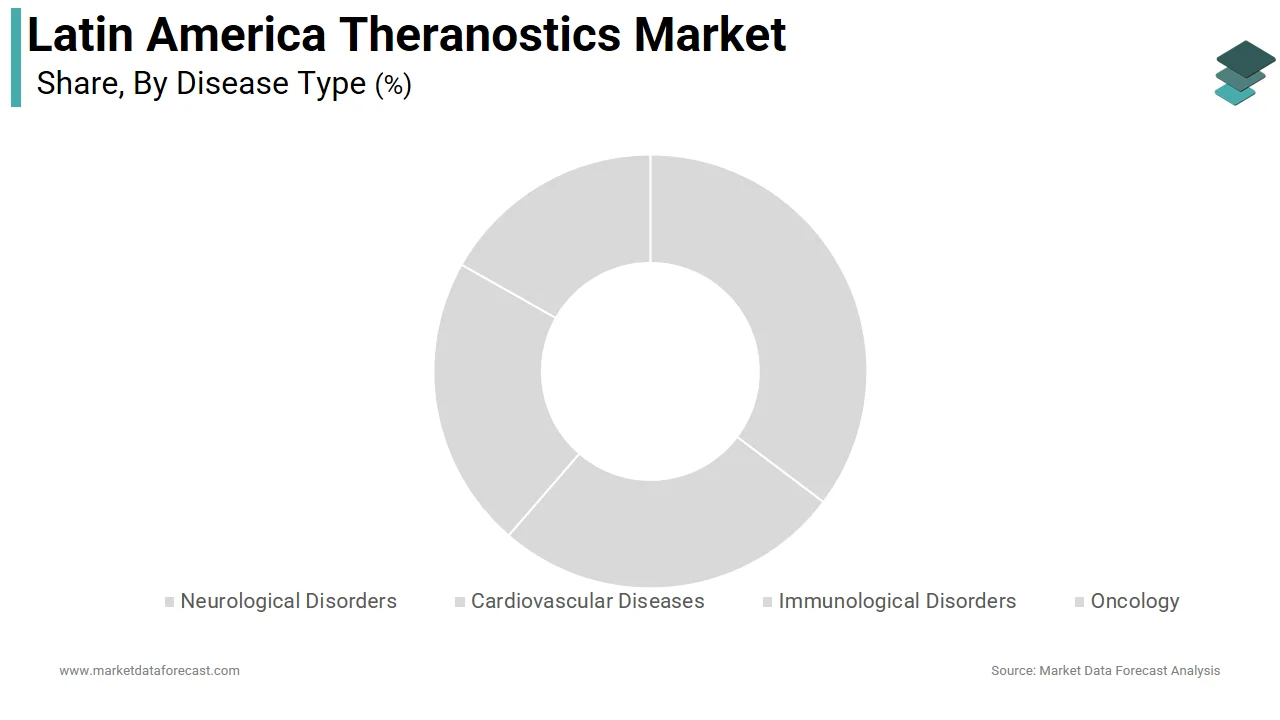
The neurological disorders segment is on the rise and is expected to be the fastest-growing segment in the market as it registers a CAGR of 14.2% from 2026 to 2034. This rapid growth of the segment is propelled by the rising incidence of neurodegenerative diseases and advancements in amyloid imaging. Alzheimer’s disease and Parkinson’s disease are becoming major public health concerns as the population ages, requiring early and accurate diagnosis. According to the study, the number of individuals living with dementia worldwide was approximately 55 million in 2019 and is expected to triple by 2050, reaching over 152 million cases, with the main projected burden concentrated in low- and middle-income regions including Latin America. This demographic shift necessitates robust diagnostic tools for early detection and monitoring. Besides, as per research, the addition of amyloid-targeting PET scans using tracers like Florbetapir substantially enhances diagnostic confidence and accuracy in characterizing Alzheimer's disease pathology compared to traditional clinical evaluation alone. This precision enables timely intervention and better management of disease progression. According to sources, clinical referrals and institutional throughput for functional brain imaging modalities have increased within private neurological practices due to shifting provider adoption. Pharmaceutical companies are investing in novel radiotracers targeting tau proteins and synaptic density, expanding the therapeutic landscape. The growing awareness among neurologists and patients about the benefits of molecular imaging fuels rapid adoption. These factors collectively accelerate the growth of the neurological disorders segment in the theranostics market.
By Technology Insights
The immunohistochemistry segment remained dominant in the Latin America theranostics market and accounted for a substantial share in 2025. This dominance was driven by its critical role in identifying protein expression levels required for selecting appropriate theranostic candidates. Before administering targeted radionuclide therapy, clinicians must confirm the presence of specific receptors such as PSMA or somatostatin receptors on tumor cells. According to studies, immunohistochemistry serves as a foundational gold standard for tissue-based biomarker confirmation, with substantial laboratory integration established across regional pathology facilities in Latin America. This widespread availability ensures that patients can be screened effectively for theranostic eligibility. Moreover, as per research, immunohistochemical staining procedures directed at PSMA exhibit high sensitivity in detecting specialized prostate cancer cell lines to guide subsequent targeted theranostic applications. According to reports, testing volumes for comprehensive diagnostic immunohistochemistry assays are steadily increasing in response to the clinical expansion of precision oncology practices. The cost-effectiveness and reliability of this technology make it indispensable in the diagnostic workflow. Pathologists rely on these results to collaborate with nuclear medicine specialists, ensuring precise patient selection. Consequently, the foundational role of immunohistochemistry in target validation sustains its dominance in the market.
The sequencing segment is likely to experience the fastest CAGR of 16.5% during the forecast period due to the need for comprehensive genomic profiling to identify rare mutations and therapeutic targets. Next generation sequencing allows for the detection of genetic alterations that may influence response to radionuclide therapy or indicate alternative treatment pathways. According to sources, the utilization of clinical next-generation sequencing within molecular oncology centers has expanded significantly across global markets, including Latin America, driven by declining assay costs and broader platform availability. This technology provides deeper insights into tumor heterogeneity, which is crucial for optimizing theranostic outcomes. Additionally, the Journal of Molecular Diagnostics shows that genomic sequencing can identify patients with specific gene fusions or mutations that make them suitable candidates for experimental theranostic trials. According to the study, diagnostic requests for targeted high-throughput genomic sequencing of complex or advanced malignancies have grown consistently within specialist diagnostic institutes. As precision medicine evolves sequencing complements imaging by providing molecular context. Hospitals and research centers are investing in bioinformatics infrastructure to handle large data sets. The ability to tailor therapy based on genetic makeup enhances the efficacy of theranostic interventions, driving rapid growth in this segment.
By End User Insights
In 2025, the hospitals segment held the majority share in the Latin America theranostics market because of its comprehensive infrastructure capability to handle radioactive materials and the multidisciplinary teams required for complex procedures. Theranostics involves both diagnostic imaging and therapeutic administration, which often requires inpatient care monitoring and immediate access to emergency services. According to the International Atomic Energy Agency, the majority of nuclear medicine centers in the Latin American and Caribbean region belong to the private health system and are concentrated in capitals or major cities, facing a persistent shortage of highly specialized personnel to manage complex equipment like cyclotrons and hybrid systems. This centralization ensures safety compliance and quality control. Moreover, as per research, integrated hospital tracking models and multidisciplinary care boards facilitate structured communication among oncologists, radiologists, and nuclear medicine professionals to align patient workflows. According to the reports, public and private hospital groups within regional markets are actively directing capital expenditures toward hybrid imaging acquisitions like PET/CT platforms to expand clinical diagnostic reach. The ability to offer end-to-end care from diagnosis to therapy under one roof enhances efficiency and patient convenience. Reimbursement policies often favor hospital-based procedures due to higher complexity levels. Consequently, the resource intensive nature of theranostics sustains the dominance of hospitals as the primary service providers.
The diagnostics laboratories segment is expected to exhibit a noteworthy CAGR of 13.8% between 2026 and 2034 owing to the decentralization of testing services and partnerships with imaging centers. Independent laboratories are expanding their offerings to include molecular diagnostics and sample processing for theranostic eligibility screening. According to sources, regional laboratory networks have scaled their technical capacities for advanced biomarker testing to address the expanding requirements of patient-specific oncology care. These laboratories collaborate with nuclear medicine clinics to provide pre-therapy assessments such as liquid biopsies and genetic profiling. Additionally, the World Health Organization encourages the development of decentralized diagnostic networks to improve access in remote areas. According to studies, private testing services increasingly implement high-throughput automated platforms to reduce procedural times and increase diagnostic output. The flexibility and lower operational costs of laboratories allow them to serve a broader patient base, including those from smaller clinics. Telemedicine integration enables remote consultation based on laboratory results. These factors contribute to the rapid expansion of diagnostics laboratories in the theranostics ecosystem.
COUNTRY-LEVEL ANALYSIS
Brazil Theranostics Market Analysis
Brazil was the largest country within the Latin American theranostics market and accounted for a substantial share in 2025. The country dominated due to its robust healthcare infrastructure, significant investment in nuclear medicine, and high prevalence of cancer. Moreover, the country benefits from a well-established network of specialized centers and domestic production of radioisotopes. According to research, diagnostic providers serve more than 420 nuclear medicine services across Brazil, drawing on centralized radiopharmacies and localized cyclotron networks to expand advanced diagnostic imaging and theranostic services. This capacity supports a wide range of diagnostic and therapeutic applications. Moreover, the National Cancer Institute of Brazil (INCA) shows that prostate cancer is the second most frequent cancer among men, second only to non-melanoma skin cancer, and represents a primary target for public oncology policies and advanced staging methodologies. According to studies, state healthcare allocations for complex specialized procedures are being reviewed to expand regional access to high-complexity hybrid scanning configurations. Private insurance coverage also plays a crucial role in facilitating access to newer therapies. Research institutions in Sao Paulo and Rio de Janeiro are actively participating in clinical trials for novel radiopharmaceuticals. The presence of local cyclotron facilities reduces dependency on imports. These factors collectively maintain Brazil as the regional leader in theranostics adoption and innovation.
Mexico Theranostics Market Analysis
Mexico is a rapidly growing country in the Latin American theranostics market because of increasing healthcare expenditure and a strong medical tourism sector. The country is leveraging its strategic location and skilled medical workforce to attract international patients seeking advanced cancer treatments. According to research, rising cancer burdens in Mexico are expanding the clinical requirement for precision oncology solutions and modernized diagnostic infrastructure. This trend supports the adoption of theranostic technologies in major urban centers. Additionally, the National Institute of Medical Sciences and Nutrition reports that collaborations with international pharmaceutical companies have facilitated the introduction of new radiopharmaceuticals. According to sources, cross-border medical travel into Mexico includes substantial volumes of international patients seeking specialized care paths, contributing to specialized clinical revenue. Private hospitals in Mexico City and Guadalajara are investing in state-of-the-art imaging equipment to compete globally. Regulatory reforms are streamlining the approval process for innovative therapies. The growing middle class is also contributing to increased demand for high-quality healthcare services. These dynamics position Mexico as a key growth engine in the regional theranostics market.
Argentina Theranostics Market Analysis
Argentina holds a notable position in the Latin America theranostics market owing to its strong tradition in nuclear medicine and scientific research. The country has a long history of isotope production and expertise in radiopharmaceutical development. According to the Argentine Society of Nuclear Medicine, Argentina operates one of the most advanced nuclear medicine networks in the region, with widespread availability of SPECT and PET imaging. This infrastructure supports comprehensive theranostic services. Besides, as per sources, regulatory frameworks and approval evaluation structures for specialized pharmaceuticals in Argentina heavily influence commercial entry timelines for newly developed radiotracers. According to research, state-supported medical distribution programs in Buenos Aires aim to provide subsidized access pathways for advanced metabolic and oncology interventions to improve equity. Local research institutes are collaborating with global partners to develop novel tracers. The economic challenges have led to a focus on cost-effective solutions and local production. Despite financial fluctuations, the technical expertise and institutional commitment sustain market activity. Argentina continues to be a hub for education and training in nuclear medicine for the region.
Chile Theranostics Market Analysis
Chile is expanding moderately within the Latin American theranostics market, backed by a stable economy and high healthcare delivery standards. The country benefits from a well-organized public and private health system that prioritizes technological advancement. According to reports, the deployment of high-resolution hybrid scanning systems across Chilean medical centers has grown to improve molecular diagnostics and support therapeutic monitoring. This trend is fueled by rising cancer incidence and an aging population. Additionally, the Ministry of Health has included certain nuclear medicine procedures in the Explicit Health Guarantees program, ensuring coverage for critical conditions. According to research, thyroid and neuroendocrine tumors represent core disease focuses for targeted molecular imaging and endocrine-specific therapeutic interventions within Chile. Private clinics in Santiago are leading the adoption of Lutetium-177 therapies. The country’s strong regulatory framework ensures patient safety and quality control. International collaborations facilitate knowledge transfer and access to new drugs. Chile’s commitment to evidence-based medicine drives steady market growth.
COMPETITIVE LANDSCAPE
The competition in the Latin America Theranostics Market is characterized by the presence of global pharmaceutical giants, specialized nuclear medicine companies, and emerging local players. Established multinational corporations leverage their extensive research pipelines and financial resources to introduce innovative radiopharmaceuticals and secure regulatory approvals across multiple countries. They compete on the basis of clinical efficacy, safety profiles, and supply chain reliability, which are critical for short-lived isotopes. Local distributors and smaller firms focus on niche markets and logistical efficiency to serve remote areas where infrastructure is limited. Price competition is moderate due to the specialized nature of products, but reimbursement policies significantly influence market access and adoption rates. Collaborative efforts between public and private sectors are becoming common to enhance healthcare infrastructure and training. Regulatory heterogeneity across countries creates barriers to entry, favoring companies with strong local presence and regulatory expertise. The market is evolving rapidly as awareness of precision medicine grows, driving demand for advanced diagnostic and therapeutic solutions. Overall success requires balancing innovation with accessibility and navigating complex regional dynamics effectively.
KEY MARKET PLAYERS
The leading companies operating in the Latin America theranostics market include:
- Abbott Laboratories
- AmeriPath
- Becton, Dickinson and Company
- BIOTEC Laboratories
- Dade Behring
- Dianon Systems
- Novartis AG
- Dynacare Laboratories
- Enterix
- Focus Diagnostics
- Curium Pharma
- Bayer AG
- Pfizer
- Beckman Coulter
TOP PLAYERS IN THE MARKET
- Novartis AG is a global leader in the Latin America Theranostics Market through its advanced radioligand therapy portfolio including Lutathera and Pluvicto. The company leverages its strong clinical data to educate physicians and regulatory bodies across the region on the benefits of targeted radionuclide treatments. Recently, Novartis has expanded its manufacturing capabilities to ensure a stable supply of critical isotopes for Latin American patients. It actively collaborates with local hospitals to establish centers of excellence for neuroendocrine tumor and prostate cancer care. The firm also invests in patient access programs to navigate complex reimbursement landscapes in countries like Brazil and Mexico. By focusing on scientific leadership and infrastructure support, Novartis strengthens its position as a key provider of precision oncology solutions while addressing the unique logistical challenges of the region.
- Bayer AG contributes significantly to the Latin America Theranostics Market via its nuclear medicine division which offers diagnostic agents and therapeutic solutions for thyroid and bone disorders. The company emphasizes innovation in radiochemistry and maintains robust distribution networks to deliver short half-life isotopes efficiently. Recently Bayer has partnered with regional distributors to enhance cold chain logistics ensuring product integrity during transport across vast geographical areas. It also supports training initiatives for nuclear medicine technologists and physicians to improve procedural standards. Bayer engages with health authorities to facilitate regulatory approvals for new radiopharmaceuticals. Its commitment to quality and reliability builds trust among healthcare providers. By integrating diagnostic and therapeutic offerings, Bayer provides comprehensive solutions that address the growing demand for personalized cancer care in Latin America.
- Curium Pharma plays a pivotal role in the Latin America Theranostics Market as a specialized provider of radiopharmaceuticals and nuclear medicine services. The company focuses on ensuring consistent availability of diagnostic and therapeutic isotopes through its global production network. Recently, Curium has strengthened its presence in Brazil and Argentina by establishing local partnerships for distribution and technical support. It invests in research and development to create novel tracers for emerging theranostic applications. Curium also prioritizes regulatory compliance and safety standards to meet the stringent requirements of regional health agencies. The firm offers tailored solutions for hospitals and imaging centers, enhancing operational efficiency. By combining scientific expertise with logistical excellence, Curium supports the expansion of nuclear medicine capabilities and improves patient access to advanced theranostic treatments throughout Latin America.
TOP STRATEGIES USED BY KEY MARKET PARTICIPANTS
Key players in the Latin America Theranostics Market prioritize strategic partnerships with local distributors and healthcare institutions to overcome logistical barriers and ensure reliable supply of short half-life isotopes. Companies invest heavily in physician education and clinical training programs to build expertise in nuclear medicine procedures and expand the base of qualified practitioners. Regulatory engagement is crucial as firms work closely with national health authorities to streamline approval processes for novel radiopharmaceuticals and secure reimbursement coverage. Product portfolio diversification includes developing both diagnostic and therapeutic agents to offer comprehensive solutions for specific cancer types. Infrastructure support involves helping hospitals establish hot labs and imaging centers to facilitate in-house production and administration. Digital health integration enables remote monitoring and data sharing, improving patient management. These multifaceted strategies enable companies to navigate regional complexities, enhance market access, and drive sustainable growth in the evolving theranostics landscape.
MARKET SEGMENTATION
This research report on the Latin America theranostics market has been segmented and sub-segmented into the following categories
By Disease Type
- Neurological Disorders
- Cardiovascular Diseases
- Immunological Disorders
- Oncology
- Others
By Technology
- Polymerase Chain Reaction (PCR)
- Immunohistochemistry
- In Situ Hybridization
- Sequencing
- Others
By End-User
- Hospitals
- Diagnostics Laboratories
- Others
By Country
- Mexico
- Brazil
- Argentina
- Chile
- Rest of Latin America