- Product Description Description
- Table of Contents TOC
- List of Table & Figure LOT
- Get Free Sample PDF Sample PDF
Market Size, 2025
$6.04 BnMarket Estimate, 2026
$6.31 BnMarket Forecast, 2034
$8.90 BnCAGR, 2026–2034
4.40%Executive Summary: Middle East & Africa Alfalfa Hay Market Analysis & Forecast (2026–2034)
- Market Scope: Comprehensive regional agricultural sector report analyzing product classifications (bales, pellets, cubes), animal feed application sectors, country-level adoption dynamics across the Middle East and Africa (KSA, UAE, Egypt, South Africa, etc.), and food security fodder trends.
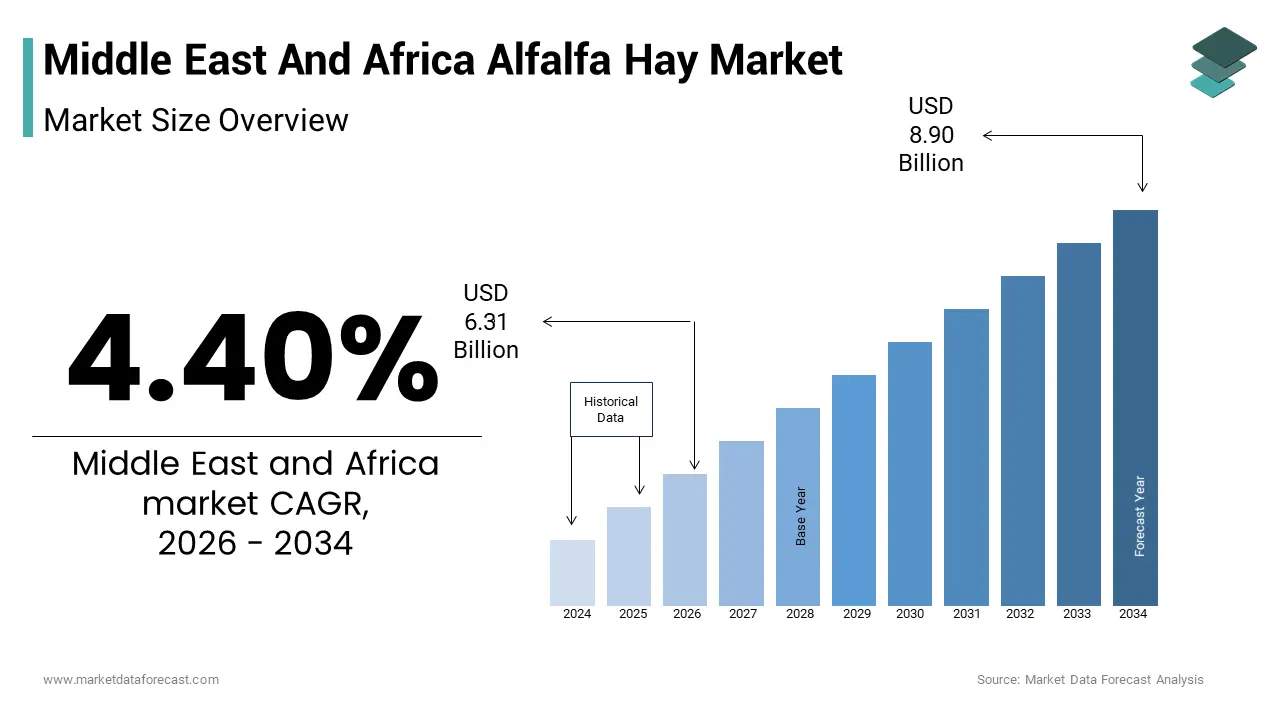
- Market Valuation: Valued at USD 6.04 billion (2025), estimated at USD 6.31 billion (2026), and projected to reach USD 8.90 billion by 2034, registering a compound annual growth rate (CAGR) of 4.40% from 2026 to 2034.
- Primary Growth Drivers: Expansion of commercial dairy and livestock farming operations, government initiatives for food security and strategic fodder reserves, and rising regional demand for protein-rich feed.
Key Market Segment Metrics (2026–2034)
| Category | Leading Segment (2025 Position) | Fastest-Growing Segment |
|---|---|---|
| By Type | Bales (held 52.1% share in 2025 due to cost effectiveness and traditional handling infrastructure) | Pellets (projected at a 6.5% CAGR for automated and urban dairy systems) |
| By Application | Meat and Dairy Animal Feed (held 38.2% share in 2025 for high-yielding livestock) | Horse Feed (projected at a 7.8% CAGR driven by the flourishing equestrian and racing industry) |
| By Country | Saudi Arabia (largest contributor with 30.3% share in 2025 via massive commercial dairy feedlots) | Egypt (strong growth across commercial dairy sectors and traditional farming populations) |
Major Market Players & Competitive Landscape
Market Structure: Fragmented and competitive landscape featuring international exporters, regional domestic producers (such as in Sudan and South Africa), and specialized agricultural traders competing on grading standards, protein content consistency, and logistics optimization.
Key Companies: Al Dahra ACX Global Inc., Alfalfa Monegros S.L., Border Valley Trading, Coaba, Los Venteros S.C., Grupo Osés, Haykingdom Inc., Standlee Hay Company, Green Prairie International, Cubeit Hay Company, Anderson Hay & Grain Inc., and Gruppo Carli.
Middle East and Africa Alfalfa Hay Market Size
The Middle East and Africa alfalfa hay market size was valued at USD 6.04 billion in 2025 and is anticipated to reach USD 6.31 billion in 2026 and USD 8.90 billion by 2034, growing at a CAGR of 4.40% from 2026 to 2034.
The Alfalfa Hay is high quality dried forage, primarily utilized for livestock feed in a region characterized by arid climates and limited natural pastureland. Alfalf, known as the queen of forages is important for sustaining dairy cattle camels and sheep, which are central to the agricultural economies of nations, such as Saudi Arabia, Egypt, and South Africa. Rising demand for milk and meat driven by population growth and urbanization necessitates consistent access to nutrient dense feed. Government initiatives in countries like the United Arab Emirates focus on food security strategies that include stockpiling essential fodder reserves. The logistical infrastructure for handling bulk agricultural commodities varies widely across the continent affecting distribution efficiency. Climate change exacerbates water stress prompting shifts toward sustainable farming practices and alternative feed sources.
MARKET DRIVERS
Expansion Of Commercial Dairy And Livestock Farming Operations
The rapid expansion of commercial dairy and livestock farming operations due to the increasing demand for high quality protein sources to maximize milk and meat yields is majorly propelling the growth of the Middle East and Africa alfalfa hay market. As per the Food and Agriculture Organization of the United Nations, the number of large-scale dairy farms in the Gulf Cooperation Council countries has increased by 25% over the last decade driven by government incentives for food self-sufficiency. These intensive farming systems require consistent and nutrient rich feed to maintain optimal health and productivity of high yielding breeds, such as Holstein Friesian cows. Alfalfa hay provides the necessary crude protein and fiber balance that inferior forages cannot match leading to higher milk production rates and better reproductive performance. In countries like Saudi Arabia and Qatar national food security strategies prioritize the development of modern livestock facilities, which rely heavily on imported alfalfa due to domestic water restrictions. The shift from traditional subsistence farming to commercial enterprises creates a structured demand for standardized feed products. Additionally, the growing camel racing and breeding industry in the region utilizes premium alfalfa to ensure peak physical condition of the animals. The economic viability of these farms depends on efficient feed conversion ratios making alfalfa an indispensable input. Rising consumer income levels in urban centers further boost demand for dairy products reinforcing the need for robust feed supply chains.
Government Initiatives For Food Security And Strategic Reserves
Government initiatives focused on food security and the establishment of strategic fodder by ensuring stable supply amidst global volatility is also leveraging the growth of the Middle East and Africa alfalfa hay market. Many nations in the region recognize their dependence on food imports and have implemented policies to mitigate risks associated with supply chain disruptions. Saudi Arabia has invested billions in agricultural projects abroad and domestic storage facilities to secure essential feed supplies including alfalfa hay. These government led efforts create a consistent baseline demand for alfalfa regardless of short term fluctuations. In Africa countries like Egypt and Morocco support local farmers through subsidies for feed imports to stabilize livestock production costs and prevent inflation in meat and dairy prices. The African Union Agenda 2063 emphasizes agricultural transformation and resilience encouraging member states to invest in feed security infrastructure. Public private partnerships facilitate the development of port infrastructure and warehousing capabilities necessary for handling large volumes of imported hay. Regulatory frameworks often mandate minimum reserve levels for critical agricultural inputs ensuring that livestock sectors remain operational during crises. These policy measures not only support domestic producers but also attract foreign investment in the feed logistics sector.
MARKET RESTRAINTS
Severe Water Scarcity Limiting Domestic Production
The severe water scarcity by limiting the feasibility of domestic cultivation and forcing reliance on expensive imports is also hindering the growth of the Middle East and Africa alfalfa hay market. Alfalfa is a water intensive crop requiring approximately 900 to 1200 millimeters of water per growing season, which is unsustainable in arid regions facing acute drought conditions. Governments in countries like Saudi Arabia have phased out domestic alfalfa production to preserve dwindling groundwater reserves leading to a complete dependence on international suppliers. This shift increases vulnerability to global price fluctuations and supply chain disruptions. In Sub Saharan Africa, irregular rainfall patterns and lack of irrigation infrastructure hinder consistent local production forcing farmers to purchase imported hay at premium prices. The high cost of desalinated water for agricultural use further erodes profit margins for any remaining local growers. Climate change projections indicate worsening drought frequency, which will further constrain water availability for agriculture. The environmental cost of transporting heavy bulk fodder across long distances also raises sustainability concerns. Farmers face higher input costs due to import tariffs and logistics fees which are passed on to consumers.
Logistical Infrastructure Deficiencies And High Transport Costs
The logistical infrastructure deficiencies and high transport costs by increasing the final price of imported fodder and causing supply delays is additionally declining the growth of the Middle East and Africa alfalfa hay market. The region lacks adequate port capacity and inland transportation networks to handle the massive volumes of bulk hay required for livestock feeding. Many African countries rank low in infrastructure quality leading to prolonged clearance times and higher handling fees at ports. In landlocked nations, such as Ethiopia and Sudan the cost of transporting alfalfa from coastal ports to interior farms can double the original purchase price. Poor road conditions and limited rail connectivity result in damage to hay bales during transit reducing quality and nutritional value. Storage facilities are often insufficient or poorly maintained leading to spoilage due to moisture and pest infestation. These inefficiencies create bottlenecks that disrupt the steady flow of feed to farms particularly during peak demand seasons. Smallholder farmers are disproportionately affected as they lack the economies of scale to negotiate favorable shipping rates or invest in private storage. The reliance on informal trading channels further complicates quality control and pricing transparency. Geopolitical tensions in certain areas can close border crossings and disrupt trade routes exacerbating supply shortages. The high cost of logistics reduces the competitiveness of imported alfalfa compared to lower quality local alternatives.
MARKET OPPORTUNITIES
Development Of Hydroponic Fodder Systems
The development of hydroponic fodder systems by offering a water efficient alternative to traditional field grown forage is creating new opportunities for the growth of the Middle east aand Africa alfalfa hay market. Hydroponics allows for the cultivation of fresh green fodder using 90% less water than conventional methods making it ideal for arid regions. This technology appeals to commercial dairy farmers seeking to reduce dependency on volatile import markets and lower feed costs. Governments in the Gulf region are increasingly supporting pilot projects and providing grants for adopting smart agriculture technologies. The ability to produce fresh fodder locally enhances milk quality and animal health while reducing the carbon footprint associated with long distance transportation. Startups and agri tech companies are entering the market with modular hydroponic units tailored for small and medium sized farms. The integration of Internet of Things sensors enables precise monitoring of nutrient levels and growth conditions optimizing yield. As awareness of water conservation grows more farmers are likely to adopt these systems complementing imported hay with fresh greens. The scalability of hydroponic solutions allows for deployment in urban and peri urban areas reducing logistics costs. This innovation aligns with national sustainability goals and food security strategies creating a favorable regulatory environment.
Expansion Of Trade Agreements With Major Exporting Nations
The expansion of trade agreements with major alfalfa exporting nations by stabilizing supply chains and reducing tariffs is another factor to level up new opportunities for the growth of the Middle East and Africa alfalfa hay market. Bilateral and multilateral trade deals facilitate smoother customs procedures and lower import duties making alfalfa more affordable for regional buyers. Countries like Egypt and Jordan have signed memorandums of understanding with key suppliers to ensure priority access during global shortages. These agreements often include provisions for technical assistance and quality certification harmonization which reduces rejection rates at ports. The African Continental Free Trade Area aims to enhance intra-regional trade although current focus remains on importing from outside the continent. Strengthening ties with reliable exporters helps mitigate risks associated with geopolitical instability and climate induced crop failures in source regions. Long term contracts resulting from these agreements provide price stability for farmers and investors in the livestock sector. The diversification of supply sources prevents over reliance on a single country enhancing resilience. Trade facilitation measures such as digital documentation and expedited clearance processes improve efficiency and reduce spoilage.
MARKET CHALLENGES
Climate Change Induced Crop Volatility In Exporting Regions
Climate change induced crop volatility in major alfalfa exporting regions by disrupting supply consistency and driving price spikes is a quite challenge for the growth of the Middle East and Africa alfalfa hay market. Droughts and extreme weather events in key producing areas, such as California and Southern Europe directly impact harvest yields and quality. These shortages force importing nations to compete for limited stocks driving up prices and straining national budgets. The unpredictability of weather patterns makes long term planning difficult for livestock farmers who rely on stable feed costs. Heatwaves can also degrade the nutritional quality of hay during curing and storage reducing its value. The reliance on a few geographic sources for global alfalfa supply creates systemic vulnerability to regional climate shocks. Insurance costs for shipments increase as risks escalate further adding to the financial burden. Importers may face sudden contract cancellations or delays if exporters prioritize domestic needs during crises. The lack of diversified sourcing options exacerbates the impact of these disruptions. Adapting to this challenge requires investing in alternative feed sources and building larger strategic reserves which entail significant capital expenditure.
Geopolitical Instability And Trade Route Disruptions
The geopolitical instability and trade route disruptions by threatening the secure flow of essential agricultural imports is also to impede the growth of the Middle East and Africa alfalfa hay market. Conflicts and political tensions in strategic maritime chokepoints can delay shipments and increase insurance premiums. The attacks on commercial vessels in the Red Sea have forced ships to reroute around Africa adding weeks to delivery times and significantly increasing freight costs. These disruptions affect the timely arrival of perishable goods like alfalfa hay, which can suffer quality degradation if stored improperly for extended periods. Political instability in neighboring African countries can close land borders hindering cross border trade and distribution. Sanctions and trade embargoes imposed on certain nations restrict access to global countries and financial systems. The uncertainty discourages long term investment in logistics infrastructure and storage facilities. Governments may impose emergency export bans or import restrictions in response to crises creating further market volatility. The reliance on fragile supply chains makes the region vulnerable to external shocks beyond its control. Diversifying trade routes and developing regional production capabilities are complex and costly solutions. The risk of supply interruption forces buyers to maintain higher inventory levels tying up capital.
REPORT COVERAGE
| REPORT METRIC | DETAILS |
| Market Size Available | 2025 to 2034 |
| Base Year | 2025 |
| Forecast Period | 2026 to 2034 |
| CAGR | 4.40% |
| Segments Covered | By Type, Application, and Region. |
| Various Analyses Covered | Global, Regional & Country Level Analysis, Segment-Level Analysis, DROC, PESTLE Analysis, Porter’s Five Forces Analysis, Competitive Landscape, Analyst Overview of Investment Opportunities |
| Regions Covered | KSA, UAE, Israel, rest of GCC countries, South Africa, Ethiopia, Kenya, Egypt, Sudan, rest of MEA |
| Market Leaders Profiled | Alfalfa Monegros, S.L., Coaba, Los Venteros S.C., Grupo Osés, Haykingdom Inc., STANDLEE HAY COMPANY, Green Prairie International, Cubeit Hay Company, M&C Hay, Glenvar Hay, McCracken HAY COMPANY, SL Follen Company, Anderson Hay & Grain Inc., Border Valley, Knight Ag Sourcing, Hay USA, Bailey Farms, Riverina Pty Ltd, and Gruppo Carli. |
SEGMENT ANALYSIS
By Type Insights
The bales segment was the largest by holding 52.1% of the Middle East And Africa Alfalfa Hay Market share in 2025 due to their cost effectiveness ease of handling and widespread acceptance among livestock farmers. The established infrastructure for baling transporting and storing hay, which aligns with traditional farming practices across the region. Bales allow for efficient stacking and ventilation which are critical for maintaining quality in hot and humid climates common in parts of Africa and the Middle East. Large square bales are particularly preferred by commercial dairy farms because they can be easily mechanized for feeding reducing labor costs. The lower processing cost compared to pellets or cubes makes bales more affordable for smallholder farmers who dominate the agricultural landscape in countries like Ethiopia and Sudan. Logistics networks in ports, such as Jeddah and Djibouti are optimized for handling bulk baled cargo ensuring smooth import operations. Farmers appreciate the flexibility of bales, which can be fed directly or chopped as needed. The visual inspection of bales allows buyers to assess quality before purchase building trust in transactions. While pellets offer convenience the higher energy costs associated with production limit their adoption in price sensitive markets. The versatility of bales for various animal types including cattle camels and horses ensures consistent demand.
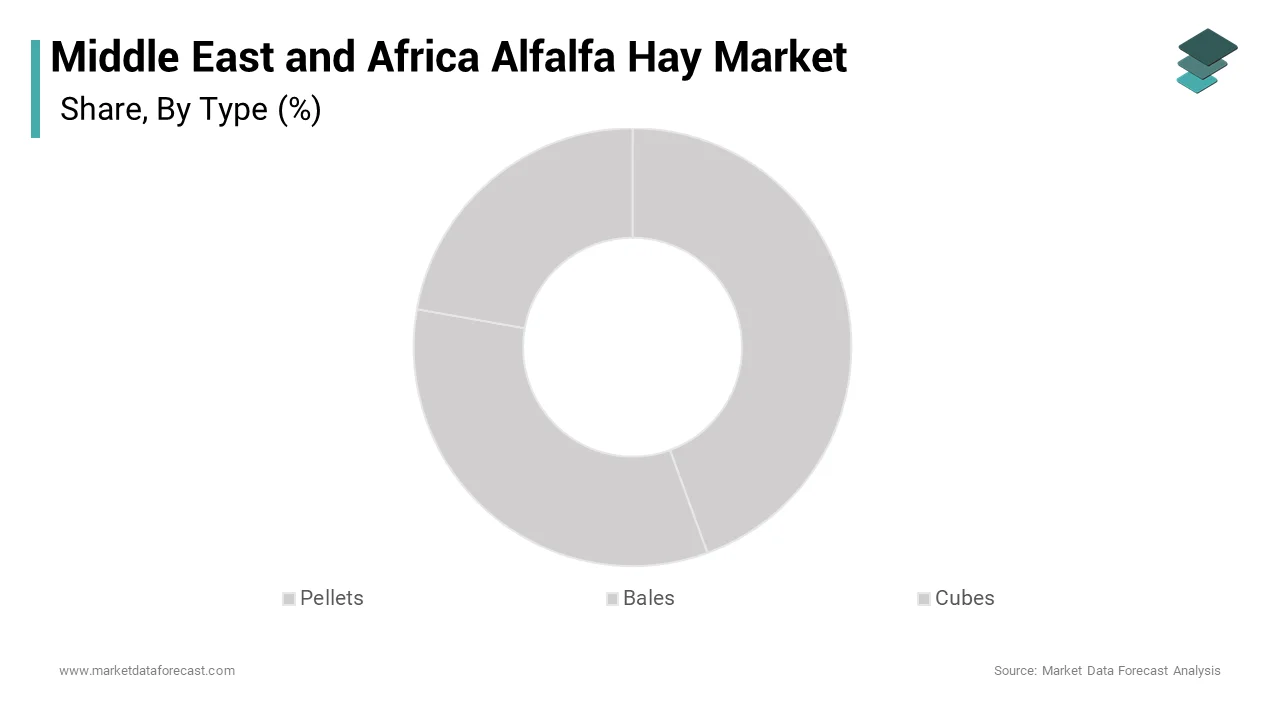
The pellets segment is likely to grow at an anticipated CAGR of 6.5% from 2026 to 2034 with the increasing adoption of intensive livestock farming systems that require precise and waste free feeding solutions. Pellets are easier to transport and store due to their higher density and reduced risk of spoilage or pest infestation. In urban and peri urban dairy farms, where space is limited pellets offer a convenient storage solution. The uniformity of pellets ensures consistent nutrient intake for animals leading to better health and productivity outcomes. Governments in Gulf Cooperation Council countries are promoting modern farming techniques that favor processed feed formats to enhance food security efficiency. The rise of automated feeding systems in smart farms further drives demand for pellets which flow smoothly through machinery. Although initial costs are higher the long term benefits of reduced labor and improved feed conversion ratios justify the investment. Technological advancements in pelleting processes have improved durability and reduced fines making the product more appealing.
By Application Insights
The meat and dairy animal feed segment was accounted in holding 38.2% of the Middle East And Africa Alfalfa Hay Market share in 2025 due to the role of alfalfa in supporting high yielding livestock production. The domination of this segment is driven by the expanding dairy industry in the Gulf region and the growing demand for meat in Sub Saharan Africa. Alfalfa provides essential protein and fiber that significantly boost milk yields and weight gain in cattle. In countries like Saudi Arabia and Egypt large commercial dairy farms rely heavily on imported alfalfa to maintain production levels throughout the year. The nutritional profile of alfalfa supports rumen health and improves digestibility, which is vital for intensive farming systems. Government initiatives to reduce reliance on milk imports have spurred investments in local dairy infrastructure increasing feed consumption. The camel dairy sector in the Arabian Peninsula also contributes to demand as alfalfa is a preferred feed for maintaining camel health and milk quality. Rising urbanization and income levels drive higher per capita consumption of dairy products reinforcing the need for quality feed. Beef production in countries like Sudan and Ethiopia utilizes alfalfa to improve carcass quality and market value. The economic returns from dairy and meat production justify the premium price of alfalfa compared to other forages.
The horse feed segment is expected to grow at a fastest CAGR of 7.8% from 2026 to 2034 with the flourishing equestrian sports industry and the cultural significance of horse ownership in the region. The Middle East hosts some of the world most prestigious horse racing and show jumping events driving demand for premium feed. Alfalfa is highly valued for its high calcium content and energy density, which support muscle development and endurance in performance horses. Wealthy individuals in countries like the United Arab Emirates and Qatar invest heavily in thoroughbred breeding and training facilities requiring top quality nutrition. The rising popularity of recreational riding and polo clubs among the middle class further expands the customer base. Owners are increasingly aware of the health benefits of alfalfa for preventing gastric ulcers and maintaining coat condition. Specialized equine feed formulations containing alfalfa are gaining traction in veterinary recommendations. The export of high value horses from the region necessitates strict adherence to international feeding standards which favor alfalfa. Social media and celebrity influence have elevated the status of horse care encouraging owners to spare no expense on diet.
REGIONAL ANALYSIS
Saudi Arabia Alfalfa Hay Market Analysis
Saudi Arabia alfalfa hay market was the largest contributor by occupying 30.3% of the share in 2025 owing to its massive commercial dairy sector and strategic food security initiatives. Saudi Arabia imports millions of tons of alfalfa annually to compensate for the ban on domestic green fodder cultivation aimed at preserving groundwater. The Kingdom largest dairy companies operate extensive feedlots that require consistent high-quality imports. Government subsidies for feed imports help stabilize costs for local producers. The vision 2030 plan emphasizes sustainable agriculture leading to investments in overseas farming projects to secure supply chains. Port infrastructure in Jeddah and Dammam facilitates efficient handling of bulk shipments. The market is characterized by long term contracts with major exporters from the United States and Spain. Quality standards are strictly enforced to ensure optimal livestock performance. The growing interest in camel racing and breeding adds to the diverse demand profile.
United Arab Emirates Alfalfa Hay Market Analysis
The United Arab Emirates alfalfa hay market growth was ranked second by holding 15.3% of share in 2025 with a highly advanced dairy industry and a thriving equestrian sector. The UAE has one of the highest per capita milk consumption rates globally necessitating robust feed supplies. The country focuses on high tech farming solutions, including hydroponics but still relies heavily on imported alfalfa for large scale operations. The presence of world class horse racing facilities in Dubai and Abu Dhabi creates substantial demand for premium hay. Government policies support food security through strategic reserves and diversified sourcing strategies. The UAE acts as a re export hub for alfalfa to other Gulf countries leveraging its superior logistics infrastructure. High disposable incomes allow farmers and pet owners to purchase top tier products.
Egypt Alfalfa Hay Market Analysis
Egypt alfalfa market growth is likely to grow at a fastest CAGR during the forecast period with a large traditional livestock population and growing commercial dairy farms. Egypt has one of the largest cattle populations in Africa driving consistent demand for fodder. Domestic production of berseem clover is insufficient during certain seasons leading to increased alfalfa imports. The government supports the dairy sector to reduce dependence on powdered milk imports. Economic challenges and currency fluctuations impact purchasing power but essential feed imports remain prioritized. Port facilities in Alexandria and Sokhna handle significant volumes of agricultural imports. Partnerships with international suppliers help ensure steady availability.
South Africa Alfalfa Hay Market Analysis
South Africa alfalfa hay market is to have significant growth opportunities in next coming years. Local production of lucerne meets a portion of demand but imports are required for premium grades and off season supply. The dairy and beef sectors are well developed utilizing advanced feeding regimes. The country serves as a gateway for feed distribution to neighboring landlocked nations. Infrastructure quality supports efficient logistics and storage. Climate variability affects local yields prompting reliance on imports during droughts. Consumer demand for high quality meat and dairy products sustains feed requirements. Regulatory frameworks ensure biosecurity and quality control.
COMPETITIVE LANDSCAPE
The Middle East And Africa Alfalfa Hay Market exhibits a fragmented competitive landscape characterized by the presence of both international exporters and regional producers vying for dominance. Major global players like Al Dahra ACX Global Inc and Alfalfa Monegros SL compete alongside specialized traders such as Border Valley Trading and Anderson Hay & Grain Inc to capture significant portions of import demand. Sudan emerges as a key production hub due to its geographical advantages and access to Nile River water resources attracting substantial foreign direct investment from Gulf states. South Africa also plays a vital role by exporting high quality Lucerne hay to meet shortages in the United Arab Emirates and other neighboring countries. The market dynamics are influenced by fluctuating prices driven by climate conditions drought cycles and global trade policies affecting supply availability. Competition intensifies as companies strive to offer superior nutritional content and consistent grading standards to discerning buyers in the dairy and equine sectors. Local producers face challenges from imported products that often benefit from economies of scale and advanced processing technologies. However, regional actors leverage shorter supply chains and lower transportation costs to maintain competitiveness in domestic markets. Strategic alliances between producers and distributors help streamline operations and enhance market reach across multiple countries. Innovation in packaging and preservation techniques further differentiates offerings in a market where product freshness and quality are paramount.
KEY MARKET PLAYERS
Some of the key players dominating the market are
- Alfalfa Monegros
- S.L., Coaba
- Los Venteros S.C
- Grupo Osés
- Haykingdom Inc
- STANDLEE HAY COMPANY
- Green Prairie International
- Cubeit Hay Company
- M&C Hay
- Glenvar Hay
- McCracken HAY COMPANY
- SL Follen Company
- Anderson Hay & Grain Inc.
- Border Valley
- Knight Ag Sourcing
- Hay USA
- Bailey Farms
- Riverina Pty Ltd
- Gruppo Carli.
Top Players in the Contribution
- Al Dahra ACX Global Inc stands as a dominant force in the regional landscape by leveraging its extensive agricultural operations across Sudan and other strategic locations. The company has integrated vertical farming practices that ensure consistent supply chains for high quality alfalfa hay to meet the rising demand from dairy and livestock sectors in Gulf Cooperation Council countries. Al Dahra focuses on sustainable irrigation techniques and advanced harvesting technologies to maintain superior nutritional content in its products. This strategic expansion allows the company to export value added live calves and meat products alongside traditional hay exports. The organization continues to invest in local dairy farming projects to create a comprehensive ecosystem that supports both feed production and animal husbandry.
- Alfalfa Monegros SL contributes significantly to the market by providing premium dehydrated alfalfa products that cater to the specific needs of high value livestock. The company maintains strict quality controls throughout its production process starting from variety selection and seeding to final transformation into pellets or bales. Its facilities in Europe process millions of tons annually with a substantial portion directed toward international countries, including the Middle East and Africa. Alfalfa Monegros emphasizes integral control mechanisms that guarantee nutritional consistency and food safety for animals consuming their products. The company offers diverse product formats, such as big bags pellets in bulk and compressed bales to accommodate varying customer requirements. Recent actions involve enhancing research and development capabilities to improve crop yields and adapt to changing environmental conditions.
- Border Valley Trading plays a crucial role by supplying premium alfalfa hay that meets rigorous grading standards for crude protein and fiber content. The company tests all alfalfa stacks for key nutritional metrics ensuring that customers receive products with optimal feed values for beef dairy cattle and equine use. Border Valley has established itself as a trusted exporter by focusing on sustainability and environmental benefits associated with alfalfa cultivation. Their recent strategies include strengthening logistics networks to facilitate efficient delivery to international destinations including ports in the Middle East and Africa. The company promotes the ecological advantages of alfalfa such as carbon sequestration and soil health improvement which appeal to environmentally conscious buyers. These efforts enable the company to compete effectively in a fragmented market where quality consistency and reliable supply are important factors for customer retention and business growth in the region.
Top Strategies Used by the Key Market Participants
Key players in the Middle East And Africa Alfalfa Hay Market primarily focus on vertical integration strategies to control production quality and reduce dependency on external suppliers. Companies invest heavily in advanced irrigation technologies to mitigate water scarcity challenges prevalent in arid regions while maximizing crop yields per hectare. Strategic partnerships with local farmers and government entities help secure land access and regulatory support for large scale agricultural projects. Diversification of product offerings including pellets cubes and bales allows participants to cater to varied customer preferences and logistical constraints. Export oriented growth models dominate as firms target high demand markets in Gulf Cooperation Council countries where local forage production remains limited. Investment in precision agriculture tools such as drone monitoring and soil sensors enhances operational efficiency and reduces input costs significantly. Supply chain optimization through improved storage facilities and transportation networks ensures timely delivery and minimizes post-harvest losses. Brand building initiatives emphasize nutritional superiority and sustainability credentials to differentiate products in competitive tender processes. Collaborative research efforts with agricultural institutions drive innovation in drought resistant varieties and harvesting techniques.
MARKET SEGMENTATION
This research report on the Middle East and Africa alfalfa hay market is segmented and sub-segmented into the following categories.
By Type
- Pellets
- Bales
- Cubes
By Application
- Meat/Dairy Animal Feed
- Poultry Feed
- Horse Feed
- Other
By Country
- KSA
- UAE
- Israel
- Rest Of GCC Countries
- South Africa
- Ethiopia
- Kenya
- Egypt
- Sudan
- Rest Of MEA