- Product Description Description
- Table of Contents TOC
- List of Table & Figure LOT
- Get Free Sample PDF Sample PDF
Market Size, 2025
$0.19 BnMarket Estimate, 2026
$0.20 BnMarket Forecast, 2034
$0.35 BnCAGR, 2026–2034
7%Middle East and Africa Automatic Pill Dispenser Market Size, Growth, Trends & Forecast (2026–2034)
The Middle East and Africa automatic pill dispenser market size was valued at USD 0.19 billion in 2025, is estimated to reach USD 0.20 billion in 2026, and is projected to scale up to USD 0.35 billion by 2034, registering a compound annual growth rate (CAGR) of 7.00% during the forecast period from 2026 to 2034. Driven by a rapidly growing senior population, increasing prevalence of chronic conditions like cardiovascular disorders, and rising adoption of home care and hospital automation technologies, the market continues to expand steadily across the region.
Key Executive Metrics (At-a-Glance)
- 2025 Base Valuation: USD 0.19 Billion
- 2026 Current Valuation: USD 0.20 Billion
- 2034 Forecast Valuation: USD 0.35 Billion
- Compound Annual Growth Rate (CAGR): 7.00% (2026–2034)
- Dominant Type Segment: Centralized & Decentralized Automated Dispensing Systems (efficient clinical inventory management)
- Dominant Application Segment: Hospital Pharmacy & Home Healthcare (essential medication adherence hubs)
- Dominant Age Cohort: 65 Years and Above (primary demographic requiring complex, multi-medication regimens)
- Dominant Region: Middle East (leading regional share driven by accelerating geriatric demographics and advanced healthcare infrastructure in nations like KSA, UAE, and Israel)
Core Market Drivers
- Aging Demographics & Chronic Diseases: Growing global and regional senior populations with high prevalence of cardiovascular disease, diabetes, and neurological disorders requiring strict medication schedules.
- Medication Error Reduction: Increasing implementation of automated dispensing systems in hospitals to streamline drug distribution, real-time inventory updates, and minimize human error.
- Home Care Expansion: Surging demand for decentralized and smart pill management solutions to assist elderly patients or individuals with physical disabilities and dementia.
Primary Market Restraints & Challenges
- High Installation Costs: Substantial capital investments required for advanced automated dispensing machinery and smart infrastructure setup.
- Low Awareness & Adoption Hurdles: Limited user awareness regarding system availability in certain emerging MEA sub-regions alongside restricted local healthcare investments.
Middle East and Africa Automatic Pill Dispenser Market Segmentation Breakdown
| Segment Category | Leading Sub-Segment (2025 Base) | Fastest-Growing Sub-Segment (2026–2034) |
|---|---|---|
| By Type | Centralized Automated Dispensing Systems & Carousels | Robots / Robotic Automated Dispensing Systems |
| By Application | Hospital Pharmacy | Home Healthcare & Retail Pharmacy |
| By Age | 65–74 years & 75–84 years | 85 years and above |
| By Indication | Old Age & Cardiovascular / Chronic Diseases | Dementia & Parkinson’s Disease |
| By Country | Middle East (KSA, UAE, Israel) | African Region (South Africa, Egypt, and expanding healthcare hubs) |
Major Industry Players Profiled
Key enterprises shaping the competitive Middle East and Africa automatic pill dispenser market include Swisslog Holdings AG, Becton, Dickinson and Company, McKesson Corporation, Cerner Corporation, Yuyama Co., Ltd, Baxter International Inc., Omnicell Inc., Illinois Tool Works, Allscripts Healthcare Solutions, Inc., Capsa Healthcare, ScriptPro LLC, Meditech, Talyst, Inc., Accu-Chart Plus Healthcare System, Optum Inc., Pearson Medical Technologies, and Constellation Software Inc..
Middle East and Africa Automatic Pill Dispenser Market Size
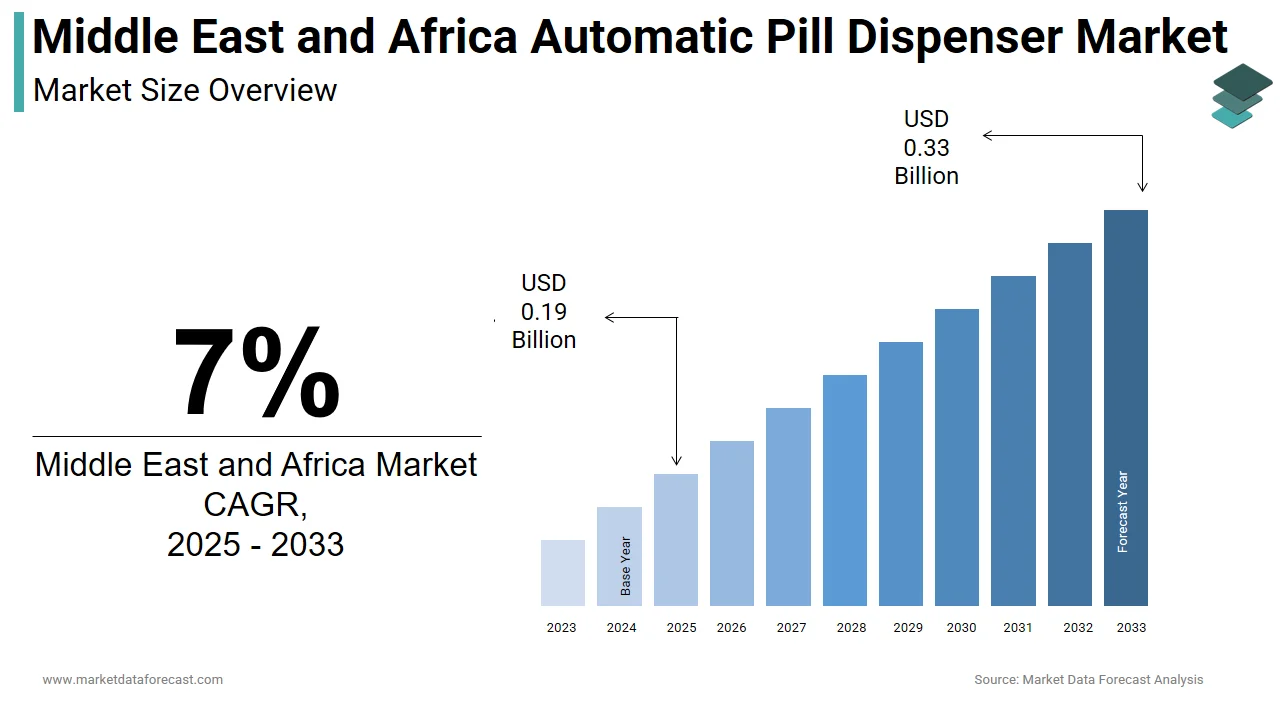
The Middle East and Africa automatic pill dispenser market was valued at USD 0.19 billion in 2025, is estimated to reach USD 0.20 billion in 2026, and is projected to reach USD 0.35 billion by 2034, growing at a CAGR of 7% from 2026 to 2034.
MARKET DRIVERS
Aging Population and Advancements in Pill Dispenser Technology
Factors such as the increasing incidence of diseases and the growth of the senior population who are likely to take medication for their well-being are expected to drive the market growth during the analysis period. The automatic pill dispenser is mainly used in medical management, drug counting, and stock recall by nurses and pharmacists. An automatic pill dispenser is useful for patients who have the tendency to forget to take medicine on time and who take a lot of medicine in a day, especially elderly patients with chronic illnesses. The prevalence of chronic diseases with increasing the number of complications in treatment regimens will drive the market in the Middle East and Africa region. According to the 2020 US report, there were 728 million people in the world aged 65 and over, and it is also expected to increase by 1.5 billion by 2040. The increasing prevalence of cardiovascular disorders and the growing population aging are the key factors driving the automatic pill dispenser market. According to the report released by the Centers for Disease Control and Prevention (CDC) in 2017, nearly 92.1 million adults suffered from at least one type of cardiovascular disease.
Several other factors, such as advancements in the automatic pill dispenser, an increasing number of people with disabilities, untapped emerging markets, increasing regulatory approvals, and increasing investments in-home care facilities, are also expected to drive the growth of the market. According to the World Health Organization Estimates 2022, the top ten global causes of disability-adjusted life years in 2019 were ischemic heart disease, neurological disorders, respiratory infections, diarrhea, traffic accidents, chronic obstructive pulmonary disease, diabetes mellitus, tuberculosis, and congenital anomalies. In addition, the automatic pill dispenser is adopted in hospitals as an advanced system responsible for drug distribution management that decreases human errors and helps with central inventory in real-time with accurate updates on the clinical case records.
MARKET RESTRAINTS
High Installation Costs and Low Awareness
The high cost of installation is expected to restrain the growth of the market. In addition, lack of awareness of system availability and low investment are other significant challenges in the Middle East and Africa automatic pill dispenser market.
REPORT COVERAGE
| REPORT METRIC | DETAILS |
| Market Size Available | 2025 to 2034 |
| Base Year | 2025 |
| Forecast Period | 2026 to 2034 |
| Segments Covered | By Type, Application, Age, Indication, and Region. |
| Various Analyses Covered | Global, Regional and Country-Level Analysis, Segment-Level Analysis, Drivers, Restraints, Opportunities, Challenges; PESTLE Analysis; Porter’s Five Forces Analysis, Competitive Landscape, Analyst Overview of Investment Opportunities |
| Countries Covered | KSA, UAE, Israel, rest of GCC countries, South Africa, Ethiopia, Kenya, Egypt, Sudan, rest of Middle East and Africa |
| Market Leaders Profiled | Swisslog Holdings AG, Dickinson and Company, McKesson Corporation, Becton, Cerner Corporation, Yuyama Co., Ltd, Baxter International Inc., Omnicell Inc., Illinois Tool Works Allscripts Healthcare Solutions, Inc., Capsa Healthcare, ScriptPro LLC, Meditech, Talyst, Inc., Accu-Chart Plus Healthcare System, Optum Inc., Pearson Medical Technologies and Constellation Software Inc. |
REGIONAL ANALYSIS
The Middle East dominated Middle East and Africa automatic pill dispenser market due to the increasing geriatric population in the region. The population in the Middle East and Africa region is expected to exceed the 100 million mark by 2060. In addition, according to the WHO, Africa will have more than 20% of the total population to be 65 years of age or older by 2030. Additionally, the increasing prevalence of chronic disorders such as cardiovascular disorders, cancer, diabetes, and others is driving the regional markets in Saudi Arabia, United Arab Emirates, Qatar, Kuwait, and Egypt. For example, Egypt had the highest cancer death rate in the Middle East and Africa region, although the number of new cases is lesser when compared to Israel. An estimated 118 people died of cancer per 100,000 people in Egypt in 2019.
Over the studied period, the African region is estimated to have good growth in the Middle East and Africa automatic pill dispenser market due to technological advancements, improving healthcare infrastructure, and the availability of funding opportunities in research and innovation, which will support market growth in this region.
KEY MARKET PLAYERS
A few of the leading companies operating in the Middle East and Africa automatic pill dispenser market profiled in this report are Swisslog Holdings AG, Dickinson and Company, McKesson Corporation, Becton, Cerner Corporation, Yuyama Co., Ltd, Baxter International Inc., Omnicell Inc., Illinois Tool Works Allscripts Healthcare Solutions, Inc., Capsa Healthcare, ScriptPro LLC, Meditech, Talyst, Inc., Accu-Chart Plus Healthcare System, Optum Inc., Pearson Medical Technologies and Constellation Software Inc.
MARKET SEGMENTATION
This research report on the Middle East and Africa automated pill dispenser market has been segmented & sub-segmented into the following categories.
By Type
-
Carousels
- Centralized Automated Dispensing System
- Robots/Robotic Automated Dispensing System
- Ward-Based
- Decentralized Automated Dispensing
- Automated Unit Dose
- Pharmacy-Based
By Application
- Home Healthcare
- Hospital Pharmacy
- Retail Pharmacy
By Age
- 38-64 years
- 65-74 years
- 75-84 years
- 85 years and above
By Indication
- Visual Impairment
- Old Age
- Dementia
- Learning Dementia
- Physical Disability
- Mental Health excluding dementia
- Parkinson’s disease
- Other Diseases
By Country
- KSA
- UAE
- Israel
- rest of GCC countries
- South Africa
- Ethiopia
- Kenya
- Egypt
- Sudan
- rest of Middle East and Africa