- Product Description Description
- Table of Contents TOC
- List of Table & Figure LOT
- Get Free Sample PDF Sample PDF
Market Size, 2025
$37.32 BnMarket Estimate, 2026
$40.31 BnMarket Forecast, 2034
$74.60 BnCAGR, 2026–2034
8%Executive Summary: Middle East and Africa (MEA) Automotive Aftermarket Market Analysis
- Market Scope: Comprehensive evaluation of the MEA automotive aftermarket sector covering product lines, distribution frameworks, application streams, country-level adoption, supply chain digitalization, and local manufacturing trends.
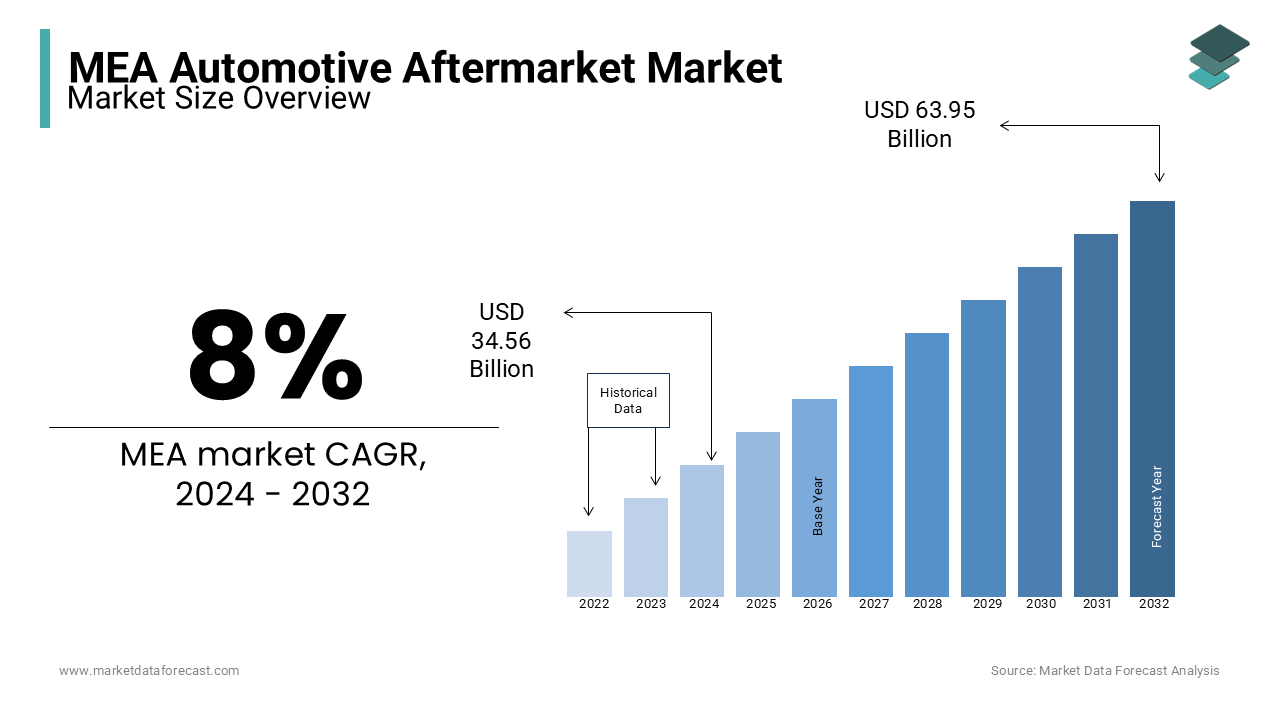
- Market Valuation: Valued at USD 37.32 billion in 2025, estimated at USD 40.31 billion in 2026, and projected to reach USD 74.60 billion by 2034, registering a CAGR of 8% during the forecast period from 2026 to 2034.
- Primary Growth Drivers: Expanding vehicle parc exceeding 60 million units, heavily aged fleets (frequently exceeding 10–15 years due to import reliance), harsh climatic conditions causing rapid component degradation, and escalating commercial transportation and intra-regional logistics.
Key Market Segment Metrics (2026–2034)
| Category | Leading Segment (2025 Position) | Fastest-Growing / Prominent Segment |
|---|---|---|
| By Product | Wear and Tear Parts (held a dominant 45.7% share in 2025 due to harsh weather, dusty terrain, and aging fleet replacement cycles) | Diagnostic Products (projected to witness the fastest CAGR of 9.1% driven by complex electronic and EV/hybrid systems) |
| By Distribution Channel | Offline Channel (dominated via traditional retail stores, authorized dealerships, and independent workshops prioritizing hands-on trust) | Online Distribution Channel (expanding rapidly via internet penetration, smartphone adoption, and e-commerce platforms) |
| By Application | Consumer Vehicles (held a 65.2% share in 2025 supported by large passenger car bases and rising private ownership) | Commercial Vehicles (fastest-growing segment at a 9.3% CAGR driven by e-commerce logistics, mining, and trade corridors) |
| By Region / Country | Saudi Arabia & South Africa (anchor regional market demand through large vehicle parcs, manufacturing bases, and trade hubs) | United Arab Emirates (serves as a primary re-export hub for luxury parts, smart vehicle tech, and digital retail integration) |
Major Market Players & Industry Structure
Market Structure: A fragmented yet dynamic landscape featuring a blend of organized multinational component suppliers, authorized brand networks, and informal localized repair shops addressing diverse regional economic and environmental realities.
Key Companies: Denso Corporation, Robert Bosch GmbH, Mitsubishi Electric Corporation, Delphi Automotive Plc, ACDelco, Akebono Brake Industry Co., Ltd., Magna International Inc., WABCO, Continental AG, and Cooper Tire & Rubber Company.
 Download Free Sample Report
Middle East And Africa Automotive Aftermarket Market Size
The Middle East and Africa (MEA) automotive aftermarket market was valued at USD 37.32 billion in 2025 and is anticipated to reach USD 40.31 billion in 2026 and USD 74.60 billion by 2034, growing at a CAGR of 8% during the forecast period from 2026 to 2034.
The automotive aftermarket is the secondary market of the automotive industry, encompassing the manufacturing, distribution, retailing, installation, and marketing of all vehicle parts, chemicals, equipment, and accessories after the initial sale of the vehicle by the original equipment manufacturer (OEM) to the consumer. This market includes the distribution of spare parts accessories lubricants tires and maintenance services that ensure vehicle longevity and performance in diverse climatic conditions. The region is characterized by a unique vehicular landscape where extreme heat and rugged terrain accelerate wear and tear necessitating frequent replacements and specialized care. According to multiple studies, the total vehicle parc in the Middle East and Africa exceeded 60 million units in 2023. Research indicates that a significant portion of this fleet consists of vehicles older than 10 years, heavily driven by the continent's reliance on imported pre-owned vehicles as highlighted in global transport studies. This aging fleet drives consistent demand for replacement parts as owners prioritize cost effective repairs over new vehicle purchases due to economic constraints. As per the World Bank data urbanization rates in Sub Saharan Africa are rising steadily leading to increased vehicle ownership in cities like Lagos Nairobi and Johannesburg. The prevalence of informal repair shops alongside organized service centers creates a fragmented yet dynamic marketplace. Consumer behavior is heavily influenced by price sensitivity and brand loyalty to durable original equipment manufacturer parts. Regulatory frameworks vary significantly across countries with some nations enforcing strict emission standards while others lack comprehensive vehicle inspection protocols. The growth of e commerce platforms is beginning to transform distribution channels allowing consumers to access a wider range of products. This market serves as a critical component of the regional transportation infrastructure supporting mobility for both personal and commercial sectors amidst evolving economic and environmental pressures.
MARKET DRIVERS
Expanding Vehicle Parc and Aging Fleet Dynamics
The expanding vehicle parc combined with an aging fleet is a primary driver of the Middle East and Africa automotive aftermarket market. In many African nations and parts of the Middle East high import duties on new vehicles and limited financing options compel consumers to retain their existing cars for extended periods. The Africa Transport Policy Program (SSATP) and United Nations transit reports indicates that the average age of vehicles in several Sub-Saharan nations routinely exceeds 15 years. This severely aged fleet profile directly drives an escalated frequency of mechanical failures and components replacements, generating a robust baseline demand for aftermarket auto parts. Older vehicles require more intensive maintenance including engine overhauls suspension repairs and electrical system upgrades creating sustained demand for spare parts and labor services. The harsh environmental conditions such as high temperatures in the Gulf states and dusty roads in rural Africa further exacerbate component degradation accelerating the need for filters belts and cooling system parts. Research highlights that vehicle retention periods in emerging markets are substantially longer than in developed economies due to affordability constraints. Motorists in developing economic zones rely heavily on extended vehicle lifecycles, creating a prolonged dependency on local maintenance networks and replacement component supply chains. This demographic reality ensures a steady stream of revenue for aftermarket suppliers who cater to a wide variety of makes and models. Additionally the lack of robust public transportation systems in many urban centers forces reliance on private vehicles for daily commuting reinforcing the necessity of keeping these assets operational. As the population grows and mobility needs expand the pressure on existing vehicles intensifies driving continuous consumption of aftermarket goods. This structural dependency on older vehicles creates a resilient market base that remains relatively immune to fluctuations in new car sales volumes.
Rising Commercial Transportation and Logistics Activities
Rising commercial transportation and logistics activities also boost the expansion of the Middle East and Africa automotive aftermarket market. This is driven by economic diversification and infrastructure development. Governments across the region are investing heavily in road networks ports and industrial zones to facilitate trade and boost non oil sectors. According to the African Development Bank (AfDB), as efforts intensify to push intra-African trade beyond its baseline of 15–16% through the AfCFTA framework, regional transit corridors are witnessing a surge in logistical activities. This structural trade expansion is requiring much higher utilization of commercial vehicles, including heavy trucks, medium distribution vans, and buses. These heavy duty vehicles operate under strenuous conditions covering long distances on often unpaved or poorly maintained roads which results in rapid wear of tires brakes and suspension components. The growth of e commerce and last mile delivery services in major cities like Cairo Dubai and Cape Town has further amplified the demand for reliable commercial fleets that require regular servicing to minimize downtime. International Road Transport Union (IRU) transit vectors acknowledges consistent, single-digit annual growth in commercial fleet registrations across key African transport corridors. This steady expansion underscores the maturation of formal logistics networks trying to meet continental freight demands. Fleet operators prioritize preventive maintenance to avoid costly breakdowns and ensure regulatory compliance creating a lucrative segment for specialized aftermarket providers. The expansion of mining and agriculture sectors also contributes to the demand for rugged vehicle parts capable of withstanding off road conditions. As supply chains become more complex the need for efficient logistics drives investment in vehicle upkeep ensuring that the aftermarket sector benefits from broader economic growth trends. This commercial momentum provides a stable and high volume revenue stream for distributors and service providers specializing in heavy duty applications.
MARKET RESTRAINTS
Prevalence of Counterfeit and Substandard Spare Parts
The prevalence of counterfeit and substandard spare parts is hindering the growth and integrity of the Middle East and Africa automotive aftermarket market. Weak regulatory enforcement and porous borders allow illicit traders to flood the market with low quality components that mimic established brands but fail to meet safety and performance standards. According to Interpol seizures of counterfeit auto parts in the region have increased by 20 percent in recent years highlighting the scale of this illegal trade. These inferior products pose serious safety risks to consumers as they are prone to premature failure leading to accidents and vehicle damage. The presence of fake parts undermines consumer confidence in the aftermarket sector as buyers struggle to distinguish between genuine and counterfeit items especially in informal markets. According to research from the Organisation for Economic Co-operation and Development (OECD), while counterfeit trade comprises roughly 2.5% to 3.3% of total global trade, it can compromise up to 10% or more of the market volume within specific developing economies. Within these environments, substandard automotive parts rank as a premier illicit category, posing immense risks to infrastructure durability. This issue erodes profit margins for legitimate distributors and manufacturers who must compete with artificially low prices. Furthermore the lack of standardized certification processes in many African countries makes it difficult to enforce quality controls effectively. Consumers often opt for cheaper alternatives due to financial constraints unaware of the long term costs associated with poor quality repairs. This environment discourages investment in brand building and innovation as reputable companies face unfair competition from illicit actors. Addressing this challenge requires coordinated efforts among governments customs agencies and industry stakeholders to strengthen intellectual property rights and improve market surveillance mechanisms.
Fragmented Distribution Networks and Infrastructure Deficits
Fragmented distribution networks and infrastructure deficits further limit the efficiency and reach of the Middle East and Africa automotive aftermarket market. The region lacks a unified logistics framework with many areas relying on informal supply chains that are inefficient and prone to disruptions. According to the World Logistics Performance Index several countries in Sub Saharan Africa rank low in terms of transport infrastructure quality leading to high delivery times and increased costs for spare parts. Poor road conditions in rural areas hinder the movement of goods making it difficult for distributors to serve remote communities where vehicle ownership is growing. The absence of centralized warehousing facilities forces retailers to maintain high inventory levels tying up capital and increasing operational risks. Data from the African Union indicates that logistics costs in Africa are approximately 50 percent higher than in other developing regions due to bureaucratic hurdles and inadequate infrastructure. This fragmentation prevents economies of scale and limits the ability of large aftermarket players to penetrate deeper into the market. Additionally inconsistent electricity supply in some regions affects the operation of modern repair shops and digital inventory systems. The lack of integrated digital platforms for ordering and tracking parts further complicates the supply chain leading to stockouts and customer dissatisfaction. These structural inefficiencies create barriers to entry for formal businesses and perpetuate the dominance of informal traders who operate with lower overheads but offer limited reliability. Improving infrastructure and streamlining distribution channels are essential for unlocking the full potential of the aftermarket sector.
MARKET OPPORTUNITIES
Digitalization of Supply Chain and E Commerce Platforms
The digitalization of the supply chain and the emergence of e commerce platforms offer a substantial opportunity for transforming the Middle East and Africa automotive aftermarket market. Online marketplaces are increasingly connecting buyers with verified sellers offering transparency in pricing and product authenticity which addresses the issue of counterfeit parts. Digital platforms enable small repair shops and individual consumers to access a wider variety of parts from international and local suppliers reducing dependency on fragmented offline networks. Companies are leveraging data analytics to optimize inventory management predict demand patterns and streamline logistics improving overall efficiency. The rise of mobile payment solutions facilitates secure transactions in regions where cash has traditionally dominated building trust in online purchasing. Startups are introducing innovative models such as on demand mechanic services and subscription based maintenance packages that appeal to younger tech savvy consumers. These digital interventions reduce transaction costs and improve service delivery speed enhancing customer satisfaction. By embracing technology aftermarket players can overcome traditional barriers related to geography and information asymmetry. This shift towards digital ecosystems offers a pathway to formalize the sector attract investment and create a more transparent and efficient market environment that benefits all stakeholders.
Growth of Local Manufacturing and Assembly Initiatives
The growth of local manufacturing and assembly initiatives provides a clear path for the Middle East and Africa automotive aftermarket market. This reduces reliance on imports and lowers costs. Several governments are implementing policies to encourage local production of spare parts and components through tax incentives and industrial parks. According to the African Continental Free Trade Area agreement the removal of tariffs on intra African trade is expected to boost regional manufacturing capabilities and create a larger integrated market for automotive parts. Local assembly plants for vehicles often require a steady supply of compatible aftermarket parts fostering partnerships between original equipment manufacturers and local suppliers. Data from the United Nations Industrial Development Organization shows that industrial value added in the automotive sector in countries like Morocco and South Africa has increased by 5 percent annually. This localization strategy reduces lead times and currency exchange risks making parts more affordable and accessible to consumers. It also creates jobs and transfers technical skills contributing to economic development. As local manufacturers improve quality standards they gain credibility and can compete with imported brands offering customized solutions for regional conditions. The push for sustainability is also driving interest in remanufactured parts which align with circular economy principles and reduce waste. By supporting local production the aftermarket sector can achieve greater resilience against global supply chain disruptions. This trend encourages innovation and collaboration within the region positioning the Middle East and Africa as a emerging hub for automotive component manufacturing and distribution.
MARKET CHALLENGES
Complex Regulatory Landscape and Cross Border Trade Barriers
A complex regulatory landscape and cross border trade barriers are significant challenges to the seamless operation of the Middle East and Africa automotive aftermarket market. Each country has its own set of import regulations certification requirements and taxation policies which create administrative burdens for distributors operating across multiple jurisdictions. According to the World Bank doing business in the region often involves navigating cumbersome customs procedures that delay shipments and increase costs. The lack of harmonized standards for vehicle safety and emissions means that parts approved in one country may not be accepted in another limiting market access. Data from the African Union highlights that non tariff barriers remain a major obstacle to intra regional trade affecting the flow of automotive components. Political instability in certain regions further exacerbates these challenges by disrupting supply routes and creating uncertainty for investors. Currency fluctuations and foreign exchange restrictions in some countries complicate financial planning and pricing strategies for international suppliers. The absence of a unified legal framework for intellectual property protection makes it difficult to combat counterfeiters effectively across borders. These regulatory complexities discourage small and medium enterprises from expanding their operations and limit competition. Companies must invest heavily in compliance and legal expertise to navigate this fragmented environment which reduces profitability. Addressing these barriers requires regional cooperation and policy alignment to create a more conducive business environment for the automotive aftermarket sector.
Skill Gap in Technical Workforce and Maintenance Practices
A significant skill gap in the technical workforce and inconsistent maintenance practices are major hurdles for the Middle East and Africa automotive aftermarket market. The rapid introduction of advanced vehicle technologies such as electronic control units and hybrid systems requires specialized knowledge that many local mechanics lack. According to the International Labour Organization there is a shortage of trained automotive technicians in the region with vocational training programs often failing to keep pace with technological advancements. This skills deficit leads to improper repairs and misdiagnosis which can damage vehicles and erode consumer trust in professional services. Studies indicate that in several African markets, upwards of 40% of premature vehicle breakdowns are directly caused by subpar maintenance executed by untrained, informal mechanics utilizing inadequate diagnostic tooling. The predominance of informal repair shops where apprentices learn through observation rather than structured education perpetuates this problem. Consumers often hesitate to pay premium prices for certified services when cheaper informal options are available despite the risk of subpar work. This dynamic limits the growth of organized service centers and discourages investment in advanced diagnostic equipment. Bridging this gap requires substantial investment in education and certification programs aligned with industry needs. Partnerships between automotive manufacturers and technical institutes can help develop curricula that address current market demands. Without a skilled workforce, the aftermarket sector cannot fully capitalize on the opportunities presented by modern vehicle technologies. Furthermore, it may continue to suffer from persistent inefficiencies and quality issues.
REPORT COVERAGE
| REPORT METRIC | DETAILS |
| Market Size Available | 2025 to 2034 |
| Base Year | 2025 |
| Forecast Period | 2026 to 2034 |
| CAGR | 8% |
| Segments Covered | By Product, Distribution Channel, Application, and Region. |
| Various Analyses Covered | Global, Regional, and Country Analysis, Segment-Level Analysis, DROC, PESTLE Analysis, Porter’s Five Forces Analysis, Competitive Landscape, Analyst Overview of Investment Opportunities |
| Regions Covered | North America, Europe, APAC, Latin America, Middle East & Africa |
| Market Leaders Profiled | Denso Corporation, Robert Bosch GmbH, Mitsubishi Electric Corporation, Delphi Automotive Plc, ACDelco, Akebono Brake Industry Co., Ltd, Magna International Inc., WABCO, Continental AG, Cooper Tire & Rubber Company, and Others. |
SEGMENT ANALYSIS
By Product Insights
The wear and tear parts segment was the largest in the Middle East and Africa automotive aftermarket market and occupied a 45.7% share in 2025. This segment dominance was primarily supported by the aging vehicle parc across the region which necessitates frequent replacement of tires brakes filters and engine oils. Also, this market share is due to the consistent demand for routine maintenance components. The harsh climatic conditions in many Middle Eastern and African countries accelerate the degradation of vehicle components thereby increasing the replacement frequency. High temperatures dust and rough road conditions contribute significantly to faster wear of suspension systems and tires. The growing number of commercial vehicles used for logistics and transportation further amplifies the demand for regular maintenance parts. Fleet operators prioritize preventive maintenance to minimize downtime and ensure operational efficiency which sustains the high volume consumption of wear and tear products. Additionally the expanding middle class in emerging economies has led to increased private vehicle ownership creating a larger base of consumers requiring periodic servicing. The availability of affordable replacement parts from both original equipment manufacturers and independent suppliers ensures steady market growth. Government regulations mandating regular vehicle inspections also compel owners to replace worn out components to meet safety standards. The established distribution networks for these parts make them easily accessible to consumers across urban and rural areas reinforcing their market leadership position.
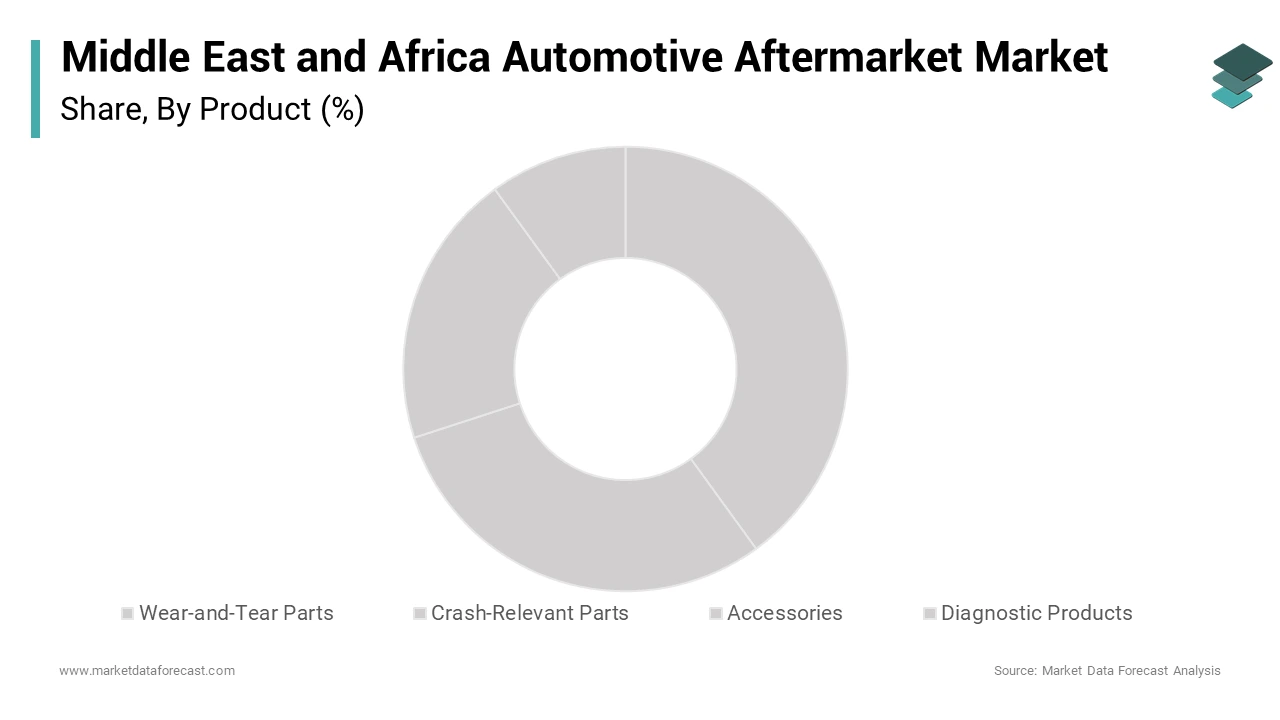
On the other hand, the diagnostic products segment is anticipated to witness the fastest CAGR of 9.1% from 2026 to 2034. Technological adoption is propelling strong market momentum. This rapid expansion is also fueled by the increasing complexity of modern vehicles equipped with advanced electronic systems and onboard computers that require specialized diagnostic tools for accurate troubleshooting. The rise in electric and hybrid vehicles across the region has created new demands for diagnostic equipment capable of analyzing battery systems and powertrain components. Independent repair shops and service centers are investing in advanced diagnostic scanners to remain competitive and provide comprehensive services to customers. The growing awareness among vehicle owners about the importance of precise diagnostics for maintaining vehicle performance and fuel efficiency supports market expansion. Government initiatives promoting vehicle safety and emissions compliance require regular diagnostic checks which further stimulates demand. The proliferation of connected car technologies enables remote diagnostics allowing service providers to identify issues before they become critical problems. Training programs for technicians on using modern diagnostic equipment have improved service quality and increased consumer confidence in professional repairs. The increasing penetration of smartphones and internet connectivity facilitates the adoption of digital diagnostic solutions and mobile applications that simplify vehicle health monitoring for end users.
By Distribution Channel Insights
In 2025, the offline distribution channel segment dominated the Middle East and Africa automotive aftermarket market and accounted for the majority share. This dominance was driven by traditional retail stores, authorized dealerships, and independent workshops. Buyers strongly prefer checking auto parts by hand before buying to ensure they work perfectly and meet their standards, which drives this segment's prominence. The established network of auto parts retailers and service centers across the region provides convenient access to genuine and aftermarket products for vehicle owners. Trust remains a critical factor in automotive part purchases as customers rely on face to face interactions with knowledgeable staff who can provide technical advice and recommendations. The presence of numerous small and medium sized enterprises operating local repair shops contributes significantly to offline sales volumes. Many consumers in rural and semi urban areas have limited internet access making physical stores the primary source for automotive components. Authorized service centers maintain strong relationships with original equipment manufacturers ensuring the availability of certified parts that meet quality standards. The immediate availability of parts from offline channels reduces vehicle downtime which is crucial for commercial fleet operators and individual users alike. Traditional payment methods and cash transactions remain prevalent in many markets supporting offline commerce. The cultural preference for personal interaction and negotiation in purchasing decisions further reinforces the dominance of brick and mortar establishments in the automotive aftermarket sector.
However, the online distribution channel segment is likely to experience the fastest CAGR during the forecast period owing to increasing internet penetration and changing consumer shopping behaviors. This rapid growth is also facilitated by the rising adoption of smartphones and digital payment platforms that make online shopping more accessible and convenient for consumers. Younger demographics particularly in urban areas prefer the ease of browsing extensive product catalogs comparing prices and reading customer reviews before making purchases. Online platforms offer a wider selection of parts including rare and specialized components that may not be readily available in local stores. Competitive pricing and frequent promotional discounts attract price sensitive consumers looking for cost effective alternatives to branded parts. The improvement in logistics and delivery infrastructure has reduced shipping times and increased reliability of online orders. Cross border e commerce enables consumers to access international brands and products that were previously difficult to obtain. Digital marketing strategies and social media engagement help online retailers reach broader audiences and build brand loyalty. The convenience of home delivery and hassle free return policies enhances the overall shopping experience encouraging repeat purchases. Government support for digital economy initiatives and investments in technology infrastructure further accelerate the transition toward online automotive parts procurement.
By Application Insights
The consumer vehicles segment held a substantial share of 65.2% of the Middle East and Africa automotive aftermarket market in 2025, because of the large base of passenger cars and increasing private vehicle ownership. Individual vehicle owners regularly invest in routine maintenance and aesthetic enhancements. The growing middle class and rising disposable incomes have enabled more households to purchase personal vehicles creating sustained demand for aftermarket services and products. Urbanization trends have increased the need for personal transportation leading to higher vehicle density in major cities across the region. Consumer preferences for customized accessories performance upgrades and premium care products contribute significantly to market revenue. The increasing average age of passenger vehicles necessitates more frequent repairs and part replacements as warranties expire. Social media and automotive enthusiast communities influence purchasing decisions by promoting trends in vehicle modification and maintenance practices. Insurance companies often recommend or require specific aftermarket parts for repairs which drives standardized demand. The availability of financing options for vehicle purchases has expanded the consumer base particularly among younger buyers entering the market. Seasonal variations in driving patterns and climate related wear also create cyclical demand spikes for certain consumer vehicle components.
But the commercial vehicles segment is on the rise and is expected to be the fastest growing segment in the market by witnessing a CAGR of 9.3% between 2026 and 2034 due to expanding logistics infrastructure and economic development initiatives. This accelerated growth is further driven by the expansion of e commerce and cross border trade which increases the demand for freight transportation and delivery services. Government investments in road networks ports and industrial zones create favorable conditions for commercial vehicle operations. Fleet operators prioritize regular maintenance to ensure vehicle reliability and comply with regulatory requirements for safety and emissions. The construction and mining sectors require heavy duty vehicles that undergo intensive usage leading to higher consumption of replacement parts and services. The growth of last mile delivery services in urban areas has increased the number of light commercial vehicles on roads. Technological advancements in telematics and fleet management systems enable predictive maintenance reducing unexpected breakdowns and optimizing service schedules. The shift toward fuel efficient and environmentally friendly commercial vehicles introduces new aftermarket opportunities for specialized components. International trade agreements and regional economic integration facilitate the movement of goods across borders boosting commercial vehicle utilization. The recovery of tourism and hospitality sectors post pandemic has renewed demand for buses and coaches requiring comprehensive aftermarket support.
COUNTRY ANALYSIS
Saudi Arabia Automotive Aftermarket Market Analysis
Saudi Arabia led the Middle East and Africa automotive aftermarket market and accounted for a significant share in 2025. The Kingdom benefits from a large vehicle parc supported by high per capita income and widespread car ownership among residents. Government initiatives under Vision 2030 promote economic diversification and infrastructure development which indirectly stimulate automotive sector growth. The harsh desert climate accelerates vehicle wear and tear creating consistent demand for replacement parts and maintenance services. The presence of major international automakers and authorized service centers ensures availability of genuine parts and quality services. Rising fuel prices have encouraged consumers to maintain their vehicles properly to optimize fuel efficiency extending the lifecycle of existing vehicles. The growing population of expatriates contributes to steady demand for both new and used vehicles supporting aftermarket activities. Investments in smart city projects and transportation networks create opportunities for advanced automotive technologies and services. The regulatory framework emphasizes vehicle safety and environmental standards prompting regular inspections and necessary repairs. Local manufacturing initiatives aim to reduce dependency on imports and develop domestic capabilities in automotive component production.

United Arab Emirates Automotive Aftermarket Market Analysis
The United Arab Emirates plays a key role in the Middle East and Africa automotive aftermarket market because of high consumer spending on premium vehicles and services. The country serves as a regional hub for automotive trade attracting distributors and service providers from across the Middle East and Africa. High disposable incomes and a culture of luxury car ownership drive demand for premium aftermarket products and customization services. The UAE government promotes innovation and technology adoption in the automotive sector including electric vehicles and autonomous driving solutions. Strict vehicle registration and inspection requirements ensure that vehicles meet safety and emissions standards stimulating regular maintenance activities. The well developed infrastructure including modern highways and service facilities supports efficient automotive operations. Tourism and hospitality sectors contribute to high vehicle utilization rates particularly for rental fleets requiring comprehensive aftermarket support. The presence of international automotive events and exhibitions fosters knowledge exchange and business collaborations. Digital transformation initiatives encourage the adoption of online platforms for parts procurement and service booking. The strategic location of the UAE facilitates re export of automotive components to neighboring countries enhancing market dynamics.
South Africa Automotive Aftermarket Market Analysis
South Africa maintains a significant position in the Middle East and Africa automotive aftermarket market. It benefits from the most developed automotive industry and infrastructure on the continent. The country has a well established manufacturing base with several global automakers operating production facilities locally. A large used vehicle market contributes significantly to aftermarket demand as older vehicles require more frequent repairs and part replacements. Economic challenges including currency fluctuations affect purchasing power but also drive demand for cost effective aftermarket alternatives to original equipment. The mining and agricultural sectors rely heavily on commercial vehicles creating sustained demand for heavy duty parts and services. Government policies support local content requirements encouraging domestic production of automotive components. Road safety campaigns and mandatory vehicle inspections promote regular maintenance practices among vehicle owners. The growing adoption of mobile technology enables innovative service delivery models including on site repairs and digital diagnostics. Infrastructure development projects stimulate demand for construction and logistics vehicles supporting commercial aftermarket segments. Consumer awareness about vehicle maintenance has improved through educational campaigns and accessible information resources.
Egypt Automotive Aftermarket Market Analysis
Egypt grew steadily in the regional market due to a large population and increasing vehicle ownership rates. The country benefits from a strategic location connecting Africa Asia and Europe facilitating automotive trade and distribution. Economic reforms and infrastructure investments have improved business conditions for automotive sector participants. The growing middle class and urbanization trends increase demand for personal vehicles and associated aftermarket services. Local assembly operations for several international brands contribute to the availability of parts and technical expertise. Currency devaluation has made imported vehicles more expensive leading consumers to extend the life of existing vehicles through regular maintenance. The government promotes local manufacturing to reduce import dependency and create employment opportunities in the automotive sector. Traffic congestion in major cities like Cairo increases wear and tear on vehicles particularly braking and suspension systems. Rising fuel costs encourage consumers to maintain vehicles efficiently to maximize fuel economy. Digital payment adoption and e commerce growth are gradually transforming traditional distribution channels in the automotive aftermarket sector.
COMPETITIVE LANDSCAPE
The Middle East and Africa automotive aftermarket market features intense competition among global giants regional players and local enterprises vying for market dominance. International brands leverage their technological expertise and established reputations to offer premium products and comprehensive service solutions. These companies invest heavily in research and development to introduce innovative components that meet evolving vehicle requirements and regulatory standards. Local competitors capitalize on their understanding of regional preferences and cost structures to provide affordable alternatives that appeal to price sensitive consumers. The market fragmentation allows numerous small and medium sized enterprises to thrive by specializing in niche segments or geographic areas. Competition drives continuous improvement in product quality service delivery and customer experience across the industry. Price wars occasionally emerge particularly in commoditized segments like tires and lubricants forcing companies to differentiate through value added services. Digital platforms have lowered entry barriers enabling new entrants to reach customers directly without extensive physical infrastructure. Strategic alliances between manufacturers distributors and service providers create integrated ecosystems that enhance operational efficiency. Regulatory compliance and adherence to safety standards serve as key differentiators influencing purchasing decisions. The dynamic nature of competition encourages constant adaptation and innovation among market participants to sustain long term growth and profitability.
KEY MARKET PLAYERS
A few of the market players in the Middle East and Africa automotive aftermarket market include
- Denso Corporation
- Robert Bosch GmbH
- Mitsubishi Electric Corporation
- Delphi Automotive Plc
- ACDelco
- Akebono Brake Industry Co. Ltd
- Magna Internation Inc.
- WABCO
- Continental AG
- Cooper Tire & Rubber Company.
Top Players In The Market
- Bosch maintains a strong presence in the Middle East and Africa automotive aftermarket through its extensive network of service centers and distribution partners. The company focuses on providing high quality diagnostic tools spare parts and maintenance solutions tailored to regional vehicle requirements. Bosch recently expanded its digital service offerings by launching connected car platforms that enable remote diagnostics and predictive maintenance for fleet operators. This initiative strengthens customer loyalty and enhances operational efficiency for commercial clients across the region. The company invests heavily in training local technicians to ensure proper handling of advanced automotive technologies. Bosch collaborates with government bodies to promote vehicle safety standards and environmental compliance. Its commitment to innovation drives the adoption of electric vehicle components and sustainable repair practices. The brand reputation for reliability and technical excellence supports its leadership position in the competitive aftermarket landscape. Continuous investment in research and development ensures product relevance amidst evolving automotive trends.
- Continental AG operates extensively in the Middle East and Africa region by supplying premium tires brake systems and electronic components to the automotive aftermarket. The company emphasizes sustainability and safety through its product portfolio which meets stringent international quality standards. Continental recently introduced smart tire technologies that monitor pressure and temperature in real time enhancing vehicle performance and safety. This innovation appeals to commercial fleet operators seeking to reduce downtime and improve fuel efficiency. The company partners with local distributors to ensure wide availability of genuine parts across urban and rural areas. Continental invests in digital platforms that facilitate easy ordering and tracking of aftermarket products. Training programs for mechanics focus on latest braking and suspension technologies ensuring proper installation and maintenance. The brand leverages its global expertise to address specific regional challenges such as extreme heat and rough road conditions. Strategic collaborations with original equipment manufacturers strengthen its supply chain and market reach.
- Denso Corporation contributes significantly to the Middle East and Africa automotive aftermarket by providing advanced thermal systems ignition components and air conditioning solutions. The company focuses on energy efficient products that align with regional demands for fuel economy and environmental sustainability. Denso recently launched next generation air conditioning compressors designed for extreme climatic conditions prevalent in many Middle Eastern countries. This product enhancement addresses customer needs for reliable cooling performance during high temperature periods. The company expands its service network through partnerships with independent repair shops and authorized dealers. Denso invests in digital tools that assist technicians in diagnosing and repairing complex electronic systems. Training initiatives educate local workforce on hybrid and electric vehicle technologies preparing them for future market shifts. The brand emphasizes quality assurance and durability to build trust among consumers and fleet operators. Collaborative efforts with regional governments support infrastructure development and automotive sector growth.
Top Strategies Used By Key Market Participants
Key players in the Middle East and Africa automotive aftermarket market employ several strategic approaches to maintain competitive advantage and drive growth. Expansion of distribution networks remains a primary strategy as companies establish partnerships with local retailers and service centers to enhance product accessibility. Digital transformation initiatives include launching e commerce platforms and mobile applications that simplify parts procurement and service booking for customers. Investment in training programs ensures that technicians possess the skills required to handle advanced automotive technologies including electric and hybrid vehicles. Product innovation focuses on developing durable components suited for harsh climatic conditions and rough terrain common in the region. Strategic collaborations with original equipment manufacturers strengthen supply chains and ensure availability of genuine parts. Companies also prioritize sustainability by introducing eco friendly products and promoting recycling initiatives. Marketing efforts emphasize brand reliability and technical expertise to build consumer trust. Geographic expansion into emerging markets within Africa allows companies to tap into growing vehicle ownership trends. Customer engagement through loyalty programs and after sales support enhances retention rates.
MARKET SEGMENTATION
This research report on the MEA automotive aftermarket is segmented and sub-segmented into the following categories.
By Product
- Wear-and-Tear Parts
- Crash-Relevant Parts
- Accessories
- Diagnostic Products
By Distribution Channel
- Offline
- Online
By Application
- Commercial Vehicles
- Consumer Vehicles
By Country
- KSA
- The
- the rest of the GCC countries
- South Africa
- Ethiopia
- Kenya
- Egypt
- Sudan
- Rest of MEA