- Product Description Description
- Table of Contents TOC
- List of Table & Figure LOT
- Get Free Sample PDF Sample PDF
Market Size, 2025
$1.81 BnMarket Estimate, 2026
$1.95 BnMarket Forecast, 2034
$3.49 BnCAGR, 2026–2034
7.55%Middle East and Africa Clinical Trials Market Report Summary
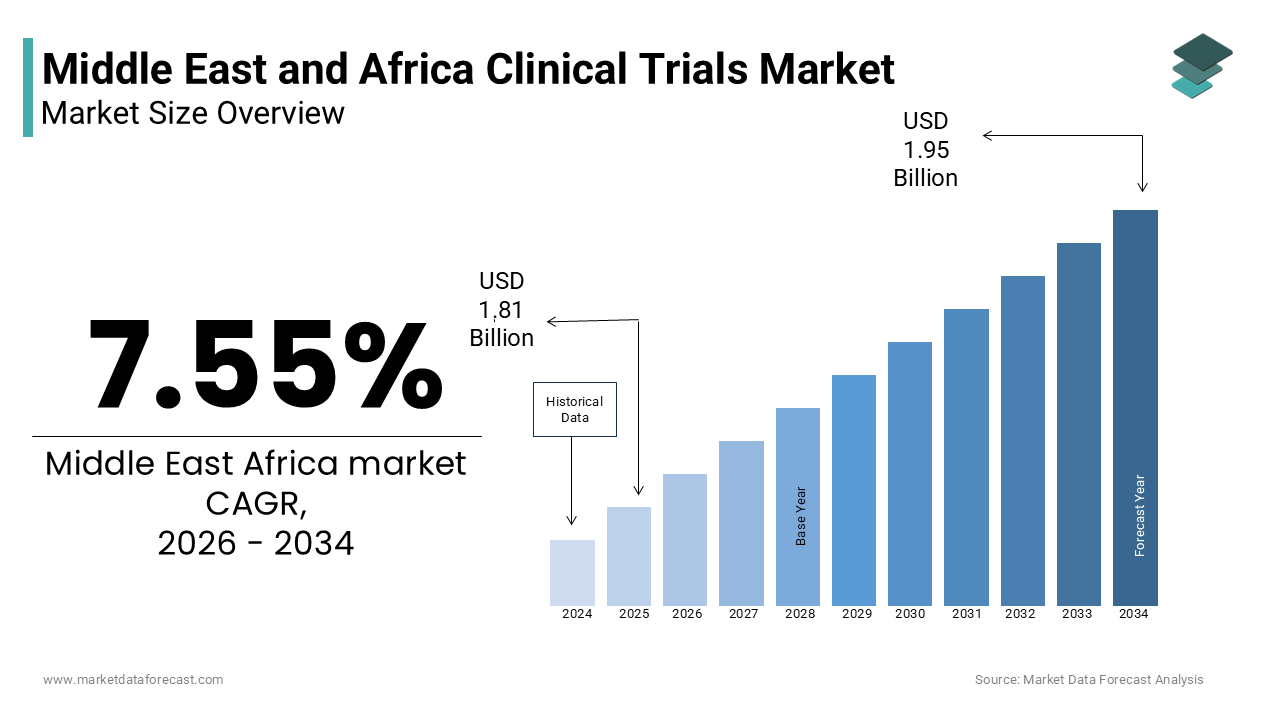
The Middle East and Africa clinical trials market was valued at USD 1.81 billion in 2025, is estimated to reach USD 1.95 billion in 2026, and is projected to reach USD 3.49 billion by 2034, growing at a CAGR of 7.55% during the forecast period from 2026 to 2034. The growth of the Middle East and Africa clinical trials market is driven by the rising prevalence of chronic diseases, increasing government support for biomedical research, and expanding healthcare infrastructure modernization initiatives across the region. Growing demand for localized clinical data, increasing investments in oncology and metabolic disorder research, and rising adoption of decentralized clinical trial models are further accelerating market growth. Moreover, advancements in digital health technologies, expansion of precision medicine programs, and increasing multinational pharmaceutical investments are supporting the expansion of the Middle East and Africa clinical trials market.
Key Market Trends
- Rising adoption of decentralized and hybrid clinical trial models utilizing telemedicine and remote monitoring technologies.
- Growing investments in oncology-focused clinical research supported by genomic sequencing and biomarker-driven trial designs.
- Increasing regulatory harmonization initiatives aimed at streamlining multinational trial approvals across MEA countries.
- Strong focus on expanding early-phase clinical research infrastructure and specialized research hubs within Gulf nations.
- Expansion of digital patient recruitment platforms and wearable health technologies to improve trial participation and retention.
Segmental Insights
- Based on phase, the Phase III trials segment dominated the Middle East and Africa clinical trials market and held the largest share in 2025. The segment’s dominance is attributed to the increasing demand for large-scale efficacy validation studies, expanding oncology and metabolic disease therapeutic pipelines, and growing investments in multinational late-stage clinical development programs.
- The Phase I trials segment is projected to witness the fastest CAGR during the forecast period owing to increasing investments in early-stage drug development infrastructure, expansion of specialized pharmacokinetic research facilities, and rising government initiatives supporting biomedical innovation.
- Based on design, the interventional trials segment accounted for the leading share of the Middle East and Africa clinical trials market in 2025. The dominance of this segment is driven by the widespread adoption of randomized controlled study protocols, increasing regulatory emphasis on robust efficacy data, and rising pharmaceutical investments in therapeutic validation studies.
- The expanded access trials segment is anticipated to register notable growth during the forecast period due to increasing demand for compassionate use programs, evolving regulatory frameworks supporting patient access to investigational therapies, and rising collaboration between healthcare providers and pharmaceutical sponsors.
- Based on indications, the oncology segment held the major share of the Middle East and Africa clinical trials market in 2025 owing to the increasing cancer burden, growing investments in targeted therapies and immunotherapies, and expanding precision oncology research initiatives across the region.
- The autoimmune and inflammation segment is expected to witness rapid growth during the forecast period because of the rising prevalence of immune-mediated disorders, increasing biologic therapeutic development, and expanding rheumatology and gastroenterology research infrastructure.
Regional Insights
Saudi Arabia dominated the Middle East and Africa clinical trials market and accounted for the largest share in 2025, supported by strong healthcare transformation initiatives under Vision 2030, advanced research infrastructure, and favorable regulatory modernization programs. The United Arab Emirates remains a major contributor to the market due to its advanced healthcare ecosystem, dedicated life sciences free zones, and increasing multinational pharmaceutical investments. South Africa continues to maintain a prominent position owing to its extensive infectious disease research expertise, established clinical research infrastructure, and diverse patient population. Egypt and Israel are also witnessing notable growth driven by expanding academic medical research networks, increasing healthcare modernization investments, and rising participation in multinational clinical development programs.
Competitive Landscape
The Middle East and Africa clinical trials market is highly competitive and characterized by the presence of global contract research organizations, multinational pharmaceutical service providers, and regional clinical research firms competing through technological innovation, regulatory expertise, and therapeutic specialization. Leading companies are focusing on expanding decentralized trial capabilities, strengthening digital data management platforms, investing in artificial intelligence-driven analytics, and enhancing patient recruitment solutions. Strategic collaborations with healthcare institutions, investments in workforce development initiatives, and expansion of oncology and precision medicine research programs are further strengthening market positioning across Middle Eastern and African clinical research ecosystems. Prominent players in the Middle East and Africa clinical trials market include Chiltern, Omnicare, PPD, Parexel, Kendle, Quintiles, ICON Plc, and Charles River.
Middle East and Africa Clinical Trials Market Size
The clinical trials market size in Middle East and Africa was valued at USD 1.81 billion in 2025. The MEA market is projected to reach USD 3.49 billion by 2034 from USD 1.95 billion in 2026, growing at a CAGR of 7.55% during the forecast period.
Clinical trials are highly regulated research studies that test medical, surgical, or behavioural interventions in human volunteers. They are the essential process used to determine if a new treatment, drug, or medical device is safe and effective before it can be made available to the public. This ecosystem operates through a complex network of research institutions, regulatory authorities, and healthcare providers that evaluate safety profiles and efficacy metrics before commercial approval. The region demonstrates a distinct epidemiological landscape where infectious disease burdens intersect with rapidly accelerating chronic illness prevalence. According to the World Health Organization Regional Office for the Eastern Mediterranean, nearly 85 million adults are living with diabetes across the region, creating substantial, high-density patient recruitment pools for metabolic and cardiovascular clinical trials. As per data verified by the United Nations Department of Economic and Social Affairs, the African population has surged past 1.5 billion inhabitants, providing an expansive and rapidly growing demographic diversity that supports robust clinical endpoint evaluations. Healthcare infrastructure modernization continues to reshape research capacity, with numerous tertiary facilities integrating advanced diagnostic capabilities and electronic health record systems. The regulatory environment remains fragmented yet progressively harmonized, as regional health ministries implement standardized good clinical practice frameworks aligned with international guidelines. Patient engagement strategies increasingly incorporate community health worker networks and localized consent protocols to address cultural considerations. This evolving research infrastructure positions the region as a critical destination for multinational pharmaceutical development programs seeking accelerated enrollment timelines and genetically diverse cohorts.
MARKET DRIVERS
Escalating Chronic Disease Burden Amplifies Therapeutic Research Demand
The accelerating incidence of metabolic and cardiovascular disorders across regional populations establishes a foundational demand for advanced therapeutic interventions that contributes to the expansion of the MEA clinical testing market. According to the International Diabetes Federation, the Gulf Cooperation Council (GCC) region exhibits some of the world's highest adult diabetes prevalence rates, ranging between 15% and 22% across member nations, driving an urgent requirement for novel glycemic control agents and extended cardiovascular outcome studies. National health ministries prioritize localized treatment development to reduce dependency on imported pharmaceuticals while addressing region specific genetic variations in drug metabolism. Research sponsors increasingly target urban centers in Saudi Arabia and the United Arab Emirates where specialized cardiology networks facilitate rapid patient identification and longitudinal monitoring. The demographic transition toward sedentary lifestyles and dietary modifications further intensifies clinical trial enrollment velocity, as healthcare systems implement population health screening initiatives that identify eligible participants during routine consultations. Sponsor organizations leverage these epidemiological trends to design adaptive trial protocols that accommodate diverse comorbidity profiles while maintaining rigorous safety monitoring. Institutional review boards have streamlined ethical approval pathways for chronic disease investigations, recognizing the public health imperative of accelerating therapeutic validation. This sustained clinical demand ensures consistent site activation and investigator engagement across the region.
Government Led Healthcare Localization Accelerates Research Infrastructure Investment
Strategic national initiatives aimed at pharmaceutical manufacturing independence and biomedical research capacity directly stimulate clinical trial site expansion throughout the region, which further propels the MEA clinical testing market forward. According to the Saudi Food and Drug Authority's specialized regulatory frameworks, its Priority Review pathway offers up to a 40% reduction in standard registration timelines, enabling significantly faster study initiation and protocol approvals. Governments allocate substantial funding toward specialized research hubs that integrate academic medical centers with commercial development facilities, creating ecosystems conducive to phase one through phase three investigations. The United Arab Emirates established dedicated free zones for life science enterprises, offering tax incentives and expedited customs clearance for investigational medical supplies. These policy frameworks attract multinational sponsors seeking predictable regulatory pathways and streamlined import procedures for biological samples. Academic institutions respond by launching dedicated clinical research training programs that cultivate investigator networks capable of managing complex multinational protocols. Healthcare procurement strategies increasingly mandate local clinical data generation before formulary inclusion, compelling pharmaceutical companies to conduct region specific efficacy studies. This institutional alignment between public health objectives and commercial research requirements generates sustained trial activity across oncology, immunology, and rare disease therapeutic categories.
MARKET RESTRAINTS
Regulatory Fragmentation Impedes Cross Border Trial Harmonization
Divergent ethical review requirements and inconsistent data protection legislation across Middle Eastern and African jurisdictions create substantial operational friction for multinational research programs, which restrains the growth of the MEA clinical testing market. According to regional regulatory audits under the African Medicines Regulatory Harmonization initiative, significant disparities in national ethics committee maturity and good clinical practice enforcement force trial sponsors to navigate highly variable cross-border approval timelines. Each country imposes distinct informed consent formatting, adverse event reporting thresholds, and principal investigator qualification criteria that necessitate customized protocol adaptations. The absence of mutual recognition agreements between regulatory authorities extends study startup phases, as sponsors must submit independent applications to multiple oversight bodies rather than utilizing centralized review pathways. Variations in data sovereignty regulations further complicate international data transfer, requiring localized server infrastructure that increases operational expenditures and delays centralized database lock procedures. Investigator networks frequently encounter delays when coordinating multi country enrollment strategies due to conflicting reimbursement guidelines for participant compensation and differing requirements for investigational product import licensing. These structural inconsistencies reduce site predictability and compel sponsors to consolidate research activities within a limited number of jurisdictions, ultimately constraining geographic diversity and slowing overall trial progression.
Shortage of Trained Clinical Research Professionals Limits Operational Capacity
The persistent deficit of qualified clinical research coordinators, data managers, and monitoring specialists directly constrains trial execution velocity across emerging research hubs, and thereby hinders the expansion of the MEA clinical testing market. Independent health workforce literature indicates that Southern Africa faces a notable shortage of trained clinical research professionals, primarily driven by inadequate specialized clinical trial infrastructure and the migration of experienced coordinators to mature markets. Academic medical programs prioritize clinical care education over research methodology, resulting in insufficient exposure to protocol development, electronic data capture systems, and pharmacovigilance reporting standards. Site personnel frequently manage concurrent responsibilities across patient care and research duties, which increases protocol deviation rates and compromises data integrity metrics. Sponsor organizations invest heavily in external contract research providers, yet these vendors face similar talent acquisition challenges when scaling regional operations. The limited availability of certified principal investigators further delays ethics committee approvals, as institutional review boards require documented experience in randomized controlled trial management before granting study clearance. Workforce development initiatives remain fragmented, with professional certification programs lacking regional accreditation reciprocity, which prevents seamless investigator mobility between neighboring countries and sustains operational bottlenecks.
MARKET OPPORTUNITIES
Decentralized Trial Frameworks Expand Patient Access and Retention
The integration of remote monitoring technologies and telehealth consultation platforms fundamentally transforms participant engagement models across geographically dispersed regions, which creates a pathway for the growth of the MEA clinical testing market. According to case studies compiled by the Clinical Trials Transformation Initiative, decentralized trial methodologies consistently demonstrate improved participant retention and enrollment metrics by actively eliminating geographic barriers and reducing onsite visit frequency requirements. Mobile health applications enable continuous biomarker tracking, electronic consent administration, and direct symptom reporting from patient residences, which proves particularly valuable for rural populations with limited tertiary healthcare access. Regional telecommunications expansion facilitates reliable data transmission, with mobile internet penetration exceeding 65 percent across North African urban corridors and major Gulf metropolitan areas. Research sponsors leverage wearable sensor networks and direct to home drug delivery logistics to maintain protocol compliance while minimizing participant withdrawal rates. Healthcare providers adopt hybrid study designs that combine periodic facility assessments with continuous digital monitoring, optimizing resource allocation and investigator workload distribution. Regulatory agencies increasingly recognize digital endpoint validation, creating pathways for accelerated approval of remotely collected clinical data. This technological convergence enables sponsors to activate previously inaccessible geographic territories, substantially broadening recruitment networks and enhancing statistical power for rare disease investigations.
Specialized Oncology Research Networks Attract Global Pharmaceutical Investment
The region features dedicated cancer research centers equipped with genomic sequencing capabilities, which provide promising prospects for the expansion of the MEA clinical testing market. This advanced precision medicine infrastructure positions the area as a competitive destination for novel oncology development programs. According to data from the International Agency for Research on Cancer (GLOBOCAN), the expanding cancer registry data across the Middle East and Africa highlights a high-density, diverse epidemiological landscape that guides targeted oncology therapeutic trial design. Academic institutions partner with international pharmaceutical developers to establish biomarker focused enrollment platforms that match patient tumor profiles with specific investigational agents. Government health ministries allocate dedicated funding for molecular diagnostics laboratories, enabling immediate mutation analysis and rapid eligibility verification for complex phase two and phase three studies. The concentration of specialized oncologists and surgical experts within metropolitan medical hubs facilitates multidisciplinary tumor board participation and streamlined protocol integration. Biobanking initiatives preserve tissue samples under standardized storage conditions, creating valuable repositories for translational research and companion diagnostic validation. International collaboration frameworks encourage knowledge exchange through joint investigator meetings and shared data analytics platforms. These structural advancements attract substantial therapeutic programs while simultaneously elevating regional clinical research standards to align with global development expectations.
MARKET CHALLENGES
Ethical Oversight Inconsistencies Complicate Multinational Protocol Compliance
Variations in institutional review board operational standards and community consent requirements generate substantial compliance uncertainties for sponsors executing complex multinational investigations, which holds back the growth of the MEA clinical testing market. Bioethics research across the Middle East and Africa indicates that a lack of standardized, institutional training modules for ethics board members evaluating complex genetic research and pediatric trial protocols can lead to protocol compliance inconsistencies in multinational studies. Divergent interpretations of vulnerable population safeguards force sponsors to implement parallel consent documentation processes that delay enrollment initiation and increase administrative expenditures. Some jurisdictions require community leader approval alongside individual participant consent, introducing unpredictable timeline extensions that conflict with tightly coordinated global study schedules. The absence of centralized ethical guidelines for digital health data collection further complicates privacy compliance, as investigators navigate conflicting national legislation regarding genetic information storage and biometric data utilization. Principal investigators frequently encounter conflicting guidance on adverse event classification thresholds and reporting deadlines, which elevates protocol deviation risks during regulatory audits. Harmonizing ethical review frameworks remains a complex undertaking that demands sustained diplomatic engagement and coordinated policy development across multiple sovereign health authorities.
Supply Chain Volatility Disrupts Investigational Product Distribution
Thermally regulated logistics networks and customs clearance delays frequently compromise the integrity and timely delivery of experimental pharmaceutical compounds across regional transit corridors, which slows down the expansion of the MEA clinical testing market. According to pharmaceutical cold chain industry assessments, temperature-reliant medical shipments face distinct risk profiles when transiting through major tropical distribution hubs, requiring robust IATA CEIV Pharma certified logistics to prevent thermal deviations. Limited availability of validated refrigerated warehousing facilities forces sponsors to rely on expedited air freight alternatives that substantially increase operational expenditures and environmental impact metrics. Customs authorities frequently classify investigational products as commercial merchandise rather than research materials, triggering unnecessary taxation assessments and prolonged documentation reviews that delay site activation timelines. Border security protocols occasionally mandate additional sterility testing or repackaging procedures, which extend refrigerated transport exposure windows and jeopardize compound stability. Regional transportation infrastructure limitations further complicate final destination delivery to peripheral research sites, particularly during extreme weather conditions that disrupt road networks and power grid reliability. Sponsors must implement redundant distribution pathways and deploy continuous temperature monitoring systems to maintain product viability while navigating unpredictable logistical constraints.
REPORT COVERAGE
| REPORT METRIC | DETAILS |
| Market Size Available | 2025 to 2034 |
| Base Year | 2025 |
| Forecast Period | 2026 to 2034 |
| CAGR | 7.55% |
| Segments Covered | By Phase, Design, Indications and Region. |
| Various Analyses Covered | Regional & Country Level Analysis, Segment-Level Analysis, DROC, PESTLE Analysis, Porter’s Five Forces Analysis, Competitive Landscape, Analyst Overview of Investment Opportunities |
| Regions Covered | Saudi Arabia, United Arab Emirates, Israel, Rest of GCC Countries, South Africa, Ethiopia, Kenya, Egypt, Sudan, and Rest of Middle East and Africa. |
| Market Leaders Profiled | Chiltern, Omnicare, PPD, Parexel, Kendle, Quintiles, ICON Plc, and Charles River |
SEGMENTAL ANALYSIS
By Phase Insights
In 2025, the phase III trials segment was the largest by occupying a 40.7% share in the MEA Clinical Trials Market. This prominence of the segment was supported by the critical requirement for large scale efficacy validation before regulatory approval. According to the World Health Organization's IARC data, the African and Eastern Mediterranean regions combined see approximately 2 million new cancer cases annually, anchoring a massive regional patient pool for late-stage clinical trials. Phase III protocols require diverse demographic representation to satisfy global regulatory bodies, and the region's genetic heterogeneity provides statistical robustness that sponsors prioritize. Research confirm that Phase III clinical trials command the largest share of regional pharmaceutical research spending across the MEA, driven by the expensive logistics of multi-center comparative safety and efficacy testing. Healthcare infrastructure investments in Saudi Arabia and the United Arab Emirates have expanded tertiary care facilities capable of managing complex multi center trials, further reinforcing Phase III predominance. The segment benefits from streamlined ethical review processes for pivotal studies, as regional authorities recognize the public health value of accelerating definitive therapeutic evidence generation.
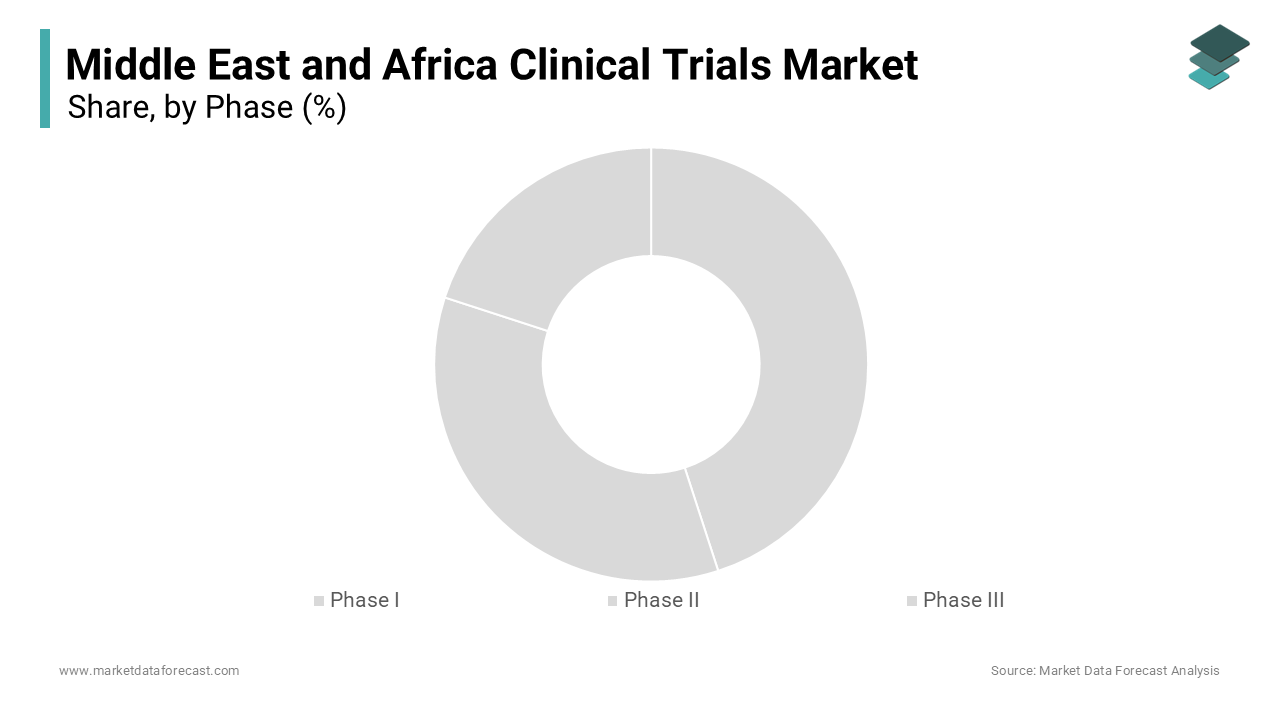
But the phase I trials segment is likely to experience the fastest CAGR of 9.8% during the forecast period owing to increasing investment in early stage drug discovery infrastructure across the region. Under Saudi Vision 2030, the Saudi Food and Drug Authority (SFDA) has actively modernized its clinical trial regulations, introducing expedited review pathways to accelerate early-stage protocol activations for novel therapeutic compounds. Academic medical centers in Egypt and South Africa have established dedicated early phase research units equipped with pharmacokinetic laboratories and intensive care monitoring capabilities, attracting global sponsors seeking cost efficient first in human testing environments. The Africa Centres for Disease Control and Prevention highlights the critical need to expand early-phase clinical trial infrastructure across the continent, prompting public-private initiatives to build specialized facilities for early-stage immunology and oncology protocols. The segment benefits from growing availability of healthy volunteer registries and advanced biomarker screening technologies that enhance participant selection precision. Pharmaceutical companies increasingly leverage the region's lower operational expenditures and favorable exchange rates to conduct parallel Phase I programs across multiple therapeutic categories, driving sustained enrollment velocity and site activation rates.
By Design Insights
The Interventional Trials segment held the majority share of 65.8% of the MEA Clinical Trials Market in 2025 because of the fundamental requirement for controlled therapeutic evaluation before commercial authorization. Adherence to International Council for Harmonisation (ICH) guidelines ensures that regulatory authorities across the MEA structurally favor robust, well-controlled interventional data to confirm therapeutic efficacy before granting new drug approvals. The segment benefits from structured protocol frameworks that facilitate regulatory alignment across diverse jurisdictions, as sponsors design randomized controlled trials that satisfy multiple national approval pathways simultaneously. Data from the Pan African Clinical Trials Registry indicates that infectious diseases and emerging oncology studies dominate the active research pipeline, supported heavily by international public health funding and regional health initiatives. Healthcare systems increasingly mandate interventional evidence before formulary inclusion, compelling pharmaceutical developers to prioritize this design format. The segment also advantages from established monitoring standards and data management platforms that ensure protocol compliance across geographically dispersed sites, reducing operational risk for multinational sponsors.
On the other hand, the expanded access trials segment is on the rise and is expected to be the fastest growing segment in the market by witnessing a CAGR of 11.2% from 2026 to 2034 due to evolving regulatory frameworks that prioritize patient access to investigational therapies for life threatening conditions. The UAE Ministry of Health and Prevention continues to expedite its regulatory approval channels for innovative therapies, enabling rapid early access and compassionate use authorization for patients facing terminal conditions. The segment benefits from increasing collaboration between regulatory authorities and pharmaceutical sponsors to establish standardized eligibility criteria and safety monitoring protocols for expanded access programs. Regional oncology networks, such as the African Organisation for Research and Training in Cancer (AORTIC), emphasize that expanding early-access frameworks is crucial for providing advanced cancer therapies to patients in sub-Saharan African regions where commercial drugs are not yet registered. Healthcare providers increasingly leverage expanded access frameworks to generate real world evidence that supports future regulatory submissions and reimbursement negotiations. The segment also advantages from growing patient advocacy engagement and digital consent platforms that facilitate ethical enrollment while maintaining rigorous safety oversight requirements.
By Indications Insights
The oncology indications segment led the MEA Clinical Trials Market and captured a 28.3% share in 2025. This leading position of the segment was attributed to the region's escalating cancer burden and substantial investment in novel therapeutic development. According to the International Agency for Research on Cancer, the expanding cancer burden across the Middle East and Africa drives severe medical demand, with annual regional incidence rates projected to rise drastically by 2040 due to rapid population growth and shifting lifestyle demographics. The segment benefits from concentrated pharmaceutical investment in targeted therapies and immunotherapies that address region specific tumor biology and genetic variations. International clinical trial registries highlight a steadily growing pipeline of oncology trials across the Middle East and Africa, focusing specifically on high-prevalence regional indications such as breast, colorectal, and liver malignancies. Healthcare systems increasingly prioritize cancer research funding through national strategic initiatives, such as Saudi Arabia's Vision 2030 healthcare transformation program, which allocates substantial resources toward precision oncology infrastructure. The segment also advantages from established biomarker testing capabilities and molecular diagnostics networks that enable patient stratification for personalized medicine protocols.
On the contrary, the autoimmune and Inflammation indications segment is expected to exhibit a noteworthy CAGR of 10.4% over the forecast period. This acceleration of the segment is propelled by rising prevalence of immune mediated disorders and increasing investment in biologic therapeutic development. Epidemiological data indicates that the rising awareness and diagnosis of autoimmune conditions across the Gulf Cooperation Council region are establishing significant patient pools, expanding clinical opportunities for novel disease-modifying antirheumatic drugs (DMARDs). The segment benefits from growing recognition of region specific genetic factors that influence autoimmune disease progression and treatment response, prompting sponsors to conduct localized efficacy studies. National regulatory databases indicate a steady increase in autoimmune clinical research protocols across North African nations, showcasing an accelerated development pipeline for targeted treatments tackling lupus, multiple sclerosis, and inflammatory bowel disease. Healthcare systems increasingly allocate dedicated funding toward immunology research infrastructure, including specialized biobanking facilities and advanced flow cytometry laboratories that support biomarker driven trial designs. The segment also advantages from expanding rheumatology and gastroenterology specialist networks that facilitate rapid patient identification and longitudinal monitoring for complex chronic condition studies.
REGIONAL ANALYSIS
Saudi Arabia Clinical Trials Market Analysis
Saudi Arabia dominated the MEA Clinical Trials Market and accounted for a 26.3% share in 2025. The Kingdom's dominance was driven by comprehensive healthcare transformation initiatives under Vision 2030 that prioritize biomedical research capacity and pharmaceutical manufacturing independence. According to the Saudi Food and Drug Authority, systematic regulatory modernization and expedited pathways have dramatically accelerated clinical trial protocol approvals, facilitating rapid trial activation for global pharmaceutical sponsors. The country benefits from substantial government investment in specialized research hubs, including the King Abdullah International Medical Research Center and the Saudi Human Genome Program, which provide advanced genomic sequencing capabilities for precision medicine protocols. Driven by Saudi Arabia's Health Sector Transformation Program, national registries showcase a robust surge in active clinical trial sites, with oncology, metabolic disorders, and cardiovascular diseases dictating the primary therapeutic focus. Healthcare infrastructure expansion has established over 120 tertiary care facilities equipped with electronic health record systems and centralized data management platforms that support complex multinational study requirements. The Kingdom also advantages from strategic geographic positioning that facilitates regional patient recruitment and logistical coordination for multi country research programs.
United Arab Emirates Clinical Trials Market Analysis
The United Arab Emirates was the next prominent country in the MEA Clinical Trials Market and captured a 18.5% share in 2025. This growth of the UAE market was supported by advanced healthcare infrastructure, streamlined regulatory frameworks, and strategic positioning as a regional research hub. According to the UAE Ministry of Health and Prevention, centralized digital submission platforms have heavily streamlined the administrative burden, substantially shortening ethics committee review cycles and accelerating time-to-market for international sponsors. The country benefits from dedicated life science free zones, including Dubai Healthcare City and Abu Dhabi Global Market, which offer tax incentives and expedited customs clearance for investigational medical supplies. Strategic infrastructure scaling documented by the Dubai Health Authority has significantly bolstered the UAE's clinical presence, establishing particular specialization in complex oncology, rare diseases, and digital health interventions. Healthcare systems have integrated artificial intelligence driven patient recruitment tools and remote monitoring technologies that enhance enrollment efficiency and data quality metrics. The UAE also advantages from multilingual investigator networks and culturally adapted consent protocols that facilitate participation across diverse expatriate and national populations, supporting robust demographic representation for global development programs.
South Africa Clinical Trials Market Analysis
South Africa maintains a significant position in the MEA Clinical Trials Market due to established research infrastructure, extensive clinical trial experience, and diverse patient populations that support robust endpoint evaluation. The country benefits from extensive experience in infectious disease research, including HIV tuberculosis and malaria studies, which has cultivated specialized investigator networks and community engagement frameworks. Healthcare systems have established comprehensive biobanking repositories and genomic research capabilities that support translational medicine protocols. South Africa also advantages from English language proficiency among research staff and established data protection frameworks aligned with international standards, facilitating seamless collaboration with multinational pharmaceutical sponsors.
Egypt Clinical Trials Market Analysis
Egypt experienced a consistent growth in the MEA Clinical Trials Market owing to large population size, growing healthcare infrastructure investment, and increasing regulatory harmonization efforts. The country benefits from extensive academic medical center networks, including Cairo University and Ain Shams University hospitals, which provide substantial patient recruitment capacity for diverse therapeutic indications. Healthcare systems have expanded specialized research units equipped with advanced diagnostic capabilities and electronic data capture systems that support complex protocol requirements. Egypt also advantages from competitive operational expenditures and favorable exchange rates that enhance cost efficiency for multinational sponsors conducting large scale enrollment studies across multiple therapeutic categories.
Israel Clinical Trials Market Analysis
Israel is anticipated to expand notably in the MEA Clinical Trials Market during a forecast period due to advanced biomedical research ecosystem, strong intellectual property protections, and extensive experience in innovative therapeutic development. The country benefits from concentrated biotechnology clusters, including the Weizmann Institute and Tel Aviv Sourasky Medical Center, which provide cutting edge translational research capabilities for novel mechanism evaluation. Healthcare systems have integrated precision medicine platforms and real world evidence generation tools that support adaptive trial designs and biomarker driven patient selection. Israel also advantages from highly trained investigator networks with extensive international collaboration experience, facilitating seamless protocol implementation and high quality data generation for global regulatory submissions.
COMPETITIVE LANDSCAPE
Competition in the MEA Clinical Trials Market features a dynamic mix of global contract research organizations and emerging regional service providers. International players leverage extensive experience and advanced technology platforms to attract multinational pharmaceutical sponsors conducting complex trials across diverse therapeutic areas. Regional organizations differentiate through local regulatory expertise cultural competency and established investigator networks that facilitate efficient patient recruitment and site management. Market participants increasingly compete on technology enablement with investments in artificial intelligence driven analytics electronic data capture systems and remote monitoring capabilities that enhance data quality and protocol compliance. Therapeutic specialization represents another competitive dimension as organizations develop deep expertise in oncology infectious diseases and metabolic disorders where regional disease burden creates substantial research opportunities. Strategic partnerships with academic medical centers and healthcare systems enable expanded site networks and enhanced patient access. Price competition remains moderate as sponsors prioritize quality and regulatory alignment over cost considerations for pivotal studies. The competitive landscape continues to evolve as regional regulatory harmonization initiatives create opportunities for standardized service delivery across multiple jurisdictions.
KEY MARKET PLAYERS
Companies playing a prominent role in the Middle East and Africa clinical trials market include
- Chiltern
- Omnicare
- PPD
- Parexel
- Kendle
- Quintiles
- ICON Plc
- Charles River
Top Players in the Market
IQVIA Incorporated
IQVIA Incorporated maintains a prominent position in the MEA Clinical Trials Market through comprehensive clinical research services and advanced technology platforms. The company leverages its global expertise to support multinational pharmaceutical sponsors conducting complex trials across diverse therapeutic areas. IQVIA has expanded its regional footprint by establishing specialized research centers in Saudi Arabia and the United Arab Emirates that offer integrated site management and patient recruitment solutions. The company recently enhanced its digital capabilities through artificial intelligence driven analytics tools that optimize protocol design and accelerate enrollment timelines. IQVIA collaborates with regional healthcare systems to implement decentralized trial frameworks that improve patient access and retention. The organization also invests in workforce development programs that cultivate local clinical research expertise and strengthen investigator networks across the Middle East and Africa.
Parexel International Corporation
Parexel International Corporation contributes significantly to the MEA Clinical Trials Market through strategic consulting services and operational excellence in clinical development. The company supports pharmaceutical and biotechnology sponsors with regulatory strategy, site selection, and data management solutions tailored to regional requirements. Parexel has strengthened its regional presence by partnering with academic medical centers and contract research organizations to expand site networks and enhance patient recruitment capabilities. The organization recently implemented advanced electronic data capture systems and remote monitoring technologies that improve data quality and protocol compliance. Parexel also focuses on therapeutic area specialization, particularly in oncology and rare diseases, where it leverages deep scientific expertise to design innovative trial protocols. The company engages in capacity building initiatives that train local investigators and research coordinators to international good clinical practice standards.
ICON Public Limited Company
ICON Public Limited Company plays a vital role in the MEA Clinical Trials Market through integrated clinical development services and technology enabled solutions. The company supports global sponsors with end to end trial management, from protocol design through regulatory submission and post marketing surveillance. ICON has expanded its regional infrastructure by establishing dedicated project management teams and data coordination centers in key markets including South Africa and the United Arab Emirates. The organization recently enhanced its patient centric approaches through mobile health applications and telehealth platforms that facilitate remote participation and continuous monitoring. ICON also focuses on therapeutic specialization in cardiovascular and metabolic disorders, where it leverages real world evidence generation capabilities to support market access strategies. The company collaborates with regional regulatory authorities to harmonize approval processes and accelerate study activation timelines for multinational development programs.
Top Strategies Used by Key Market Participants
Key players in the MEA Clinical Trials Market employ strategic partnerships with regional healthcare systems to expand site networks and enhance patient recruitment capabilities. Organizations invest in digital health technologies including artificial intelligence driven analytics and remote monitoring platforms to improve data quality and protocol compliance. Companies focus on therapeutic area specialization particularly in oncology infectious diseases and metabolic disorders where regional disease burden creates substantial research opportunities. Market participants strengthen regulatory expertise through dedicated teams that navigate diverse approval pathways and harmonize submission requirements across jurisdictions. Organizations also prioritize workforce development initiatives that train local investigators and research coordinators to international good clinical practice standards. Strategic acquisitions of regional contract research organizations enable rapid market entry and expanded service offerings. Companies implement decentralized trial frameworks that leverage telehealth and mobile technologies to improve patient access and retention across geographically dispersed populations.
MARKET SEGMENTATION
This report on the Middle East and Africa clinical trials market has been segmented into the following categories.
By Phase
- Phase I
- Phase II
- Phase III
By Design
- Interventional Trials
- Observational Trials
- Expanded Access Trials
By Indications
- Autoimmune
- Blood disorders
- Cancer
- Circulatory
- CNS
- Congenital
- CVS
- Dermatology
- Ear
- Gastrointestinal
- Genitourinary
- Infections
- Mental disorders,
- Metabolic
- Musculoskeletal
- Nose
- Ophthalmology
By Country
- KSA
- UAE
- Israel
- Rest of the GCC countries
- South Africa
- Ethiopia
- Kenya
- Egypt
- Sudan
- Rest of MEA