- Product Description Description
- Table of Contents TOC
- List of Table & Figure LOT
- Get Free Sample PDF Sample PDF
Market Size, 2025
$4.48 BnMarket Estimate, 2026
$5.29 BnMarket Forecast, 2034
$20.16 BnCAGR, 2026–2034
18.19%Middle East and Africa Fitness Trackers Market Size, Growth, Trends & Forecast (2026–2034)
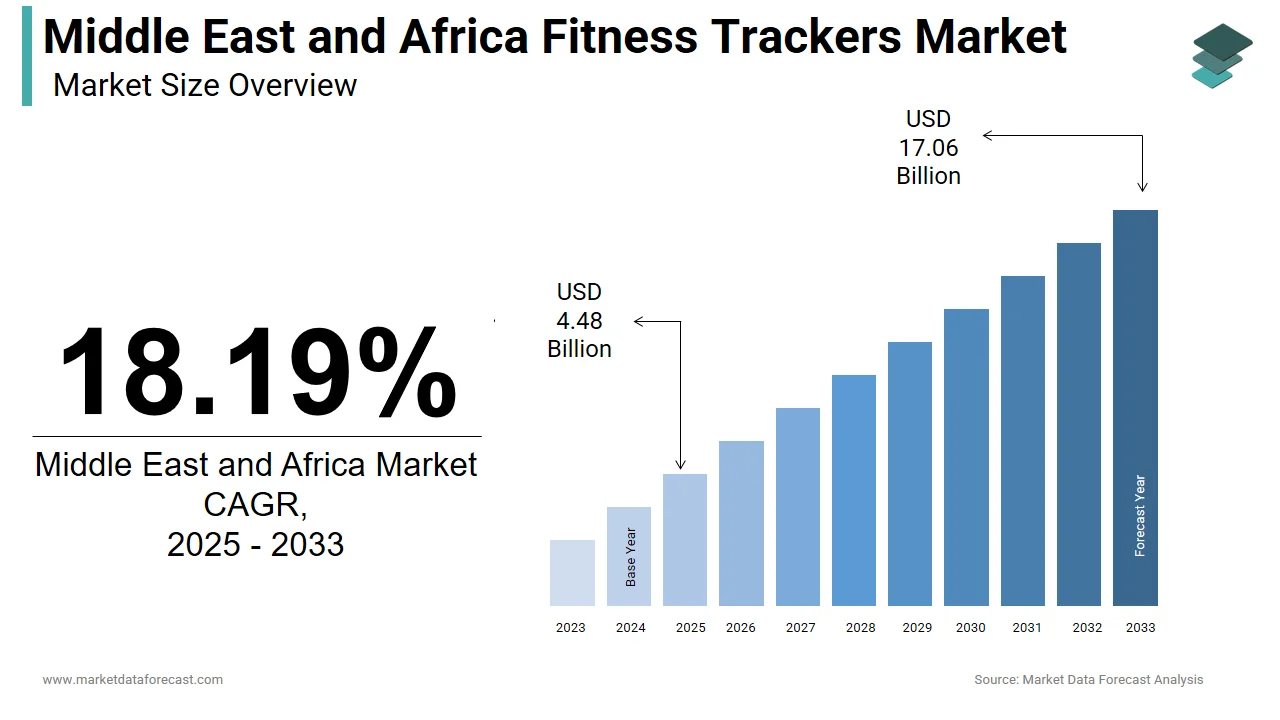
The Middle East and Africa fitness trackers market size was valued at USD 4.48 billion in 2025, is estimated at USD 5.29 billion in 2026, and is projected to reach USD 20.16 billion by 2034, expanding at a rapid compound annual growth rate (CAGR) of 18.19% during the forecast period from 2026 to 2034. Market growth is primarily driven by escalating consumer health awareness, increasing prevalence of chronic lifestyle diseases, rising healthcare expenditure, physician-backed monitoring recommendations, and the widespread integration of IoT and wireless technologies.
Key Executive Metrics (At-a-Glance)
- 2025 Base Valuation: USD 4.48 Billion
- 2026 Current Valuation: USD 5.29 Billion
- 2034 Forecast Valuation: USD 20.16 Billion
- Compound Annual Growth Rate (CAGR): 18.19% (2026–2034)
- Key Geographic Footprint: UAE, Saudi Arabia (KSA), South Africa, Israel, Rest of GCC, Egypt, Nigeria, Kenya, Ethiopia, Sudan, and Rest of MEA
Middle East and Africa Fitness Trackers Market Segmentation Breakdown
| Segment Category | Leading / Dominant Segment | Fastest-Growing Segment |
|---|---|---|
| By Product Type | Smart Watches & Activity Monitors | Smart Clothing |
| By Wearing Type | Handwear | Legwear & Headwear |
| By Application | Heart Rate & Sports/Running Tracking | Glucose & Sleep Measurement |
| By End-Users | Sports & Fitness Enthusiasts | Hospitals & Diagnosis Centers |
| By Age Group | Adult's Fitness Trackers | Children's Fitness Trackers |
| By Sales Channel | Offline Retail Channels | Online / E-Commerce Platforms |
| By Country | United Arab Emirates (UAE) | Nigeria & Rest of MEA |
Major Industry Players Profiled
Key market participants shaping the Middle East & Africa fitness trackers landscape include Fitbit, Inc., Apple Inc., Adidas AG, Xiaomi Inc., Samsung Electronics Co. Ltd., Nike Inc., Moov Inc., Lumo Bodytech Inc., and Jawbone.
Middle East and Africa Fitness Trackers Market Size
The Middle East and Africa fitness trackers market was valued at USD 4.48 billion in 2025, is estimated to reach USD 5.29 billion in 2026, and is projected to reach USD 20.16 billion by 2034, growing at a CAGR of 18.19% from 2026 to 2034.
MARKET DRIVERS
Growing Health Awareness and Adoption of Smart Fitness Devices
Escalating expenditure on healthcare is a key driving factor for the market to grow. The rise in the utilization of smartphones and laptops is accelerating the growth rate of the fitness trackers market eventually in this region. In addition, a growing number of people suffering from diabetes, asthma, and other cardiovascular problems are expanding the growth of the market. People's interest to keep the focus on their physical activities by measuring a number of calories burnt, heart rate and others are solely accelerating the demand of the market. IT sector is also playing an important role in manufacturing the devices with the latest features which are highly accurate and convenient for the users. The aforementioned attribute is promoting the demand of the market to the extent. Wireless technology made easy to connect with smartphones and laptops where user can have a brief history of the physical activity which is impacting positively on the growth of the market.
Increasing awareness to monitor fitness-related measurement among individuals is considered to be a major driving factor for the market to grow. Physicians are highly recommending these devices to their patients to monitor heart rate and other important activities which are also accelerating the demand for the market. Through campaigns and digital advertisements, the popularity of fitness trackers is increasing day by day and this is elevating the demand of the market to the extent. The rise in the number of people suffering from various diseases and increasing prevalence to improve services in healthcare centers is accelerating the growth rate of the fitness trackers market in the Middle East & Africa.
MARKET OPPORTUNITIES
IoT Adoption and Affordable Innovative Devices
As the internet of things is going popular in every corner of the world and this is anticipated to create growth opportunities for the market. The emergence of the latest technologies and introduction of innovative devices in favor of the users at reasonable prices is additionally leveraging the demand of the Middle East & Africa fitness trackers market. The trend towards to record and monitor a number of steps taken, heart rate, sleep duration and a number of calories burnt while doing exercises or performing sports activities is ascribed to boost up the demand of the fitness trackers market in the Middle East & Africa.
MARKET CHALLENGES
Design Gaps, Data Security Issues, and Low Awareness
The lack of certain knowledge over the designs and manufacturing them accordingly is slowly hampering the growth rate of the market. Rapid changes in the economic strategies may also impact negatively on the growth of the fitness trackers market in Middle East & Africa. Decreasing the production rate of the devices due to security and data threat issues remains a challenging attribute for the market players. In rural areas, people are not aware of these devices and their benefits which are inhibiting the demand of the market.
REPORT COVERAGE
| REPORT METRIC | DETAILS |
| Market Size Available | 2025 to 2034 |
| Base Year | 2025 |
| Forecast Period | 2026 to 2034 |
| Segments Covered | By Product Type, Wearing Type, Application, End-users, Age Group, Sales Channel, and Region. |
| Various Analyses Covered | Global, Regional and Country-Level Analysis, Segment-Level Analysis, Drivers, Restraints, Opportunities, Challenges; PESTLE Analysis; Porter’s Five Forces Analysis, Competitive Landscape, Analyst Overview of Investment Opportunities |
| Countries Covered | KSA, UAE, Israel, rest of GCC countries, South Africa, Ethiopia, Kenya, Egypt, Sudan, rest of Middle East and Africa |
| Market Leaders Profiled | Fitbit, Inc., Apple Inc., Adidas AG, Xiaomi Inc., Samsung Electronics Co. Ltd., Nike Inc., Moov Inc., Lumo Bodytech Inc. and Jawbone. |
REGIONAL ANALYSIS
UAE stands first in holding the largest shares of the market in the Middle East & Africa. Rising concern towards health is a major factor influencing towards growth side. Increasing disposable income is another factor lavishing the growth rate of the fitness trackers market. Saudi Arabia and South Africa are following UAE in leading dominant shares of the market by owing to the quick adoption of the latest technology and also growing prevalence for innovative products. Constant economic growth is evenly fueling the demand of the market in these countries. Nigeria and the rest of the Middle East & Africa are anticipated to have inclined growth rates in the coming years with the emergence of e-commerce in every sector. Rising competition between the players is to enhance growth opportunities for the market.
KEY MARKET PLAYERS
Companies playing a prominent role in the MEA Fitness Trackers Market profiled in this report are Fitbit, Inc., Apple Inc., Adidas AG, Xiaomi Inc., Samsung Electronics Co. Ltd., Nike Inc., Moov Inc., Lumo Bodytech Inc. and Jawbone.
MARKET SEGMENTATION
This research report has been segmented & sub-segmented into the following categories:
By Product Type
- Activity Monitors
- Smart Watches
- Smart Clothing
By Wearing Type
- Handwear
- Legwear
- Headwear
By Application
- Heart Rate Tracking
- Sleep Measurement
- Glucose Measurement
- Sports, Running, Cycling Tracking
By End-users
- Sports
- Hospitals and Diagnosis Center
- Others
By Age Group
- Adult's Fitness Tracker
- Children’s Fitness Tracker
By Sales Channel
- Online
- Offline
By Country
- KSA
- UAE
- Israel
- Rest of GCC Countries
- South Africa
- Ethiopia
- Kenya
- Egypt
- Sudan
- Rest of MEA