- Product Description Description
- Table of Contents TOC
- List of Table & Figure LOT
- Get Free Sample PDF Sample PDF
Market Size, 2025
$84.13 BnMarket Estimate, 2026
$101.04 BnMarket Forecast, 2034
$437.36 BnCAGR, 2026–2034
20.1%Executive Summary: Fitness Trackers Market
- Market Scope: Global fitness trackers market analysis covering product types, wearing categories, application areas, regional leadership frameworks, and wearable health monitoring adoption metrics.
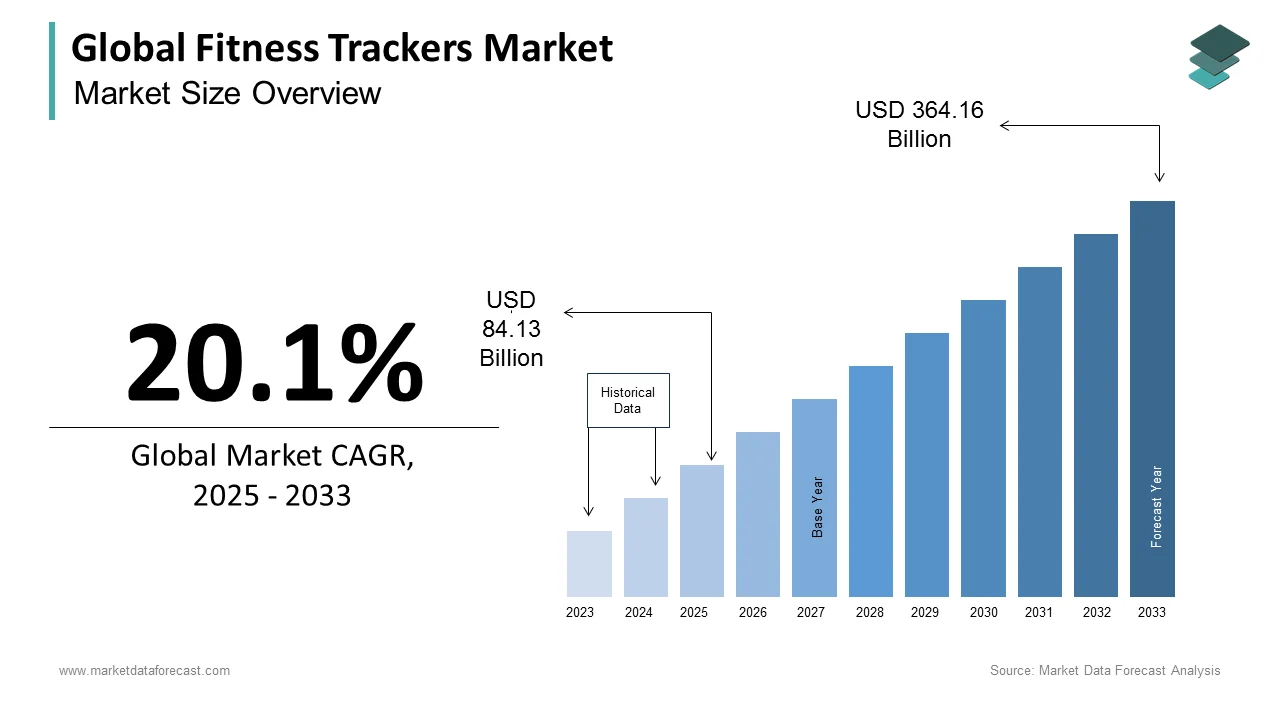
- Market Valuation: Valued at USD 84.13 billion in 2025, estimated at USD 101.04 billion in 2026, and projected to reach USD 437.36 billion by 2034, registering a CAGR of 20.1% from 2026 to 2034.
- Primary Growth Drivers: Integration of advanced biometrics and medical-grade monitoring capabilities, growing adoption of corporate wellness programs and institutional health initiatives, rising health consciousness, preventive healthcare adoption, and the expansion of wearable health monitoring technologies.
Key Market Segment Metrics (2026–2034)
| Category | Leading Segment (Position) | Fastest-Growing / Key Growth Segment |
|---|---|---|
| By Product & Wearing Type | Smart Watches (largest product) & Hand Wear (largest wearing type) | Smart Clothing (fastest product) & Legwear (fastest wearing type) |
| By Application Area | Heart Rate Tracking (largest application) | Glucose Measurement (fastest-growing application) |
| By Technology & Innovation | Standard activity monitors and conventional fitness tracking hardware | AI-driven health analytics, predictive monitoring, and telemedicine-integrated platforms |
| By Region / Country | North America (leading regional market) | Asia Pacific (fastest-growing regional market) |
Major Market Players & Market Structure
Market Structure: Highly competitive global fitness tracking and wearable ecosystem characterized by AI health analytics integration, advanced biometric sensor expansions, medical-grade monitoring development, and strategic healthcare provider partnerships.
Key Companies: Fitbit Inc. (Google), Apple Inc., Adidas AG, Xiaomi Inc., Samsung Electronics Co., Garmin Ltd., Huawei Technologies Co., Ltd., and Polar Electro Oy.
 Download Free Sample Report
Global Fitness Trackers Market Size
The size of the global fitness trackers market was worth USD 84.13 billion in 2025. The global market is anticipated to grow at a CAGR of 20.10% from 2026 to 2034 and be worth USD 437.36 billion by 2034 from USD 101.04 billion in 2026.
Fitness Trackers refers to the wearable electronic devices engineered to monitor and analyze physiological and behavioral metrics related to physical activity, health, and wellness. These devices, ranging from wrist-worn bands to advanced smart patches, employ embedded sensors such as accelerometers, photoplethysmographic (PPG) monitors, and gyroscopes to capture data on heart rate, sleep cycles, step count, oxygen saturation, and energy expenditure. Unlike general-purpose smartwatches, fitness trackers prioritize health-centric analytics with extended battery life and streamlined interfaces tailored for continuous biometric surveillance.
The global rise in sedentary lifestyles has intensified their relevance; as per the World Health Organization, more than 1.8 billion adults fail to meet minimum physical activity guidelines, contributing to an estimated 4-5 million annual deaths from non-communicable diseases. In response, public health initiatives in countries like Finland and Singapore have integrated fitness tracking into national wellness programs, distributing devices to at-risk populations. With increasing urbanization and digital health adoption, fitness trackers are evolving from consumer gadgets into tools for preventive medicine, supported by growing interoperability with electronic health records and telemedicine platforms, particularly in regions with strained healthcare infrastructures.
MARKET DRIVERS
Integration of Advanced Biometrics and Medical-Grade Monitoring Capabilities
The incorporation of clinically relevant biometric sensors capable of generating actionable health insights is a pivotal force accelerating demand for fitness trackers. Modern devices now measure not only basic parameters like steps and heart rate but also advanced markers such as heart rate variability (HRV), VO₂ max estimation, and nocturnal blood oxygen levelsmetrics increasingly recognized in preventive cardiology. According to the American College of Cardiology, HRV serves as a reliable indicator of autonomic nervous system function, with low variability correlating to a higher risk of cardiovascular events over a time period. Leading manufacturers like Garmin and Fitbit have embedded HRV tracking into their mid-tier models, enabling users to assess stress resilience and recovery status. Additionally, the FDA’s clearance of certain trackers for irregular rhythm notifications has elevated their credibility. Furthermore, the integration of bioimpedance sensors allows for segmental body composition analysis, with devices like the Huawei Watch Fit 3 offering hydration and skeletal muscle monitoring. As healthcare systems face mounting pressure from aging populations, fitness trackers are emerging as scalable tools for remote patient monitoring, reducing clinical burden through early anomaly detection and longitudinal health profiling.
Corporate Wellness Programs and Institutional Adoption
The institutional deployment of fitness trackers within corporate wellness and public health frameworks, driven by rising occupational health concerns and escalating healthcare expenditures, is another significant demand catalyst. Employers are increasingly adopting wearable technology to mitigate productivity losses linked to chronic disease and absenteeism. Programs such as Aetna’s “Attain” initiative, developed in collaboration with Apple, reward employees with premium discounts for achieving activity milestones tracked via wearables. Similarly, national health authorities are leveraging trackers at scale. In Japan, where karoshi (death from overwork) remains a societal concern, the government mandates stress assessments for large firms, many of which now use wearable-derived data to monitor employee fatigue. This institutional endorsement not only validates the efficacy of fitness trackers but also ensures sustained procurement, transforming them from discretionary purchases into essential components of organizational health strategy.
MARKET RESTRAINTS
Data Privacy Vulnerabilities and Regulatory Non-Harmonization
The growing apprehension surrounding personal health data security and the absence of unified global regulatory standards a critical impediments to the widespread adoption of fitness trackers. These devices continuously collect highly sensitive biometric information, including heart rate patterns, sleep architecture, and GPS-tracked movement, creating expansive digital health profiles vulnerable to exploitation. According to a 2020 investigation by the Norwegian Consumer Council, several mainstream fitness apps transmit unencrypted user data to third-party advertisers and analytics firms, including precise location histories and menstrual cycle details. This exposure is exacerbated by fragmented legal frameworks; while the European Union enforces stringent protections under the General Data Protection Regulation (GDPR), the United States lacks a federal law governing health data from consumer wearables, leaving oversight to a patchwork of state regulations and sector-specific rules like HIPAA, which does not cover most fitness tracker manufacturers. As per a Pew Research Center survey, 72% of Americans are concerned about how their wearable data is used, with 48% avoiding device usage due to privacy fears. Moreover, cross-border data flows face compliance hurdles; in China, the Personal Information Protection Law mandates onshore data storage, complicating global operations for multinational brands. Without transparent data governance, standardized encryption protocols, and enforceable consent mechanisms, consumer trust remains fragile, undermining long-term engagement and limiting market expansion, particularly in privacy-sensitive regions like Germany and South Korea.
High User Attrition and Limited Long-Term Engagement
Despite initial enthusiasm, a persistent challenge for the fitness tracker market is the rapid decline in user engagement after the first few months of ownership. Behavioral studies indicate that device abandonment rates exceed 50% within six months of purchase. This attrition stems from a combination of novelty fatigue, lack of personalized feedback, and insufficient integration into daily routines. Many users report that default notifications, such as step count reminders, become irrelevant or intrusive over time, failing to adapt to individual goals or lifestyle changes. Additionally, users with chronic conditions often find the data overwhelming without clinical interpretation. Unlike medical devices prescribed with professional guidance, fitness trackers are typically self-managed, leading to disengagement when perceived utility wanes. This behavioral bottleneck limits the realization of long-term health benefits and constrains the value proposition for both consumers and healthcare providers, challenging the sustainability of mass-market adoption.
MARKET OPPORTUNITIES
Synergy with Telemedicine and Remote Patient Monitoring Ecosystems
The deeper integration of fitness trackers into telehealth and remote care infrastructures, particularly as healthcare systems shift toward decentralized models, is a transformative opportunity. Fitness trackers capable of capturing stable heart rate, respiratory rate, and activity levels offer real-time physiological baselines that enhance diagnostic accuracy during remote visits. With the rise of AI-driven analytics platforms such as Current Health and Biofourmis, tracker data is being translated into predictive risk scores for conditions like sepsis and decompensated diabetes. As regulatory bodies like the FDA expand clearance for wearable-based monitoring, and insurers begin reimbursing remote tracking services, fitness trackers are poised to transition from wellness accessories to reimbursable medical tools, unlocking new revenue streams and institutional contracts.
Expansion into Geriatric and Age-Management Health Applications
Their adaptation for aging populations, where early detection of functional decline can significantly improve quality of life and reduce healthcare costs is an emerging frontier for fitness trackers. There is growing demand for non-invasive tools that monitor mobility, fall risk, and cognitive health. Modern trackers equipped with advanced motion sensors can detect subtle changes in gait variability, a known precursor to falls. Devices like the Oura Ring have introduced “readiness” scores. In Japan, where a notable share of the population is already over 65, municipal programs in Tokyo and Osaka have distributed trackers to elderly residents to monitor nighttime bathroom visits and sleep fragmentation, indicators of urinary tract issues or early dementia. By repositioning fitness trackers as proactive aging tools rather than youth-oriented fitness gadgets, manufacturers can access a high-value demographic with strong healthcare spending power and institutional support, fostering long-term product relevance.
MARKET CHALLENGES
Sensor Accuracy Limitations in Diverse Physiological Conditions
The variability in sensor accuracy across different skin tones, body types, and activity intensities is a fundamental challenge undermining the credibility of fitness trackers. Photoplethysmography (PPG), the primary technology for heart rate monitoring, relies on light absorption through the skin, but melanin density can interfere with signal detection. Similarly, excessive wrist movement during resistance training or cycling can generate motion artifacts, leading to erroneous readings. Blood oxygen (SpO₂) measurements have also been questioned. These inaccuracies compromise the reliability of health insights, especially in medical or athletic settings where precision is paramount. Without rigorous, independent validation across diverse populations and standardized performance benchmarks, consumer and clinical trust remains compromised, limiting the transition from lifestyle use to diagnostic-grade applications.
Rapid Technological Obsolescence and Sustainability Concerns
The fitness tracker market faces mounting pressure from rapid product cycles and environmental implications tied to electronic waste and resource depletion. Manufacturers typically release new models every 12 to 18 months, rendering older devices incompatible with updated software or apps, effectively shortening their functional lifespan. Unlike smartphones, most trackers lack modular design or repairability. Additionally, the production of lithium-ion batteries and rare earth elements like neodymium carries significant ecological costs. Consumers are becoming increasingly aware of these impacts. As regulatory bodies like the European Commission advance right-to-repair legislation and carbon labeling mandates, companies face growing pressure to extend product longevity and adopt circular design principles. Failure to address these sustainability challenges risks reputational damage and regulatory penalties, particularly in environmentally conscious markets.
REPORT COVERAGE
| REPORT METRIC | DETAILS |
| Market Size Available | 2025 to 2034 |
| Base Year | 2025 |
| Forecast Period | 2026 to 2034 |
| Segments Covered | By Product Type, Wearing Type, Application, and Region. |
| Various Analyses Covered | Global, Regional and Country-Level Analysis, Segment-Level Analysis, Drivers, Restraints, Opportunities, Challenges; PESTLE Analysis; Porter’s Five Forces Analysis, Competitive Landscape, Analyst Overview of Investment Opportunities |
| Regions Covered | North America, Europe, Asia Pacific, Latin America, Middle East & Africa |
| Market Leaders Profiled | Fitbit Inc., Apple Inc., Adidas AG, Xiaomi Inc., Samsung Electronics Co. Ltd, and Nike Inc. |
SEGMENTAL ANALYSIS
By Product Type Insights
The smartwatch segment dominated the global fitness trackers market by capturing approximately 56.3% of total revenue in 2025. This lead position is credited to their dual functionality as both health-monitoring devices and communication platforms, effectively merging the capabilities of traditional fitness bands with smartphone integration. The main driver of this dominance is the increasing integration of advanced health sensors into mainstream smartwatches. Devices such as the Apple Watch Series 9 and Samsung Galaxy Watch 6 now feature FDA-cleared electrocardiogram (ECG) monitoring, blood oxygen saturation (SpO₂) tracking, and fall detection systems. Furthermore, the global proliferation of mobile health ecosystems has elevated demand; Apple Health and Samsung Health collectively serve a substantial number of active users, enabling seamless data synchronization with telemedicine platforms. Another critical factor is brand-driven consumer loyalty. The convergence of fashion, functionality, and digital identity has transformed smartwatches into status symbols, particularly in urban centers across North America and East Asia, ensuring sustained market penetration and premium pricing power.
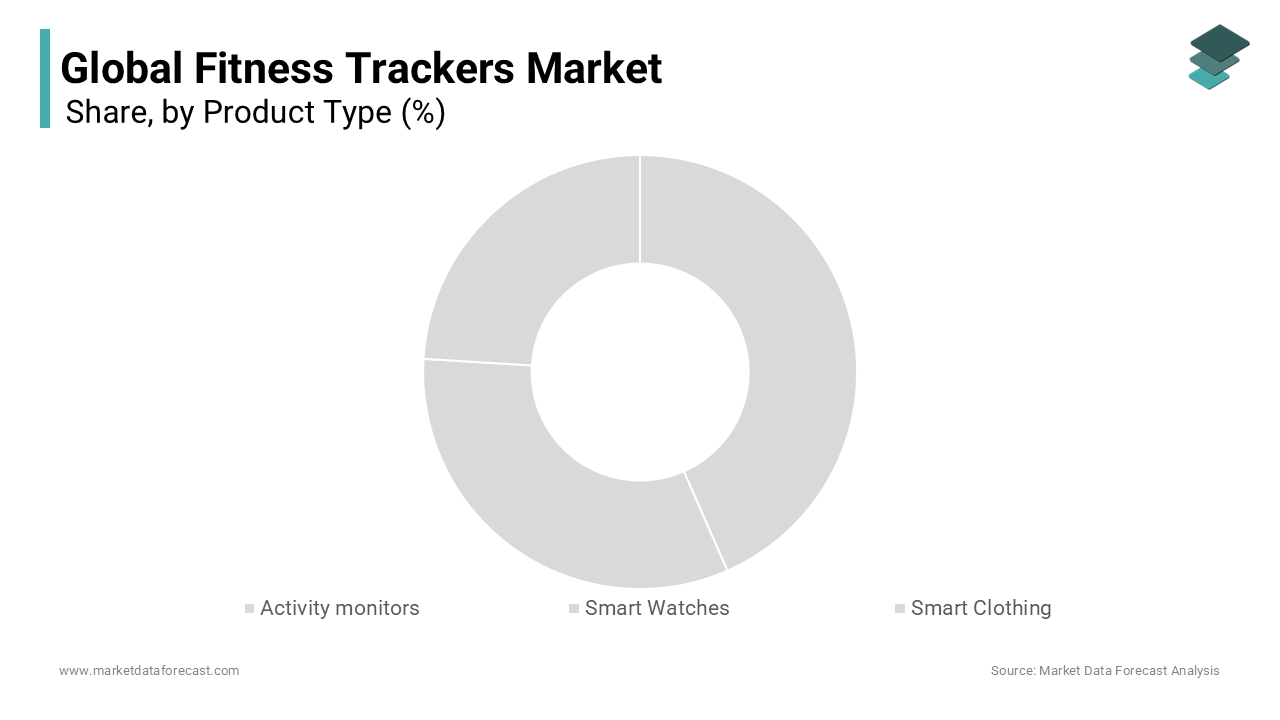
The smart clothing segment is emerging as the fastest-growing category and is projected to expand at a CAGR of 18.7% from 2026 to 2034. This accelerated growth is fueled by innovations in textile-based biosensing and the demand for unobtrusive, continuous physiological monitoring. Unlike wrist-worn devices, smart garments, such as Hexoskin’s biometric shirts and OMsignal’s respiratory vests, offer direct contact with the torso, enabling more accurate measurement of respiration rate, thoracic movement, and cardiac output. Additionally, adoption in professional sports is accelerating. The military and occupational safety sectors are also embracing smart clothing. As conductive fiber production scales and wash durability improves, smart clothing is transitioning from niche performance gear to scalable health infrastructure, driving exponential growth.
By Wearing Type Insights
The hand wear segment commandded the largest share of the wearing type segment in 2025. This dominance is rooted in ergonomic practicality and sensor efficacy the wrist provides consistent blood flow and stable positioning for photoplethysmography (PPG) sensors, ensuring reliable heart rate and oxygen saturation readings. Moreover, cultural familiarity plays a pivotal role; the wrist has historically been the preferred location for timekeeping, making fitness bands a natural extension of daily accessory use. Retail availability reinforces this trend. The integration of haptic feedback and gesture controls further enhances utility, enabling silent notifications and contactless payments. In emerging markets like Indonesia and Brazil, where smartphone penetration is significant, wrist-worn devices serve as secondary screens, bridging digital access gaps. This combination of physiological accuracy, behavioral habit alignment, and technological versatility ensures hand wear remains the dominant form factor across consumer and institutional applications.
The legwear segment is the fastest-growing wearing type and is registering a projected CAGR of 16.3% from 2026 to 2034. This surge is driven by the rising demand for biomechanical analytics in athletic training and rehabilitation. Devices such as Sensoria’s smart socks and Wiivv’s insoles utilize pressure mapping and accelerometry to assess gait symmetry, foot strike patterns, and load distribution, metrics critical for injury prevention. Additionally, medical applications are expanding. Paralympic athletes increasingly rely on smart leg braces with embedded trackers to optimize prosthetic alignment and energy expenditure. As edge computing enables on-device data processing and 5G connectivity supports real-time coaching, legwear is evolving from passive gear to intelligent mobility systems, catalyzing rapid adoption across sports, healthcare, and defense sectors.
By Application Insights
The Heart rate tracking segment held the largest application by representing 41.5% of total fitness tracker functionality utilization in 2025. This dominance is underpinned by the centrality of cardiac metrics in both fitness optimization and chronic disease management. Resting heart rate (RHR) and heart rate variability (HRV) are widely recognized indicators of cardiovascular fitness and autonomic nervous system balance. The American Heart Association identifies a resting heart rate above 80 bpm as a predictor of increased mortality risk, prompting users to monitor trends over time. Modern trackers employ multi-wavelength PPG sensors to enhance accuracy, with devices achieving high agreement with chest-strap monitors during aerobic exercise. Furthermore, heart rate data powers key features such as calorie burn estimation, stress scoring, and workout intensity zones, making it indispensable for training regimens. Public health initiatives have amplified its relevance. In elite sports, teams like FC Barcelona use real-time heart rate analytics to adjust training loads and prevent overtraining syndrome. Thus, the preventive value of continuous heart monitoring ensures this application remains the cornerstone of the fitness tracker ecosystem.
The Glucose measurement segment is the fastest-growing application segment and is anticipated to grow at a CAGR of 22.4% from 2026 to 2034. This explosive growth is driven by the global diabetes epidemic and the urgent need for non-invasive monitoring solutions. With 537 million adults living with diabetes in 2023, a figure expected to rise to 783 million by 2045 as per the International Diabetes Federation, there is intense demand for alternatives to finger-prick testing. While current fitness trackers do not directly measure blood glucose, emerging optical and electrochemical sensors are enabling indirect estimation through interstitial fluid analysis and AI-driven pattern recognition. Additionally, partnerships between tech firms and pharmaceutical companies, such as Dexcom’s integration with Apple Watch, are accelerating commercialization. As regulatory pathways for non-invasive glucose monitoring evolve, particularly under the FDA’s Digital Health Pre-Cert Program, fitness trackers are poised to become integral to metabolic health management, unlocking unprecedented growth potential.
REGIONAL ANALYSIS
North America Fitness Trackers Market Analysis
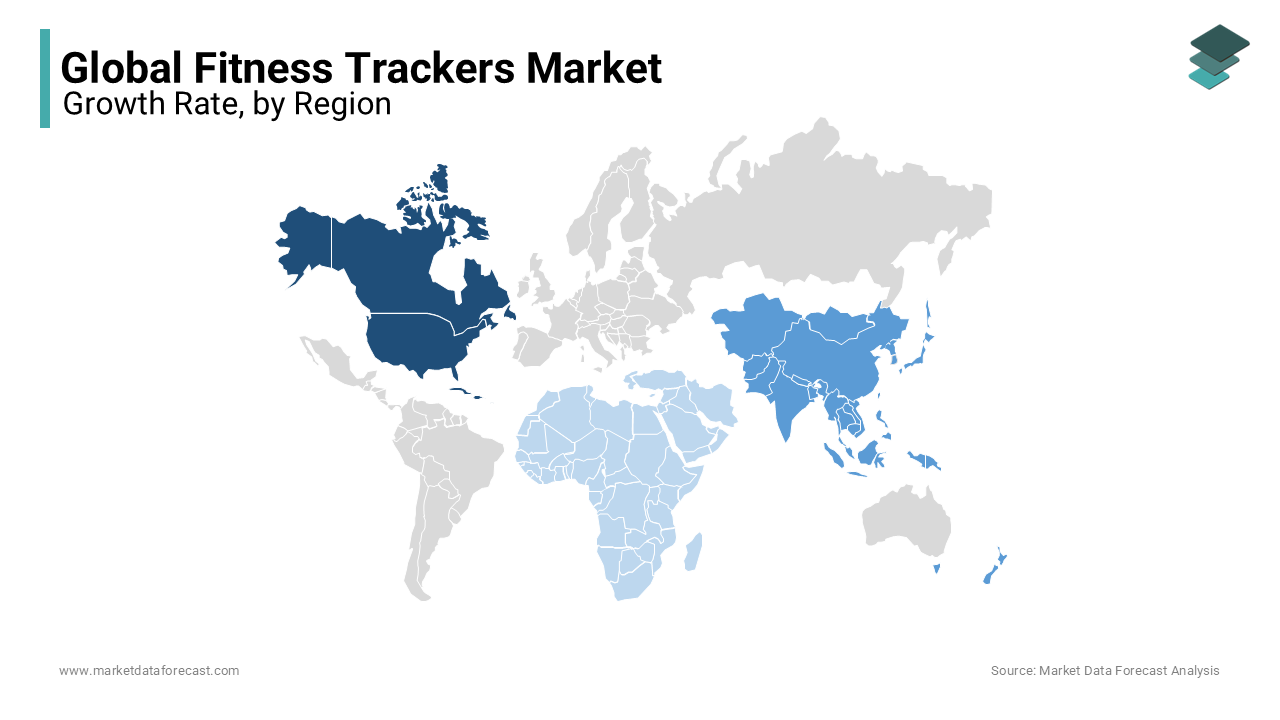
North America stood as the most mature and technologically advanced market for fitness trackers by commanding 32.4% of global revenue in 2025. The region’s progress is anchored in high healthcare digitization, robust consumer spending, and a deeply embedded fitness culture. The United States alone accounts for a significant share of regional demand, driven by widespread adoption of preventive health technologies. Corporate wellness programs, mandated by employers like Google and Johnson & Johnson,, enhancing institutional penetration. Regulatory support further strengthens the ecosystem; the FDA’s Breakthrough Devices Program has fast-tracked approvals for trackers with medical-grade capabilities, including atrial fibrillation and sleep apnea detection. Silicon Valley’s innovation pipeline ensures continuous product evolution, with Apple, Fitbit, and Whoop leading R&D investments. Moreover, integration with private insurance creates strong behavioral nudges. With telehealth utilization surging post-pandemic and chronic disease prevalence rising, North America remains the epicenter of high-value, data-driven wearable adoption.
Europe Fitness Trackers Market Analysis
Europe secured a significant share of the market. The region exhibits a balanced blend of consumer demand and regulatory rigor, with Germany, the UK, and France leading in per capita adoption. A defining characteristic is the emphasis on data privacy and clinical validation, shaped by the General Data Protection Regulation (GDPR) and the EU Medical Device Regulation (MDR). This has encouraged manufacturers to prioritize transparency and accuracy, enhancing consumer trust. Public healthcare systems are increasingly incorporating trackers into preventive care. Additionally, the rise of outdoor sports culture, cycling, hiking, and triathlons fuels demand for rugged, GPS-enabled devices. Garmin dominates the premium segment, capturing a portion of sales in Alpine countries. With aging populations and rising healthcare costs, European governments are incentivizing digital self-monitoring, positioning the region as a leader in ethically governed, clinically integrated wearable deployment.
Asia-Pacific Fitness Trackers Market Analysis
Asia-Pacific exhibits the most dynamic growth trajectory due to rapid urbanization and digital transformation. China, India, and Japan are key contributors, each with distinct drivers. In China, government-backed initiatives like the “Healthy China 2030” plan promote wearable adoption to combat rising metabolic disorders; a substantial number of Chinese consumers now use fitness trackers. Indian tech startups such as Noise and boAt have captured a notable share of the mid-tier market by offering localized features and affordable pricing, with unit sales growing annually. Japan’s aging society has spurred demand for fall-detection wearables, with Panasonic and Sony launching senior-focused models integrated into national long-term care insurance schemes. Additionally, the region’s smartphone-first population embraces app-connected devices, with WeChat and Paytm enabling seamless fitness data sharing. As 5G networks expand and AI-driven health coaching gains traction, the Asia-Pacific is evolving into a hub of innovation and mass-market scalability, challenging Western dominance in the long term.
Latin America Fitness Trackers Market Analysis
Latin America holds a notable share of the global fitness tracker market, with Brazil and Mexico serving as primary growth engines, according to Latin American Tech Insights. The region’s expansion is fueled by rising middle-class awareness of preventive health and increasing access to digital finance. Brazil alone recorded a year-on-year increase in wearable sales in 2023, driven by e-commerce platforms like Mercado Libre and educational campaigns on diabetes prevention. Local telecom providers such as Claro and Telefónica are bundling trackers with mobile plans, lowering entry barriers. While affordability remains a constraint, the proliferation of sub-$50 devices from Chinese OEMs is accelerating adoption. With digital literacy improving and chronic disease burdens mounting, Latin America is transitioning from a peripheral to a strategic market for wearable manufacturers.
Middle East and Africa Fitness Trackers Market Analysis
Middle East and Africa collectively display nascent yet promising potential. The Gulf Cooperation Council (GCC) countriesparticularly the UAE and Saudi Arabiaare leading adoption, driven by national health transformation agendas. Saudi Arabia’s Vision 2030 includes digital health as a pillar, with it distributing trackers to diabetic patients in Riyadh and Jeddah, achieving an improvement in glycemic control. The UAE has launched the “Smart Dubai” initiative, integrating wearable data into city-wide wellness dashboards. High smartphone penetration (in urban centers) and luxury consumer preferences favor premium brands like Apple and Garmin. In Africa, South Africa dominates with a notable share of regional sales, though affordability limits its reach. However, mobile-based health programs like mHero in Kenya are exploring low-cost trackers for maternal and child health monitoring. As infrastructure improves and health awareness grows, the region is poised for incremental but impactful expansion, particularly in preventive care for non-communicable diseases.
COMPETITIVE LANDSCAPE
The competitive landscape of the fitness trackers market is marked by a dynamic interplay between technological innovation, brand positioning, and ecosystem integration. Dominant players leverage their scale and R&D capabilities to push the boundaries of sensor accuracy and health functionality, while niche manufacturers focus on specialized applications such as athletic performance or senior care. The market is increasingly segmented by user intentranging from casual wellness tracking to clinical-grade monitoringprompting companies to refine their value propositions. Differentiation arises not only from hardware design but also from software intelligence, data interpretation, and user engagement strategies. As consumer expectations evolve toward actionable health insights, companies are investing heavily in artificial intelligence and predictive analytics to deliver personalized feedback. The convergence of fitness technology with digital health infrastructure has intensified rivalry, with tech giants, medical device firms, and startups vying for influence. Brand trust, data privacy practices, and regulatory compliance have become critical competitive levers. Moreover, the rise of direct-to-consumer health models and insurance-linked incentives has redefined go-to-market strategies. While innovation drives short-term advantage, long-term success hinges on sustained user engagement, clinical validation, and seamless integration into broader health ecosystems.
KEY MARKET PLAYERS
Some notable companies that dominate the global fitness trackers market profiled in this report are
- Fitbit, Inc.
- Apple Inc.
- Adidas AG
- Xiaomi Inc.
- Samsung Electronics Co., Ltd
- Nike Inc.
- Others
TOP LEADING PLAYERS IN THE MARKET
- Apple Inc. has redefined the fitness tracker landscape by seamlessly integrating health monitoring into a premium consumer technology ecosystem. Through the Apple Watch, the company has elevated wearables from simple step counters to sophisticated health companions capable of delivering clinically relevant insights. Its emphasis on design, user experience, and interoperability with iOS devices has cultivated a loyal customer base. Apple’s collaboration with medical institutions and regulatory bodies has enabled the inclusion of advanced features such as ECG and fall detection, positioning its devices at the intersection of wellness and preventive healthcare. By continuously refining sensor accuracy and expanding health-related functionalities, Apple has set industry benchmarks, influencing both consumer expectations and competitive innovation.
- Fitbit LLC, now under Google’s umbrella, pioneered the mainstream adoption of wearable fitness technology. Known for its user-friendly interface and comprehensive health dashboards, Fitbit built a reputation for accessibility and long-term health tracking. The brand’s strength lies in its robust software platform, which offers detailed analytics on activity, sleep, and heart health, fostering user engagement through goal setting and community challenges. Fitbit’s early focus on behavior modification and wellness integration has made it a preferred choice in corporate and public health programs. Its transition into advanced health monitoring, including sleep apnea detection and stress management tools, reflects a strategic evolution from fitness gadgetry to holistic health management.
- Garmin Ltd. distinguishes itself through a precision-driven approach tailored to athletes, outdoor enthusiasts, and performance-focused users. Unlike mass-market competitors, Garmin emphasizes data depth, battery longevity, and rugged durability across its wearable lineup. The company’s expertise in GPS technology and biomechanical analytics enables highly accurate tracking of complex activities such as triathlons, mountaineering, and endurance training. Garmin’s ecosystem integrates seamlessly with training platforms, offering actionable insights for performance optimization. Its reputation for reliability and minimal reliance on smartphones appeals to professionals and serious hobbyists. By maintaining a niche yet dedicated user base and consistently innovating in sports science, Garmin has secured a unique and enduring position in the global fitness tracker market.
TOP STRATEGIES USED BY KEY MARKET PARTICIPANTS
One major strategy employed by leading players is the integration of medical-grade health monitoring features into consumer wearables. Companies are collaborating with healthcare institutions and regulatory agencies to validate sensor accuracy and introduce clinically meaningful functionalities such as atrial fibrillation detection, blood oxygen monitoring, and sleep disorder screening. This shift positions fitness trackers as tools for preventive care, enhancing credibility and expanding utility beyond lifestyle tracking.
Another key approach is ecosystem consolidation, where manufacturers deepen integration between hardware, software, and cloud-based services. By creating seamless experiences across devices, mobile apps, and third-party platforms such as telemedicine, wellness programs, and insurance incentivescompanies increase user dependency and retention. This interconnected model fosters long-term engagement and differentiates brands in a saturated market.
A third strategy involves strategic partnerships with healthcare providers, insurers, and corporate wellness programs. By embedding fitness trackers into institutional health initiatives, companies ensure bulk procurement, sustained usage, and access to high-value user segments. These alliances also facilitate data utilization in clinical settings, bridging the gap between consumer technology and formal healthcare delivery.
GLOBAL FITNESS TRACKERS MARKET NEWS
- In June 2023, Apple launched advanced sleep apnea detection features on the Apple Watch Series 9 through a software update, enhancing its role in preventive healthcare and expanding its appeal to users with respiratory concerns.
- In September 2023, Google integrated Fitbit’s health data platform with its Verily-developed health analytics tools, enabling deeper insights and paving the way for personalized wellness recommendations based on long-term biometric trends.
- In January 2024, Garmin introduced the Forerunner 165 with built-in training effect analytics and recovery advisor, reinforcing its leadership in performance-oriented wearables for serious athletes and endurance trainers.
- In March 2024, Samsung partnered with the European Society of Cardiology to validate the accuracy of blood pressure monitoring on the Galaxy Watch 6, aiming to strengthen clinical credibility and expand medical adoption in Europe.
- In May 2024, Whoop collaborated with the NFL Players Association to provide recovery tracking wearables to professional athletes, solidifying its position in elite sports performance and increasing visibility among fitness-conscious consumers.
MARKET SEGMENTATION
This research report on the global fitness trackers market has been segmented and sub-segmented into the following categories.
By Product Type
- Activity monitors
- Smart Watches
- Smart Clothing
By Wearing Type
- Hand Wear
- Legwear
- Headwear
- Others
By Application
- Heart Rate Tracking
- Sleep Measurement
- Glucose Measurement
- Sports, Running, and Cycling Tracking
By Region
- North America
- Europe
- Asia-Pacific
- Latin America
- Middle East and Africa