- Product Description Description
- Table of Contents TOC
- List of Table & Figure LOT
- Get Free Sample PDF Sample PDF
Market Size, 2025
$119.82 BnMarket Estimate, 2026
$145.27 BnMarket Forecast, 2034
$678.18 BnCAGR, 2026–2034
21.24%Executive Summary: Smart Wearables Market
- Market Scope: Comprehensive global smart wearables market analysis covering product types, technology integrations, end-user applications, regional leadership frameworks, and biometric monitoring metrics.
- Market Valuation: Valued at USD 119.82 billion (2025), estimated at USD 145.27 billion (2026), and projected to reach USD 678.18 billion by 2034, registering a robust CAGR of 21.24% (2026–2034).
- Primary Growth Drivers: Increasing health consciousness, continuous fitness and physiological monitoring, aging population, chronic disease management, and technical advances in sensors, AI, machine learning, wireless technologies, and 5G. Key operational highlights include smart wearables supporting remote patient monitoring and home healthcare, alongside high historical demand (e.g., 28.4 million smartwatches shipped globally in Q2 2023, representing a 27.2% year-over-year increase).
Key Market Segment Metrics (2026–2034)
| Category | Leading Segment (2025 Position) | Fastest-Growing Segment |
|---|---|---|
| By Product Type | Smartwatches (held the largest share of the global market in 2025 and expected to retain dominance) | Fitness Trackers (projected to register a promising CAGR alongside head-mounted displays) |
| By Application / Technology | Fitness & Physiological Monitoring (dominant consumer sector tracking heart rate, sleep quality, and calories burned) | Medical-Grade Wearables & Remote Patient Monitoring (RPM) applications |
| By End User | Consumer Electronics Segment (accounting for the primary bulk of commercial adoption and retail sales) | Healthcare Providers and Home-Healthcare Settings (driven by chronic disease management) |
| By Region | North America (held the largest global market share in 2025, led by the United States) | Asia-Pacific (projected to register the fastest regional CAGR during the forecast period) |
Major Market Players & Market Structure
Market Structure: Highly competitive and fast-evolving ecosystem featuring leading technology conglomerates and specialized health-tech innovators competing intensely on advanced sensors, AI-enabled health insights, seamless connectivity, medical-grade wearables, and continuous biometric monitoring.
Key Companies: Apple, Covidien, Philips Electronics, Fitbit, LifeWatch, Polar Electro, Jawbone, Sotera Wireless, Pebble Technology, Drägerwerk, Omron, Samsung, Huawei, Lifesense Group, Adidas, Qualcomm, Sony, Garmin, Nokia Technologies, Vital Connect, and Everist Genomics.
Global Smart Wearables Market Size
The size of the global smart wearables market was worth USD 119.82 billion in 2025. The global market is anticipated to grow at a CAGR of 21.24% from 2026 to 2034, reaching USD 678.18 billion by 2034, up from USD 145.27 billion in 2026.
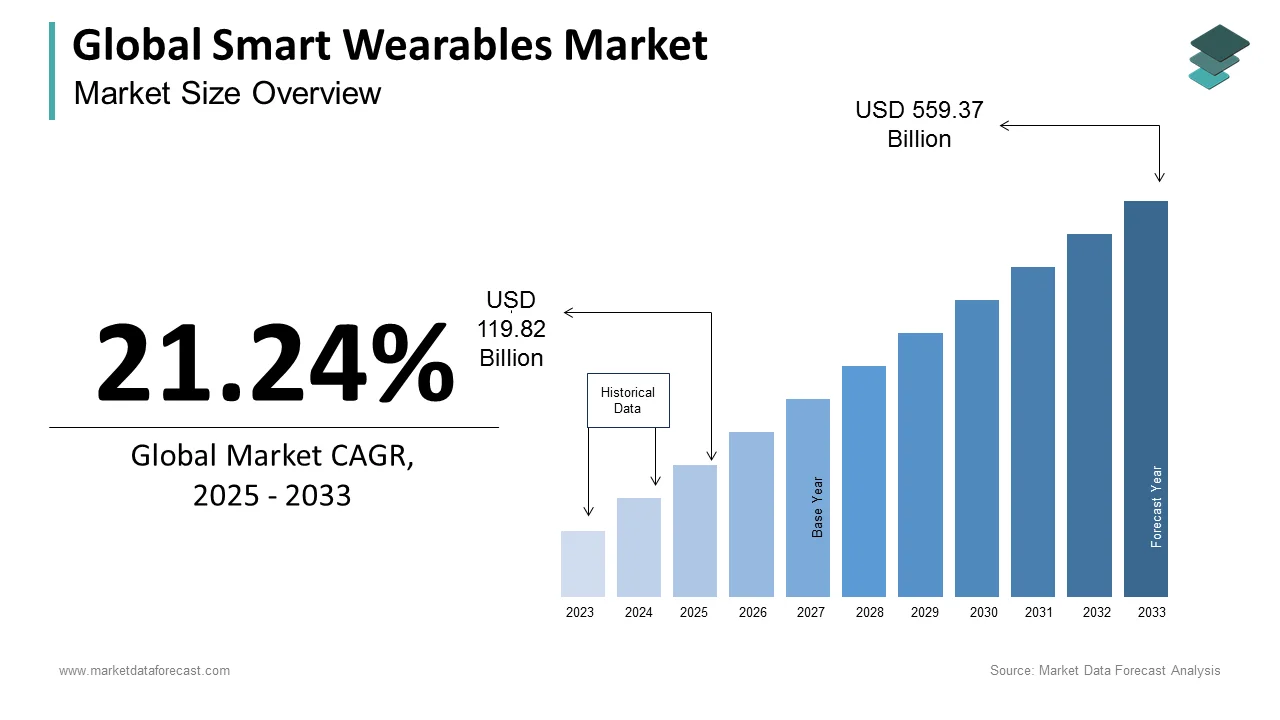
The usage of smart wearables such as smartwatches, fitness trackers, smart clothes, smart glasses, and more is growing rapidly worldwide. With the growing adoption, these devices have become an everyday need for many people. The popularity of smart wearables has increased notably in recent days, and these devices have become accessible and affordable. People primarily use these devices to monitor their health and fitness with real-time data continuously. Smart wearables allow people to easily track their physical activity, sleep patterns, and other physiological parameters. This information can be used to make informed decisions regarding their health and wellness. Considering the advantages of using smart wearables, many people are willing to purchase and use these devices. The adoption trend is expected to progress significantly in the coming years.
MARKET DRIVERS
The rising awareness among people regarding the advantages associated with using smart wearables and rising health consciousness among people are primarily propelling market growth.
Using smart wearables, people can track the number of steps walked, distance traveled, calories burned, heart rate, sleep quality, blood pressure, and blood oxygen levels. Keeping an eye on the health metrics has become essential to the people of the modern world owing to the growing aging population, increasing incidence of chronic diseases, and a growing number of infectious diseases. Smart wearables further help people set reminders, schedule events, track appointments, and provide the ability to send an emergency message or call for help. The understanding levels of people about the benefits of smart wearables such as smartwatches, fitness trackers, smart glasses, and others have grown significantly in the recent past. Smart wearables such as smartwatches and fitness trackers help track and monitor various health parameters and set fitness goals. Likewise, increasing awareness of the benefits of smart wearables drives the market’s growth rate. The growing adoption of technological developments in manufacturing advanced smart wearable devices is anticipated to promote the market’s growth rate.
Technological advancements in smart wearables and increasing R&D efforts from the key market participants are further contributing to the expansion of the global market.
The manufacturers of smart wearable devices are putting significant efforts into bringing technologically well-advanced products to the market. Some of the smart wearable devices of the current generation are now equipped with technologies such as sensors, wireless technologies, AI, and ML and are providing the ability to track and monitor a wide range of health and fitness parameters and offering personalized services. These devices are also capable of following voice commands and making mobile payments. The rising demand and usage of smart wearable devices among the aging population are further fuelling market growth.
With the growing age, people's need for effective health management increases. In the modern world, many aged people are leveraging the abilities of smart wearables to stay connected with healthcare providers and caregivers and keep track of their health parameters. Using smart wearables, caregivers or healthcare providers can track the health condition of older adults timely and be aware of various essential health parameters such as fall detection, medication reminders, GPS tracking, and heart rate monitoring. In addition, people aged and suffering from chronic diseases must have micro-monitoring of their health, and tracking their health condition regularly is a must. Using smart wearables, these tasks can be done effortlessly, and based on the stored data, the healthcare providers can assess the health condition and suggest appropriate treatment plans.
In addition, the growing penetration of mobile platforms into human lives and the growing adoption of AI and 5G are some of the significant factors accelerating the growth rate of the global smart wearables market. Furthermore, the growing adoption of home healthcare, remote patient monitoring, and telemedicine is anticipated to boost the growth rate of the smart wearables market.
MARKET RESTRAINTS
High costs associated with some smart wearable devices are key factors that hamper market growth.
These high costs are not affordable to some of the target audiences of these products, limiting their widespread adoption. Issues associated with interoperate ability are another major concern for market growth. Some smart wearable devices are compatible with other devices and platforms. Issues of data privacy and security are another significant obstacle to the growth of the smart wearables market. However, product recalls and stringent regulatory requirements for new products have somewhat stifled this market’s growth. Furthermore, strict government regulations for device approval are limiting the market growth. However, the limited battery life in almost all wearables is expected to impact market growth negatively.
REPORT COVERAGE
| REPORT METRIC | DETAILS |
| Market Size Available | 2025 to 2034 |
| Base Year | 2025 |
| Forecast Period | 2025 to 2033 |
| Segments Covered | By Product, Component, and Region. |
| Various Analyses Covered | Global, Regional, and Country-Level Analysis, Segment-Level Analysis, Drivers, Restraints, Opportunities, Challenges; PESTLE Analysis; Porter’s Five Forces Analysis, Competitive Landscape, Analyst Overview of Investment Opportunities |
| Regions Covered | North America, Europe, Asia Pacific, Latin America, Middle East & Africa |
| Market Leaders Profiled | Apple, Covidien Plc, Philips Electronics, Fitbit Inc., LifeWatch AG, Polar Electro, Jawbone, Sotera Wireless, Pebble Technology Corp., Drägerwerk AG & Co. KGaA, Omron Corp., Samsung, Huawei, Lifesense Group, Adidas Group, Qualcomm Technologies, Inc, Sony Corporation, Garmin, Nokia Technologies, Vital Connect, and Everist Genomics, and Others. |
SEGMENTAL ANALYSIS
By Product Insights
The smartwatches segment had the largest share of the global smart wearables market in 2025, and the segment’s domination is estimated to continue during the forecast period. The growing popularity of smartwatches and their increasing adoption worldwide are majorly propelling segmental growth. The useful features associated with smartwatches, such as fitness tracking, communication, mobile payments, music streaming, and others, are majorly boosting the adoption of these devices and resulting in the segment's growth. In addition, smartwatches are further capable of tracking various health metrics such as heart rate monitoring, blood oxygen level tracking, and sleep tracking, due to which the adoption of these devices is further growing. As per the data published by IDC, an estimated 28.4 million smartwatches were shipped in Q2 2023, an increase of 27.2% compared to the previous year. In addition, increasing promotional activities by the notable manufacturers of smartwatches such as Apple, Samsung, Garmin, Huawei, and Xiaomi to promote the awareness and adoption of smartwatches is further propelling the segment's growth rate.
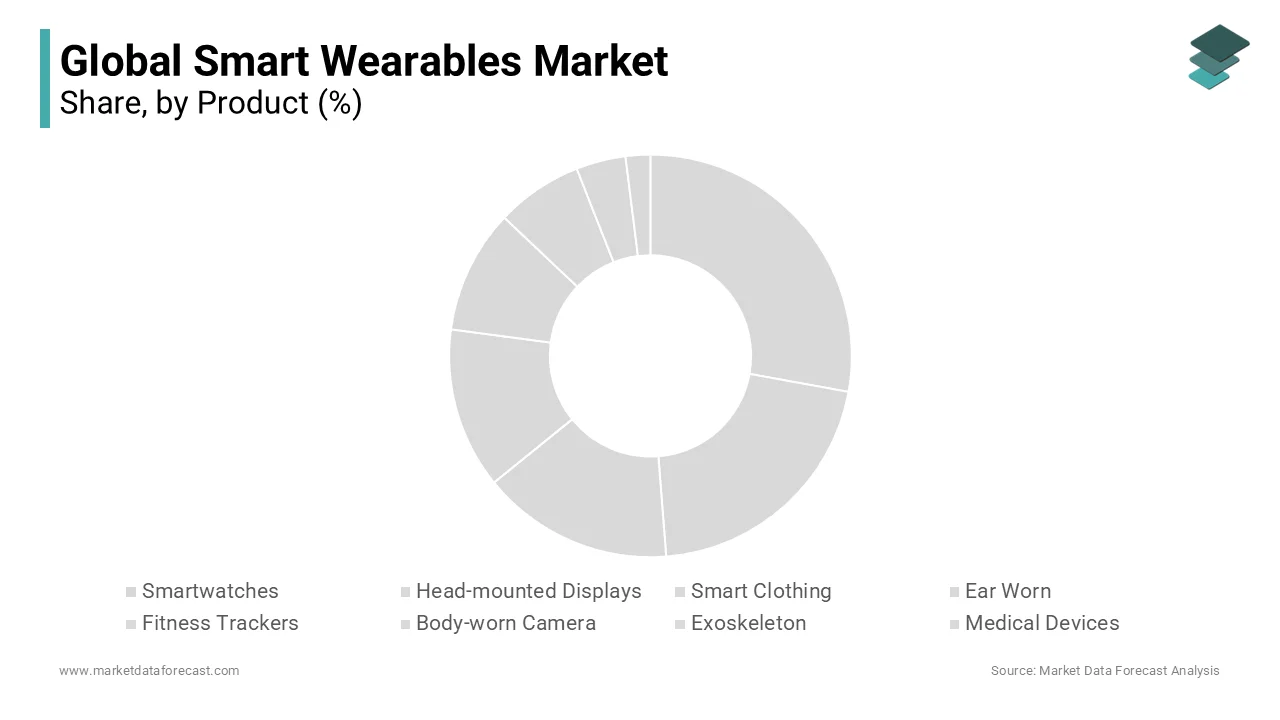
The fitness trackers segment is anticipated to grow at a promising CAGR during the forecast period owing to the growing adoption of these devices by fitness enthusiasts and celebrities. In addition, people keen on fitness and health prefer fitness-tracking devices over smartwatches. As a result, the adoption of these devices has grown significantly in the last few years, and the trend is expected to continue in the coming years and result in segmental growth.
The head-mounted displays segment is predicted to showcase a healthy CAGR during the forecast period.
REGIONAL ANALYSIS
North America Smart Wearables Market Analysis
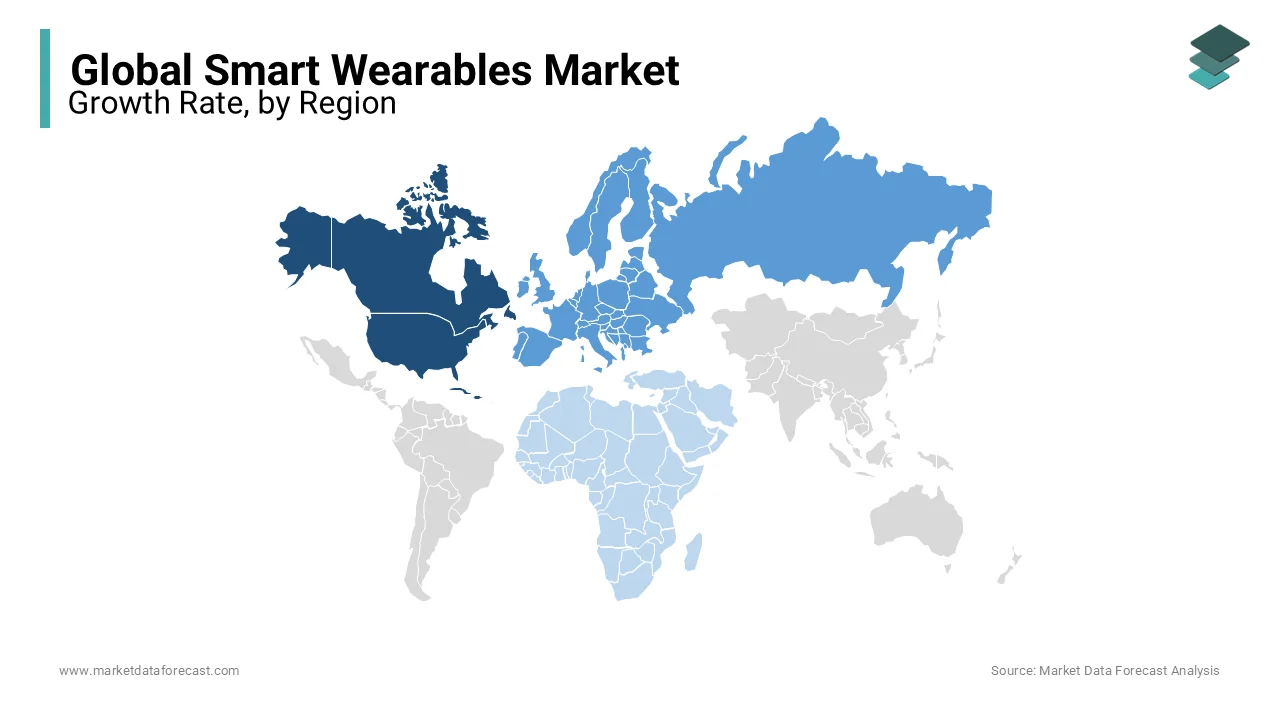
North America was the largest regional segment in the worldwide market in 2025, and the region’s domination is anticipated to continue during the forecast period. The growth of the North American smart wearables market is primarily attributed to growing disposable income, rising health consciousness among the North American population, and the presence of sophisticated healthcare infrastructure. The U.S. market had the major share of the North American market, followed by Canada in 2025. The presence of key market participants in the U.S. and the increasing adoption of smartwatches and fitness trackers are majorly propelling the U.S. market growth.
Europe Smart Wearables Market Analysis
Europe is another notable regional market for smart wearables worldwide and is predicted to register a promising CAGR during the forecast period. The penetration of wearable technology among the European population has been rising in the last few years, favoring regional market growth. Furthermore, factors such as growing emphasis on health and wellness among people in Europe and rising awareness among people regarding the benefits of smart wearables are promoting the growth rate of the European market. During the forecast period, the UK and Germany are anticipated to hold a considerable share of the European market.
Asia-Pacific Smart Wearables Market Analysis
The Asia-Pacific market is progressing rapidly. As a result, the APAC market is predicted to showcase the fastest CAGR during the forecast period. The growing disposable income and rapid adoption of technological developments are majorly boosting regional market growth. In addition, the growing aging population, rising incidence of chronic diseases, and the presence of local and global market players are propelling the APAC smart wearables market growth.
Latin America Smart Wearables Market Analysis
Latin America is anticipated to showcase a healthy CAGR during the forecast period. The growth of the Latin American market is majorly driven by the growing awareness of smart wearable devices and the increasing adoption of these devices. Mexico and Brazil together accounted for the largest share of the Latin American market in 2025, and the domination of these countries in this regional market is expected to continue during the forecast period.
KEY MARKET PLAYERS
Some of the companies that are playing a dominating role in the global smart wearables market include
- Apple Inc. (U.S.)
- Covidien Plc (Ireland)
- Philips Electronics (Netherlands)
- Fitbit Inc. (U.S.)
- LifeWatch AG (Switzerland)
- Polar Electro (Finland)
- Jawbone (U.S.)
- Sotera Wireless (U.S.)
- Pebble Technology Corp. (U.S.)
- Drägerwerk AG & Co. KGaA (Germany)
- Omron Corporation (Japan)
- Samsung Electronics Co., Ltd. (South Korea)
- Huawei Technologies Co., Ltd. (China)
- Lifesense Group (Netherlands)
- Adidas Group (Germany)
- Qualcomm Technologies, Inc. (U.S.)
- Sony Corporation (Japan)
- Garmin Ltd. (Switzerland/U.S.)
- Nokia Technologies (Finland)
- Vital Connect, Inc. (U.S.)
- Everist Genomics (U.S.)
GLOBAL SMART WEARABLES MARKET NEWS
- In February 2023, AUO, a company that manufactures display technologies, announced their mass production plans for MicroLED displays for wearable devices, TVs, and Cars.
- In January 2023, Fastrack entered the affordable smart wearables segment with Reflex Beat+ In India.
- In February 2023, the National University of Singapore and FlexoSense developed a small insole that can detect falls. But, of course, people have to include these soles inside their regular footwear to make it work, and these insoles are equipped with GPS modules, IMU, and pressure sensors.
MARKET SEGMENTATION
This research report on the global smart wearables market has been segmented and sub-segmented based on the product and region.
By Product
- Smartwatches
- Head-mounted Displays
- Smart Clothing
- Ear Worn
- Fitness Trackers
- Body-worn Camera
- Exoskeleton
- Medical Devices
By Region
- North America
- The U.S.
- Canada
- Rest of North America
- Europe
- UK
- Germany
- France
- Spain
- Italy
- Rest of Europe
- Asia-Pacific
- India
- China
- Japan
- Australia
- South Korea
- Rest of APAC
- Latin America
- Mexico
- Brazil
- Argentina
- Chile
- Rest of Latin America
- Middle East and Africa