- Product Description Description
- Table of Contents TOC
- List of Table & Figure LOT
- Get Free Sample PDF Sample PDF
Market Size, 2025
$3.56 BnMarket Estimate, 2026
$3.73 BnMarket Forecast, 2034
$5.42 BnCAGR, 2026–2034
4.79%Middle East and Africa Floriculture Market Size
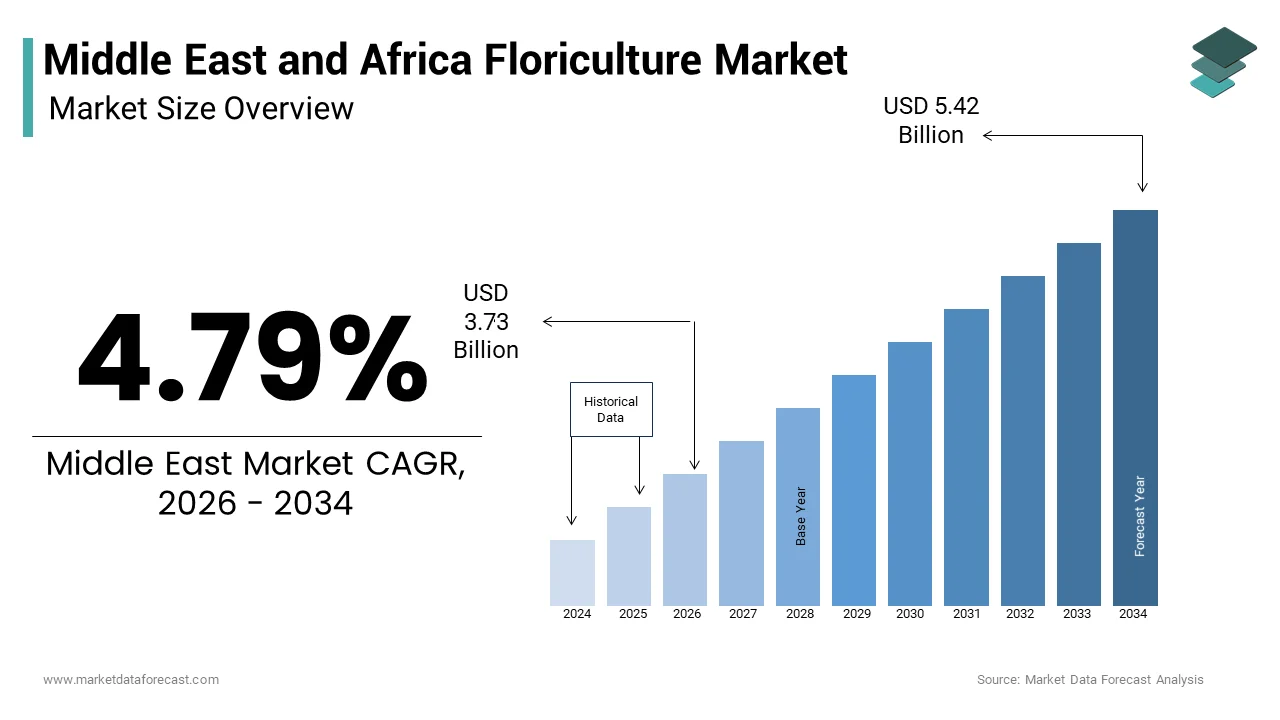
The Middle East and Africa floriculture market size was valued at USD 3.56 billion in 2025 and is anticipated to reach USD 3.73 billion in 2026 and USD 5.42 billion by 2034, growing at a CAGR of 4.79% from 2026 to 2034.
The study of growing flower-bearing plants and foliage is called floriculture, also known as flower farming. It also includes the cultivation of ornamental plants and the production of seeds, grafting, budding, cuttings, and other planting materials. It is the complete development of flowers and ornamentals from seeds to the point of sale.
The demand for flowers has been very high in the past few years and is expected to remain so in the forecast period as well. Technological advances in biotechnology and genome sequencing in plants have resulted in the development of new hybrid varieties of flowering plants and have also increased the yield. Floriculture is transforming into a lucrative business due to its high growth potential.
Developments in horticulture practices and greenhouse technology, advances in biotechnology and its applications on plants, and the rapidly growing commercial flower trade in developing countries are driving the market growth. However, the lack of better-transporting facilities in developing regions and increasing demand for artificial flowers are restraining the market growth to an extent.
REPORT COVERAGE
| REPORT METRIC | DETAILS |
| Market Size Available | 2025 to 2034 |
| Base Year | 2025 |
| Forecast Period | 2026 to 2034 |
| CAGR | 4.79% |
| Segments Covered | By Offering, Technology, Application Region. |
| Various Analyses Covered | Global, Regional & Country Level Analysis, Segment-Level Analysis, DROC, PESTLE Analysis, Porter’s Five Forces Analysis, Competitive Landscape, Analyst Overview on Investment Opportunities |
| Regions Covered | KSA, UAE, Israel, South Africa, Ethiopia, Kenya, Egypt, Sudan, Rest of GCC Countries, and Rest of MEA |
| Market Leaders Profiled | Syngenta Flowers, Karuturi, Rosebud, Beekenkamp, Queens Group, Dutch Flower Group, Washington Bulb, Finlays, Selecta One, Dümmen Orange. |
COUNTRY ANALYSIS
Based on region, the Floriculture market is analyzed under the Middle East and Africa regions. The Africa region leads the floriculture market. This region has a large number of agricultural-based countries and is a major exporter to theEuropeane region.
KEY MARKET PLAYERS
These are the market players that are dominating the Middle East and Africa floriculture market.
- Syngenta Flowers
- Karuturi
- Rosebud
- Beekenkamp
- Queens Group
- Dutch Flower Group
- Washington Bulb
- Finlays
- Selecta One
- Dümmen Orange
MARKET SEGMENTATION
This research report on the Middle East and Africa floriculture market is segmented and sub-segmented into the following categories.
By Product Type
- Cut Flowers
- Foliage Plants
- Potted Plants
- Bedding Plants
- Others
By Application
- Personal Use
- Cosmetics
- Pharmaceuticals
- Others
By Country
- KSA
- UAE
- Israel
- Rest Of GCC Countries
- South Africa
- Ethiopia
- Kenya
- Egypt
- Sudan
- Rest Of MEA