- Product Description Description
- Table of Contents TOC
- List of Table & Figure LOT
- Get Free Sample PDF Sample PDF
Market Size, 2025
$175 BnMarket Estimate, 2026
$181 BnMarket Forecast, 2034
$231 BnCAGR, 2026–2034
3.11%Middle East and Africa Non Alcoholic Drinks Market Report Summary
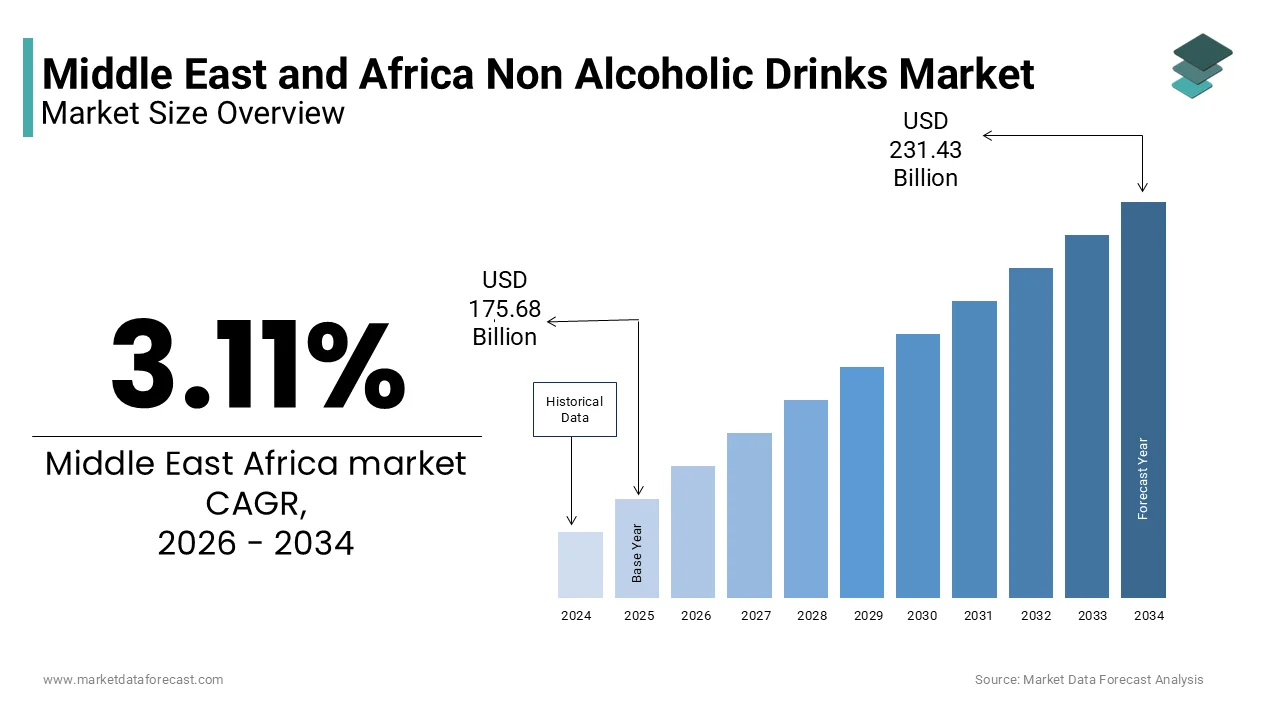
The Middle East and Africa non alcoholic drinks market was valued at USD 175.68 billion in 2025, is estimated to reach USD 181.14 billion in 2026, and is projected to reach USD 231.43 billion by 2034, growing at a CAGR of 3.11% during the forecast period. Market growth is driven by increasing consumer preference for healthier beverage options, rising urbanization, and expanding retail distribution networks. Non alcoholic drinks, including bottled water, juices, soft drinks, and functional beverages, are widely consumed due to changing lifestyles and growing demand for convenient refreshment products. The expansion of supermarkets, convenience stores, and foodservice outlets is further supporting steady market growth across the region.
Key Market Trends
- Rising demand for healthier and convenient beverage options is driving market growth.
- Increasing consumption of bottled water and functional beverages is boosting demand.
- Growing urbanization and changing consumer lifestyles are supporting market expansion.
- Expansion of supermarkets and organized retail channels is enhancing product accessibility.
- Innovation in low sugar, flavored, and fortified beverages is influencing consumer preferences.
Segmental Insights
- Based on product type, the bottled water segment held the leading share of the Middle East and Africa non alcoholic drinks market in 2025. This dominance is attributed to increasing health awareness, high temperatures across the region, and growing preference for safe drinking water.
- Based on distribution channel, the supermarkets and hypermarkets segment accounted for the highest share of the regional market in 2025, supported by broad product availability and organized retail growth.
Regional Insights
- The Middle East and Africa non alcoholic drinks market is experiencing steady growth across the region, supported by rising beverage consumption and retail development.
- Saudi Arabia was the leading contributor in 2025 and is expected to maintain its dominance during the forecast period, driven by high per capita beverage consumption, strong retail infrastructure, and economic diversification initiatives under Vision 2030.
Competitive Landscape
The Middle East and Africa non alcoholic drinks market is highly competitive, with key players focusing on product innovation, flavor diversification, and expansion of distribution networks to strengthen their market position. Companies are investing in healthier beverage formulations, premium bottled water products, and sustainable packaging solutions. Prominent players in the Middle East and Africa non alcoholic drinks market include Attitude Drinks Inc, Coca-Cola Company, Dr. Pepper Snapple Group Inc, Danone, DydoDrinco, Inc, Nestlé S.A., PepsiCo Inc, Parle Agro Ltd, and San Benedetto.
Middle East and Africa Non Alcoholic Drinks Market Size
The Middle East and Africa non alcoholic drinks market size was valued at USD 175.68 billion in 2025 and is projected to reach USD 231.43 billion by 2034 from USD 181.14 billion in 2026, growing at a CAGR of 3.11%.
In many nations within the Middle East, the prohibition of alcohol under Islamic law has historically fostered a robust industry for non-alcoholic alternatives, particularly during social gatherings and religious observances such as Ramadan. According to the World Health Organization, the prevalence of diabetes in the Eastern Mediterranean Region is among the highest globally, affecting over 15% of the adult population, which significantly influences consumer choices towards healthier beverage options. The hot and arid climate prevalent in much of the Gulf Cooperation Council countries and North Africa drives consistent demand for hydrating fluids throughout the year. As per a report released on March 6, 2025, Africa’s urban population is set to double by 2050, soaring from 700 million to 1.4 billion, thereby expanding the consumer base for packaged beverages. The market is characterized by a mix of international conglomerates and local producers who compete on price, taste, and brand loyalty. Regulatory frameworks regarding sugar taxation and labeling are evolving in countries like Saudi Arabia and South Africa aiming to combat obesity. These dynamics create a complex landscape where traditional preferences intersect with modern health consciousness shaping the trajectory of the non-alcoholic drinks market in the region.
MARKET DRIVERS
High Prevalence of Hot Climates Driving Hydration Needs
The extreme climatic conditions prevalent across the Middle East and large parts of Africa are primarily driving the expansion of the Middle East and Africa non-alcoholic drinks market. Temperatures in Gulf countries frequently exceed 40 degrees Celsius during summer months creating an enduring demand for refreshing and cooling beverages. As per recent findings, the Middle East is warming at a rate of 0.45 degrees Celsius per decade which is twice the global average and intensifies the need for fluid intake to prevent heat related illnesses. This environmental factor ensures a baseline consumption of bottled water and isotonic drinks regardless of economic fluctuations. In North African nations such as Egypt and Morocco, the hot desert climate similarly sustains high per capita consumption of soft drinks and juices. The cultural habit of consuming beverages with meals is further reinforced by the weather making drinks an integral part of daily life rather than just occasional indulgences. Retailers and manufacturers capitalize on this by ensuring widespread availability of cold chains in urban and semi urban areas. The tourism sector in countries like the United Arab Emirates and Morocco also contributes to demand as visitors seek hydration in the heat. Additionally the agricultural sector in regions like Kenya and Ethiopia relies on irrigation which supports the production of fruit based drinks using locally sourced ingredients. The consistent thermal stress on the population creates a stable and predictable demand curve for non-alcoholic beverages making climate a fundamental structural driver of market growth and volume expansion across the region.
Rapid Urbanization and Expansion of Modern Retail Infrastructure
The accelerating pace of urbanization and the subsequent expansion of modern retail infrastructure are pivotal drivers further propelling the growth of the non-alcoholic drinks market in the Middle East and Africa. As populations migrate from rural areas to cities, there is a marked shift in consumption habits from traditional homemade beverages to convenient packaged options. As per a 2025 report, Africa’s urban population is set to double by 2050, soaring from 700 million to 1.4 billion, representing a significant increase in the number of consumers with access to supermarkets and convenience stores. In the Middle East, cities like Riyadh, Dubai, and Doha have seen substantial development in shopping malls and hypermarkets which serve as primary distribution channels for branded beverages. These modern retail outlets offer a wide variety of products including imported premium drinks and local favorites enhancing consumer choice. The presence of international retail chains facilitates the entry of global beverage brands into new markets while providing local producers with platforms to scale their operations. Improved logistics and cold chain management in urban centers ensure product quality and availability reducing spoilage and waste. The rise of middle class incomes in urban areas further supports the purchase of discretionary items such as energy drinks and flavored waters. Digital payment systems and e commerce platforms are also gaining traction enabling easier access to beverage products. This structural transformation in living standards and retail accessibility creates a fertile environment for sustained market expansion and brand penetration.
MARKET RESTRAINTS
Implementation of Sugar Taxes and Health Regulatory Measures
The introduction of sugar taxes and stringent health regulations is impeding the expansion of the Middle East and Africa non-alcoholic drinks market, particularly for carbonated soft drinks and high sugar juices. Governments in the region are increasingly adopting fiscal policies to combat rising rates of obesity and diabetes which are major public health concerns. As per the World Bank, Saudi Arabia and the United Arab Emirates implemented a 50% excise tax on sugary drinks in 2017 which led to an immediate decline in sales volumes for taxed categories. Similarly South Africa introduced a Health Promotion Levy on sugar sweetened beverages in 2018 aiming to reduce sugar intake among its population. These measures increase the retail price of beverages making them less affordable for price sensitive consumers. Manufacturers are forced to reformulate products to reduce sugar content which can alter taste profiles and potentially alienate loyal customers. The compliance costs associated with new labeling requirements and nutritional standards add to operational burdens. Small and medium sized enterprises may struggle to adapt to these regulatory changes due to limited resources for research and development. Consumer awareness campaigns linked to these taxes further discourage consumption of unhealthy drinks. While these policies aim to improve public health, they inadvertently suppress market growth for traditional high sugar beverages. The industry faces the challenge of balancing profitability with regulatory compliance while navigating shifting consumer preferences towards healthier alternatives. This regulatory pressure necessitates strategic pivots that may not always yield immediate financial returns.
Economic Volatility and Currency Fluctuations
Economic volatility and currency fluctuations is also hampering the expansion of the non-alcoholic drinks market in the Middle East and Africa, which is affecting both production costs and consumer purchasing power. Many countries in the region rely heavily on imports for raw materials such as concentrate, packaging materials, and machinery which are priced in US dollars. According to recent economic data, currency devaluations in nations like Nigeria, Egypt, and Ghana have significantly increased the cost of imports leading to higher production expenses for beverage manufacturers. These costs are often passed on to consumers in the form of higher retail prices which dampens demand especially in low income segments. Inflationary pressures erode disposable incomes forcing households to prioritize essential goods over discretionary spending on branded beverages. Political instability in certain regions further disrupts supply chains and distribution networks causing shortages and logistical delays. Foreign exchange shortages can hinder the ability of companies to repatriate profits or pay for imported inputs affecting investor confidence. In oil dependent economies, fluctuations in crude oil prices directly impact government revenues and consumer spending power. The uncertainty surrounding economic policies and exchange rates makes long term planning difficult for multinational corporations. Local producers may gain a competitive advantage if they source locally, but they too face challenges with input cost inflation. This economic instability creates an unpredictable business environment that constrains market expansion and investment in new product development.
MARKET OPPORTUNITIES
Growing Demand for Health and Wellness Oriented Beverages
The rising consumer preference for health and wellness oriented beverages is a substantial opportunity for growth in the Middle East and Africa non-alcoholic drinks market. As awareness of lifestyle diseases such as diabetes and obesity increases, consumers are actively seeking healthier alternatives to traditional sugary soft drinks. According to the 2025 Global Wellness Economy Monitor, the wellness economy in the Middle East and North Africa is among the fastest growing regional wellness economies over the last five years and has shown strong resilience. This trend drives demand for functional beverages including fortified waters, probiotic drinks, and natural fruit juices with no added sugar. Manufacturers have the opportunity to innovate by introducing products with added vitamins, minerals, and antioxidants that appeal to health aware demographics. The use of local superfoods such as dates, hibiscus, and baobab in beverage formulations offers a unique selling proposition that resonates with cultural preferences. Organic and clean label products are gaining traction among affluent urban consumers who prioritize transparency and natural ingredients. Retailers are dedicating more shelf space to health focused brands reflecting this shift in consumer behavior. Collaborations with fitness centers and health influencers can effectively promote these products to target audiences. The younger population in the region is particularly receptive to new health trends making it a key demographic for market penetration. By aligning product portfolios with wellness trends, companies can capture value in a growing segment that offers higher margins than conventional beverages. This strategic focus on health allows brands to differentiate themselves and build long term loyalty.
Expansion of E Commerce and Digital Distribution Channels
The rapid expansion of e-commerce and digital distribution channels offers a significant opportunity for the non-alcoholic drinks market in the Middle East and Africa to reach broader consumer bases. The adoption of smartphones and internet connectivity is rising sharply enabling online grocery shopping and direct to consumer delivery services. According to recent data, e commerce revenue in the Middle East and Africa is projected to grow substantially driven by increasing digital literacy and improved logistics infrastructure. Beverage companies can leverage these platforms to offer subscription services, bulk purchases, and exclusive online bundles that enhance customer convenience. The ability to deliver heavy and bulky items like bottled water and soft drinks directly to homes appeals to busy urban consumers. Digital marketing allows for targeted advertising and personalized promotions which can drive trial and repeat purchases. Partnerships with food delivery apps and quick commerce platforms enable faster delivery times meeting the immediate needs of consumers. In rural areas where physical retail presence is limited, e commerce can bridge the gap providing access to branded products. Data analytics from online sales provide valuable insights into consumer preferences and buying patterns enabling better inventory management and product development. The integration of digital payment solutions facilitates seamless transactions enhancing the overall customer experience. By embracing digital transformation, beverage manufacturers can optimize their distribution networks and tap into new market segments. This channel diversification reduces reliance on traditional retail and opens up avenues for innovative engagement strategies.
MARKET CHALLENGES
Inadequate Water Resources and Sustainability Concerns
The scarcity of water resources and growing sustainability concerns is a promising challenge to the non-alcoholic drinks market in the Middle East and Africa. The region is one of the most water stressed areas in the world with limited freshwater availability for agricultural and industrial use. According to data from the World Resources Institute, several countries in the Middle East face extremely high baseline water stress which impacts the production of water intensive beverages. Beverage manufacturing requires significant amounts of water for processing, cleaning, and cooling raising concerns about environmental impact and resource depletion. Consumers and regulators are increasingly scrutinizing the water footprint of companies demanding greater transparency and sustainable practices. Droughts and climate change exacerbate water scarcity leading to potential restrictions on industrial water usage. Companies must invest in advanced water treatment and recycling technologies to minimize waste which increases operational costs. The disposal of plastic bottles also presents a major environmental challenge with low recycling rates in many African countries. Pressure to adopt eco friendly packaging solutions such as biodegradable materials or refillable containers requires substantial capital investment. Failure to address sustainability issues can damage brand reputation and lead to regulatory penalties. Supply chain disruptions due to water shortages can affect production continuity. Balancing business growth with environmental responsibility is a complex task that requires long term strategic planning. The industry must collaborate with governments and communities to develop sustainable water management practices. This challenge necessitates innovation in resource efficiency and circular economy models to ensure viable operations.
Complex Supply Chain Logistics and Infrastructure Deficits
Complex supply chain logistics and infrastructure deficits present a persistent challenge for the non -alcoholic drinks market in the Middle East and Africa. The vast geographic expanse and varied terrain in Africa coupled with underdeveloped transportation networks hinder efficient distribution. According to the African Development Bank, inadequate infrastructure costs the continent billions of dollars annually in lost productivity affecting the movement of goods. Poor road conditions and limited rail connectivity increase transit times and transportation costs for beverage manufacturers. In remote rural areas, lack of reliable electricity compromises cold chain integrity leading to product spoilage and quality issues. Port congestion and customs delays in key entry points further disrupt supply chains causing inventory shortages. The fragmentation of markets across numerous countries with different regulatory regimes complicates cross border trade. Manufacturers must maintain multiple distribution centers to ensure product availability which increases overhead costs. Security concerns in certain regions pose risks to transport vehicles and storage facilities. The lack of standardized logistics protocols leads to inefficiencies and higher error rates. Small retailers who dominate the market often lack the capacity to store large volumes requiring frequent small deliveries. These logistical hurdles limit market penetration and restrict the ability of companies to scale operations effectively. Investing in infrastructure improvements and leveraging technology for supply chain visibility are essential but costly endeavors. The industry must navigate these complexities to maintain service levels and competitiveness.
REPORT COVERAGE
| REPORT METRIC | DETAILS |
| Market Size Available | 2025 to 2034 |
| Base Year | 2025 |
| Forecast Period | 2026 to 2034 |
| CAGR | 3.11% |
| Segments Covered | By Product Type, Sales, Distribution Channel, and Region |
| Various Analyses Covered | Global, Regional, & Country Level Analysis; Segment-Level Analysis; DROC, PESTLE Analysis; Porter’s Five Forces Analysis; Competitive Landscape; Analyst Overview of Investment Opportunities |
| Regions Covered | KSA, UAE, Israel, rest of GCC countries, South Africa, Ethiopia, Kenya, Egypt, Sudan and Rest of MEA |
| Market Leaders Profiled | Attitude Drinks Inc, Coca-Cola Company, Dr. Pepper Snapple Group Inc, Danone, DydoDrinco, Inc, Nestlé S.A., PepsiCo Inc, Parle Agro Ltd, San Benedetto. |
SEGMENTAL ANALYSIS
By Product Type Insights
The bottled water segment held the leading position in the Middle East and Africa non-alcoholic drinks market by accounting for the highest share of the regional market in 2025. The dominance of bottled water segment in this regional market is primarily due to the critical lack of safe drinking tap water in many regions and a growing consumer preference for pure hydration. In numerous countries across the Gulf Cooperation Council and North Africa, groundwater resources are depleted or saline necessitating reliance on desalination which is energy intensive and not always distributed for direct consumption. According to the World Health Organization, access to safely managed drinking water services remains a challenge in parts of Sub Saharan Africa where only 60% of the population has access, thereby driving demand for packaged alternatives. In the Gulf states, despite advanced infrastructure, cultural habits favor bottled water for its perceived purity and convenience. The hot climate exacerbates dehydration risks making water an essential daily commodity rather than a discretionary purchase. Consumers are increasingly avoiding sugary beverages due to health concerns related to diabetes and obesity further boosting water consumption. Major brands invest heavily in marketing campaigns emphasizing purity, source origin, and mineral content to differentiate their products. The availability of various pack sizes from small portable bottles to large dispensers caters to diverse usage scenarios including home, office, and travel. Retailers prioritize shelf space for water due to its high turnover rate. Government initiatives promoting hydration during religious periods such as Ramadan also support consistent demand. The segment benefits from relatively lower production costs compared to flavored beverages allowing for competitive pricing. This combination of necessity, health trends, and accessibility solidifies bottled water as the dominant product type in the regional market.
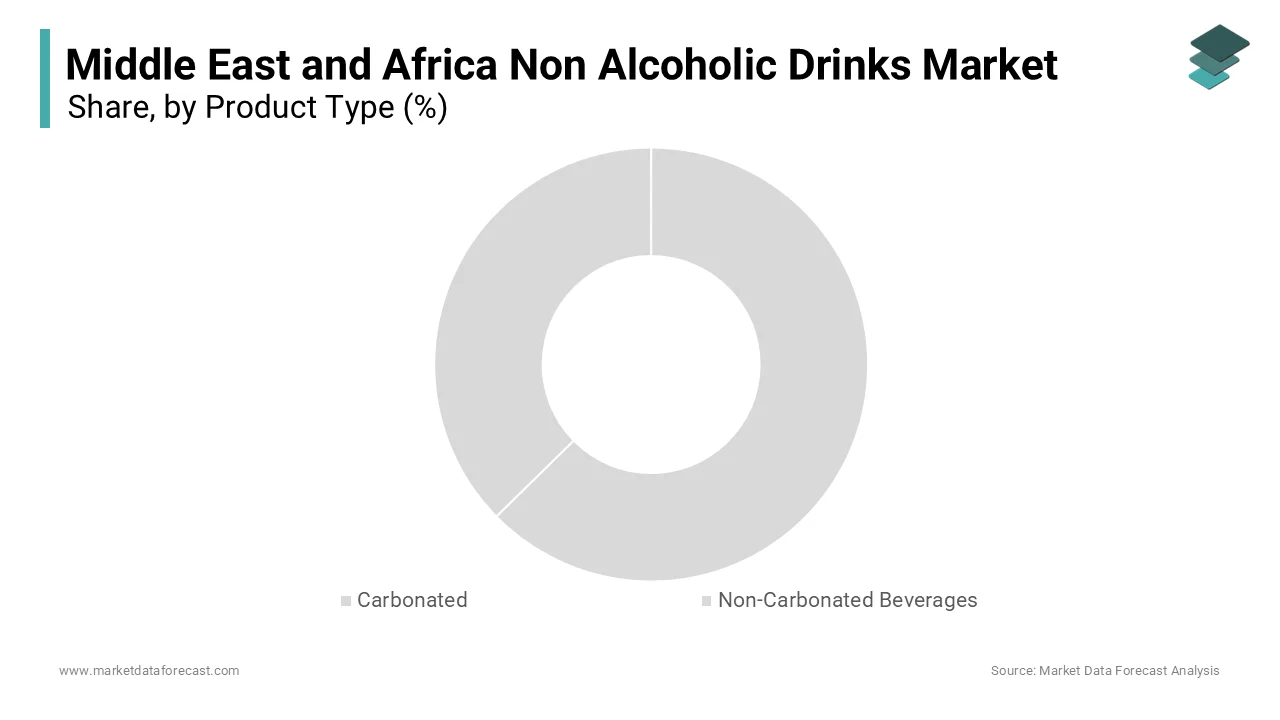
On the other hand, the juice segment is a promising segment and is estimated to grow at a CAGR of 8.4% over the forecast period owing to the increasing disposable incomes and a strong consumer shift towards natural and nutritious beverages. As middle class populations expand in countries like Saudi Arabia, Egypt, and South Africa, consumers are willing to pay premium prices for 100% pure juices and cold pressed variants that offer health benefits without artificial additives. According to the Food and Agriculture Organization of the United Nations, fruit production in the Middle East and North Africa region has seen steady growth providing a robust local supply base for juice manufacturers. The availability of indigenous fruits such as dates, pomegranates, and mangoes allows producers to create unique flavor profiles that resonate with local tastes. Urbanization has led busier lifestyles where convenient ready to drink juices serve as quick nutritional supplements. Retailers are expanding their chilled juice sections to accommodate fresh and pasteurized options that appeal to health conscious shoppers. Marketing efforts highlighting vitamin content and immune boosting properties further drive consumer interest. The introduction of innovative packaging such as re-sealable bottles and eco-friendly materials enhances product appeal. Collaborations with local farmers ensure sustainable sourcing and quality control. The trend towards clean label products free from preservatives and added sugars aligns with global wellness movements. This segment offers significant opportunities for differentiation through exotic blends and functional ingredients. The growing awareness of the link between diet and health sustains the momentum for juice consumption across the region.
By Distribution Channel Insights
The supermarkets and hypermarkets segment led the market by capturing the highest share of the regional market in 2025. The growth of the supermarkets and hypermarkets segment in this regional market is attributed to their ability to offer extensive product varieties under one roof. These large format stores provide consumers with the convenience of purchasing beverages alongside groceries, household items, and fresh produce. According to recent market figures, modern grocery retailers account for a significant portion of packaged food and drink sales in urban centers across the region particularly in the Gulf Cooperation Council countries where mall culture is prevalent. The structured environment allows for effective merchandising strategies such as end cap displays and promotional bundles which drive impulse purchases. Established relationships with major beverage manufacturers ensure consistent stock availability and competitive pricing. Private label brands offered by supermarket chains provide affordable alternatives that attract price sensitive shoppers. The presence of air conditioned environments in these stores is a crucial factor in hot climates encouraging longer shopping durations and higher spending. Loyalty programs and digital coupons enhance customer retention and encourage repeat visits. The ability to buy in bulk appeals to large families who constitute a significant demographic in the region. Supermarkets also serve as key launch pads for new product introductions allowing brands to gain immediate visibility. The integration of online ordering with in store pickup options further strengthens their position. This channel benefits from established logistics networks that ensure efficient replenishment. The trust consumers place in reputable supermarket chains for product quality and safety reinforces their dominance in the beverage distribution landscape.
However, the online stores segment is experiencing the fastest growth and is anticipated to record a CAGR of 10.45 over the forecast period in this regional market owing to the rapid digital adoption and the convenience of home delivery services. The proliferation of smartphones and improved internet connectivity has transformed shopping behaviors particularly among younger demographics in urban areas. According to recent statistics, e commerce penetration in the Middle East and Africa is rising steadily with grocery and beverage categories seeing increased online transaction volumes. Consumers appreciate the ability to order heavy and bulky items like bottled water and soft drinks without the physical effort of transporting them. Quick commerce platforms offering delivery within minutes have gained popularity for immediate hydration needs. Subscription models for regular deliveries of essential beverages ensure consistent supply for households and offices. Digital platforms enable personalized recommendations and targeted promotions based on purchase history enhancing customer engagement. The expansion of last mile logistics infrastructure has improved delivery reliability and reduced costs. Social media marketing influences purchasing decisions by showcasing new products and limited time offers. The COVID 19 pandemic accelerated the shift to online shopping, a trend that has persisted post pandemic. Retailers are investing in user friendly apps and secure payment gateways to streamline the buying process. This channel offers valuable data insights for manufacturers to understand consumer preferences. The convenience and efficiency of online shopping continue to drive its rapid expansion in the non alcoholic drinks market.
REGIONAL ANALYSIS
Saudi Arabia Non Alcoholic Drinks Market Analysis
Saudi Arabia dominated the non-alcoholic drinks market in this region in 2025 and is likely to maintain its position as a primary volume driver for non-alcoholic drinks due to its high per capita consumption and ongoing economic reforms under Vision 2030. The country has a young demographic with over 60% of the population under the age of 30 who are avid consumers of soft drinks and energy beverages. According to the General Authority for Statistics, the retail sector in Saudi Arabia is expanding rapidly supported by government initiatives under Vision 2030 to diversify the economy and improve quality of life. The prohibition of alcohol makes non alcoholic beverages the primary choice for social gatherings and celebrations. The hot desert climate necessitates constant hydration boosting demand for bottled water and juices. The implementation of sugar taxes has prompted manufacturers to introduce low sugar and diet variants which are gaining traction among health conscious consumers. Modern retail infrastructure including mega malls and hypermarkets provides extensive distribution channels for international and local brands. The hospitality sector is growing with increased tourism and religious pilgrimages driving demand in hotels and restaurants. Local production capabilities are strengthening reducing reliance on imports. Consumer preferences are shifting towards premium and functional beverages reflecting rising income levels. The market is characterized by intense competition among global giants and regional players. Strategic partnerships with local distributors facilitate market penetration. Saudi Arabia remains a pivotal market for volume and value growth in the region.
United Arab Emirates Non Alcoholic Drinks Market Analysis
The United Arab Emirates is likely to remain the regional hub for premium beverage innovation and sustainability initiatives as its diverse population continues to seek high quality functional products. According to the Department of Economic Development, Dubai attracts millions of visitors annually who contribute significantly to beverage consumption in hotels, restaurants, and cafes. The multicultural society demands a wide variety of international beverage brands ranging from specialty coffees to exotic juices. Health and wellness trends are prominent with consumers actively seeking organic, sugar free, and functional drinks. The government supports sustainability initiatives encouraging the use of recyclable packaging and reduced plastic waste. Modern retail outlets and luxury supermarkets cater to affluent consumers willing to pay for premium quality. The hot climate ensures year round demand for refreshing beverages. Innovation in product formats such as single serve packs and artisanal blends is common. The food and beverage service industry is highly developed offering diverse consumption occasions. Regulatory standards for food safety are stringent ensuring high product quality. The UAE serves as a test bed for new product launches before regional expansion. The market is dynamic and responsive to global trends making it a key influencer in the Middle East.
South Africa Non Alcoholic Drinks Market Analysis
South Africa is likely to lead the African continent in the adoption of health centric regulations and local manufacturing expansion despite facing ongoing economic challenges. According to official data, the manufacturing sector in South Africa contributes substantially to the economy with beverage production being a key component. The market is characterized by a mix of international brands and strong local players who dominate the carbonated soft drink and juice segments. Consumer preferences are influenced by health awareness leading to growth in bottled water and low sugar options. The retail landscape is dominated by large supermarket chains that offer wide product assortments. Economic challenges such as inflation and unemployment affect purchasing power making price sensitivity a key factor. Private label brands are gaining popularity as consumers seek value for money. The wine industry also influences the non alcoholic segment with dealcoholized wines gaining niche appeal. Regulatory measures such as the sugar tax impact formulation strategies. Distribution networks are well developed reaching both urban and rural areas. The market is competitive with frequent promotional activities. Innovation in packaging and sustainability is increasingly important. South Africa serves as a gateway for international brands entering the broader African market.
Egypt Non Alcoholic Drinks Market Analysis
Egypt is likely to see continued massive growth in the volume of daily staple beverages as its large population navigates economic adjustments through more affordable local brand options. According to the Central Agency for Public Mobilization and Statistics, Egypt has a population exceeding 100 million creating a massive consumer base for everyday beverages. Tea is deeply ingrained in Egyptian culture with high per capita consumption driving steady demand. Carbonated drinks are popular among youth and are widely available through traditional trade channels such as kiosks and small grocery stores. Economic constraints make affordability a critical factor influencing brand choice. Local manufacturers compete effectively with international brands by offering lower priced alternatives. The hot climate supports consistent consumption of refreshing drinks throughout the year. Bottled water demand is rising due to concerns over tap water quality. The government encourages local production to reduce import dependency. Distribution networks are extensive reaching remote rural areas. Consumer loyalty to established brands is strong but price promotions can shift preferences. The market is resilient despite economic fluctuations. Innovation focuses on cost effective packaging and familiar flavors. Egypt remains a key volume driver in the North African region.
Israel Non Alcoholic Drinks Market Analysis
Israel is likely to pioneer new frontiers in the global functional beverage market through its advanced technological research and high consumer demand for nutritional wellness. According to the Israel Central Bureau of Statistics, the food and beverage industry is a significant contributor to the economy with a focus on export oriented products. Consumers in Israel are highly health conscious driving demand for organic, natural, and functional beverages. The startup ecosystem fosters innovation in beverage formulation and sustainable packaging solutions. Bottled water and plant based milk alternatives are popular choices. The retail sector is modern with supermarkets offering diverse international and local brands. Kosher certification is a key requirement influencing product availability and consumer trust. The hot summers drive seasonal spikes in soft drink and juice consumption. Coffee culture is vibrant with a growing number of specialty cafes. Regulatory standards for labeling and ingredients are strict ensuring transparency. The market is open to new trends and global influences.
COMPETITIVE LANDSCAPE
The competition in the Middle East and Africa non alcoholic drinks market is intense and characterized by the presence of global multinational corporations alongside strong regional and local players. Major international brands leverage their extensive resources established distribution networks and powerful marketing capabilities to maintain dominance. However local companies compete effectively by offering products tailored to specific cultural tastes and price points. The market is fragmented in certain segments such as juices and dairy drinks where regional producers hold significant influence. Price sensitivity is a critical factor influencing consumer choices particularly in emerging economies within Africa. Companies differentiate themselves through innovation in health focused products sustainable packaging and digital engagement. Regulatory pressures such as sugar taxes force manufacturers to reformulate products creating a competitive landscape based on health credentials. Supply chain efficiency and cold chain infrastructure are key determinants of success in hot climates. Private label brands from large retail chains pose a growing threat by offering affordable alternatives. Consolidation through mergers and acquisitions is observed as companies seek to expand their portfolios. Competitive success depends on balancing cost efficiency with brand equity and adaptability to local market nuances.
KEY MARKET PLAYERS
Some of the key players in Middle East and Africa non-alcoholic drinks market are
- Attitude Drinks Inc
- Coca-Cola Company
- Dr. Pepper Snapple Group Inc
- Danone, DydoDrinco, Inc
- Nestlé S.A.
- PepsiCo Inc
- Parle Agro Ltd
- San Benedetto.
Top Players in the Market
- The Coca Cola Company maintains a dominant presence in the Middle East And Africa Non Alcoholic Drinks Market through its extensive distribution network and diverse portfolio of beverages. The company operates numerous bottling partners across the region ensuring widespread availability of its core brands. Recently The Coca Cola Company has focused on reducing sugar content in its products to align with regional health regulations and consumer preferences. The firm invests heavily in water stewardship initiatives to address sustainability concerns in water scarce areas. By launching localized flavors and packaging sizes the company caters to specific cultural tastes and economic segments. Strategic partnerships with local retailers enhance market penetration in both urban and rural areas. The company also leverages digital marketing campaigns to engage with younger demographics. These efforts strengthen its brand loyalty and competitive position while adapting to evolving regulatory landscapes and health conscious trends in the region.
- PepsiCo Inc is a key competitor in the Middle East And Africa Non Alcoholic Drinks Market offering a wide range of carbonated soft drinks juices and bottled water. The company strengthens its position through continuous innovation in product formulations and sustainable packaging solutions. PepsiCo has recently expanded its portfolio of low and no sugar beverages to meet growing health demands among consumers. The firm collaborates with local agricultural suppliers to source ingredients supporting community development and supply chain resilience. Investment in advanced manufacturing technologies improves operational efficiency and product quality. PepsiCo actively engages in corporate social responsibility programs focusing on water conservation and recycling initiatives. The company utilizes data analytics to understand consumer behavior and optimize distribution strategies. By maintaining strong relationships with retail partners PepsiCo ensures prominent shelf placement and visibility. These strategic actions enable the company to remain competitive and responsive to market dynamics while driving sustainable growth in the region.
- Almarai Company is a leading regional player in the Middle East And Africa Non Alcoholic Drinks Market specializing in dairy based beverages and juices. The company leverages its integrated supply chain from farm to table to ensure high product quality and freshness. Almarai has recently invested in expanding its production facilities to meet rising demand for healthy and nutritious drinks. The firm focuses on innovation by introducing functional beverages fortified with vitamins and minerals. Almarai emphasizes sustainability through efficient water usage and waste management practices in its operations. The company strengthens its market position by expanding its distribution network across the Gulf Cooperation Council countries. Strategic marketing campaigns highlight the natural and wholesome attributes of its products appealing to health conscious families. Almarai also explores export opportunities to broaden its geographic reach. By prioritizing quality and innovation Almarai maintains a strong brand reputation and customer loyalty in the competitive regional beverage landscape.
Top Strategies Used by the Key Market Participants
Key players in the Middle East And Africa Non Alcoholic Drinks Market primarily employ product diversification strategies to cater to evolving consumer preferences. Companies are increasingly launching low sugar and organic variants to address health concerns. Investment in sustainable packaging and water conservation initiatives enhances brand reputation and regulatory compliance. Manufacturers focus on localizing flavors and packaging sizes to resonate with cultural norms and economic conditions. Strategic partnerships with local distributors improve supply chain efficiency and market penetration. Digital marketing and e commerce platforms are utilized to engage younger demographics and drive sales. Innovation in functional beverages with added health benefits creates new growth opportunities. Cost optimization through localized sourcing reduces dependency on imports and mitigates currency risks. These combined strategies enable market participants to maintain competitiveness and adapt to the dynamic regional environment.
MARKET SEGMENTATION
This Research Report on the Middle East and Africa non-alcoholic drinks market is segmented and sub segmented into following categories
By Product Type
- Carbonated
- Non-Carbonated Beverages
By Sales And Distribution Channel Types
- Hypermarket
- Supermarket
- Convenience Store
- Departmental Stores
- Specialty Store
- Online Purchase
By Region
- UAE
- Israel
- KSA
- South Africa
- Egypt