- Product Description Description
- Table of Contents TOC
- List of Table & Figure LOT
- Get Free Sample PDF Sample PDF
Market Size, 2025
$1.19 BnMarket Estimate, 2026
$1.26 BnMarket Forecast, 2034
$2.01 BnCAGR, 2026–2034
6.04%Middle East and Africa Smoothies Market Report Summary
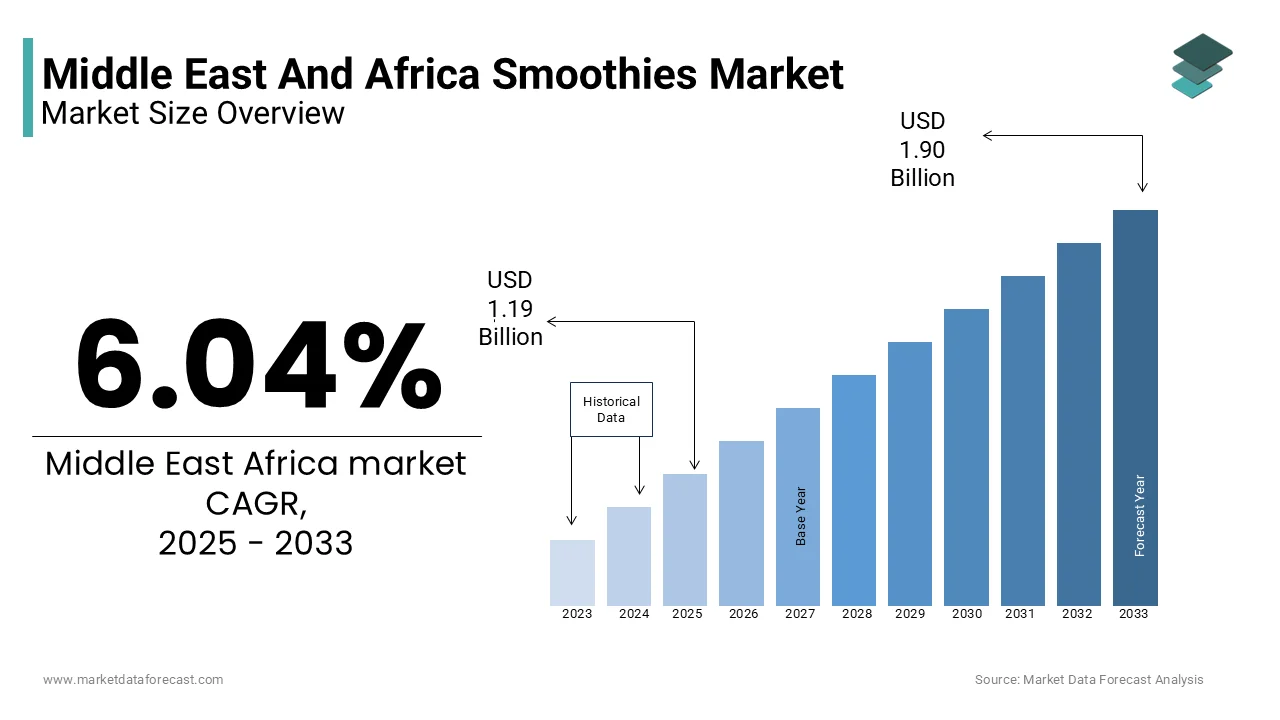
The Middle East and Africa smoothies market was valued at USD 1.19 billion in 2025, is estimated to reach USD 1.26 billion in 2026, and is projected to reach USD 2.01 billion by 2034, growing at a CAGR of 6.04% during the forecast period from 2026 to 2034. The growth of the Middle East and Africa smoothies market is driven by increasing consumer preference for healthy beverages, rising awareness of nutrition and wellness, and growing demand for convenient ready-to-drink products. The expanding café culture, increasing urbanization, and rising popularity of fruit- and vegetable-based functional beverages are further supporting market growth. Additionally, product innovation, clean-label formulations, and expanding retail availability are accelerating the adoption of smoothies across the region.
Key Market Trends
-
Rising consumer preference for healthy, natural, and functional beverages is driving demand for smoothies across the Middle East and Africa.
-
Growing awareness of nutrition, immunity, and wellness is encouraging the consumption of fruit- and vegetable-based smoothies.
-
Increasing demand for clean-label, low-sugar, and plant-based smoothie products is supporting market expansion.
-
Expansion of supermarkets, cafés, and online retail channels is improving product accessibility and availability.
-
Continuous product innovation with superfoods, protein, and functional ingredients is creating new growth opportunities.
Segmental Insights
-
Based on product, the fruit-based smoothies segment dominated the Middle East and Africa smoothies market in 2025. The segment's leadership is attributed to strong consumer preference for natural fruit beverages, wide flavor availability, and increasing demand for nutrient-rich ready-to-drink products.
-
Based on distribution channel, the supermarkets segment held the largest share of 44.4% of the Middle East and Africa smoothies market in 2025. The segment's dominance is driven by extensive product availability, organized retail expansion, competitive pricing, and convenient shopping experiences.
Regional Insights
-
The Middle East and Africa smoothies market is witnessing steady growth due to increasing health consciousness, expanding retail infrastructure, and rising demand for convenient nutritious beverages.
-
South Africa dominated the Middle East and Africa smoothies market by accounting for 22.4% of the regional market share in 2025. The country's leadership is supported by a well-developed retail sector, increasing consumer awareness of healthy lifestyles, expanding café culture, and growing demand for premium beverage products.
-
Saudi Arabia remains a significant market due to rising disposable incomes, increasing demand for functional beverages, and expanding modern retail networks.
Competitive Landscape
The Middle East and Africa smoothies market is moderately competitive, with manufacturers focusing on product innovation, clean-label ingredients, and expansion of distribution networks to strengthen their market positions. Companies are investing in functional beverage formulations, sustainable packaging, and strategic partnerships to meet the growing demand for healthy and convenient beverage options across the region. Key players operating in the Middle East and Africa smoothies market include Smoothie King, Maui Wowi Hawaiian Coffees & Smoothies, Suja Juice, Innocent Drinks, Bolthouse Farms, Jamba Juice Company, Ella's Kitchen Ltd., Barfresh Food Group, and Tropical Smoothie Café.
Middle East and Africa Smoothies Market Size
The smoothies market size in the Middle East and Africa was valued at USD 1.19 billion in 2025, and the market size is expected to grow from USD 1.26 billion in 2026 to USD 2.01 billion by 2034, growing at a CAGR of 6.04% from 2026 to 2034.
The smoothies are a dynamic segment of the broader functional beverages industry, characterised by ready-to-drink or freshly prepared blended fruit and vegetable formulations, often enriched with nutritional additives such as probiotics, proteins, or superfoods. Unlike traditional juices, smoothies retain fibrous pulp, which offers enhanced satiety and perceived health benefits. Urbanisation and rising health consciousness have redefined dietary preferences across the regional economies. According to the World Health Organisation (WHO), which often works with the FAO, a minimum daily intake of 400 grams of fruits and vegetables per adult in the African region is recommended. According to the FAO and other international organisations, which recognise insufficient fruit and vegetable consumption as a global public health problem, especially in developing nations.
MARKET DRIVERS
Urbanisation Boosting Demand for Convenient Nutrition
The escalating urbanisation rate, which is reshaping consumption behaviours and increasing demand for convenient, ready-to-consume nutritious products, is significantly driving the Middle East and Africa Smoothies Market growth. According to the United Nations, the urban population in sub-Saharan Africa is projected to double by 2050, reaching nearly 1 billion people, with cities like Lagos, Nairobi, and Johannesburg experiencing rapid expansion. This demographic shift fosters a growing middle class with disposable income and time-constrained lifestyles, favouring portable, healthy meal replacements. As per the Gulf Cooperation Council (GCC) countries, over 85% of the population residing in urban areas is creating a fertile ground for retail innovation and chilled beverage distribution. The proliferation of modern grocery retailers and cold chain infrastructure in these urban hubs further supports the accessibility and shelf-life viability of perishable smoothie products is reinforcing their integration into daily dietary routines.
Rising Lifestyle Diseases Driving Functional Smoothies
The rising prevalence of lifestyle-related health conditions is prompting consumers to seek functional foods with preventive health benefits, which is boosting the growth of the Middle East and Africa Smoothies Market. As per the International Diabetes Federation, the Middle East and North Africa region has one of the highest diabetes prevalence rates globally, with over 95 million adults projected to be living with diabetes by 2030. This alarming trend has escalated a shift toward low-sugar, high-fibre dietary options, positioning smoothies, particularly those incorporating green vegetables, plant-based proteins, and natural sweeteners, as viable alternatives to sugary beverages. For Instance, in South Africa, the Human Sciences Research Council found that 45% of adult women and 17% of men are obese, which is amplifying demand for weight management solutions. Smoothie brands capitalising on clean labelling, organic sourcing, and clinically backed ingredients are gaining traction among health-conscious consumers in metropolitan centres such as Dubai, Cape Town, and Nairobi.
MARKET RESTRAINTS
Weak Cold Chain Infrastructure Limiting Market Reach
The underdeveloped cold chain infrastructure, particularly across sub-Saharan Africa, which limits the shelf life and geographic reach of perishable smoothie products, is a majorlyrestraintg on the Middle East and Africa Smoothies Market. As per the World Bank, only half of the refrigerated transport needs are met in Sub-Saharan Africa, which is resulting in spoilage rates exceeding 30% for temperature-sensitive goods. This deficiency impedes mass distribution and increases operational costs for producers relying on fresh ingredients. According to the International Energy Agency, in rural areas of countries like Ethiopia and Tanzania, few households have access to refrigeration, which severely restricts consumer access to chilled smoothies. Consequently, manufacturers are constrained to urban markets with reliable power and refrigeration by curtailing market penetration and scalability, particularly for premium, fresh, and unpasteurized smoothie variants.
High Production Costs Reduce Smoothie Affordability
The high cost of production and sourcing of premium ingredients, which inflates retail prices and limits affordability for the majority of consumers, is a significant factor hindering the Middle East and Africa Smoothies Market. As per the Food and Agriculture Organisation, import dependency for exotic fruits such as mangoes, berries, and avocados is commonly used in smoothie formulations, which remains high in regions like the Levant and East Africa, where local cultivation is limited by climatic and agronomic constraints. For instance, Kenya imports over 40% of its avocado supply for commercial processing, which exposes manufacturers to currency fluctuations and supply volatility. The cost of pasteurisation, packaging, and compliance with food safety standards further escalates production expenses, leading to limited revenue for the market. According to the African Development Bank, processed food prices in urban African markets are on average 2.5 times higher than raw agricultural commodities, which is pricing out low- and middle-income consumers and restricting smoothies to niche, premium segments.
MARKET OPPORTUNITIES
Indigenous Superfruits Creating Localised Product Growth
The integration of locally sourced indigenous superfruits into smoothie formulations is enhancing product differentiation while supporting regional agricultural economies is creating growth opportunities in the Middle East and Africa Smoothies Market. As per the International Centre of Insect Physiology and Ecology, Africa is home to hundreds of underutilised native fruit species, including baobab, marula, and tamarind, which are rich in antioxidants, vitamins, and fibre. Companies such as South Africa’s Mzansi Smoothies have begun incorporating marula pulp, which contains six times the vitamin C of oranges. This localisation strategy reduces import dependency, lowers carbon footprint, and appeals to consumers seeking authentic, culturally resonant products. Furthermore, the African Union’s Agenda 2063 emphasises agro-value addition as a pillar of economic transformation by creating policy tailwinds for domestic ingredient valorisation in functional food and beverage sectors.
E-Commerce Expansion Enabling Direct Smoothie Delivery
The digitalisation and e-commerce expansion are enabling direct-to-consumer distribution models for smoothie brands in urban centres, posing an emerging opportunity to the Middle East and Africa Smoothies Market. As per the International Telecommunication Union, "Facts and Figures 2023" report, the internet penetration rate in Africa was 37% in 2023. This digital surge has enhanced the rise of health-focused delivery platforms such as Kitopi in the UAE and Kifugo in Kenya, which offer subscription-based smoothie services with personalised nutrition plans. In Dubai, Kitopi reported a year-on-year increase in smoothie kit deliveries in 2023, which reflects strong consumer adoption. These platforms bypass traditional retail players, which allows real-time customer feedback to facilitate rapid product iteration. Moreover, integration with fitness apps and wellness influencers enhances brand credibility and drives consumer engagement, particularly among millennials and Gen Z people in major metropolitan areas.
MARKET CHALLENGES
Low Consumer Trust Due to Weak Transparency Standards
The consumer scepticism regarding product authenticity and ingredient transparency, especially in regions with weak regulatory enforcement, is posing a significant challenge in the expansion of the Middle East and Africa Smoothies Market. As per various research, a majority of Nigerian consumers are concerned about food fraud. According to research published in 2023, it assessed consumer awareness of additives used in food, and it pointed to a general lack of consumer knowledge. This scepticism is amplified by the presence of counterfeit or substandard products in informal markets, which account for up to 35% of food and beverage sales in countries like Egypt and Ghana. The lack of stringent third-party certification or clear labelling standards, consumers remain hesitant to adopt premium-priced smoothies, particularly those marketed with functional health benefits. Building trust requires substantial investment in traceability systems, consumer education, and partnerships with credible health institutions.
Climate-Driven Raw Material Volatility Affecting Supply
The volatility of raw material supply due to climate change and environmental degradation, which disrupts production consistency and increases input cost, is a major challenge that is limiting the growth of the Middle East and Africa Smoothies Market. A 2023 report by the UN Office for the Coordination of Humanitarian Affairs (OCHA), citing IPCC data, mentioned that a third of the world's most vulnerable countries to climate change are in Eastern and Southern Africa. According to the Southern African Development Community’s Climate Services Centre, in 2022, prolonged droughts in South Africa reduced mango production, which directly impacted smoothie manufacturers reliant on seasonal fruits. Similarly, erratic rainfall patterns in Morocco have led to a decline in citrus output over the past three years. These disruptions force brands to either reformulate products or absorb higher procurement costs is undermining pricing stability and long-term brand equity in a market where affordability remains a crucial purchase determinant.
REPORT COVERAGE
| REPORT METRIC | DETAILS |
| Market Size Available | 2025 to 2034 |
| Base Year | 2025 |
| Forecast Period | 2026 to 2034 |
| CAGR | 6.04% |
| Segments Covered | By Product, Distribution Channel, and Region |
| Various Analyses Covered | Global, Regional, & Country Level Analysis; Segment-Level Analysis; DROC; PESTLE Analysis; Porter’s Five Forces Analysis; Competitive Landscape; Analyst Overview of Investment Opportunities |
| Regions Covered | KSA, UAE, Israel, tcountriesies, South Africa, Ethiopia, Kenya, Egypt, Sudan and the Rest of MEA |
| Market Leaders Profiled | Smoothie King, Maui Wowi Hawaiian Coffees & Smoothies, Suja Juice, Innocent Drinks, Bolthouse Farms, Jamba Juice Company, Ella’s Kitchen Ltd., Barfresh Food Group and Tropical Smoothie Café |
SEGMENTAL ANALYSIS
By Product Insights
Fruit-based smoothies segment dominated the Middle East and Africa Smoothies Market with a significant share in 2025. The widespread consumer preference for naturally sweet and refreshing beverages that align with regional taste profiles and dietary habits is augmenting the segment growth. The prominence of tropical and subtropical fruit cultivation across sub-Saharan Africa and the Arabian Peninsula ensures that consistent raw material availability is reinforcing the economic feasibility of fruit-centric formulations. According to the Food and Agriculture Organisation, countries such as Kenya, Tanzania, and Egypt collectively produce over 15 million metric tons of mangoes, bananas, and citrus annually, which provides a robust supply base for commercial smoothie manufacturing. This localised sourcing reduces import dependency and enhances product freshness, which is a key selling point for health-oriented consumers. The presence of fruit-based smoothies is which align with clean-label and plant-forward dietary trends, particularly in urban centres, is driving the segment revenue.
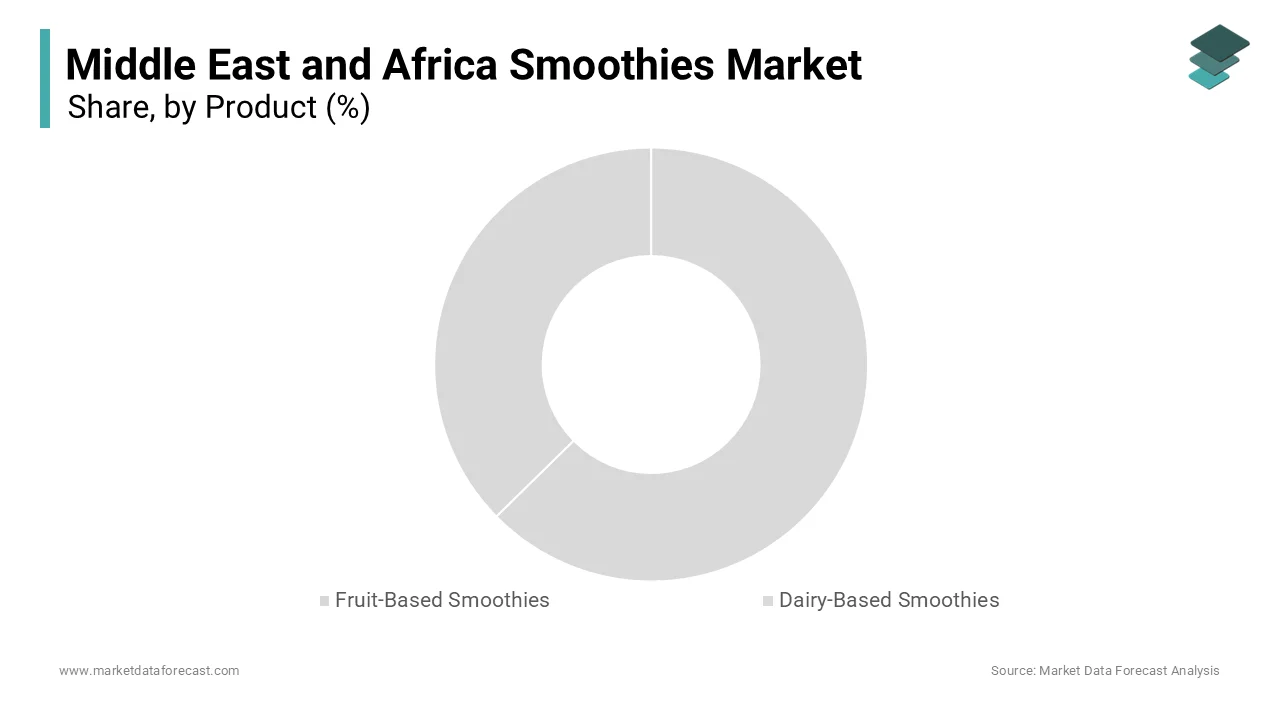
Dairy-based Smoothies segment is projected to expand at a CAGR of 9.4% from 2026 to 2034 in the Middle East and Africa Smoothies Market. The rising consumer interest in protein-enriched functional beverages, particularly among fitness-conscious urban populations, is significantly reinforcing the segment growth. The inteof yoghurttyoghurtt, fermented milk, and plant-based dairy alternatives into smoothie formulations enhances nutritional density by appealing to consumers seeking satiety and muscle recovery support. As per the Gulf Health Council, over 40% of adults in GCC countries engage in regular gym activities, which is creating a receptive audience for post-workout nutrition products. Brands such as Lifeway Foods and local UAE-based FitnFresh have capitalised on this trend by launching probiotic-infused dairy smoothies fortified with whey and collagen. The increasing adoption of Western-style breakfast and snack routines in urban households is enhancing the market growth. Moreover, partnerships between dairy cooperatives and beverage manufacturers, such as the collaboration between Kenya Co-operative Creameries and Nairobi-based smoothie startup, are enabling cost-efficient production and wider distribution, further accelerating market penetration.
By Distribution Channel Insight
supermarket segment led the Middle East and Africa Smoothies Market by capturing 44.4% of share in 2025. The rapid expansion of organised retail, particularly in Gulf countries and South Africa, where modern grocery stores offer temperature-controlled sections for chilled beverages, is driving the segment growth. The proliferation of hypermarkets such as Carrefour, P Pick'n Pay, and Lulu Hypermarket has significantly enhanced product visibility and consumer access, which is fueling the market expansion. These retail environments provide ideal conditions for smoothie brands to showcase premium packaging, nutritional labelling, and promotional displays. The integration of cold chain logistics within these retail ecosystems is another factor boosting the supermarkets segment growth. As per the African Development Bank, most of the supermarkets in major African cities now operate with reliable refrigeration systems to ensure product integrity for perishable smoothies. The smoothie market is anticipated to grow at a CAGR of 11.2% from 2026 to 2034 in the Middle East and Africa Smoothies Market. The rising popularity of experiential wellness consumption, particularly among younger, urban demographics who view smoothie bars as lifestyle destinations rather than mere food outlets, is propelling the segment growth rate. The expansion of dedicated health-focused chains such as Boost Juice in South Africa and Pressery in Dubai has redefined consumer engagement by oofferingcustomizable blends, organic ingredients, and digital ordering systems. The increasing integration of these outlets into mixed-use urban developments, including fitness centres, co-working spaces, and lifestyle malls, is significantly boosting the segment growth. The strategic positioning of outlets ensures high foot traffic and aligns with consumer routines, such as post-gym refreshment or midday detox breaks.
REGIONAL ANALYSIS
South Africa Market Analysis
South Africa outperformed other regions in the Middle East and Africa Smoothies Market in 2025 by securing 22.4% the share. As the most industrialised economy in sub-Saharan Africa, South Africa serves as a regional hub for food innovation, retail sophistication, and health-conscious consumerism. The country’s well-developed cold chain infrastructure and high penetration of modern grocery retailers create an enabling environment for smoothie commercialisation. The growing burden of lifestyle diseases, where most adult women are obese, has further intensified demand for functional drinks. Domestic brands like Smoothie Revolution and international players such as Naked Juice have expanded aggressively, which is supported by rising gym culture and digital fitness platforms.
United Arab Emirates Market Analysis
The United Arab Emirates held a significant share in the Middle East and Africa Smoothies Market by capturing 18.5% of the share in the regional market. The growth is driven by its status as a cosmopolitan epicentre of wellness and premium consumption. As per the Dubai Department of Economy and Tourism, Dubai welcomed 17.15 million international overnight visitors in 2023, a significant milestone that surpassed its previous pre-pandemic record of 16.73 million visitors in 2019. The country’s proactive public health initiatives, including the National Nutrition Strategy 2023–2030, promote reduced sugar intake and increased fruit and vegetable consumption. According to numerous studies, which indicate high and increasing rates of overweight and obesity in the UAE population, particularly among Emirati nationals. High disposable incomes and a dense network of malls, fitness centres, and gourmet cafes have enabled the rapid adoption of premium smoothie brands, with Dubai alone hosting hundreds of specialised juice and smoothie outlets.
Saudi Arabian Market Analysis
Saudi Arabian Market represents around 14.3% of the share in the Middle East and Africa Smoothies Market due to its urban lifestyle. The Kingdom’s Public Investment Fund has backed numerous wellness startups, including homegrown smoothie delivery services like Zood and Tamm. As per the Saudi Central Statistics Agency, the urban population now exceeds 85%, with rising female workforce participation altering household consumption dynamics. As per the IDF Atlas, that diabetes prevalence stands at 18.3% among adults, one of the highest in the region, which is fueling demand for low-glycemic functional beverages. Moreover, the General Entertainment Authority’s expansion of lifestyle events from fitness expos to wellness festivals has created new avenues for smoothie brand visibility and trial, particularly in Riyadh and Jeddah.
Egypt Market Analysis
Egyptian smoothies Market is distinguished by its massive population base and deep-rooted culture of fruit juice consumption. Egypt offers a vast potential consumer pool, with over millions of inhabitants, particularly in Cairo and Alexandria, where modern retail and food delivery services are expanding. Local vendors and informal kiosks have begun transitioning to branded smoothie formats, which often incorporate moringa, hibiscus, and date extracts. For Instance, the Ministry of Trade and Industry has also introduced incentives for food processing startups, which are fostering innovation in affordable, shelf-stable smoothie pouches tailored to lower-income segments.
Kenya Market Analysis
Kenya's market is emerging as a key growth node in East Africa due to its vibrant entrepreneurial ecosystem and rising urban health awareness. Nairobi has become a hotspot for wellness startups, with smoothie delivery apps like Kifugo and HealthyU gaining traction among young professionals. Kenya, particularly Nairobi, has seen the emergence of a growing middle class. This is driven by economic growth and opportunities in sectors like finance, insurance, education, and services. As per the Ministry of Health, non-communicable diseases now account for 27% of all deaths, up from 18% in 2015, which is prompting a shift toward preventive nutrition. Kenya’s rich biodiversity supports the use of indigenous fruits such as baobab and wild berries is enabling differentiation and export potential for locally crafted smoothie brands.
COMPETITIVE LANDSCAPE
The competitive landscape of the Middle East and Africa Smoothies Market is characterised by a blend of multinational corporations, regional manufacturers, and agile local startups vying for consumer attention in a rapidly evolving health beverage sector. Established players leverage brand equity, extensive distribution networks, and R&D capabilities to maintain visibility, while emerging brands capitalise on niche positioning, ingredient transparency, and digital engagement. Intense rivalry is evident in urban centres such as Dubai, Johannesburg, and Nairobi, where product differentiation through functional benefits, exotic flavours, and sustainable practices is crucial. Private-label entries from major retailers are increasing price pressure is prompting innovation in packaging and formulation. Moreover, the low barriers to entry in informal markets encourage entrepreneurial activity, though scalability remains constrained by cold chain and regulatory challenges. As consumer awareness grows, competition is shifting from mere availability to trust, authenticity, and holistic wellness alignment.
KEY MARKET PLAYERS
A few of the notable players in the Middle East and Africa smoothies market include
- Smoothie King
- Maui Wowi Hawaiian Coffees & Smoothies
- Suja Juice
- Innocent Drinks
- Bolthouse Farms
- Jamba Juice Company
- Ella’s Kitchen Ltd.
- Barfresh Food Group
- Tropical Smoothie Café
TOP PLAYERS IN THE MARKET
- Nestlé has established a significant presence in the Middle East and Africa Smoothies Market through its diversified portfolio of nutritionally fortified beverages tailored to regional tastes. The company leverages its extensive distribution network and R&D capabilities to launch innovative products such as plant-based smoothie formulations enriched with vitamins and minerals. In recent years, Nestlé has intensified its focus on clean-label ingredients and sustainable sourcing by partnering with local farmers in Kenya and Ethiopia to procure fruits like mango and passionfruit. The introduction of chilled, ready-to-drink smoothie variants under brands like Nesfit has strengthened its foothold in urban retail and pharmacy channels. Nestlé’s collaboration with fitness platforms in the UAE and Saudi Arabia has enhanced consumer engagement by positioning its smoothie offerings as integral components of balanced diets.
- The Coca-Cola Company exerts prominent influence in the Middle East and Africa Smoothies Market through its Minute Maid and Simply brands, which are increasingly adapted to meet regional demand for healthier beverage options. The company has repositioned its smoothie lines to emphasise no added sugar, real fruit content, and cold-chain preservation, which aligns with rising health consciousness across major urban centres. In September 2023, Coca-Cola launched a new flavour in South Africa, but it was the Y3000 beverage, co-created with artificial intelligence. The company has also invested in localised production facilities in Egypt and Kenya to reduce costs and improve supply chain efficiency. By integrating its smoothie offerings into existing distribution channels for carbonated and non-carbonated beverages, Coca-Cola ensures wide retail availability and brand visibility across supermarkets, convenience stores, and foodservice outlets.
- PepsiCo has strategically expanded its influence in the Middle East and Africa Smoothies Market through its premium brands Tropicana and Naked Juice, which are focusing on urban and health-oriented consumers. The company has localised its smoothie formulations to incorporate regionally preferred fruits such as guava, pomegranate, and date extracts by enhancing cultural relevance. The company has also strengthened its e-commerce presence by partnering with regional delivery platforms like Talabat and Jumia Food. Furthermore, PepsiCo’s investment in sustainable packaging, including recyclable bottles and reduced carbon footprint logistics, is supporting its brand equity among environmentally conscious consumers. These initiatives escalate its commitment to capturing a growing segment of nutritionally aware, digitally connected customers.
TOP STRATEGIES USED BY THE KEY MARKET PLAYERS
Key players in the Middle East and Africa Smoothies Market are deploying product innovation, strategic localisation, digital distribution, brand partnerships, and sustainability initiatives to consolidate their positions. Companies are reformulating offerings to include functional ingredients such as probiotics, plant proteins, and superfruits while eliminating artificial additives. Localisation of sourcing and flavour profiles enhances consumer relevance and reduces supply chain risks. Expansion into e-commerce and direct-to-consumer models allows brands to bypass traditional retail limitations and engage customers through personalised nutrition plans. Collaborations with fitness centres, wellness influencers, and healthcare providers strengthen brand credibility. The investments in cold chain infrastructure and eco-friendly packaging reflect a long-term commitment to quality and environmental responsibility by differentiating market leaders in an increasingly competitive landscape.
Middle East and Africa Smoothies Market News
- In September 2023, Coca-Cola launched the "Y3000" flavour in several markets, including South Africa, which was co-created with artificial intelligence. The Minute Maid brand is active in South Africa under the brand name Cappy. In May 2023, Coca-Cola announced a new global branding for Minute Maid and its associated names.
- In 2022, Nestlé announced a significant investment of SAR 7 billion in Saudi Arabia. Nestlé has also expanded its cold, ready-to-drink (RTD) coffee range, particularly under the Nescafé brand, in the MENA region to meet the demands of young consumers.
- In 2021, Kauai launched smoothie and coffee subscriptions in early 2021. Another company, Juice Revolution, offers "blast frozen" juices and smoothies delivered across South Africa.
- In May 2023, Lulu Group was focused on different strategic initiatives, such as announcing plans for a major expansion in Saudi Arabia. Its public communications during this period focused on existing product lines or broader business development.
MARKET SEGMENTATION
This research report on the Middle East and Africa smoothies market has been segmented and sub-segmented into the following categories.
By Product
- Fruit-Based Smoothies
- Dairy-Based Smoothies
By Distribution Channel
- Restaurants
- Smoothie bars
- Supermarkets
- Convenience Stores
By Country
- KSA
- UAE
- Israel
- Rest Of GCC Countries
- South Africa
- Ethiopia
- Kenya
- Egypt
- Sudan
- Rest Of MEA