- Product Description Description
- Table of Contents TOC
- List of Table & Figure LOT
- Get Free Sample PDF Sample PDF
Market Size, 2025
$114 MnMarket Estimate, 2026
$124.03 MnMarket Forecast, 2034
$244 MnCAGR, 2026–2034
8.80%Executive Summary: Middle East and Africa Vaccine Contract Manufacturing Market
- Market Scope: Comprehensive regional market evaluation of vaccine contract manufacturing in the Middle East and Africa covering service types, product types, vaccine variations, and key country/regional frameworks.
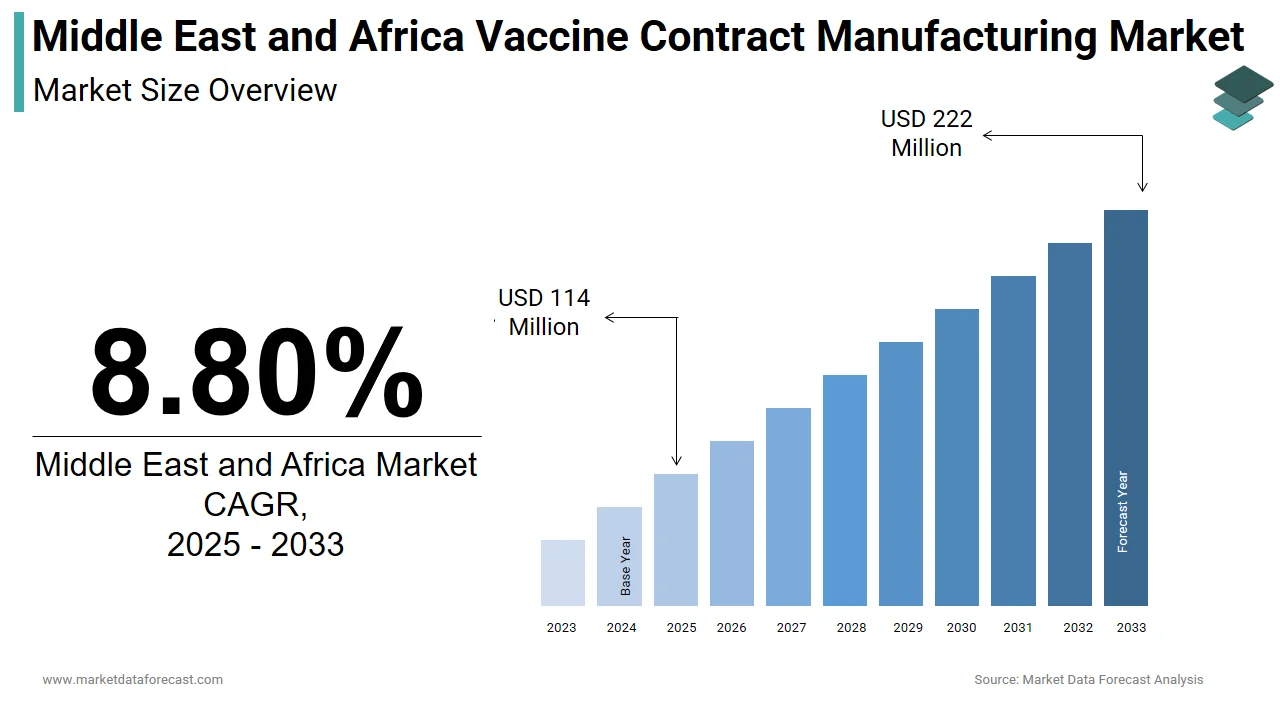
- Market Valuation: Valued at USD 114 million in 2025, estimated at USD 124.03 million in 2026, and projected to reach USD 244 million by 2034, registering a solid CAGR of 8.80% from 2026 to 2034.
- Primary Growth Drivers: Aggressive national health security mandates, push for regional self-reliance and localized production (such as the African Union's 60% local manufacturing goal), high infectious disease burden, and procurement acceleration for immunization programs.
Key Market Segment Metrics (2026–2034)
| Category | Leading Segment (2025 Position) | Fastest-Growing Segment |
|---|---|---|
| By Service Type | Fill-Finish (commanded 61.2% of market share in 2025 due to final packaging localization and supply chain bottleneck reduction) | Bulk Product (registering a CAGR of 13.5% driven by technology transfers for upstream bioprocessing) |
| By Product Type | Single Vaccine (led the market via baseline reliance on routine national immunization schedules for endemic diseases) | Combination Vaccine (showcasing a CAGR of 12.4% driven by infant schedule compliance and fewer injections) |
| By Vaccine Type | Inactivated Vaccine (held 41.2% market share in 2025 due to safety profiles for mass routine immunizations) | Recombinant / Vector Vaccines (registering a CAGR of 15.1% driven by next-gen responses to endemic/emerging pathogens) |
| By Region / Country | Saudi Arabia & South Africa (premier regional hubs for bioprocessing, investment, and mRNA/technology transfer initiatives) alongside Egypt (volume-driven demand) | |
Major Market Players & Market Structure
Market Structure: Highly competitive regional biological manufacturing sector defined by a mix of established multinational corporations leveraging deep financial resources and specialized local enterprises emphasizing cost-effective, localized production capabilities.
Key Companies: GSK, SPIMANCO, Pfizer, Ajinomoto, Tabuk, Novartis, Biological E Limited, Jamjoom, Minerva Biotechnologies Corporation, AstraZeneca, Julphar, MSD, and Janssen.
 Download Free Sample Report
Middle East and Africa Vaccine Contract Manufacturing Market Size
The size of the Middle East and Africa vaccine contract manufacturing market was worth USD 114 million in 2025. The regional market is anticipated to grow at a CAGR of 8.80% from 2026 to 2034 and be worth USD 244 million by 2034 from USD 124.03 million in 2026.
According to the World Health Organization, the African region accounts for a significant share of the global infectious disease burden, a disparity that drives the urgent need for local production. Furthermore, the continuous expansion of national immunization programs requires a colossal and uninterrupted supply of biological products. As per the United Nations Children’s Fund, the African continent experiences a high volume of annual births, requiring comprehensive vaccination schedules to ensure survival and healthy development. According to the World Bank, the total population of the Middle East and Africa region is projected to continue its significant growth, which is creating an unprecedented baseline demand for preventive healthcare solutions. Consequently, the intersection of massive demographic growth and the strategic imperative for regional health security defines the dynamic landscape of this vital biological manufacturing sector across diverse nations.
MARKET DRIVERS
Catalyst for Localized Production
The aggressive implementation of national health security mandates and the strategic push for regional self-reliance is one of the key factors propelling the vaccine contract manufacturing market in Middle East and Africa. Governments across the Middle East and Africa are actively funding and incentivizing the establishment of domestic manufacturing facilities to ensure uninterrupted access to critical immunizations during global health crises. Historically, the region relied heavily on imported vaccines, leaving populations vulnerable to international supply chain disruptions. According to the African Union, the continental health strategy explicitly mandates that 60% of all required biological products must be manufactured locally by the end of the decade to achieve true health sovereignty. This profound policy shift has triggered massive capital investments from both public and private sectors to build state-of-the-art biological production campuses. Furthermore, the World Health Organization states that the establishment of regional technology transfer hubs has accelerated the deployment of advanced manufacturing infrastructure in countries like South Africa and Morocco. The International Finance Corporation indicates that over 2 billion dollars in new financing has been directed toward regional biological manufacturing projects to bridge the historical capacity gap. By prioritizing domestic production capabilities, national governments are directly driving the exponential expansion of contract manufacturing partnerships to operationalize these ambitious health security frameworks.
Procurement Acceleration
The escalating regional burden of endemic infectious diseases and the continuous expansion of national immunization programs is further aiding the expansion of the Middle East and Africa vaccine contract manufacturing market. The Middle East and Africa face a disproportionate share of the global infectious disease burden, necessitating massive and continuous vaccination campaigns to protect vulnerable populations. Diseases such as malaria, tuberculosis, and various strains of meningitis require specialized and highly specific biological interventions that must be produced in massive volumes. According to the World Health Organization, the African region accounts for over 90% of global malaria cases, requiring the annual distribution of hundreds of millions of specialized immunization doses. To meet this colossal demand, national health ministries are increasingly partnering with contract manufacturing organizations to scale up production capacity without bearing the full capital expenditure of building new facilities from scratch. Furthermore, the United Nations Children’s Fund states that routine childhood immunization coverage in the region is expanding, requiring the continuous supply of pentavalent and measles-containing biological products. According to the Global Vaccine and Immunization Alliance, millions of children in the region need to be reached with life-saving immunizations over the coming years. This relentless public health imperative forces health authorities to secure long-term manufacturing agreements, ensuring that contract production facilities operate at maximum capacity to meet the immense regional demand.
MARKET RESTRAINTS
Technical Expertise Deficit
The profound deficit of highly specialized technical personnel and advanced bioprocessing expertise severely restricts the rapid operationalization of new manufacturing facilities, which is a key impediment to the regional market growth. The successful execution of complex biological manufacturing requires a highly trained workforce proficient in cell culture development, bioreactor operation, and stringent quality control protocols. However, the Middle East and Africa region currently faces a critical shortage of professionals with specific experience in large-scale biological production. According to educational and industry reports, a limited portion of regional graduates possess the highly specialized skills required for advanced bioprocessing and biological quality assurance. This massive talent gap forces contract manufacturing organizations to rely heavily on expensive expatriate experts or invest millions of dollars in prolonged training programs for local staff. Furthermore, the World Bank indicates that the regional education system produces a significant number of general biology graduates but often lacks the specialized infrastructure to train students in modern Good Manufacturing Practice environments. The International Labour Organization states that the competition for specialized bioprocessing talent is incredibly fierce, with global pharmaceutical companies offering substantially higher compensation packages to attract the limited pool of qualified experts. Consequently, this acute scarcity of skilled human capital significantly delays facility commissioning, increases operational costs, and limits the overall production capacity of the regional contract manufacturing sector.
Logistical Infrastructure Constraints
The severely inadequate cold chain infrastructure and the complex logistical networks across vast geographic areas severely constrain the efficient distribution and storage of biological products, which is further impeding the expansion of the Middle East and Africa vaccine contract manufacturing market. Biological products are highly sensitive to temperature fluctuations and require an unbroken cold chain from the manufacturing facility to the final point of administration to maintain their efficacy. The Middle East and Africa region encompasses vast and remote geographical areas where maintaining continuous refrigeration is exceptionally challenging due to unreliable electrical grids and poor transportation infrastructure. According to the World Health Organization, a significant percentage of vaccines distributed in the region are compromised by temperature excursions during transit or storage, leading to massive financial losses and compromised public health outcomes. The International Energy Agency indicates that over 600 million people in Sub-Saharan Africa lack access to reliable electricity, making the deployment of standard medical refrigerators virtually impossible in rural clinics. Furthermore, logistics reports state that the regional transportation infrastructure ranks among the lowest globally, resulting in extended transit times that further jeopardize the stability of temperature-sensitive biological products. The United Nations Development Programme emphasizes that upgrading the entire regional cold chain network requires an investment of over 5 billion dollars, a capital requirement that far exceeds the current budgets of most national health ministries. Consequently, this profound logistical vulnerability acts as a massive bottleneck limiting the effective utilization of manufactured biological products.
MARKET OPPORTUNITIES
Strategic Innovation Hubs
The strategic execution of technology transfer agreements and the establishment of regional innovation hubs is a promising opportunity for the Middle East and Africa vaccine contract manufacturing market. Global pharmaceutical companies are increasingly entering into strategic partnerships with regional contract manufacturers to transfer proprietary production technologies and establish localized innovation hubs. This collaborative approach allows regional facilities to bypass the lengthy and expensive research and development phases by directly adopting proven manufacturing processes for complex biological products. According to the World Health Organization, the establishment of the messenger ribonucleic acid vaccine technology transfer hub in South Africa has successfully trained personnel from multiple regional nations in advanced nucleic acid production techniques. The African Union indicates that over 15 major technology transfer agreements have been signed in the past two years specifically targeting the localized production of both traditional and novel biological products. Furthermore, the International Finance Corporation states that these strategic partnerships significantly de-risk the entry of new contract manufacturers into the market by providing guaranteed technical support and quality assurance frameworks. The Global Fund to Fight AIDS, Tuberculosis and Malaria indicates that localized production through technology transfer reduces the overall procurement costs by up to 30% while ensuring a more resilient supply chain. By leveraging these collaborative frameworks, regional contract manufacturers can rapidly elevate their technological capabilities and capture a larger share of the domestic biological market.
Next-Generation Platform Investments
The rising influx of capital directed toward novel modalities and next-generation biological platforms offers a highly lucrative opportunity for contract manufacturers to diversify their service portfolios. The global shift toward advanced biological therapeutics, including viral vectors and recombinant protein technologies, is creating unprecedented demand for specialized manufacturing capabilities. Contract manufacturing organizations in the Middle East and Africa that invest in these next-generation platforms can position themselves as critical partners for both regional and global pharmaceutical companies. According to industry reports, the global market for advanced biological modalities is expanding at a rapid pace, requiring massive increases in specialized contract production capacity. The World Economic Forum indicates that billions of dollars in new venture capital have been directed toward regional biotechnology startups focusing on novel biological platforms specifically tailored to address endemic regional diseases. Furthermore, the African Development Bank states that the establishment of specialized biological innovation parks is attracting significant foreign direct investment from multinational corporations seeking to outsource the production of complex therapeutics. Professional engineering societies state that facilities equipped with modular and single-use manufacturing technologies can reduce capital expenditure by up to 40% while accelerating the time to market for new biological products. By embracing these advanced manufacturing paradigms, regional contract organizations can unlock entirely new revenue streams and establish themselves as global leaders in next-generation biological production.
MARKET CHALLENGES
Regulatory Landscape Fragmentation
The highly fragmented regulatory landscapes and the prolonged approval processes across different national jurisdictions create immense operational friction for contract manufacturers, which is a major challenge for the regional market. The Middle East and Africa region comprises dozens of sovereign nations, each with its own distinct regulatory authority and specific requirements for the approval of biological products. This extreme fragmentation forces contract manufacturing organizations to navigate a labyrinthine web of compliance standards, which significantly delays the commercialization of new products. According to the World Health Organization, the average time required to secure regulatory approval for a new biological product in the region can be extensive, due to overlapping requirements and limited regulatory capacity. Industry associations state that the lack of harmonized regulatory frameworks across the continent forces manufacturers to conduct redundant clinical trials and submit duplicate documentation for each individual market. Furthermore, regional regulatory forums indicate that a limited number of national regulatory authorities in the region possess the advanced capabilities required to conduct rigorous and timely assessments of complex biological manufacturing facilities. The World Bank emphasizes that these prolonged approval timelines severely diminish the return on investment for contract manufacturers and deter global pharmaceutical companies from outsourcing their production to the region. Consequently, the profound regulatory disunity acts as a persistent and costly challenge that stifles the rapid expansion of the regional contract manufacturing sector.
Global Market Competition
The intense competition from highly established global contract development and manufacturing organizations poses a formidable threat to the market share of emerging regional players, which is further challenging the regional market expansion. The global biological contract manufacturing landscape is heavily dominated by massive multinational corporations that possess decades of operational experience, unparalleled economies of scale, and deeply entrenched relationships with major pharmaceutical sponsors. These established global entities can offer highly competitive pricing and guaranteed production capacity that emerging regional facilities simply cannot match. According to market research firms, the top global contract manufacturers control over 60% of the total international biological production capacity, creating massive barriers to entry for new regional competitors. The World Economic Forum indicates that these multinational organizations invest billions of dollars annually in research and development, allowing them to continuously innovate and offer superior manufacturing technologies to their clients. Furthermore, professional engineering associations state that global contract manufacturers benefit from a vast network of international facilities, enabling them to easily shift production volumes between regions to optimize costs and mitigate supply chain risks. The United Nations Conference on Trade and Development emphasizes that regional contract manufacturers often struggle to secure long-term contracts with major sponsors who perceive regional facilities as higher risk due to their limited operational track record. Consequently, overcoming the overwhelming dominance of these established global giants requires regional players to execute flawless operational strategies and continuously innovate to remain competitive.
REPORT COVERAGE
| REPORT METRIC | DETAILS |
| Market Size Available | 2025 to 2034 |
| Base Year | 2025 |
| Forecast Period | 2026 to 2034 |
| Segments Covered | By Service Type, Product Type, Vaccine Types, Combination Type, and Region. |
| Various Analyses Covered | Global, Regional and Country-Level Analysis, Segment-Level Analysis, Drivers, Restraints, Opportunities, Challenges; PESTLE Analysis; Porter’s Five Forces Analysis, Competitive Landscape, Analyst Overview of Investment Opportunities |
| Countries Covered | Brazil, Mexico, Argentina, Chile, Rest of Latin America |
| Market Leaders Profiled | GSK, SPIMANCO, Pfizer, Ajinom, Tabuk, Novartis, Biological E Limited, Jamjoom, Minerva Biotechnologies Corporation, Astra, Julphar, MSD, and Janssen. |
SEGMENTAL ANALYSIS
By Service Type Insights
The fill-finish segment dominated the market by commanding for 61.2% of the regional market share in 2025. The dominance of fill-finish segment in the Middle East and African market is primarily driven by the critical bottleneck in regional supply chains and the strategic mandate to localize the final packaging of biological products. Historically, the region relied heavily on importing finished vials, but recent global health crises exposed the severe vulnerability of this external dependency model. According to the African Union, a vast majority of vaccines used in the region were previously imported in fully finished formats, prompting urgent policy shifts. To achieve true health sovereignty, governments are now investing massively in local fill-finish facilities to control the final critical steps of production. As per the World Health Organization, establishing local fill-finish capacity reduces the time to market for regional immunization campaigns by up to 40%, which is ensuring faster response to disease outbreaks. Furthermore, the International Finance Corporation notes that regional health ministries are prioritizing fill-finish contracts because it allows them to secure domestic supply of essential immunizations without waiting for international shipping logistics. This profound strategic shift, combined with the urgent need to bypass global export restrictions, guarantees that fill-finish services will maintain their absolute dominance in the regional contract manufacturing landscape.
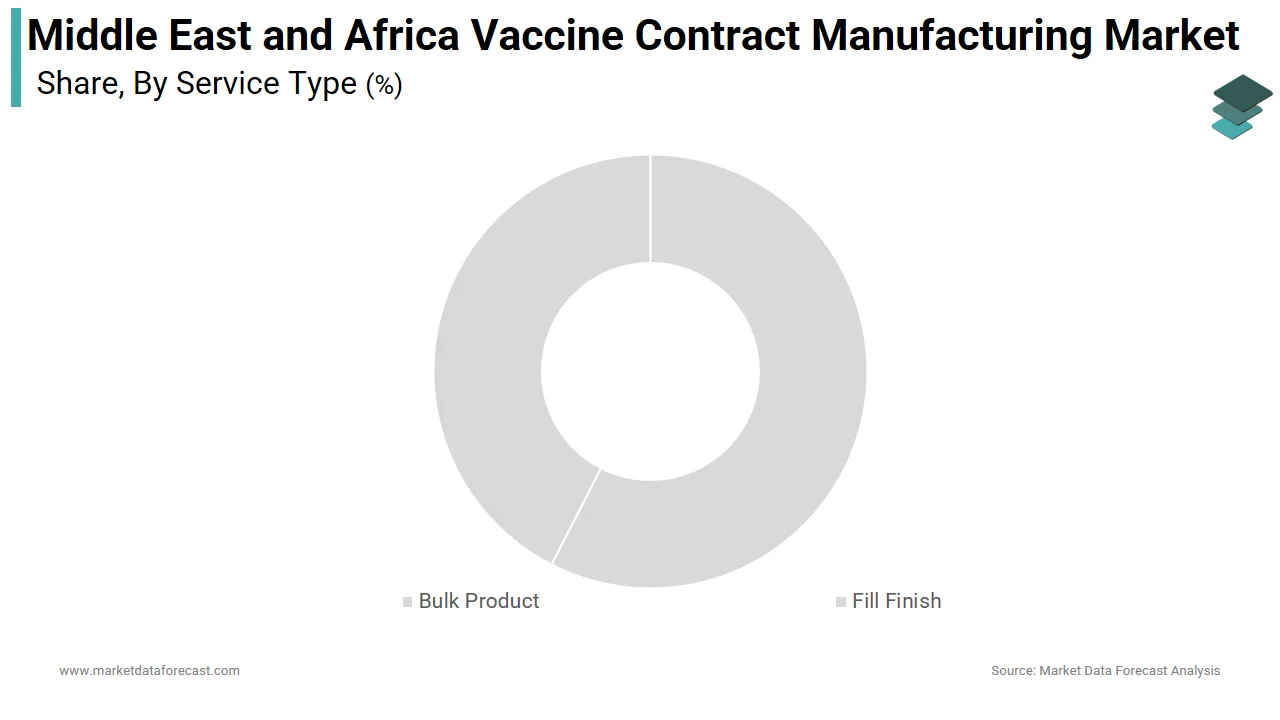
On the other side, the bulk product segment is estimated to register a CAGR of 13.5% during the forecast period in the Middle East and African market owing to the aggressive execution of technology transfer agreements for upstream bioprocessing and cell culture development. Global pharmaceutical partners are increasingly sharing the core intellectual property for antigen production rather than just the final packaging steps. According to the World Health Organization, the establishment of regional messenger ribonucleic acid and viral vector hubs has necessitated the local production of bulk drug substances to ensure complete supply chain independence. Scientific academies note that technology transfer for bulk manufacturing increases regional self-reliance by ensuring the actual biological active ingredients are synthesized locally rather than imported as intermediates. Furthermore, over 15 major technology transfer agreements focused specifically on upstream fermentation and purification have been signed in the past two years. This profound shift toward localizing the most complex and critical stages of biological production, combined with massive international funding for regional bioprocessing hubs, guarantees that the bulk product segment will experience the fastest growth rate in the market.
By Product Type Insights
The single vaccine segment led the market by capturing the leading share of the regional market in 2025. The foundational reliance on single antigen vaccines for routine national immunization programs across the continent secures the absolute dominance of the single vaccine segment. Diseases such as tuberculosis, measles, and polio remain endemic in many parts of the region, necessitating the continuous and massive procurement of single antigen formulations. According to the World Health Organization, the Bacillus Calmette-Guérin vaccine for tuberculosis and the oral polio vaccine are administered to millions of new-borns annually in the African region. The United Nations Children’s Fund states that single antigen vaccines form the absolute backbone of the Expanded Programme on Immunization, driving consistent and high-volume contract manufacturing orders year after year. Furthermore, as per the Global Vaccine and Immunization Alliance, national health ministry’s prioritize the procurement of these essential single antigens to maintain baseline herd immunity against the most devastating childhood diseases. This unbreakable reliance on single vaccines for foundational public health, combined with the massive birth rates across the continent, ensures their overwhelming market supremacy.
The combination vaccine segment is estimated to showcase a promising CAGR of 12.4% during the forecast period in the regional market due to the strategic shift toward reducing the number of injections required for infant immunization schedules to improve compliance and reduce healthcare worker. Combination vaccines such as pentavalent and hexavalent formulations protect against multiple diseases in a single dose, which is drastically simplifying the vaccination process. According to the World Health Organization, the integration of pentavalent vaccines into national immunization programs has expanded to a majority of countries in the region, significantly increasing the completion rates for childhood immunization schedules. According to the International Pediatric Association, reducing the number of clinic visits and needle sticks increases parental willingness to fully vaccinate their children against preventable diseases. Furthermore, as per the United Nations Children’s Fund, the deployment of combination vaccines reduces the logistical burden on healthcare workers, which is allowing them to serve more communities efficiently. This profound operational efficiency, combined with the strong push from international health organizations to streamline immunization delivery, ensures that combination vaccines will experience the fastest growth rate in the market.
By Vaccine Type Insights
The inactivated vaccine segment held 41.2% of the regional market share in 2025 due to the widespread use of inactivated vaccines for major routine immunizations and their established safety profile across diverse patient populations. Inactivated vaccines such as those for polio, hepatitis A, and influenza are crucial for protecting vulnerable and immunocompromised individuals who cannot receive live vaccines. According to the World Health Organization, the inactivated polio vaccine has been fully integrated into the routine immunization schedules of nearly all countries in the Middle East and Africa to support global polio eradication efforts. As per the Centers for Disease Control and Prevention, inactivated vaccines carry zero risk of causing the disease they protect against, making them the preferred choice for mass public health campaigns in regions with high rates of underlying health conditions. Furthermore, according to the International Pediatric Association, the safety profile of inactivated vaccines ensures high public trust and widespread acceptance during national vaccination drives. This uncompromising safety advantage, combined with the massive scale of routine immunization programs, guarantees their leading market position.
On the other side, the recombinant vaccines segment is estimated to register a CAGR of 15.1% during the forecast period in the Middle East and African market owing to the aggressive regional push to develop and manufacture next-generation immunizations against high-threat endemic and emerging pathogens. Recombinant vector platforms are highly effective at inducing strong cellular and humoral immune responses, which is making them ideal for diseases like Ebola, Lassa fever, and malaria. According to the African Union, recent outbreaks of viral hemorrhagic fevers have accelerated the technology transfer and local contract manufacturing of viral vector vaccines to ensure rapid regional response capabilities. As per the World Health Organization, the deployment of recombinant vector vaccines for malaria in sub-Saharan Africa has created a massive new market segment, requiring specialized local production to meet the immense public health need. Furthermore, epidemic preparedness coalitions indicate that regional governments are heavily funding the local production of vector-based vaccines to protect against future zoonotic spill overs. This urgent public health imperative, combined with the high efficacy of vector platforms, guarantees the fastest growth rate for this advanced segment.
REGIONAL ANALYSIS
Saudi Arabia Africa Vaccine Contract Manufacturing Market Analysis
Saudi Arabia is likely to see significant growth in its biological manufacturing sector as it continues to prioritize localized production over the next few years. Saudi Arabia is the primary hub for biological manufacturing in the Gulf. Saudi Arabia maintains a highly dominant position in the regional landscape, characterized by massive government healthcare investments, aggressive localization mandates, the continuous integration of advanced bioprocessing facilities to ensure absolute national health security. According to the Ministry of Investment, the national healthcare sector has attracted over 10 billion dollars in foreign direct investment recently to expand local biological production capabilities. As per the World Health Organization, the regional push for health sovereignty requires the domestic manufacturing of at least 60% of all essential immunizations by the end of the decade. Furthermore, according to the World Bank, the national population continues to grow, creating an immense baseline demand for routine and specialized preventive biological products. The International Finance Corporation emphasizes that substantial public funding has been directed toward regional biological manufacturing projects to bridge the historical capacity gap. This profound commitment to technological modernization and strategic self-reliance guarantees sustained and highly profitable market growth across the entire kingdom today, and tomorrow, globally.
South Africa Africa Vaccine Contract Manufacturing Market
South Africa is expected to maintain its status as a premier hub for biological manufacturing and regional innovation in the coming years. South Africa occupies a highly influential position in the continental arena due to the advanced bioprocessing infrastructure, the successful establishment of regional technology transfer hubs, the aggressive deployment of next-generation nucleic acid production capabilities to address both regional and global health emergencies. According to the African Union, the continental health strategy explicitly mandates the localization of complex biological therapeutics to reduce historical reliance on external supply chains. The World Health Organization states that the establishment of the regional messenger ribonucleic acid vaccine technology transfer hub has successfully trained personnel from multiple nations in advanced production techniques. Furthermore, the World Bank indicates that the national pharmaceutical sector generates substantial economic output, driven by the continuous expansion of clinical research and contract manufacturing partnerships. The International Finance Corporation emphasizes that over 2 billion dollars in new financing has been directed toward regional biological manufacturing projects to bridge the historical capacity gap. This unwavering commitment to scientific innovation ensures sustained market leadership and robust commercial expansion across the entire continent right now.
Egypt Africa Vaccine Contract Manufacturing Market
Egypt will likely strengthen its position as a key regional consumer and manufacturing base through continued investment in public health infrastructure over the next few years. Egypt maintains a massively volume-driven position in the regional landscape, supported by an enormous population base and the continuous expansion of public health infrastructure. According to government statistics, the national population continues to rise, creating an immense and continuous baseline demand for reliable immunization schedules. The World Health Organization indicates that the national immunization programs require the deployment of millions of specialized biological doses annually to maintain herd immunity across rural and urban clinics. Furthermore, the African Development Bank emphasizes that recent investments in domestic drug production facilities have significantly increased the procurement of advanced contract manufacturing services. Global vaccine alliances state that millions of children in the region need to be reached with life-saving immunizations over the next few years. This sheer demographic scale and public health focus guarantee massive and consistent market volume right now, and well into the future.
COMPETITIVE LANDSCAPE
The competitive landscape of the regional biological manufacturing sector is defined by intense rivalry among established multinational corporations and specialized local enterprises. Major global brands leverage massive financial resources to dominate original equipment manufacturing channels through aggressive research investments and extensive distribution networks. These industry leaders continuously develop advanced viral vector and nucleic acid platforms to ensure absolute compliance with stringent international safety regulations. Meanwhile regional players compete fiercely by emphasizing localized production capabilities and highly cost effective manufacturing solutions that resonate deeply with budget constrained national health ministries. The market also witnesses a surge in strategic mergers and acquisitions as companies seek to consolidate their technological capabilities and acquire emerging biotechnology startups. Furthermore sustainability initiatives have become a critical competitive differentiator with firms adopting single use technologies to appeal to environmentally aware institutional buyers. Ultimately the competitive environment demands continuous adaptation to rapid technological shifts ensuring that only the most agile and innovative organizations maintain their extended profitability and brand loyalty across all international biological markets today and tomorrow globally right here and now across the entire continental healthcare infrastructure network ensuring absolute operational excellence and reliability for all global public health clients every single day across the globe.
KEY MARKET PLAYERS
Major manufacturing companies in the Middle East and Africa vaccine contract manufacturing market are
- GSK
- SPIMANCO
- Pfizer
- Ajinomoto
- Tabuk
- Novartis
- Biological E Limited
- Jamjoom
- Minerva Biotechnologies Corporation
- AstraZeneca
- Julphar
- MSD
- Janssen
TOP PLAYERS IN THE MARKET
- Minerva Biotechnologies Corporation operates as a monumental force in the regional biological sector providing exceptional contract manufacturing solutions to global health organizations. The corporation leverages its extensive scientific expertise to develop advanced viral vector platforms that significantly enhance immunological responses. Recently the enterprise launched a comprehensive next generation bioreactor facility designed to maximize production yields for complex nucleic acid therapeutics. This strategic innovation significantly enhances their product portfolio and deeply resonates with modern public health mandates. By continuously upgrading their manufacturing capabilities the organization successfully reinforces its industry leadership and drives substantial commercial growth across international markets today and tomorrow.
- Biological E Limited stands as a premier global biological brand actively transforming the immunization landscape through deep expertise in large scale fermentation and purification processes. The organization focuses heavily on producing highly reliable conjugate and recombinant biological products that cater to the exacting standards of national health programs. Recently the company completed a massive upgrade to its specialized aseptic filling infrastructure designed to extend product shelf life and maintain optimal stability. This operational enhancement significantly improves supply chain efficiency and guarantees superior product quality for global partners. By prioritizing technological excellence the enterprise successfully attracts loyal clients globally right now.
- Ajinom Biotechnology Morocco functions as an innovative biological company dedicating significant resources toward the development of premium nucleic acid and viral vector manufacturing solutions. The corporation utilizes its advanced research facilities to create unique biological formulations that perfectly stabilize complex therapeutic molecules without compromising efficacy. In a recent strategic initiative the enterprise introduced a new series of modular single use production systems specifically engineered for rapid pandemic response capabilities. This technological breakthrough enables the brand to capture the critical emergency health segment without compromising on operational reliability. Through continuous product development the company continues to solidify its formidable global presence.
TOP STRATEGIES USED BY KEY MARKET PARTICIPANTS
Key players in the market employ several strategic approaches to reinforce their competitive standing and capture evolving technological demands. Strategic partnerships remain central as companies collaborate directly with global health organizations to integrate proprietary biological architectures during the initial development phase. Mergers and acquisitions are another common tactic with major firms purchasing specialized biotechnology startups to instantly acquire advanced nucleic acid capabilities. Investment in sustainable production methods including the development of single use bioreactors and water conservation technologies helps meet strict environmental regulations. Geographic expansion particularly into emerging healthcare markets across the continent allows access to new government clients and diversified revenue streams. Lastly continuous investment in artificial intelligence ensures that all biological manufacturing networks remain perfectly optimized against evolving operational demands ensuring extended commercial viability.
MARKET SEGMENTATION
This research report on the Middle East and Africa vaccine contract manufacturing market has been segmented and sub-segmented into the following categories:
By Service Type:
- Bulk Product
- Fill Finish
By Product Type:
- Single Vaccine
- Influenza Virus
- Ebola Virus
- Chickenpox
- Tetanus
- Tuberculosis
- Polio
- Smallpox
- Others
- Combination Type
By Vaccine Type:
- Inactivated Vaccines
- Conjugate Vaccines
- Live Attenuated Vaccines
- Toxoid Vaccines
- Recombinant Vector Vaccines
- Subunit Vaccines
- Synthetic Vaccines
By Country:
- KSA
- UAE
- Israel
- rest of GCC countries
- South Africa
- Ethiopia
- Kenya
- Egypt
- Sudan
- rest of Middle East and Africa