- Product Description Description
- Table of Contents TOC
- List of Table & Figure LOT
- Get Free Sample PDF Sample PDF
Market Size, 2025
$1258 MnMarket Estimate, 2026
$1363 MnMarket Forecast, 2034
$2579 MnCAGR, 2026–2034
8.3%Global Vaccine Contract Manufacturing Market Report Summary
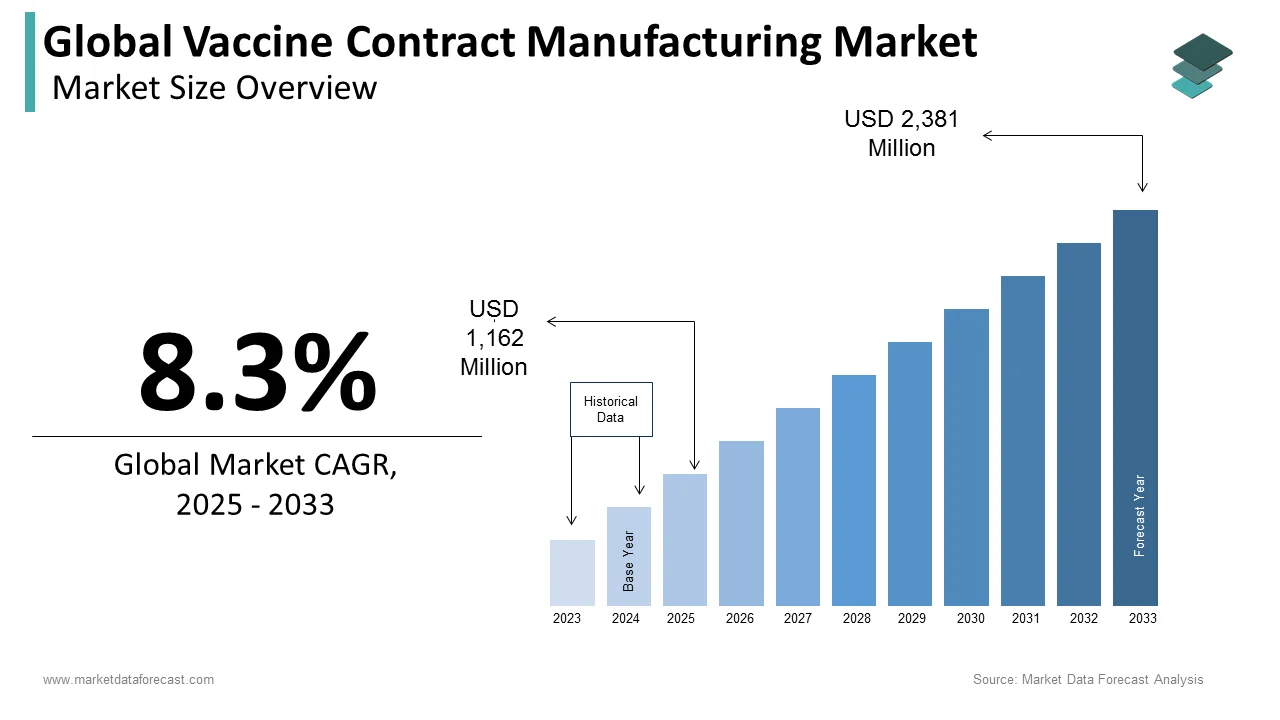
The global vaccine contract manufacturing market was valued at USD 1,258.45 million in 2025 and is projected to grow from USD 1,363 million in 2026 to USD 2,579 million by 2034, registering a CAGR of 8.3% from 2026 to 2034. Market growth is driven by increasing vaccine demand, expanding immunization programs, and rising outsourcing activities among pharmaceutical and biotechnology companies. Vaccine developers are increasingly partnering with contract manufacturing organizations (CMOs) to enhance production capacity, reduce operational costs, and accelerate time-to-market. Growing investments in biologics manufacturing infrastructure, pandemic preparedness initiatives, and advancements in vaccine technologies are further supporting market expansion globally.
Key Market Trends
- Increasing outsourcing of vaccine development and manufacturing operations.
- Rising demand for large-scale vaccine production capacity.
- Growing investments in biologics and vaccine manufacturing infrastructure.
- Expansion of pandemic preparedness and immunization programs worldwide.
- Increasing adoption of advanced manufacturing technologies for vaccine production.
Segmental Insights
- Based on service type, the fill-finish segment dominated the global vaccine contract manufacturing market by accounting for 45.3% share in 2025, driven by the critical role of sterile filling, packaging, and final product preparation in vaccine production workflows.
- Based on product type, the influenza virus vaccines segment held the largest share of the market in 2025, supported by the recurring seasonal nature of influenza outbreaks and the need for annual vaccine reformulation and large-scale production.
- Based on vaccine type, the inactivated vaccines segment accounted for 34.2% market share in 2025, owing to their established safety profile, regulatory acceptance, and broad use across multiple infectious disease indications.
Regional Insights
The global vaccine contract manufacturing market is witnessing strong growth across major regions, supported by increasing vaccine production requirements, public health initiatives, and expanding biotechnology capabilities.
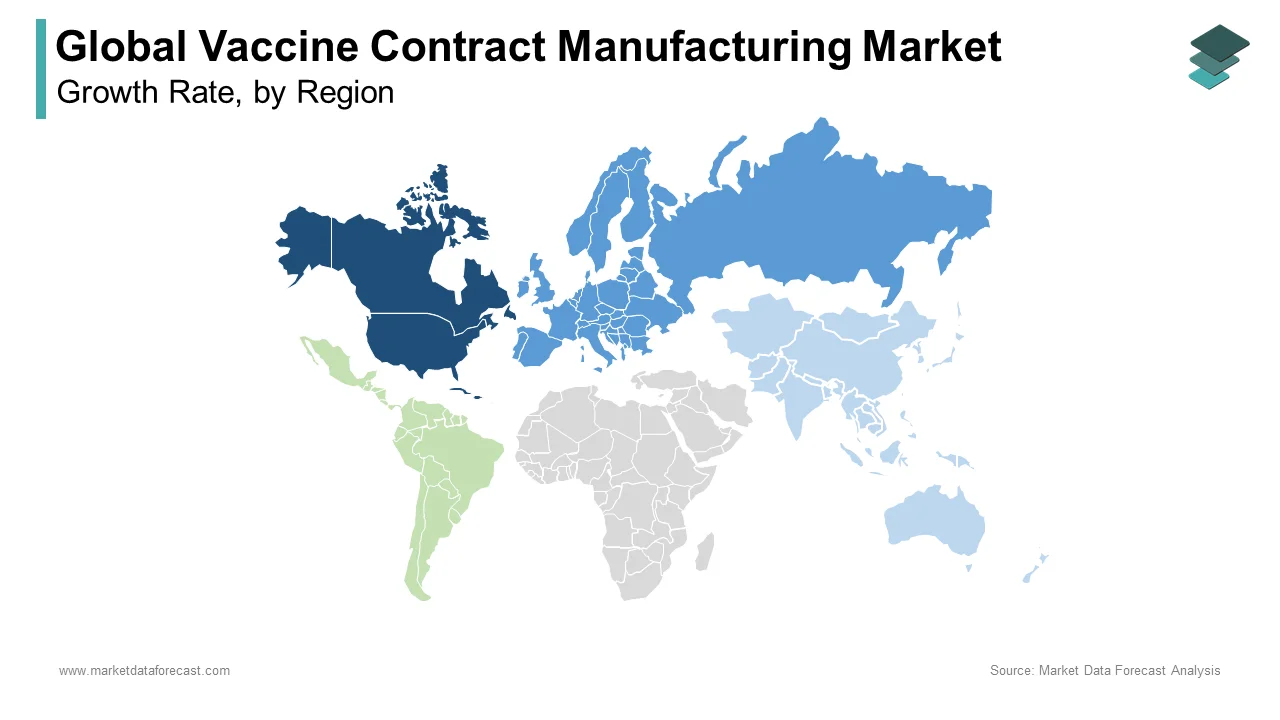
- North America dominated the global market in 2025 by accounting for 33.2% share, driven by a robust biotechnology sector, significant government funding, advanced manufacturing infrastructure, and strong vaccine research capabilities.
- Europe ranked second with 21.2% share in 2025, supported by strong public healthcare systems, centralized vaccine procurement programs, and established pharmaceutical manufacturing networks.
- Asia-Pacific is projected to register the fastest growth during the forecast period, driven by rising healthcare investments, expanding vaccine manufacturing capacity, and increasing government support for local vaccine production initiatives.
Competitive Landscape
The global vaccine contract manufacturing market is characterized by the presence of specialized contract development and manufacturing organizations (CDMOs), biotechnology firms, and vaccine production service providers competing through capacity expansion, technological expertise, and regulatory compliance capabilities. Market participants are focusing on strengthening manufacturing infrastructure, enhancing fill-finish capabilities, and expanding biologics production services to meet growing vaccine demand. Strategic partnerships, facility expansions, and investments in advanced manufacturing technologies continue to shape competitive dynamics across the market.
Prominent companies operating in the global vaccine contract manufacturing market include Thomas Jefferson University, Goodwin Biotechnology Inc., BioMARK, Samsung Biologics Co. Ltd., Emergent BioSolutions, Soligenix Inc., Lonza Group AG, Catalent Biologics, Minneapolis Medical Research Foundation (MMRF), Bavarian Nordic A/S, and FUJIFILM Diosynth Biotechnologies.
 Download Free Sample Report
Global Vaccine Contract Manufacturing Market Size
The size of the global vaccine contract manufacturing market was worth USD 1,258.45 million in 2025. The global market is anticipated to grow at a CAGR of 8.3% from 2026 to 2034 and be worth USD 2,579 million by 2034 from USD 1,363 million in 2026.
The vaccine contract manufacturing is specialized third-party organizations that produce vaccines on behalf of pharmaceutical and biotechnology companies under contractual agreements. These contract development and manufacturing organizations provide infrastructure, technical expertise, and regulatory support to streamline the complex process of vaccine production. Such vast logistical requirements necessitate robust manufacturing networks capable of handling diverse platforms, including live attenuated, inactivated, and mRNA technologies. Regulatory bodies like the European Medicines Agency enforce stringent quality standards, ensuring that outsourced production meets the same safety criteria as in-house manufacturing. The shift towards biologics and personalized medicine further drives the need for flexible and specialized manufacturing solutions. As patent cliffs approach for several blockbuster vaccines, companies increasingly rely on contract manufacturers to maintain supply continuity and cost efficiency. This strategic outsourcing model is now integral to the global public health infrastructure, enabling rapid response to emerging infectious threats.
MARKET DRIVERS
Surging Pipeline of Novel Vaccine Candidates Driving Outsourcing Demand
The expanding pipeline of novel vaccine candidates, as biotechnology firms seek external expertise to bring innovations, is the primary factor boosting the growth of the vaccine contract manufacturing market. Traditional pharmaceutical companies are increasingly partnering with agile biotech startups that lack internal manufacturing infrastructure. According to the Pharmaceutical Research and Manufacturers of America, there are over 400 vaccines currently in clinical development targeting infectious diseases, cancer, and autoimmune disorders. Many of these candidates utilize advanced platforms, such as viral vectors and messenger RNA, which require specialized facilities. Contract manufacturers offer the necessary flexibility to handle small batch sizes during clinical trials and scale up rapidly upon approval. The complexity of modern vaccine formulations demands precise control over parameters like temperature, pH, and sterility, which specialized contractors are equipped to manage. Furthermore, the high failure rate in clinical trials makes capital investment in dedicated manufacturing lines risky for small enterprises. Outsourcing mitigates this financial burden by converting fixed costs into variable expenses. The trend towards personalized cancer vaccines further amplifies this demand as each batch may be unique to a patient. Contract manufacturers with modular facilities can adapt quickly to these bespoke requirements.
Government Initiatives and Global Health Security Agendas Boosting Capacity Investment
The government initiatives aimed at strengthening global health security and pandemic preparedness is another factor bolstering the growth of the vaccine contract manufacturing market. National governments and international organizations recognize the strategic importance of domestic manufacturing capabilities to reduce reliance on foreign supplies during health emergencies. The United States government has invested billions of dollars in building resilient vaccine supply chains through programs like Operation Warp Speed and subsequent bio-defense initiatives. Similar efforts are underway in Europe, where the European Union has established the Health Emergency Preparedness and Response Authority to coordinate procurement and manufacturing capacity. These public funds often subsidize the expansion of contract manufacturing facilities, encouraging private sector participation. The goal is to create surge capacity that can be activated rapidly in the event of an outbreak. Developing nations are also investing in local manufacturing hubs to improve vaccine equity and access. The World Bank supports these initiatives by providing financing for infrastructure development in Africa and Asia. This institutional support ensures long-term sustainability and readiness, addressing both routine immunization needs and emergency response requirements, thereby driving consistent market growth.
MARKET RESTRAINTS
Stringent Regulatory Compliance and Quality Assurance Burdens Restraining Operational Flexibility
The stringent regulatory compliance and rigorous quality assurance requirements, by increasing operational complexity and costs, are hindering the growth of the vaccine contract manufacturing market. Vaccine production is subject to some of the strictest regulations in the pharmaceutical industry due to the administration of these products to healthy populations, including infants. Manufacturers must adhere to Good Manufacturing Practice guidelines that cover every aspect of production from raw material sourcing to final packaging. The validation of processes and equipment is time-consuming and resource-intensive, requiring extensive documentation and testing. Changes in manufacturing processes often require regulatory reapproval, which can delay product launches. Contract manufacturers must maintain state-of-the-art quality control laboratories and employ highly trained personnel to ensure compliance. The cost of maintaining these standards is substantial and can erode profit margins, particularly for smaller players. Additionally, varying regulatory requirements across different regions complicate global supply chains. A manufacturer serving multiple markets must navigate diverse legal frameworks, which increases administrative burdens. These regulatory hurdles limit the speed at which new capacity can be brought online and restrict the ability to quickly adapt to new technologies or processes.
High Capital Intensity and Long Lead Times for Facility Construction Limiting Rapid Expansion
The high capital intensity and long lead times associated with constructing specialized vaccine manufacturing facilities restrain the ability of contract manufacturers to respond quickly to sudden demand spikes. This factor is that building a biologics manufacturing plant requires significant financial investment, often exceeding 500 million dollars for a single commercial-scale facility. It can take five to seven years to design, build, validate, and receive regulatory approval for a new vaccine production site. This lengthy timeline creates a mismatch between the rapid emergence of health threats and the availability of manufacturing capacity. During pandemics, this lag can result in critical shortages despite urgent global needs. The specialized nature of equipment, such as bioreactors, fill finish lines, and cold chain storage systems, further complicates procurement and installation. Supply chain bottlenecks for these components can extend construction timelines even further. High interest rates and economic uncertainty make securing financing for such large projects challenging. Companies must carefully balance capacity expansion with the risk of overcapacity once demand normalizes. This financial caution leads to conservative growth strategies that may not align with public health expectations. The inability to rapidly scale up physical infrastructure limits the agility of the contract manufacturing sector.
MARKET OPPORTUNITIES
Expansion into Emerging Markets with Growing Immunization Programs
The expansion of vaccine manufacturing capabilities into emerging countries to tap into new revenue streams and support global health equity is one of the major factors setting up new opportunities for the growth of the vaccine contract manufacturing market. Countries in Asia, Latin America, and Africa are increasingly prioritizing local production to reduce dependency on imports and ensure supply security. This ambitious goal creates substantial demand for technology transfer and contract manufacturing services. International contract manufacturers can partner with local firms to establish facilities that meet global quality standards. These collaborations allow for knowledge sharing and capacity building while opening access to growing domestic markets. Government incentives in these regions often include tax breaks and land grants to attract foreign investment. The rising middle class in emerging economies is also driving demand for premium vaccines such as those for human papillomavirus and rotavirus. Contract manufacturers with experience in navigating diverse regulatory environments are well-positioned to capitalize on this trend. This geographic expansion aligns with global efforts to decentralize vaccine production and enhance resilience against future health crises.
Adoption of Continuous Manufacturing and Advanced Process Technologies
The adoption of continuous manufacturing and advanced process technologies to improve efficiency and reduce costs is another factor to fuel the growth of the vaccine contract manufacturing market. Traditional batch processing is often inefficient and prone to variability, whereas continuous manufacturing allows for real-time monitoring and control of production parameters. According to the United States Food and Drug Administration, continuous manufacturing can reduce production time by up to 50% and lower facility footprint requirements. This technology enables faster scale-up and more consistent product quality, which is crucial for meeting tight deadlines during outbreaks. Contract manufacturers investing in single-use technologies benefit from reduced cleaning validation times and increased flexibility between different product runs. Single-use bioreactors and tubing systems minimize cross-contamination risks and allow for quicker changeovers. The integration of artificial intelligence and machine learning further optimizes process parameters, predicting potential issues before they occur. These digital tools enhance yield and reduce waste, contributing to more sustainable operations. As regulatory agencies become more familiar with these advanced methods, approval pathways are becoming clearer. Early adopters of these technologies gain a competitive advantage by offering faster turnaround times and lower costs to clients.
MARKET CHALLENGES
Supply Chain Vulnerabilities for Critical Raw Materials and Components
The supply chain vulnerabilities for raw materials and components is act as a major barrier for the growth of the vaccine contract manufacturing market. The production of vaccines relies on a complex web of suppliers for items. The disruptions in the supply of any single component can halt entire production lines, leading to significant delays. The concentration of suppliers for certain key materials creates bottlenecks, especially during periods of high global demand. Geopolitical tensions and trade restrictions that further exacerbate these risks limiting access to essential inputs. For instance, shortages of glass vials and stoppers have previously delayed vaccine distribution campaigns worldwide. Contract manufacturers often operate with lean inventories to minimize costs, making them susceptible to sudden supply shocks. Diversifying suppliers is difficult due to the rigorous qualification processes required for pharmaceutical-grade materials. Each new supplier must undergo extensive testing and validation, which can take months or years. This lack of flexibility makes it challenging to switch sources quickly when disruptions occur. The opacity of multi-tier supply chains makes it difficult to identify risks early. Managing these vulnerabilities requires significant investment in supply chain mapping and strategic stockpiling, which increases operational costs.
Intellectual Property Protection and Technology Transfer Complexities
The intellectual property protection and the complexities of technology transfer for contract manufacturers and their clients in the vaccine sector are additional inhibitors to the growth of the vaccine contract manufacturing market. Vaccines often involve proprietary processes and unique biological materials that require strict confidentiality and legal safeguards. According to the World Intellectual Property Organization, disputes over patent rights and trade secrets can delay product launches and damage business relationships. Transferring manufacturing technology from an innovator to a contract manufacturer is an intricate process that requires detailed documentation and training. Any loss of knowledge or misinterpretation of protocols can compromise product quality and efficacy. Ensuring that intellectual property is protected across different jurisdictions with varying legal frameworks adds another layer of difficulty. Contract manufacturers must implement robust cybersecurity measures to protect sensitive data from theft or espionage. The risk of unauthorized replication or counterfeiting is a constant concern, particularly in regions with weak enforcement mechanisms. Clients are often hesitant to share full process details, fearing loss of competitive advantage. This reluctance can hinder efficient technology transfer and slow down production ramp-up. Negotiating comprehensive licensing and indemnity agreements is time-consuming and legally complex.
REPORT COVERAGE
| REPORT METRIC | DETAILS |
| Market Size Available | 2025 to 2034 |
| Base Year | 2025 |
| Forecast Period | 2026 to 2034 |
| Segments Covered | By Service Type, Product Type, Vaccine Type, and Region. |
| Various Analyses Covered | Global, Regional and Country-Level Analysis, Segment-Level Analysis, Drivers, Restraints, Opportunities, Challenges; PESTLE Analysis; Porter’s Five Forces Analysis, Competitive Landscape, Analyst Overview of Investment Opportunities |
| Regions Covered | North America, Europe, Asia Pacific, Latin America, the Middle East, and Africa |
| Market Leaders Profiled | Thomas Jefferson University, Goodwin Biotechnology Inc., BioMARK, Emergent BioSolutions, Soligenix Inc., Catalent Biologics, Minneapolis Medical Research Foundation (MMRF), Bavarian Nordic A/S, and FUJIFILM Diosynth Biotechnologies. |
SEGMENTAL ANALYSIS
By Service Type Insights
The fill-finish segment was accounted for in holding 45.3% of the vaccine contract manufacturing market share in 2025. This process involves transferring the bulk drug substance into vials, syringes, or cartridges and sealing them under sterile conditions. The global capacity for fill finish operations is often the primary hurdle during pandemic responses, limiting the speed at which doses can be distributed. The complexity of this stage requires specialized facilities with strict aseptic controls to prevent contamination, which many biotech firms lack internally. The high demand for pre-filled syringes, which improve ease of administration and reduce dosing errors, further drives this segment. As per the World Health Organization, the shift towards single-dose presentations has increased the volume of fill-finish work required globally. Contract manufacturers with established fill-finish lines are prioritized by governments and health organizations to ensure rapid deployment. The capital intensity of building new fill finish suites deters many companies from expanding in-house, leading to heavy reliance on external partners. This structural dependency ensures that fill finish remains the largest service segment by revenue and volume.
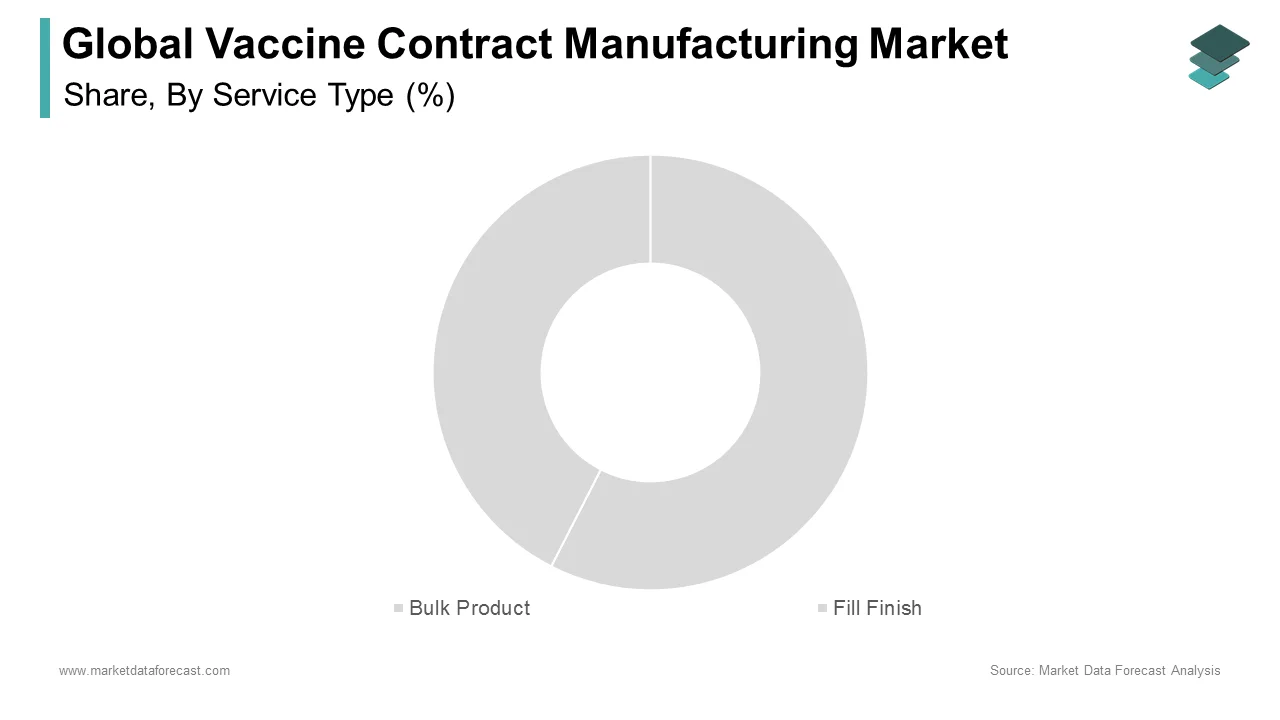
The bulk product manufacturing segment is likely to register the fastest CAGR of 12.5% during the forecast period, driven by the increasing complexity of novel vaccine platforms. The success of messenger RNA and viral vector vaccines has shifted manufacturing focus upstream to cell culture and fermentation processes. The production of these biologics requires sophisticated bioreactors and purification systems that are capital-intensive and technically demanding. Many emerging biotech companies do not possess the infrastructure for large-scale bulk production, leading them to partner with specialized contract manufacturers. The scalability of these new platforms allows for faster production cycles compared to traditional egg-based methods but requires precise control over biological parameters. Contract manufacturers are investing heavily in modular facilities and single-use technologies to accommodate these advanced processes. The ability to produce high yields of complex antigens is crucial for meeting global demand.
By Product Type Insights
The influenza virus vaccines segment was the largest by capturing the largest share of the vaccine contract manufacturing market due to the recurring seasonal nature of the disease and the need for annual reformulation. The World Health Organization recommends twice-yearly updates to vaccine strains to match circulating viruses, creating a consistent and predictable demand for manufacturing services. According to the Centers for Disease Control and Prevention, hundreds of millions of influenza vaccine doses are administered each year globally, requiring massive production capacity. Contract manufacturers are essential for meeting this surge demand within short timeframes before the flu season begins. The complexity of producing trivalent and quadrivalent vaccines necessitates specialized expertise in strain selection and egg-based or cell-based production. Public health campaigns in developed countries drive high coverage rates, ensuring steady volumes for manufacturers. The established infrastructure for influenza production makes it a staple service for contract organizations.
The combination type vaccines segment is expected to witness the fastest CAGR of 9.8% from 2026 to 2034, owing to their ability to improve patient compliance and reduce healthcare costs. These vaccines protect against multiple diseases with a single injection, reducing the number of visits required for immunization. The combination vaccines simplify immunization schedules, which is particularly beneficial in regions with limited healthcare access. Parents and caregivers prefer fewer injections for children, leading to higher uptake rates and better coverage. Contract manufacturers are increasingly tasked with producing these complex formulations, which require precise blending and stability testing. The development of pentavalent and hexavalent vaccines has expanded the scope of contract manufacturing services. Healthcare systems save on administrative and logistics costs by administering fewer doses. This economic efficiency drives adoption in both public and private sectors.
By Vaccine Type Insights
The inactivated vaccines segment was the largest by accounted in holding 34.2% of the vaccine contract manufacturing market share in 2025 due to their long-established safety profile and broad application across various diseases. These vaccines use killed versions of the germ causing a disease, making them safe for individuals with weakened immune systems. The inactivated vaccines are used for diseases, such as polio, hepatitis A, and rabies, which remain significant public health concerns globally. The manufacturing process for inactivated vaccines is well understood and standardized, allowing contract manufacturers to produce them efficiently at scale. The stability of these vaccines facilitates storage and distribution in regions with limited cold chain infrastructure. This logistical advantage makes them preferred choices for global immunization programs. Contract manufacturers have extensive experience with inactivation techniques such as chemical treatment and heat, ensuring consistent quality. The regulatory pathway for inactivated vaccines is clearer compared to newer platforms, reducing development risks.
The recombinant vector vaccines segment is likely to register the fastest CAGR of 14.2% from 2026 to 2034 due to their rapid development capabilities for emerging pathogens. These vaccines use a harmless virus to deliver genetic material from the target pathogen, triggering an immune response. The recombinant vector platforms can be adapted quickly to new threats, making them ideal for pandemic preparedness. The success of Ebola and COVID-19 vaccines using this technology has validated its efficacy and safety. Contract manufacturers are investing in flexible facilities that can switch between different vector systems, such as adenovirus and vesicular stomatitis virus. The modular nature of this platform allows for faster scale-up compared to traditional methods. Governments are prioritizing these vaccines for stockpiling against future outbreaks. The ability to induce strong cellular immunity makes them effective against complex diseases.
REGIONAL ANALYSIS
North America Vaccine Contract Manufacturing Market Analysis
North America was the largest by holding 33.2% of the global vaccine contract manufacturing market share in 2025, with a robust biotechnology sector and significant government funding. The United States is home to many leading pharmaceutical companies and contract manufacturers who benefit from advanced infrastructure and regulatory clarity. The region has seen a surge in approvals for novel vaccine platforms, encouraging outsourcing. The presence of major research institutions fosters innovation, leading to a rich pipeline of vaccine candidates. Government initiatives, such as the Biomedical Advanced Research and Development Authority, provide financial support for manufacturing capacity expansion. High healthcare expenditure ensures a strong demand for premium vaccines. The region leads in the adoption of advanced manufacturing technologies like continuous processing. Strong intellectual property protection attracts global innovators to partner with local manufacturers. The focus on pandemic preparedness has further accelerated investment in domestic production capabilities.
Europe Vaccine Contract Manufacturing Market Analysis
Europe's vaccine contract manufacturing market is the next positioned by holding 21.2% of the share in 2025, with strong public health systems and centralized procurement. Countries like Germany, France, and Switzerland are hubs for pharmaceutical production with renowned contract manufacturers operating in the region. The stringent quality standards ensure high safety levels for manufactured vaccines. The European Union’s strategy for vaccine procurement emphasizes supply security, driving demand for local manufacturing partners. Public trust in vaccines is generally high, supporting consistent immunization rates. Collaboration between academic institutions and industry fosters technological advancements. The aging population increases demand for vaccines against respiratory diseases and shingles. Cross-border trade within the EU facilitates efficient distribution. Regulatory harmonization simplifies market access for manufacturers.
Asia Pacific Vaccine Contract Manufacturing Market Analysis
The Asia Pacific vaccine contract manufacturing market is likely to grow at the fastest CAGR in the coming years, fueled by rising healthcare investments and local production initiatives. India and China are major players with large-scale manufacturing capabilities serving both domestic and global markets. The region is increasing its share of global vaccine production to enhance health security. Government policies promoting self-sufficiency in vaccine supply are driving capacity expansion. The growing middle class is increasing demand for premium and optional vaccines. Low manufacturing costs attract international partnerships and technology transfers. The region is a key supplier of generic and routine vaccines to developing nations. Infrastructure improvements are enhancing cold chain logistics. Regulatory frameworks are being strengthened to meet international standards.
Latin America Vaccine Contract Manufacturing Market Analysis
Latin America vaccine contract manufacturing market growth is driven by the investment in local production to improve access and affordability. The initiatives to strengthen regional supply chains are gaining momentum. Public health programs drive demand for routine vaccines against measles, polio, and yellow fever. Economic constraints limit spending on premium vaccines, but international aid supports procurement. Local manufacturers are partnering with global firms for technology transfer and capacity building. Regulatory agencies are working towards harmonization to facilitate trade. The prevalence of tropical diseases creates a specific demand for certain vaccines. Urbanization is improving healthcare access and awareness. Government commitment to expanding immunization coverage supports market growth.
Middle East and Africa Vaccine Contract Manufacturing Market Analysis
The Middle East and Africa vaccine contract manufacturing market growth is driven by health security concerns and international support. South Africa and Egypt are developing local manufacturing hubs to reduce dependency on imports. High burden of infectious diseases drives demand for vaccines against malaria, tuberculosis, and HIV. International organizations provide funding and technical assistance for facility development. Regulatory systems are strengthening to ensure quality and safety. Public-private partnerships are facilitating technology transfer and skills development. The young population structure requires extensive immunization programs. Climate challenges necessitate robust cold chain solutions. Regional collaboration is enhancing procurement power and supply resilience.
COMPETITIVE LANDSCAPE
The competition in the vaccine contract manufacturing market is characterized by intense rivalry among established global giants and agile specialized players vying for long-term partnerships with pharmaceutical innovators. Major competitors leverage their scale and technological expertise to offer end-to-end solutions from development to commercial supply. Speed to market and regulatory compliance are critical differentiators as clients prioritize partners who can navigate complex approval processes efficiently. Capacity availability remains a key competitive factor, especially during public health emergencies when demand surges unexpectedly. Companies invest heavily in advanced manufacturing technologies like continuous processing and single-use systems to gain operational advantages. Strategic alliances and joint ventures are common tactics to share risks and access new markets. Price competition is moderate as quality and reliability often outweigh cost considerations in this high-stakes sector.
KEY MARKET PLAYERS
Some of the key competitors in the global vaccine contract manufacturing market profiled in this report are
- Thomas Jefferson University
- Goodwin Biotechnology Inc.
- BioMARK
- Samsung Biologics Co., Ltd.
- Emergent BioSolutions
- Soligenix Inc.
- Lonza Group AG
- Catalent Biologics
- Minneapolis Medical Research Foundation (MMRF)
- Bavarian Nordic A/S
- FUJIFILM Diosynth Biotechnologies
TOP PLAYERS IN THE MARKET
- Catalent Inc. is a leading global provider of advanced delivery technologies and development solutions for drugs, vaccines, and gene therapies. The company leverages its extensive network of manufacturing facilities to support clients from clinical stages through commercial production. Recent strategic actions include significant investments in expanding fill finish capacity and adopting single-use technologies to enhance flexibility. Catalent has strengthened its position by integrating digital tools for real-time process monitoring, ensuring higher quality and efficiency. The company actively collaborates with biopharmaceutical innovators to accelerate vaccine timelines.
- Samsung Biologics Co., Ltd. has rapidly emerged as a dominant force in the contract manufacturing sector with a strong focus on large-scale biologics and vaccine production. The company operates some of the largest biomanufacturing plants globally, enabling high-volume output for critical health initiatives. Recent efforts involve expanding its facility footprint in South Korea to meet surging global demand for viral vector and mRNA vaccines. Samsung Biologics has secured multiple long-term contracts with major pharmaceutical companies, demonstrating its reliability and technical expertise. The firm invests heavily in talent development and state-of-the-art equipment to maintain a competitive advantage. Its commitment to speed and quality solidifies its role as a key enabler of global vaccine accessibility and security.
- Lonza Group AG is a premier supplier to the pharmaceutical, biotech, and specialty ingredients markets, offering comprehensive vaccine manufacturing services. The company specializes in complex biologics, including microbial and mammalian cell culture processes essential for modern vaccine development. Lonza has recently expanded its capabilities in sterile fill finish operations and modular manufacturing units to increase agility. Strategic partnerships with innovative biotech firms allow Lonza to integrate cutting-edge technologies into its production workflows. The group emphasizes sustainability and operational excellence to meet evolving regulatory standards.
TOP STRATEGIES USED BY KEY MARKET PARTICIPANTS
Key players in the vaccine contract manufacturing market primarily focus on capacity expansion through strategic capital investments in new facilities and technology upgrades. Companies adopt single-use systems to enhance flexibility and reduce cross-contamination risks during multi-product campaigns. Strategic acquisitions of specialized firms enable broader service portfolios and geographic reach. Partnerships with biotechnology innovators facilitate early involvement in drug development pipelines, ensuring long-term manufacturing contracts. Investment in digitalization and automation improves process efficiency and data integrity for regulatory compliance. Diversification into novel platforms such as mRNA and viral vectors addresses emerging market demands. Emphasis on supply chain resilience mitigates risks associated with raw material shortages. These strategies collectively strengthen market positions and ensure reliable vaccine availability.
MARKET SEGMENTATION
This research report on the global vaccine contract manufacturing market has been segmented and sub-segmented based on the service type, product type, vaccine type, and region.
By Service Type
- Bulk Product
- Fill Finish
By Product Type
- Single Vaccine
- Influenza Virus
- Ebola Virus
- Chickenpox
- Tetanus
- Tuberculosis
- Polio
- Smallpox
- Others
- Combination Type
By Vaccine Type
- Inactivated Vaccines
- Conjugate Vaccines
- Live Attenuated Vaccines
- Toxoid Vaccines
- Recombinant Vector Vaccines
- Subunit Vaccines
- Synthetic Vaccines
By Region
- North America
- Europe
- Asia Pacific
- Latin America
- Middle East and Africa