- Product Description Description
- Table of Contents TOC
- List of Table & Figure LOT
- Get Free Sample PDF Sample PDF
Market Size, 2025
$29 BnMarket Estimate, 2026
$34 BnMarket Forecast, 2034
$128 BnCAGR, 2026–2034
17.80%Global Meal Kit Delivery Services Market Report Summary
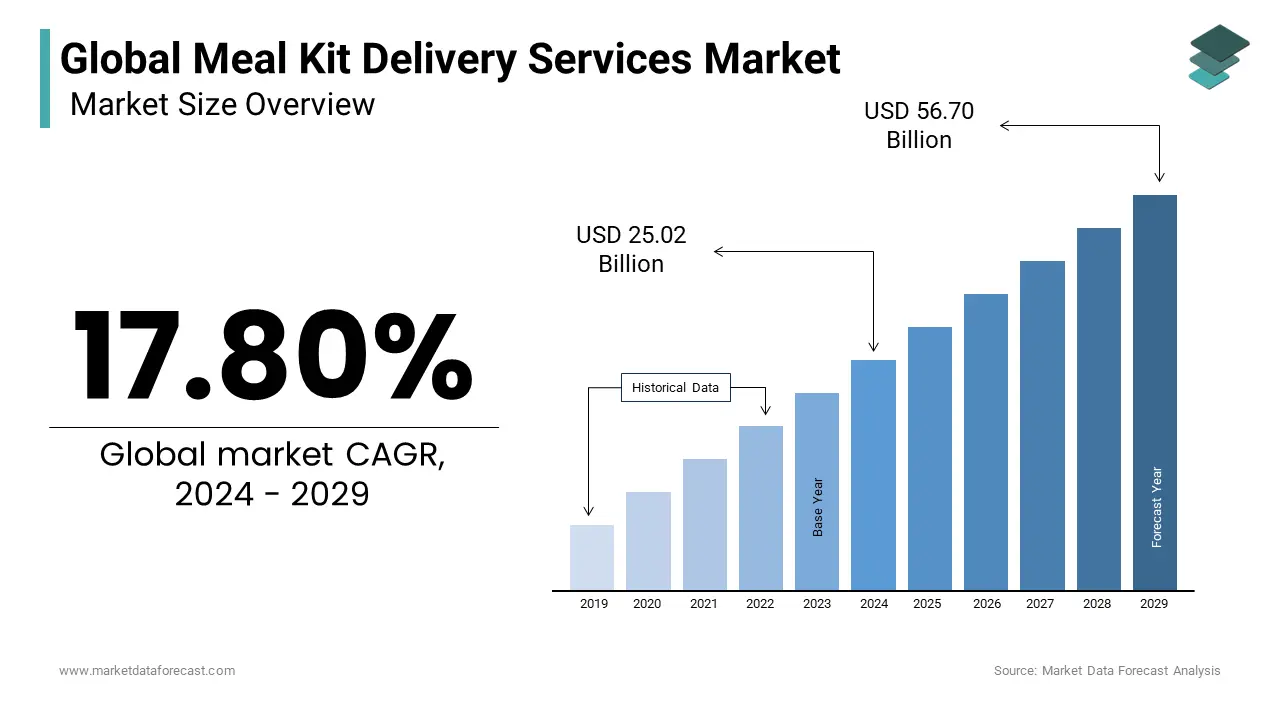
The global meal kit delivery services market was valued at USD 29.47 billion in 2025, is estimated to reach USD 34.72 billion in 2026, and is projected to reach USD 128.75 billion by 2034, growing at a CAGR of 17.80% during the forecast period. Market growth is driven by rising demand for convenient meal solutions, increasing adoption of online food delivery platforms, and changing consumer lifestyles. Meal kit delivery services provide pre portioned ingredients and recipes that simplify home cooking while saving time. The growing preference for healthy eating, subscription based services, and personalized meal options is further supporting strong market expansion globally.
Key Market Trends
- Rising demand for convenient and time saving meal solutions is driving market growth.
- Increasing adoption of online food ordering and subscription services is boosting demand.
- Growing preference for healthy and home cooked meals is supporting market expansion.
- Expansion of personalized and diet specific meal plans is enhancing customer engagement.
- Innovation in sustainable packaging and delivery logistics is influencing market development.
Segmental Insights
- Based on offering, the cook and eat segment accounted for 62.4% of the global meal kit delivery services market share in 2025. This dominance is attributed to rising consumer interest in convenient home cooking experiences.
- Based on platform, the online segment held 64.6% of the global meal kit delivery services market share in 2025, driven by widespread internet penetration and increasing digital purchasing behavior.
- Based on service, the several meals per week segment accounted for 41.9% of the global meal kit delivery services market share in 2025, supported by growing demand for recurring meal subscription plans.
Regional Insights
- The global meal kit delivery services market is experiencing rapid growth across regions, supported by digital transformation and changing food consumption habits.
- North America was the leading contributor, accounting for 45.7% of the global meal kit delivery services market share in 2025, driven by high adoption of subscription services, busy lifestyles, and strong online food delivery infrastructure.
Competitive Landscape
The global meal kit delivery services market is highly competitive, with key players focusing on menu innovation, personalized meal offerings, and expansion of online delivery networks to strengthen their market position. Companies are investing in subscription models, sustainable packaging, and partnerships with food suppliers. Prominent players in the global meal kit delivery services market include Just Add Cooking, Blue Apron, Din, Ahold USA, Cooking Simplified, Chef'd, Gobble, Foodstirs, Green Chef, FreshDirect, HelloFresh, Green Blender, Home Chef, Handpick, Maki Spoon, Hungry Root, Munchery, Potato, Saffron Crystal, PeachDish, Terra's Kitchen, Tyson Foods, Sun Basket, BurgaBox, Martha & Marley Spoon, Feastive, Farmhouse Delivery Dinner Club, The Purple Carrot, Kitchen Table, Good Egg, and Direct Tie.
Global Meal Kit Delivery Services Market Size
The global meal kit delivery services market size was valued at USD 29.47 billion in 2025, and the global market size is expected to reach USD 128.75 billion by 2034 from USD 34.72 billion in 2026. The market's promising CAGR for the predicted period is 17.80%.
Meal kit delivery services are subscription-based businesses that deliver pre-portioned, fresh ingredients and detailed recipe cards directly to customers' homes, allowing them to cook meals from scratch without planning or shopping. This sector bridges the gap between grocery shopping and restaurant dining by offering convenience without sacrificing the culinary experience of home cooking. The industry has evolved from a niche novelty into a significant component of the modern food ecosystem driven by changing consumer lifestyles and digital adoption. As per the United States Department of Agriculture household spending on food away from home has historically competed with at home preparation but recent trends show a hybrid model where consumers seek efficiency in meal preparation. The operational framework relies heavily on sophisticated supply chain management cold chain logistics and data analytics to minimize waste and ensure freshness. Consumer behavior indicates a shift towards health conscious eating with individuals seeking control over ingredient quality and nutritional content. According to the Bureau of Labor Statistics, the average American (aged 15+) spends approximately 40 minutes (0.67 hours) per day on food preparation and cleanup, a constraint that continues to drive the demand for time-saving solutions like meal kits. The market is characterized by high customer acquisition costs and churn rates necessitating continuous innovation in menu variety and user experience. Regulatory standards for food safety and labeling are stringent requiring companies to maintain rigorous quality control protocols. The integration of sustainability practices such as recyclable packaging and carbon neutral delivery options has become a critical differentiator. This sector reflects broader societal shifts towards digitalization convenience and personalized nutrition.
MARKET DRIVERS
Increasing Demand For Convenience Amidst Time Poverty
The escalating demand for convenience is the main driver fueling the meal kit delivery services market. Consumers are increasingly seeking these options as they face time poverty due to demanding work schedules and urban lifestyles. Modern professionals often struggle to balance career obligations with domestic responsibilities leaving little time for traditional grocery shopping and meal planning. As per the OECD Employment Outlook 2025, workers in developed nations work an average of 36 hours per week, which creates significant time pressure on household tasks like meal preparation. Meal kits eliminate the need for meal planning ingredient sourcing and portioning allowing users to prepare high quality meals in under 30 minutes. This value proposition appeals strongly to dual income households and young professionals who prioritize efficiency without compromising on dietary quality. The psychological benefit of reducing decision fatigue associated with daily meal choices further enhances appeal. Consumers perceive meal kits as a solution that simplifies their routine while providing a sense of accomplishment from cooking. The seamless integration of subscription models with mobile apps allows for easy customization and skipping of weeks adding to the flexibility. This driver ensures that meal kits remain relevant for individuals seeking to optimize their time management. The ability to deliver restaurant quality experiences at home with minimal effort sustains consumer loyalty. The trend towards outsourcing mundane tasks extends to food preparation driving consistent demand.
Rising Health Consciousness And Desire For Dietary Control
The growing emphasis on health and wellness is greatly propelling the growth of the meal kit delivery services market. Consumers are increasingly seeking greater control over their dietary intake. Individuals are increasingly aware of the hidden calories sodium and preservatives found in takeout and processed foods prompting a shift towards home cooked meals. As per the Centers for Disease Control and Prevention more than 40 percent of adults in the United States are obese leading to a heightened focus on nutritious eating habits. Meal kits provide transparent nutritional information and pre portioned ingredients that help users manage calorie intake and adhere to specific dietary requirements such as keto vegan or gluten free. The inclusion of fresh vegetables lean proteins and whole grains aligns with public health recommendations for balanced diets. Consumers appreciate the ability to explore diverse cuisines and cooking techniques that promote healthy eating without the complexity of sourcing exotic ingredients. The educational aspect of meal kits encourages users to develop better cooking skills and healthier long term habits. Partnerships with nutritionists and dietitians allow companies to offer specialized menus that cater to medical needs such as diabetes management. This driver resonates with fitness enthusiasts and families aiming to improve their overall well being. The perception of meal kits as a tool for achieving health goals reinforces their value proposition. The alignment with preventive healthcare trends ensures sustained growth in this segment.
MARKET RESTRAINTS
High Cost Per Serving Compared To Traditional Grocery Shopping
The relatively high cost per serving of meal kits compared to traditional grocery shopping impedes the expansion of the meal kit delivery market. While meal kits offer convenience they often carry a premium price tag that excludes budget conscious consumers. As per the Bureau of Labor Statistics, while average annual household spending on food at home is roughly $6,300, meal kit subscriptions can cost $110-$150 per week for a family of four, acting as a major cost restraint. This price disparity makes meal kits inaccessible to lower and middle income households who prioritize affordability over convenience. The economic uncertainty and inflationary pressures further exacerbate this issue as consumers tighten their discretionary spending. Many potential customers view meal kits as a luxury item rather than a staple necessity limiting their frequency of use. The perceived value proposition diminishes when compared to the cost of buying ingredients in bulk from supermarkets. Promotional discounts often attract initial subscribers but retention drops when prices revert to standard rates. The inability to compete on price with large grocery chains restricts the market potential. Consumers may opt for ready made meals or takeout which offer similar convenience at comparable or lower prices. This financial barrier prevents meal kits from becoming a mainstream solution for daily dining. The challenge lies in reducing operational costs to lower prices without compromising quality. Until price parity is achieved growth will remain constrained to higher income demographics.
Logistics Complexity And Cold Chain Infrastructure Limitations
The complexity of logistics and the reliance on robust cold chain infrastructure obstructs the growth of the meal kit delivery services market. Ensuring the freshness and safety of perishable ingredients during last mile delivery requires sophisticated temperature controlled packaging and transportation networks. As per the Food and Drug Administration strict regulations govern the handling of potentially hazardous foods requiring precise temperature maintenance throughout the supply chain. Any deviation can result in spoilage foodborne illnesses and significant liability issues. The high cost of insulated packaging and ice packs contributes to operational expenses and environmental concerns. Rural and remote areas often lack the logistical infrastructure to support timely and efficient delivery limiting market reach. Delivery delays due to weather traffic or carrier errors can compromise product quality and customer satisfaction. The carbon footprint associated with individual deliveries is higher than bulk grocery shopping attracting criticism from environmental advocates. Companies must invest heavily in technology and partnerships with logistics providers to optimize routes and reduce waste. The fragility of the supply chain makes it vulnerable to disruptions such as labor strikes or fuel price spikes. These operational challenges increase the barrier to entry for new players and strain profitability. The need for constant monitoring and quality assurance adds to the administrative burden. This logistical constraint limits scalability and geographic expansion.
MARKET OPPORTUNITIES
Expansion Into Specialty And Dietary Specific Menus
The proliferation into specialty and dietary specific menus offers a strong opening for meal kit delivery services to capture niche market segments within the global meal kit delivery services market. Consumers with specific health conditions or lifestyle preferences are underserved by generic offerings creating demand for tailored solutions. As per the 2024 International Food Information Council (IFIC) Food & Health Survey, 54% of consumers follow a specific diet or eating pattern, such as high protein or plant-based, indicating a massive market for specialized meal kits. Companies can develop dedicated lines for diabetic friendly low sodium or allergen free meals addressing critical health needs. Collaborations with healthcare providers and insurance companies could facilitate prescriptions for meal kits as part of medical nutrition therapy. The aging population also represents a growing demographic requiring easy to prepare nutritious meals that accommodate dietary restrictions. Customization algorithms can leverage user data to recommend meals that align with individual health goals and taste preferences. The introduction of global and ethnic cuisines allows users to explore diverse flavors without the hassle of sourcing rare ingredients. Premium offerings featuring organic sustainably sourced or locally grown ingredients can attract high end consumers willing to pay for quality. This differentiation strategy reduces competition with standard grocery items and enhances brand loyalty. The ability to cater to specific cultural and religious dietary laws further expands the customer base. By focusing on personalization companies can create sticky subscriptions that are difficult to replace. This opportunity drives innovation and increases average revenue per user.
Integration With Retail And Omnichannel Strategies
The integration of meal kit services with traditional retail channels provides a clear path for growth and customer acquisition in the meal kit delivery services market. Partnering with supermarkets allows meal kit companies to leverage existing distribution networks and reach a broader audience. As per the Food Marketing Institute over 90 percent of consumers shop at grocery stores weekly providing a massive touchpoint for marketing and sales. Retailers can dedicate shelf space to ready to cook meal kits bridging the gap between online subscriptions and impulse purchases. This omnichannel approach reduces customer acquisition costs and increases brand visibility. Consumers who are hesitant to commit to subscriptions can trial products in store before signing up online. Collaborations with major grocery chains enable meal kit providers to utilize local warehouses for faster and cheaper delivery. The data shared between retailers and meal kit companies can enhance inventory management and demand forecasting. Private label meal kits offered by supermarkets can compete on price while maintaining quality standards. The integration of digital platforms with physical stores creates a seamless shopping experience. Click and collect options allow customers to order online and pick up in store reducing delivery costs. This strategy diversifies revenue streams and reduces dependence on direct to consumer logistics. The synergy between digital convenience and physical accessibility strengthens market position. This opportunity fosters long term sustainability and scalability.
MARKET CHALLENGES
High Customer Churn And Retention Difficulties
High customer churn rates pose a critical challenge to the profitability and sustainability of these services, which hinders the growth of the global meal kit delivery services market. The subscription model relies on long term retention but many users cancel after trying the service for a few weeks. As per industry benchmarks the average monthly churn rate for meal kit services can exceed 10 percent indicating significant instability in the customer base. Consumers often subscribe for novelty or promotional discounts but revert to traditional cooking or takeout once the initial excitement fades. The lack of flexibility in menu options and delivery schedules can lead to frustration and cancellation. Competition from numerous providers makes it easy for customers to switch brands in search of better deals or variety. The high cost of acquiring new customers through digital marketing erodes margins if retention is low. Companies must continuously invest in engagement strategies such as personalized recommendations and loyalty programs to keep users active. The fatigue of repetitive recipes and packaging waste also contributes to attrition. Understanding the root causes of churn requires sophisticated data analysis and customer feedback mechanisms. Failure to address these issues leads to a revolving door of subscribers that hinders growth. The challenge lies in creating lasting value that justifies the ongoing commitment. Building emotional connections and habit formation is essential for reducing churn. This issue remains a persistent obstacle to achieving consistent profitability.
Environmental Sustainability And Packaging Waste Concerns
Environmental sustainability and packaging waste concerns are a major challenge for the meal kit delivery services market. This is amid growing ecological awareness. Each meal kit arrives with multiple layers of packaging including cardboard boxes plastic bags and ice packs generating significant waste. As per the Environmental Protection Agency containers and packaging make up a major portion of municipal solid waste raising alarms about the environmental impact of delivery services. Consumers are increasingly critical of the excessive use of single use plastics and non recyclable materials. Although companies are transitioning to recyclable or compostable packaging the infrastructure for processing these materials is not universally available. The carbon footprint of individual home deliveries is higher than consolidated grocery trips attracting scrutiny from environmental groups. Regulatory pressures are mounting for companies to adopt circular economy principles and reduce waste. Failure to address these concerns can damage brand reputation and alienate eco conscious consumers. Developing sustainable packaging solutions that maintain food safety and insulation is technically challenging and costly. Companies must balance operational efficiency with environmental responsibility. The lack of standardized recycling guidelines across regions complicates compliance efforts. Greenwashing accusations can arise if sustainability claims are not substantiated. This challenge requires innovative material science and supply chain redesign. The industry faces pressure to prove its environmental credentials to maintain social license to operate.
REPORT COVERAGE
| REPORT METRIC | DETAILS |
| Market Size Available | 2025 to 2034 |
| Base Year | 2025 |
| Forecast Period | 2026 to 2034 |
| CAGR | 17.80% |
| Segments Covered | By Offering, Service, Platform, and Region |
| Various Analyses Covered | Global, Regional and Country Level Analysis; Segment-Level Analysis; DROC; PESTLE Analysis; Porter’s Five Forces Analysis; Competitive Landscape; Analyst Overview of Investment Opportunities |
| Regions Covered | North America, Europe, APAC, Latin America, Middle East & Africa |
| Market Leaders Profiled | Just Add Cooking, Blue Apron, Din, Ahold USA, Cooking Simplified, Chef'd, Gobble, Foodstirs, Green Chef, FreshDirect, HelloFresh, Green Blender, Home Chef, Handpick, Maki Spoon, Hungry Root, Munchery, Potato, Saffron Crystal, PeachDish, Terra's Kitchen, Tyson Foods, Sun Basket, BurgaBox, Martha & Marley Spoon, Feastive, Farmhouse Delivery Dinner Club, Foodstirs, The Purple Carrot, Kitchen Table, Good Egg, Direct Tie. |
SEGMENTAL ANALYSIS
By Offering Insights
The cook and eat segment dominated the Meal Kit Delivery Services Market and accounted for a 62.4% share in 2025. This was driven by its alignment with the core value proposition of providing a culinary experience combined with convenience. Moreover, this model delivers pre portioned raw ingredients and recipe cards requiring consumers to prepare and cook the meal at home. The Cook and Eat segment dominates because it satisfies the consumer desire for culinary engagement. Furthermore, it allows for the development of cooking skills without the burden of meal planning. Many individuals view cooking as a therapeutic activity or a hobby rather than a chore and seek high quality ingredients that are difficult to source locally. As per the National Restaurant Association a significant percentage of consumers express interest in learning new cooking techniques and exploring global cuisines which meal kits facilitate through guided instructions. The educational aspect of these kits allows users to expand their culinary repertoire building confidence in the kitchen. This experiential value differentiates Cook and Eat from ready made meals which offer convenience but lack the interactive element. Consumers appreciate the sense of accomplishment derived from preparing a restaurant quality dish at home. The ability to customize spice levels and cooking methods provides a level of control that pre cooked meals cannot match. This segment appeals to food enthusiasts who prioritize freshness and flavor over absolute speed. The social aspect of cooking together also strengthens family bonds making it a preferred choice for households. The integration of chef designed recipes adds prestige and variety keeping subscribers engaged. This emotional and educational connection ensures high retention rates among dedicated users. The focus on fresh ingredients supports health conscious lifestyles further driving demand. The perception of superior freshness and ingredient quality drives the dominance of the Cook and Eat segment in the market. Consumers associate raw ingredients with higher nutritional value and better taste compared to pre cooked or processed alternatives. Meal kit companies leverage this by sourcing premium organic and sustainable ingredients that are not always available in standard supermarkets. The transparency of the supply chain allows customers to know exactly what goes into their meals fostering trust and loyalty. The absence of preservatives and artificial additives appeals to health conscious individuals seeking clean eating options. The visual appeal of vibrant vegetables and high quality proteins enhances the overall user experience. Consumers are willing to pay a premium for the assurance of freshness and ethical sourcing. The ability to control portion sizes reduces food waste and supports dietary management. This segment benefits from the growing trend towards whole foods and minimally processed diets. The emphasis on quality ingredients distinguishes meal kits from fast food and frozen dinners. The commitment to freshness reinforces the brand promise and justifies the subscription cost. This factor ensures that Cook and Eat remains the preferred option for quality focused consumers.
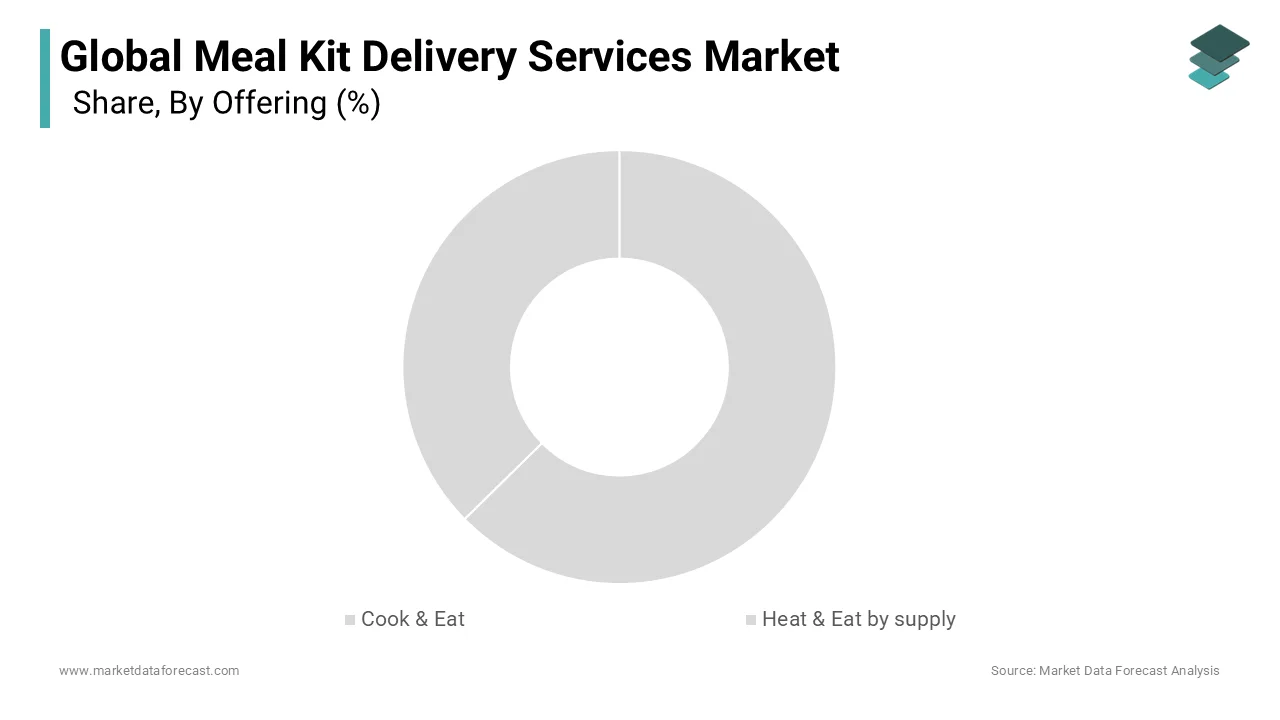
The heat and eat segment is likely to experience the fastest CAGR of 17.5% from 2026 to 2034. This rapid expansion of the segment is propelled by the increasing demand for ultimate convenience and time savings. Busy professionals and families are seeking quick meal solutions. The demand for Heat and Eat products is soaring, as they offer maximum convenience by bypassing traditional cooking steps. Consumers facing extreme time poverty due to long work hours and commuting seek meals that can be ready in minutes. According to the Bureau of Labor Statistics, the average American spends approximately 40 minutes per day on food preparation and cleanup, driving demand for "heat & eat" meal kits, which are projected to grow at a significant rate through 2033. Heat and Eat meals require only reheating making them ideal for lunch breaks or late night dinners. This segment appeals to individuals who want the quality of home cooked meals without the effort. The rise of remote work has blurred the lines between work and personal time increasing the need for efficient meal solutions. Consumers are willing to sacrifice the cooking experience for the benefit of saved time. The availability of diverse menus including gourmet and international cuisines ensures that convenience does not compromise on taste. The integration of microwave safe packaging enhances usability and reduces cleanup. This segment captures customers who may find Cook and Eat kits too time consuming. The focus on speed and ease drives adoption among younger demographics and single person households. The alignment with fast paced lifestyles ensures sustained growth. The ability to provide instant gratification supports market expansion. The expansion into premium ready made meals is a key driver of growth for the Heat and Eat segment. Companies are elevating the quality of pre cooked meals to compete with restaurant takeout and fast casual dining. Heat and Eat kits now feature chef curated menus with restaurant quality presentation and flavors. The use of high end ingredients such as grass fed beef wild caught seafood and organic vegetables appeals to discerning palates. This premiumization strategy allows companies to charge higher prices while delivering perceived value. The focus on nutritional balance and dietary specific options such as keto paleo and vegan attracts health conscious buyers. Partnerships with renowned chefs and restaurants enhance credibility and attract foodies. The improvement in packaging technology ensures that meals retain their texture and flavor upon reheating. This segment benefits from the blurring lines between grocery retail and food service. Consumers appreciate the ability to enjoy gourmet meals at home without the hassle. The continuous innovation in menu offerings keeps the segment fresh and exciting. The focus on quality and sophistication drives rapid adoption. This trend positions Heat and Eat as a viable alternative to dining out.
By Platform Insights
The online segment was the largest segment by occupying a 64.6% share of the Meal Kit Delivery Services Market in 2025. This is because the meal kit business model is inherently digital, relying on subscriptions and automated recurring orders. It served as the primary channel for subscription management, ordering, and customer engagement. Digital platforms enable seamless user experiences and efficient logistics coordination. Consumers prefer the convenience of managing their meals through mobile apps and websites where they can easily skip weeks change preferences and track deliveries. As per research, approximately 90 percent of Americans use the internet making digital platforms the most accessible channel for service adoption. The online interface allows for personalized recommendations based on dietary preferences and past purchases enhancing customer satisfaction. Digital marketing strategies such as social media advertising and influencer partnerships drive customer acquisition effectively. The ability to collect and analyze user data enables companies to optimize menus and reduce waste. Online platforms facilitate seamless payment processing and customer support improving the overall user experience. The scalability of digital infrastructure allows companies to reach a wide geographic audience without physical store limitations. The integration of loyalty programs and referral incentives encourages retention and word of mouth promotion. The convenience of 24/7 access to account management appeals to busy consumers. This digital first approach reduces operational costs associated with physical retail. The reliance on technology ensures efficient order fulfillment and inventory management. The dominance of online channels reflects the broader shift towards e commerce in the food industry. Enhanced user experience and personalization capabilities drive the dominance of the Online segment in the market. Digital platforms leverage algorithms to tailor meal suggestions to individual tastes dietary restrictions and household size. Meal kit companies use data analytics to predict customer preferences and optimize menu offerings. The intuitive design of apps and websites simplifies the ordering process reducing friction and abandonment. Interactive features such as cooking videos and nutritional information enhance engagement and education. Customers appreciate the ability to customize their boxes selecting specific meals or swapping ingredients. The transparency of delivery tracking builds trust and reduces anxiety about order status. Online reviews and ratings provide social proof and help new users make informed decisions. The integration of customer feedback loops allows companies to continuously improve their services. The flexibility of digital platforms enables rapid testing of new features and menus. This agility supports innovation and responsiveness to market trends. The focus on user centric design fosters loyalty and long term retention. The seamless integration of technology into the dining experience defines the modern meal kit service.
The offline segment is on the rise and is expected to be the fastest growing segment in the market by witnessing a CAGR of 36.4% during the forecast period due to strategic partnerships with retail stores and physical presence in supermarkets. This channel expands reach to non digital natives and impulse buyers. It is growing rapidly due to strategic partnerships with major grocery retailers that place meal kits in physical stores. This approach allows companies to tap into the existing foot traffic of supermarkets and reach customers who prefer shopping in person. As per the Food Marketing Institute over 90 percent of consumers still prefer to buy fresh food in stores providing a massive opportunity for offline sales. Retailers dedicate shelf space to branded meal kits offering immediate purchase without subscription commitment. This visibility introduces the concept to skeptical consumers who may be hesitant to sign up online. The ability to physically inspect ingredients builds trust and confidence in product quality. Impulse purchases are driven by attractive packaging and prominent placement near fresh produce or deli sections. Retail partnerships reduce customer acquisition costs by leveraging established brand loyalty of supermarkets. The offline channel serves as a trial ground for online conversion as satisfied in store buyers may subscribe later. The integration of click and collect services bridges the gap between digital and physical retail. This omnichannel strategy enhances accessibility and convenience for diverse consumer segments. The presence in stores increases brand awareness and credibility. The focus on physical availability supports rapid market penetration. This trend reflects the convergence of e commerce and traditional retail. Accessibility for non digital native demographics is a key driver of growth for the Offline segment. Older adults and individuals with limited internet access or digital literacy prefer purchasing meal kits in physical stores. Offline availability ensures that these demographics can benefit from the convenience and nutrition of meal kits. Physical stores provide assistance from staff who can explain product features and preparation methods. The tactile experience of selecting meals appeals to consumers who value sensory engagement. Cash payment options and immediate possession of goods eliminate concerns about online security and delivery delays. The familiarity of the grocery shopping routine reduces barriers to adoption. Retailers often offer promotions and discounts that attract price sensitive shoppers. The inclusion of meal kits in weekly grocery trips integrates them into existing habits. This segment benefits from the trust associated with established retail brands. The focus on inclusivity ensures that meal kits reach a broader audience. The physical presence supports community engagement and local brand building. This accessibility drives steady growth in the offline channel. The adaptation to diverse consumer needs expands market potential.
By Service Insights
The several meals per week segment held the majority share of 41.9% of the Meal Kit Delivery Services Market in 2025. This segment is preferred because it offers flexibility and variety for regular household consumption. Most subscribers opt for multiple meals to cover several dinners throughout the week. Subscribers typically choose two to five meals per week allowing them to supplement their diet with other food sources. As per industry data the average subscriber orders three to four meals per week reflecting the desire for diversity without total dependence on the service. This frequency allows users to explore different cuisines and recipes while maintaining flexibility in their schedule. The ability to skip weeks or pause subscriptions accommodates travel and changing routines. Multiple meals provide enough variety to prevent menu fatigue and keep the experience engaging. Households appreciate the reduction in decision fatigue for multiple nights rather than just one. The cost per meal often decreases with larger orders providing economic incentives for subscribing to several meals. The social aspect of sharing meals with family members is enhanced by having multiple options to choose from. This segment supports consistent revenue streams for companies through higher average order values. The flexibility to mix and match meals caters to diverse tastes within a household. The focus on regular consumption builds habitual usage and long term loyalty. This model aligns with the typical weekly grocery shopping cycle. The balance of commitment and freedom drives widespread adoption. Cost efficiency through bulk ordering drives the dominance of the Several Meals Per Week segment. Companies often offer discounts or free shipping for orders containing multiple meals encouraging subscribers to increase their box size. Subscribers perceive greater value when they can feed their family for several nights with a single delivery. The ability to plan meals for the entire week reduces the need for additional grocery trips saving time and money. Bulk ordering allows companies to optimize logistics and reduce per unit transportation costs. The predictability of larger orders improves inventory management and reduces food waste. Consumers appreciate the transparency of pricing and the ability to budget for weekly meals. The inclusion of family sized portions appeals to households with children. The economic advantage of subscribing to several meals makes the service more competitive with traditional grocery shopping. This financial incentive encourages higher retention and reduced churn. The focus on value maximization supports the popularity of multi meal subscriptions. The alignment with household budgeting practices ensures sustained demand. This efficiency drives the leading position of the segment.
The One Meal Per Week segment is expected to exhibit a noteworthy CAGR of 13.1% over the forecast period owing to trial usage and supplementary dining needs. It serves as a low-commitment entry point for new customers hesitant to subscribe to larger plans. Many consumers prefer to test the service quality and taste before committing to multiple meals. As per marketing studies trial offers and single meal options significantly reduce barriers to entry and increase conversion rates. This segment appeals to individuals who want to experience the convenience without a significant financial obligation. The low risk nature of ordering one meal encourages experimentation with new brands. Users can evaluate the portion size packaging and recipe difficulty before expanding their order. This segment also attracts occasional users who only need assistance with one busy night per week. The flexibility to order a single meal fits into irregular schedules and varying appetites. Social media promotions often target this segment with introductory discounts for first time buyers. The ability to customize a single meal allows for precise dietary adherence. This low threshold supports customer acquisition and market expansion. The focus on accessibility drives rapid growth in this segment. The trial nature converts skeptics into loyal subscribers over time. This strategy lowers the barrier to adoption. Supplementary dining for busy nights is a key driver of growth for the One Meal Per Week segment. Consumers often use meal kits to cover specific evenings when they have late meetings or social commitments. Ordering one meal allows users to manage these high pressure moments without disrupting their entire weekly routine. This segment appeals to singles and couples who do not require multiple meals. The ability to treat oneself to a special meal once a week adds value to the subscription. Users appreciate the novelty and break from routine cooking. The focus on quality over quantity makes single meals appealing for date nights or self care. The integration of premium ingredients in single meals enhances the perceived value. This segment benefits from the trend towards mindful consumption and treating food as an experience. The flexibility to order ad hoc meals supports spontaneous decision making. The focus on solving specific pain points drives adoption. This targeted usage expands the market beyond full time subscribers. The alignment with lifestyle variability ensures growth.
REGIONAL ANALYSIS
North America Meal Kit Delivery Services Market Analysis
North America dominated the global meal kit delivery services market and accounted for a 45.7% share in 2025. The demand for these services was driven by high consumer adoption and mature infrastructure. Also, the region is home to major players and early adopters of the subscription model. North America maintains its leading position due to high consumer acceptance of digital services and well developed logistics networks. The United States and Canada have high levels of internet penetration and credit card usage facilitating online subscriptions. As per the United States Department of Agriculture the food away from home sector is highly competitive driving innovation in home meal replacements. Consumers in this region prioritize convenience and health driving demand for personalized meal solutions. The presence of major companies such as HelloFresh and Blue Apron has educated the market and established standards. The dense urban population supports efficient last mile delivery reducing costs. High disposable income allows consumers to afford premium meal kits. The cultural emphasis on fitness and wellness aligns with the nutritional benefits of meal kits. Regulatory frameworks for food safety are robust ensuring consumer trust. The maturity of the market drives consolidation and innovation in service offerings. The focus on sustainability and local sourcing resonates with regional values. This strong foundation ensures continued dominance. The integration with retail partners expands reach. The region sets trends for global markets.
Europe Meal Kit Delivery Services Market Analysis
Europe followed closely behind in the global market and captured a 23.7% share in 2025 because of strong environmental consciousness and diverse culinary traditions. Countries like Germany and the United Kingdom are key contributors. Europe maintains a strong market position due to high environmental awareness and appreciation for diverse cuisines. Consumers in this region prioritize sustainability and ethical sourcing influencing their choice of meal kit providers. As per Eurostat the adoption of eco friendly practices is high among European households driving demand for recyclable packaging and local ingredients. The diverse culinary landscape allows companies to offer varied menus featuring regional specialties. Strict food safety regulations ensure high quality standards building consumer trust. The density of urban centers in countries like Germany and France supports efficient delivery networks. The growing number of single person households increases demand for portion controlled meals. Cultural appreciation for fresh ingredients aligns with the meal kit value proposition. Government initiatives promoting healthy eating support market growth. The focus on reducing food waste resonates with European values. The integration of organic and vegetarian options appeals to health conscious buyers. This combination of ethics and quality drives sustained demand. The region leads in sustainable packaging innovations. The diverse palate supports menu variety.
Asia Pacific Meal Kit Delivery Services Market Analysis
Asia Pacific is a rapidly growing region in the Meal Kit Delivery Services Market due to urbanization and increasing disposable income. China Japan and Australia are key markets. Consumers in cities like Shanghai Tokyo and Sydney face time constraints and seek convenient meal solutions. As per the Asian Development Bank (ADB), the region's rising middle class, projected to represent a majority of global consumers, has significantly increased spending on diversified and premium food services. The adoption of digital payment systems facilitates online subscriptions. Cultural shifts towards nuclear families reduce the time available for traditional cooking. The influence of Western lifestyles introduces meal kits as a modern dining option. Local players adapt menus to regional tastes incorporating Asian flavors and ingredients. The high population density in urban areas supports efficient logistics. Government support for e commerce infrastructure enhances delivery capabilities. The growing health consciousness drives demand for nutritious meals. The integration of super apps allows seamless ordering and payment. This dynamic environment supports rapid market expansion. The focus on convenience and quality drives adoption. The region offers significant growth potential. The adaptation to local preferences ensures relevance.
Latin America Meal Kit Delivery Services Market Analysis
Latin America is moving ahead steadfastly in the global market owing to increasing internet penetration and urbanization. Brazil and Mexico are key contributors. The region is an emerging player in the market with growth driven by increasing internet access and urban population growth. Consumers in major cities are adopting digital services for convenience. As per the Economic Commission for Latin America and the Caribbean e commerce adoption is rising steadily. The young demographic is open to trying new food concepts. Economic challenges require cost effective solutions making meal kits appealing if priced competitively. Local companies are adapting to logistical challenges by optimizing delivery routes. The cultural importance of family meals supports demand for shared dining experiences. The growth of the middle class increases affordability. Partnerships with local retailers enhance distribution. The focus on fresh and flavorful ingredients aligns with local culinary preferences. Regulatory improvements in food safety build trust. The market is in early stages but shows promise. The focus on accessibility drives initial adoption. The potential for scale is significant. The adaptation to local economic conditions is crucial.
Middle East and Africa Meal Kit Delivery Services Market Analysis
The Middle East and Africa region is anticipated to grow significantly in the global market from 2026 to 2034. Dubai and South Africa are key locations. High net worth individuals in cities like Dubai and Johannesburg seek premium convenience services. As per the World Bank urbanization rates are increasing driving demand for modern food solutions. The expatriate population contributes to demand for diverse international cuisines. Logistical challenges in some areas limit widespread adoption. High import costs affect pricing making meal kits a luxury item. The cultural preference for fresh home cooked meals requires marketing efforts to shift perceptions. Local players focus on high end segments to ensure profitability. The growth of digital infrastructure supports online ordering. The focus on quality and exclusivity drives initial traction. The market is small but offers opportunities for premium brands. The adaptation to local tastes is essential. The potential for growth exists as infrastructure improves. The focus on niche segments ensures sustainability.
COMPETITIVE LANDSCAPE
The competitive landscape of the Meal Kit Delivery Services Market is characterized by intense rivalry among established global brands and emerging local providers. Major players compete on price variety and convenience to capture consumer attention in a saturated environment. The rise of private label meal kits from supermarkets has intensified competition forcing dedicated services to differentiate through quality and customization. Innovation in ready to eat options and dietary specific menus provides a competitive edge for companies seeking to expand their customer base. Retail integration allows traditional grocery chains to offer convenient alternatives challenging pure play subscribers. Customer acquisition costs remain high driving firms to focus on retention and lifetime value. Brand loyalty is fragile as consumers frequently switch providers for better deals or variety. Regulatory pressures regarding sustainability and food safety influence operational strategies. Market dynamics require continuous adaptation to changing consumer preferences and economic conditions. Technological advancements in logistics and personalization shape competitive advantages. Consolidation activities allow larger firms to achieve economies of scale. This highly competitive environment forces companies to innovate constantly. Maintaining relevance requires strategic focus on efficiency and customer satisfaction.
KEY MARKET PLAYERS
Some of the key players in the global meal kit delivery services market are
- Just Add Cooking
- Blue Apron
- Din
- Ahold USA
- Cooking Simplified
- Chef'd
- Gobble
- Foodstirs
- Green Chef
- FreshDirect
- HelloFresh
- Green Blender
- Home Chef
- Handpick
- Maki Spoon
- Hungry Root
- Munchery
- Potato
- Saffron Crystal
- PeachDish
- Terra's Kitchen
- Tyson Foods
- Sun Basket
- BurgaBox
- Martha & Marley Spoon
- Feastive
- Farmhouse Delivery Dinner Club
- Foodstirs
- The Purple Carrot
- Kitchen Table
- Good Egg
- Direct Tie
Top Players in the Market
- HelloFresh SE stands as a dominant force in the European meal kit landscape leveraging its extensive logistics network and brand recognition. The company operates across multiple European countries offering diverse menu options that cater to local tastes and dietary preferences. Recent strategic initiatives include expanding its ready to eat meal offerings to capture consumers seeking greater convenience beyond traditional cooking kits. HelloFresh has invested heavily in automated fulfillment centers to enhance operational efficiency and reduce delivery times. The company actively promotes sustainability through recyclable packaging and carbon neutral delivery options. Partnerships with local suppliers ensure fresh ingredient quality while supporting regional economies. HelloFresh utilizes data analytics to personalize customer experiences and reduce churn rates. These actions strengthen its position as a market leader by addressing evolving consumer needs. The focus on innovation and customer satisfaction drives continuous growth. This comprehensive approach ensures resilience against competitive pressures. The company remains committed to expanding its digital footprint and enhancing user engagement.
- Marley Spoon AG is a significant participant in the European market known for its partnership with Martha Stewart and focus on premium culinary experiences. The company emphasizes high quality ingredients and chef inspired recipes that appeal to food enthusiasts. Recent actions involve strengthening its supply chain infrastructure to improve reliability and reduce waste. Marley Spoon has expanded its presence in key European markets by tailoring menus to local cultural preferences. The company invests in sustainable sourcing practices aligning with growing consumer demand for ethical food production. Digital marketing campaigns highlight the ease and enjoyment of cooking with their kits. Marley Spoon collaborates with retail partners to increase brand visibility and accessibility. These efforts enhance its competitive stance and attract discerning customers. The focus on quality and sustainability differentiates the brand in a crowded market. This strategy supports long term customer loyalty and brand equity. The company continues to innovate its platform to improve user experience.
- Gousto is a leading player in the United Kingdom and expanding European market recognized for its technological approach to meal kit delivery. The company uses advanced algorithms to predict demand and optimize inventory reducing food waste significantly. Recent strategies include introducing flexible subscription models that allow customers to pause or skip weeks easily. Gousto has diversified its menu to include health focused and quick preparation options catering to busy lifestyles. The company invests in eco friendly packaging solutions to meet environmental standards and consumer expectations. Strategic partnerships with fitness and wellness brands enhance its appeal to health conscious demographics. Gousto leverages customer feedback to refine recipes and improve service quality. These actions solidify its reputation for innovation and customer centricity. The focus on technology and sustainability drives operational efficiency. This approach ensures sustained growth and market relevance. The company remains agile in adapting to changing consumer trends.
Top Strategies Used by Key Market Participants
Key players in the Meal Kit Delivery Services Market employ diverse strategies to maintain competitiveness and drive growth. Product diversification is central as companies introduce ready to eat meals and specialty diets to attract broader audiences. Sustainability initiatives focus on reducing packaging waste and optimizing supply chains to appeal to environmentally conscious buyers. Strategic partnerships with retailers and local suppliers enhance distribution efficiency and ingredient quality. Digital marketing campaigns leverage social media and influencers to engage younger demographics and build brand loyalty. Technology integration improves personalization and inventory management reducing operational costs. Companies prioritize customer retention through flexible subscription models and enhanced user experiences. These combined approaches help operators navigate market saturation while ensuring long term profitability in a dynamic industry landscape.
MARKET SEGMENTATION
This research report on the global meal kit delivery services market has been segmented and sub-segmented based on offering, platform, service & region.
By Offering
- Cook & Eat
- Heat & Eat by supply
By Platform
- Online
- Offline
By Service
- One
- Several
By Region
- North America
- Europe
- Asia Pacific
- Latin America
- Middle East and Africa