- Product Description Description
- Table of Contents TOC
- List of Table & Figure LOT
- Get Free Sample PDF Sample PDF
Market Size, 2025
$23.5 BnMarket Estimate, 2026
$24.98 BnMarket Forecast, 2034
$40.73 BnCAGR, 2026–2034
6.3%Global Medical Foods Market Report Summary
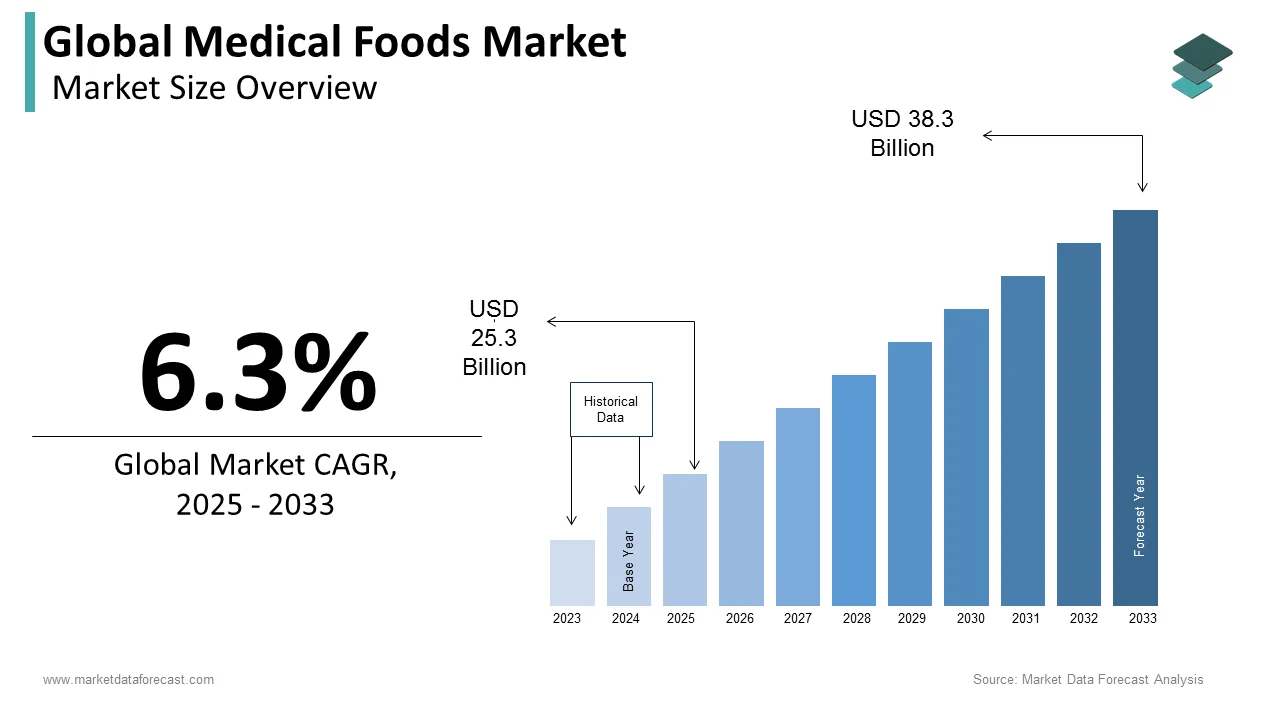
The global medical foods market was valued at USD 23.5 billion in 2025 and is projected to grow from USD 24.98 billion in 2026 to USD 40.73 billion by 2034, registering a CAGR of 6.3% from 2026 to 2034. Market growth is driven by the rising prevalence of chronic diseases, increasing demand for disease-specific nutritional management, and growing awareness regarding therapeutic nutrition. Medical foods are increasingly utilized in the dietary management of conditions such as diabetic neuropathy, metabolic disorders, gastrointestinal diseases, and cognitive disorders. Expanding aging populations, rising healthcare expenditure, and growing clinical adoption of personalized nutrition solutions are further supporting global market expansion.
Key Market Trends
- Increasing demand for disease-specific nutritional therapies.
- Rising adoption of medical foods for chronic disease management.
- Growing focus on personalized and clinically tailored nutrition solutions.
- Expansion of institutional healthcare nutrition programs and hospital procurement.
- Continuous advancements in functional ingredients and therapeutic nutritional formulations.
Segmental Insights
- Based on product, the powder segment dominated the global medical foods market in 2025 by accounting for 54.5% market share, driven by hospital procurement preferences for bulk reconstitution formats, extended shelf life, and ease of dosage customization.
- Based on application, the diabetic neuropathy segment held the highest share of 25.9% in 2025, supported by the increasing prevalence of diabetes and growing demand for nutritional therapies supporting nerve health management.
- Based on route of administration, the oral segment led the market by capturing 61.6% share in 2025, driven by convenience, non-invasive administration, and broad patient acceptance.
- Based on sales channel, the institutional sales channel segment accounted for 47.4% market share in 2025, supported by rising demand from hospitals, long-term care facilities, and specialized healthcare centers.
Regional Insights
The global medical foods market is witnessing steady growth across major regions, supported by rising chronic disease burden, increasing healthcare awareness, and growing emphasis on clinical nutrition management.
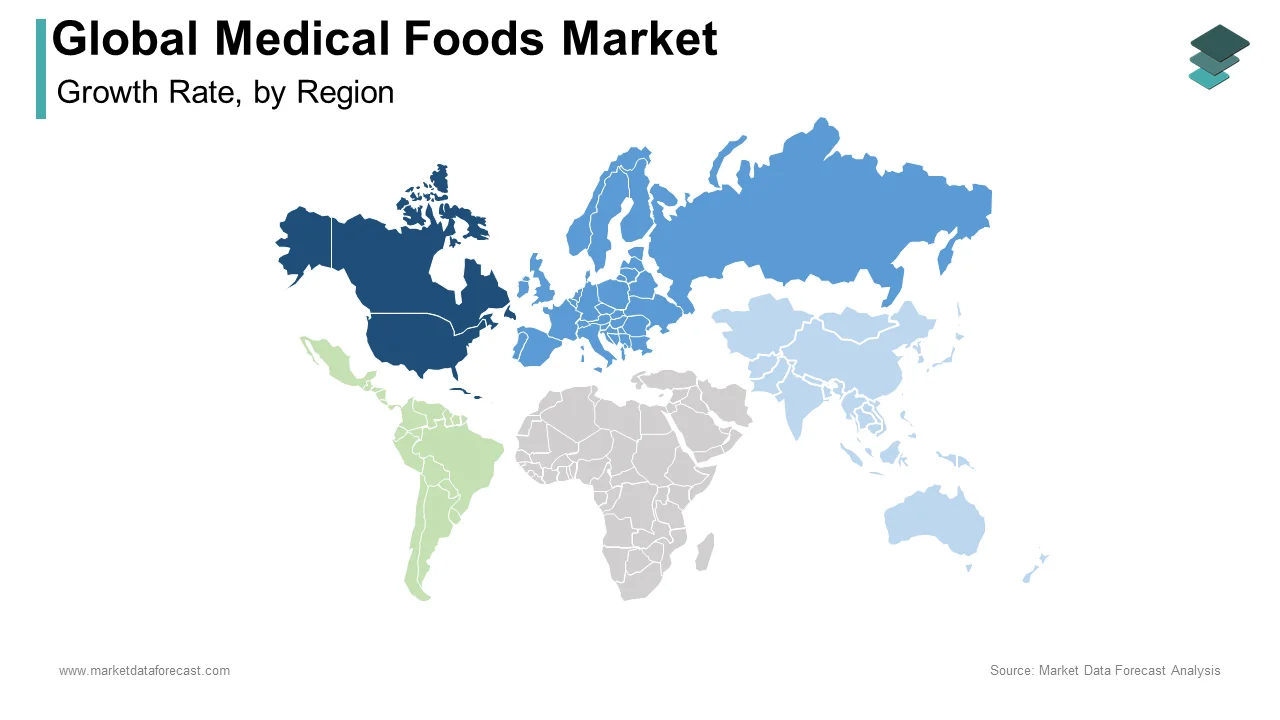
- North America dominated the market in 2025 and is expected to maintain its leading position during the forecast period, driven by advanced healthcare infrastructure, high healthcare expenditure, and strong adoption of therapeutic nutrition products.
- Europe remains a lucrative regional market, supported by increasing aging populations, strong regulatory frameworks, and rising awareness regarding medical nutrition therapies.
- Asia-Pacific is projected to register the fastest CAGR over the forecast period, driven by improving healthcare access, growing prevalence of lifestyle diseases, and increasing investments in clinical nutrition solutions.
Competitive Landscape
The global medical foods market is characterized by the presence of multinational nutrition companies and specialized therapeutic food manufacturers focusing on disease-specific nutritional formulations and clinical efficacy. Market participants are emphasizing product innovation, expansion of therapeutic nutrition portfolios, and strengthening institutional distribution channels to enhance market positioning. Strategic collaborations, research investments, and regulatory approvals are shaping competitive dynamics across the market.
Prominent companies operating in the global medical foods market include Fresenius Kabi AG, Danone, Targeted Medical Pharma Inc., Primus Pharmaceuticals Inc., Mead Johnson & Company, LLC, Abbott Laboratories, and Nestlé.
Global Medical Foods Market Size
The global medical foods market was worth US$ 23.5 billion in 2025 and is anticipated to reach a valuation of US$ 40.73 billion by 2034 from US$ 24.98 billion in 2026, and it is predicted to register a CAGR of 6.3% during the forecast period 2026 to 2034.
Medical foods are products specifically formulated for the dietary management of distinct medical conditions under professional supervision. These Foods for Special Medical Purposes operate within the European Union regulatory framework established by Regulation EU No 609/2013, which differentiates them from conventional foods and pharmaceutical products. Medical foods address nutritional requirements arising from diseases that impair normal food consumption, digestion, or metabolism. The European healthcare landscape demonstrates a substantial need for such interventions, as chronic conditions affect 53.7% of adults in Germany, according to Robert Koch Institute data from 2024. According to the World Health Organization European Region, nearly 1.8 million avoidable deaths occur annually linked to noncommunicable diseases, including cardiovascular conditions, cancer, and chronic respiratory disorders. Demographic transitions further intensify demand, with Eurostat projecting the proportion of EU residents aged 65 years and older will more than double from 12.4% in 2025 to 33.6% by 2100. According to Eurostat, the median age across the European Union is expected to increase by 6.6 years during this same timeframe, reflecting profound population ageing. Disease-related malnutrition affects approximately one in four patients admitted to European hospitals, creating substantial clinical and economic burdens. These non-market statistics illustrate the foundational health challenges that medical foods aim to address through targeted nutritional therapy under healthcare professional guidance.
MARKET DRIVERS
Rising Prevalence of Chronic Diseases Demands Specialized Nutritional Interventions
Chronic disease expansion across Europe creates sustained demand for medical foods as therapeutic adjuncts, which is a key factor propelling the global medical foods market expansion. According to the Robert Koch Institute, 53.7% of German adults reported living with chronic conditions or long-term health problems in 2024, with prevalence rising to 73.3% among those aged 80 years and older. According to the World Health Organization European Region, nearly 1.8 million avoidable annual deaths are attributed to noncommunicable diseases, including cardiovascular disorders, cancer, and chronic respiratory conditions. These pathologies frequently impair nutritional status through reduced appetite, malabsorption, or increased metabolic demands. Medical foods provide precisely calibrated nutrient profiles that address disease-specific requirements, such as modified amino acid formulations for metabolic disorders or high-energy dense supplements for cancer-related cachexia. Clinical evidence supports their efficacy in preserving lean body mass, enhancing treatment tolerance, and improving quality of life outcomes. Healthcare systems increasingly recognize medical foods as cost-effective interventions that reduce hospital readmissions and complication rates. As chronic disease burden intensifies with population ageing, medical foods transition from niche products to essential components of integrated care pathways across European healthcare settings.
Accelerating Population Ageing Amplifies Nutritional Vulnerability
Demographic shifts fundamentally reshape European healthcare needs, with ageing populations driving medical foods adoption, which is further boosting the global market expansion. According to Eurostat, the EU population will peak at 453.3 million in 2029 before declining to 398.8 million by 2100, while the proportion aged 65 years and older rises from 12.4% to 33.6%. According to Eurostat, the median age across the European Union is expected to increase by 6.6 years between 2025 and 2100, reflecting profound demographic transformation. Older adults face heightened nutritional risks, including sarcopenia dysphagia and disease-related malnutrition, which affect approximately one in four hospital patients according to European clinical nutrition data. Medical foods address these vulnerabilities through texture-modified formulations for swallowing difficulties, high protein supplements for muscle preservation, and condition-specific products for neurodegenerative disorders. Healthcare professionals increasingly integrate medical foods into geriatric care protocols to maintain functional independence and reduce care dependency. The economic imperative strengthens adoption as malnutrition-related complications cost European healthcare systems an estimated 170 billion euros annually. Population ageing thus creates structural demand for medical foods as preventive and therapeutic nutritional solutions across community and institutional care settings.
MARKET RESTRAINTS
Complex Regulatory Heterogeneity Across European Member States
Regulatory fragmentation presents substantial barriers to medical foods market expansion across Europe. While Regulation EU No 609/2013 establishes a common framework for Foods for Special Medical Purposes, national implementation varies significantly regarding notification procedures, compositional requirements, and reimbursement pathways. Market access pathways for medical nutrition demonstrate considerable heterogeneity between European countries, affecting product availability and patient access. Some member states maintain restrictive classification criteria that delay product launches, while others lack clear reimbursement mechanisms, limiting commercial viability. Healthcare professionals face uncertainty regarding appropriate product selection when regulatory guidance differs across borders. This complexity increases development costs and time to market for manufacturers, particularly small and medium enterprises with limited regulatory resources. Patients in countries with underdeveloped reimbursement frameworks may face out-of-pocket expenses that restrict access to clinically indicated medical foods. Regulatory harmonization efforts continue, but progress remains gradual given divergent national healthcare priorities and budget constraints. Until greater alignment emerges, regulatory fragmentation will constrain market growth and equitable patient access across the European Union.
Reimbursement Limitations Restrict Patient Access and Adoption
Inconsistent reimbursement policies significantly impede medical foods utilization across European healthcare systems, which is further hindering the growth of the global market. Coverage decisions for medical nutrition products vary widely between countries, with some nations providing comprehensive community and hospital reimbursement, while others offer limited or no financial support. Disease-related malnutrition affects approximately one in four hospitalized European patients, yet many eligible individuals cannot access prescribed medical foods due to cost barriers. Healthcare budgets face intense pressure from competing priorities, leading payers to apply restrictive criteria for medical foods coverage. Clinical evidence requirements for reimbursement differ across member states, creating uncertainty for manufacturers and prescribers. Patients with rare metabolic disorders or complex nutritional needs face particular challenges when specialized products lack reimbursement pathways. The economic burden of malnutrition, estimated at 170 billion euros annually for European healthcare systems, underscores the cost-effectiveness of appropriate medical foods intervention, yet upfront reimbursement barriers persist. Without broader and more consistent reimbursement frameworks, medical foods will remain underutilized despite strong clinical rationale and potential long term healthcare savings.
MARKET OPPORTUNITIES
Digital Health Integration Enables Personalized Nutritional Therapy
Digital health advancement creates promising opportunities for medical foods personalization and monitoring across Europe. Telehealth adoption expanded significantly following pandemic-related healthcare shifts, enabling remote nutritional assessment and medical foods prescription. Integrated care platforms increasingly support real-time monitoring of patient adherence, nutritional status, and clinical outcomes for medical foods interventions. Wearable sensors and mobile applications facilitate continuous data collection on dietary intake, physical activity, and physiological parameters, allowing healthcare professionals to adjust medical food regimens dynamically. Artificial intelligence algorithms analyze complex patient data to identify optimal nutritional formulations for specific disease phenotypes and individual metabolic profiles. Digital prescribing systems streamline medical foods ordering and delivery, improving access for homebound patients and those in rural communities. European Union digital health initiatives, including the European Health Data Space, provide infrastructure for secure data sharing that supports evidence generation for the effectiveness of medical foods. As digital health ecosystems mature, medical foods manufacturers can develop connected products that deliver personalized nutrition while generating real-world evidence to support reimbursement and clinical adoption.
Preventive Healthcare Expansion Creates New Indication Pathways
Growing emphasis on preventive healthcare across European systems opens novel opportunities for medical foods applications. According to the World Health Organization European strategies, noncommunicable disease prevention represents a priority area where targeted nutrition can modify risk trajectories before clinical disease manifests. Medical foods developers are exploring formulations that address prediabetes, early-stage renal impairment, or subclinical inflammation to delay or prevent disease progression. European healthcare reforms increasingly incentivize preventive interventions that reduce long-term care costs and improve population health outcomes. Medical foods positioned within preventive care pathways can demonstrate value through reduced hospitalizations, medication requirements,, and functional decline. Clinical research supports nutritional interventions for metabolic health preservation, cognitive function maintenance, and immune resilience in ageing populations. Healthcare professionals increasingly recognize medical foods as tools for risk stratification and early intervention within integrated care models. As European health systems shift toward value-based care, medical foods that demonstrate preventive benefits will gain traction among payers, providers, and patients seeking proactive health management solutions.
MARKET CHALLENGES
Clinical Evidence Generation Demands Substantial Investment
Generating robust clinical evidence for medical foods presents significant scientific and financial challenges across European markets. According to European Food Safety Authority guidance, medical foods must demonstrate safety, suitability, and efficacy through generally accepted scientific data, yet study designs face unique methodological considerations. Randomized controlled trials for nutritional interventions often encounter ethical constraints regarding control groups and blinding procedures, particularly in vulnerable patient populations. Heterogeneous patient characteristics, disease stages, and concomitant treatments complicate outcome measurement and statistical analysis. Long-term effectiveness studies require extended follow-up periods, increasing costs and attrition risks. Real-world evidence generation demands sophisticated data infrastructure and analytical capabilities that many manufacturers lack. Healthcare payers increasingly require comparative effectiveness data against standard care or alternative interventions, raising evidence thresholds for reimbursement approval. Small patient populations for rare disease indications further challenge traditional trial designs and statistical power. Without innovative evidence generation approaches and collaborative research frameworks, medical foods developers may struggle to meet evolving European regulatory and payer expectations for clinical validation.
Healthcare Professional Awareness and Training Gaps Limit Utilization
Insufficient healthcare professional knowledge regarding medical foods represents a persistent barrier to optimal patient care across Europe, which is further challenging the expansion of the medical foods market. Disease-related malnutrition affects approximately one in four hospitalized European patients, yet screening and intervention rates remain suboptimal, partly due to awareness gaps. Healthcare professionals may lack confidence in distinguishing medical foods from dietary supplements or conventional foods, leading to underprescription or inappropriate product selection. Continuing education opportunities on medical foods remain fragmented across European countries, with variable quality and accessibility. Time constraints in clinical practice further limit thorough nutritional assessment and medical foods counseling. Digital decision support tools and standardized clinical pathways could enhance appropriate medical foods utilization, but require investment and integration into existing workflows. Addressing professional knowledge gaps through coordinated education initiatives represents a critical challenge for maximizing the clinical and economic value of medical foods across European healthcare systems.
REPORT COVERAGE
| REPORT METRIC | DETAILS |
| Market Size Available | 2025 to 2034 |
| Base Year | 2025 |
| Forecast Period | 2026 to 2034 |
| Segments Covered | By Product, Application, Route of Administration, Sales Channel, and Region. |
| Various Analyses Covered | Global, Regional and Country-Level Analysis, Segment-Level Analysis, Drivers, Restraints, Opportunities, Challenges; PESTLE Analysis; Porter’s Five Forces Analysis, Competitive Landscape, Analyst Overview of Investment Opportunities |
| Regions Covered | North America, Europe, Asia Pacific, Latin America, the Middle East, and Africa |
| Market Leaders Profiled | Fresenius Kabi AG, Danone, Targeted Medical Pharma Inc., Primus Pharmaceuticals Inc., Mead Johnson & Company, LLC, Abbott, and Nestlé, and Others. |
SEGMENTAL ANALYSIS
By Product Insights
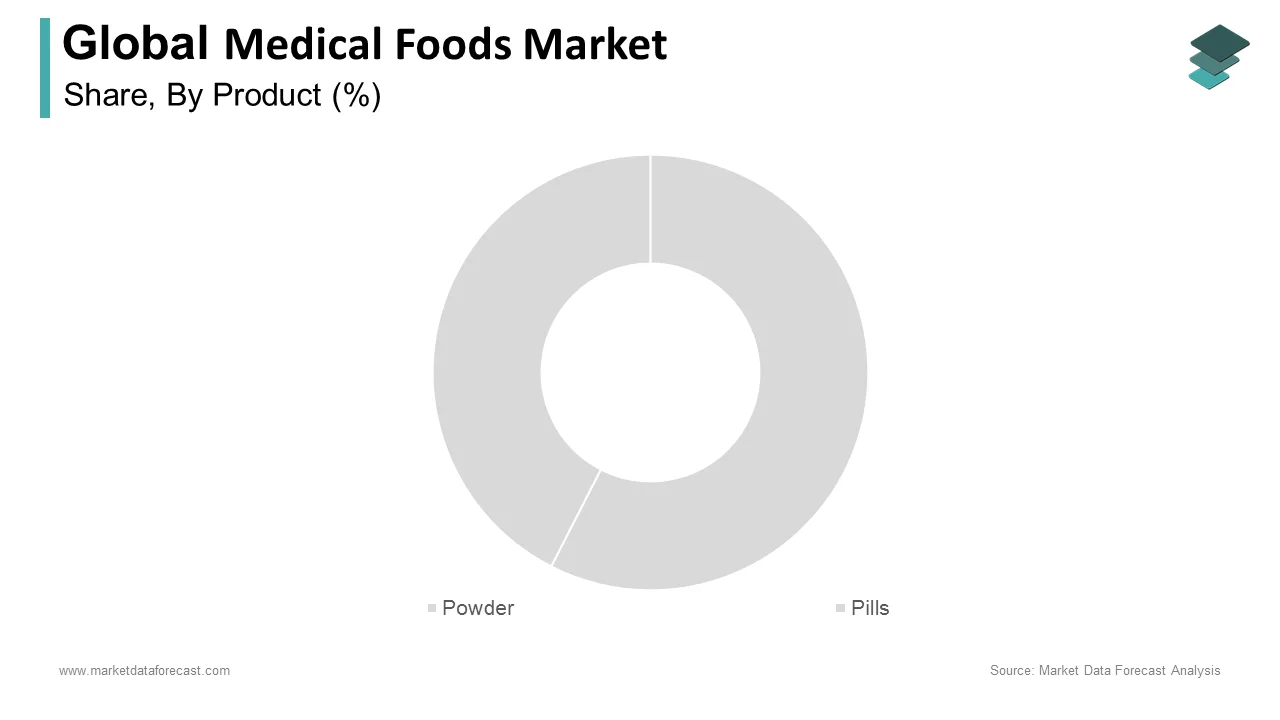
The powder segment led the market by capturing 54.5% of the global market share in 2025 due to the hospital procurement preferences for bulk reconstitution formats that enable cost-efficient nutritional therapy delivery across diverse patient populations. Powder formulations maintain market leadership due to their exceptional formulation flexibility and storage efficiency. For instance, powder medical foods accounted for 35.6% of revenue in 2025 because they can be administered orally or enterally by mixing with water or milk as clinically directed. Healthcare institutions favor powdered formats for their extended shelf life, reduced transportation costs, and ability to customize concentration levels for individual patient needs. According to research published by the National Institutes of Health, powdered medical foods like Souvenaid support cognitive function in early Alzheimer's disease through precisely calibrated nutrient delivery. Manufacturers leverage powder platforms to develop vegan, gluten-free, and allergen-free variants addressing growing dietary restriction requirements. Hospital pharmacies report that powdered medical foods reduce waste by enabling partial preparation and reconstitution on demand. The format also facilitates pediatric dosing adjustments and geriatric texture modifications without compromising nutritional integrity. As chronic disease management shifts toward outpatient settings, powder medical foods enable home-based nutritional therapy with minimal equipment requirements. This operational flexibility, combined with proven clinical outcomes, sustains the powder segment market position while supporting healthcare system cost containment objectives across European and North American markets.
On the other hand, the liquid segment is projected to expand at the fastest CAGR of 8.4% during the forecast period in the global market, owing to the rising adoption among pediatric and geriatric populations, where swallowing difficulties or clinical dysphagia limit solid format consumption. Liquid medical foods are experiencing accelerated adoption due to superior patient compliance and clinical versatility. Liquid formulations address critical needs in dysphagia management, where texture-modified liquids prevent aspiration pneumonia in elderly patients. According to the World Health Organization European Region, swallowing disorders affect 15% of adults over 65, creating substantial demand for ready-to-drink medical nutrition. Liquid formats ensure precise hydration and electrolyte balance, which is essential for patients with renal impairment or post-surgical recovery. For instance, liquid medical foods generated 4.86 billion dollars in revenue during 2025, with projected growth to 7.64 billion dollars by 2033. Manufacturers are investing in taste masking technologies and nutrient stabilization to improve palatability without compromising therapeutic efficacy. Hospital discharge protocols increasingly prescribe liquid medical foods for continuity of care in home settings where preparation complexity must be minimized. The format also enables rapid nutrient absorption, which is critical for malnourished patients requiring immediate metabolic support. As healthcare systems prioritize patient-centered care, liquid medical foods align with preferences for convenient, non-invasive nutritional interventions. These clinical and operational advantages position the liquid segment for sustained above-market growth across institutional and retail distribution channels.
By Application Insights
The diabetic neuropathy segment accounted for the highest share of 25.9% of the global market in 2025. The growth of the diabetic neuropathy segment in the global market is attributed to the global diabetes epidemic and the proven efficacy of specialized nutritional interventions for nerve health preservation. Diabetic neuropathy medical foods maintain market dominance due to escalating diabetes incidence and robust clinical validation. According to the International Diabetes Federation, global diabetes cases are projected to reach 643 million by 2030, creating sustained demand for neuropathy-specific nutritional support. Medical foods containing alpha lipoic acid and benfotiamine demonstrate significant improvements in nerve conduction velocity and symptom reduction in randomized controlled trials. According to the American Diabetes Association, specialized nutritional therapy is recognized as adjunctive management for diabetic complications, supporting reimbursement pathways. For instance, diabetic neuropathy medical foods generated 1.55 billion dollars in revenue during 2025, with continued expansion anticipated. Healthcare providers increasingly integrate these products into comprehensive diabetes care protocols to reduce hospitalization risks and improve quality of life. Patient adherence remains high due to minimal side effect profiles compared to pharmacological alternatives. As continuous glucose monitoring becomes standard practice, medical foods manufacturers are developing formulations that complement real-time glycemic data for personalized nutritional adjustments. The convergence of demographic trends, clinical evidence, and digital health integration sustains the diabetic neuropathy segment market position while addressing unmet needs in chronic disease management across diverse healthcare systems.
However, the chronic kidney disease segment is predicted to record a CAGR of 8.5% during the forecast period in the global market, owing to the nephrology guideline updates and expanding reimbursement for renal-specific nutritional interventions. Chronic kidney disease medical foods are experiencing rapid growth due to evolving clinical protocols and compelling economic outcomes. According to the National Kidney Foundation, updated guidelines recommend low-protein, high-calorie medical foods to delay dialysis initiation in stage three and four chronic kidney disease. Medical foods formulated with ketoanalogues reduce nitrogenous waste accumulation while preserving nutritional status, extending the pre-dialysis period by 12 to 18 months in clinical studies. According to the European Renal Association, chronic kidney disease affects 10% of European adults, creating substantial addressable patient populations. For instance, renal medical foods represent one of the fastest growing application segments with hospital formularies increasingly adopting these products for cost-effective disease management. Payers recognize that appropriate nutritional intervention reduces hospitalization rates and delays expensive renal replacement therapies. Manufacturers are developing phosphate binders and potassium-restricted formulations that align with dietary restrictions in advanced chronic kidney disease. As value-based care models expand, medical foods for renal applications demonstrate clear return on investment through reduced complication rates and improved patient outcomes. These clinical and economic advantages position chronic kidney disease medical foods for sustained above-market growth across institutional and specialty pharmacy channels.
By Route of Administration Insights
The oral segment held the largest share of 61.6% of the global market in 2025. The growth of the oral segment in the global market can be credited to the rising patient preference for non-invasive administration and broad clinical applicability across care settings. Oral medical foods maintain market dominance due to superior patient acceptance and operational simplicity. For instance, oral formulations accounted for the largest revenue share in 2025 because they enable self-administration without specialized equipment or clinical supervision. According to the World Health Organization European Region, oral nutritional supplements improve adherence in community-dwelling older adults where enteral access requires invasive procedures. Oral formats support diverse delivery vehicles, including powders, liquids, pills, and soft gels, enabling formulation optimization for specific therapeutic targets. Hospital discharge protocols increasingly prescribe oral medical foods for continuity of care in home settings where enteral tube management presents logistical challenges. Patient-reported outcomes consistently favor oral administration due to preserved dignity and reduced caregiver burden. Manufacturers leverage oral platforms to develop taste-optimized formulations that improve compliance in pediatric and geriatric populations. As healthcare systems shift toward value-based care, oral medical foods demonstrate cost-effectiveness through reduced hospital readmissions and complication rates. The convergence of patient preference, clinical evidence, and operational efficiency sustains the oral segment market position while supporting accessible nutritional therapy across diverse healthcare environments.
However, the enteral segment is projected to expand at a prominent CAGR of 8.2% during the forecast period in the global market, owing to the growing adoption of home enteral nutrition and technological advances in feeding device safety. Enteral medical foods are experiencing accelerated adoption due to healthcare system cost containment and technological innovation. For instance, enteral formats are expanding rapidly as payers migrate tube feeding to home care to prevent costly hospital admissions. According to the International Organization for Standardization, the implementation of ISO 80369-3 connectors globally has reduced misconnection risks and encouraged home use of enteral medical foods. Clinical evidence supports enteral nutrition for patients with dysphagia, neurological impairment, or gastrointestinal dysfunction where oral intake is insufficient or unsafe. According to the European Society for Clinical Nutrition and Metabolism, early enteral intervention reduces infection rates and shortens hospital stays in critically ill patients. As aging populations increase demand for long-term nutritional support, enteral medical foods offer reliable delivery of therapeutic nutrients with minimal aspiration risk. Manufacturers are developing closed system formulations that reduce contamination and simplify caregiver training. These clinical, operational, and economic advantages position the enteral segment for sustained above-market growth across institutional and home care distribution channels.
By Sales Channel Insights
The institutional sales channel segment captured 47.4% of the global market share in 2025. The dominance of the institutional segment in the global market is attributed to the physician-driven prescribing patterns and hospital formulary inclusion requirements for medical nutrition products. Institutional sales maintain market dominance due to clinical decision-making protocols and reimbursement structures. For instance, institutional channels generated the highest revenue share because medical foods consumption requires medical supervision, and discharge orders typically originate in hospital settings. According to the American Hospital Association, 6120 hospitals in the United States provided care to over 33 million patients in 2024, creating substantial institutional demand for medical nutrition products. Healthcare professionals rely on institutional procurement to ensure product quality, regulatory compliance, and clinical support services. Hospital formularies standardize medical food selections based on evidence-based guidelines, reducing prescribing variability and optimizing patient outcomes. Institutional channels also enable bundled service offerings, including nutritional assessment, patient education, and adherence monitoring, that enhance therapeutic effectiveness. As healthcare systems adopt value-based payment models, institutional medical food utilization demonstrates cost savings through reduced complication rates and shorter lengths of stay. Manufacturers prioritize institutional relationships to secure formulary placement and generate real-world evidence supporting broader market adoption. These clinical, operational, and economic factors sustain the institutional segment market position while supporting comprehensive nutritional care across acute and post-acute settings.
On the other hand, the online segment is predicted to record a CAGR of 9.4% during the forecast period in the global market, owing to the digital health adoption and direct-to-patient fulfillment models that improve access and affordability. Online medical food sales are experiencing rapid growth due to technological enablement and consumer preference for convenient access. For instance, online sales generated 7.31 billion dollars in revenue during 2025, with projected expansion driven by e-commerce platform integration and automated refill services. Digital platforms facilitate personalized product recommendations based on clinical profiles and enable remote monitoring of adherence and outcomes. Patients value online channels for discreet access to specialized nutrition products and reduced travel burden, particularly in rural communities. Manufacturers leverage digital channels to collect real-world evidence and engage patients through educational content and adherence support tools. As telehealth adoption expands, online medical food sales align with virtual care workflows, enabling seamless nutritional therapy integration. These technological, operational, and patient experience advantages position the online segment for sustained above-market growth across diverse geographic and demographic markets.
REGIONAL ANALYSIS
North America Medical Foods Market Analysis
North America dominated the medical foods market in 2025, and the regional domination is anticipated to continue during the forecast period. The growth of the North American market is primarily driven by factors such as the growing prevalence of chronic diseases, such as diabetes, obesity, and cardiovascular diseases in North America, the growing geriatric population, rising awareness of medical foods, and the presence of many key market players, such as Nestle Health Science, Abbott Laboratories, and Danone Nutricia. In addition, favorable government initiatives and policies regarding medical foods and their coverage under insurance schemes contribute to the North American market growth. The U.S. held the largest share of the North American market in 2025, followed by Canada. The rising prevalence of chronic diseases such as diabetes and the presence of several market players primarily drive the growth of the U.S. market. According to the Centers for Disease Control and Prevention (CDC), more than 34 million Americans have diabetes.
Europe Medical Foods Market Analysis
Europe is a lucrative regional market for medical foods and is anticipated to hold a noteworthy share of the worldwide market during the forecast period. The growing aging population in Europe, increasing awareness of the benefits of medical foods, and the growing patient population of chronic diseases majorly boost the growth rate of the European market. The presence of several leading manufacturers of medical foods in Europe and favorable government regulations and policies supporting the use of medical foods for specific diseases and health conditions promote the European medical foods market growth. The launch of new and innovative products specifically designed for the European market further promotes regional market growth. Germany held the largest share of the European market in 2025 and is anticipated to register a healthy CAGR during the forecast period.
Asia-Pacific Medical Foods Market Analysis
Asia-Pacific is estimated to showcase the fastest CAGR among all the regions in the worldwide market during the forecast period. The rising prevalence of chronic diseases, increasing healthcare expenditure, and rising disposable income majorly drive the medical foods market in the Asia-Pacific region. In addition, the growing geriatric population, changing lifestyles, and increasing awareness of the benefits of medical foods fuel the growth rate of the Asia-Pacific market. Furthermore, the rising emphasis of international market participants to capture the potential of the Asia-Pacific market and the launch of new products specifically designed for the Asian market promote regional market growth. Japan captured the leading share of the Asia-Pacific market in 2025 and is expected to grow substantially during the forecast period, owing to the growing consumption of medical foods and the rapid adoption of these products by the patient population of various diseases in Japan.
Latin America Medical Foods Market Analysis
Latin America had a considerable share of the worldwide market in 2025 and is anticipated to grow at a healthy CAGR during the forecast period. The growing patient population with diabetes and obesity, the availability of government initiatives and policies supporting the use of medical foods, and increasing healthcare expenditure fuel the medical foods market in Latin America.
COMPETITIVE LANDSCAPE
The medical foods market exhibits moderate concentration with established players leveraging clinical expertise, regulatory capabilities, and distribution networks to maintain a competitive advantage. Abbott Laboratories, Nestle Health Science, and Danone Nutricia collectively dominate hospital pharmacy sales across North America and Europe through comprehensive product portfolios and evidence-based positioning. Emerging manufacturers focus on niche indications and innovative delivery formats to differentiate offerings and capture specialized market segments. Competition intensifies around clinical validation with companies investing in randomized controlled trials and real-world evidence to support reimbursement and clinical adoption. Digital health integration represents a key differentiator as manufacturers develop connected products that enable remote monitoring, personalized recommendations, and adherence support. Geographic expansion strategies target emerging markets with favorable regulatory frameworks and growing chronic disease prevalence. Pricing pressure from payers requires robust health economic evidence demonstrating cost-effectiveness through reduced hospitalizations and complication rates. Innovation in formulation technology, including microencapsulation, taste masking, and bioavailability enhancement, sustains competitive differentiation. Strategic partnerships with healthcare systems, digital platforms, and research institutions enable comprehensive nutritional therapy solutions that address evolving patient needs across diverse care settings.
MARKET KEY PLAYERS
Some of the companies that are playing a dominating role in the global medical foods market include
- Fresenius Kabi AG
- Danone
- Targeted Medical Pharma Inc.
- Primus Pharmaceuticals Inc.
- Mead Johnson & Company, LLC
- Abbott Laboratories
- Nestlé
TOP PLAYERS IN THE MARKET
- Abbott Laboratories maintains a prominent position in the global medical foods market through comprehensive product portfolios and clinical innovation. The company develops condition-specific nutritional solutions, including Ensure and Glucerna brands, that support diabetes management and general malnutrition. Abbott invests in digital health integration, connecting continuous glucose monitoring with nutritional guidance to personalize medical food recommendations. Recent patent filings focus on glucose-responsive formulations that adapt to real-time metabolic data, enhancing therapeutic precision. The company collaborates with healthcare systems to embed medical foods into chronic disease management protocols, demonstrating cost-effectiveness through reduced complication rates. Abbott prioritizes evidence generation through clinical trials and real-world studies supporting reimbursement pathways and clinical adoption. Manufacturing capabilities ensure consistent quality and global supply chain reliability for hospital and retail distribution channels. Strategic partnerships with digital health platforms enable remote monitoring and adherence support, improving patient outcomes. Abbott's commitment to innovation and clinical validation sustains market leadership while addressing evolving nutritional therapy needs across diverse healthcare environments.
- Nestle Health Science leads the global medical foods market through specialized nutritional solutions and strategic acquisitions. The company develops Foods for Special Medical Purposes, including Fortimel and Souvenaid brands, that address malnutrition and cognitive health. Nestle invests in plant-based formulations and microbiome research to advance personalized nutritional therapy. The recent expansion of production facilities in Poland enhances global supply capacity for medical nutrition products. The company collaborates with digital health providers to integrate nutritional guidance into chronic care management platforms. Nestle prioritizes clinical evidence generation through randomized controlled trials and real-world studies supporting reimbursement and clinical adoption. Manufacturing excellence ensures regulatory compliance and product quality across diverse geographic markets. Strategic partnerships with healthcare systems embed medical foods into integrated care pathways, demonstrating value through improved outcomes. Nestle commitment to innovation and patient-centered design sustains market leadership while addressing evolving nutritional therapy needs across diverse healthcare environments.
- Danone Nutricia maintains a strong position in the global medical foods market through specialized clinical nutrition products and geographic expansion. The company develops Foods for Special Medical Purposes, including Fortimel and Aptamil brands, that address malnutrition and pediatric nutritional needs. Danone invests in plant-based formulations and sustainable sourcing to align with evolving consumer preferences. Recent market entry into China with adult medical nutrition products expands geographic reach and addresses the growing chronic disease burden. The company collaborates with healthcare providers to embed medical foods into clinical protocols, demonstrating cost effectiveness through reduced hospitalizations. Danone prioritizes evidence generation through clinical research and real-world studies supporting reimbursement pathways. Manufacturing capabilities ensure consistent quality and regulatory compliance across diverse markets. Strategic acquisitions strengthen home care service offerings, enabling comprehensive nutritional support. Danone's commitment to innovation and clinical validation sustains its market position while addressing evolving nutritional therapy needs across diverse healthcare environments.
TOP STRATEGIES USED BY KEY MARKET PARTICIPANTS
Key market participants employ product innovation strategies to develop condition-specific formulations with enhanced bioavailability and patient acceptance. Companies invest in clinical evidence generation through randomized controlled trials and real-world studies to support reimbursement pathways and clinical adoption. Strategic partnerships with digital health platforms enable remote monitoring, adherence support, and personalized nutritional guidance. Geographic expansion focuses on emerging markets with favorable regulatory frameworks and growing chronic disease prevalence. Manufacturing excellence ensures regulatory compliance, product quality, and supply chain reliability across diverse markets. Acquisitions strengthen therapeutic portfolios and distribution capabilities while enabling entry into new indication areas. Value demonstration through health economic analyses supports formulary inclusion and payer coverage decisions. Patient-centric design improves adherence and outcomes through taste optimization, convenient formats, and digital engagement tools.
MARKET SEGMENTATION
This research report on the global medical foods market has been segmented and sub-segmented based on product, application, route of administration, sales channel, and region.
By Product
- Powder
- Pills
- Others
- Liquid
- Gel
- Semi-Solid
By Application
- Nutritional Deficiency
- Alzheimer’s Disease
- Depression
- Diabetic Neuropathy
By Route of Administration
- Oral
- Enteral
By Sales Channel
- Institutional
- Retail
- Online
By Region
- North America
- Europe
- Asia Pacific
- Latin America
- The Middle East and Africa