- Product Description Description
- Table of Contents TOC
- List of Table & Figure LOT
- Get Free Sample PDF Sample PDF
Market Size, 2025
$263.7 MnMarket Estimate, 2026
$309.8 MnMarket Forecast, 2034
$1125.8 MnCAGR, 2026–2034
17.5%Global Membrane Chromatography Market Report Summary
The global membrane chromatography market was valued at USD 263.73 million in 2025 and is anticipated to reach USD 309.88 million in 2026 from USD 1,125.89 million by 2034, growing at a CAGR of 17.5% during the forecast period from 2026 to 2034. The growth of the global membrane chromatography market is driven by the increasing adoption of single-use bioprocessing technologies, rising demand for high-throughput purification systems, and the rapid expansion of biopharmaceutical manufacturing. Growing production of monoclonal antibodies, vaccines, gene therapies, and biosimilars, coupled with increasing implementation of continuous bioprocessing technologies, is further accelerating market growth. Moreover, advancements in membrane materials, expanding applications in viral vector purification, and increasing investments in next-generation biologics manufacturing are supporting the expansion of the global membrane chromatography market.
Key Market Trends
-
Rising adoption of single-use membrane chromatography systems across biopharmaceutical manufacturing facilities.
-
Increasing integration of membrane chromatography with continuous bioprocessing platforms.
-
Growing demand for rapid purification technologies in monoclonal antibody and vaccine production.
-
Rising application of membrane chromatography in gene therapy and viral vector purification.
-
Increasing development of high-capacity affinity and ion-exchange membrane technologies.
Segmental Insights
- Based on product, the ion exchange membrane chromatography segment dominated the global membrane chromatography market and accounted for 48.6% of the market share in 2025. The dominance of the segment is attributed to its high purification efficiency, excellent flow characteristics, rapid processing capability, and widespread adoption in both capture and polishing stages of downstream bioprocessing. Its compatibility with single-use manufacturing systems and continuous processing platforms further supports segment growth.
- The affinity membrane chromatography segment is projected to witness the fastest CAGR of 19.6% during the forecast period owing to increasing demand for high-specificity purification technologies in advanced biologics, gene therapy, and monoclonal antibody production. Continuous improvements in ligand chemistry, higher selectivity, and increasing adoption in high-value biologic manufacturing are further accelerating segment growth.
- Based on application, the chemical segment accounted for the largest share of the global membrane chromatography market in 2025. The growth of the segment is driven by increasing demand for efficient purification processes, rising utilization in specialty chemical manufacturing, growing emphasis on green chemistry practices, and expanding industrial biotechnology applications. High process efficiency and reduced solvent consumption continue to strengthen segment demand.
- The sewage treatment segment is anticipated to register the fastest CAGR during the forecast period due to increasing investments in advanced wastewater treatment technologies, rising environmental regulations, growing concerns regarding pharmaceutical contaminants in water resources, and expanding adoption of membrane-based purification systems for municipal and industrial wastewater treatment.
- Based on end user, the pharmaceutical and biopharmaceutical companies segment dominated the global membrane chromatography market and held 64.2% of the market share in 2025. The dominance of the segment is attributed to increasing biologics manufacturing, growing production of monoclonal antibodies and vaccines, expanding adoption of continuous bioprocessing, and rising investments in advanced downstream purification technologies.
- The contract research organizations (CROs) segment is projected to witness the fastest growth during the forecast period owing to increasing outsourcing of biopharmaceutical development, growing demand for flexible purification platforms, expanding contract manufacturing activities, and rising investments in advanced purification infrastructure by contract service providers.
Regional Insights
- North America dominated the global membrane chromatography market in 2025 and accounted for 34.8% of the global market share. The region's leadership is driven by a well-established biopharmaceutical industry, strong research and development investments, widespread adoption of advanced purification technologies, and the presence of major biotechnology and pharmaceutical manufacturers. Supportive regulatory frameworks and increasing biologics production continue to strengthen regional market growth.
- Europe held 29.3% of the global membrane chromatography market share in 2025 owing to its mature pharmaceutical manufacturing industry, increasing investments in biologics development, supportive regulatory environment, and expanding adoption of continuous bioprocessing technologies. Strong academic research collaborations and growing personalized medicine initiatives further support market expansion.
- Asia Pacific is projected to witness the fastest growth during the forecast period due to rapidly expanding biopharmaceutical manufacturing capacity, increasing healthcare expenditure, growing contract manufacturing activities, rising government support for biotechnology research, and significant investments in biologics production facilities across China, India, South Korea, and Japan.
- Latin America continues to maintain steady growth due to increasing healthcare investments, expanding pharmaceutical manufacturing capabilities, improving regulatory frameworks, and growing demand for cost-effective biologics production technologies across major economies including Brazil and Mexico.
- The Middle East & Africa is expected to experience notable growth during the forecast period owing to increasing healthcare modernization initiatives, expanding pharmaceutical manufacturing infrastructure, rising investments in biotechnology research, and growing government efforts to strengthen domestic biopharmaceutical production capabilities across the region.
Competitive Landscape
The global membrane chromatography market is highly competitive and characterized by the presence of multinational life sciences companies, chromatography technology providers, and specialized bioprocess equipment manufacturers competing through continuous technological innovation, product performance, strategic partnerships, and global expansion initiatives. Leading companies are focusing on developing high-capacity membrane technologies, enhancing purification efficiency, expanding single-use product portfolios, and integrating automation and digital monitoring capabilities into downstream processing workflows. Strategic acquisitions, collaborations with biopharmaceutical manufacturers, and investments in next-generation purification technologies continue to strengthen market positioning across the global membrane chromatography industry. The key players operating in the global membrane chromatography market include Sartorius AG, Danaher Corporation, Merck Millipore, Thermo Fisher Scientific Inc., 3M Company, GE Healthcare, Asahi Kasei Corporation, Cole-Parmer Instrument Company, LLC, GL Sciences Inc., Regis Technologies, Inc., and Restek Corporation.
Global Membrane Chromatography Market Size
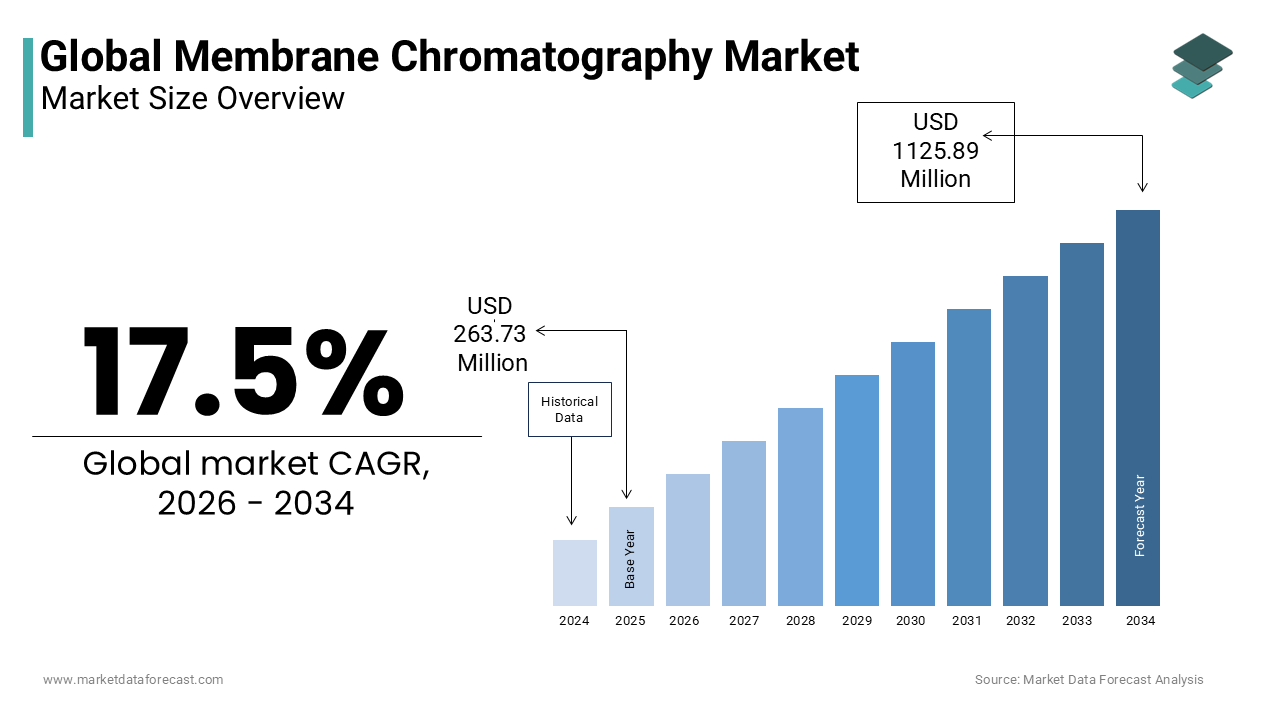
The global membrane chromatography market size was valued at USD 263.73 million in 2025 and is anticipated to reach USD 309.88 million in 2026 from USD 1125.89 million by 2034, growing at a CAGR of 17.5% during the forecast period from 2026 to 2034.
Membrane chromatography is a specialized purification technology that utilizes porous polymeric membranes functionalized with ligands to separate biomolecules based on specific interactions rather than size exclusion alone. Unlike traditional resin based column chromatography which relies on diffusion into bead pores membrane adsorbers facilitate convective flow allowing for significantly higher processing speeds and reduced residence times. This distinction is critical in modern biopharmaceutical manufacturing where throughput and scalability are paramount. According to industrial bioprocessing market evaluations reported by BioProcess International, global therapeutic monoclonal antibody market demand continues to grow significantly, creating an ongoing industry demand for intensified downstream processing solutions capable of handling massive mass loads without sacrificing target purity. As outlined in the US FDA's guidance frameworks on Continuous Manufacturing (ICH Q13), the agency supports process intensification strategies because implementing continuous processing can reduce equipment scale, eliminate large intermediate hold tanks, and substantially downsize the physical facility footprint compared to traditional batch systems. Biotech/Bioprocess Literature establish that standard platform manufacturing for complex biologics relies on multi-step purification chains, wherein single-use membrane chromatography is predominantly utilized as an efficient flow-through polishing step to clear trace viruses and host cell proteins. The technology’s ability to operate at high flow rates with low back pressure makes it ideal for integrating into single use systems which are increasingly adopted to minimize cross contamination risks. This market operates at the intersection of material science and bioprocess engineering driving innovation in ligand density and membrane stability to meet the rigorous demands of regulatory compliant pharmaceutical production.
MARKET DRIVERS
Accelerated Adoption of Single Use Bioprocessing Technologies
The widespread transition toward single use systems in biopharmaceutical manufacturing is one of the major drivers of the membrane chromatography market. This is due to their compatibility with disposable formats. Also, the BioPlan Associates Annual Report indicates that over 70–80% of biopharmaceutical developers routinely implement single-use systems in clinical production to eliminate cleaning validation protocols. Membrane chromatography devices are inherently suited for single use applications because they are compact lightweight and do not require extensive equilibration or cleaning cycles between batches. Bioprocess Engineering Literature confirm that disposable single-use flow paths fundamentally negate product-to-product cross-contamination risks by eliminating multi-product contact surfaces entirely. As per sources, replacing traditional packed-bed column preparation with pre-sterilised single-use membrane adsorbers can compress equipment turnaround times by roughly 40% between production batches. This operational efficiency is particularly valuable for contract development and manufacturing organizations that must adapt quickly to changing client demands. The modular nature of membrane devices allows for easy scaling from laboratory to production scales without revalidating entire processes. Regulatory bodies support this shift by providing clear guidelines for extractables and leachables testing ensuring patient safety. Thus, manufacturers are prioritizing membrane technologies that integrate seamlessly into closed single use workflows to enhance agility and reduce operational overheads.
Rising Demand for High Throughput Purification in Monoclonal Antibody Production
The exponential growth in monoclonal antibody therapies fuels significant demand for high throughput purification methods capable of handling large feedstock volumes efficiently, which further boosts the expansion of the membrane chromatography market. The Tufts Center for the Study of Drug Development highlight that the global pipeline of monoclonal antibodies has expanded sharply since 2015, driving a clear need for high-throughput purification methods. Traditional resin based chromatography often becomes a bottleneck due to slow diffusion rates and high pressure drops at large scales whereas membrane chromatography offers convective mass transfer that maintains binding capacity even at high flow rates. The Journal of Chromatography A reports that membrane adsorbers can process feeds up to 10 times faster than conventional resins while achieving comparable purity levels for impurity removal such as host cell proteins and DNA. Bioprocess simulation models published in Biotechnology Literature show that process intensification using membrane chromatography can lower specific downstream operating expenses by 20–30% by reducing buffer volumes. The ability to perform rapid capture and polishing steps enables continuous manufacturing models which are gaining traction among leading biopharma companies. This efficiency is crucial for meeting global demand for biosimilars and novel biologics where time to market and cost competitiveness are decisive factors. Manufacturers are investing in high-capacity membrane ligands to further enhance productivity ensuring that purification keeps pace with upstream fermentation advancements.
MARKET RESTRAINTS
Limited Binding Capacity Compared to Traditional Resins
The relatively lower binding capacity of membrane adsorbers compared to high performance resin beads is a significant limitation for certain large scale purification applications, which holds back the growth of the membrane chromatography market. The Biotechnology Journal note that standard membrane adsorbers exhibit static binding capacities of 10–30 mg/mL, whereas advanced bead resins exceed 50–80 mg/mL. This discrepancy necessitates larger membrane surface areas or multiple processing runs to achieve the same yield as resin columns increasing material costs and operational complexity. Bioprocess optimization data suggests that when processing high-titer cell cultures exceeding 5 g/L, membrane adsorbers face rapid saturation, requiring frequent cycles or continuous swap-outs that complicate fluid streams. Industrial downstream consensus holds that lower volumetric binding capacities limit the economic viability of traditional membrane chromatography for initial product capture, keeping resin columns the standard option. Manufacturers must carefully evaluate feedstock concentrations and target molecule characteristics to determine if membrane technology is suitable otherwise risking inefficient resource utilization. The development of high density ligand chemistries is ongoing but achieving stable high capacity binding without compromising flow dynamics remains a technical challenge. This constraint restricts the universal application of membrane chromatography confining it primarily to polishing and flow through modes where capacity requirements are less stringent.
High Initial Costs and Specialized Equipment Requirements
The substantial capital investment required for specialized membrane chromatography systems and compatible single use infrastructure is a barrier to entry for smaller biotechnology firms, which hampers the expansion of the global market. Systems evaluations in AIChE's Chemical Engineering Progress show that integrating high-speed membrane chromatography can require unique low-pressure flow hardware, inflating specialized skid acquisition costs for some setups. The high price of proprietary membrane cartridges which are often sold as single use items adds to the recurring operational expenses making long term cost savings dependent on high utilization rates. Surveys confirm that capital expenditure restrictions frequently prevent small-and-medium-sized biomanufacturers from implementing advanced continuous platforms, forcing them to stick with standard legacy equipment. The requirement for specialized training for personnel to operate and optimize membrane systems further increases implementation costs and time. Additionally the limited number of suppliers for high quality membrane adsorbers creates a monopolistic pricing structure reducing bargaining power for end users. These economic factors slow down adoption rates particularly in emerging markets where budget constraints are more pronounced. Companies must conduct thorough return on investment analyses to justify the transition which can delay project timelines and hinder market penetration.
MARKET OPPORTUNITIES
Expansion into Gene Therapy and Viral Vector Purification
The rapid advancement of gene therapy and viral vector production presents a substantial opportunity for the membrane chromatography market. This is due to the unique challenges associated with purifying large fragile biomolecules. Viral vectors such as adeno associated viruses are sensitive to shear stress and have large sizes that make traditional resin chromatography inefficient and potentially damaging. Membrane chromatography offers gentle convective flow conditions that preserve viral integrity while effectively removing impurities like empty capsids and host cell DNA. Bioprocess optimization papers available on PubMed indicate that while traditional anion-exchange (AEX) membranes offer excellent flow rates, their high charge density can lead to irreversible binding of delicate viral vectors, necessitating structural modifications to consistently hit recovery rates above 80%. The ability to process large volumes rapidly aligns with the need for scalable manufacturing platforms in regenerative medicine. Regulatory agencies are encouraging the adoption of robust purification methods that ensure product safety and consistency creating a favorable environment for membrane technology adoption. Manufacturers are developing specialized membranes with tailored pore sizes and ligand densities to optimize viral capture and polishing. This niche application commands premium pricing and offers high growth potential as the gene therapy pipeline expands globally.
Integration with Continuous Manufacturing Platforms
The industry shift toward continuous biomanufacturing creates a pathway for the membrane chromatography market. This helps to serve as a key enabler of integrated downstream processes. Studies focused on continuous bioprocessing, supported by academic initiatives like those at MIT, demonstrate that shifting from batch to continuous lines can reduce overall biomanufacturing facility footprints by roughly 70%. Membrane chromatography devices are ideal for continuous operations due to their fast kinetics and low hold up volumes which allow for seamless integration with upstream perfusion cultures. The Food and Drug Administration has issued guidance supporting continuous manufacturing initiatives encouraging companies to adopt technologies that enhance process control and product quality. Technology roadmaps from the BioPhorum Operating Group track the industry-wide shift toward continuous processing, where multiple leading developers use membrane adsorbers for real-time flow-through impurity polishing. The modular design of membrane cassettes facilitates easy swapping and parallel processing which is essential for maintaining uninterrupted production flows. Digital twins and process analytical technology tools can be integrated with membrane systems to monitor performance and predict maintenance needs enhancing operational efficiency. This alignment with Industry 4.0 principles positions membrane chromatography as a critical component of next generation biomanufacturing facilities. Early adopters gain competitive advantages through reduced cycle times and improved resource utilization driving broader industry acceptance.
MARKET CHALLENGES
Technical Complexity in Ligand Functionalization and Stability
Achieving consistent and stable ligand functionalization on membrane surfaces is a significant technical challenge that impacts performance reproducibility and product lifespan, and thereby holds back the growth of the membrane chromatography market. According to the Journal of Membrane Science the uniform distribution of ligands across porous membrane structures is difficult to control leading to variations in binding capacity and selectivity between batches. Instability of ligands under harsh cleaning conditions or prolonged storage can result in leaching which compromises product purity and poses safety risks. Regulatory quality guidelines compiled by the European Directorate for the Quality of Medicines (EDQM) enforce strict purity criteria for biological drugs, requiring manufacturers to validate that no functional ligands leach from the membrane matrix into the final product stream. The chemical diversity of target molecules necessitates customized ligand chemistries that may not be commercially available forcing manufacturers to invest in extensive research and development. Furthermore the mechanical stability of thin membrane sheets under high flow rates can lead to deformation or rupture causing process failures and product loss. Ensuring long term stability of functionalized membranes while maintaining high binding efficiency requires advanced material engineering techniques that are not yet fully standardized. This technical hurdle limits the availability of off the shelf solutions for novel applications forcing users to engage in costly custom development projects. The lack of universal standards for membrane characterization further complicates quality control and regulatory submissions.
Regulatory Hurdles and Validation Requirements for New Materials
Navigating the complex regulatory landscape for novel membrane materials and single use components is a significant obstacle for manufacturers and end users alike, which slows down the expansion of the membrane chromatography market. Under ICH Q5E guidelines, changing downstream purification materials or process configurations requires extensive comparability testing to prove that the change does not alter the product's quality profile. The extraction of leachables from polymeric membranes into the product stream is a major concern requiring extensive toxicological assessments and extractables studies. Compliance updates within the United States Pharmacopeia (USP) guidelines for polymeric components have expanded the baseline testing criteria for extractables and leachables, increasing the data burden required to clear single-use purification equipment. The lack of harmonized global standards for membrane chromatography validation means that companies must conduct separate studies for different regions delaying market entry. Regulatory agencies are cautious about approving new purification technologies without long term stability data which can take years to generate. This uncertainty discourages some companies from adopting membrane chromatography for critical commercial processes preferring established resin based methods with known regulatory histories. The high cost and time associated with regulatory compliance act as a deterrent particularly for small biotech firms with limited resources. Overcoming these hurdles requires close collaboration with regulators and investment in robust quality management systems.
REPORT COVERAGE
| REPORT METRIC | DETAILS |
| Market Size Available | 2025 to 2034 |
| Base Year | 2025 |
| Forecast Period | 2026 to 2034 |
| CAGR | 17.5% |
| Segments Covered | By Product, Region, Application & End-user |
| Various Analyses Covered | Global, Regional & Country Level Analysis, Segment-Level Analysis, Drivers, Restraints, Opportunities, Challenges, PESTLE Analysis, Porter’s Five Forces Analysis, Competitive Landscape, Analyst Overview on Investment Opportunities |
| Regions Covered | North America, Europe, Asia Pacific, Latin America, Middle East & Africa |
| Market leaders Profiled | Sartorius AG, Danaher Corporation, Merck Millipore, Thermo Fisher Scientific, 3M Company, GE Healthcare, Asahi Kasei Corporation, Cole-Parmer Instrument Company, LLC, GL Sciences Inc., Regis Technologies, Inc. and Restek Corporation. |
SEGMENTAL ANALYSIS
By Product Insights
The ion exchange membrane chromatography segment dominated the global market and accounted for a 48.6% share in 2025. This dominance of the segment was mainly driven by the widespread adoption of ion exchange techniques for both capture and polishing steps in downstream bioprocessing operations. The technology enables precise separation of biomolecules based on charge interactions which offers high selectivity and efficiency for complex biological mixtures. High flow rates significantly reduce processing time compared to traditional resin based systems which makes it highly attractive for commercial scale manufacturing environments. Ion exchange membranes are fully compatible with single use manufacturing environments which supports scalable purification workflows in monoclonal antibody and vaccine production facilities. Reduced buffer consumption improves operational efficiency and lowers overall production costs for biopharmaceutical manufacturers. Automation compatibility enhances process control and reproducibility which is critical for meeting stringent regulatory compliance standards. These membranes support both batch and continuous processing formats which provides flexibility for different manufacturing strategies. Ease of integration lowers implementation complexity for facilities transitioning from traditional column chromatography. Strong binding kinetics improve product recovery rates which directly impacts profitability and yield optimization. Process consistency supports regulatory compliance which is essential for approval of new biologics. Demand is rising among contract manufacturers who require reliable and efficient purification technologies. This segment remains the dominant technology in membrane chromatography applications due to its proven performance and versatility across various bioprocessing stages.
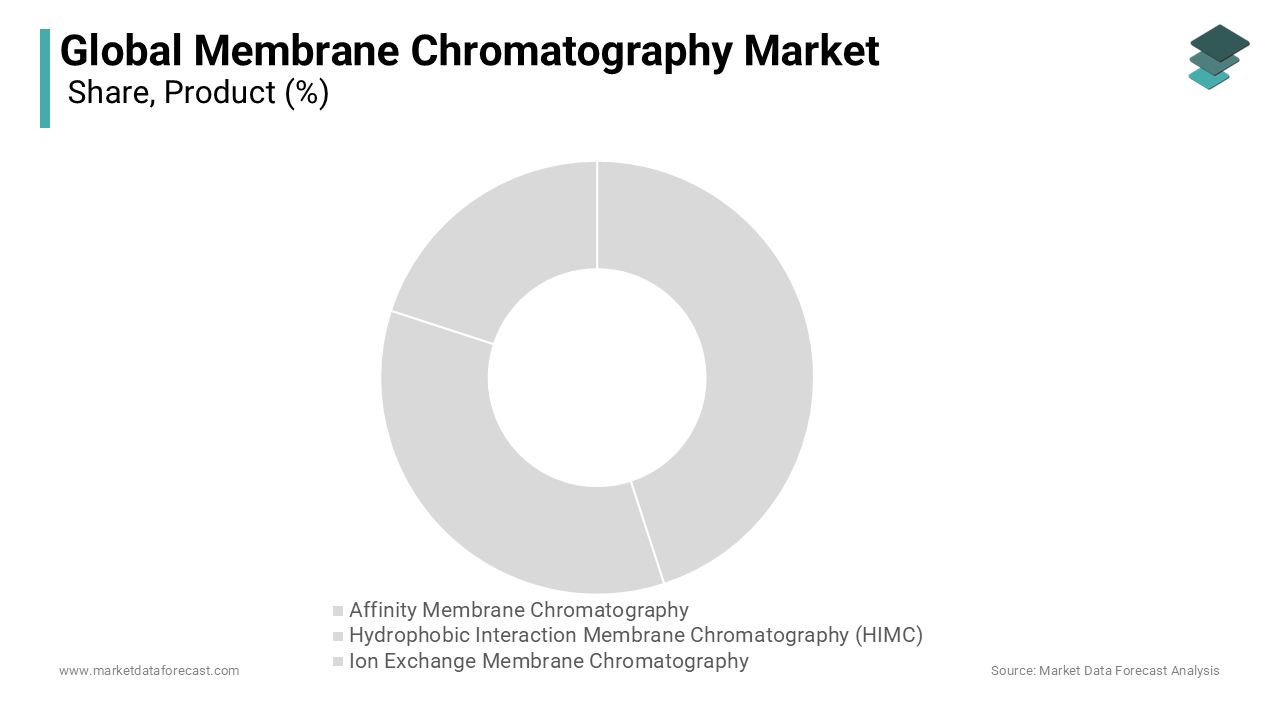
However, the affinity membrane chromatography segment is estimated to register the fastest CAGR of 19.6% from 2026 to 2034 due to the increasing demand for high specificity purification methods in advanced biologics and gene therapy production. Affinity ligands provide selective binding which reduces downstream processing steps and simplifies overall purification workflows. Improved ligand chemistry enhances binding stability and performance which leads to higher purity outputs and better product quality. These membranes enable rapid processing with minimal non specific interactions which is crucial for sensitive biomolecules. Adoption is increasing in advanced biologics and gene therapy production where purity requirements are extremely stringent. Single use compatibility supports flexible manufacturing models which allows facilities to quickly switch between different products. Reduced footprint benefits space constrained facilities which is particularly important in urban manufacturing hubs. Automation integration improves process reliability and reduces human error during critical purification steps. High purity output strengthens regulatory acceptance which accelerates time to market for new therapies. Affinity membranes reduce process complexity which lowers operational costs and training requirements. Demand is growing for high value and sensitive biomolecules which require specialized purification approaches. Custom ligand development supports niche applications which opens new revenue streams for manufacturers. This segment continues to expand with innovation in ligand technologies which enhances performance and broadens application scope.
By Application Insights
The chemical application segment led the membrane chromatography market and captured a significant share in 2025. This leading position of the segment was attributed to the increasing need for efficient separation and purification processes in chemical manufacturing and industrial biotechnology. Membrane chromatography offers advantages over traditional methods including faster processing times and reduced solvent consumption which aligns with sustainability goals in the chemical industry. The technology is used for purifying specialty chemicals catalysts and intermediates where high purity is required for downstream reactions. Growing emphasis on green chemistry practices promotes adoption of membrane based separation technologies that minimize waste generation. Chemical manufacturers are increasingly integrating membrane chromatography into their processes to improve product quality and consistency. The ability to handle complex mixtures and achieve high selectivity makes membrane chromatography suitable for challenging chemical separations. Regulatory pressures for cleaner production methods drive investment in advanced purification technologies. Cost effectiveness compared to conventional chromatography methods encourages wider adoption in large scale chemical production. Technological advancements in membrane materials enhance durability and chemical resistance which extends equipment lifespan. Integration with existing chemical processing infrastructure is feasible with minimal modifications which reduces capital expenditure. Demand is strong in pharmaceutical chemical synthesis where purity standards are exceptionally high. Research and development activities in novel chemical compounds further stimulate market growth. The chemical segment benefits from cross industry applications including food and beverage processing and environmental monitoring. Continuous improvement in membrane performance supports expansion into new chemical application areas. Industry collaborations accelerate technology adoption and standardization across chemical manufacturing sectors.
On the other hand, the sewage treatment application segment is likely to experience the fastest CAGR during the forecast period owing to increasing global focus on water purification and environmental protection initiatives. Membrane chromatography technologies are being adapted for removal of contaminants pharmaceutical residues and organic pollutants from wastewater streams. Rising urbanization and industrialization generate larger volumes of contaminated wastewater requiring advanced treatment solutions. Government regulations mandating stricter discharge standards compel municipal and industrial facilities to adopt sophisticated purification methods. Membrane chromatography offers high efficiency in removing trace contaminants that conventional treatment methods cannot effectively address. Growing awareness of water scarcity promotes investment in water reuse and recycling technologies. Industrial facilities seek sustainable solutions to meet corporate social responsibility goals and regulatory compliance. Technological innovations enhance membrane fouling resistance and longevity which reduces maintenance costs. Integration with existing sewage treatment infrastructure is becoming more seamless with modular system designs. Demand is increasing in regions facing severe water stress including parts of Asia Pacific and Middle East. Public private partnerships support deployment of advanced water treatment technologies in developing economies. Research institutions are developing specialized membranes for targeted contaminant removal which expands application scope. Cost reductions through economies of scale make membrane chromatography more accessible for municipal applications. Environmental concerns regarding pharmaceutical pollution in water bodies drive adoption in healthcare facility wastewater treatment. The sewage treatment segment benefits from global sustainability trends and circular economy principles. Continued investment in water infrastructure supports long term market growth for membrane chromatography in this application.
By End User Insights
In 2025, the pharmaceutical and biopharmaceutical companies segment held a 64.2% share of the membrane chromatography market because of the massive scale of biologics, vaccine, and advanced therapy manufacturing requirements within this sector. Membrane chromatography enables faster downstream purification reduced processing time and improved productivity which aligns perfectly with commercial manufacturing objectives. Biopharma companies increasingly integrate membrane chromatography into capture and polishing steps to enhance operational efficiency and reduce production bottlenecks. Single use compatibility supports flexible production and minimizes contamination risks which is critical for maintaining product integrity. Continuous bioprocessing strategies further increase demand within this end user segment as companies seek to optimize resource utilization. Automation and digital monitoring improve batch consistency and regulatory compliance which reduces risk of costly batch failures. Investment in monoclonal antibodies biosimilars and gene therapies drives sustained adoption of advanced purification technologies. These companies prioritize scalability reproducibility and cost optimization which makes membrane chromatography a preferred purification technology. The rising prevalence of chronic diseases such as cancer and autoimmune disorders fuels demand for biologic therapies requiring sophisticated purification. Regulatory approvals for new biologics continue to increase which expands the addressable market for membrane chromatography. Strategic alliances and partnerships between technology providers and pharmaceutical companies accelerate innovation and adoption. Large scale manufacturing facilities require robust and reliable purification systems that can operate continuously with minimal downtime. Quality by design principles promote integration of advanced analytics and process control which membrane chromatography supports effectively. This segment remains the dominant contributor to overall market demand due to its critical role in bringing life saving therapies to market.
But the contract research organizations segment is on the rise and is expected to be the fastest growing segment in the market by witnessing a significant CAGR between 2026 and 2034. This quick surge of the segment is fuelled by increasing outsourcing trends in biopharmaceutical manufacturing and development activities. CROs rely on membrane chromatography for its flexibility rapid turnaround time and compatibility with multi client manufacturing environments. These organizations support a wide range of customers requiring adaptable purification platforms that can handle varying product volumes and molecule types. Membrane chromatography enables efficient process transfer and quick scale adjustments which is essential for CRO business models. Single use formats reduce downtime between projects and simplify cleaning validation which improves operational efficiency. Adoption is strong in clinical stage and small to mid scale commercial production where flexibility is paramount. CROs and CMOs benefit from standardized membrane modules that improve operational efficiency and reduce training requirements. Growing outsourcing trends in biopharmaceutical manufacturing significantly strengthen demand for contract research services. These organizations increasingly invest in advanced purification technologies to enhance service offerings and competitive positioning. CROs serve diverse clients from startups to large pharmaceutical companies requiring versatile purification capabilities. Rapid project cycles necessitate equipment that can be quickly configured for different applications. Quality standards and regulatory compliance requirements drive adoption of validated membrane chromatography systems. Investment in state of the art facilities attracts clients seeking high quality development and manufacturing services. This end user segment continues to expand alongside global biopharma outsourcing growth creating sustained demand for membrane chromatography solutions.
REGIONAL ANALYSIS
North America Membrane Chromatography Market Analysis
North America outperformed other regions in the global membrane chromatography market and accounted for a 34.8% share in 2025. The region maintains its dominance due to the presence of a well established biopharmaceutical industry robust research infrastructure and favorable government initiatives supporting biopharmaceutical research and development. The United States and Canada have significant growth rates due to increasing pharmaceutical research and development investments. North America is home to several key market players and has witnessed early adoption of membrane chromatography technologies driving market growth. The Chromatography Institute of America facilitates information flow on chromatography instrumentation serving laboratories and instrument suppliers effectively. Stringent regulatory standards from the Food and Drug Administration drive adoption of advanced purification technologies ensuring product safety and efficacy. High healthcare expenditure supports investment in cutting edge manufacturing technologies. Presence of major biopharmaceutical companies creates consistent demand for membrane chromatography systems and consumables. Strong intellectual property protection encourages innovation and technology development. Collaborative research between academia and industry accelerates technology transfer and commercialization. Venture capital funding supports startup companies developing novel membrane chromatography solutions. Skilled workforce availability ensures efficient operation and maintenance of advanced purification systems. Established distribution networks facilitate easy access to membrane chromatography products. Clinical trial activity remains high driving demand for purification technologies in drug development. Biosimilar development gains momentum requiring cost effective purification methods. Gene therapy research receives substantial funding promoting adoption of specialized membrane chromatography applications. Continuous manufacturing initiatives gain traction supporting integration of membrane chromatography into modern production facilities.
Europe Membrane Chromatography Market Analysis
Europe was the next prominent region in the global membrane chromatography market and captured a 29.3% share in 2025. This position of the European market was supported by established pharmaceutical manufacturing bases and supportive regulatory frameworks. Germany, France, and the United Kingdom are key contributors to regional market growth due to their strong biopharmaceutical sectors. European Medicines Agency regulations promote adoption of advanced purification technologies ensuring high quality standards. Increasing focus on personalized medicine drives demand for flexible and scalable purification solutions. Government funding for biomedical research supports development and adoption of membrane chromatography technologies. Presence of leading academic institutions fosters innovation and technology advancement. Collaborative projects between European countries enhance knowledge sharing and best practice adoption. Sustainability initiatives promote eco friendly purification methods reducing environmental impact. Aging population increases demand for therapeutic biologics requiring efficient purification processes. Contract manufacturing organizations in Europe serve global clients driving demand for versatile purification platforms. Investment in digital health and precision medicine creates opportunities for advanced purification technologies. Brexit impacts supply chains but also stimulates local manufacturing capabilities. Eastern European countries emerge as growth markets due to increasing healthcare investments. Pharmaceutical companies in Europe prioritize quality and compliance driving adoption of validated membrane chromatography systems. Research consortia focus on developing next generation membrane materials and processes. Training programs ensure skilled workforce availability for operating advanced purification equipment.
Asia Pacific Membrane Chromatography Market Analysis
Asia Pacific is rapidly expanding in the global membrane chromatography market. China India and South Korea are emerging as major manufacturing hubs attracting significant investments. Increasing focus on development of novel biopharmaceuticals drives demand for advanced purification technologies. High government investments and funding for research and development support market expansion. Booming healthcare sector with rising healthcare expenditure creates favorable market conditions. Growing middle class population increases access to advanced therapies requiring sophisticated purification. Outsourcing activities by global pharmaceutical companies boost demand for contract manufacturing services. Local manufacturers invest in state of the art facilities to meet international quality standards. Regulatory harmonization efforts facilitate market entry and product approval processes. Infrastructure development supports establishment of biopharmaceutical manufacturing clusters. Academic institutions collaborate with industry partners accelerating technology adoption. Rising prevalence of chronic diseases increases demand for biologic therapies. Government initiatives promote domestic pharmaceutical production reducing import dependence. Skilled workforce availability improves operational efficiency and product quality. Supply chain localization reduces costs and improves delivery timelines. Digital transformation initiatives enhance manufacturing capabilities and process control.
Latin America Membrane Chromatography Market Analysis
Latin America is moving ahead steadfastly in the global membrane chromatography market. The region shows potential for expansion driven by increasing healthcare investments and growing biopharmaceutical sector. Brazil and Mexico are key markets contributing to regional growth due to their large populations and expanding healthcare infrastructure. Government initiatives to improve healthcare access drive demand for affordable biologic therapies. Local manufacturing capabilities are developing to reduce reliance on imports. Regulatory frameworks are evolving to support adoption of advanced purification technologies. Economic challenges pose constraints but also create opportunities for cost effective solutions. Partnership with global technology providers facilitates knowledge transfer and capacity building. Academic research institutions contribute to technology evaluation and adaptation. Rising awareness of biopharmaceutical benefits increases market demand. Contract research organizations emerge to support drug development activities. Investment in healthcare infrastructure creates opportunities for membrane chromatography adoption. Local companies seek to improve product quality to compete in international markets. Training programs develop skilled workforce for operating advanced purification systems. Distribution networks expand to improve product accessibility. Collaborative projects with international partners accelerate technology adoption.
Middle East and Africa Membrane Chromatography Market Analysis
The Middle East and Africa region is a developing market for membrane chromatography, with growing potential. The region shows increasing interest in biopharmaceutical manufacturing driven by healthcare modernization initiatives. Gulf Cooperation Council countries invest heavily in healthcare infrastructure and pharmaceutical production capabilities. Egypt and South Africa emerge as key markets due to their relatively developed healthcare systems. Government initiatives to achieve healthcare self sufficiency drive investment in local manufacturing. Rising prevalence of chronic diseases increases demand for advanced therapies. International partnerships facilitate technology transfer and capacity building. Regulatory frameworks are strengthening to ensure product quality and safety. Academic institutions contribute to research and development activities. Skilled workforce development programs support technology adoption. Investment in research parks and innovation hubs promotes technological advancement. Public private partnerships support deployment of advanced purification technologies. Growing awareness of biopharmaceutical benefits drives market expansion. Local manufacturing initiatives reduce dependency on imports. Training and education programs build technical capabilities. Distribution channels expand to improve market penetration. Collaborative research projects address regional healthcare challenges.
COMPETITIVE LANDSCAPE
The competition in the membrane chromatography market is characterized by intense rivalry among established multinational corporations and emerging specialized firms. Leading companies differentiate themselves through technological innovation product quality and comprehensive customer support services. The market features a mix of large diversified life science companies and niche players focusing exclusively on chromatography solutions. Competitive dynamics are driven by the need for continuous improvement in membrane performance including higher flow rates and better selectivity. Price competition remains moderate as customers prioritize reliability and regulatory compliance over cost savings alone. Strategic alliances and collaborations are common as companies seek to combine complementary technologies for integrated solutions. Intellectual property protection plays a crucial role in maintaining competitive advantages and preventing market entry by copycat products. Geographic expansion into high growth regions like Asia Pacific intensifies competition as local manufacturers gain capabilities. Customer retention strategies include long term service contracts and customized application development support. The entry of new players with disruptive technologies poses ongoing challenges to incumbent firms requiring constant adaptation. Regulatory standards create barriers to entry but also ensure quality consistency across the market. Overall the competitive landscape fosters innovation and drives continuous improvement in membrane chromatography technologies benefiting end users globally.
KEY MARKET PLAYERS
Companies playing a notable role in the global membrane chromatography market include
- Sartorius AG
- Danaher Corporation
- Merck Millipore
- Thermo Fisher Scientific
- 3M Company
- GE Healthcare
- Asahi Kasei Corporation
- Cole-Parmer Instrument Company, LLC
- GL Sciences Inc.
- Regis Technologies, Inc.
- Restek Corporation
Top Players in the Global Membrane Chromatography Market
Pall Corporation
Pall Corporation stands as a prominent leader in the membrane chromatography sector by providing advanced purification solutions for biopharmaceutical manufacturing. The company focuses on developing high performance membrane adsorbers that enable rapid processing and improved yield for monoclonal antibodies and vaccines. Pall Corporation recently expanded its portfolio through strategic innovations in single use technologies which support flexible manufacturing environments. Their commitment to sustainability drives the development of eco friendly purification systems that reduce waste and energy consumption. The company actively collaborates with global biopharma clients to customize solutions that meet specific regulatory requirements. Continuous investment in research and development ensures their products remain at the forefront of technological advancement. Pall Corporation also enhances customer support services to facilitate seamless integration of membrane chromatography systems into existing workflows. These efforts strengthen their reputation for reliability and innovation in the competitive global market landscape.
Sartorius AG
Sartorius AG contributes significantly to the membrane chromatography market through its comprehensive range of bioprocessing equipment and consumables. The company emphasizes digitalization and automation in purification processes to enhance efficiency and data integrity for pharmaceutical manufacturers. Sartorius AG recently launched new membrane chromatography devices designed for continuous processing applications which align with industry trends toward modern manufacturing. Their focus on quality by design principles helps clients achieve consistent product quality and regulatory compliance. The company expands its global footprint by establishing new production facilities and strengthening distribution networks in emerging markets. Strategic partnerships with academic institutions foster innovation in membrane materials and ligand chemistry. Sartorius AG also prioritizes customer education through training programs and technical workshops. These initiatives reinforce their position as a trusted partner for complex biopurification challenges worldwide.
Repligen Corporation
Repligen Corporation plays a vital role in the membrane chromatography market by offering specialized protein A affinity membranes for antibody purification. The company leverages its proprietary ProSep technology to deliver high capacity and selectivity for therapeutic protein production. Repligen Corporation recently strengthened its market position through strategic acquisitions that expand its product offerings and geographic reach. The company focuses on reducing cost of goods sold for biopharmaceutical manufacturers by improving membrane longevity and performance. Collaborations with key industry players enable the development of integrated purification platforms that streamline downstream processing. Repligen Corporation invests heavily in intellectual property protection to safeguard its innovative technologies. Their commitment to customer success is evident through tailored support services and application development assistance. These actions ensure sustained growth and competitiveness in the evolving membrane chromatography landscape.
Top Strategies Used by the Key Market Participants
Key players in the membrane chromatography market primarily focus on product innovation and strategic partnerships to maintain competitive advantage. Companies invest heavily in research and development to create advanced membrane materials with higher binding capacity and selectivity. Expansion into emerging markets through localized manufacturing and distribution networks helps capture growing demand in Asia Pacific and Latin America. Strategic acquisitions allow firms to broaden their product portfolios and access new technologies quickly. Collaboration with biopharmaceutical companies enables customization of solutions for specific purification challenges. Emphasis on single use technologies supports flexible manufacturing models and reduces contamination risks. Digital integration and automation features enhance process control and data integrity for regulatory compliance. Sustainability initiatives drive the development of eco friendly products that minimize environmental impact. Customer education and technical support services strengthen long term relationships and brand loyalty. These strategies collectively drive market growth and ensure sustained leadership positions for major participants in the global membrane chromatography industry.
RECENT MARKET HAPPENINGS
- In 2020, Danaher Corporation, a global science and technology innovator announced the completion of its acquisition of the Biopharma business from General Electric Company's Life Sciences division. It helps its customers in resolving challenging issues and improving standards of living globally.
- In 2021, Sartorius Stedim Biotech, a leading international partner in the biopharmaceutical industry, signed an agreement with McMaster University to improve the manufacturing processes of antibody and virus-based treatments for diseases.
MARKET SEGMENTATION
This research report has segmented the global membrane chromatography market into the following categories: product, application, end-user & region.
By Product
- Affinity Membrane Chromatography
- Hydrophobic Interaction Membrane Chromatography (HIMC)
- Ion Exchange Membrane Chromatography
By Application
- Chemical
- Sewage Treatment
By End-User
- Pharmaceutical and Biopharmaceutical Companies
- CROs
- Academic and Research Institutes
By Region
- North America
- Europe
- Asia-Pacific
- Latin America
- Middle East and Africa