- Product Description Description
- Table of Contents TOC
- List of Table & Figure LOT
- Get Free Sample PDF Sample PDF
Market Size, 2025
$631.95 MnMarket Estimate, 2026
$686.36 MnMarket Forecast, 2034
$1328 MnCAGR, 2026–2034
8.61%Executive Summary: Global Metal Chelates Market
- Market Scope: Comprehensive overview of the global metal chelates market covering varied types, crop applications, modes of application, and major geographic regions.
- Market Valuation: Valued at USD 631.95 million in 2025, estimated at USD 686.36 million in 2026, and projected to reach USD 1328.96 million by 2034, growing at a robust CAGR of 8.61% over the forecast period from 2026 to 2034.
- Primary Growth Drivers: Intensification of precision agriculture and micronutrient deficiency remediation, expansion of biofortification programs, rising demand in clinical nutrition therapeutics, and technological integration with smart farming systems.
Key Market Segment Metrics (2026–2034)
| Category | Leading Segment (Base Position) | Fastest-Growing / High-Growth Segment |
|---|---|---|
| By Type | Micronutrients (dominant baseline share in 2025 due to critical roles in correcting widespread soil trace element deficiencies) | Secondary Nutrients (estimated at the fastest CAGR of 9.8% driven by recognition of calcium, magnesium, and sulfur roles in plant physiology) |
| By Crop Type | Fruits and Vegetables (held a 48.6% majority share in 2025 supported by high-value perennial crops and quality standard demands) | Oilseeds and Pulses (anticipated to witness the fastest CAGR of 11.2% due to expanding cultivation areas and nitrogen fixation needs) |
| By Mode of Application | Soil Application (commanded a 57.9% share in 2025 backed by established infrastructure and broad-acre compatibility) | Fertigation (expected to be the fastest-growing segment with a CAGR of 13.4% propelled by precision irrigation and greenhouse expansion) |
| By Region | North America (led the global market with a 28.1% share in 2025, closely followed by Europe at 26.5%) | Asia Pacific (rapidly growing regional market fueled by intensive agricultural sectors in China and India) |
Major Market Players & Industry Landscape
Market Structure: Highly competitive landscape comprising major chemical multinationals and agricultural input specialists focusing on regulatory compliance, biodegradable formulations, and supply chain resilience.
Key Companies: BASF SE, Akzo Nobel N.V., Syngenta AG, Nufarm Limited, Haifa Chemicals Ltd., Aries Agro Limited, Van Iperen International, Valagro SPA, Protex International, and Deretil Agronutritional.
Global Metal Chelates Market Size
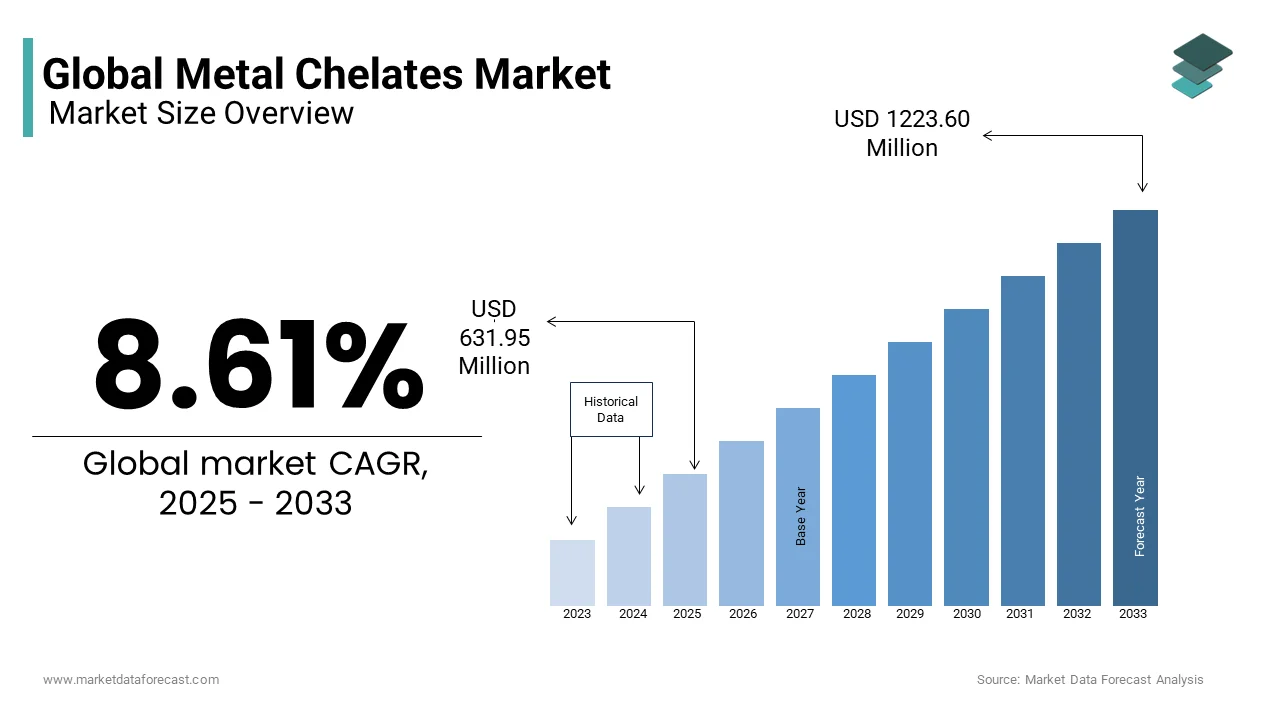
The global metal chelates market size was valued at USD 631.95 million in 2025 and is anticipated to reach a valuation of USD 686.36 million in 2026 to reach USD 1328.96 million by 2034, growing at a compound annual growth rate (CAGR) of 8.61%, from 2026 to 2034.
Current Intro Definition of the Metal Chelates Market
Metal chelates are specialised coordination compounds where a central metal ion is bonded to an organic ligand through multiple coordinate bonds, forming stable ring structures that prevent precipitation and enhance bioavailability in complex matrices. These compounds serve critical functions across agriculture, nutrition, pharmaceuticals and industrial processing by maintaining metal solubility under varying pH conditions and preventing unwanted chemical interactions. According to the Food and Agriculture Organisation of the United Nations, a significant proportion of global agricultural soils suffer from nutrient degradation and imbalances, prompting localised interventions with micronutrient fertilisers to stabilise crop health and yield metrics. The World Health Organisation states that anaemia affects approximately 1.92 billion people worldwide, with recent nutritional updates advocating for comprehensive iron supplementation and food fortification to lower systemic global health risks. As per the European Chemicals Agency, chemical companies registering substances under REACH regulations are steadily publishing data on industrial chemicals to satisfy standard chemical risk management, evaluation, and authorisation benchmarks within the European Economic Area. According to the National Research Council, standard trace mineral baseline guidelines for livestock feed are continuously monitored to determine minimal dietary requirements and avoid systemic heavy metal excretion in production facilities. This molecular engineering approach transforms reactive metal ions into biologically compatible or industrially functional species, enabling precise delivery mechanisms that simple inorganic salts cannot achieve effectively across diverse application environments requiring stability and controlled release characteristics.
MARKET DRIVERS
Intensification of Precision Agriculture and Micronutrient Deficiency Remediation
Global soil degradation and intensive farming practices have created widespread micronutrient depletion, which fuels the growth of the metal chelates market. This necessitates advanced fertilisation strategies beyond conventional NPK applications. According to the International Fertiliser Association, widespread micronutrient deficiencies, particularly zinc, affect roughly half of the world's cereal-growing soils, prompting global crop nutrition initiatives to improve agricultural productivity. Chelated micronutrients address this crisis by remaining soluble in alkaline calcareous soils where inorganic salts precipitate and become unavailable to plant roots. The United States Department of Agriculture documents that targeted agronomic biofortification using zinc fertilisers can actively increase grain zinc concentrations to elevate the nutritional density of major cereal crops. Rising food security concerns drive adoption as the global population reaches 9.7 billion by 2050, requiring a massive expansion in crop yields on existing agricultural lands, according to FAO projections. Farmers increasingly recognise that micronutrient sufficiency enhances nitrogen use efficiency, reducing fertiliser waste and environmental runoff. Brazil’s agricultural research corporation EMBRAPA reports that co-inoculation combined with targeted micronutrient application improves biological nitrogen fixation and nutrient uptake efficiency to optimise regional soybean yields in Cerrado soils. This agronomic necessity transforms chelates from premium inputs to essential components of sustainable intensification strategies balancing productivity with resource stewardship across diverse soil chemistries and cropping systems worldwide.
Expansion of Biofortification Programs and Clinical Nutrition Therapeutics
Public health initiatives targeting hidden hunger and therapeutic nutrition create sustained demand for highly bioavailable mineral delivery systems in human and animal populations, which in turn propels the metal chelates market. According to HarvestPlus, biofortification programs utilising zinc-enriched wheat crops have reached more than 97 million people across Pakistan to combat hidden hunger without modifying existing dietary habits. Chelated iron bisglycinate demonstrates enhanced bioavailability and excellent gastrointestinal tolerability compared to standard ferrous sulfate as documented in global nutritional intervention trials. Infant formula manufacturers increasingly adopt amino acid chelates to match breast milk bioavailability profiles, with EFSA confirming 95 per cent iron absorption from lactoferrin-bound sources versus 10 to 15 per cent from inorganic fortificants. Infant formula manufacturers adopt safe, highly bioavailable food ingredients to meet strict developmental nutrition requirements. Pet food premiumization trends mirror human nutrition, with AAFCO recognising organic trace minerals as superior for immune function and coat quality in companion animals. Regulatory approvals for novel chelate structures continue expanding therapeutic applications, including copper histidine for Wilson disease management and zinc carnosine for gastric mucosal repair, creating specialised high-value market segments beyond commodity supplementation.
MARKET RESTRAINTS
Regulatory Scrutiny on Synthetic Chelating Agents and Environmental Persistence
Environmental concerns regarding non-biodegradable synthetic chelators like EDTA and DTPA create significant regulatory headwinds in the metal chelates market. This restricts their continued use despite established efficacy. According to the European Environment Agency, 24% of the total groundwater body area across EU member states was reported to be of poor chemical status due to widespread pollution and abstraction pressures. These persistent compounds mobilise heavy metals from sediments, increasing aquatic toxicity and bioaccumulation risks throughout food chains. As per the European Commission, a targeted revision of the REACH regulation and the Water Framework Directive updates the baseline rules for chemical status assessments to strengthen Europe's industrial resilience. Switzerland and Germany already mandate substitution plans for persistent chelators in agricultural applications, forcing reformulation investments. Biodegradable alternatives like GLDA and IDS are currently more expensive than EDTA, limiting adoption in price-sensitive markets despite environmental advantages. Regulatory divergence between regions complicates global supply chains as formulations acceptable in North America may face restrictions in Asia or Europe. Compliance testing requirements add 18 to 24 months to product development timelines, delaying market entry for novel structures. This regulatory uncertainty discourages long-term investment in synthetic chelate infrastructure while transition pathways to approved alternatives remain economically and technically challenging for many end-use applications.
Raw Material Price Volatility and Supply Chain Concentration Risks
Metal chelate production depends critically on both metal precursors and organic ligand synthesis, creating dual exposure to commodity fluctuations and geopolitical supply disruptions, which constrains the expansion of the global metal chelates market. According to the London Metal Exchange, benchmark zinc prices exhibited significant market volatility throughout 2025 and 2026, driven by macro factors like inflation, global surplus adjustments, and maritime transport delays in the Persian Gulf. According to the European Parliament, China controls approximately 85 per cent of global rare earth processing capacity, creating strategic supply chain considerations for Western manufacturing sectors. Amino acid ligand production concentrates in a few facilities. According to the European Commission, global amino acid production relies on a consolidated group of global manufacturers to supply foundational materials like glycine and methionine for industrial and nutritional sectors. Trade tensions and export restrictions can cause sudden supply shortages, as demonstrated when China imposed gallium export controls in 2023, affecting semiconductor-grade chelate availability. Energy-intensive chelation synthesis processes face additional cost pressure. As per Eurostat, industrial producer price indices for European natural gas reflected major upward energy cost pressures for chemical synthesis operations due to geopolitical conflicts disrupting regional supply pipelines. Currency exchange fluctuations further complicate international procurement as most raw materials trade in USD while regional sales occur in local currencies. Small and medium enterprises lack hedging capabilities available to multinational corporations, creating competitive disadvantages during volatile periods. Forward contracting provides limited protection as suppliers increasingly refuse fixed pricing beyond 90 days amid uncertain input costs.
MARKET OPPORTUNITIES
Development of Biodegradable Next Generation Chelating Molecules
Environmental regulations and sustainability commitments create substantial opportunity for novel biodegradable chelators matching synthetic performance while eliminating persistence concerns, which is likely to accelerate the growth of the metal chelates market. According to OECD testing standards, methylglycinediacetic acid achieves rapid environmental breakdown by exceeding a 60% biodegradation rate within a 28-day trial period while maintaining stabilising performance. According to corporate disclosures from BASF, capital expenditures are actively allocated to the expansion of biodegradable aminocarboxylate production facilities to secure regional manufacturing resilience across European industrial centres. Agricultural applications particularly benefit as soil microbiome health gains recognition, with studies showing biodegradable chelates support beneficial microbial populations unlike persistent alternatives that accumulate and disrupt ecosystem functions. Personal care formulators actively reformulate with tetrasodium glutamate diacetate to meet Cosmos and Ecocert certification requirements. As per Ecocert regulatory guidelines, cosmetic companies substitute synthetic chemical formulations with bio-based alternatives like tetrasodium glutamate diacetate to achieve organic product certification compliance. Municipal water treatment authorities pilot biodegradable chelates for scale inhibition, reducing discharge permit violations and avoiding costly tertiary treatment upgrades. Patent landscapes remain relatively open for novel structures, enabling differentiation through proprietary molecules rather than competing solely on price. Government green procurement policies in the EU and North America prioritise environmentally preferable products creating guaranteed demand channels for certified biodegradable alternatives. Early movers establishing technical dossiers and regulatory approvals gain first-mover advantages as substitution mandates expand globally across industrial and consumer applications.
Integration with Controlled Release Fertiliser Technologies and Smart Farming Systems
Convergence of chelate chemistry with precision agriculture platforms paves the way for intelligent nutrient delivery systems, optimising application timing and placement, which is predicted to boost the expansion of the metal chelates market. According to the International Fertiliser Association, farmers adopt high-efficiency slow- and controlled-release fertilisers to maximise nutrient utilisation while managing nitrogen volatilisation challenges. According to the University of Florida Institute of Food and Agricultural Sciences, localised application of customised micronutrient ratios significantly improves crop canopy growth parameters and final marketable fruit yield. Digital soil mapping and variable rate technology integration allow site-specific chelate prescriptions addressing field variability rather than uniform blanket applications. Drone and satellite remote sensing detect real-time deficiency symptoms triggering targeted chelate interventions before yield loss occurs. IoT-enabled soil sensors monitor chelate mobility and root zone availability, providing feedback loops for adaptive management decisions. Speciality crop producers investing in fertigation infrastructure prefer liquid chelate formulations compatible with automated injection systems, reducing handling hazards and measurement errors. Vertical farming expansion creates controlled environment applications where chelate stability in recirculating hydroponic solutions directly impacts system productivity and crop quality. Data analytics platforms incorporating chelate response models enable predictive recommendations, improving return on investment visibility for growers. This technological convergence transforms chelates from standalone inputs to integrated components of digital agronomy ecosystems commanding premium positioning through measurable performance outcomes.
MARKET CHALLENGES
Technical Complexity of Ligand Selection and Formulation Compatibility
Creating these formulations presents major hurdles that limit universal applicability and ultimately hamper the growth of the metal chelates market. Optimal chelate performance requires precise matching of ligand chemistry to specific metal ions, pH ranges, and matrix compositions. According to the Journal of Coordination Chemistry, the thermodynamic stability constants of coordination complexes dictate specific metal-ligand binding strengths, necessitating multi-wavelength spectrophotometric and potentiometric evaluations to accurately resolve equilibrium configurations in variable solution environments. Incompatible tank mix partners cause chelate dissociation or precipitation in agricultural sprays. As per CropLife International, effective stewardship and responsible handling of crop protection sprays require thorough diagnostic jar tests to avoid severe structural precipitation, nozzle blockages, and active ingredient inactivation under localised field conditions. Pharmaceutical formulations face additional complexity as excipient interactions alter chelate speciation, affecting bioavailability predictions and regulatory approval pathways. High ionic strength environments in seawater aquaculture or brine processing destabilise many commercial chelates, requiring specialised ligands like polyaminocarboxylates with enhanced salt tolerance. Temperature sensitivity complicates storage and transport logistics as thermal degradation reduces efficacy before application, particularly in tropical climates lacking cold chain infrastructure. Analytical verification of chelate integrity in finished products demands sophisticated instrumentation like HPLC ICP MS that many quality control laboratories cannot afford or operate competently. Knowledge gaps persist among end users who treat all chelates as interchangeable, leading to suboptimal results and brand reputation damage. Technical support requirements strain manufacturer resources as customisation needs multiply across diverse applications and regional conditions.
Analytical Standardisation Gaps and Quality Verification Difficulties
Absence of universally accepted analytical methods for chelate speciation creates quality assurance challenges for the metal chelates market. This situation enables adulteration and undermines market confidence in premium products. According to AOAC International, the Official Methods of Analysis program peer-reviews, validates, and standardises regulatory food testing metrics and agricultural input criteria to deliver globally defensible analytical compliance baselines. Indirect measurement techniques like colourimetric assays cannot distinguish between true chelates and physical mixtures, allowing fraudulent products to pass basic quality tests. As per sources, specialised mass spectrometry profiling and elemental speciation are performed via custom liquid chromatography instrumentation on an hourly machine-rate or per-injection billing framework. Regulatory agencies lack harmonised definitions for terms like "fully chelated" or "amino acid complex", creating labelling ambiguity that confuses purchasers and enables misleading claims. As per research, certified nutrient manufacturers undergo standardised government quality audits and mandatory registration procedures to legally declare technical complexation safety data on retail product labels. Counterfeit products containing undisclosed synthetic chelators undermine legitimate biodegradable alternatives, eroding price premiums needed to justify sustainable chemistry investments. Supply chain opacity complicates traceability as intermediaries repackage bulk materials without maintaining chain of custody documentation. Dispute resolution becomes difficult when buyer and seller employ different analytical protocols yielding conflicting results. Until standardised reference methods achieve broad adoption and regulatory endorsement, quality differentiation remains subjective rather than scientifically verifiable. This constraint slows down market maturation and trust development.
REPORT COVERAGE
| REPORT METRIC | DETAILS |
| Market Size Available | 2025 to 2034 |
| Base Year | 2025 |
| Forecast Period | 2026 to 2034 |
| CAGR | 8.61% |
| Segments Covered | By Type, Crop Type, Mode Of Application, and Region |
| Various Analyses Covered | Global, Regional and Country Level Analysis; Segment-Level Analysis; DROC; PESTLE Analysis; Porter’s Five Forces Analysis; Competitive Landscape; Analyst Overview of Investment Opportunities |
| Regions Covered | North America, Europe, APAC, Latin America, Middle East & Africa |
| Market Leaders Profiled | BASF SE, Akzo Nobel N.V., Syngenta AG, Nufarm Limited, Haifa Chemicals Ltd., Aries Agro Limited, Van Iperen International, Valagro SPA, Protex International, Deretil Agronutritional and Others. |
SEGMENTAL ANALYSIS
By Type Insights
Micronutrients
The micronutrient chelates segment was the largest in 2025 and occupied a commanding share of the metal chelates market. This supremacy of the segment was credited to its critical role in correcting widespread soil deficiencies that directly limit crop yield and quality potential. According to the Food and Agriculture Organisation, zinc deficiency remains a critical nutritional constraint that limits global crop productivity and staple food quality across diverse agro-ecological systems. Iron chelates dominate high-value horticulture where alkaline soils render inorganic iron unavailable. As per the University of California Agriculture and Natural Resources division, severe calcareous and alkaline soil restrictions lock up essential micronutrients, requiring targeted management strategies to correct interveinal chlorosis in high-value orchard crops. The physiological requirement for micronutrients at parts per million levels makes chelation economically viable compared to macronutrients needed in kilogram quantities, where chelate costs become prohibitive. According to the Food and Agriculture Organisation, intensive crop cultivation and inadequate mineral replenishment accelerate the depletion of essential soil micronutrients, driving global market demand for high-solubility fertiliser complexes. Regulatory frameworks in the EU and North America increasingly mandate micronutrient fortification in fertilisers to address hidden hunger in food systems, driving institutional adoption. Speciality crop producers recognise that micronutrient sufficiency enhances postharvest shelf life and nutritional density, commanding price premiums that justify chelate investment. This combination of agronomic necessity, economic feasibility, and regulatory support sustains micronutrient segment leadership across diverse agricultural systems globally.
Secondary Nutrients
The secondary nutrient chelates segment is estimated to register the fastest CAGR of 9.8% between 2026 and 2034, owing to recognition of calcium, magnesium, and sulfur roles beyond basic nutrition. According to the Fertiliser Institute, modern commercial growers integrate balanced secondary nutrient plans alongside primary macronutrient applications to optimise overall plant physiological efficiency. Calcium chelates gain traction in fruit production. As per Cornell University Cooperative Extension research, localised calcium applications mitigate physiological disorders like bitter pit and blossom-end rot to protect high-value commercial apple and tomato harvests. Magnesium chelates address intensifying deficiencies in sandy soils and high rainfall regions where leaching removes exchangeable cations faster than natural weathering replenishes them. Sulfur chelates emerge as essential inputs as atmospheric deposition declines following clean air regulations. According to the U.S. Department of Agriculture, dramatic long-term declines in atmospheric sulfur deposition across the Midwest corn belt require farmers to proactively manage secondary nutrient fertility levels. Controlled environment agriculture expansion creates additional demand as hydroponic systems require fully soluble secondary nutrients to prevent precipitation in recirculating solutions. Research confirming secondary nutrient roles in stress tolerance and disease resistance expands application beyond deficiency correction to proactive crop health management. Premium positioning of secondary nutrient chelates as quality enhancers rather than commodity inputs supports margin sustainability despite higher unit costs compared to sulfate salts.
By Crop Insights
Fruits and Vegetables
In 2025, the fruits and vegetables segment held a 48.6% majority share of the metal chelates market. High-value perennial crops like citrus, grapes, and berries justify chelate investment through premium pricing and long-term productivity protection that annual field crops cannot economically support. According to the University of Florida IFAS Extension, chelated iron applications correct visible leaf chlorosis in commercial blueberry plantings to optimise overall plant health and vegetative growth parameters. Vegetable producers adopt chelated micronutrients to meet cosmetic quality standards. According to the UC Davis Postharvest Technology Centre, fresh produce suppliers implement balanced pre-harvest micronutrient nutrition to prevent internal and external physiological disorders that diminish the marketability of harvested vegetable crops. Protected cultivation expansion, including greenhouses and high tunnels, creates controlled environments where chelate stability in fertigation systems directly impacts crop performance and resource use efficiency. Consumer demand for nutritionally dense produce drives biofortification programs using chelated zinc and selenium to enhance human health benefits beyond basic yield metrics. Export market requirements for residue-free produce favour chelates over certain fungicides, as nutritional sprays avoid maximum residue limit concerns. Continuous harvest cycles in vegetable production enable multiple chelate applications per season, increasing volume intensity compared to single application field crops. This convergence of economic viability, quality requirements and application frequency sustains fruit and vegetable segment dominance.
Oilseeds and Pulses
The oilseeds and pulses segment is anticipated to witness the fastest CAGR of 11.2% over the forecast period due to expanding cultivation areas and recognised micronutrient responsiveness. According to the International Crops Research Institute for the Semi-Arid Tropics, targeted soil and foliar applications of critical micronutrients resolve severe nutritional constraints to enhance the grain quality and productivity of legume crops. Soybean expansion in Brazil’s cerrado region drives molybdenum chelate demand as biological nitrogen fixation requires adequate molybdenum for nitrogenase enzyme function. As per EMBRAPA, soybean cultivation in highly weathered tropical soils requires trace quantities of molybdenum to sustain the biological nitrogen fixation carried out by symbiotic root nodules. According to the Canola Council of Canada, canola crops exhibit higher relative demands for boron during reproductive growth stages because a deficiency can restrict vital pollen tube structure and subsequent fertilisation. Pulse crops’ role in sustainable rotation systems increases as farmers seek nitrogen-fixing alternatives to synthetic fertilisers, reducing input costs while improving soil health. Government biofuel mandates expand oilseed crushing capacity, creating downstream demand pull for consistent quality raw materials achievable through balanced nutrition. Research confirming micronutrient roles in oil synthesis and protein accumulation shifts grower perception from optional supplementation to essential management practice. Mechanisation compatibility of liquid chelate formulations enables efficient application during existing herbicide passes, reducing operational barriers to adoption in extensive dryland production systems.
By Mode Of Application Insights
Soil Application
The soil application segment dominated the metal chelates market and accounted for a 57.9% share in 2025. This dominance of the segment was driven by established infrastructure and broad-acre compatibility. Granular chelate formulations integrate seamlessly with conventional fertiliser spreading equipment, enabling single-pass nutrient application that reduces labour and fuel costs compared to separate foliar operations. Root zone placement provides sustained nutrient availability throughout the growing season, matching crop uptake patterns better than transient foliar applications requiring multiple treatments. According to ISRIC World Soil Information, managing high-pH soil variations requires precise technical inputs to stabilise essential trace elements before severe agricultural nutrient deficiencies restrict regional crop production. Preplant incorporation allows chelates to equilibrate with soil chemistry, optimising bioavailability before sensitive germination and establishment phases. Large-scale field crop production dominates global agriculture. As per the Food and Agriculture Organisation, global primary cereal production scales across extensive agricultural land areas to establish a massive baseline consumption market for macro and micronutrient soil inputs. Dealer networks and distribution logistics favour granular products with longer shelf life and lower storage requirements compared to liquid formulations. Grower familiarity with soil fertility management creates lower adoption barriers than precision foliar technologies requiring new skills and equipment investments. This combination of operational convenience, agronomic effectiveness, and infrastructure alignment sustains soil application dominance despite emerging alternative delivery methods.
Fertigation
The fertigation segment is on the rise and is expected to be the fastest-growing segment in the market, witnessing a CAGR of13.4% from 2026 to 2034. This swift expansion of the segment is propelled by precision irrigation expansion and controlled environment agriculture proliferation. According to the Irrigation Association, commercial growers accelerate the adoption of highly efficient microirrigation infrastructure to optimise water resource delivery directly into localised crop root zones. As per the University of Arizona Controlled Environment Agriculture Centre, precision injection of liquid nutrient formulations through automated drip systems maximises resource stewardship by regulating immediate mineral availability. Vertical farming and greenhouse expansion create closed-loop systems where chelate stability prevents emitter clogging and maintains consistent nutrient solution composition critical for crop uniformity. Labour shortages accelerate automation adoption, with fertigation enabling programmable nutrient dosing without manual intervention, reducing operational complexity and human error risks. Water scarcity concerns drive precision irrigation investment, particularly in Mediterranean climates and arid regions where fertigation maximises productivity per unit water consumed. Real-time monitoring integration allows dynamic chelate adjustment based on plant feedback and environmental sensors, optimising nutrition to actual demand rather than calendar schedules. Younger farmer demographics demonstrate greater technology acceptance, accelerating adoption curves compared to older generations resistant to digital integration. This convergence of water efficiency, labour savings, and precision control propels fertigation growth beyond traditional application methods.
REGIONAL MARKET ANALYSIS
North America Market Analysis
North America led the global metal chelates market and captured a 28.1% share in 2025. This leading position of the segment was attributed to advanced agricultural technology adoption, stringent environmental regulations, and sophisticated supply chain infrastructure supporting premium product positioning. According to the United States Department of Agriculture Economic Research Service, speciality crop production farms generate high per-acre revenue that drives localised demand for premium fertiliser technologies across prominent fruit and vegetable regions. As per the U.S. Geological Survey, California's Central Valley utilises less than 1 per cent of U.S. farmland to supply approximately 25 per cent of the nation's food, including 40 per cent of its fresh fruits, nuts, and table foods. Canadian prairie canola expansion drives molybdenum and boron chelate markets. According to Statistics Canada, Canadian farmers reported total canola seeded area at 21.5 million acres for the 2025 growing season, demanding optimised nutrient management to ensure stable oilseed development. EPA pesticide registration reviews indirectly benefit chelates as growers substitute nutritional approaches for chemical controls facing regulatory scrutiny. Biodegradable chelate adoption accelerates as state-level water quality regulations restrict persistent EDTA discharges, particularly in Great Lakes watershed states. Venture capital investment in agtech startups reaches record levels. As per sources, venture capital financing trends across the agricultural technology sector shift dynamically as investment funds concentrate on high-efficiency precision inputs and automated crop health systems. Trade agreements facilitate cross-border supply chain optimisation, with Mexico serving as a manufacturing hub for amino acid chelates exported duty-free under USMCA provisions.
Europe Market Analysis
Europe followed closely behind in the global metal chelates market and held a 26.5% share in 2025. This growth of the European market was fuelled by regulatory leadership in sustainable chemistry, high-value protected cultivation, and integrated nutrient management frameworks. According to Eurostat, the total agricultural area utilised for organic farming across the European Union continued its upward trajectory to reach 16.9 million hectares in 2022. As per Wageningen University research, commercial greenhouse operators in the Netherlands utilize specialized hydroponic closed-loop systems to run extreme-intensity liquid nutrition frameworks for high-yield vine crops. REACH regulation revisions propose restricting EDTA and DTPA, forcing industry transition toward biodegradable alternatives. As per the European Chemicals Agency, chemical policy revisions evaluate the environmental persistence of conventional aminocarboxylate complexes, accelerating an industry-wide transition toward bio-based, rapid-biodegradation alternatives. Common Agricultural Policy eco schemes incentivise precision fertilisation practices, rewarding chelate users who demonstrate reduced environmental footprint through improved nutrient use efficiency documentation. Southern European citrus and olive production faces increasing drought stress, amplifying micronutrient deficiency symptoms as reduced transpiration limits mass flow nutrient delivery to roots. Nordic countries lead biodegradable chelate adoption, with Sweden and Finland mandating substitution in municipal water treatment, creating guaranteed demand channels for GLDA and MGDA products. Brexit created UK regulatory divergence requiring separate registrations, adding compliance complexity for pan-European suppliers navigating dual approval pathways. Consumer preference for sustainably produced food drives retailer procurement policies favouring certified chelate users in supply chains.
Asia Pacific Market Analysis
Asia Pacific is rapidly expanding in the global metal chelates market due to intensive rice-wheat systems, expanding horticulture, and government-subsidised micronutrient programs addressing soil fertility depletion. According to the Food and Agriculture Organisation, balanced plant nutrition plans across the Asia-Pacific region focus on intensive fruit and vegetable production systems to satisfy rigorous international quality and phytosanitary standards. As per NITI Aayog guidelines, the National Mission for Sustainable Agriculture promotes climate-resilient farming systems, water-use efficiency, and localised soil health management to optimise staple crop productivity. Southeast Asia palm oil expansion drives copper and zinc chelate demand. According to the Malaysian Palm Oil Board, specialised micronutrient management on coastal peat soils corrects physical trace element constraints to optimise fresh fruit bunch yields and vegetative canopy health. Japan’s ageing farmer population accelerates labour-saving technology adoption, including fertigation-compatible liquid chelates reducing physical demands of nutrient management. As per the Grains Research and Development Corporation, broadacre grain growers integrate targeted trace element applications into zero-tillage conservation agriculture to sustain crop productivity across variable soil profiles. ASEAN harmonisation efforts simplify cross-border trade in registered chelate products, reducing duplication costs for multinational suppliers serving fragmented national markets. Monsoon climate variability increases foliar chelate appeal as rescue treatments when waterlogged soils prevent root uptake during critical growth stages. Digital agriculture platforms connect smallholders with chelate suppliers, improving access and technical knowledge dissemination.
Latin America Market Analysis
Latin America is moving ahead steadfastly in the global metal chelates market because of tropical soil challenges, export agriculture expansion, and technological leapfrogging in precision nutrition. According to EMBRAPA, soybean cultivation throughout the highly weathered soils of the Brazilian Cerrado requires tailored macro and micronutrient management to overcome natural phosphorus fixation and high aluminium saturation. As per the Office of Agricultural Studies and Policies, Chilean fruit exporters rely on precision pre-harvest mineral nutrition to prevent structural postharvest defects and satisfy quality benchmarks in overseas consumer markets. According to the Ministry of Agriculture and Rural Development of Mexico, commercial avocado and berry producers prioritise high-solubility nutrient formulations to sustain yield consistency for high-value export pathways. As per the National Agricultural Technology Institute, long-term continuous no-till farming systems alter vertical soil chemical gradients, making strategic subsurface nutrient placement essential to ensure effective root interception. Colombian coffee renovation programs incorporate chelated zinc and boron, addressing quality deterioration linked to micronutrient depletion in ageing plantations. Currency volatility complicates import-dependent supply chains, encouraging local manufacturing partnerships with multinational chelate producers establishing regional production facilities. Climate change-induced rainfall variability increases foliar chelate relevance as insurance against soil moisture limitations during critical reproductive windows.
Middle East and Africa Market Analysis
The Middle East and Africa region is anticipated to expand notably in the global metal chelates market during the forecast period due to extreme soil constraints, water scarcity adaptation, and development program-supported technology transfer initiatives. As per the African Union Development Agency, widespread mineral and trace element deficiencies restrict sub-Saharan crop biofortification and livestock health, driving regional programs focused on balanced fertiliser development. According to the Ministry of Environment, Water and Agriculture of Saudi Arabia, national capital allocations expand advanced greenhouse systems and desert reclamation infrastructure under Vision 2030 to maximise water-use efficiency through fully soluble liquid nutrition. As per the Citrus Growers Association of Southern Africa, exporters utilise target soil and foliar trace element supplements to prevent severe visual chlorosis in orchards planted across calcareous geomorphic zones. According to the Ministry of Agriculture and Rural Development of Israel, advanced hyper-precise localised irrigation systems combine water conservation with real-time liquid nutrient injection to sustain high-yield vegetable crops in hyper-arid zones. According to HarvestPlus, the biofortification of foundational tropical crops like cassava targets essential micronutrients, focusing primarily on breeding provitamin A carotenoid traits to combat systemic public health deficiencies. Gulf Cooperation Council countries subsidise chelate imports as strategic food security inputs, reducing dependence on volatile global grain markets. Desertification pressures amplify micronutrient importance as marginal lands enter production, requiring intensive soil amendment to establish viable cropping systems. Mobile money platforms facilitate smallholder chelate access, bypassing traditional distribution bottlenecks in remote rural areas.
COMPETITIVE LANDSCAPE
The competitive landscape exhibits bifurcation between multinational specialty chemical producers and regional formulators creating distinct competitive dynamics across value chain segments. Established players leverage integrated backward production proprietary molecules and global regulatory dossiers defending premium positioning against generic competitors lacking technical verification capabilities. Biodegradable chelate transition creates temporary disruption windows where early movers gain share from slower incumbents still dependent on restricted synthetic chemistries facing phaseout deadlines. Regional formulators compete through localized technical knowledge established dealer relationships and flexible small batch manufacturing serving niche applications multinationals cannot address profitably. Price competition intensifies in commodity chelate segments where differentiation erodes and purchasing decisions reduce to cost per unit metal delivered. Innovation races focus on novel ligand structures offering improved stability broader pH tolerance or enhanced biodegradation profiles securing patent protected exclusivity periods. Customer lock in strategies employ proprietary blends application specific formulations and integrated digital services raising switching costs beyond simple price comparisons. Regulatory expertise becomes competitive moat as approval complexity increases favoring organizations with dedicated registration teams and established authority relationships. Consolidation accelerates as larger entities acquire specialized technology providers absorbing capabilities and eliminating emerging threats before achieving independent scale threatening incumbent positions.
KEY MARKET PLAYERS
Major key players in the global metal chelates market are
- BASF SE
- Akzo Nobel N.V.
- Syngenta AG
- Nufarm Limited,
- Haifa Chemicals Ltd.
- Yara International ASA
- Nouryon Specialty Chemicals
- Aries Agro Limited
- Van Iperen International
- Valagro SPA
- Protex International
- Deretil Agronutritional.
Top Players In The Market
- BASF SE operates as a global leader in chelating agent production supplying biodegradable alternatives like methylglycinediacetic acid to agricultural and industrial sectors worldwide. The company contributes significantly to sustainable chemistry transitions by replacing persistent synthetic chelators with environmentally compatible molecules meeting stringent regulatory requirements across multiple jurisdictions. They launched digital formulation tools enabling customers to optimize chelate selection based on specific pH and matrix conditions improving application efficacy. These actions reinforce their technical leadership position while supporting client sustainability commitments through verified biodegradable solutions and comprehensive regulatory documentation packages globally.
- Nouryon Specialty Chemicals maintains prominent position in metal chelates market through Dissolvine brand portfolio serving agriculture water treatment and personal care applications internationally. The organization contributes to industry advancement by developing next generation biodegradable chelators including glutamic acid diacetate that match EDTA performance while achieving complete environmental degradation. Strategic partnerships with fertilizer formulators enable customized chelate blends addressing regional soil deficiencies and crop requirements effectively. Their technical service teams provide field validation data supporting product claims and facilitating regulatory approvals across diverse geographic markets strengthening customer relationships through proven performance evidence.
- Yara International ASA integrates metal chelates into comprehensive crop nutrition programs delivering balanced micronutrient solutions to farmers across six continents through extensive distribution networks. The company contributes to global food security by combining chelated micronutrients with macronutrient fertilizers creating integrated products that simplify application logistics and improve nutrient use efficiency. They invested in digital agronomy platforms providing site specific chelate recommendations based on soil test data and crop modeling optimizing return on investment for growers. These initiatives strengthen direct farmer relationships while differentiating commodity nutrition offerings through value added chelate technology and precision application guidance services worldwide.
Top Strategies Used By Key Market Participants
Key players prioritize biodegradable molecule development to address regulatory restrictions on persistent synthetic chelators while maintaining equivalent technical performance across applications. Companies invest substantially in production capacity expansion for approved alternatives ensuring supply security during mandatory substitution transitions in regulated markets. Technical service differentiation creates competitive advantages through field validation data formulation support and regulatory documentation assisting customers navigating complex compliance requirements. Strategic partnerships with fertilizer manufacturers enable integrated product offerings combining chelates with macronutrients simplifying grower adoption and expanding distribution reach. Digital tool development provides value added services including chelate selection calculators compatibility checkers and application rate optimizers enhancing customer loyalty beyond transactional relationships. Vertical integration of ligand synthesis reduces raw material dependency improving margin stability amid volatile precursor pricing. Sustainability certification acquisition enables premium positioning in environmentally conscious market segments commanding price differentials over conventional alternatives. Geographic diversification balances regulatory risk exposure across jurisdictions with varying restriction timelines and enforcement intensity. Application specific formulation customization addresses unique matrix challenges in pharmaceutical industrial and agricultural end uses preventing commoditization pressures.
MARKET SEGMENTATION
This research report on the global metal chelates market has been segmented and sub-segmented based on type, crop type, mode of application, and region.
By Type
- primary nutrients
- secondary nutrients
- micronutrients
- other nutrients
By Crop Type
- cereals & grains
- oilseeds & pulses
- fruits & vegetables
- others
By Mode Of Application
- soil
- foliar
- fertigation
- others
By Region
- North America
- Europe
- Asia-Pacific
- Latin America
- Middle East and Africa