- Product Description Description
- Table of Contents TOC
- List of Table & Figure LOT
- Get Free Sample PDF Sample PDF
Market Size, 2025
$1.56 BnMarket Estimate, 2026
$1.75 BnMarket Forecast, 2034
$4.37 BnCAGR, 2026–2034
12.11%Middle East and Africa Prosthetic Heart Valves Market Report Summary
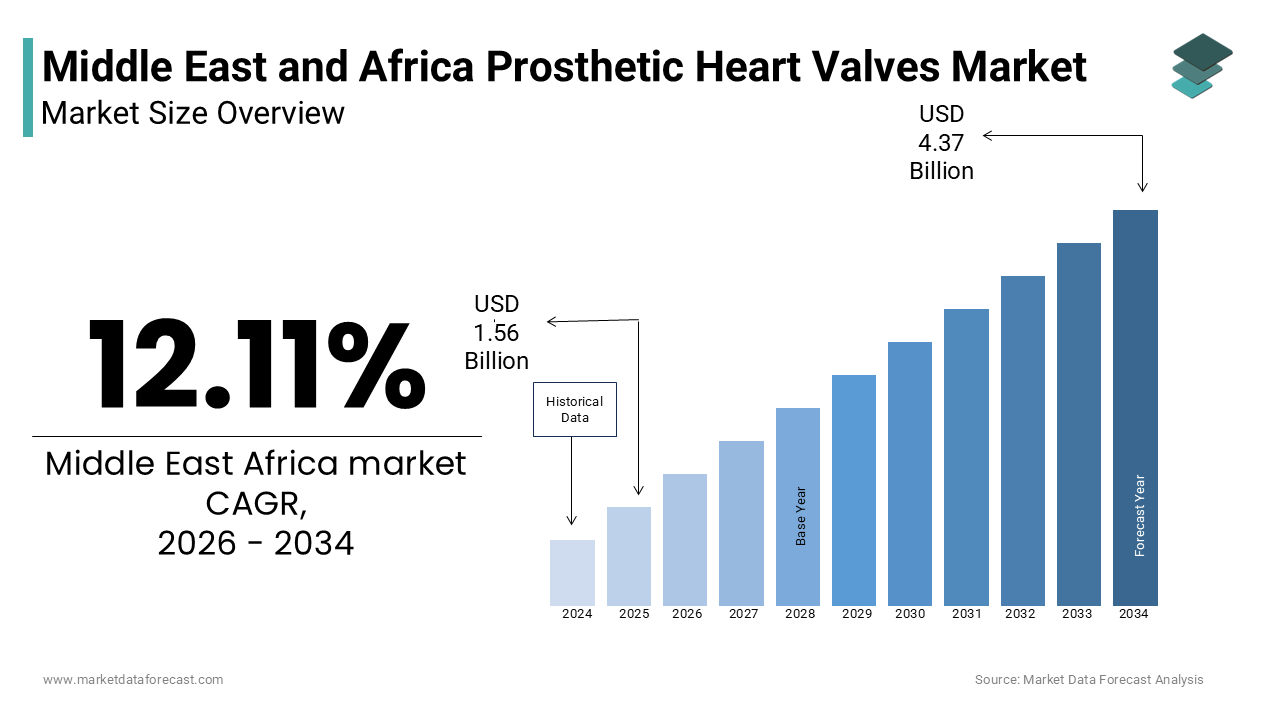
The Middle East and Africa prosthetic heart valves market was valued at USD 1.56 billion in 2025 and is anticipated to reach USD 1.75 billion in 2026 from USD 4.37 billion by 2034, growing at a CAGR of 12.11% during the forecast period from 2026 to 2034. The growth of the Middle East and Africa prosthetic heart valves market is driven by the rising prevalence of valvular heart diseases, increasing burden of rheumatic heart disease, and expanding investments in advanced cardiac care infrastructure. Growing adoption of transcatheter heart valve replacement procedures, increasing healthcare expenditure across Gulf Cooperation Council (GCC) countries, and improving access to specialized cardiovascular care are further accelerating market growth. Moreover, advancements in minimally invasive valve replacement technologies, increasing medical tourism, and continuous innovation in prosthetic valve design are supporting the expansion of the Middle East and Africa prosthetic heart valves market.
Key Market Trends
-
Rising adoption of transcatheter heart valve replacement procedures for high-risk and elderly patients.
-
Increasing investments in specialized cardiac centers across GCC countries.
-
Growing demand for minimally invasive structural heart interventions.
-
Rising medical tourism supporting advanced cardiovascular treatment across the Middle East.
-
Increasing technological advancements in biological and transcatheter heart valve systems.
Segmental Insights
- Based on product, the mechanical heart valve segment dominated the Middle East and Africa prosthetic heart valves market in 2025. The dominance of the segment is attributed to its superior durability, lower acquisition cost, widespread use in younger patients with rheumatic heart disease, established surgical expertise, and strong preference across public healthcare systems due to its long-term cost-effectiveness.
- The transcatheter heart valve segment is projected to witness the fastest CAGR of 18.5% during the forecast period owing to increasing prevalence of calcific aortic stenosis, growing elderly population, expanding hybrid operating room infrastructure, rising adoption of minimally invasive procedures, improving reimbursement policies, and continuous technological advancements in transcatheter valve systems.
Regional Insights
- Saudi Arabia dominated the Middle East and Africa prosthetic heart valves market and accounted for 28.3% of the regional market share in 2025. The country's leadership is driven by large-scale healthcare investments under Vision 2030, expanding specialized cardiac centers, increasing cardiovascular disease burden, growing adoption of transcatheter valve replacement procedures, comprehensive health insurance coverage, and strengthening partnerships with leading global medical device manufacturers.
- The United Arab Emirates held 22.1% of the regional market share in 2025 owing to its world-class healthcare infrastructure, expanding medical tourism industry, rapid adoption of advanced structural heart interventions, presence of internationally accredited hospitals, efficient regulatory environment, and growing investments in minimally invasive cardiovascular care.
- Israel continues to maintain a significant position in the regional market due to its advanced medical technology ecosystem, strong research and development capabilities, universal healthcare coverage, expanding adoption of innovative prosthetic heart valves, robust collaboration between academia and industry, and leadership in structural heart innovation.
- South Africa is witnessing steady growth supported by its advanced cardiology infrastructure, increasing burden of rheumatic heart disease, expanding private healthcare sector, growing availability of transcatheter valve replacement procedures, and continuous investment in specialist cardiac training programs.
- Egypt is expected to experience notable growth during the forecast period owing to its large patient population, high prevalence of rheumatic heart disease, expanding universal health insurance coverage, increasing investments in cardiac surgery centers, growing demand for durable prosthetic valves, and strengthening collaborations with international cardiovascular institutions.
Competitive Landscape
The Middle East and Africa prosthetic heart valves market is highly competitive and characterized by the presence of multinational cardiovascular device manufacturers alongside regional distributors competing through technological innovation, physician education, localized distribution networks, and comprehensive clinical support. Leading companies are focusing on expanding transcatheter valve portfolios, strengthening regional training programs, investing in physician education, improving supply chain capabilities, and developing affordable prosthetic valve solutions suited to diverse healthcare systems. Strategic collaborations with hospitals, governments, and cardiovascular centers continue to strengthen competitive positioning across the Middle East and Africa prosthetic heart valves market. The prominent players operating in the Middle East and Africa prosthetic heart valves market include Corvia Medical, CardioKinetix, Biomerics LLC, Lepu Medical Technology, XELTIS BV, Comed BV, HLT, Meril Life Sciences, SYMETIS SA, and Transcatheter Technologies.
Middle East and Africa Prosthetic Heart Valves Market Size
The Middle East and Africa prosthetic heart valves market size was valued at USD 1.56 billion in 2025 and is anticipated to reach USD 1.75 billion in 2026 from USD 4.37 billion by 2034, growing at a CAGR of 12.11% during the forecast period from 2026 to 2034.
Prosthetic heart valves are artificial devices surgically implanted to replace a diseased or damaged natural heart valve. Their primary purpose is to ensure one-way blood flow and prevent backward leakage through the heart's chambers. This market is intrinsically linked to the rising prevalence of valvular heart diseases driven by demographic shifts and changing lifestyle patterns across diverse nations. According to the World Health Organization, cardiovascular diseases account for approximately 32% of all global deaths, with a disproportionate burden observed in low- and middle-income nations where rheumatic heart disease remains a persistent public health challenge. As per the Global Burden of Disease Study, over 40 million people worldwide suffer specifically from rheumatic heart disease, with a disproportionate impact on younger populations in sub-Saharan Africa due to untreated streptococcal infections. The region faces unique clinical complexities as patients often present with advanced disease stages requiring intricate surgical interventions or minimally invasive procedures. Healthcare infrastructure development varies significantly between Gulf Cooperation Council nations which boast world class medical facilities and other regions struggling with basic access to specialized cardiac care. The adoption of transcatheter aortic valve replacement technologies is gradually increasing in urban centers offering less invasive alternatives for high risk patients who cannot tolerate open heart surgery. Regulatory frameworks are evolving to accommodate these advanced therapies while ensuring patient safety through rigorous approval processes. The interplay between traditional surgical expertise and emerging minimally invasive techniques defines the current operational dynamics of this specialized medical device sector.
MARKET DRIVERS
Rising Prevalence of Rheumatic Heart Disease in Sub Saharan Africa Drives Demand
Rheumatic heart disease remains a key driver for the demand of these valves in sub-Saharan Africa, which in turn fuels the growth of the Middle East and Africa prosthetic heart valves market. This demand is due to the disease's high incidence among children and young adults, resulting from untreated group A streptococcal pharyngitis. According to the World Heart Federation, rheumatic heart disease affects approximately 40 million people globally, with a disproportionate burden borne by low- and middle-income nations. This condition causes permanent damage to heart valves necessitating surgical replacement to prevent heart failure and premature death. Epidemiological screenings utilizing World Heart Federation echocardiographic criteria indicate that the prevalence of subclinical rheumatic heart disease in high-burden African communities is substantially higher than in developed nations. The chronic nature of this disease creates a sustained need for durable prosthetic valves especially mechanical options that offer longevity for younger patients. Public health initiatives aimed at early detection and antibiotic prophylaxis have shown limited success due to resource constraints leaving surgical intervention as the only viable treatment for advanced cases. Clinical observations from national referral networks in Kenya highlight that rheumatic heart disease creates a heavy surgical load, accounting for a high percentage of open-heart operations. The lack of widespread primary prevention programs ensures a continuous pipeline of patients requiring valve replacement thereby sustaining market demand despite economic challenges. This demographic reality underscores the urgent need for affordable and accessible prosthetic valve solutions tailored to the specific clinical profiles of African patients.
Expansion Of Advanced Cardiac Care Infrastructure In Gulf Cooperation Council Nations
The rapid expansion of state-of-the-art cardiac care facilities in Gulf Cooperation Council nations is also a major driver for the adoption of advanced prosthetic heart valves including transcatheter and biological options, which further propels the expansion of the Middle East and Africa market. As part of the Saudi Health Sector Transformation Program under Vision 2030, the Kingdom is investing heavily in modernization grants to establish cutting-edge specialized medical hubs and advanced operating suites. These facilities enable the performance of complex transcatheter aortic valve replacement procedures which require sophisticated imaging and monitoring equipment alongside skilled multidisciplinary teams. Driven by strategic priorities outlined in the Dubai Health Investment Guide, the expansion of private and public cardiovascular centers has significantly broadened access to advanced transcatheter interventions. The presence of highly trained cardiac surgeons and interventional cardiologists in these regions attracts medical tourists from neighboring countries seeking high quality care thus further stimulating demand for premium prosthetic devices. In 2024, Cleveland Clinic Abu Dhabi celebrated a major milestone by completing its 500th cumulative transcatheter aortic valve implantation (TAVI) procedure, demonstrating its leadership in minimally invasive structural heart care. Government initiatives promoting medical tourism and localizing advanced healthcare services create a favorable environment for the introduction of next generation valve technologies. The concentration of wealth and insurance coverage in these nations allows for the procurement of expensive biological and transcatheter valves which offer faster recovery times and improved quality of life compared to traditional mechanical options.
MARKET RESTRAINTS
High Cost Of Advanced Prosthetic Valves And Limited Reimbursement Coverage
The prohibitive cost of advanced prosthetic heart valves, particularly transcatheter and biological options, is a significant restraint limiting both their accessibility across much of the region and the growth of the Middle East and Africa Prosthetic Heart Valves Market. Sources confirm that the high material cost of transcatheter heart valves presents an economic barrier, vastly exceeding the annual per capita healthcare expenditure of many developing economies. This financial barrier restricts access to life saving treatments for the majority of the population who rely on out of pocket payments or inadequate public health funding. The World Bank underscores that high out-of-pocket healthcare expenses across sub-Saharan Africa create severe financial barriers, making specialized structural heart surgeries inaccessible for many households. Even in wealthier Gulf nations reimbursement policies for newer valve technologies can be restrictive requiring extensive pre authorization and limiting coverage to specific patient criteria. Statistics South Africa show that approximately 15% of the population maintains private medical scheme coverage, leaving the remaining majority dependent on the heavily burdened public healthcare system. The lack of standardized pricing and bulk procurement mechanisms further exacerbates cost issues preventing economies of scale that could lower device prices. Manufacturers face challenges in introducing innovative products due to price sensitivity and budget constraints within public healthcare systems. This economic reality forces clinicians to opt for older mechanical valves or conservative management strategies despite the clinical benefits of newer technologies thereby stifling market growth for premium segments.
Shortage Of Specialized Cardiac Surgeons and Interventional Cardiologists
A critical shortage of trained cardiac surgeons and interventional cardiologists hampers the expansion of the Middle East and Africa prosthetic heart valves market. This severely restricts the capacity to perform prosthetic heart valve replacements across the region. The Journal of Cardiothoracic Surgery indicates a severe workforce deficit in sub-Saharan Africa, where the ratio stands at approximately one cardiac surgeon per 14.3 million individuals, creating a major structural treatment gap. This scarcity of specialized personnel limits the number of procedures that can be performed annually regardless of device availability or funding. Regional licensing networks highlights that a critical deficit of formal surgical training facilities restricts the annual graduation of qualified interventional and cardiothoracic specialists across the continent. The brain drain phenomenon further aggravates the situation as trained professionals emigrate to Europe North America and Gulf states in search of better working conditions and compensation. In addition, the complexity of transcatheter valve procedures requires additional specialized training and team coordination which is lacking in many secondary and tertiary care centers. Without adequate human capital investments the deployment of advanced prosthetic valves remains confined to a few elite institutions in major cities. This human resource bottleneck prevents the scaling up of services necessary to address the high burden of valvular heart disease effectively.
MARKET OPPORTUNITIES
Growth Of Medical Tourism Hubs In The Middle East Creates Regional Demand
The emergence of the Middle East as a global medical tourism destination offers a significant opportunity for the Middle East and Africa prosthetic heart valves market. This attracts international patients seeking high quality cardiac care. According to the Dubai Health Authority, international medical tourism exceeded 691,000 annual health visitors, supported by specialized centers expanding access to advanced cardiovascular and orthopedic procedures. This influx of patients drives demand for premium prosthetic valves including latest generation transcatheter and biological options that may not be available in their home countries. In alignment with the Saudi Ministry of Health Transformation Program, extensive capital allocations are directed toward modernizing public hospital networks and establishing specialized regional cardiovascular centers. Hospitals in Qatar Bahrain and Jordan are also investing heavily in cardiac infrastructure to capture share of this lucrative market segment. As per the Joint Commission International, a vast network of hundreds of healthcare facilities across the Middle East maintain international accreditation, reinforcing clinical confidence for cross-border patient demographics. The revenue generated from medical tourism enables hospitals to invest in cutting edge devices and maintain high standards of care that benefit local populations as well. Manufacturers can leverage this trend by partnering with leading medical tourism providers to ensure supply chain reliability and technical support for complex procedures. The cross border flow of patients facilitates knowledge exchange and adoption of best practices accelerating the diffusion of innovative valve technologies throughout the region.
Adoption Of Transcatheter Valve Technologies For High Risk Patients
The increasing adoption of transcatheter aortic valve replacement technologies provides a substantial prospect to treat high risk and elderly patients who are unsuitable candidates for traditional open heart surgery, which is likely to boost the expansion of the Middle East and Africa prosthetic heart valves market. Clinical data published in the New England Journal of Medicine demonstrates that transcatheter valve replacement yields shorter recovery times and fewer procedural complications when compared to open surgical replacement in patients stratified across high-to-low surgical risk tiers. As per regulatory approvals from the Saudi Food and Drug Authority, several next generation transcatheter valve systems have received clearance in recent years expanding treatment options for clinicians in the region. The aging population in Gulf Cooperation Council nations where life expectancy has risen to over 77 years creates a growing cohort of patients eligible for these minimally invasive procedures. The expansion of hybrid operating rooms in major hospitals facilitates the safe delivery of these complex interventions requiring multidisciplinary collaboration. Manufacturers have the opportunity to introduce dedicated training programs and proctoring services to build local expertise and accelerate adoption. The potential for transcatheter mitral and tricuspid valve interventions further expands the addressable market beyond aortic valve disease. As clinical evidence accumulates and reimbursement pathways clarify, the uptake of these technologies is expected to accelerate. Consequently, this will transform the standard of care for valvular heart disease in the region.
MARKET CHALLENGES
Logistical Complexities And Supply Chain Vulnerabilities
Logistical complexities and supply chain vulnerabilities are significant challenges to the consistent availability of these valves across the diverse geographic landscape of the region, which slows down the growth of the Middle East and Africa prosthetic heart valves market. Prosthetic valves often require strict cold chain management and sterile handling which is difficult to maintain in regions with unreliable electricity and transportation networks. Studies emphasize that fragmented domestic distribution and poor inventory infrastructure create severe medical supply chain shortfalls across regional healthcare facilities. The reliance on imports from Europe and the United States exposes the region to global shipping disruptions currency fluctuations and geopolitical tensions. Customs clearance processes can take weeks or even months in some jurisdictions delaying urgent surgeries and compromising patient outcomes. The lack of localized manufacturing capabilities means that any disruption in global supply chains has immediate and severe impacts on local healthcare delivery. Manufacturers face high costs associated with maintaining redundant inventory and specialized logistics partners to mitigate these risks. These structural inefficiencies hinder the equitable distribution of life saving technologies and limit market penetration in remote and underserved areas.
Regulatory Heterogeneity And Approval Delays
Regulatory heterogeneity and prolonged approval processes are a serious obstacle for manufacturers seeking to introduce new prosthetic heart valves into the Middle East and Africa markets. The fragmentation forces manufacturers to navigate dozens of different regulatory systems increasing compliance costs and delaying market entry. In many African nations regulatory agencies lack sufficient technical expertise and resources to evaluate advanced medical devices efficiently leading to further delays. Statistics from the African Medicines Agency indicate that harmonization efforts are ongoing but full implementation of a unified approval mechanism remains years away. The absence of mutual recognition agreements means that approvals in one country do not facilitate access to neighboring markets requiring duplicate submissions and fees. This regulatory uncertainty discourages investment and limits the availability of innovative technologies to patients who need them most. Manufacturers must allocate significant resources to regulatory affairs activities diverting funds from research and development or market access initiatives. The lack of transparency and predictability in regulatory decisions creates an unpredictable business environment that stifles competition and innovation.
REPORT COVERAGE
| REPORT METRIC | DETAILS |
| Market Size Available | 2025 to 2034 |
| Base Year | 2025 |
| Forecast Period | 2026 to 2034 |
| CAGR | 12.11% |
| Segments Covered | By Product and Region. |
| Various Analyses Covered | Global, Regional & Country Level Analysis, Segment-Level Analysis, DROC, PESTLE Analysis, Porter’s Five Forces Analysis, Competitive Landscape, Analyst Overview of Investment Opportunities |
| Regions Covered | Saudi Arabia (KSA), the United Arab Emirates (UAE), Israel, the Rest of GCC Countries, South Africa, Ethiopia, Kenya, Egypt, Sudan, and the Rest of the Middle East & Africa (MEA). |
| Market Leaders Profiled | Corvia Medical, CardioKinetix, Biomerics LLC, Lepu Medical Technology, XELTIS BV, Comed BV, HLT, Meril Life Sciences, SYMETIS SA, Transcatheter Technologies, and others. |
SEGMENTAL ANALYSIS
By Product Type Insights
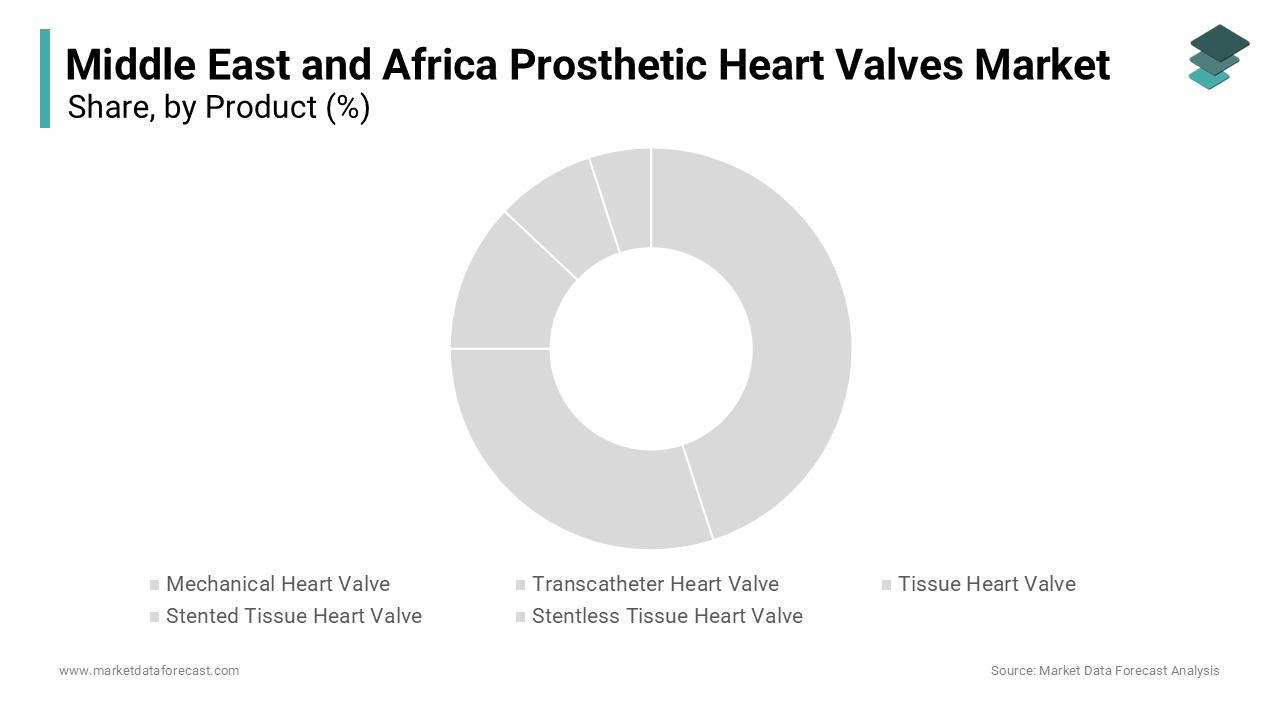
The mechanical heart valves segment dominated the Middle East and Africa prosthetic heart valves market in 2025. This dominance of the segment was mainly driven by its exceptional durability and lower cost which aligns with the demographic profile of valvular heart disease patients in the region. According to the World Heart Federation, rheumatic heart disease originates primarily during childhood and adolescence, necessitating highly durable lifetime valve replacements when severe valvular damage manifests in young adulthood. In accordance with clinical consensus from the American College of Cardiology / American Heart Association, mechanical prostheses offer long-term structural durability, whereas bioprosthetic valves exhibit accelerated degradation over 10 to 15 years in younger patient cohorts. The European Society of Cardiology recommend selecting a mechanical prosthesis for aortic valve replacements in patients under 60 years of age, accounting for long-term durability and anticoagulation feasibility. The cost differential is also significant. Sources confirm that mechanical heart valves maintain a lower initial procurement cost than biological equivalents, making them a financially viable option for resource-constrained public health systems. Clinical studies from tertiary centers in Egypt highlight that mechanical prostheses represent the vast majority of surgical valve replacements due to their long-term cost-effectiveness and durability in treating young adult populations. The requirement for lifelong anticoagulation therapy with warfarin is manageable in urban centers where monitoring infrastructure exists further supporting the continued dominance of this segment. Public procurement policies often favor mechanical valves due to their lower upfront costs allowing healthcare systems to treat a larger volume of patients within fixed budgets. This economic and clinical alignment ensures that mechanical valves remain the standard of care for the majority of surgical interventions across the region.
The widespread availability of surgical expertise for mechanical valve implantation reinforces its market leadership as open heart surgery remains the most common approach for valve replacement in the Middle East and Africa. The skill distribution ensures that mechanical valves are the default option in secondary and tertiary care facilities across the continent. Also, the robust supply chain for mechanical valves established over decades ensures consistent availability even in remote areas unlike newer technologies that may face stock outs. In addition, the lack of need for specialized imaging equipment such as computed tomography angiography for preoperative planning further lowers the barrier to entry for hospitals adopting mechanical valve programs. Regulatory approval pathways for mechanical valves are well established and streamlined reducing time to market for new manufacturers. These structural and operational advantages create a self reinforcing cycle where existing infrastructure and expertise drive continued demand for mechanical prostheses.
The transcatheter heart valve segment is predicted to witness the highest CAGR of 18.5% from 2026 to 2034 due to the increasing prevalence of calcific aortic stenosis in the aging populations of Gulf Cooperation Council nations. According to the United Nations Department of Economic and Social Affairs, the population aged 65 and older in Northern Africa and Western Asia is projected to more than triple by 2050, expanding the patient pool requiring less invasive transcatheter heart therapies. Transcatheter aortic valve replacement offers a less invasive alternative with significantly shorter recovery times and lower perioperative mortality rates for these frail patients. Moreover, the Journal of the American College of Cardiology confirm that transcatheter valve interventions significantly reduce hospital length of stay compared to open surgery, maximizing bed capacity across healthcare systems. The procedure can be performed under local anesthesia reducing the physiological stress on patients with multiple comorbidities such as chronic kidney disease or pulmonary hypertension. Research highlights that Cleveland Clinic Abu Dhabi continues to expand its clinical footprint in structural heart therapies, celebrating over 500 cumulative transcatheter aortic valve implantations to treat high-risk and elderly patients. Government initiatives in Saudi Arabia and the United Arab Emirates to expand hybrid operating rooms facilitate the adoption of these complex interventions. The ability to treat patients who were previously deemed inoperable expands the total addressable market for valve replacements. Insurance coverage for transcatheter procedures is expanding in private healthcare sectors further driving uptake among affluent demographics.
Rapid technological advancements in transcatheter valve design and delivery systems are broadening the scope of treatable anatomies and improving long term outcomes thereby accelerating market growth. These innovations enhance procedural success rates and reduce the need for permanent pacemaker implantation a common complication of earlier generation devices. The expansion of indications beyond aortic stenosis to include mitral regurgitation opens new revenue streams for manufacturers. Training programs and proctoring initiatives by manufacturers are building local expertise in complex transcatheter interventions reducing the learning curve for interventional cardiologists. The integration of artificial intelligence in preoperative planning software improves patient selection and procedural precision further enhancing clinical outcomes. These technological tailwinds ensure that the transcatheter segment will continue to outpace other product categories in terms of growth rate.
COUNTRY ANALYSIS
Saudi Arabia Prosthetic Heart Valves Market Analysis
Saudi Arabia led the Middle East and Africa prosthetic heart valves market and captured a 28.3% share in 2025. This leading position of the country’s market was attributed to massive government investments in healthcare infrastructure and a high burden of cardiovascular disease. The kingdom Vision 2030 health transformation program has allocated billions of dollars to establish specialized cardiac centers and upgrade existing facilities with advanced surgical capabilities. According to the Saudi Ministry of Health, cardiovascular diseases remain the leading cause of non-communicable mortality, driven by a rising prevalence of lifestyle-related degenerative conditions among the aging population alongside persistent localized pockets of rheumatic heart disease. The establishment of the Saudi Center for Organ Transplantation and specialized heart institutes has enhanced the capacity for complex valve surgeries. Clinical registries from major tertiary medical centers in Riyadh and Jeddah show a expanding adoption of minimally invasive transcatheter valve technologies to manage structural heart disease in high-risk patients. The presence of international hospital chains such as King Faisal Specialist Hospital and Dr. Sulaiman Al Habib Medical Group attracts medical tourists from neighboring countries further boosting demand for premium prosthetic valves. Government mandates for local manufacturing and technology transfer are encouraging global device makers to establish regional hubs in the kingdom. The comprehensive health insurance coverage for citizens ensures high accessibility to advanced cardiac care. Strategic partnerships with global leaders in valve technology are facilitating the introduction of next generation devices. The focus on preventive cardiology and early detection programs is expected to increase the diagnosis rate of valvular heart disease driving future market growth.
United Arab Emirates Prosthetic Heart Valves Market Analysis
The United Arab Emirates was positioned second in the Midde East and Africa prosthetic heart valves market and held a 22.1% share in 2025. This growth of the UAE market was propelled by world class healthcare infrastructure and a strong focus on medical tourism. The country serves as a regional hub for advanced cardiac care attracting patients from across the Middle East Africa and Asia seeking high quality valve replacement services. In alignment with the Dubai Health Authority's Health Investment Guide, the emirate has prioritized private and public sector infrastructure funding for advanced hybrid operating rooms and advanced catheterization labs to support complex structural heart interventions. The presence of renowned institutions such as Cleveland Clinic Abu Dhabi and Mediclinic City Hospital ensures access to cutting edge treatments including transcatheter aortic and mitral valve replacements. The regulatory environment is highly efficient with the Ministry of Health and Prevention fast tracking approvals for innovative medical devices. As per the Dubai Health Authority, international medical tourists spent approximately AED 1.03 billion on specialized medical services within the emirate, supported by accelerated medical visa and booking programs. The high disposable income and comprehensive insurance coverage among residents facilitate the adoption of premium prosthetic valves. Government initiatives to localize healthcare manufacturing are beginning to include medical devices potentially impacting future supply chains. The continuous influx of skilled cardiac specialists from around the world supports the high volume of complex procedures performed annually.
Israel Prosthetic Heart Valves Market Analysis
Israel holds a significant share of the regional market due to its advanced medical technology ecosystem and high per capita healthcare spending. The country is a global leader in cardiovascular innovation with several domestic companies developing next generation prosthetic heart valves and transcatheter delivery systems. In accordance with the Israel National Health Insurance Law, the country’s universal healthcare framework guarantees equitable, subsidized access to essential structural heart surgeries and valve replacement procedures for all citizens. The prevalence of congenital heart defects and degenerative valve disease drives steady demand for both mechanical and biological prostheses. The strong collaboration between academic medical centers and industry fosters rapid adoption of clinical trials and new technologies. The Israel Central Bureau of Statistics show a steadily aging population with high life expectancy, correlating clinically with an expanding requirement for durable biological valves and advanced transcatheter interventions. Regulatory harmonization with European standards facilitates the quick entry of new products. The high level of digital health integration allows for precise patient monitoring and post operative care improving long term outcomes. Investment in research and development continues to drive innovation in valve design and materials science maintaining the country competitive edge.
South Africa Prosthetic Heart Valves Market Analysis
South Africa grew steadily in the Middle East and Africa prosthetic heart valve market by serving as the primary hub for advanced cardiac care in sub Saharan Africa. The country possesses the most developed medical infrastructure on the continent with private hospitals offering world class valve replacement services alongside a strained public sector. According to clinical guidelines supported by the South African Heart Association, rheumatic heart disease remains a severe, preventable public health concern in vulnerable communities, requiring durable surgical valve interventions to manage long-term structural damage. The dual tier healthcare system creates a distinct market dynamic where private patients access premium biological and transcatheter valves while public patients rely on cost effective mechanical options. Also, the South African National Department of Health indicate that while the public healthcare sector manages the vast majority of the population, resource constraints and limited cardiothoracic infrastructure create prolonged waitlists for elective heart valve surgeries. The private sector however sees growing adoption of transcatheter technologies driven by medical scheme coverage and specialist availability. Local manufacturing capabilities for certain medical supplies exist but prosthetic valves are primarily imported. Training programs for cardiac surgeons and interventional cardiologists are supported by international partnerships helping to build local capacity. The burden of HIV associated cardiomyopathy adds complexity to patient management requiring specialized valve solutions. Economic volatility and currency fluctuations impact procurement costs affecting market stability.
Egypt Prosthetic Heart Valves Market Analysis
Egypt is predicted to expand notably in the regional market owing to the regional market due to its large population and high prevalence of rheumatic heart disease. The country has a long history of cardiac surgery with several centers of excellence performing high volumes of valve replacements annually. Through coordinated community health initiatives, the Egyptian Ministry of Health and Population targets rheumatic fever prevention to reduce the incidence of valvular degradation among younger populations across regional communities. The government has launched initiatives to improve access to cardiac care including the Universal Health Insurance System which aims to cover all citizens. Clinical registries from the National Heart Institute in Cairo show that mechanical valves are widely utilized in young adult populations requiring structural intervention due to their long-term durability and cost-effectiveness in developing public health frameworks. The growing middle class is increasingly accessing private healthcare facilities where biological valves are more commonly used. Import regulations and customs procedures can delay the availability of new devices but the market remains robust due to high clinical need. Local assembly of some medical devices is being encouraged to reduce costs and improve supply chain resilience. International collaborations with European and American institutions help in training surgeons and introducing new techniques. The high burden of disease ensures consistent demand for prosthetic valves across both public and private sectors. Economic reforms and currency devaluation have impacted purchasing power but essential medical imports remain prioritized.
COMPETITIVE LANDSCAPE
The competition in the Middle East and Africa prosthetic heart valves market is characterized by a mix of global multinational corporations and regional distributors who navigate a complex landscape of varying healthcare infrastructure and economic conditions. Global leaders compete primarily on technological innovation clinical evidence and educational support rather than price alone particularly in wealthy Gulf Cooperation Council nations where demand for advanced transcatheter solutions is rising. In contrast competition in sub Saharan Africa focuses heavily on cost effectiveness durability and supply chain reliability as public health systems prioritize affordable mechanical valves for treating rheumatic heart disease. The market is fragmented due to regulatory heterogeneity requiring companies to maintain distinct strategies for each country or sub region. Local partnerships are critical for success as they provide insights into cultural preferences procurement processes and clinical practices. Emerging players are entering the market with niche products or localized manufacturing capabilities challenging established incumbents. The lack of standardized reimbursement policies across the region creates pricing pressure and necessitates flexible commercial models. Intellectual property protection varies significantly influencing the entry of generic or lower cost alternatives. Overall the competitive dynamics are shaped by the dual need to deliver high technology solutions in affluent markets while ensuring accessibility and affordability in resource limited settings requiring balanced strategic approaches.
KEY MARKET PLAYERS
Companies playing a crucial role in the MEA Prosthetic Heart Valves Market include
- Corvia Medical
- CardioKinetix
- Biomerics LLC
- Lepu Medical Technology
- XELTIS BV
- Comed BV
- HLT
- Meril Life Sciences
- SYMETIS SA
- Transcatheter Technologies
Top Players in the MEA Market
Edwards Lifesciences Corporation
Edwards Lifesciences maintains a strong presence in the Middle East and Africa by focusing on advanced transcatheter heart valve technologies that address the growing burden of structural heart disease. The company actively collaborates with leading medical centers in Saudi Arabia and the United Arab Emirates to establish comprehensive training programs for interventional cardiologists and cardiac surgeons. Recently Edwards Lifesciences expanded its clinical support infrastructure in the region by launching dedicated education hubs that facilitate knowledge transfer and procedural excellence. These initiatives help local healthcare providers adopt minimally invasive techniques such as transcatheter aortic valve replacement which are gaining traction among high risk patient populations. The company also engages in strategic partnerships with regional distributors to ensure consistent supply chain reliability and timely access to innovative devices. By prioritizing physician education and clinical evidence generation, Edwards Lifesciences strengthens its reputation. This establishes the company as a trusted partner in improving patient outcomes across diverse healthcare settings in the region.
Medtronic plc
Medtronic plc leverages its extensive portfolio of mechanical and biological heart valves to serve the varied needs of patients across the Middle East and Africa. The company has strengthened its market position by investing in local manufacturing capabilities and regulatory compliance teams to navigate the complex approval landscapes of different countries. Medtronic recently initiated several community health programs aimed at early detection of rheumatic heart disease in sub Saharan Africa which helps identify patients requiring valve intervention earlier in the disease progression. The company also supports capacity building by sponsoring fellowships and surgical workshops for healthcare professionals in Egypt and South Africa. These efforts enhance the technical skills required for complex valve surgeries and promote the adoption of Medtronic devices. By aligning its commercial strategies with public health goals, Medtronic demonstrates a commitment to sustainable healthcare development. At the same time, it expands its reach in underserved markets through affordable product offerings and robust distribution networks.
Abbott Laboratories
Abbott Laboratories contributes significantly to the prosthetic heart valves market in the Middle East and Africa through its innovative transcatheter mitral and tricuspid valve solutions. The company focuses on addressing unmet clinical needs in valvular heart disease by introducing next generation devices that offer improved safety and efficacy profiles. Abbott has recently enhanced its regional footprint by establishing specialized clinical support teams in key markets such as Israel and Qatar to assist hospitals in implementing advanced structural heart programs. The company also collaborates with local regulatory bodies to accelerate the approval process for new technologies ensuring faster patient access. Abbott invests heavily in real world evidence generation through registries and clinical studies conducted in partnership with regional medical institutions. This data driven approach helps validate the performance of its devices in diverse patient populations. By combining technological innovation with strong clinical engagement, Abbott strengthens its competitive position. This approach drives the adoption of minimally invasive valve therapies across the region.
Top Strategies Used by Key Market Participants
Key players in the Middle East and Africa prosthetic heart valves market employ several strategic approaches to enhance their competitive positioning and drive growth. Companies prioritize establishing strong clinical education and training programs to build local expertise in complex valve procedures such as transcatheter replacements. Strategic partnerships with regional distributors and healthcare providers ensure reliable supply chains and facilitate market access in diverse regulatory environments. Manufacturers also focus on adapting product portfolios to meet the specific needs of the region including affordable mechanical valves for public health systems and advanced biological options for private sectors. Investment in local regulatory affairs teams helps navigate heterogeneous approval processes and accelerate time to market for new innovations. Companies engage in corporate social responsibility initiatives such as rheumatic heart disease screening programs to build brand loyalty and address public health challenges. Digital health integration and remote monitoring solutions are increasingly used to support post operative care and improve long term patient outcomes. These multifaceted strategies enable companies to overcome infrastructural and economic barriers while capturing growth opportunities in this emerging market.
MARKET SEGMENTATION
This research report on the Middle East and Africa Prosthetic Heart Valves Market segmented and sub-segmented into the following categories.
By Product
- Mechanical Heart Valve
- Transcatheter Heart Valve
- Tissue Heart Valve
- Stented Tissue Heart Valve
- Stentless Tissue Heart Valve
By Country
- KSA
- UAE
- Israel
- rest of GCC countries
- South Africa
- Ethiopia
- Kenya
- Egypt
- Sudan
- rest of MEA